
Many men who train hard notice a firm, sometimes tender swelling under one or both nipples and wonder whether something they took at the gym is to blame. Steroid induced gynecomastia is real: anabolic steroids appear in medical lists of substances that can cause breast enlargement in men [1][2]. Dr. Vishal Purohit, an M.Ch. plastic surgeon at Kalpana Aesthetics in Jaipur, sees gym-goers and bodybuilders with exactly this question. This guide explains what the evidence says, which symptoms need a doctor, and what to discuss before any treatment.
This article does not give advice on using steroids, doses or hormone-blocking drugs. Its purpose is to help you understand your chest and have an honest conversation with a doctor.
Key points at a glance
| Question | What the evidence or clinic protocol says |
|---|---|
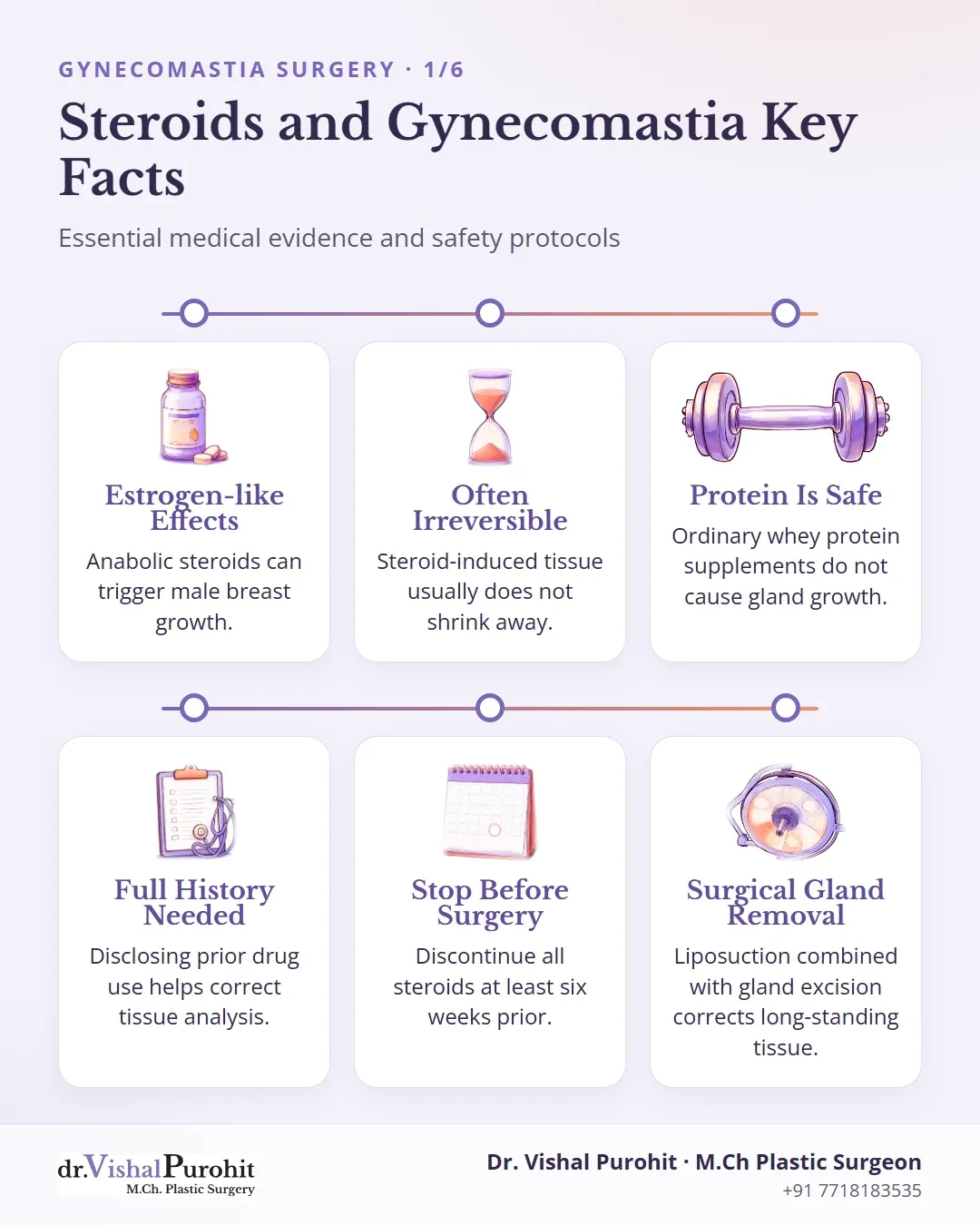
| Can anabolic steroids cause gynecomastia? | Yes; they are listed among agents with estrogen-like effects [1] |
| Does it always go away after stopping? | No; anabolic steroid use often causes irreversible gynecomastia [1] |
| Do self-bought hormone blockers prevent it safely? | No; such attempts may cause irreversible adverse effects [1] |
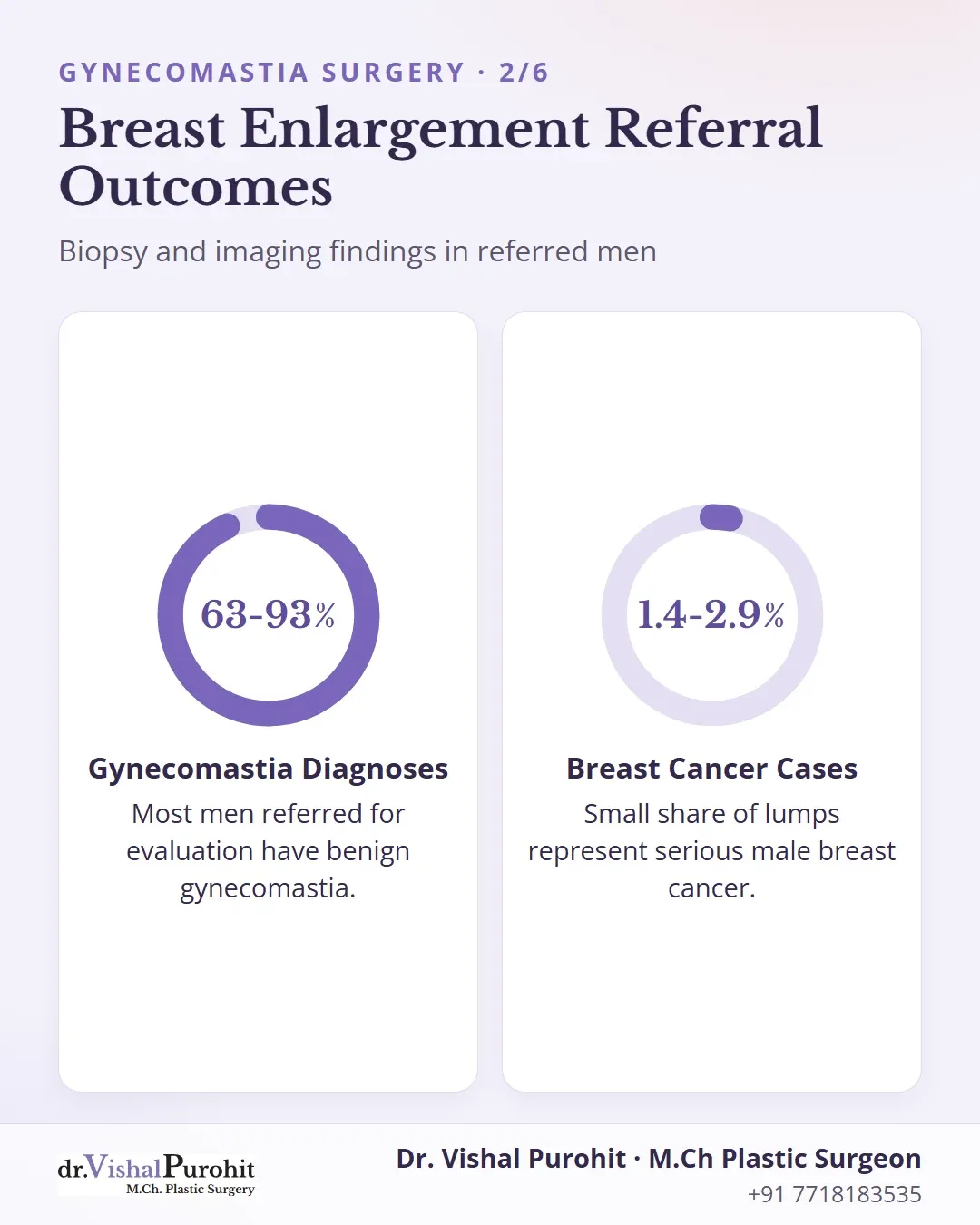
| Share of men referred for breast imaging or biopsy who had gynecomastia | 63 to 93% [1] |
| Share who had breast cancer | 1.4 to 2.9% [1] |
| Removed tissue sent for histopathology at Kalpana Aesthetics | Always |
| Cost of surgery at Kalpana Aesthetics, Jaipur | ₹45,000 to ₹95,000, depending on grade and technique |
How anabolic steroids disrupt hormone balance
Breast tissue in men responds to the balance between two hormones. Estrogen makes breast tissue grow, while testosterone holds that growth in check [3]. Estrogen also suppresses luteinizing hormone (LH), the signal that tells the testicles to make testosterone, so a rise in estrogen together with a fall in testosterone most often leads to gynecomastia [2].
Anabolic steroids push this balance in the wrong direction. A review in American Family Physician lists anabolic steroids among the agents with estrogenic properties that are associated with gynecomastia [1]. The same review explains the mechanism: injected testosterone switches off the body’s own testosterone production, which cannot recover quickly enough between periods of use to prevent estrogen from predominating [1]. Cleveland Clinic and Cedars-Sinai both name the misuse of anabolic steroids as a cause of male breast enlargement [2][4].
Why the change may not reverse
Gynecomastia in newborns and teenagers usually settles once hormones rebalance [2], but steroid-related breast growth often does not. American Family Physician states that anabolic steroid use often causes irreversible gynecomastia [1]. It also warns that trying to prevent breast growth by taking hormone-blocking medicines alongside steroids may itself cause irreversible adverse effects [1]. WebMD makes a similar point: it is unclear how well, or how safely, such strategies work, and anabolic steroids carry health risks far more serious than gynecomastia [5].
Plastic surgeons have noticed the trend. Authors of a classification study in Aesthetic Plastic Surgery point to substantial increases in anabolic steroid use over recent decades as one factor that can, at least in theory, stimulate growth of the male breast gland [6].
If you want the wider picture of hormones, medicines and health conditions behind male breast growth, read what causes gynecomastia, or start with the overview in what gynecomastia is and how it is graded.
Symptoms that warrant evaluation
Gynecomastia usually feels like a button-sized growth under the nipple. The lump may move easily within the breast and may be tender to touch, and it can affect one or both sides [2]. Swelling, tenderness and soreness are common [5], and the two sides often grow unevenly [4]. This is different from a general increase in chest size caused by fat, known as pseudogynecomastia [2].
Most of the time the cause is benign. Among men referred for imaging or biopsy because of breast enlargement, gynecomastia accounted for 63 to 93% of diagnoses, while breast cancer accounted for 1.4 to 2.9% [1]. Because male breast cancer can also present as a lump, a physical examination is essential to tell the two apart [2].
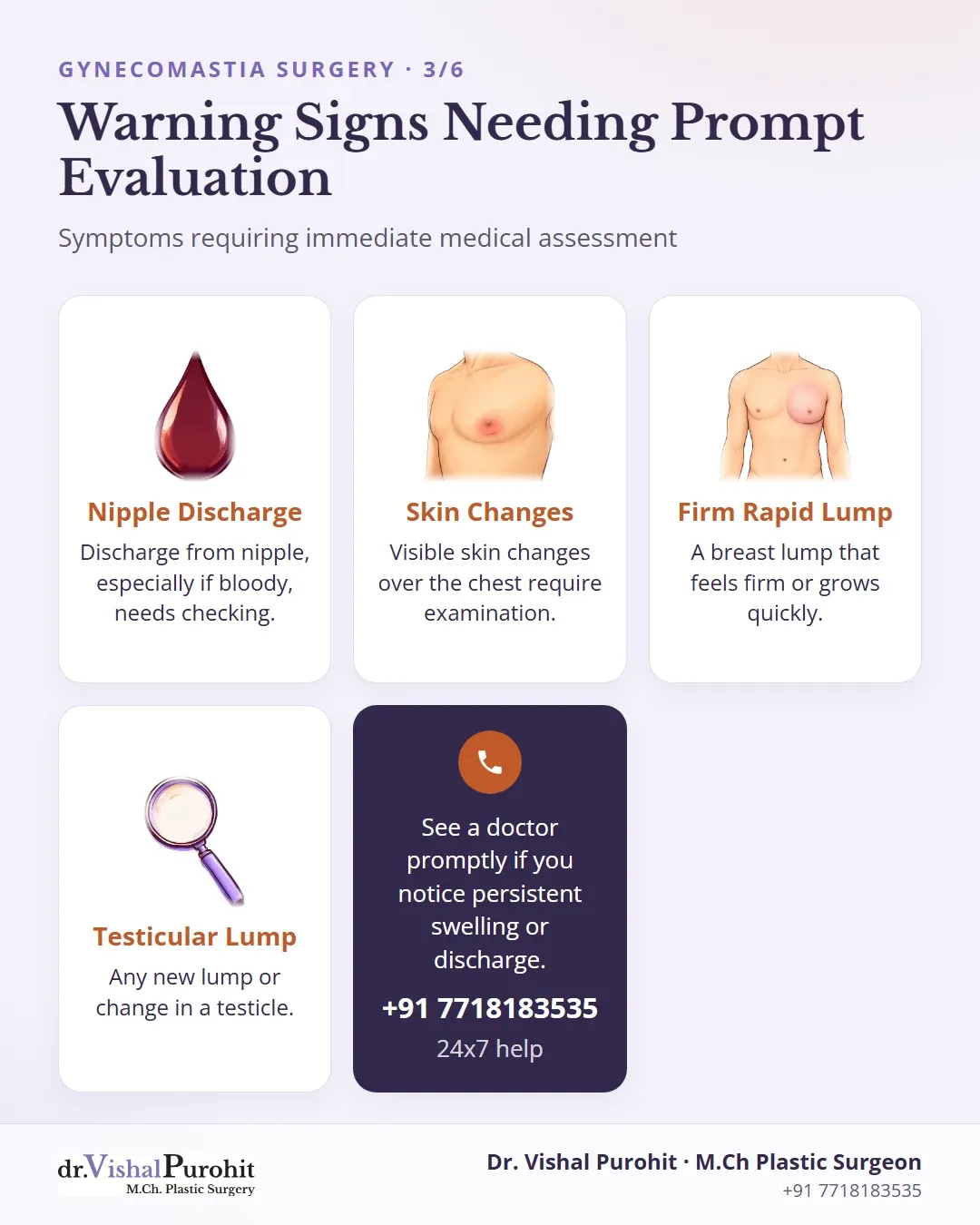
See a doctor promptly if you notice any of the following [1][3]:
- Nipple discharge, especially bloody discharge
- Skin changes over the breast
- A breast lump that is growing quickly or feels firm
- A lump or change in a testicle
- Weight loss or other general symptoms without a clear reason
- Unusual and persistent swelling, pain or discharge
- A lump on one side only that does not hurt, since pain is more common in gynecomastia and a one-sided mass without pain needs checking [1]
American Family Physician also notes that symptoms lasting longer than one to two years suggest a cause that needs intervention rather than waiting [1]. During the examination, a doctor may also check the genitals and abdomen [3][7].
Hormonal products versus ordinary nutrition products
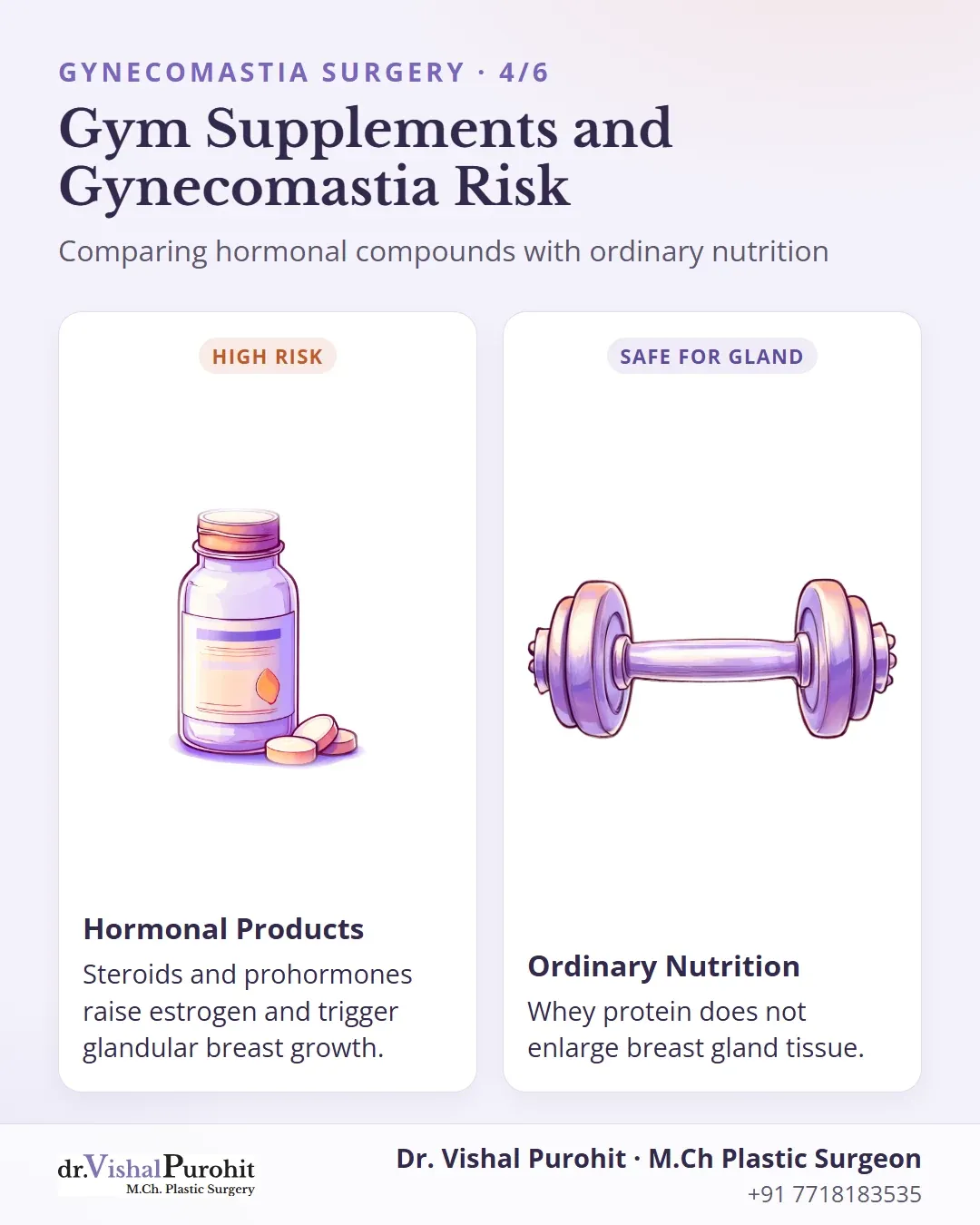
Not everything sold in a gym carries the same risk, and it helps to separate two groups.
Hormonal products. These are designed to act like, or turn into, hormones. Anabolic steroids belong here [1]. So do prohormones, over-the-counter products designed to convert into active hormones; a surgical report in Aesthetic Plastic Surgery describes bodybuilders who use steroids or prohormones as prime candidates for gynecomastia, because prohormones can increase the amount of estrogen in the body [8].
Supplement ingredients that have been linked to breast growth. Some products not marketed as hormones still deserve attention. American Family Physician reports that Tribulus terrestris, an ingredient in performance-enhancing supplements, has been linked to gynecomastia, as have lavender, tea tree oil and dong quai [1]. Soy is thought to be safe, but intake of more than 300 mg per day has been reported to cause gynecomastia [1]. Essential oils such as lavender and tea tree oil can have this effect when swallowed in supplements and possibly through shampoos, soaps and skin products [5].
Ordinary nutrition products. The medical sources used for this article do not name ordinary food-based products such as whey protein as a cause of gynecomastia. In Dr. Vishal Purohit’s practice, protein supplements have no role in increasing or decreasing gynecomastia; anabolic steroids can cause it, while growing chest muscle can push the gland outwards and make it look more prominent.
The practical message is the same for every product: American Family Physician advises that all supplement use in patients with gynecomastia should be scrutinised, because marketed preparations vary [1]. Bring the actual tubs or labels to your consultation rather than relying on memory. The FAQ section on causes and risk factors answers more questions about specific triggers, and the section on gynecomastia and exercise explains what training can and cannot change.
Disclosing supplement and steroid history to the surgeon
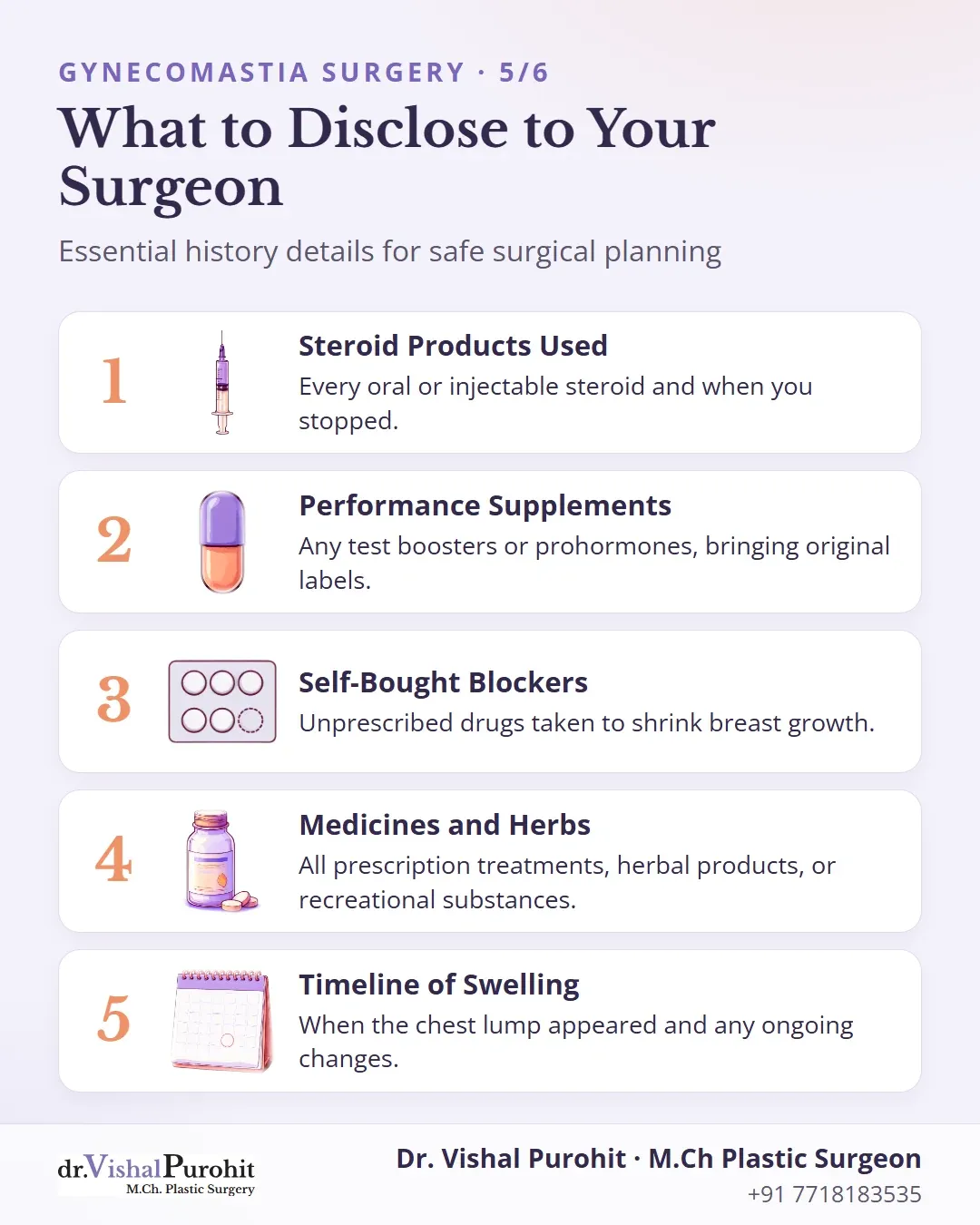
Many men hesitate to mention steroids. The medical reason to be open is simple: your history directs the tests and the treatment.
Clinical guidance tells doctors to review every patient’s use of medicines, supplements and illicit drugs as part of the history [1]. Doctors ask what drugs, legal or illegal, you have taken, and WebMD stresses that being honest gives the doctor a clearer idea of what is happening in your body [5]. The history and examination then decide which blood tests are needed. These can include liver, kidney and thyroid tests for all patients, and testosterone, estradiol, LH and follicle-stimulating hormone levels to define a hormonal imbalance [1]. A diagnosis of ordinary physiological gynecomastia should not be made until other causes have been excluded [1].
There is a second reason that matters to surgeons. A study in Acta Cytologica found that moderate to severe cell atypia can be seen in breast tissue associated with anabolic drug abuse, and that such changes may be mistaken for malignancy; the authors advise that a detailed clinical history, including prior drug use, should be obtained [9]. At Kalpana Aesthetics, Dr. Vishal Purohit always sends all removed breast tissue for histopathology, so an accurate drug history helps the pathologist interpret the result correctly.
What to tell your surgeon:
- Every steroid, injectable or oral product you have used, and when you last used it
- Any prohormone, “test booster” or performance supplement, with labels if possible
- Any medicine bought without a prescription to prevent or shrink breast growth
- Prescription medicines, herbal products and recreational drugs
- When the swelling started and whether it has changed
Dr. Vishal Purohit refers patients to an endocrinologist only when gynecomastia develops suddenly, well after puberty is complete, or when there are other symptoms of hormonal imbalance. Before surgery, he routinely orders pre-operative tests for anaesthesia, including CBC and renal function tests (RFT); hormone blood tests are ordered only when there are other symptoms of hormonal imbalance. For steroid and prohormone users, he requires stopping for a minimum of 6 weeks before surgery, with 3 months being preferable.
Treatment assessment and ongoing exposure
The first step in managing drug-related gynecomastia is to stop the substance responsible [6]. Stopping matters even when the tissue does not fully shrink, because the result of any later surgery depends on it, as explained below [10].
When gynecomastia is long-standing, surgery is usually the treatment that corrects it. The Aesthetic Plastic Surgery classification study notes that, beyond weight loss, medicines and suspending the drugs involved, surgical treatment is needed for long-standing gynecomastia, combining liposuction with removal of the gland [6].
Surgery while still using steroids
This is the question many bodybuilders ask. The American Society of Plastic Surgeons states that the results of gynecomastia surgery are permanent in many cases, but if gynecomastia resulted from drugs, including steroids, a patient must be fully free from these substances to maintain the result [10]. It also notes that good results are expected but cannot be promised, and that some situations need more than one operation [11]. If breast tissue returns after surgery, the guide on whether male breasts can grow back after gynecomastia surgery explains why.
For men using anabolic steroids or prohormones, Dr. Vishal Purohit requires them to stop these substances for a minimum of 6 weeks before surgery, though 3 months is preferable.
What surgery involves at Kalpana Aesthetics
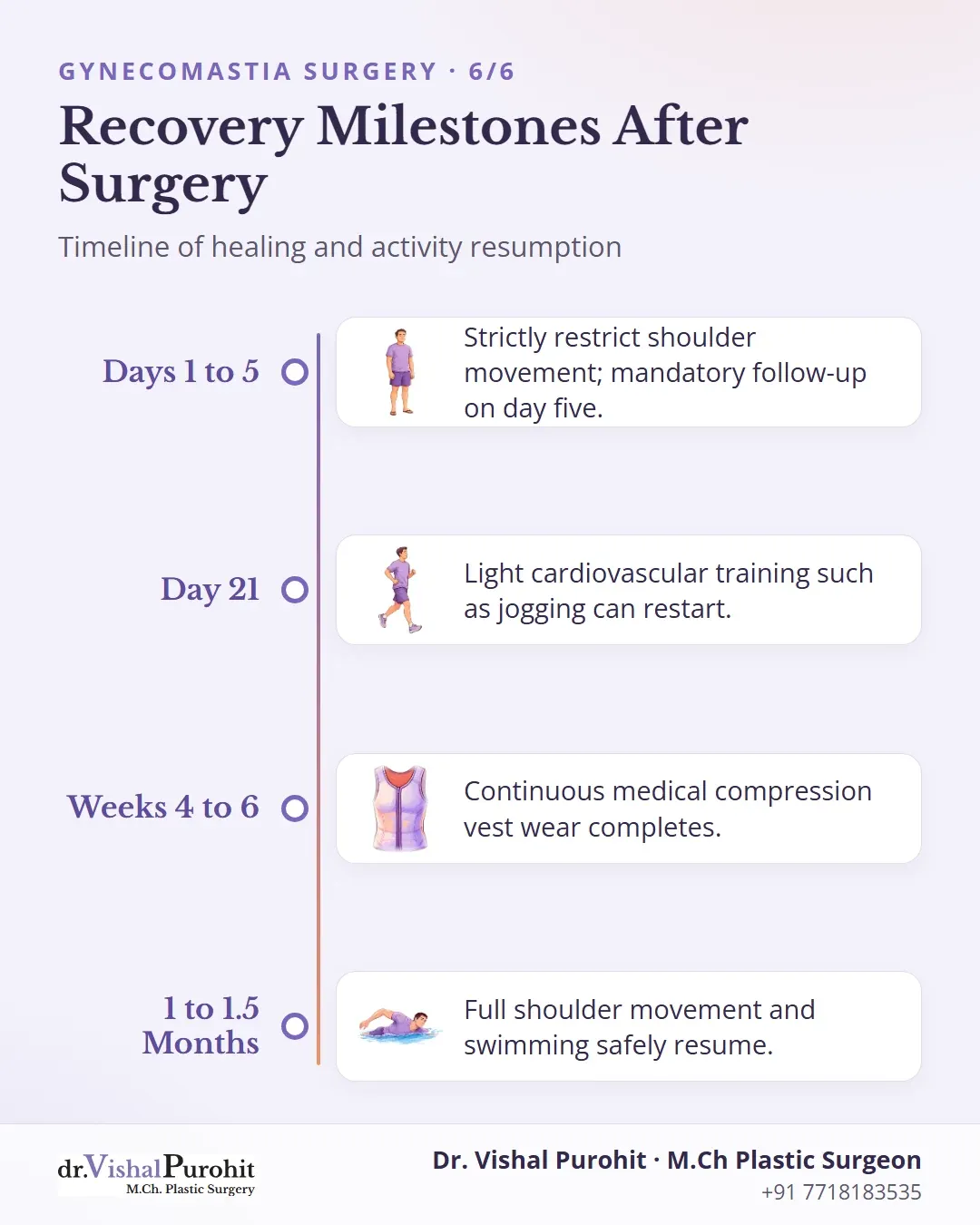
For men who are suitable, Dr. Vishal Purohit combines VASER or power liposuction with excision of the gland through an inconspicuous hemi-periareolar incision along the lower half of the areola border. Surgery is done under local or general anaesthesia. Operating time is 60 to 120 minutes for simpler grades and up to about 4 hours for grade 4 or massive gynecomastia. Drains are placed only in grade 4.
After surgery, a custom medical-grade compression vest is worn 24/7 for 4 to 6 weeks. Shoulder movement is strictly restricted for the first 5 to 7 days and increased gradually over weeks 2 to 4; bed rest is never advised. Jogging can usually restart on day 21, and full shoulder movement such as swimming returns at 1 to 1.5 months. Follow-up visits on day 5 and at 1 month are mandatory, and help is available 24x7. If a patient is not satisfied, a touch-up such as liposuction is planned with a gap of 8 to 9 months after the first operation.
Gynecomastia assessment in Jaipur
If you train, have used steroids or hormonal supplements, and now have a lump or swelling under the nipple, the safest next step is an examination rather than another product. Dr. Vishal Purohit, M.Ch. plastic surgeon registered with the Rajasthan Medical Council (RMC Reg. 28041/14185), assesses gynecomastia at Kalpana Aesthetics in Jaipur. In his practice, evaluation begins with clinical examination and direct palpation, followed by ultrasound or MRI when imaging is needed, while hormone blood tests are reserved for patients with other symptoms of hormonal imbalance. He takes a full history and explains whether observation, tests or surgery fits your situation. Surgery at the clinic costs ₹45,000 to ₹95,000, depending on grade and technique. Learn more about gynecomastia surgery in Jaipur.
This is educational information, not medical advice.