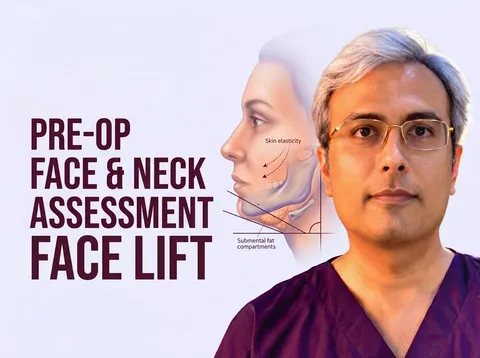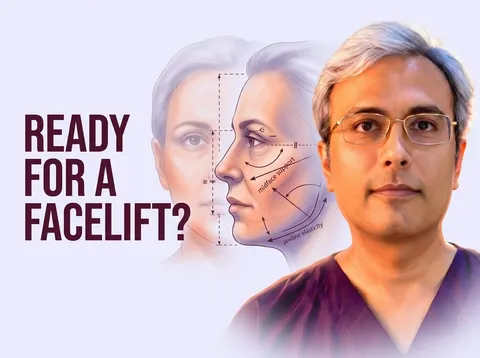
Facial ageing rarely stems from a single anatomical change. Over time, descending deeper tissues, shifting fat compartments, and thinning skin alter the contours of the midface, jawline, and neck in distinct ways.
When addressing structural tissue descent along the lower face and neck, Dr. Vishal Purohit evaluates whether facelift surgery in Jaipur or less invasive modalities are anatomically indicated.
Understanding whether laxity, hollowed contours, or fine surface creases predominate helps determine realistic treatment paths. Prospective patients can review Am I Ready for a Facelift? Health, Age and Realistic Goals to explore how individual concerns shape clinical planning.
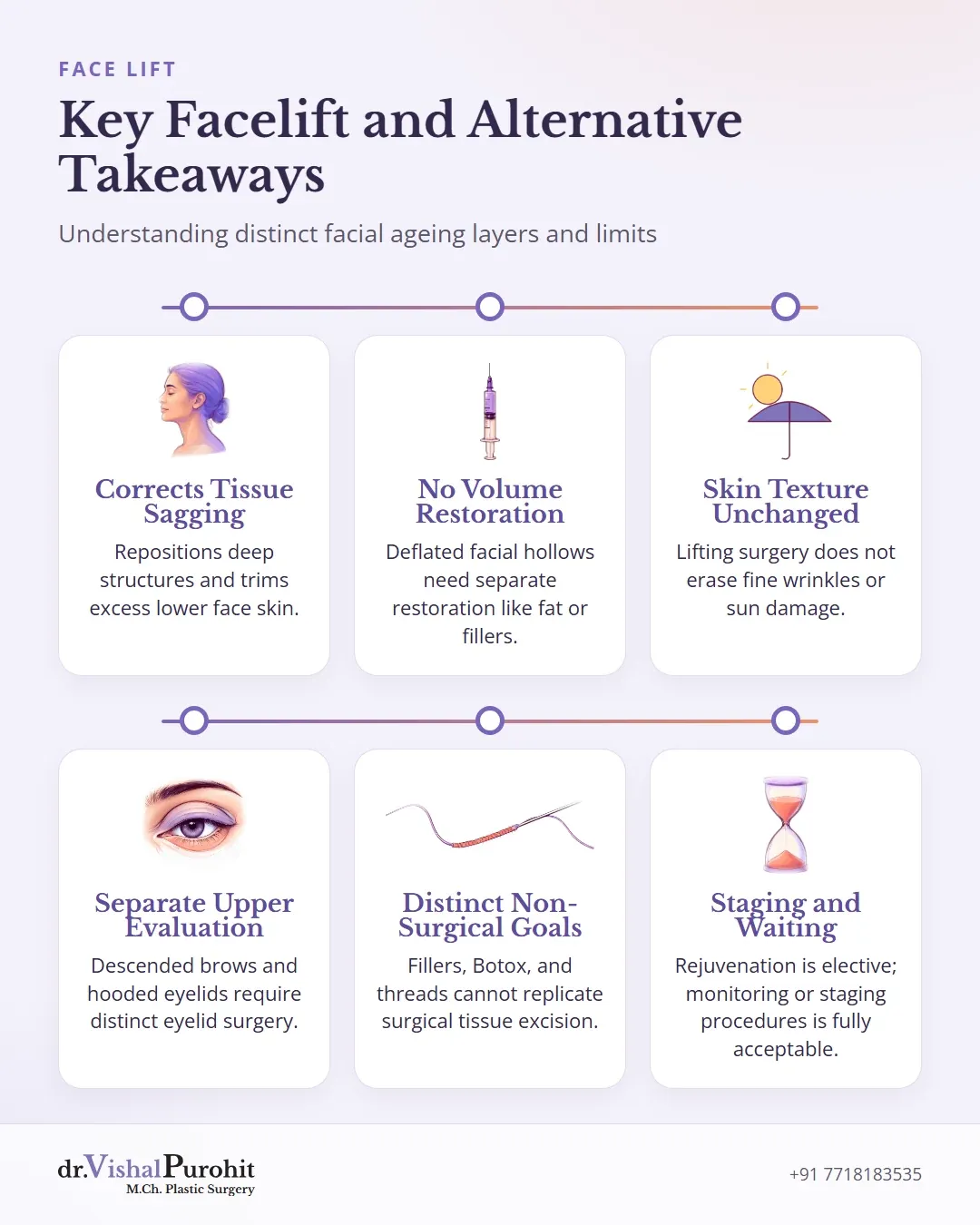
Sagging, Hollowing and Wrinkles Often Appear Together
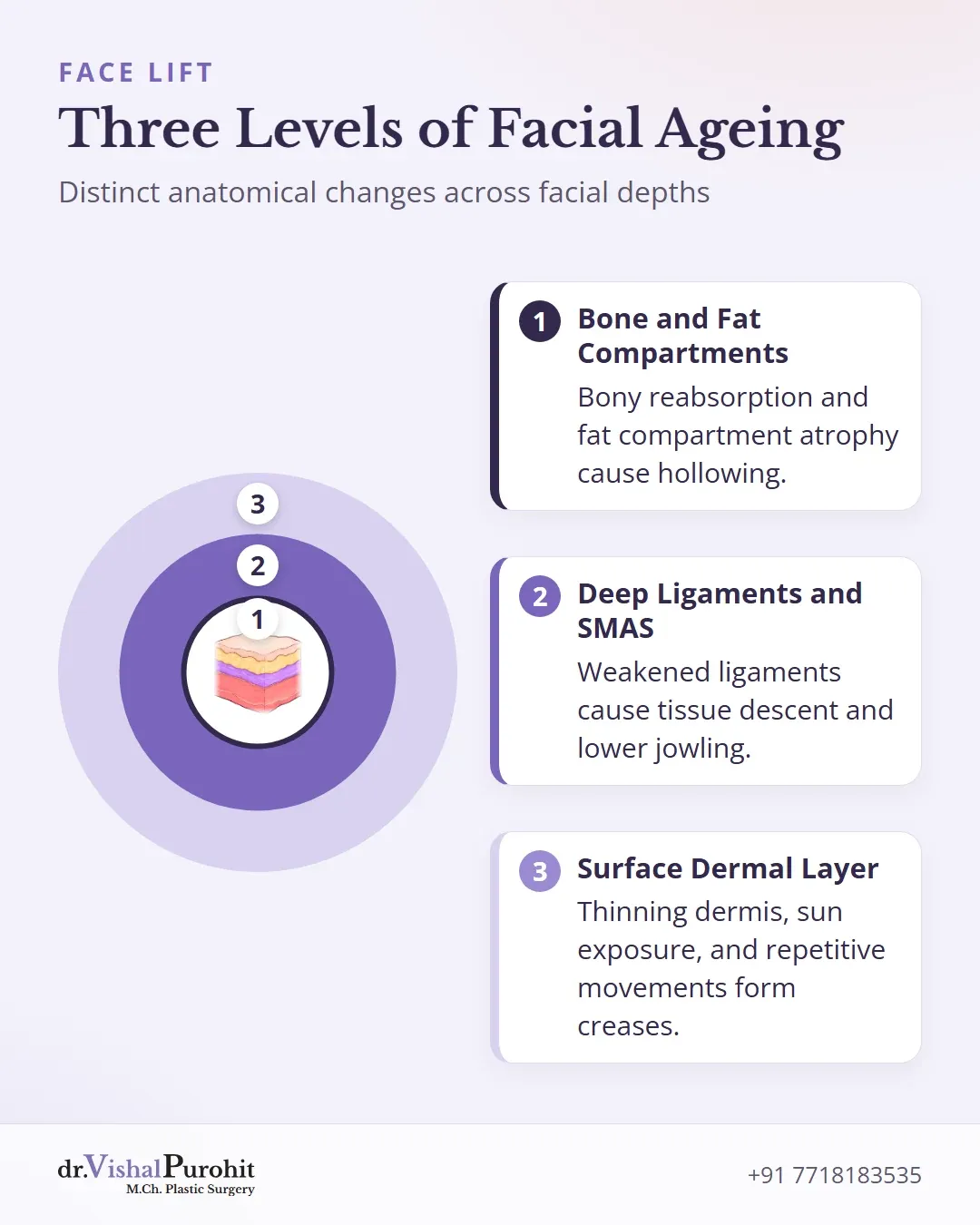
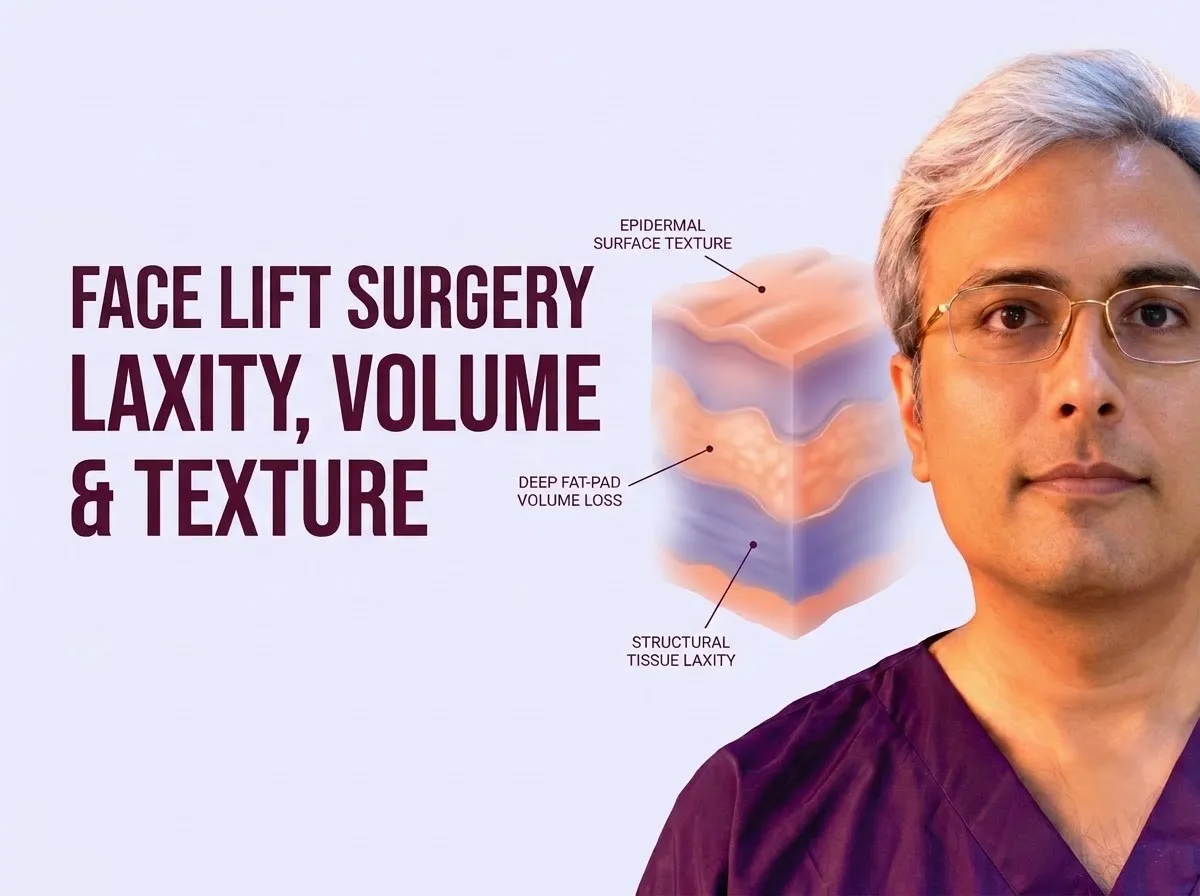
Facial ageing involves distinct anatomical changes rather than a single problem12. As tissues mature, three main processes take place across different layers of the face:
- Tissue descent and laxity: Breakdown of collagen and elastin fibers, along with weakening of supporting facial ligaments, leads to sagging skin, deepening folds, and jowling along the lower face and jawline13.
- Volume loss: Fat compartments in the face atrophy and shift position, while gradual bony reabsorption occurs in the facial skeleton, creating hollowed areas345.
- Surface skin changes: Thinning of the dermis, reduced cellular turnover, sun exposure, and repetitive muscle movements create fine wrinkles, creases, and texture alterations367.
What a Facelift Addresses
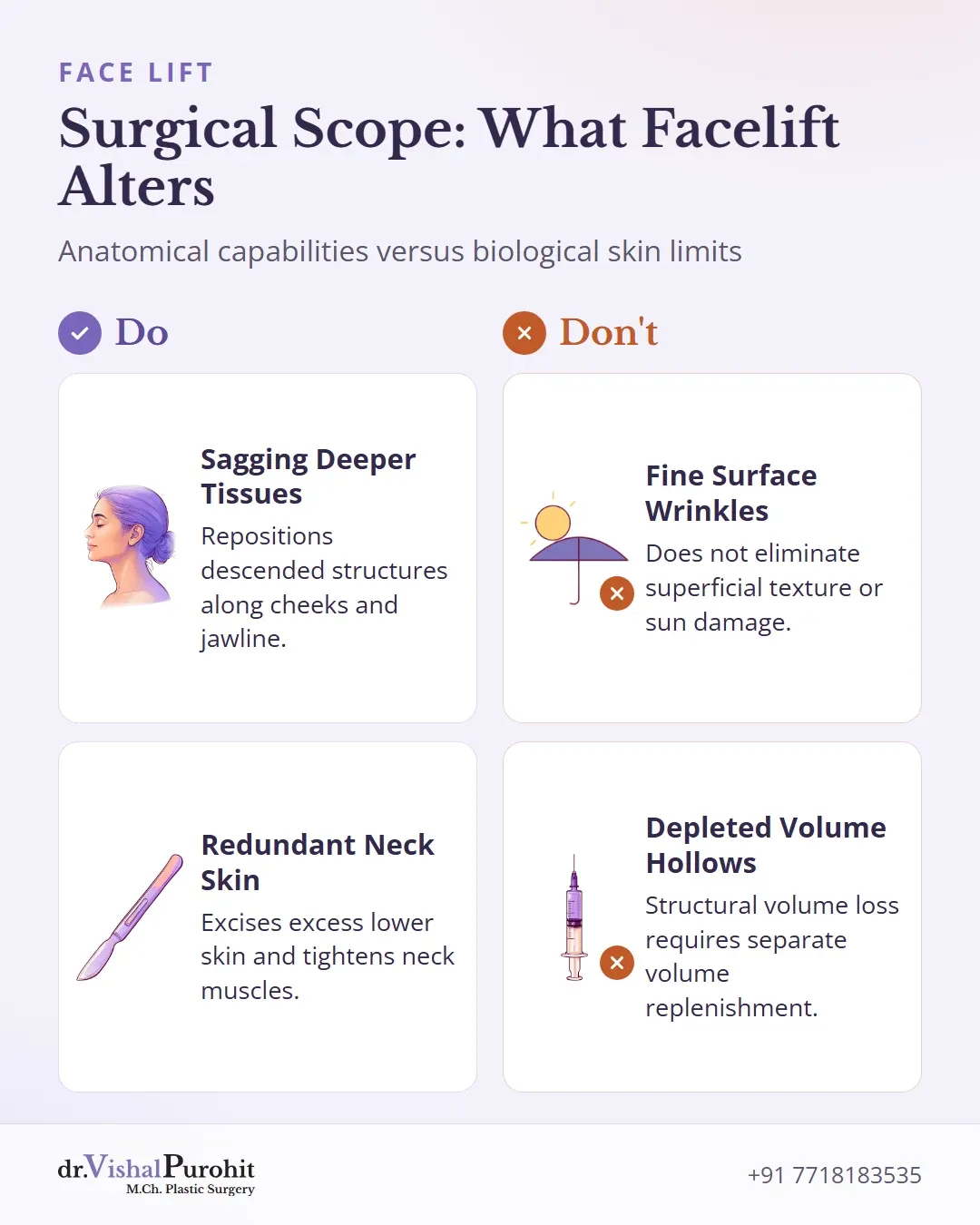
A facelift is designed specifically to correct tissue laxity and the gravitational descent of the lower face and neck789. The procedure repositions sagging deeper tissues and removes excess skin along the cheeks, jawline, and neck410.
Dr. Purohit’s note: In his practice in Jaipur, Dr. Vishal Purohit performs SMAS plication and suspension facelift surgery, incorporating cervicofacial platysmaplasty to tighten the neck muscles when indicated.
However, a face lift does not change the biological quality of the skin itself78. It does not eliminate fine surface wrinkles, sun damage, or pigment irregularities7811. Deep creases and lines formed by muscle movement or weather exposure are not erased by lifting surgery101112. Similarly, volume hollowing is distinct from sagging; while surgery repositions displaced tissue, structural volume loss requires separate volume management rather than stretching the skin under excessive tension28.
What a Facelift Does Not Change
A facelift repositions descending deeper structures and removes redundant skin, but it has defined anatomical limits. Understanding what surgical repositioning cannot alter helps patients plan appropriately for their facial rejuvenation goals.
Key points
- A facelift addresses structural laxity and sagging but does not restore depleted facial volume.
- Surface skin texture, sun damage, and dynamic expression lines around the mouth or eyes remain unchanged by surgical lifting alone.
- Volume loss and superficial skin concerns require separate surgical or non-surgical treatments for balanced rejuvenation.
Volume Loss and Skin Texture
Surgical lifting does not replace depleted facial volume13. While a face lift restores contour along the jawline and midface, deflated areas require separate restoration1314. In the practice of Dr. Vishal Purohit in Jaipur, fat grafting is not performed together with the facelift; when needed, it is carried out as a separate procedure a few months later. For patients seeking non-surgical volume replenishment, dermal fillers are also offered.
Similarly, surgical tension cannot correct surface skin texture or dynamic fine lines:
- Deep perioral rhytids around the mouth do not improve with a facelift15.
- Aging in the mouth and lip area is generally not corrected by standard surgical lifting techniques16.
- Creases caused by facial muscle action, including vertical lip wrinkles, forehead furrows, and lateral crow’s feet, remain unchanged by surgical lifting alone1214.
- Surgery is designed to address structural sagging and laxity, whereas surface wrinkles and sun-damaged skin quality require different modalities1213.
Patients with poor skin quality often require non-surgical approaches rather than surgery alone to achieve balanced rejuvenation13. Addressing deeper tissue descent does not alter superficial tissue changes, so individual treatment components must be matched to whether laxity, volume depletion, or surface wrinkling is the primary concern.
Eyelids and Brow Are Assessed Separately
A facelift corrects midfacial and lower facial laxity, but it produces little improvement in brow and periorbital descent14. It does not lift a low brow, nor does it remove hooded eyelid skin14. The upper third of the face ages through distinct anatomical shifts that require dedicated evaluation1417.
Upper Facial Assessment
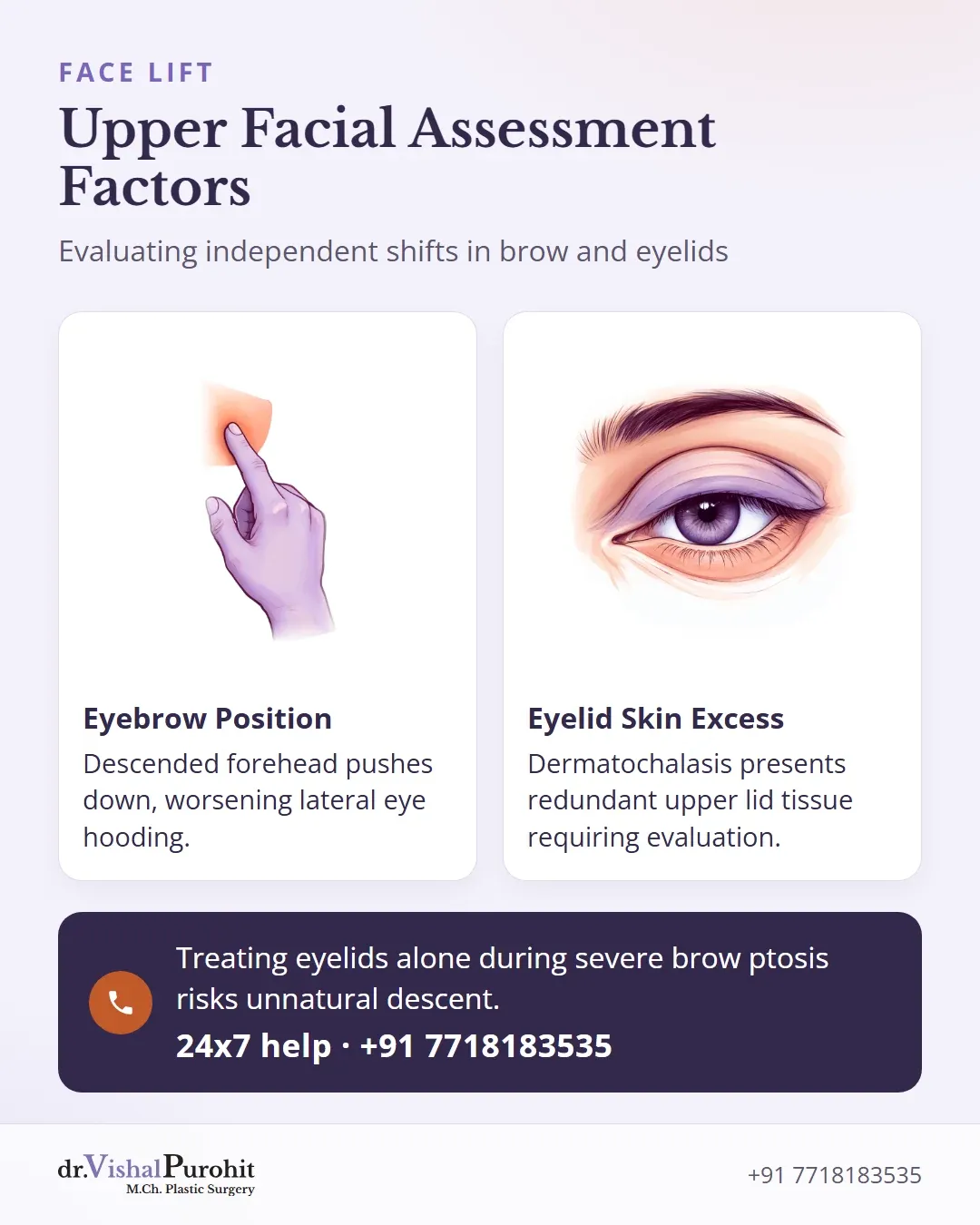
When assessing upper facial rejuvenation, the eyebrow and eyelid are evaluated independently:
- Brow position: A descended forehead or heavy eyebrow (brow ptosis) pushes downward and often contributes directly to lateral hooding over the eye1417.
- Eyelid skin excess: Dermatochalasis involves redundant upper eyelid tissue17. If severe brow ptosis is present, treating the eyelid alone without addressing the brow position can aggravate brow descent or lead to an unnatural look171819.
Combined and Staged Surgical Planning
In clinical practice in Jaipur, Dr. Vishal Purohit finds that blepharoplasty is the procedure most commonly combined with a facelift.
Combining eyelid surgery with a face lift allows multiple areas of facial ageing to be treated during the same operative journey. However, performing additional procedures simultaneously increases total operating time and alters the early recovery period.
Whether eyelid or brow procedures are performed together with a facelift or staged as separate procedures depends on individual tissue anatomy, surgical goals, and patient safety. Each plan is tailored during the initial consultation.
Fillers, Botox and Threads: Different Goals
Non-surgical treatments address specific signs of facial ageing, but each works through a distinct mechanism and none replicates the results of surgery. At his practice in Jaipur, Dr. Vishal Purohit offers dermal fillers, Botox, and thread lifts as non-surgical alternatives. The practice does not offer laser or skin resurfacing procedures.
How Non-Surgical Modalities Function
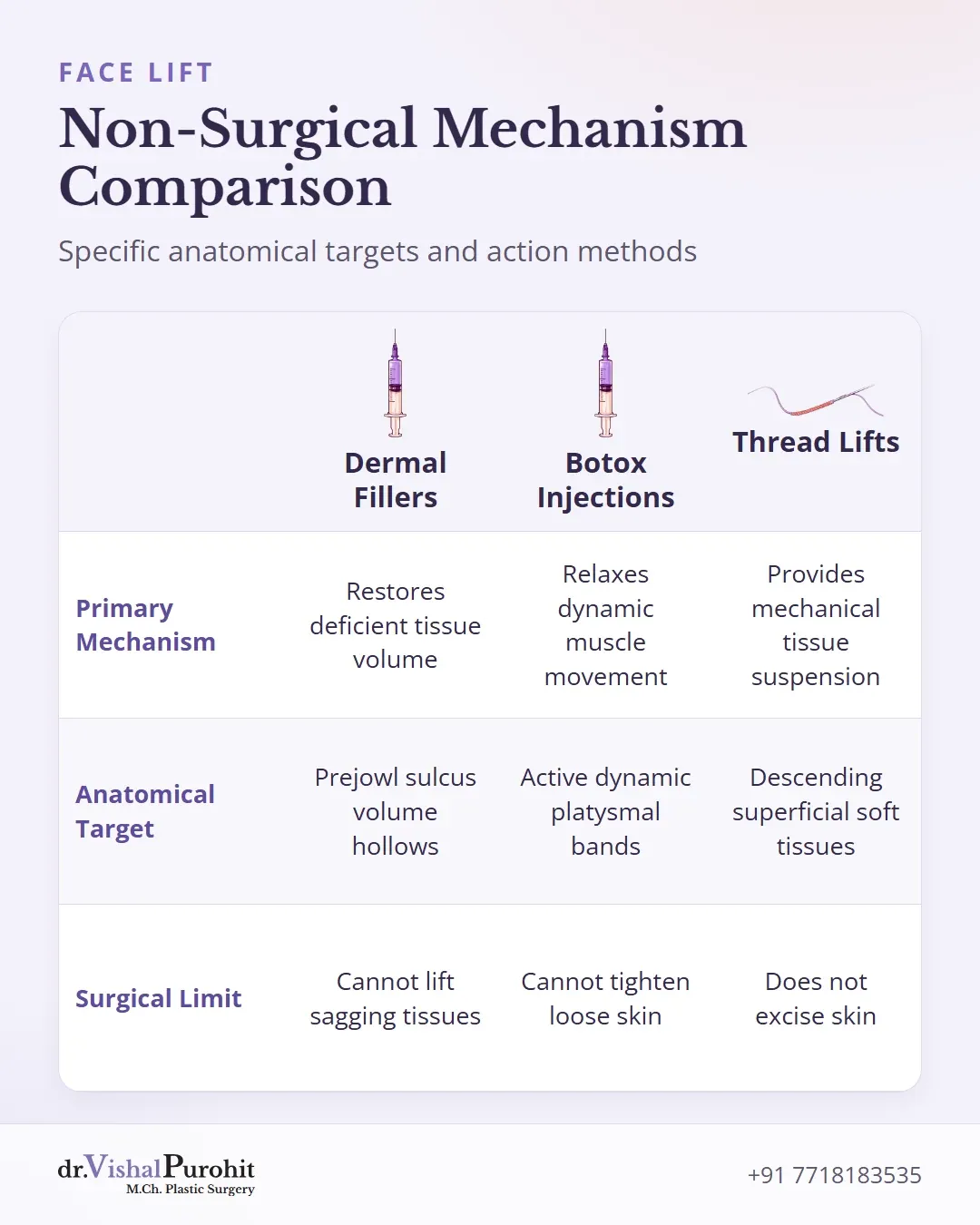
Each non-surgical option targets a particular anatomical concern:
Dermal Fillers
Injected to restore volume deficiencies in areas such as the prejowl sulcus or lateral jawline, helping camouflage mild jowling2021. They do not lift or excise sagging structures22.
Understanding the Boundaries of Non-Surgical Care
None of these modalities can remove redundant, stretched tissue or match the structural correction of a surgical procedure. In the literature, filler placed in the prejowl hollow can straighten a jawline contour, but significant jowl descent and loose skin ultimately require a facelift for definitive lifting and tissue repositioning2122.
Similarly, thread lifts offer temporary repositioning with less recovery time, but they provide a milder result rather than standard surgical longevity2729. For patients with prominent skin laxity, muscle diastasis, or severe descent, non-surgical options cannot substitute for a formal facelift and neck lift. Surgical candidates require an individual evaluation to determine whether structural surgery or targeted non-surgical rejuvenation aligns with their anatomical needs.
Choosing, Staging or Waiting
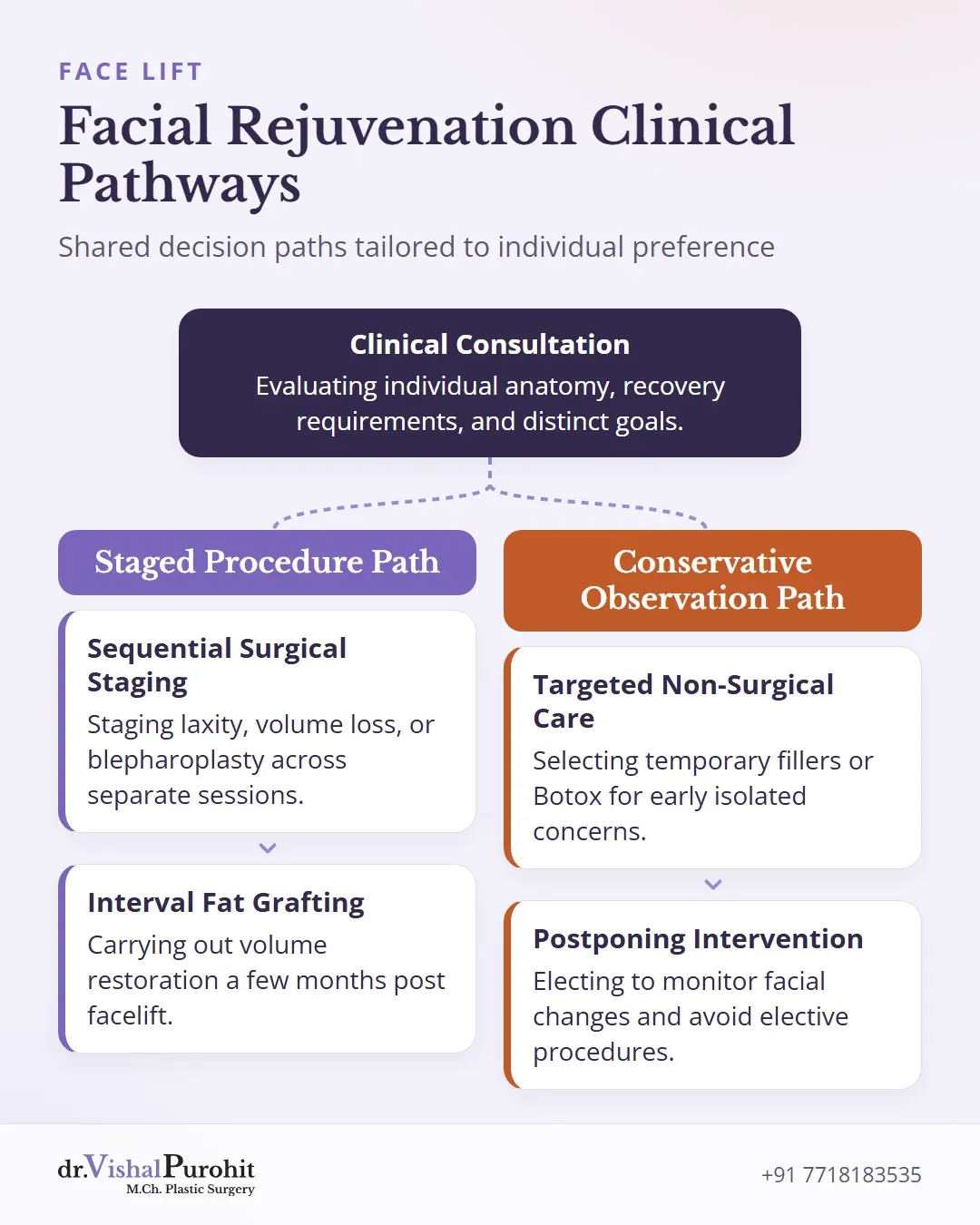
Facial rejuvenation is entirely elective, and deciding to wait or choose no procedure is always a reasonable option. Not every patient is an immediate candidate for comprehensive surgery, whether due to personal preferences, recovery time considerations, or medical reasons30. When care is undertaken, treatment can also be staged rather than completed all at once.
In Dr. Vishal Purohit’s practice in Jaipur, non-surgical options include dermal fillers, Botox, and thread lifts, while laser or skin resurfacing procedures are not offered. Furthermore, when fat grafting is indicated, it is not performed during the facelift itself; it is staged as a separate procedure a few months later. Eyelid surgery (blepharoplasty) is the procedure most commonly combined with a facelift in his surgical practice.
Patients often explore different paths to achieve their goals:
- Staging procedures over time to address volume loss, laxity, or eyelid changes sequentially.
- Choosing conservative non-surgical treatments to address specific early concerns31.
- Electing to monitor changes and postpone any intervention.
Shared decision-making allows individuals to evaluate risks, recovery, and alternatives collaboratively32. Because every approach carries distinct benefits and considerations, each surgical or non-surgical treatment requires its own independent informed consent32.
Facial Rejuvenation Consultations in Jaipur
Planning facial rejuvenation requires matching specific anatomical concerns to appropriate techniques, whether addressing deep tissue descent, volume depletion, or upper facial changes. To explore surgical options and non-surgical alternatives, read about facelift surgery in Jaipur and review common questions in our facelift FAQs before scheduling a consultation.
This is educational information, not medical advice.