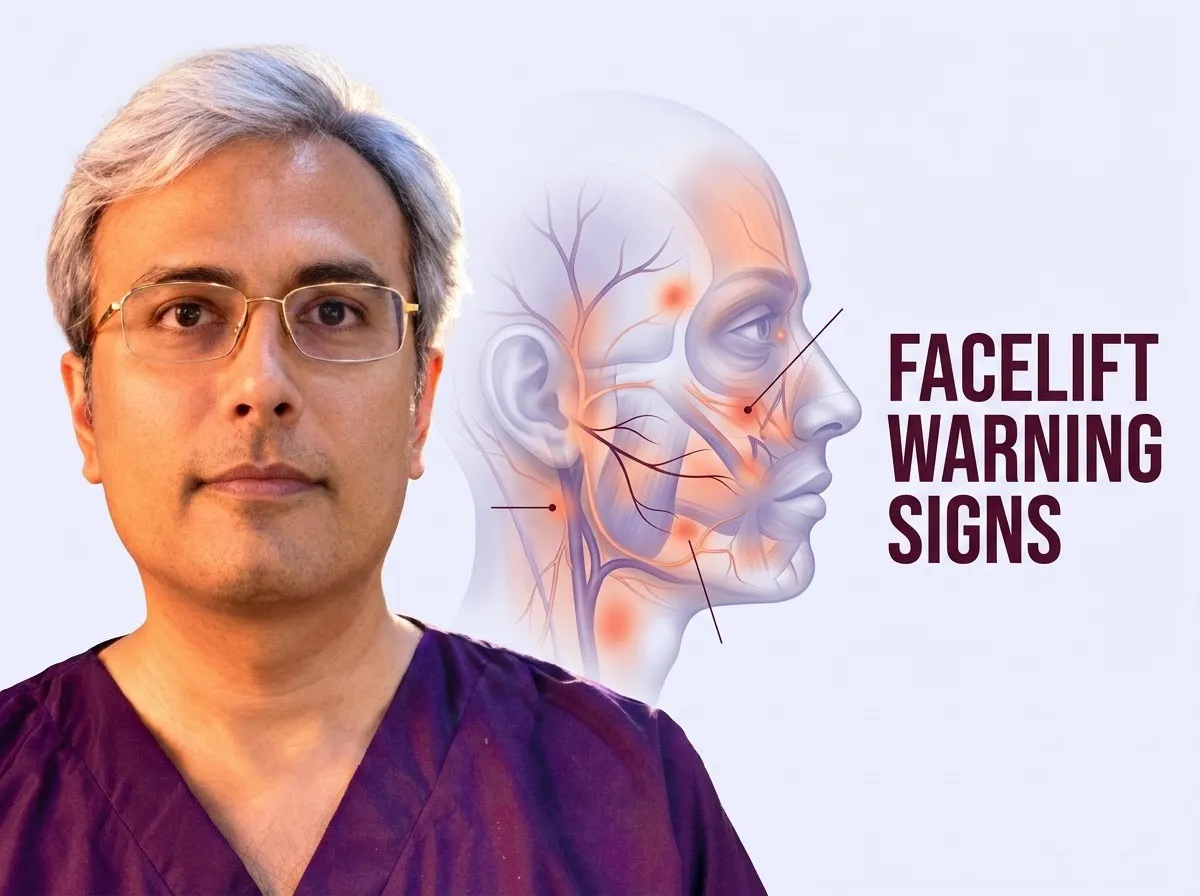
Healing after facial rejuvenation requires distinguishing expected tissue changes from acute complications. While minor puffiness and bruising resolve gradually, sudden or asymmetric changes require immediate clinical attention to protect healing tissues.
Dr. Vishal Purohit advises patients undergoing facelift surgery in Jaipur to promptly report severe pain or expanding hematomas for timely clinical evaluation.
Understanding postoperative recovery timelines helps patients monitor their progress safely at home. For practical guidance on typical downtime, read about Facelift Recovery: Swelling, Work and Return to Activity alongside these critical safety indicators.
Expected Bruising Versus Swelling That Keeps Getting Worse
Facial procedures naturally involve bruising and swelling because of the extensive vascular supply in the face1. Mild to moderate puffiness, surface discoloration, and a feeling of tissue tightness are common during early healing12. However, the exact extent remains highly variable between individuals depending on general health and personal healing tendencies13.
Recognising Normal Healing
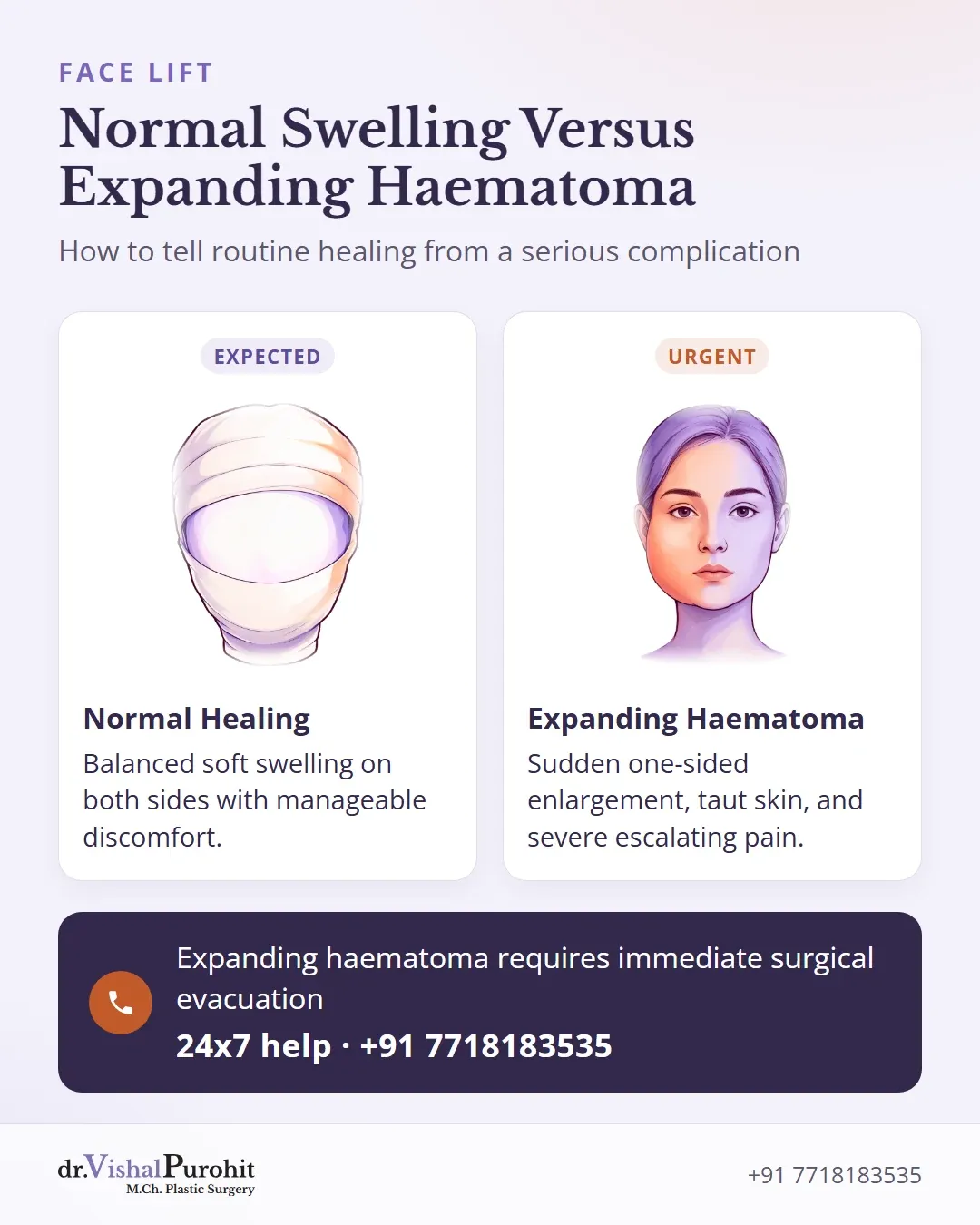
Normal postoperative swelling usually affects both sides of the face relatively evenly and remains manageable in discomfort. While discoloration can spread downward and look noticeable, it stays soft to the touch and does not rapidly expand2. In Dr. Vishal Purohit’s practice in Jaipur, patients stay in the hospital for 48 hours under observation, where early recovery changes are monitored.
Warning Signs of a Developing Haematoma
A serious issue such as an expanding haematoma presents very differently from routine healing. It typically develops within hours following surgery, marked by rapid changes rather than steady, expected swelling456.
Key differences indicating a complication include:
Normal Healing
- Swelling affects both sides of the face relatively evenly.
- Discoloration stays soft to the touch and does not rapidly expand2.
- Manageable discomfort rather than escalating pain.
Developing Haematoma
- Sudden enlargement on one side of the face rather than balanced swelling57.
- Skin that feels tense or taut, resembling a full water balloon7.
- Severe, escalating pain or an intense feeling of pressure that does not settle567.
- Active, fresh bleeding that breaks through dressings or drains from incision edges457.
- Loss of the distinct edge along the lower jawline or neck fullness on the affected side478.
- Difficulty closing the mouth if clotted blood tracks into deeper tissue spaces67.
For any warning sign after a facelift, such as rapidly increasing one-sided swelling, call the surgical team immediately on +91 7718183535.
Call the surgical team immediately if you notice sudden enlargement on one side of the face, skin resembling a full water balloon, severe escalating pain or pressure, active bleeding from incision edges, loss of the lower jawline edge on the affected side, or difficulty closing the mouth.
Haematoma: The Complication to Act On Quickly
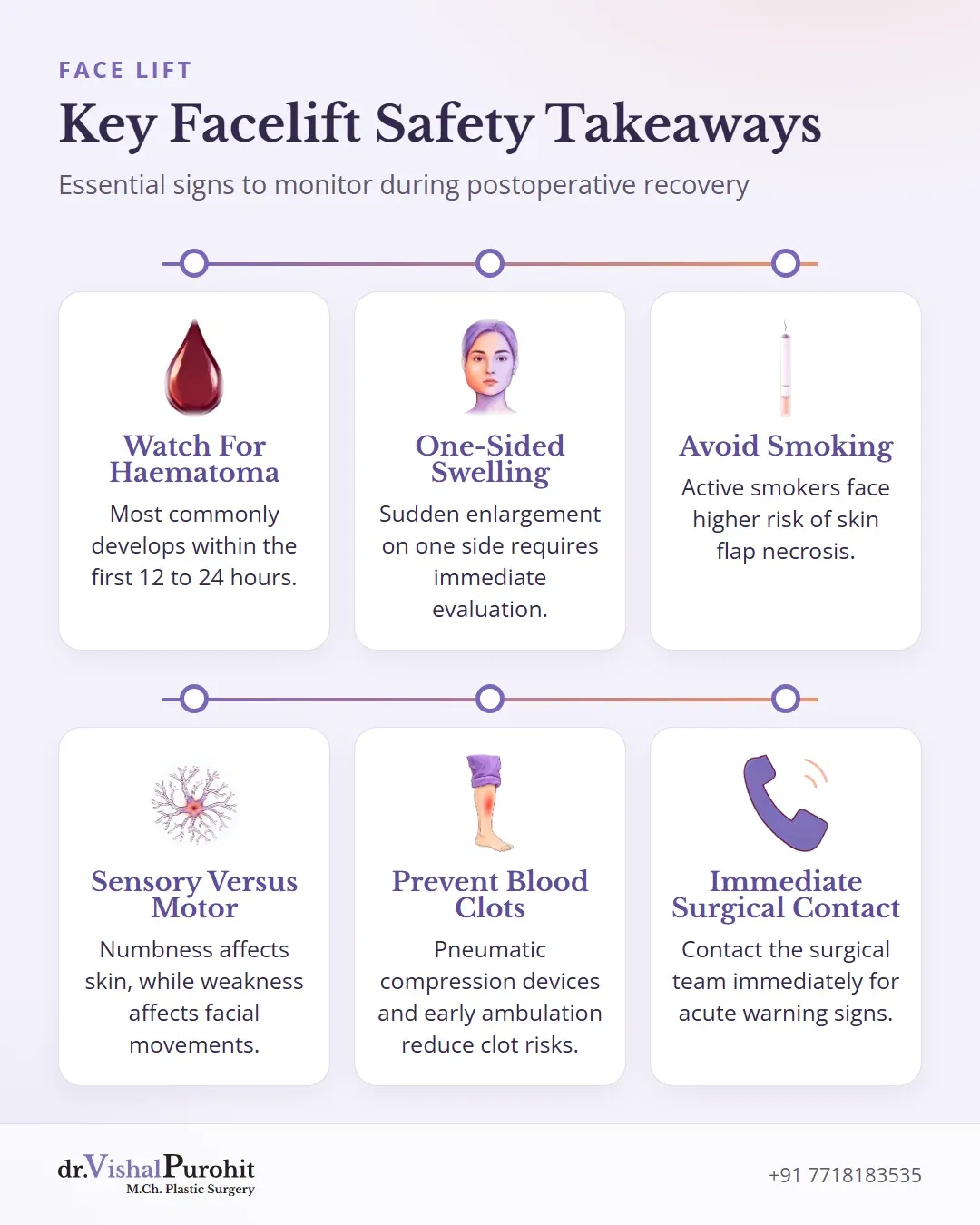
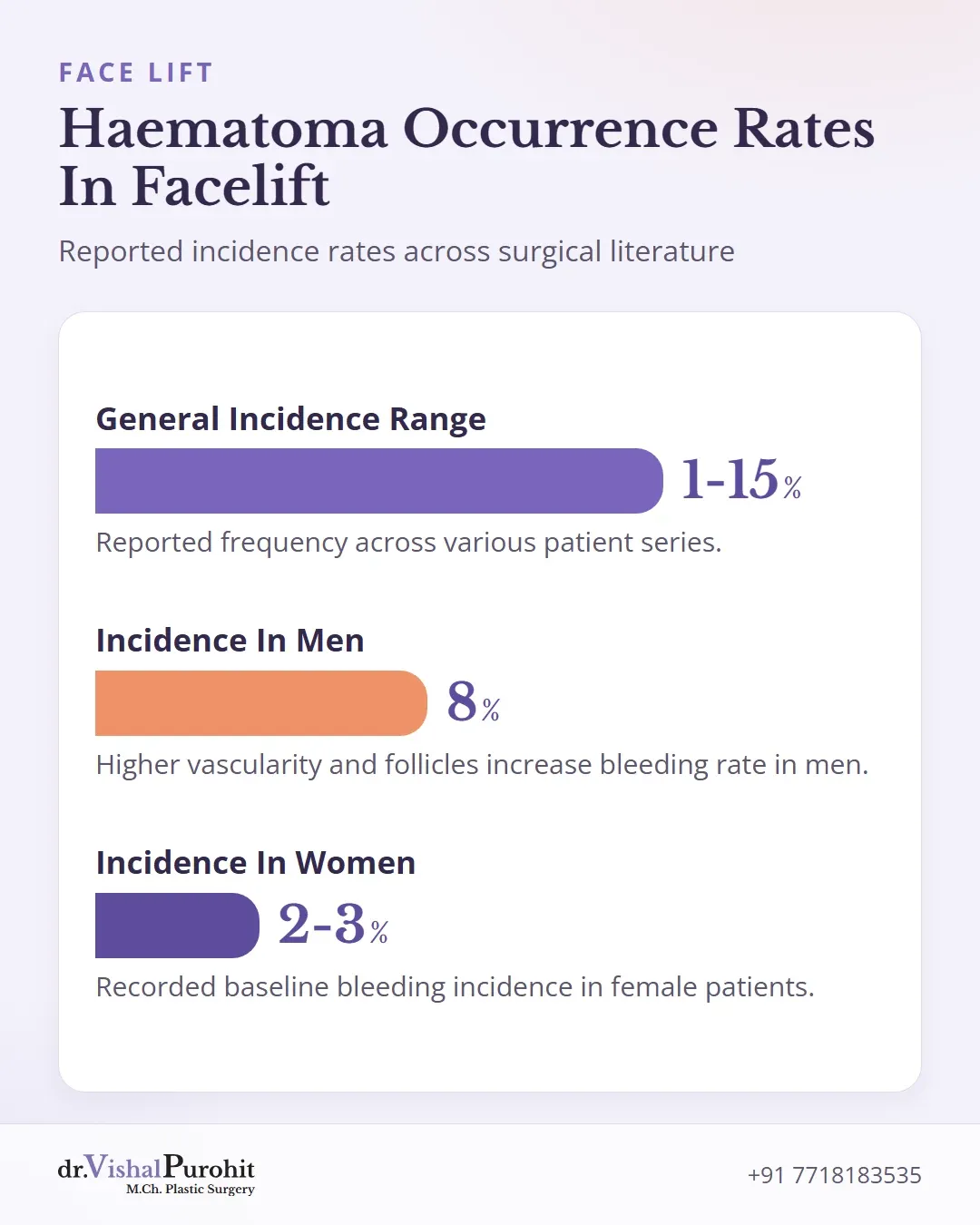
A haematoma is a collection of blood that pools under the skin flaps after surgery910. In surgical literature, it represents the most frequent early complication following a facelift, with overall rates generally recorded between 1% and 15% across various patient series1011121314. It most commonly develops within the first 12 to 24 hours postoperatively131516.
Key points
- Haematoma is the most common early complication after facelift, occurring in 1–15% of cases, usually within 12–24 hours.
- Key risk factors include uncontrolled hypertension, male sex, bleeding disorders, blood thinners, and straining.
- An expanding haematoma causes rapid pain and one-sided swelling; urgent surgical evacuation is needed to prevent skin necrosis.
Recognized Risk Factors
Surgical studies consistently identify key factors that increase the risk of bleeding beneath the skin:
- High blood pressure (hypertension), especially when uncontrolled before or after surgery1112131417.
- Male sex, due in part to greater blood supply across facial tissues and hair follicles11131417. Reported rates reach around 8% in men compared to 2% to 3% in women15.
- Preexisting bleeding disorders or coagulopathies12131417.
- Blood-thinning agents, including aspirin, non-steroidal anti-inflammatory drugs (NSAIDs), and vitamin E121314.
- Episodes of retching, vomiting, or coughing that elevate pressure in facial blood vessels1014.
In surgical research, the antifibrinolytic drug tranexamic acid has been explored both intravenously and locally to help preserve clotting and reduce bleeding during face lift procedures18192021. The literature notes that while it may reduce operative bleeding and bruising, universal standardized protocols remain under discussion1921.
Why an Expanding Haematoma Needs Urgent Care
A major or expanding haematoma usually presents with rapidly increasing pain and noticeable one-sided facial or neck swelling101315. If blood continues to pool without prompt decompression, pressure beneath the skin can compromise blood circulation, which may lead to skin flap necrosis91013.
Patients must never attempt self-drainage, massage, or changes to medication. Formal evaluation allows the surgeon to assess the surgical site and, when necessary, perform formal evacuation and secure bleeding vessels1315.
Infection, Wound Healing Problems and Skin Loss
Infection after a facelift is uncommon, with reported incidence rates ranging from 0.18%22 to 2%2324. Most surgical site infections appear around 5 to 7 days after surgery, most frequently along the periauricular incisions2324. The most common bacterial organisms isolated in these cases are Staphylococcus aureus and Pseudomonas aeruginosa2324.
Warning Signs of Infection and Poor Healing
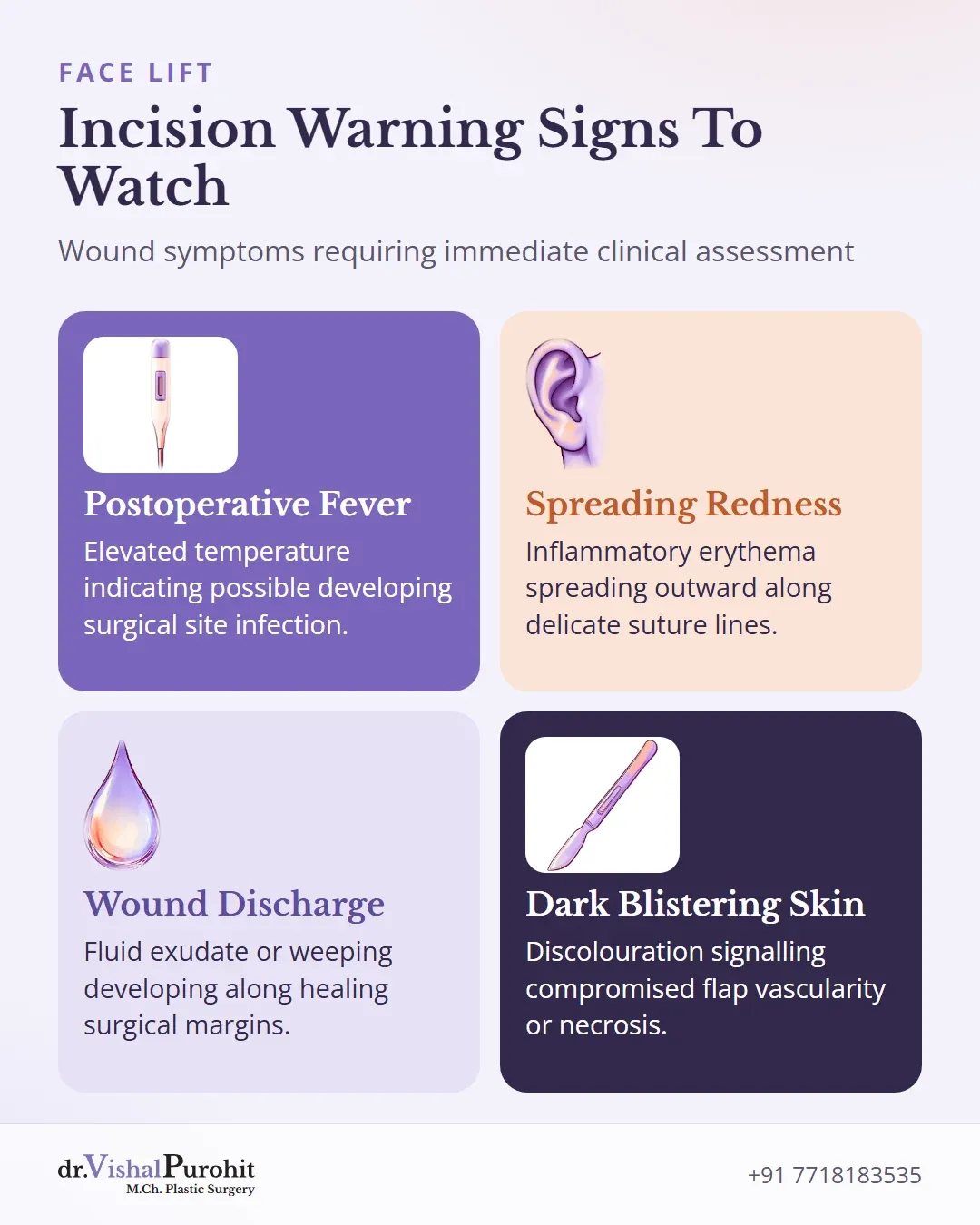
Patients should monitor their incisions closely during recovery. Symptoms that require immediate clinical assessment include:
- Fever25
- Spreading redness or inflammatory swelling around the suture lines232526
- Wound discharge or fluid exudate23
- Dark, discoloured, or blistering skin along the incision margins, which can signal compromised blood supply or necrosis2327
Untreated collections of fluid or deep infections can compromise the vascular supply to overlying skin flaps, potentially resulting in skin slough or delayed healing2527.
Tobacco Use and Skin Flap Survival
Smoking and nicotine exposure represent major risk factors for wound breakdown and flap necrosis after a face lift272829. Nicotine impairs microvascular circulation by constricting blood flow2930. In clinical studies, active smokers experienced a 10-fold29 to 12.5-fold31 or 13-fold27 higher risk of skin flap necrosis compared to non-smokers. Excessive tension on skin closures and very thin flaps also elevate the risk of tissue loss2728.
Numbness Versus Facial Weakness
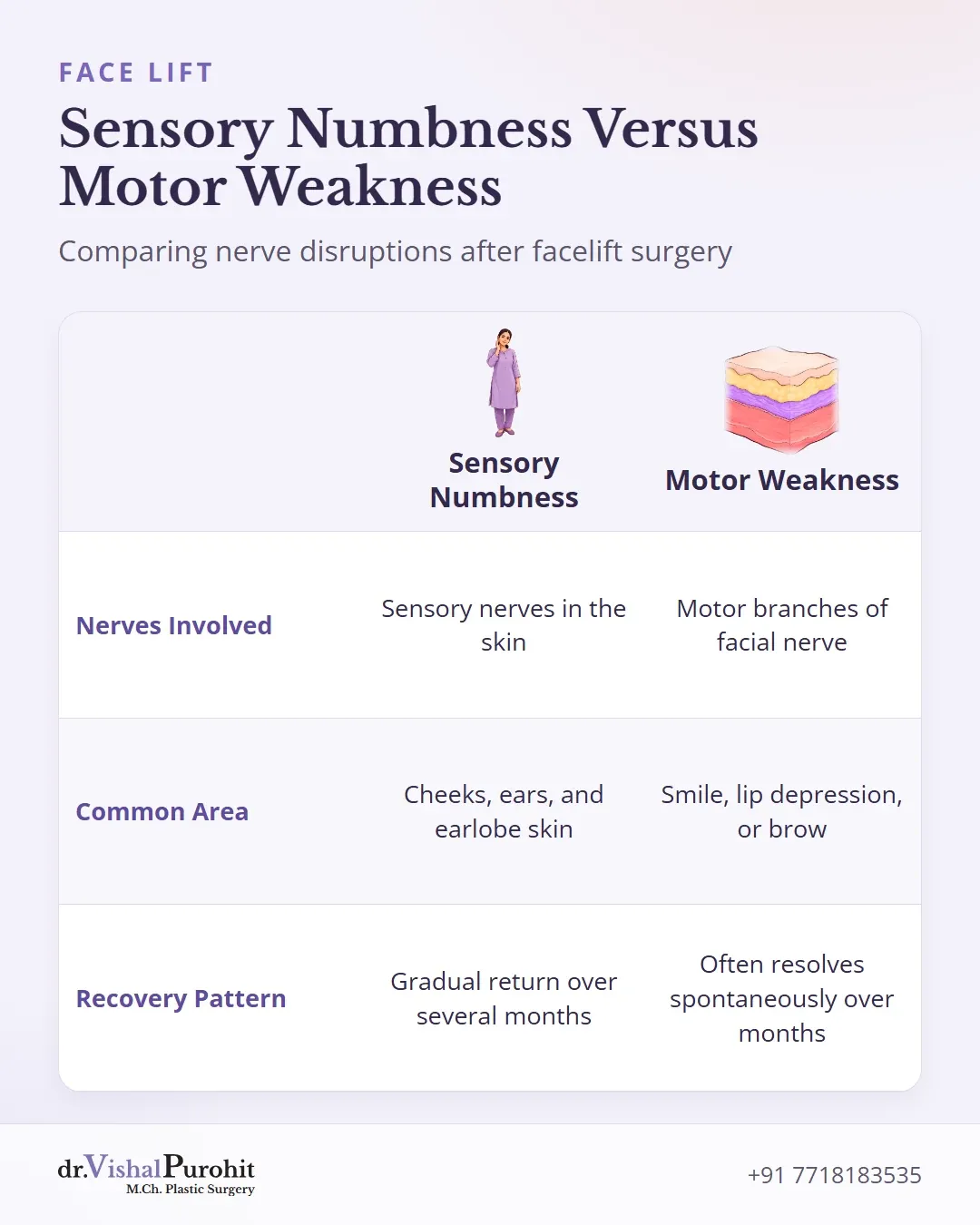
After a facelift operation, disruptions to sensory nerves in the skin inevitably occur, and numbness may persist for months3233. In contrast, facial weakness involves motor nerves that control facial expressions3435. Understanding the distinction between these two experiences helps patients monitor their recovery accurately.
Sensory Changes: Numbness
Sensation changes typically affect the skin rather than facial motion:
- Common areas: numbness of the cheeks and ears is a known occurrence following surgery3233.
- Sensory nerves: the great auricular nerve provides sensibility to the skin of the lower ear and earlobe3233. Transection or injury can cause numbness across the earlobe or lower ear, and occasionally a painful neuroma32343637.
- Course: normal sensibility gradually returns as sensory nerve branches recover3233.
Motor Changes: Facial Weakness
Facial weakness affects voluntary muscle movement and animation35:
- Motor nerves: inadvertent injury or neuropraxia can affect branches of the facial nerve, such as the marginal mandibular, zygomatic, or buccal branches3435.
- Symptoms: injury to these branches can alter the smile, impair lower lip depression, or affect the brow and oral commissure34383940.
- Course: motor nerve weakness often resolves spontaneously over weeks or months3539.
Recovery Expectations and Warning Signs
Neither permanent injury nor full return of function should be presumed for an individual patient35. While most motor weakness improves spontaneously, return of complete function cannot be promised35.
Dr. Purohit’s note: In Dr. Purohit’s practice in Jaipur, numbness and temporary facial weakness usually last from a few weeks to about 2 months.
A patient should contact the surgical team if they notice new or worsening facial weakness.
Anaesthesia, Blood Clots and General Health Risks
A facelift is always performed under general anaesthesia in Dr. Vishal Purohit’s practice in Jaipur. Patients must observe 6 hours of fasting prior to receiving general anaesthesia.
General anaesthesia ensures complete comfort during extensive facial work, but it also immobilises the body41. Large studies show that venous thromboembolism is an uncommon complication in face and neck surgery42. Across major patient series, deep venous thrombosis occurs in 0.1% to 0.35% of facelift cases, while pulmonary embolism occurs in 0% to 0.14%43. In an assessment by Reinisch and colleagues, the deep venous thrombosis rate was 0.35% and pulmonary embolism was 0.14%, with almost all events occurring when procedures were done under general anaesthesia42. Prolonged operating times and combined procedures also increase this risk4143.
Medical Checks and Clot Prevention
To protect patient safety, pre-existing health conditions and risk factors are thoroughly reviewed before surgery4144:
- History of prior blood clots or inherited clotting disorders4445
- Obesity, higher body weight, or smoking4445
- Recent use of oral contraceptives or hormone replacement therapy444546
- Medications that influence platelet function, which can trigger haematoma formation41
During surgery, mechanical methods help maintain circulation. Studies recommend intermittent lower-extremity pneumatic compression devices and early ambulation to reduce clot risks4347. In contrast, preventive blood-thinning medications in facelift patients carry a significant risk of postoperative bleeding without showing an added reduction in clot formation4347.
Who to Call and When
Recognising postoperative complications early allows for prompt medical intervention. After a facelift, patients should remain observant of acute changes rather than waiting for scheduled follow-up visits.
In the practice of Dr. Vishal Purohit in Jaipur, the protocol for any postoperative warning sign is direct and singular: contact the surgical team immediately.
Symptoms Requiring Immediate Attention
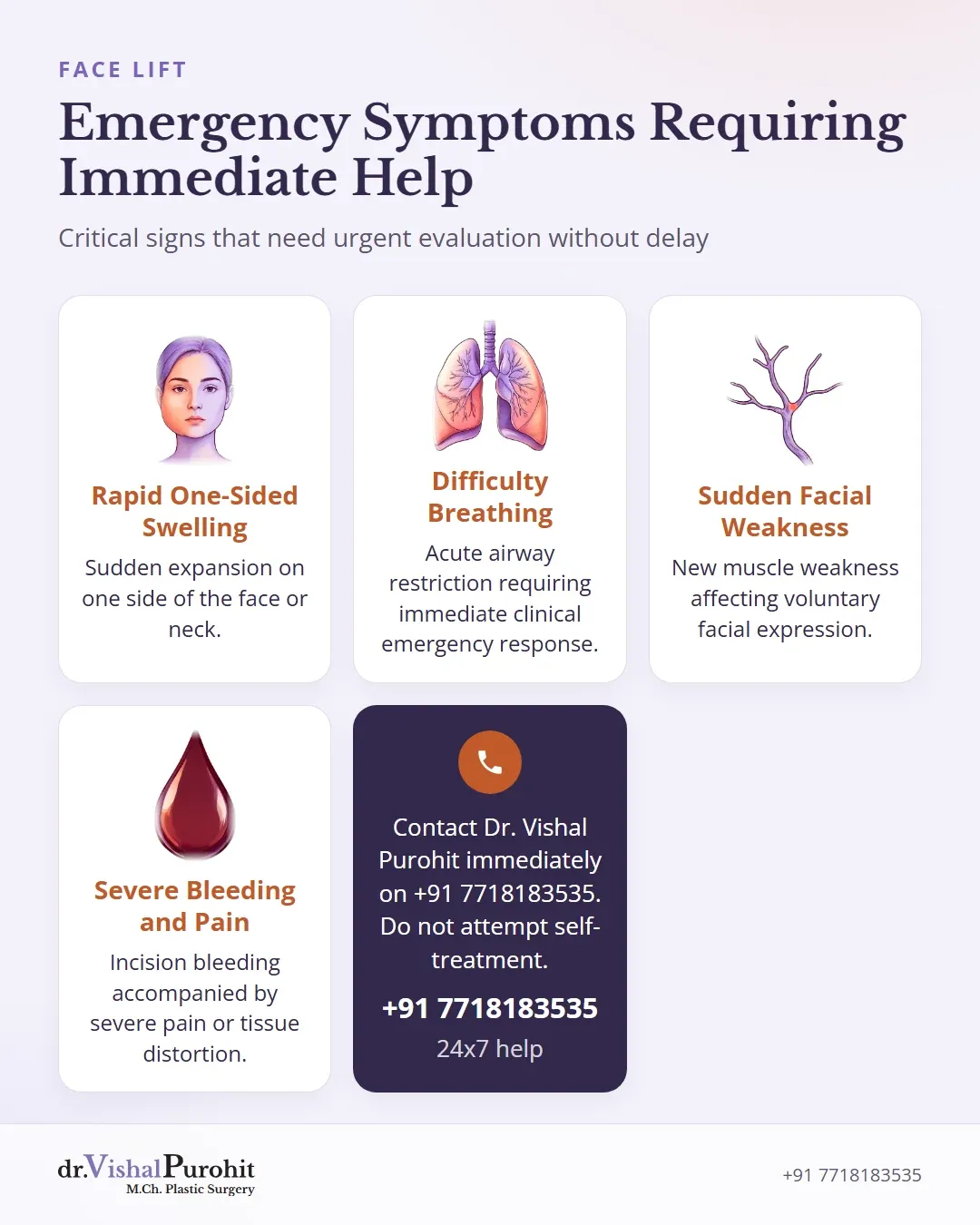
An enlarging haematoma is a surgical emergency, and patients must seek contact immediately if rapid swelling develops48. Patients and their caregivers should contact the surgical team without delay if they notice any of the following:
- Sudden or rapid swelling on one side of the face or neck
- Difficulty breathing
- New or sudden facial weakness
- Bleeding from incision sites accompanied by facial distortion or severe unilateral pain5
Postoperative patients receive individual discharge contact instructions. While numbness and temporary facial weakness are expected during early recovery, any sudden deterioration requires urgent professional assessment. Patients should not attempt self-treatment for acute swelling or bleeding, nor should they alter prescribed medications without direct instruction.
Urgent Postoperative Support and Consultation in Jaipur
Recognising postoperative complications early protects your surgical outcome and general health. For a comprehensive overview of candidacy, surgical techniques, and consultation details, explore facelift surgery in Jaipur. To understand typical recovery questions and planning, review our detailed facelift FAQs. For any immediate warning sign during recovery, contact the surgical team directly.
This is educational information, not medical advice.