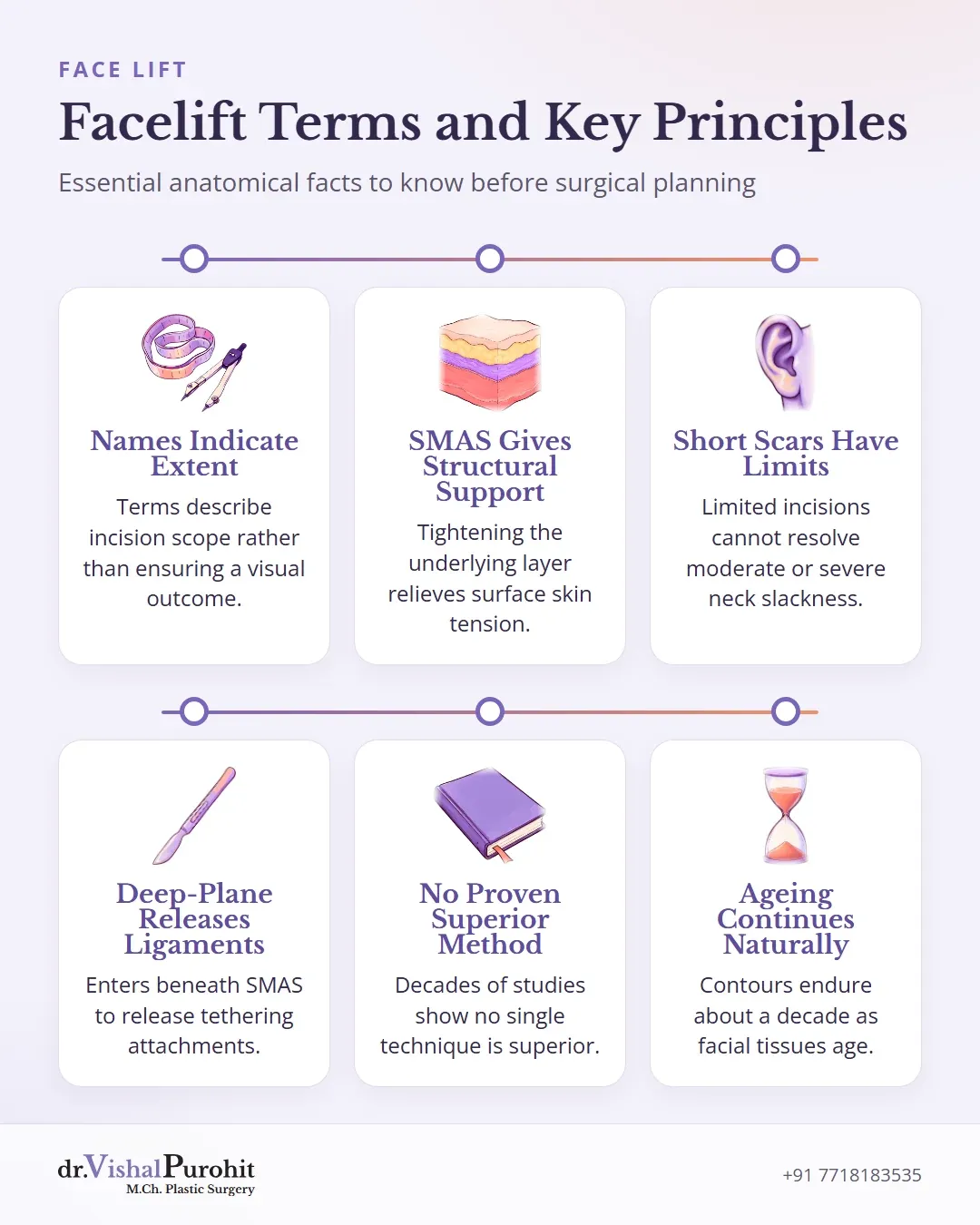
Facial rejuvenation terminology often creates confusion for individuals evaluating surgical possibilities. Descriptive names typically indicate the specific tissue depth or the incision scope rather than ensuring a particular visual outcome.
When evaluating these anatomical approaches for facelift surgery in Jaipur, Dr. Vishal Purohit assesses facial structure and tissue mobility to determine which surgical plane will address individual aging changes.
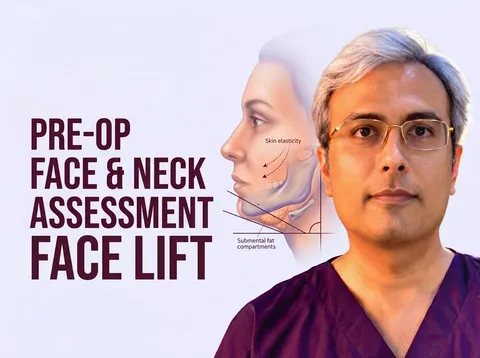
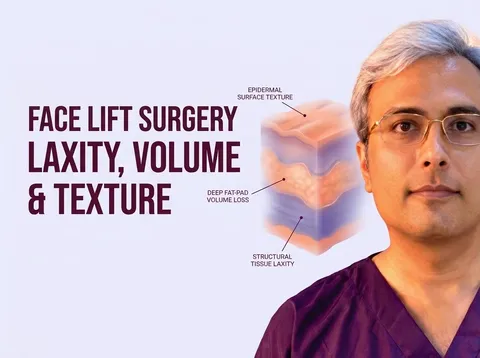
Understanding structural anatomy helps clarify why supporting deeper tissues remains essential for balanced facial rejuvenation. In clinical practice, evaluating individual tissue laxity and skin elasticity determines the appropriate operative design, as detailed in what is assessed before a face and neck lift.
Mini and Full Describe Extent, Not Results
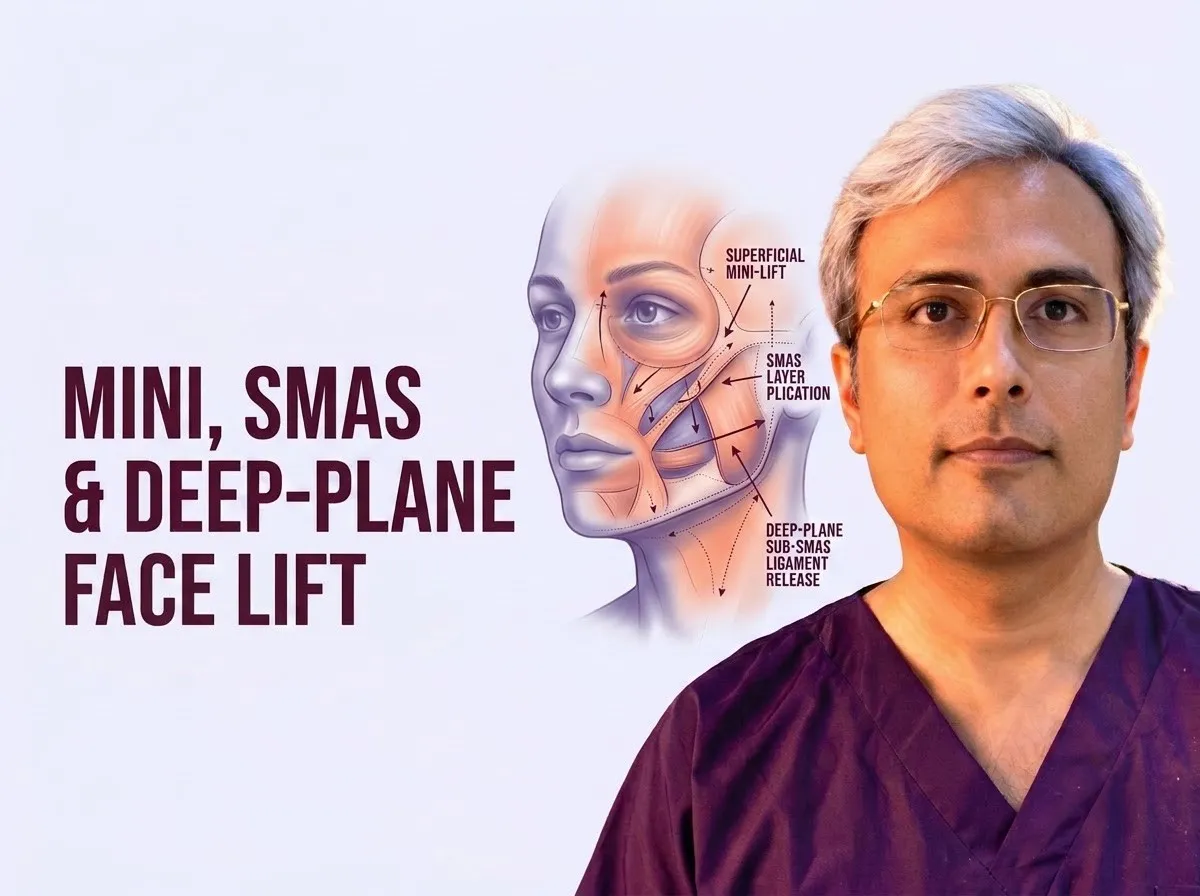
In facial surgery, descriptive terms such as mini or full refer to the anatomical extent of the dissection and incisions, not a promised standard of outcome. A mini or short-scar procedure is designed for patients with limited lower-face laxity, mild jowl formation, and minimal excess skin along the neck12. In contrast, a conventional or full face lift incorporates longer incisions around and behind the ear to address broader age-related changes across the midface, lower face, and neck134.
Understanding Procedure Scope
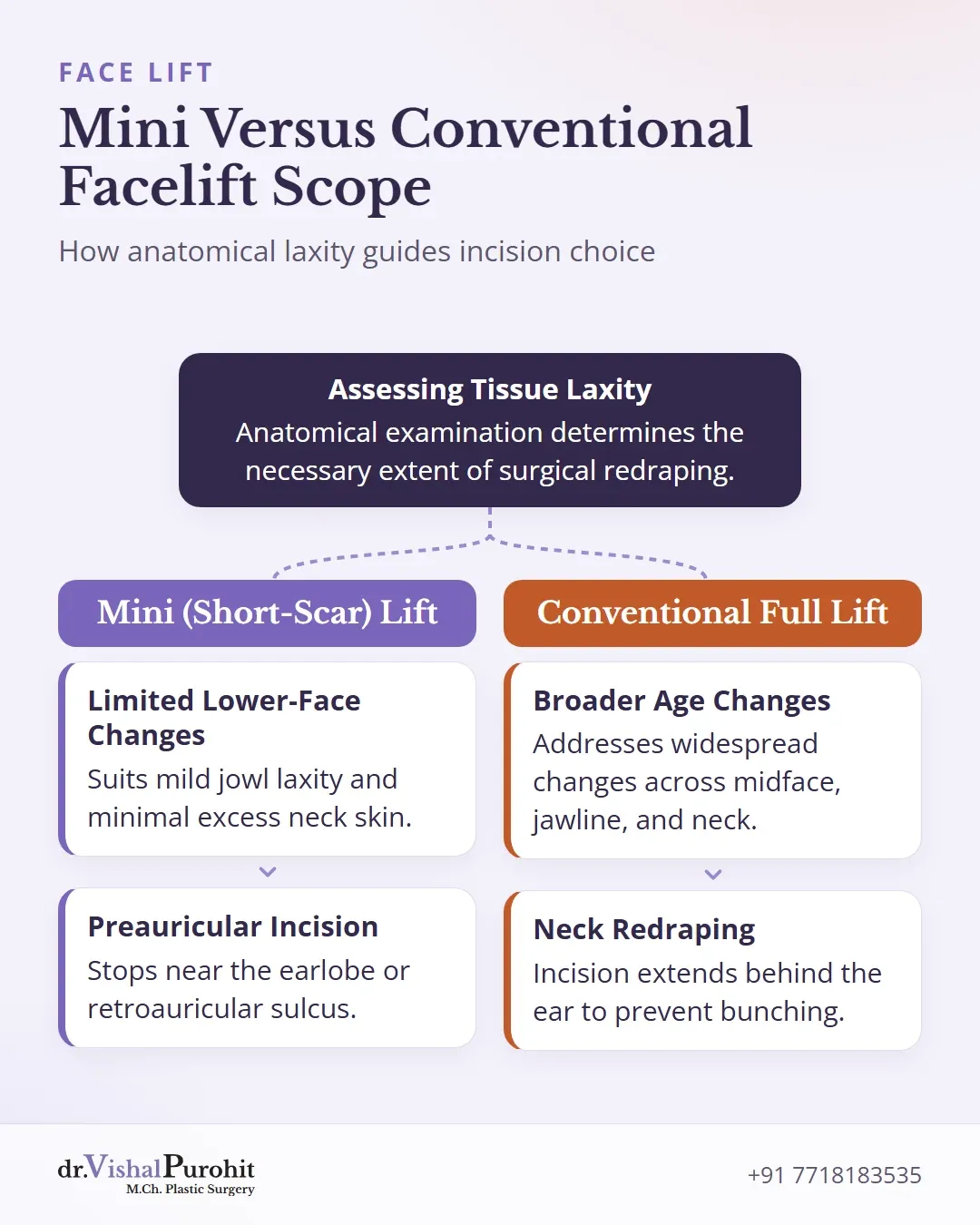
A short-scar approach limits the incision to the temple and preauricular areas, stopping near the earlobe or retroauricular sulcus34. While this reduces the scar footprint, it also restricts how much skin and underlying tissue can be redistributed45.
Literature highlights several specific considerations regarding procedure scope:
- Short-scar lifts suit younger individuals or those with early jowl laxity and little submental slackness12.
- Attempting to manage moderate to advanced neck skin laxity through a short incision can lead to skin bunching or vertical pleats behind the ear46.
- A smaller incision does not translate into superior tightening; limited procedures generally produce smaller anatomical changes and may not last as long as conventional techniques26.
Dr. Purohit’s note: In his practice in Jaipur, Dr. Vishal Purohit performs SMAS plication and suspension facelift surgery, incorporating cervicofacial platysmaplasty for the neck when indicated.
Choosing a surgical plan depends on clinical examination rather than marketing terminology. Abbreviated operations cannot substitute for comprehensive redraping when significant excess skin involves the neck and jawline17.
What the SMAS Is and Why It Is Lifted
The superficial musculoaponeurotic system, commonly known as the SMAS, is a continuous structural layer of tissue beneath the facial skin89. Originally described by Mitz and Peyronie in 19769, this layer connects with the platysma muscle in the neck8 and acts as a firm foundation for the overlying facial tissues910.
Key points
- The SMAS is a deep structural tissue layer that provides a firm foundation beneath facial skin.
- Tightening the SMAS repositions sagging tissues without placing tension on the skin.
- Lifting the SMAS rather than the skin alone lets the skin close without tension, which helps the result look natural.
Facial skin is naturally elastic and serves as an outer covering rather than a support structure10. When deeper tissues descend with age, lifting the skin alone cannot provide sustained support10. In modern face lift surgery, tightening the inelastic SMAS layer repositions sagging fat and restores facial contour, allowing the overlying skin to be redraped under normal tension without a pulled appearance101112.
Skin-Only Lifts Versus SMAS Techniques
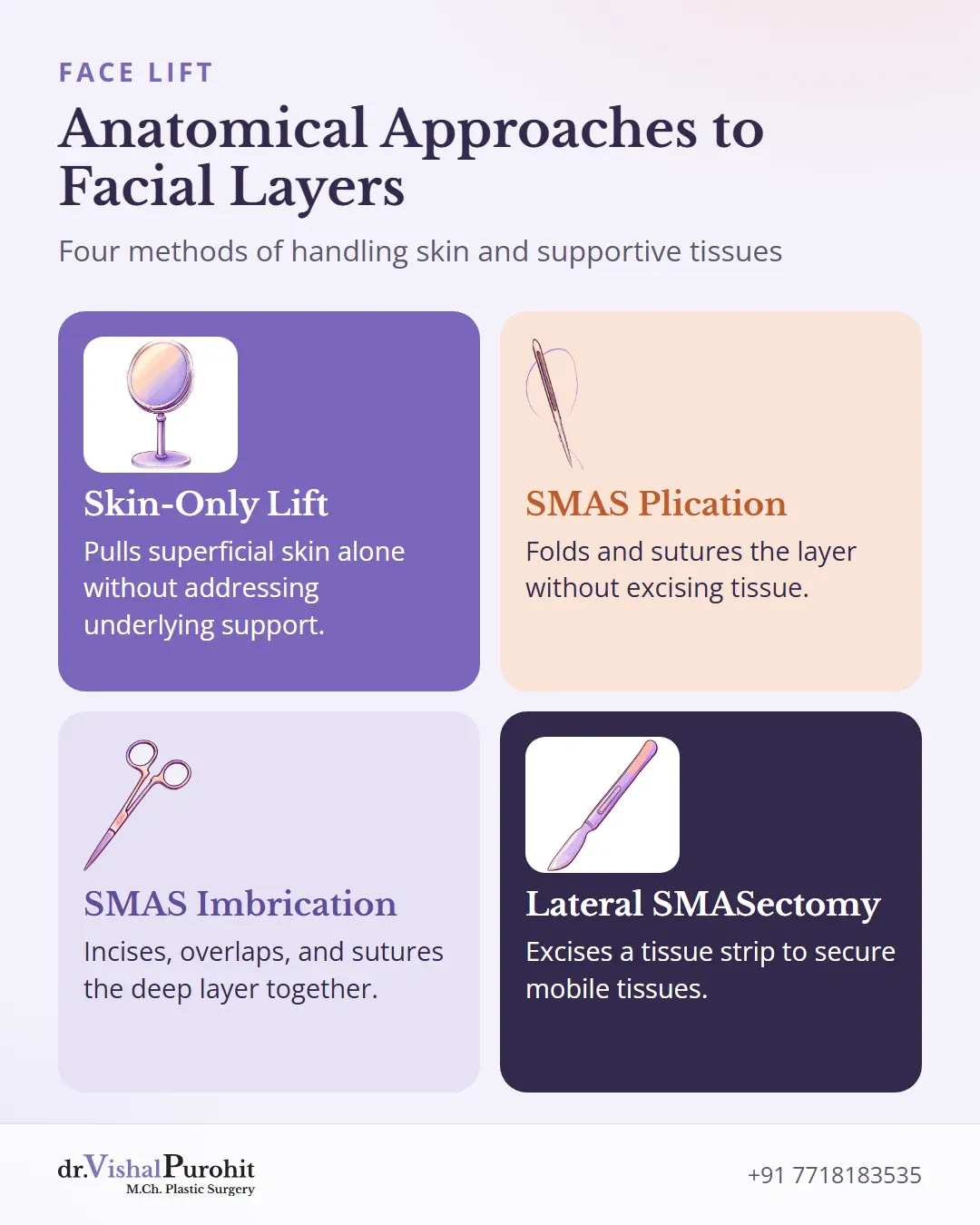
Surgical techniques manage these anatomical layers in distinctly different ways:
- Skin-only lift: Only the skin is elevated and pulled1213. Because deeper tissues remain unaddressed, it carries a risk of early recurrence and can result in an unnatural, tight look1213.
- SMAS plication: The SMAS layer is folded and sutured over itself without excising tissue81213. This preserves soft tissue bulk and provides structural lift13.
- SMAS imbrication: The SMAS layer is incised, overlapped, and sutured together812.
- Lateral SMASectomy: A defined strip of SMAS tissue is excised, and the cut edges are sutured to secure mobile tissues to fixed structures121314.
Supporting the deeper SMAS layer protects the skin flaps from tension, preserving facial contours and extending surgical longevity10.
Deep-Plane Facelift
A deep-plane facelift enters the tissue plane beneath the superficial musculoaponeurotic system (SMAS) to mobilise deeper facial layers1516. Rather than relying on tension applied to the skin, this method focuses on releasing retaining ligaments that tether facial tissues to underlying facial structures151718.
Key points
- A deep-plane facelift mobilises tissues beneath the SMAS by releasing facial retaining ligaments.
- Releasing these ligaments allows the composite tissue flap to be repositioned without surface skin tension.
- Comparative studies show mixed results between deep-plane and SMAS-based techniques without consensus on superiority.
Ligament Release Under the SMAS
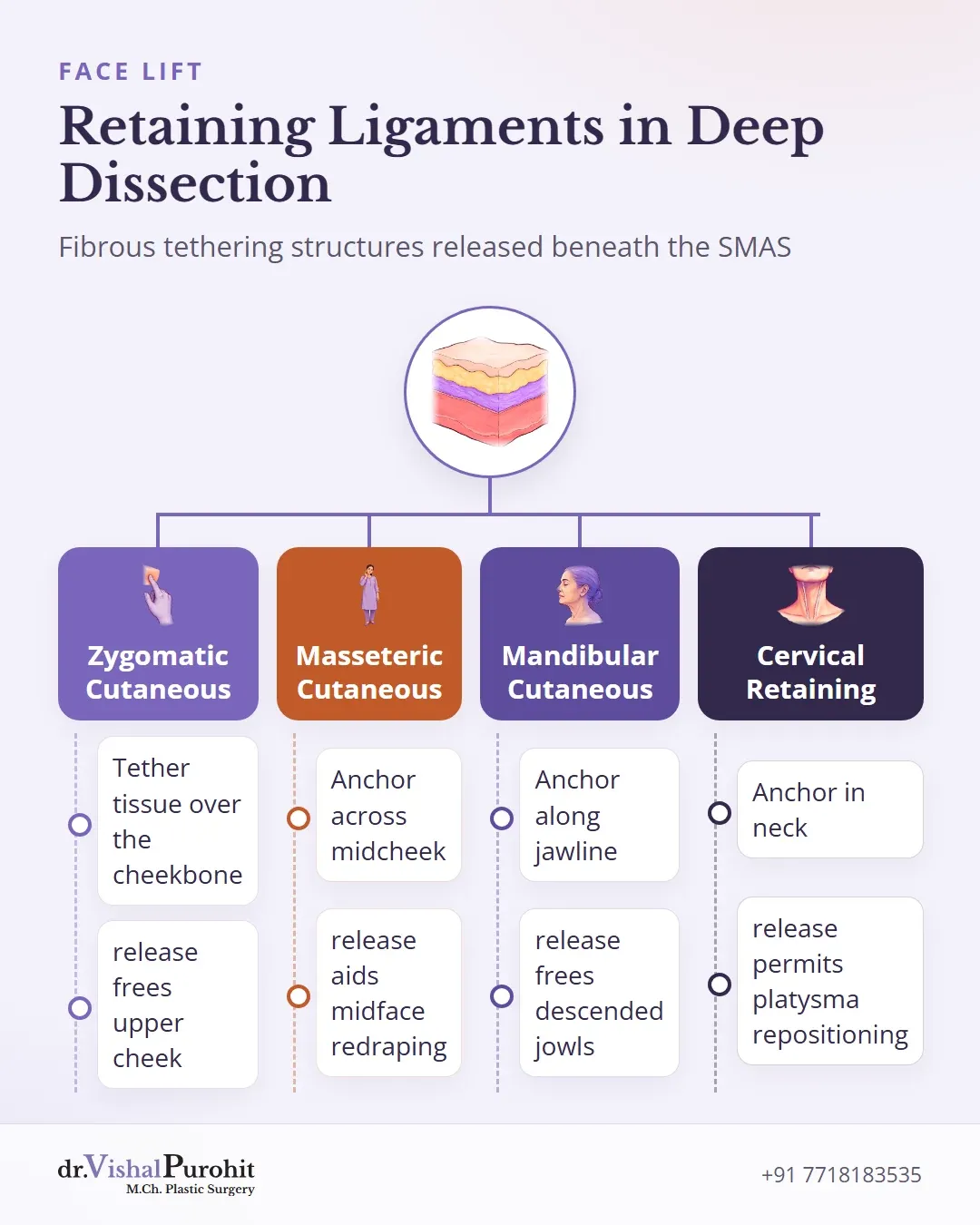
Retaining ligaments are strong fibrous attachments that anchor soft tissues to bone or deep fascia1518. With facial ageing, neighboring soft tissues pivot around these fixed points, contributing to folds and sagging15.
During an extended deep-plane dissection, several key retaining ligaments are released:
- Zygomatic cutaneous ligaments that tether tissue over the cheekbone1519.
- Masseteric cutaneous ligaments across the midcheek151820.
- Mandibular cutaneous ligaments along the jawline to free descended jowl tissue151721.
- Cervical retaining ligaments in the neck to permit platysma repositioning151721.
Releasing these tethering structures allows the composite flap of skin and muscle to be redraped smoothly without pulling tension on the surface1718.
Comparative Findings and Limitations
Comparative literature between deep-plane and SMAS-based techniques shows mixed findings with no clear scientific consensus showing one technique is superior22.
An evaluation of 25 SMAS plication patients and 25 deep-plane patients by Adamson and colleagues reported greater photographic improvement at 6 months for the deep-plane group in the cheek, melolabial fold, jowls, and neck angle, though not in neck banding22. Becker and Bassichis noted slightly improved outcomes with deep-plane techniques among patients aged 70 to 80, but found no superiority in patients under 7022.
Studies comparing outcomes remain limited by small cohorts, retrospective reviews, and a general scarcity of evidence-based trials222324. In his practice in Jaipur, Dr. Vishal Purohit focuses on SMAS-based techniques rather than deep-plane surgery.
The Technique Dr. Purohit Uses
This surgical approach addresses the deeper supportive tissues of the face and neck rather than relying solely on skin tension.
In clinical practice, handling the superficial musculoaponeurotic system (SMAS) helps restore structural contour:
SMAS plication
The tissue layer is folded and sutured over itself to reposition sagging areas without excising SMAS tissue2526. This action can also augment volume in regions like the cheek13.
A prospective comparison of multiple SMAS techniques noted no discernible difference in overall aesthetic outcomes between different dissection methods30. Dr. Purohit tailors this approach to each patient’s facial anatomy in Jaipur, avoiding unnecessary tissue excision while providing stable, natural structural repositioning.
Why the Name Does Not Guarantee a Natural Look or Longevity
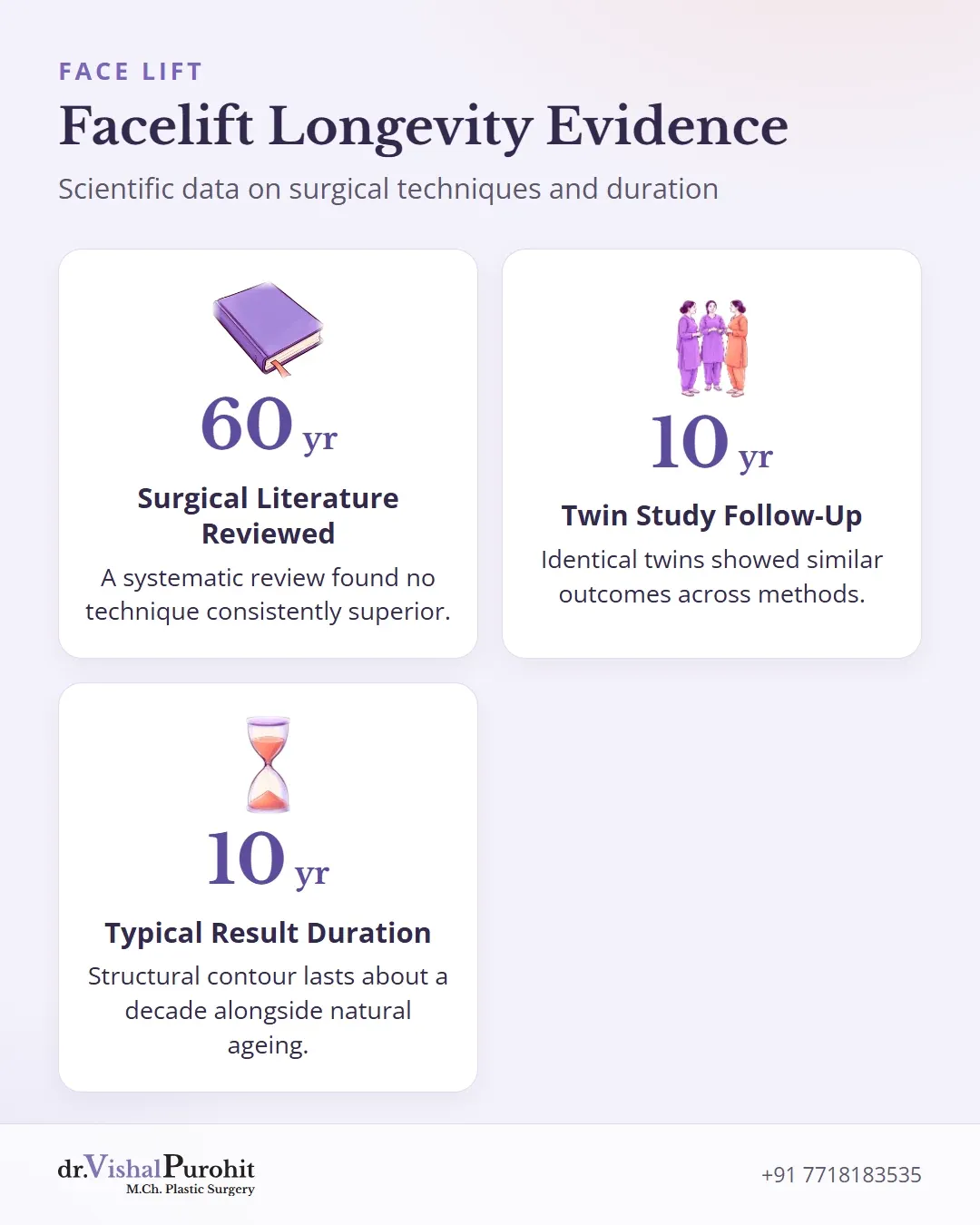
Surgical terms alone do not determine the durability or visual quality of a face lift. A systematic review examining 60 years of surgical literature found no clear indication that any single facelift technique was superior to another31. In an identical-twin study comparing different methods across four surgeons, results remained similar at 10 years31. Furthermore, photographs of well-executed results show that the specific technique used cannot be discerned simply by viewing the outcome32.
A balanced, natural result relies on foundational surgical principles rather than a branded procedure name32. The outcome depends directly on individual facial skeleton anatomy, soft tissue weight, skin quality, and meticulous preoperative planning33. Surgical tension must be placed on deep supportive structures, while flap edges must be closed without tension to avoid unaesthetic scars34. Natural ageing continues uninterrupted after any procedure3135. At his practice in Jaipur, Dr. Vishal Purohit advises patients that results last about a decade while facial tissues continue to age naturally.
Questions to Ask Before Surgery
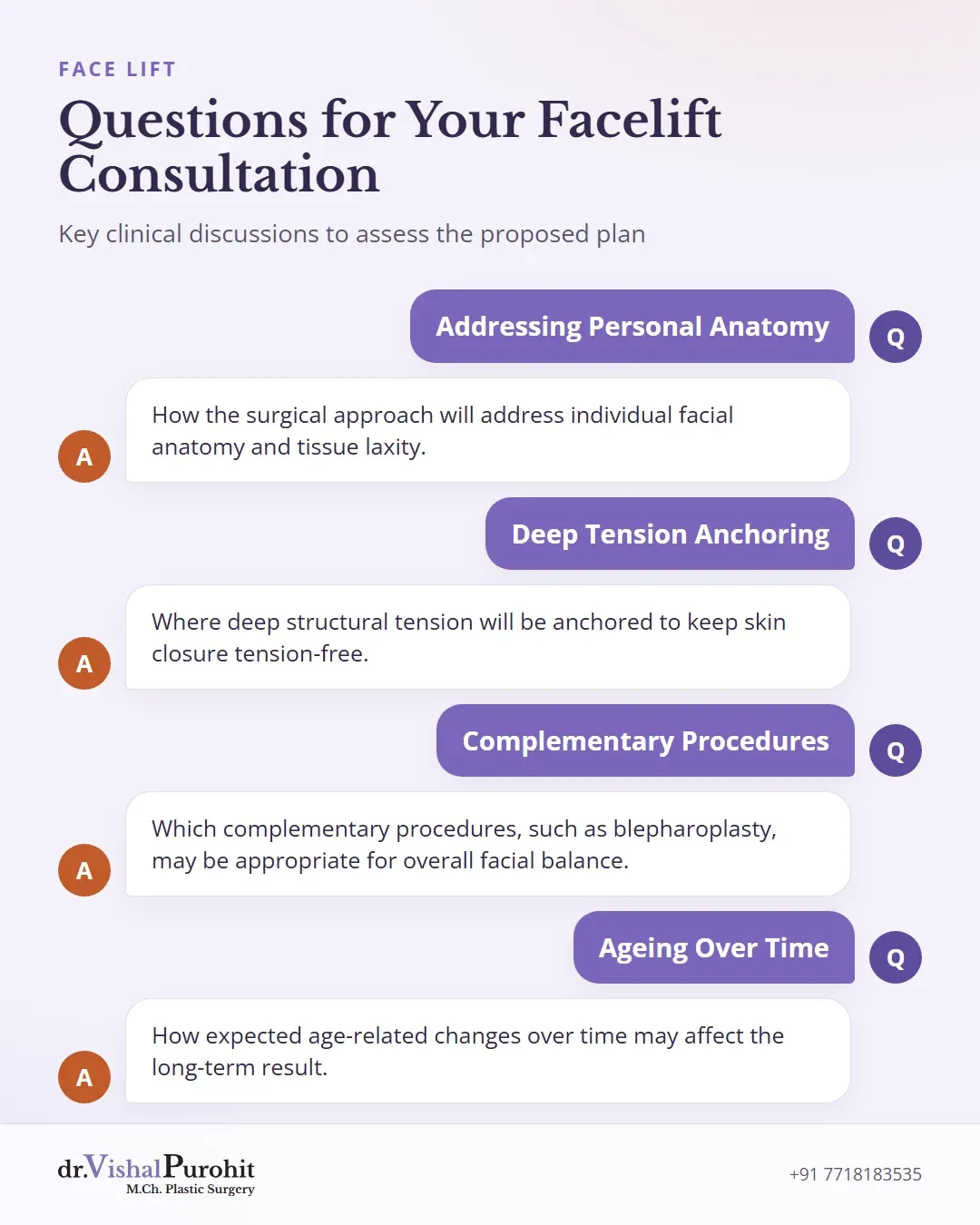
During an initial evaluation, patients can assess the proposed plan by discussing:
- How the surgical approach will address individual facial anatomy and tissue laxity3133
- Where deep structural tension will be anchored to keep skin closure tension-free34
- Which complementary procedures, such as blepharoplasty, may be appropriate for overall facial balance36
- How expected age-related changes over time may affect the long-term result3135
Facelift Planning and Consultation in Jaipur
Achieving balanced facial rejuvenation requires tailoring surgical mechanics to structural anatomy rather than relying on promotional procedure titles. Patients considering facelift surgery in Jaipur benefit from an in-depth clinical evaluation of tissue laxity, structural support, and individual goals. Reviewing facelift FAQs provides further insight into anatomical planes, SMAS suspension, and platysmaplasty principles.
This is educational information, not medical advice.