Recovery following facial rejuvenation requires patience while healing tissues soften and contours gradually settle. Recognizing whether an early contour change reflects temporary swelling or genuine structural looseness helps patients avoid premature surgical decisions.
During postoperative follow-ups, Dr. Vishal Purohit assesses healing patterns to help patients determine whether early anatomical changes warrant observation or secondary facelift surgery in Jaipur.
When unexpected issues arise shortly after an operation, evaluating facelift complications and warning signs that need urgent help takes precedence over aesthetic assessments. A structured evaluation helps determine whether simple observation, minor refinements, or secondary surgery is appropriate.
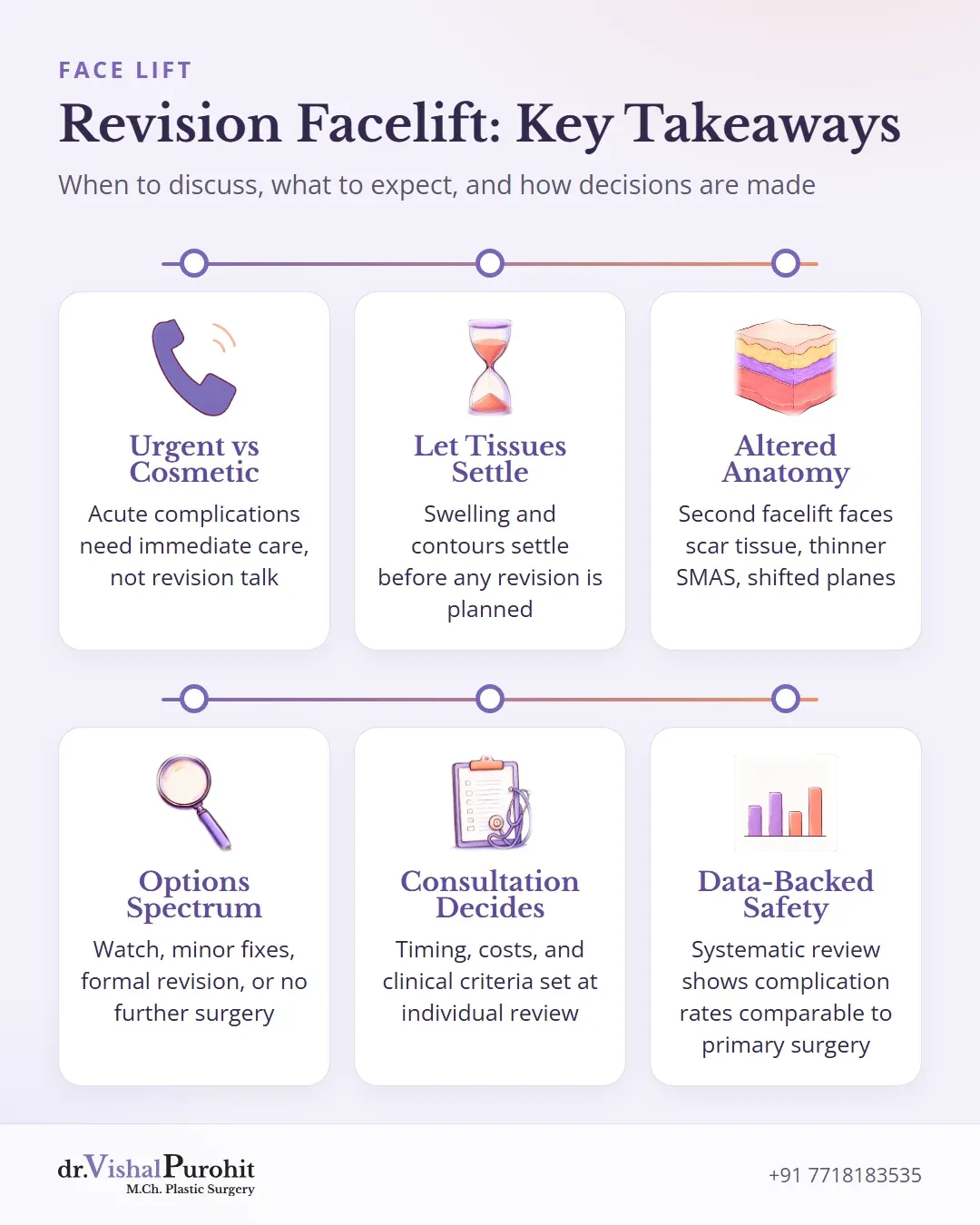
Urgent Problems Are Not a Revision Question
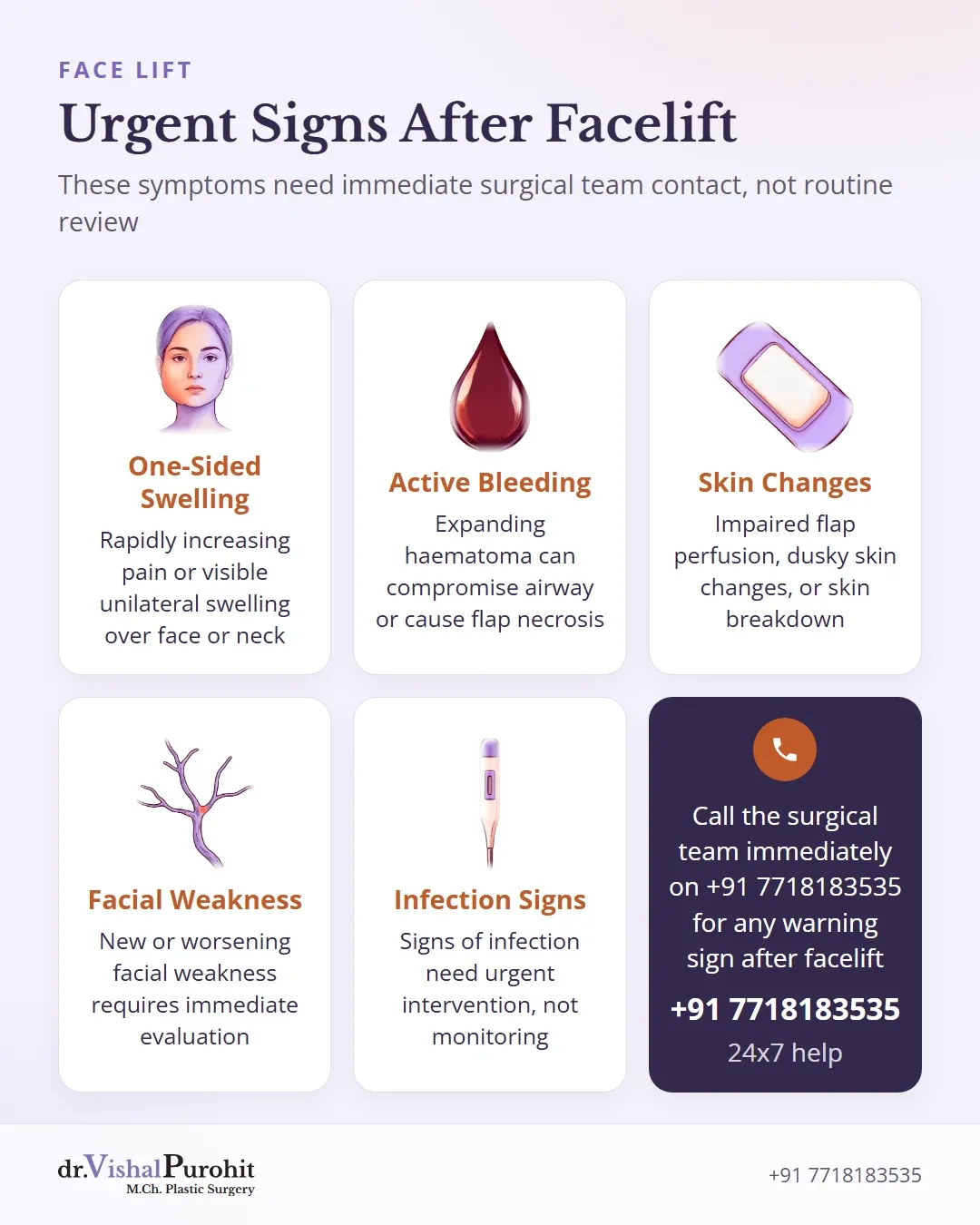
When recovery takes an unexpected turn, acute surgical problems must not be mistaken for cosmetic dissatisfaction or early skin laxity. A discussion about revision is meant for healed tissues, whereas acute complications require immediate medical intervention.
In the early postoperative phase, certain symptoms indicate an urgent issue rather than a matter to monitor over time:
- Rapidly increasing pain or visible unilateral swelling overlying the face or neck12
- Active bleeding or an expanding haematoma, which can compromise the airway or lead to flap necrosis3
- Impaired flap perfusion, dusky skin changes, or skin breakdown3
- New or worsening facial weakness3
- Signs of infection13
Haematoma is the most common early complication following a face lift123. It most frequently develops within the first 12 to 24 hours after surgery124. Failure to recognize and evacuate an expanding haematoma promptly risks soft tissue loss, scarring, or skin necrosis1356.
Dr. Purohit’s note: For any warning sign after a facelift—including one-sided swelling, breathing difficulty, or facial weakness—Dr. Purohit advises patients to contact the surgical team immediately on +91 7718183535 rather than waiting for a routine review.
Swelling, Asymmetry or Returning Laxity
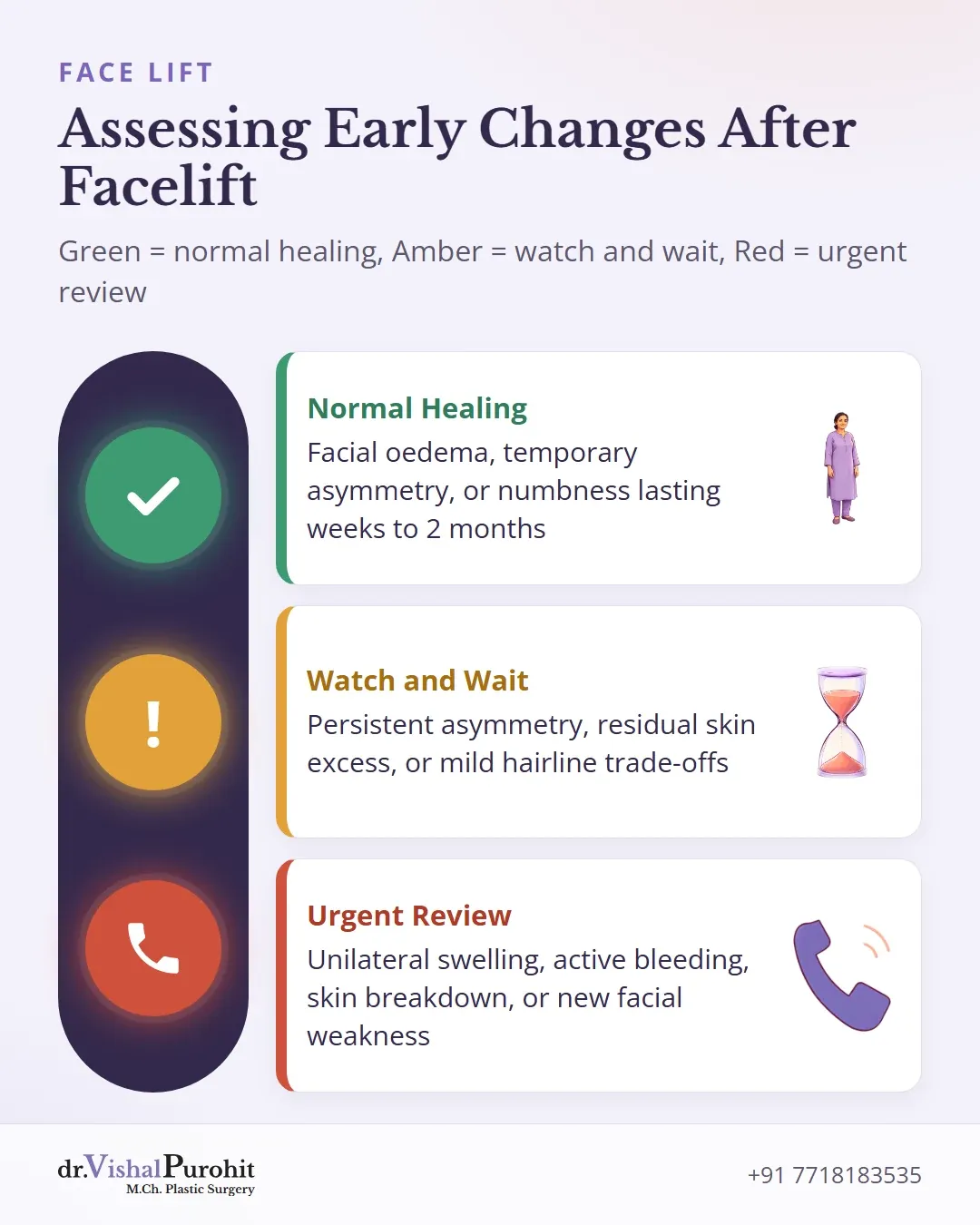
After a facelift, the face needs time to recover before anyone can judge the final surgical result. Patients often notice uneven contour, fullness, or loose skin during recovery, but these early changes are rarely permanent defects.
Understanding Early Postoperative Changes
In the initial recovery period, tissues react to surgical trauma:
- Postoperative oedema is common to all patients, and facial swelling can persist for several weeks78.
- Uneven tissue fluid distribution or dynamic muscle healing can produce temporary asymmetry910.
- Numbness and temporary facial weakness usually last from a few weeks to about 2 months, which can also influence facial symmetry.
Sudden or one-sided swelling is a warning sign that requires prompt surgical evaluation rather than attempting self-treatment.
Call the surgical team immediately if you notice sudden or one-sided swelling.
Waiting for Tissues to Settle
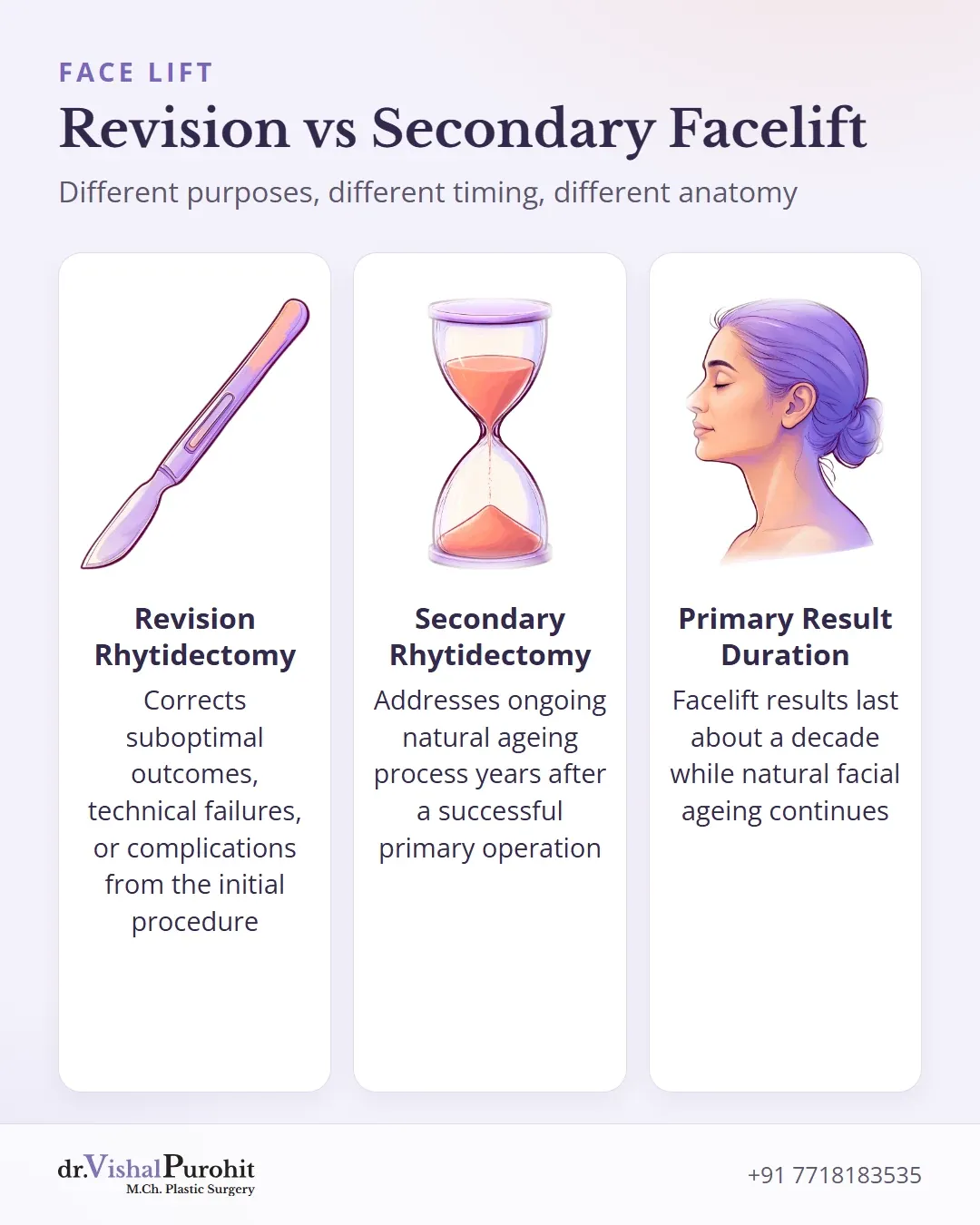
A clear line exists between temporary healing issues, true surgical dissatisfaction, and natural ageing11:
- A revision rhytidectomy is designed to correct suboptimal outcomes, technical failures, or complications stemming from the initial procedure1112.
- A secondary rhytidectomy addresses the ongoing, natural ageing process that continues years after a successful primary operation11.
- In Dr. Vishal Purohit’s practice, facelift results last about a decade, while natural facial ageing continues.
Rushing into reoperation while swelling is resolving risks operating on unstable anatomy1314. Allowing the underlying superficial musculoaponeurotic system and skin flaps to completely heal ensures that persistent asymmetry or residual skin excess is correctly distinguished from normal recovery1315.
What Makes a Second Facelift Different
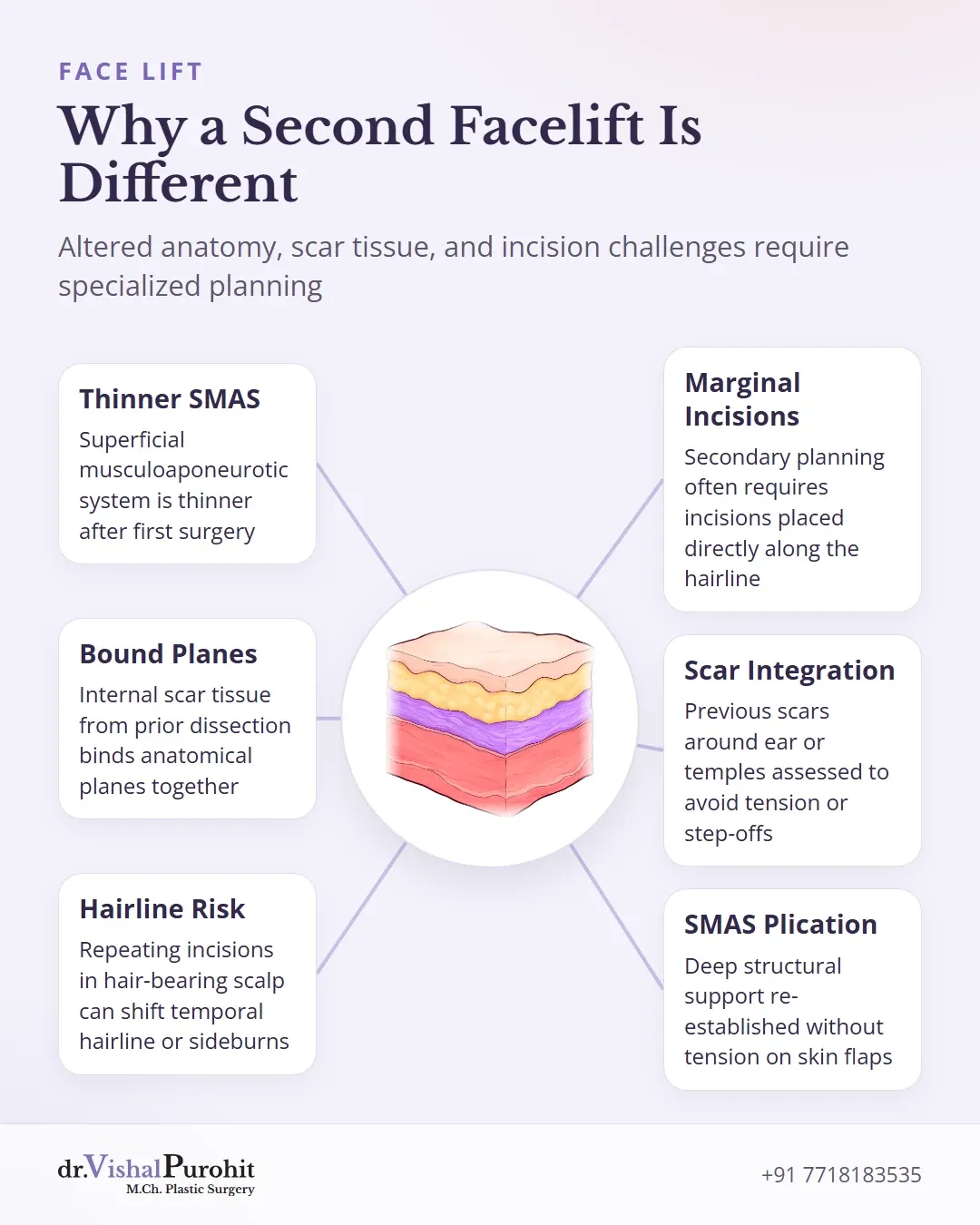
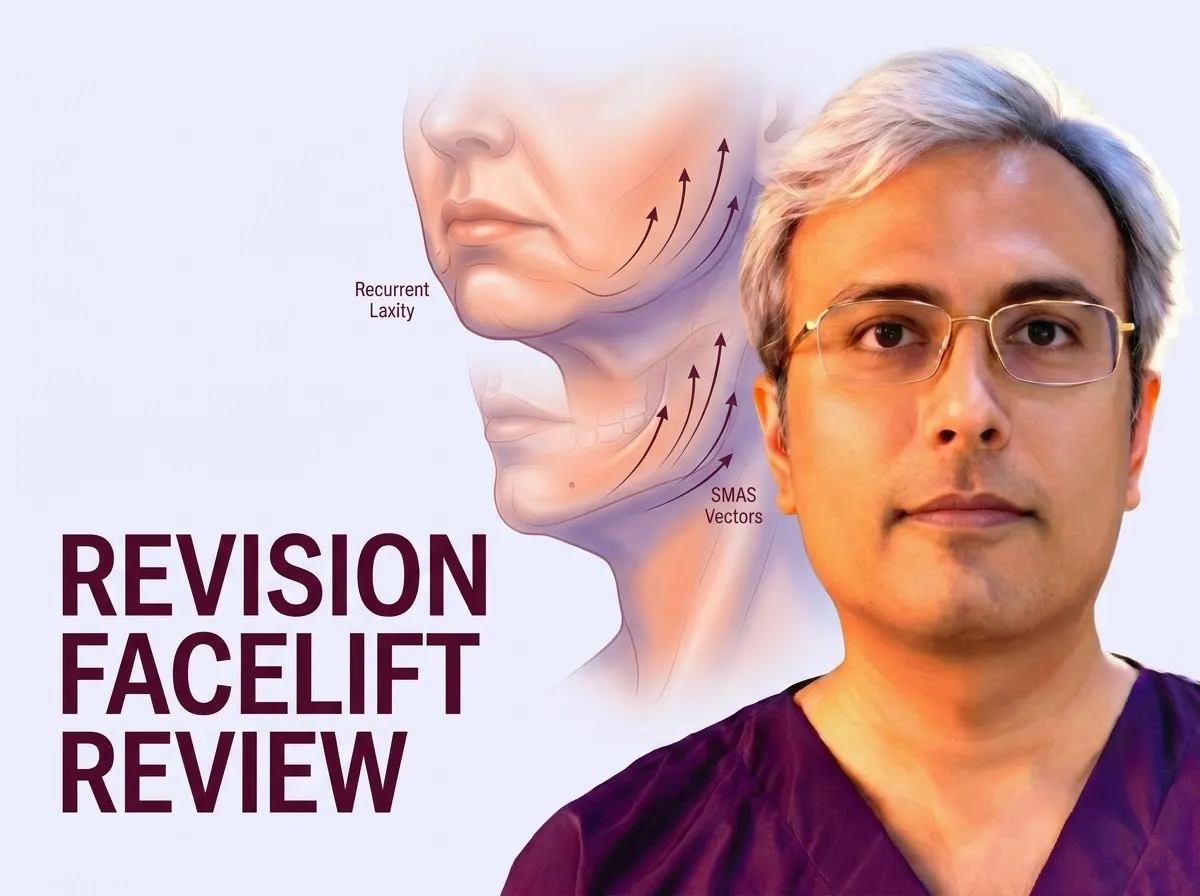
Undergoing a secondary rhytidectomy involves specific surgical challenges that do not exist during an initial procedure16. Previous surgery leaves altered planes, deeper scarring, and structural shifts that require individualized surgical planning14.
Altered Anatomy and Scar Tissue
A previous operation significantly alters normal tissue layers1417. A systematic review notes that secondary procedures are technically demanding because of this altered anatomy, particularly involving a thinner superficial musculoaponeurotic system (SMAS)14. Internal scar tissue from prior dissection binds anatomical planes together, requiring precise navigation to restore stable deep tissue support14. For his patients in Jaipur, Dr. Vishal Purohit performs SMAS plication and suspension facelift techniques to re-establish deep structural support without placing tension on the skin.
Incisions and Hairline Shifts
Planning incisions in a repeat face lift demands careful evaluation of hair-bearing areas18:
Hairline Distortion
Repeating incisions inside the hair-bearing scalp can produce noticeable shifts in the temporal hairline or sideburns1819.
Marginal Placement
To prevent upward or backward displacement of the hair, secondary planning often requires incisions placed directly along the hairline rather than behind it18.
Findings from the Systematic Review
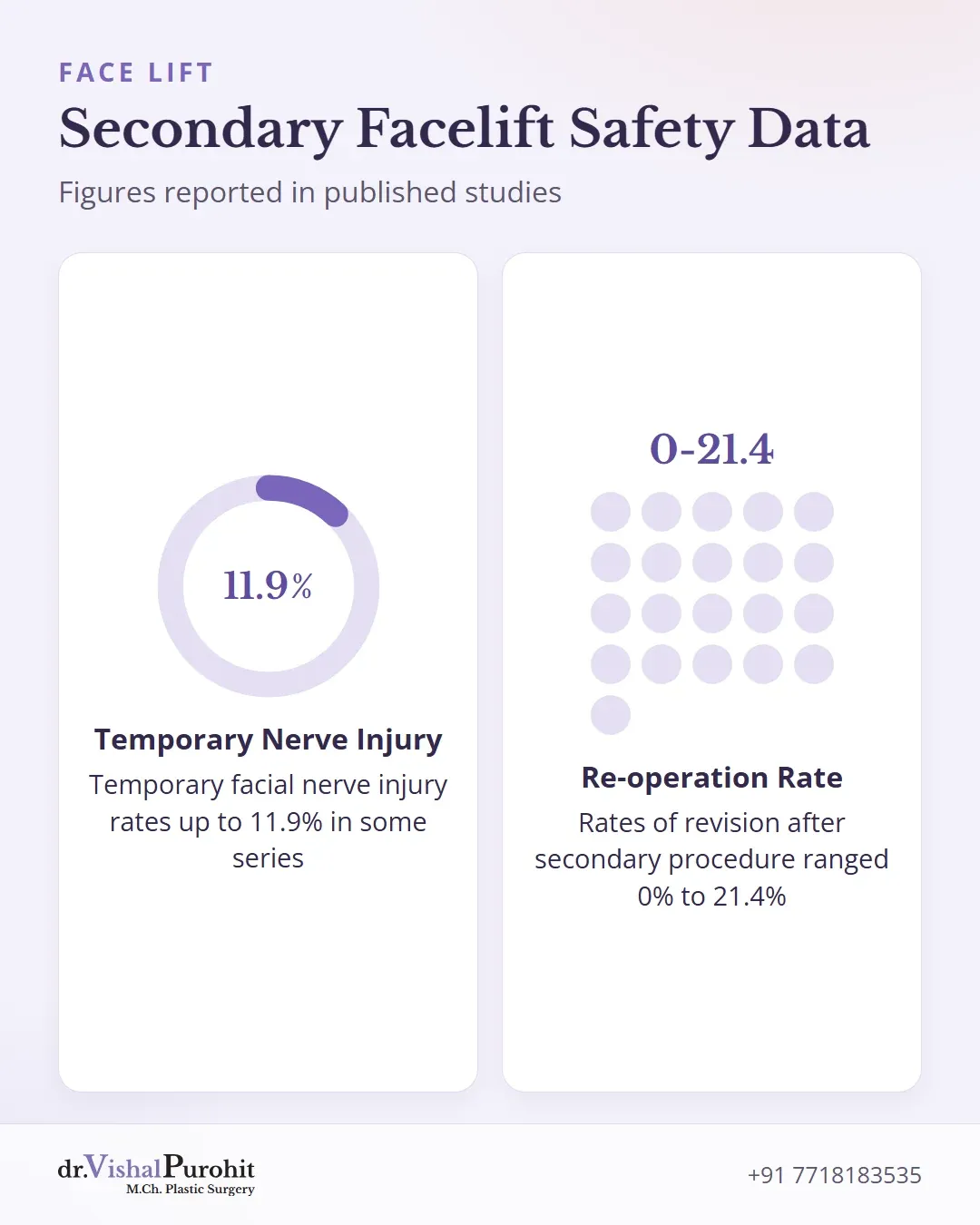
The systematic review on secondary rhytidectomies identified specific patterns regarding outcomes and surgical safety:
- Complication rates: Overall complication rates in secondary facelifts remain comparable to primary surgeries, despite the technical complexity1417.
- Common adverse events: The most frequent complications identified were haematoma and temporary facial nerve injury, with temporary nerve injury rates reaching up to 11.9% in some series17. Other reported issues included seroma, minor skin slough, and delayed healing17.
- Subsequent revision: Rates of re-operation or revision after a secondary procedure ranged from 0% to 21.4% across studies20.
Options: Watching, Small Corrections or a Larger Revision
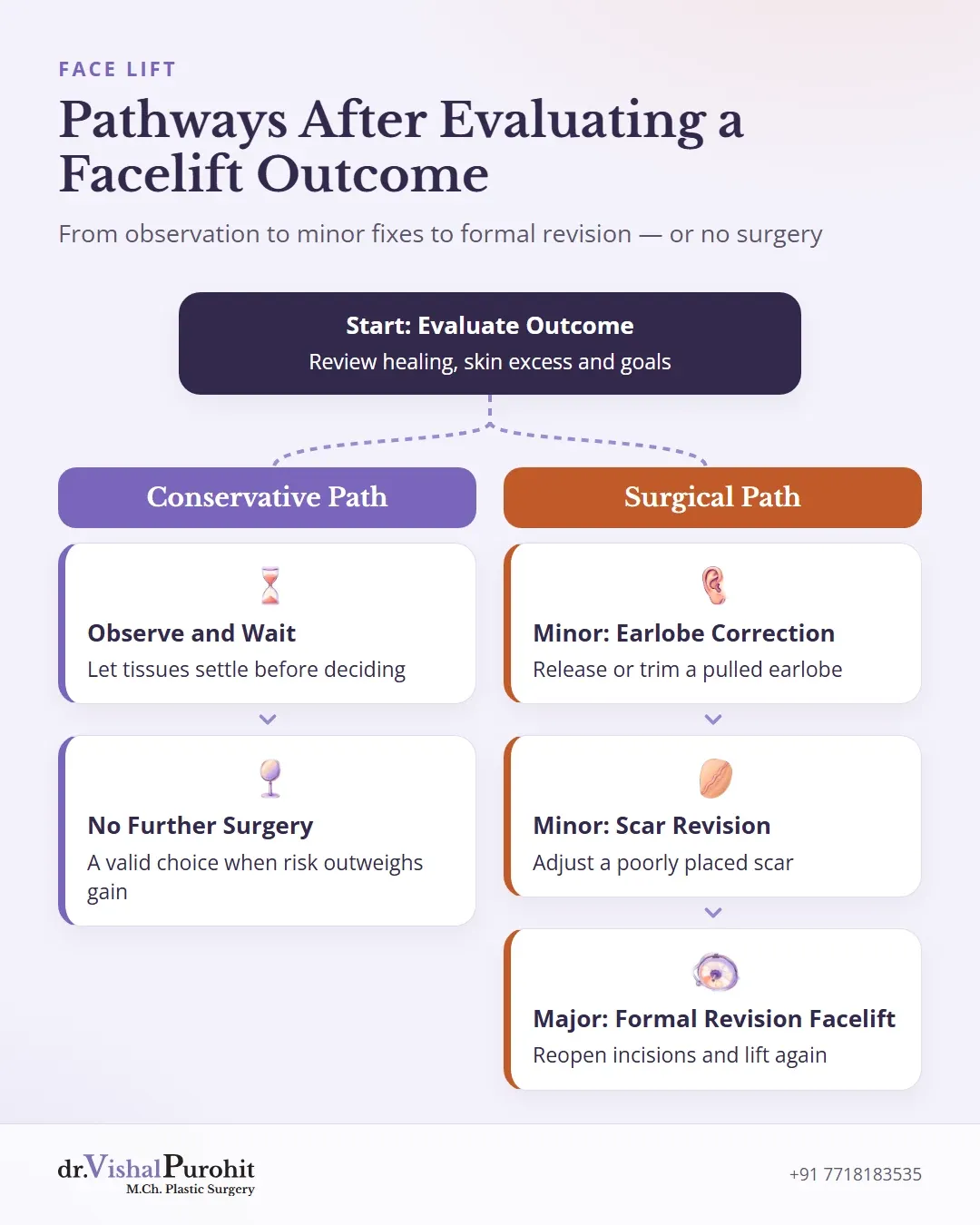
When reviewing an earlier facelift outcome or assessing returning laxity, several distinct pathways exist depending on tissue healing, skin excess, and patient goals.
Key points
- Tissues must fully settle before surgical revision is considered.
- Minor issues such as earlobe deformities or scars can be corrected with limited procedures.
- A formal secondary facelift is reserved for significant recurrent laxity or complex scarring.
Observation and Waiting
Allowing tissues to fully settle is often necessary before planning any surgical adjustment. Major flap redissection cannot be performed immediately after surgery, as adequate skin laxity must develop first2122. Continued observation provides time for wound maturation before determining whether further intervention is warranted.
Minor Adjustments and Earlobe Correction
Isolated anatomical concerns may be addressed with limited procedures rather than a full secondary face lift:
- Earlobe deformities: A pulled or pixie earlobe can occur after surgery due to wound contracture tension2122. A conservative repair can release the lobe through a small incision at its base to restore position2122, or redundant lobule tissue can be trimmed with a seam along the inferior margin23.
- Scar revision: Obvious preauricular or poorly placed scars may be excised or adjusted24. While some literature notes laser resurfacing after scar repair2125, Dr. Vishal Purohit does not offer laser or resurfacing procedures in his practice. Scar revision is assessed and managed surgically as an independent procedure when indicated.
Larger Revision Facelift
Significant recurrent skin laxity, persistent vector displacement, or complex scarring may require a formal secondary facelift2425. Reoperating involves opening previous incisions to dissect and reposition deep tissue flaps and redrape excess skin212224.
No Further Surgery
Some contour variations, mild asymmetries, or hairline changes carry surgical trade-offs24. In situations where additional operative risk outweighs aesthetic gains, opting against further surgery remains a valid clinical path.
Questions About Timing and Costs
Evaluating a previous face lift requires clear communication regarding surgical timing and financial responsibility. Patients considering secondary correction should raise specific practical points during their initial assessment.
Key Consultation Questions
Patients can discuss the following questions with their surgical team:
- When would a potential revision be formally reviewed, and how much healing time is required before reoperating?
- Who pays which part of the surgical, anaesthesia, or facility costs if secondary work becomes necessary?
- Which clinical findings qualify as surgical touch-ups rather than separate procedures?
Timing Considerations
Adequate tissue recovery and swelling resolution are essential before considering any revision26. In published surgical guidelines, waiting at least 6 to 12 months is recommended before performing a revision facelift26. In certain complex cases, significant revisions are considered after 6 months to address residual laxity2728.
Clinic Policies
Dr. Vishal Purohit does not apply a fixed clinic waiting interval or revision payment formula online. These policies are not confirmed on digital platforms and are explained directly by the surgical team at consultation in Jaipur. Preoperative documentation typically establishes financial responsibility in advance2629, ensuring patients clearly understand potential anaesthesia, facility, or material charges before undergoing surgery2930.
Discussing Secondary Care in Jaipur
Deciding whether to undergo secondary facial surgery requires balancing aesthetic expectations against structural healing. When considering a secondary procedure or exploring facelift surgery in Jaipur, careful evaluation ensures that tissues are fully stable before any reoperation. Reviewing facelift FAQs helps clarify surgical realities, recovery milestones, and procedural expectations. A direct clinical assessment allows the surgical team to evaluate previous incisions, determine underlying tissue laxity, and recommend a safe, individualized pathway forward.
This is educational information, not medical advice.