Undergoing facial surgery involves an important period of healing where tissues gradually settle and adapt. Preparing for this postoperative phase helps patients plan appropriate rest and manage daily expectations smoothly.
Dr. Vishal Purohit guides patients through each stage of healing following facelift surgery in Jaipur, supporting they understand expected swelling and activity restrictions.
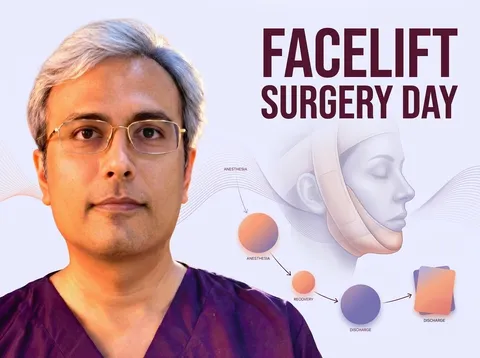
Preparing for recovery begins before leaving the hospital, as reviewed in Anaesthesia, Dressings and Discharge: The Facelift Surgery Day. Symmetrical swelling and mild bruising improve steadily, allowing a comfortable return to ordinary routines.
The First Days: Hospital Stay, Swelling and Tightness
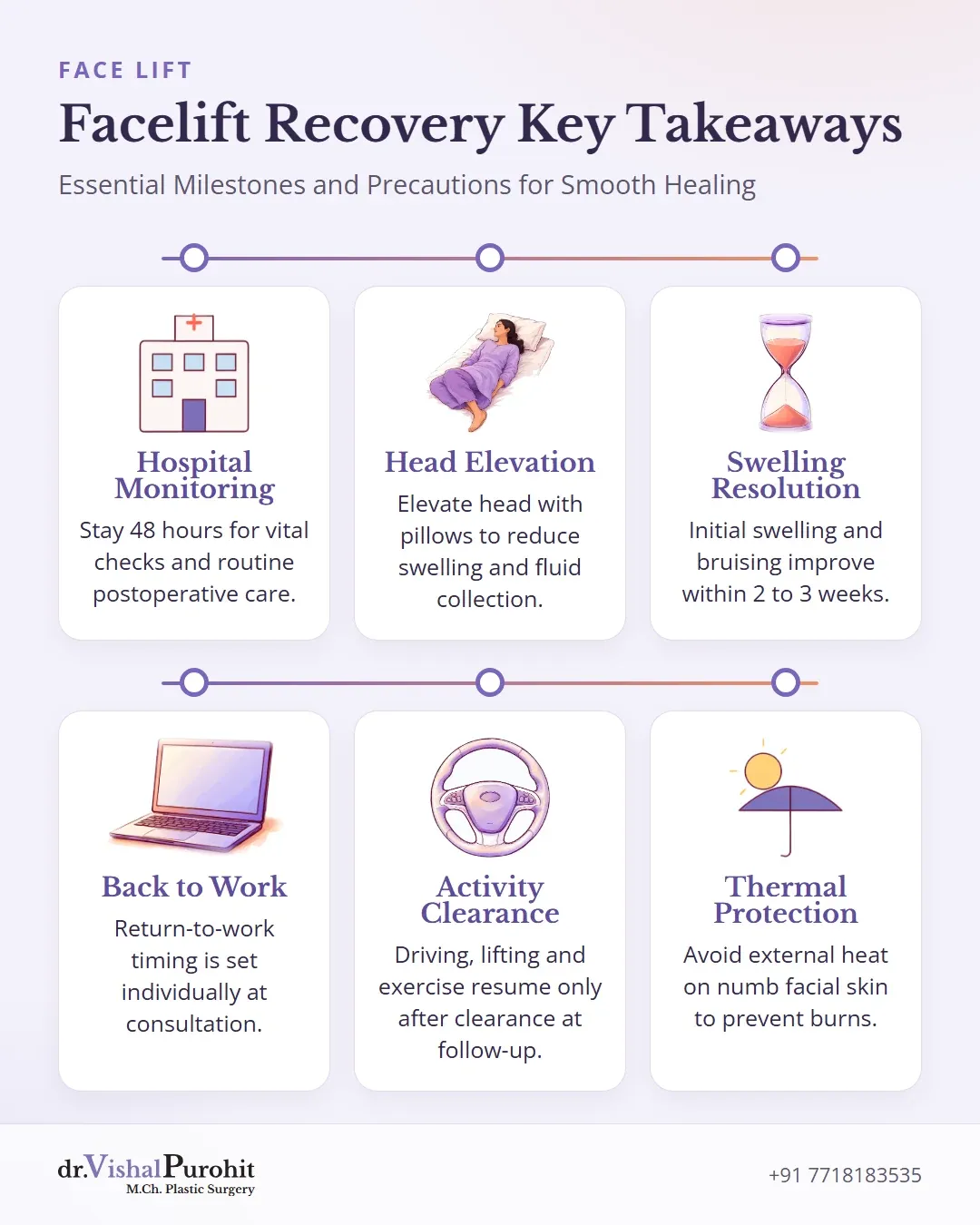
Following facelift surgery, Dr. Vishal Purohit keeps patients in the hospital for 48 hours for postoperative monitoring. Having professional care during this immediate window ensures vital checks are completed safely before discharge.
What the Early Recovery Feels Like
Patients experience facial swelling and bruising that can spread down into the neck and chest1. This tissue fullness commonly leads to a sensation of facial tightness1.
In clinical literature, early postoperative experiences include:
- Feeling drowsy or falling asleep repeatedly during the first day following general anaesthesia1.
- Mild discomfort managed with prescribed pain medications2.
- Difficulty with active chewing, which makes a soft-food diet such as soups or yoghurts helpful for the first 3 days1.
- Head elevation using extra pillows to assist drainage and help reduce fluid collection2.
Swelling and bruising remain inherently difficult to predict before surgery, as individual propensity varies widely among patients undergoing the same procedure3.
Warning Signs to Monitor
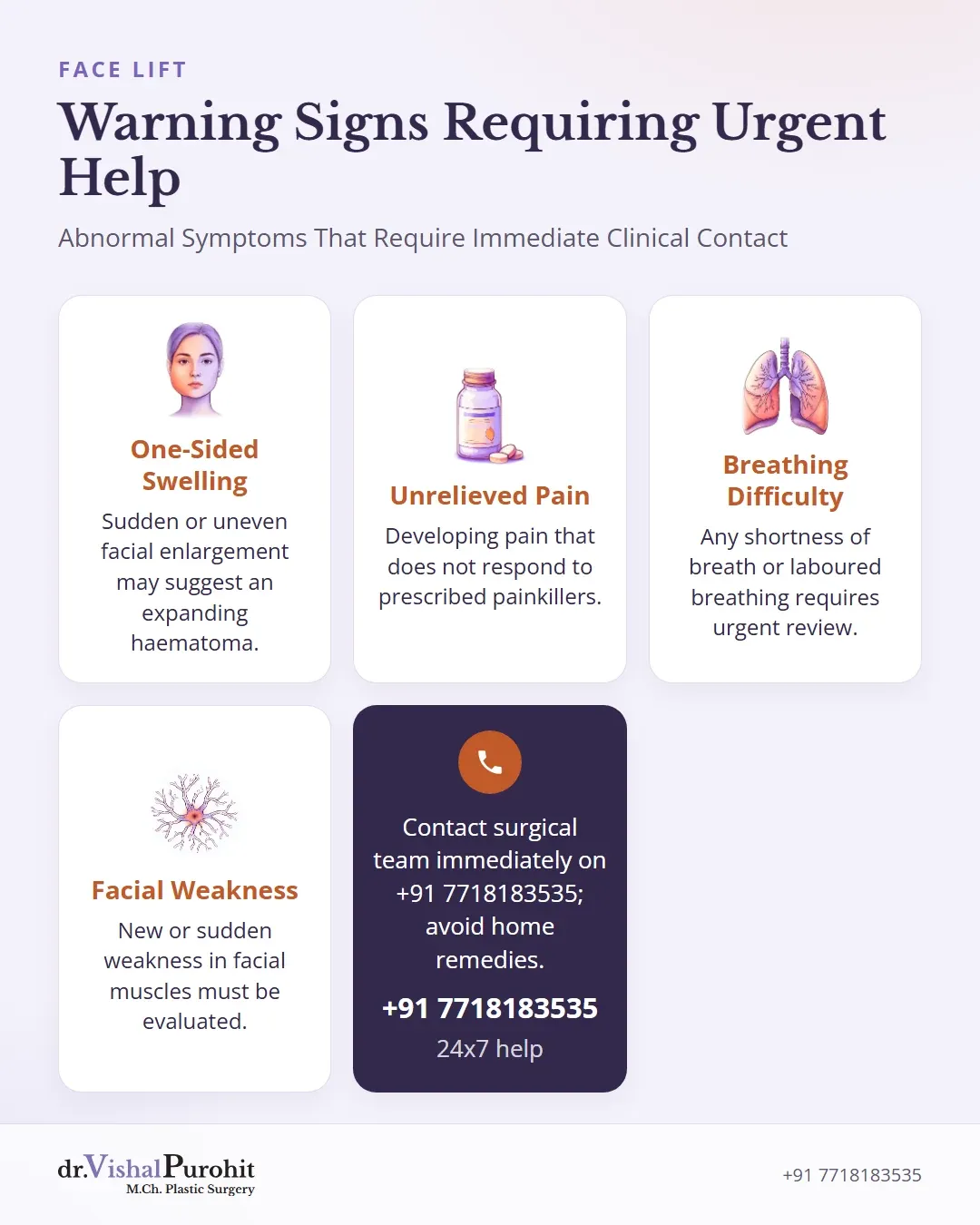
While symmetrical swelling and mild bruising are expected aspects of tissue healing1, any sudden or uneven change requires urgent attention. Increasing one-sided swelling, developing pain unrelieved by prescribed painkillers2, breathing difficulty, or facial weakness are abnormal warning signs.
Call the surgical team immediately if you notice increasing one-sided swelling, developing pain unrelieved by prescribed painkillers, breathing difficulty, or facial weakness.
If any of these signs appear, patients must contact the surgical team immediately on +91 7718183535 rather than attempting any home remedies. Prompt evaluation is essential to exclude acute complications such as an expanding haematoma45.
Head Elevation, Rest and Wound Care
Resting Position and Neck Protection
Resting posture requires careful attention after surgery. Head position in the early postoperative period is debated among surgeons6. While many surgeons ask patients to sleep with the head elevated6, others advocate sleeping on a recliner with the chin elevated and a pillow firm enough not to engulf the head or exert lateral pressure on the flaps78. In contrast, some surgeons instruct patients to lie flat on their back without a pillow, or with a small cylindrical roll behind the neck, to keep the cervicomental angle open, prevent neck flexion, and avoid folding the skin flap9.
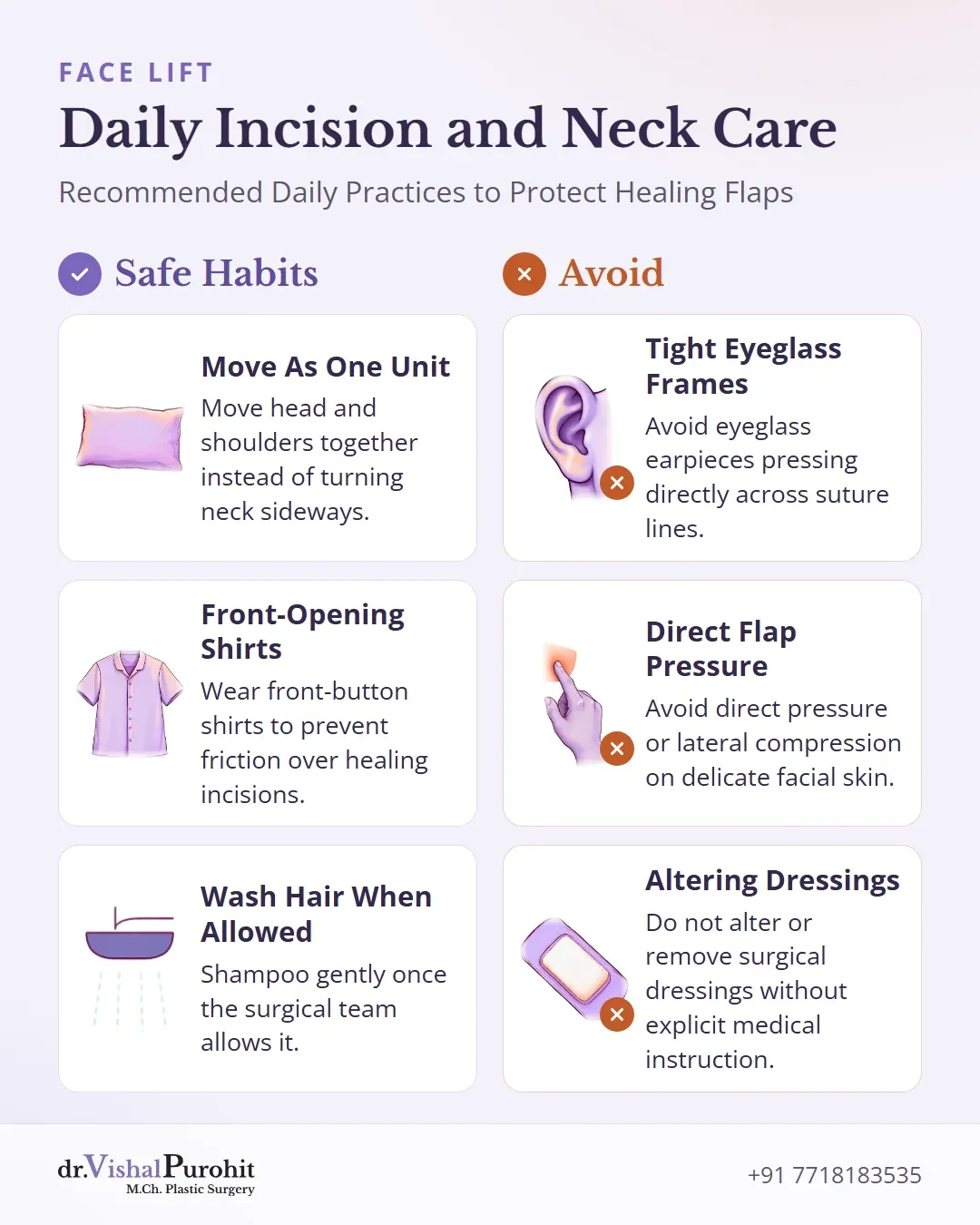
To protect the surgical sites and avoid neck strain, published protocols advise patients to move the head and shoulders together as one unit rather than turning the neck from side to side10. Direct pressure on healing tissues must be avoided, as compression can compromise flap vascularity or contribute to wound breakdown6.
Keeping Incisions Clean
Proper wound hygiene helps incisions heal without unnecessary disruption:
- Published surgical instructions note that patients may shampoo their hair with regular shampoo starting on postoperative day three, allowing water to run over the incision sites10.
- Incisions must not be subjected to friction; eyeglass earpieces resting directly across suture lines can cause irritation and should be adjusted to rest passively6.
- Patients should wear shirts that open in the front rather than garments pulled over the head, minimising contact with surgical areas11.
Following Written Postoperative Instructions
Patients must follow their specific written directions carefully rather than altering dressings independently.
Dr. Purohit’s note: Every patient under the care of Dr. Vishal Purohit in Jaipur receives clear written discharge instructions outlining daily home care.
Swelling and Bruising Over the Weeks
Following a facelift, postoperative swelling and bruising are normal parts of healing that resolve gradually over several weeks to months.
Key points
- Swelling and bruising improve steadily over several weeks, though full tissue refinement takes months.
- Individual recovery times vary widely based on personal health, age, and genetics.
- Sudden, one-sided swelling requires immediate contact with the surgical team.
Expected Timeline of Resolution
The initial inflammatory response peaks early, followed by steady improvement:
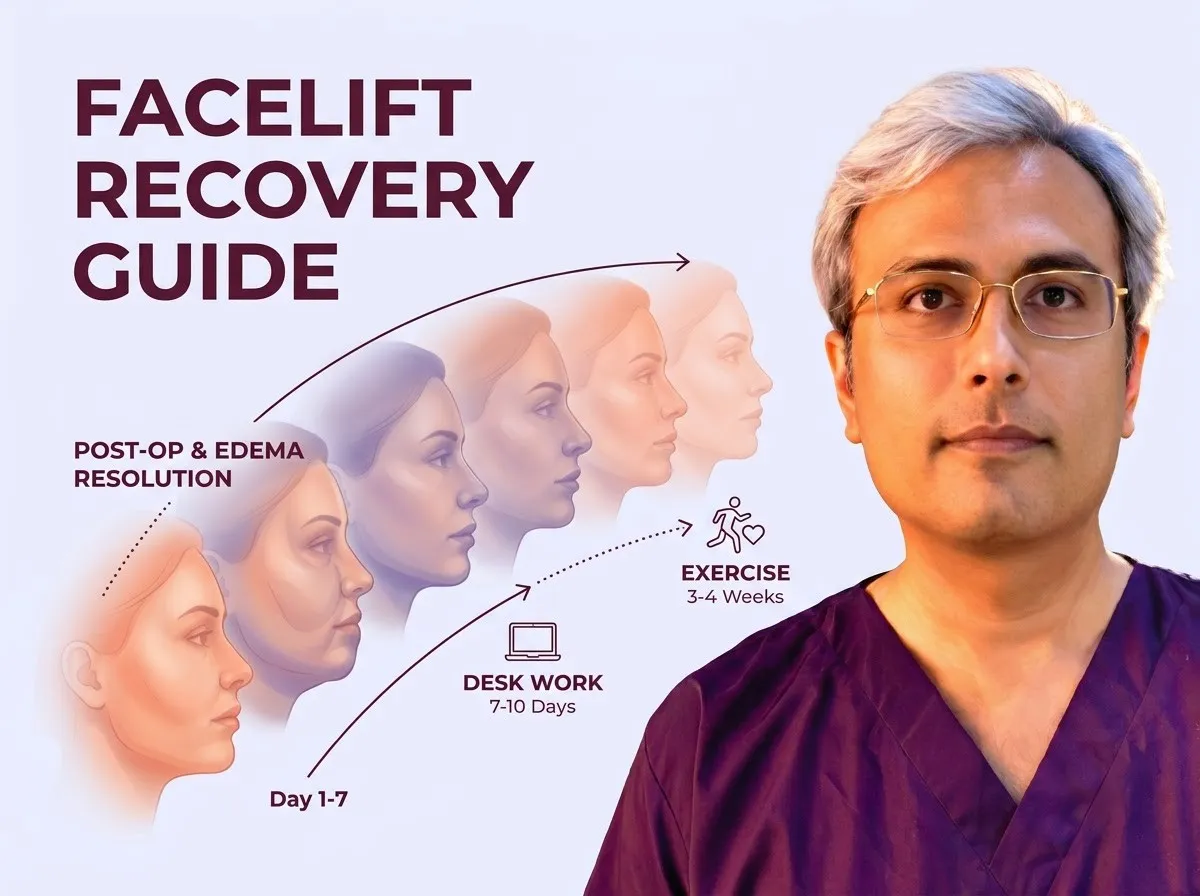
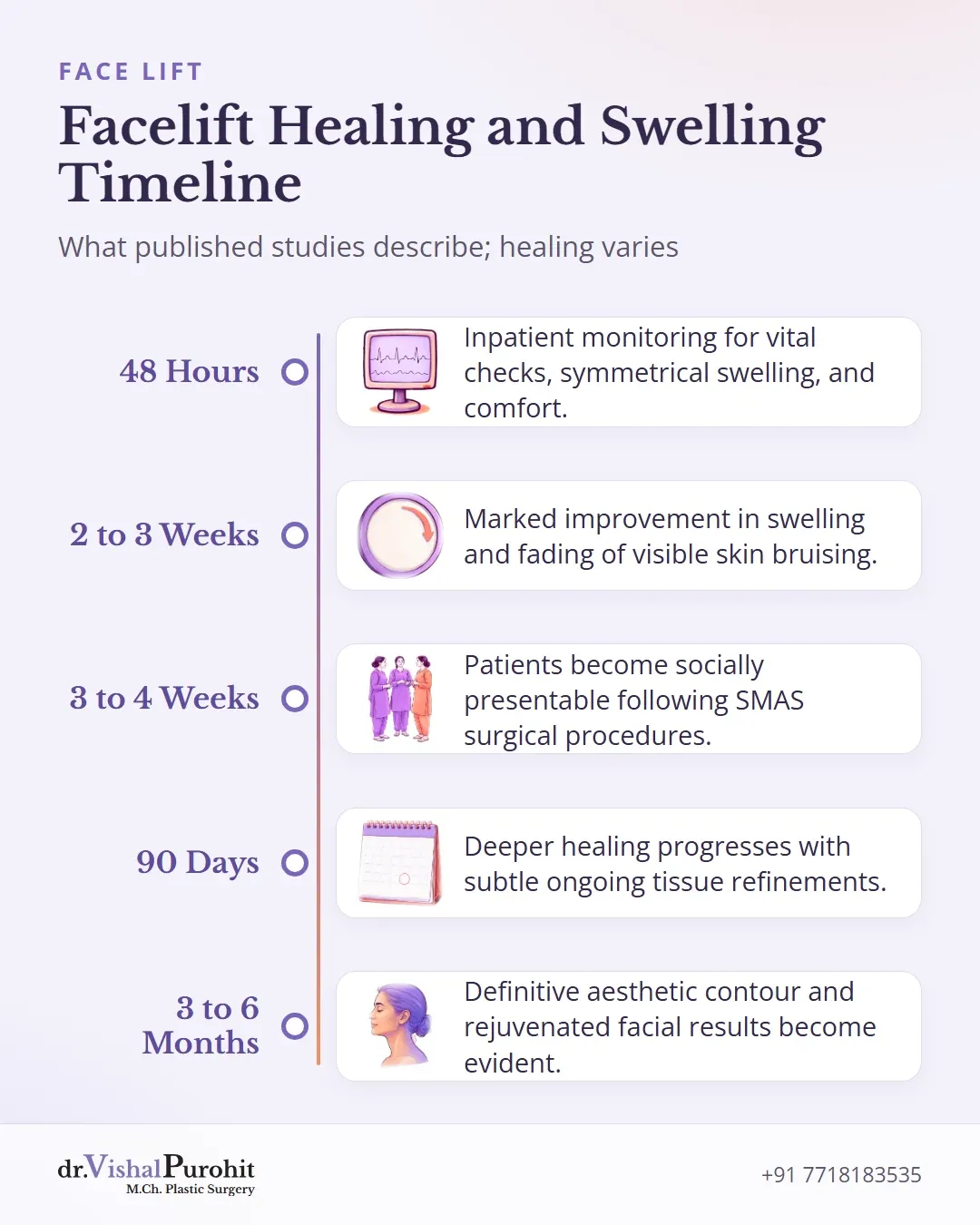
- Swelling and bruising typically improve within 2 to 3 weeks after surgery12.
- Bruising remains visible for at least 2 weeks13.
- On a bell curve, some patients may appear ready sooner around 9 days, while others remain bruised at 3 weeks14.
- For SMAS procedures, downtime before a patient is socially presentable is reported as 3 to 4 weeks15.
- The broader recovery process actually takes about 90 days, during which ongoing tissue refinements continue14.
- Noticeable improvements appear within a few weeks, but outcomes are usually appreciated between 3 and 6 months16. It can take up to 6 to 9 months to observe the full effect13.
In his practice in Jaipur, Dr. Vishal Purohit notes that temporary numbness and facial weakness usually last from a few weeks to about 2 months. Sudden, one-sided swelling is an important warning sign requiring immediate contact with the surgical team.
Individual Variation in Healing
The severity and duration of swelling and ecchymosis vary substantially between individuals317.
Predicting the degree of swelling or bruising in any single patient remains difficult317. Intrinsic factors like genetics and clotting tendency interact with extrinsic factors such as patient age, general health status, and whether additional facial procedures were performed simultaneously317. Some individuals who report an inclination to bruise easily exhibit minimal bruising, whereas others experience marked discoloration despite normal preoperative coagulation parameters317.
Back to Work and Social Life
Returning to desk work or casual public outings differs from full physical recovery. While early wound healing allows individuals to resume basic routines, looking socially presentable and achieving tissue stability follow a separate timeframe.
Key points
- Published reports describe a return to light desk work within 7 to 14 days; the timing for each patient is set at follow-up.
- Looking socially presentable for major events typically requires 4 to 6 weeks of recovery.
- Tissue healing and subtle recovery changes continue for up to 90 days.
Resuming Desk Work
General medical literature notes that return-to-work timing depends on an individual’s healing capacity, surgical extent, and occupational demands1819. For sedentary or light desk jobs:
- Patients are often asked to set aside 7 to 10 days to recover1819, with additional time off suggested when related procedures are performed concurrently1819.
- Other published reports note that most individuals return to light office activities or work within 7 to 14 days12, 10 to 14 days20, or at an average of 2 weeks142122.
- Starting with a limited workday before adjusting back to a full schedule is frequently advised19.
- Jobs involving physical labour or strenuous tasks require a longer period of convalescence19.
Dr. Vishal Purohit advises patients in Jaipur that the exact timeline for returning to professional duties is determined individually during clinical consultations.
Planning Major Social Events
Being comfortable around family or close colleagues happens much sooner than attending high-visibility gatherings. Published clinical observations emphasize planning events with a clear margin:
- Downtime before appearing socially presentable following SMAS procedures is reported as 3 to 4 weeks15.
- Some individuals may still show bruising at 3 weeks142122.
- For important social milestones, such as a family wedding, reunion, or major vacation, published guidelines suggest setting aside 4 to 6 weeks for recovery142122.
- The broader recovery process extends to about 90 days as subtle positive tissue changes continue142122.
Driving, Lifting and Exercise
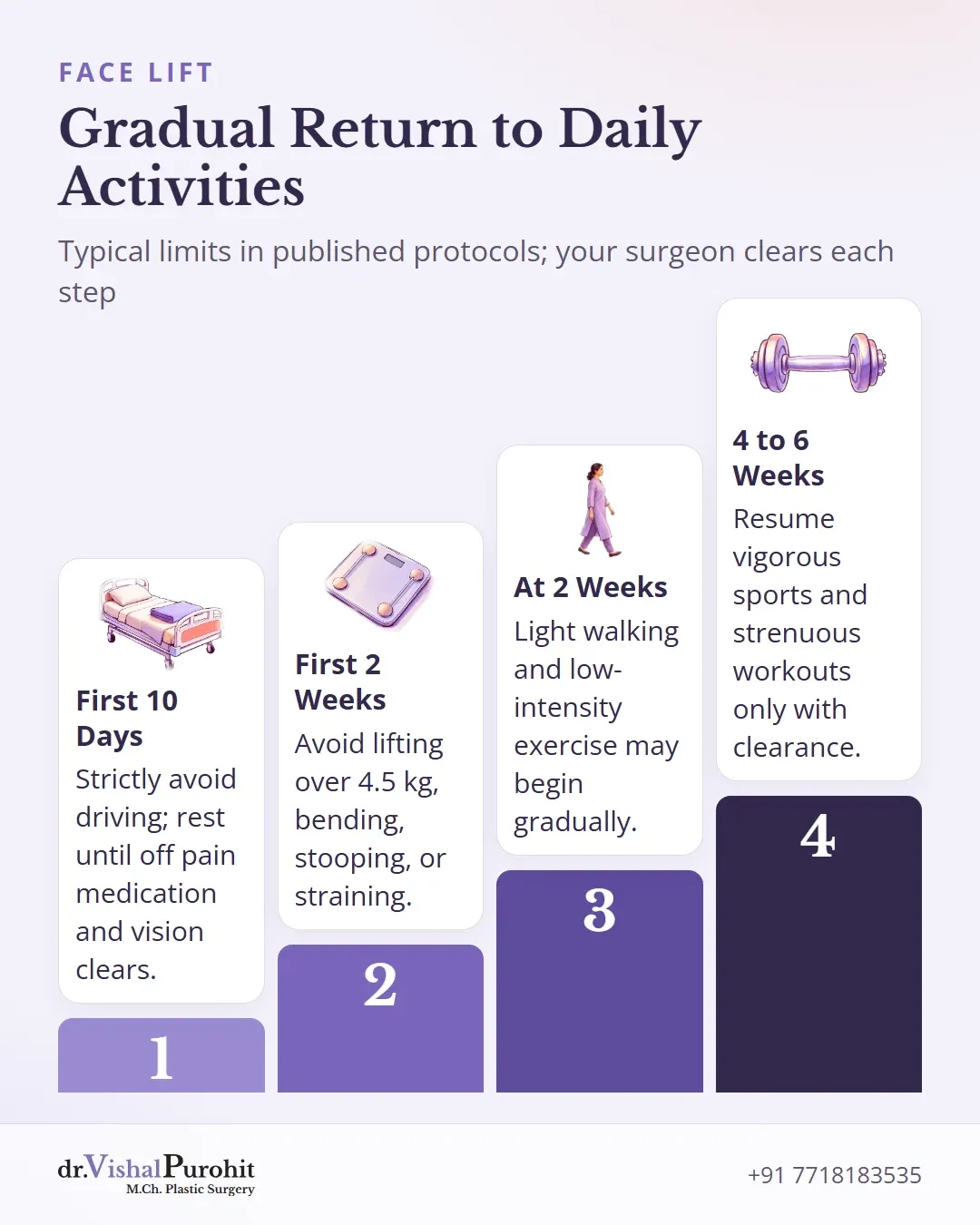
After a facelift, early physical restrictions are essential to protect healing tissues. Controlling blood pressure is critical because haematoma is the most common major complication after face-lift surgery23, and blood pressure elevation can lead to bleeding and haematoma formation24. In published surgical protocols, patients are advised to avoid heavy lifting (more than about 4.5 kg, or 10 pounds), bending at the waist, stooping, and straining for the first two weeks2526.
Literature guidance outlines the following progression for returning to daily activities:
- Driving: Patients are advised not to drive for the first 10 days after surgery, and only resume once they feel well, their vision is clear, and they are off pain medications192627.
- Light activity: Light exercise may typically begin at two weeks, gradually working back toward baseline activity192627.
- Vigorous exercise: More vigorous physical activities and most sports are generally delayed until four to six weeks postoperatively, as tolerated1926.
In the practice of Dr. Vishal Purohit in Jaipur, individual return-to-activity timelines are never generalized. Patients must not resume driving, heavy lifting, or strenuous exercise until they receive direct clearance during their postoperative follow-up evaluation.
Heat, Dust and Sun During Recovery in Rajasthan
Recovering from a face lift in the dry climate of Jaipur requires careful attention to environmental exposure, thermal injury, and scar healing.
Sun Protection and Healing Scars
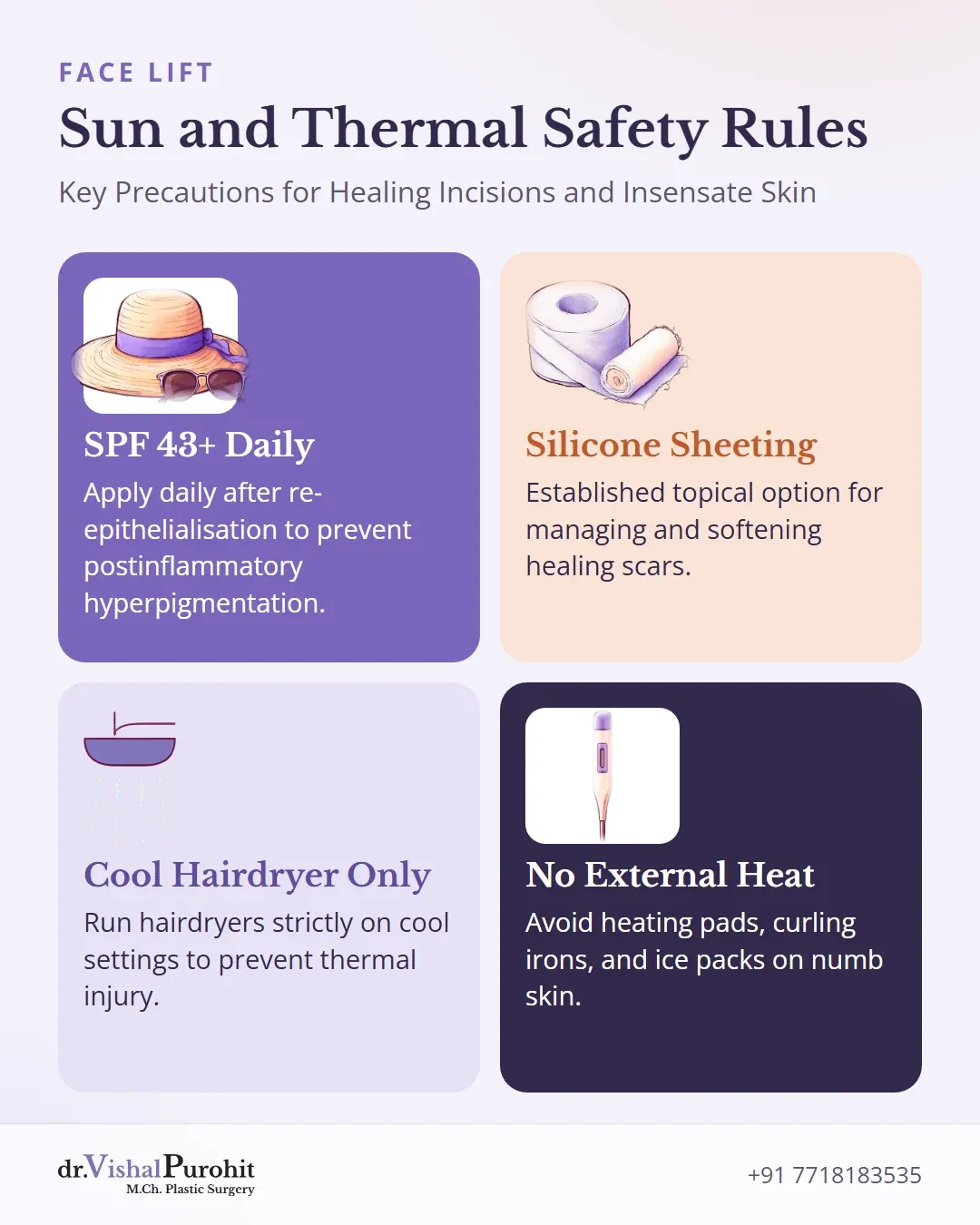
Direct sunlight on healing incisions can trigger pigment alterations. After complete re-epithelialisation, patients are advised to avoid direct sun exposure and apply a sunscreen with an SPF of 43 or higher daily to prevent dyspigmentation or postinflammatory hyperpigmentation28. Ingredients such as avobenzone, oxybenzone, and oxytinate may cause irritation on newly healing skin28. Silicone sheeting provides an established topical option for scar management29.
Managing Heat, Numbness, and Dust
Because healing facial flaps remain temporarily insensate, external heat sources create a significant danger of accidental thermal injury3031.
- Hairdryers must only run on low or cool settings313233.
- Heating pads, curling irons, and excessively hot tap water can burn undermined skin without early pain sensation30313233.
- Applying external heat or ice packs during early recovery is discouraged by surgical authors due to burn risks on numb tissue323334.
Postoperative Care Consultations in Jaipur
Smooth tissue healing relies on disciplined rest, consistent head elevation, and protecting healing incisions from thermal injury and excess physical strain. Patients considering facelift surgery in Jaipur receive individualized evaluations to align surgical planning with personal recovery schedules. Reviewing detailed facelift FAQs offers helpful guidance regarding healing milestones, while direct clinical follow-up evaluations ensure safe clearance before resuming professional work, driving, and vigorous physical activities.
This is educational information, not medical advice.