
A chemical brow lift relies on the delicate interplay between opposing muscles in the upper face. By using botulinum toxin type A to temporarily relax targeted brow depressors, the frontalis muscle can elevate parts of the eyebrow without opposition, resulting in subtle, millimeter-level contour adjustments.
Because neuromodulators do not physically suspend tissue, patients evaluating Hooded Eyes, Low Brows or Drooping Eyelid Before Botox must understand that botulinum toxin cannot remove excess skin or replace depleted structural volume. Careful clinical assessment ensures treatment aligns with individual facial anatomy.
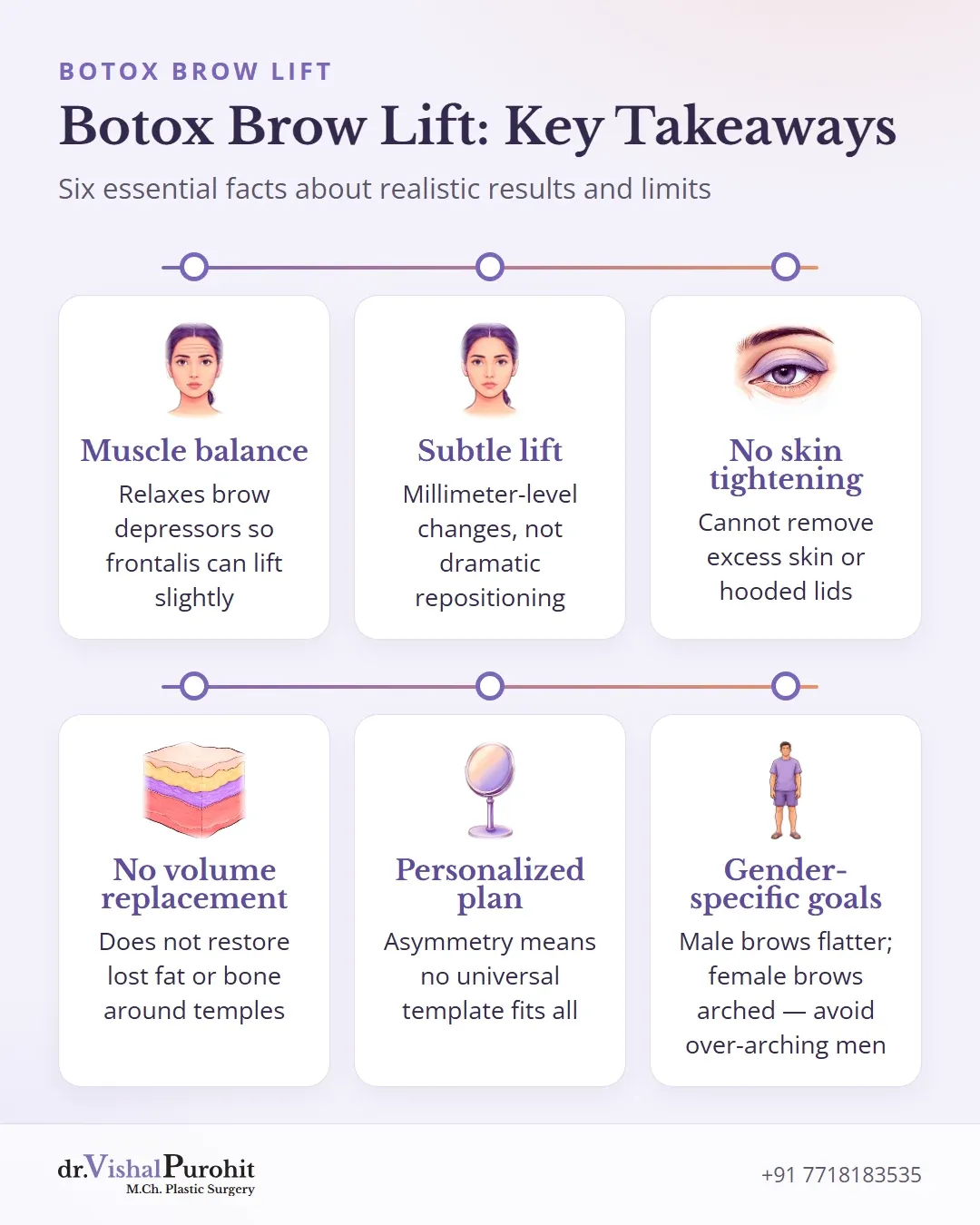
How Brow Elevators and Depressors Interact
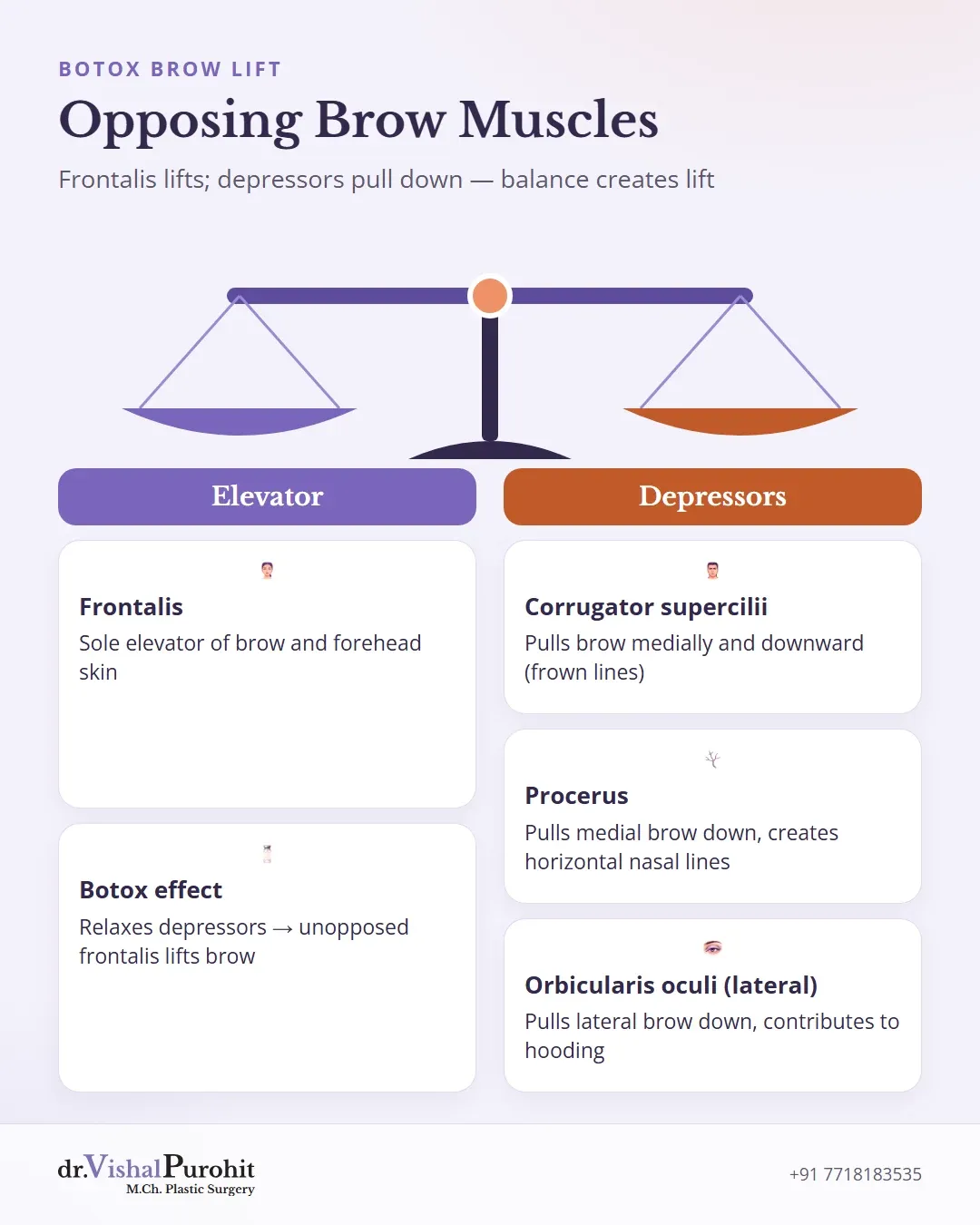
Eyebrow position relies on a dynamic muscular balance across the upper face rather than physical suspension12. Antagonistic muscle groups pull the brow in opposing directions:
- The frontalis muscle acts as the sole elevator of the brow and forehead skin345.
- The brow depressors pull tissue downward and medially, comprising the corrugator supercilii, procerus, and superolateral fibers of the orbicularis oculi167.
A chemical brow lift uses botulinum toxin type A to temporarily relax targeted depressor muscles78. Because neurotoxin does not mechanically hoist tissue, relaxing these depressors leaves active portions of the frontalis unopposed, permitting subtle upward elevation of the eyebrow4910.
Precise balance remains essential. Excessive weakening of the depressors can produce an overly elevated or unnatural arch13. Conversely, overtreating or paralyzing the frontalis removes upward pull and may lead to eyebrow ptosis or negate any lift achieved by treating the depressors15910.
Dr. Purohit’s note: Dr. Vishal Purohit assesses individual muscle dynamics during consultation to plan treatment accurately.
Subtle Outer Brow Repositioning Versus Surgery

A chemical brow lift using Botox provides subtle changes in eyebrow position rather than the dramatic repositioning seen with surgical techniques911. In surgical brow rejuvenation, more involved procedures allow for greater anatomical intervention and more noticeable, longer-lasting elevation11. In contrast, non-surgical treatment focuses on slight adjustments to dynamic eyebrow shape911.
Targeting the depressor muscles, such as the superolateral orbicularis oculi at the lateral eyebrow, permits subtle lateral elevation912. However, patients should understand that this outcome remains modest compared to an operative correction9.
Outcomes depend entirely on individual dynamic muscle tone rather than an invariable surgical alteration:
Dynamic Muscular Balance
Presentation & Results
- Patients presenting with severe brow drooping generally achieve less noticeable lift from botulinum toxin alone10.
Because aesthetic response relies directly on dynamic muscular interplay, the literature does not promise fixed elevation measurements, focusing instead on delicate, millimeter-level contour changes912. In Dr. Vishal Purohit’s practice in Jaipur, treatment expectations are tailored during individual clinical assessment.
Why Skin Excess and Volume Loss Persist
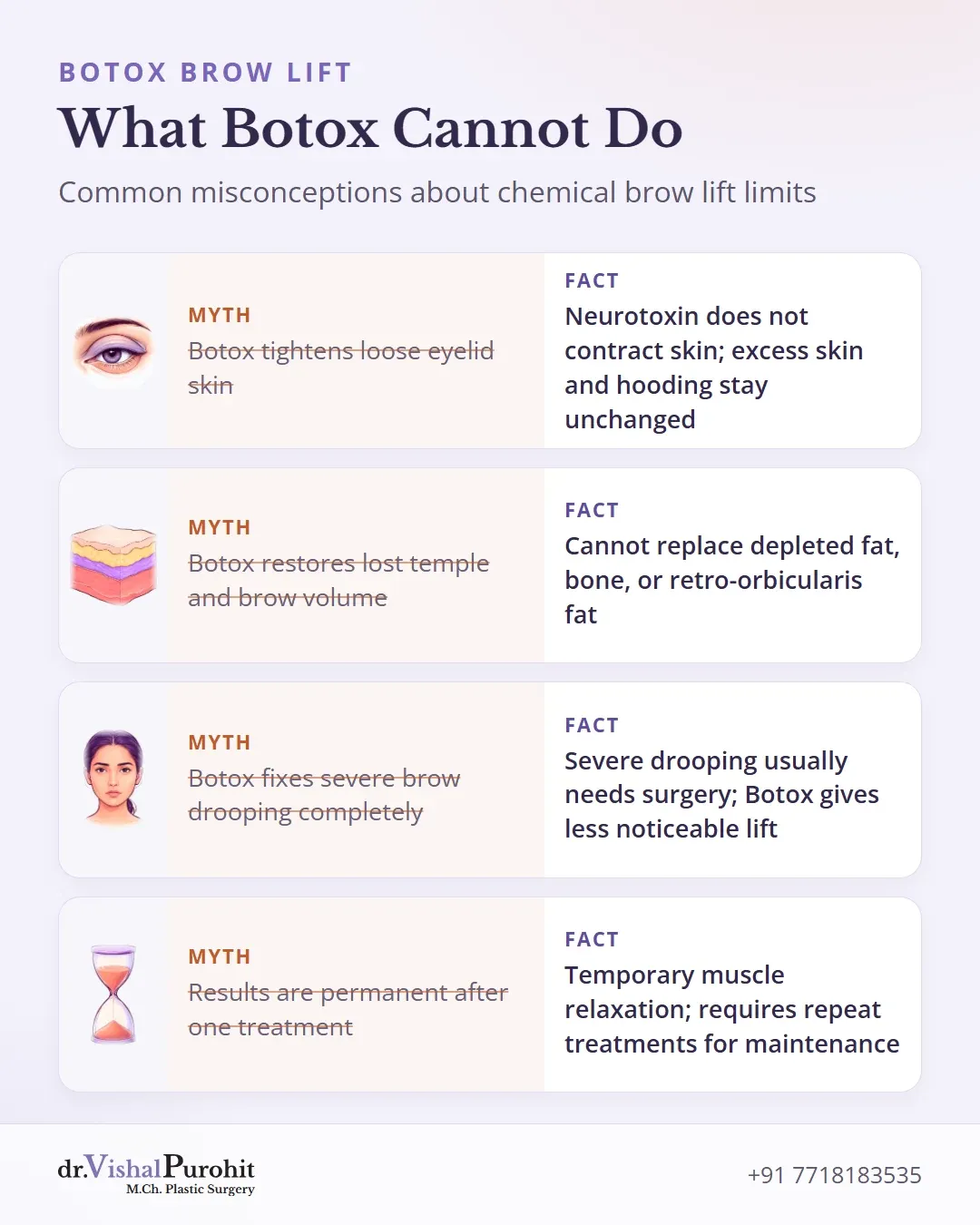
Botulinum toxin temporarily alters muscle dynamics by inhibiting acetylcholine release to relax targeted skeletal muscles8. However, neurotoxin injections do not tighten stretched skin or replenish lost structural volume around the temples and orbital rim.
Patients with significant brow redundancy, marked skin excess, or true eyelid laxity do not achieve skin contraction through chemical brow lift injections21415. Static tissue laxity and persistent hooding remain unchanged because neuromodulators address dynamic muscle pull rather than redundant tissue214. When excessive brow droop, hooding, or severe lid ptosis is present, surgical intervention may be required instead2.
Furthermore, volume loss can involve deeper anatomical layers, including bone as well as subcutaneous and retro-orbicularis fat16. While temple volume restoration can affect lateral brow position16, botulinum toxin cannot replace depleted structural tissues. In his practice, Dr. Vishal Purohit assesses brow and periorbital anatomy during consultation to determine whether dynamic muscle modulation can assist or whether structural concerns require other approaches.
Natural Facial Asymmetry and Individual Goals
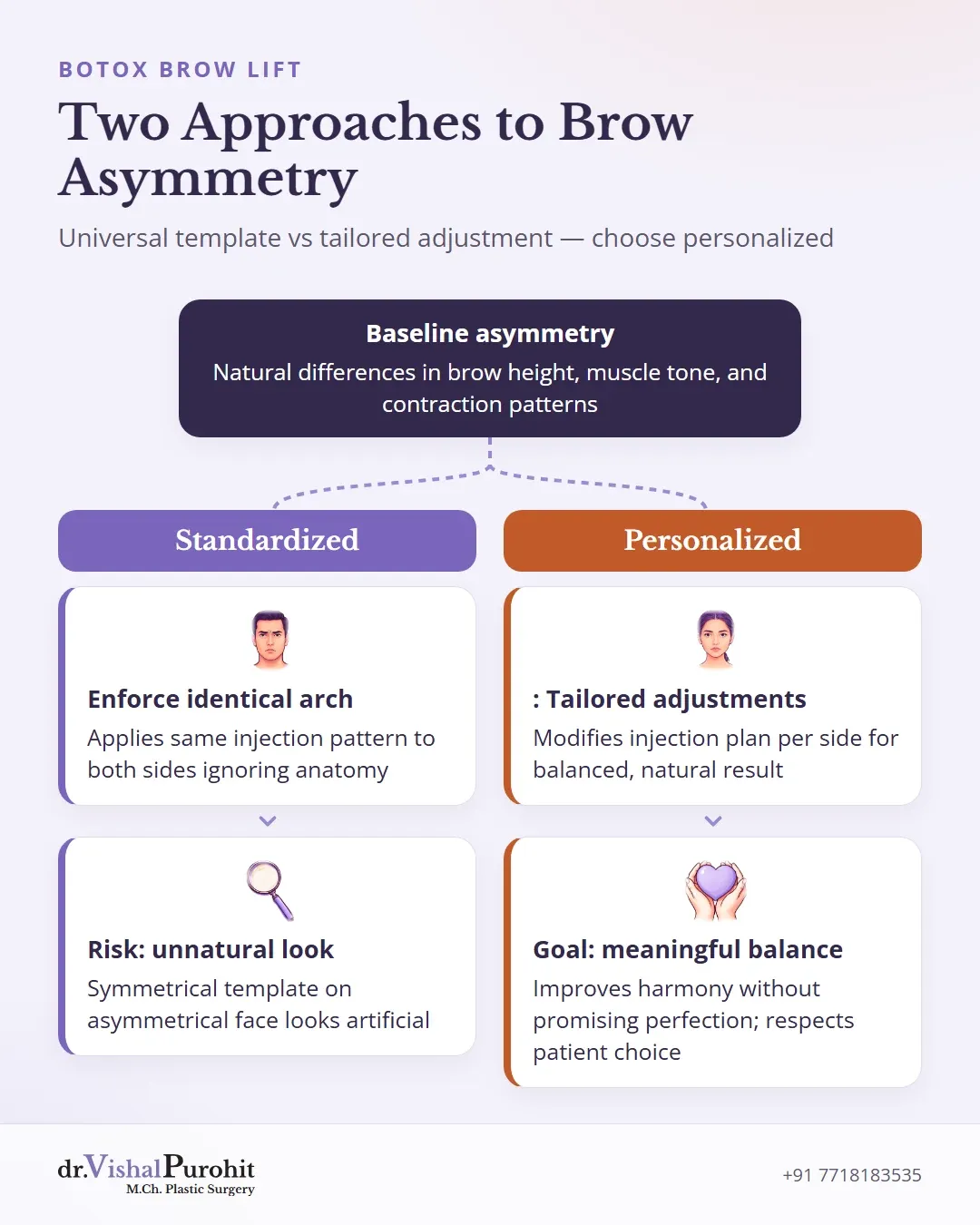
Facial asymmetries are common, though many individuals remain unaware of subtle differences between sides until examined closely17. Natural variations in baseline eyebrow height, frontalis muscle activity, and glabellar contraction patterns mean that a single universal template cannot suit every face1718. Enforcing an identical arch often appears unnatural and fails to respect individual anatomy1819.
During evaluation, Dr. Purohit focuses on each person’s unique facial features and specific aesthetic goals rather than applying a rigid template. At his practice in Jaipur, clinical photographs are taken strictly for confidential treatment records and are never displayed publicly.
Key points during individual planning include:
- Differences in brow height or muscle movement often require tailored, individualized adjustments to standard injection plans1718.
- Meaningful improvement in balance can be planned, but complete perfection is never promised17.
- Individual anatomy, age, and personal preferences guide realistic outcomes1920.
Choosing no treatment is always a completely valid option, and patients are supported to make unhurried decisions without cosmetic pressure.
Evaluating Matched Photographs and Aesthetic Differences
Clinical photography is an integral part of facial assessment when planning botulinum toxin type A treatment21. Evaluating outcomes accurately requires standardized, matched photographs taken both at rest and during dynamic facial expression. Commercial marketing images often fail to show both states, which limits their reliability for judging true aesthetic change. In Dr. Purohit’s practice, clinical photographs are kept strictly for treatment records and are never displayed publicly.
Key points
- Standardized photographs at rest and during expression are essential for assessing botulinum toxin outcomes.
- Commercial marketing images often omit both facial states and are less reliable for judging true changes.
- Gender differences in eyebrow anatomy require distinct, tailored injection approaches.
Gender Variations in Eyebrow Contours
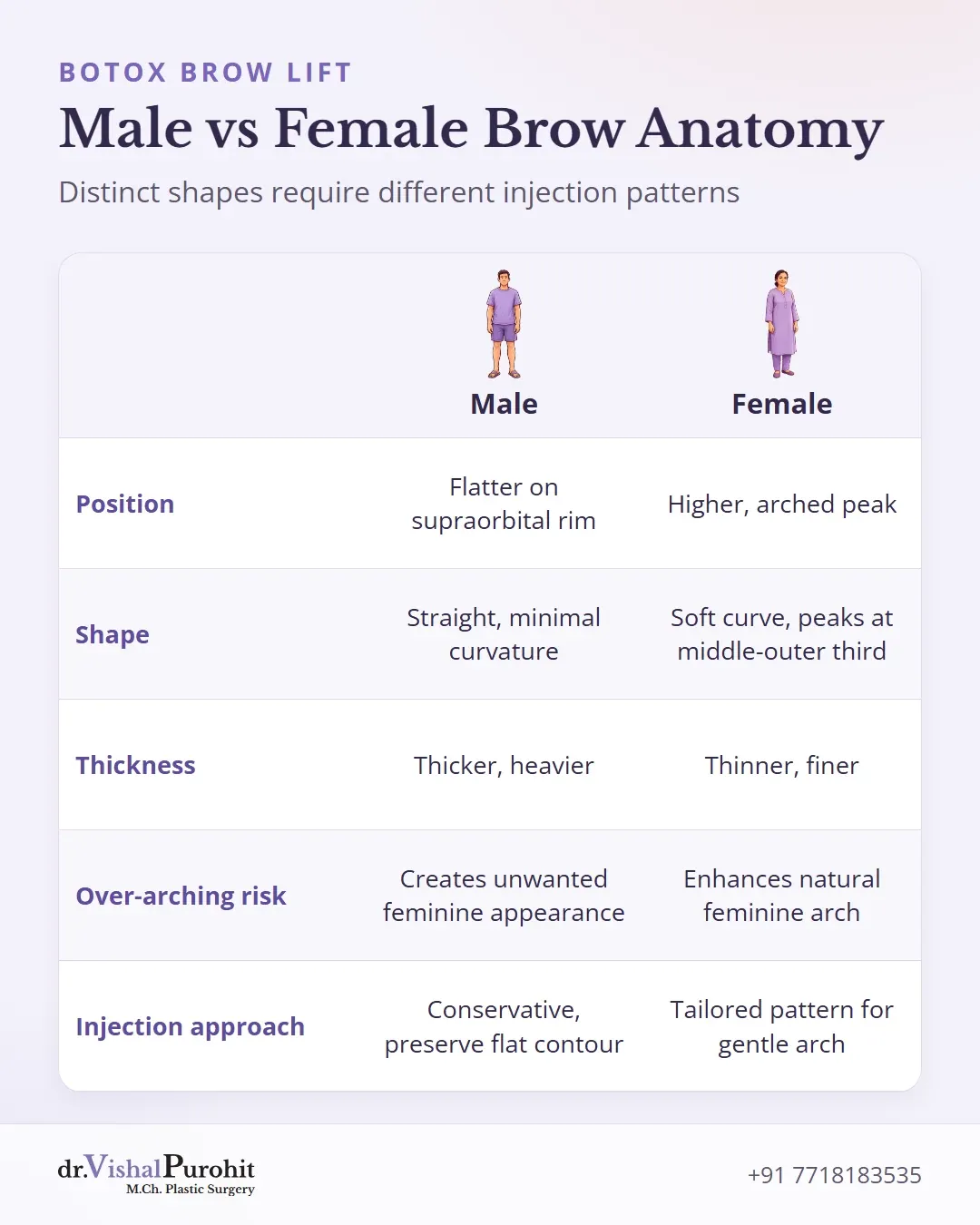
Anatomical differences between male and female brows require distinct treatment approaches:
- The male eyebrow is typically thicker, heavier, and positioned flatter across the supraorbital rim with minimal curvature1. It generally follows a straighter configuration relative to the nose22.
- The female eyebrow naturally presents a softer curve, often peaking between the middle and outer thirds to create a gentle lateral arch122.
Introducing an excessive lateral arch into a male brow risks creating an unintended feminine appearance122. Whether a tailored injection pattern or a conservative adjustment is chosen for male or female facial anatomy is decided at the consultation.
Consulting for Eyebrow Rejuvenation in Jaipur
Realistic outcomes rely on dynamic muscle balance, individualized planning, and respect for baseline anatomy. If you are considering non-surgical options to refine eyebrow contours, explore details regarding Botox Brow Lift in Jaipur or read Botox Brow Lift FAQs. During a consultation, Dr. Purohit evaluates unique facial features to determine if dynamic muscle modulation suits your aesthetic goals.
This is educational information, not medical advice.