
Attending social celebrations or returning to daily professional commitments requires thoughtful scheduling after facial injectable procedures. Understanding Judging Botox Brow Lift Results and What Happens as It Wears Off helps patients coordinate important appointments realistically around expected physical changes.
Immediate skin reactions such as minor swelling, redness, and occasional bruising appear regularly at injection points. Proper planning allows these temporary changes to settle naturally before critical public appearances or family festivities take place.
Immediate Injection Marks Redness and Minor Swelling
Local skin reactions are normal sequelae of botulinum toxin injections rather than lasting complications1. Most patients notice minor changes at the injection points immediately following treatment12.
Key points
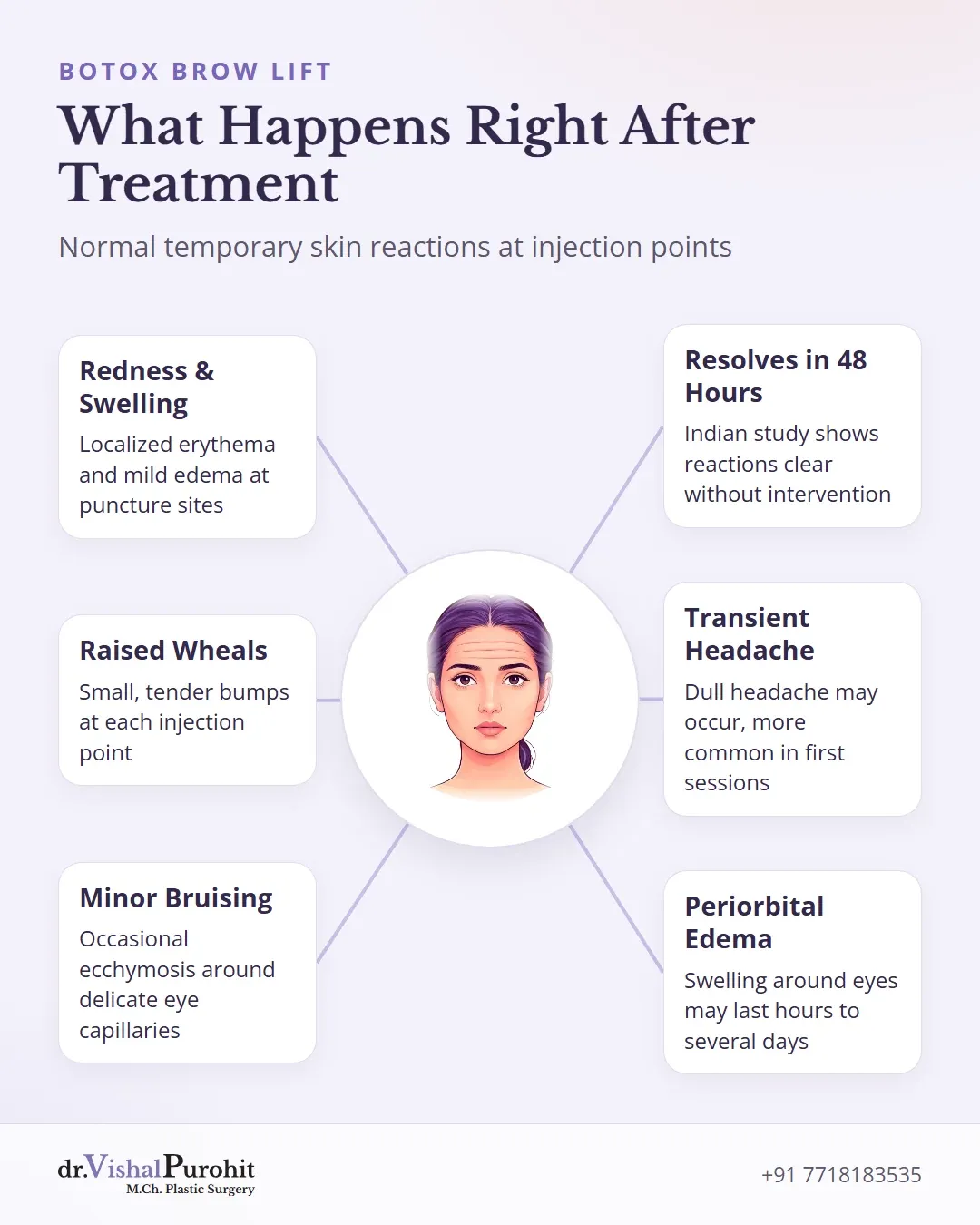
- Local reactions like redness, mild swelling, and small wheals at injection points are normal and self-limiting.
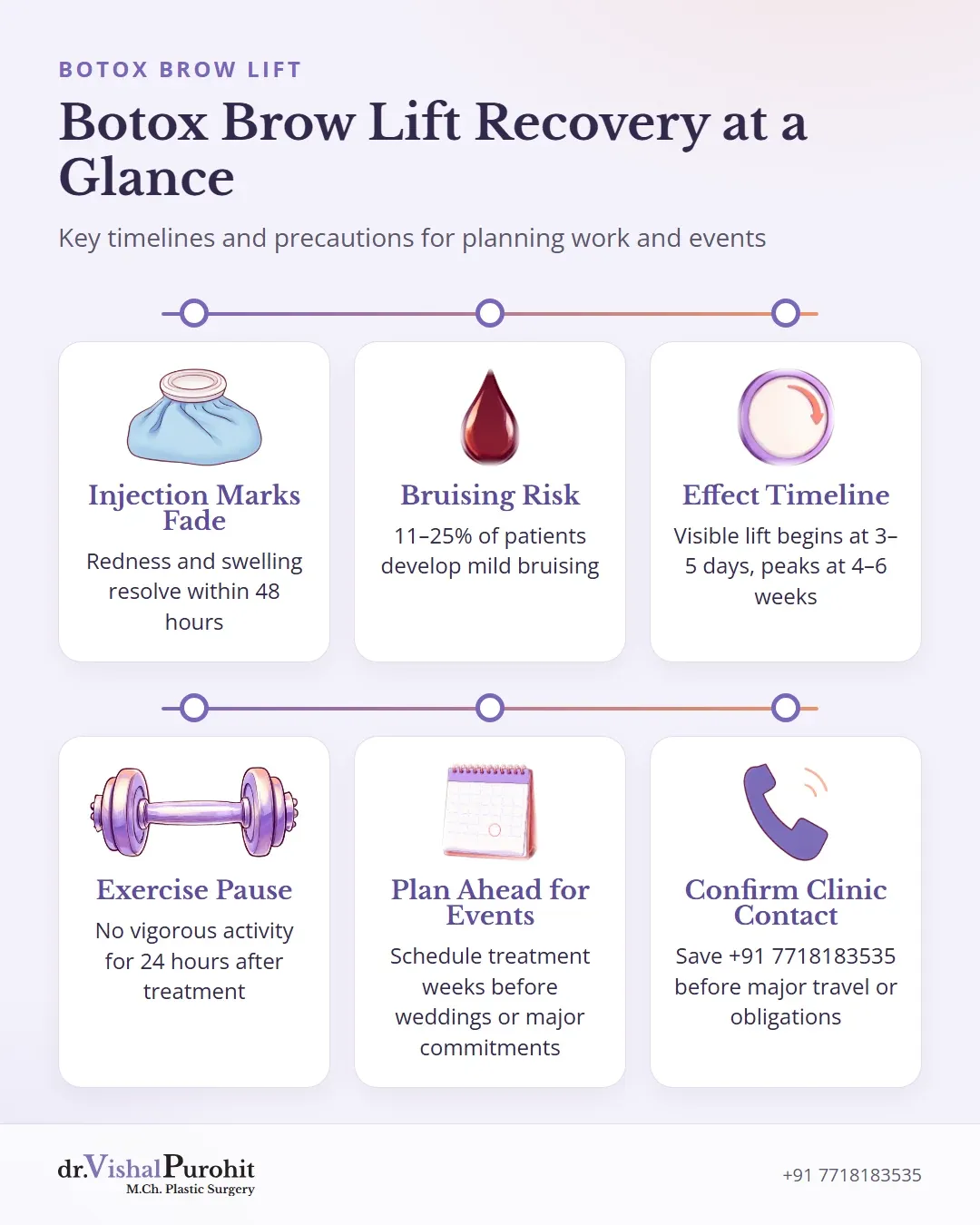
- Most injection-site reactions resolve within 48 hours without intervention.
- Transient dull headaches may occasionally occur, typically subsiding with subsequent treatments.
Typical Initial Reactions
Common immediate reactions include:
- Localized redness (erythema) and mild swelling (edema)13
- Small, raised wheals or tenderness at the puncture points12
- Occasional minor bruising or ecchymosis123
These localized effects are self-limited and typically resolve within a short period1. In an Indian study of upper facial lines, mild and transient injection-site reactions resolved within 48 hours without any intervention4. Periorbital edema may last from a few hours up to several days5.
Transient Dull Headache
Some patients experience a dull, transient headache after receiving injections15. This may occur with or without mild body malaise and can occasionally persist beyond 24 to 72 hours5. Literature notes that these headaches appear more frequently after the first two or three sessions and subside with subsequent treatments5.
Allowing Time for Bruising and Gradual Settling
Botox injections around the brow alter eyebrow position through a non-surgical approach, but visible results are never instant. Planning ahead around social or professional commitments allows necessary time for any localized post-treatment changes to resolve.
Key points
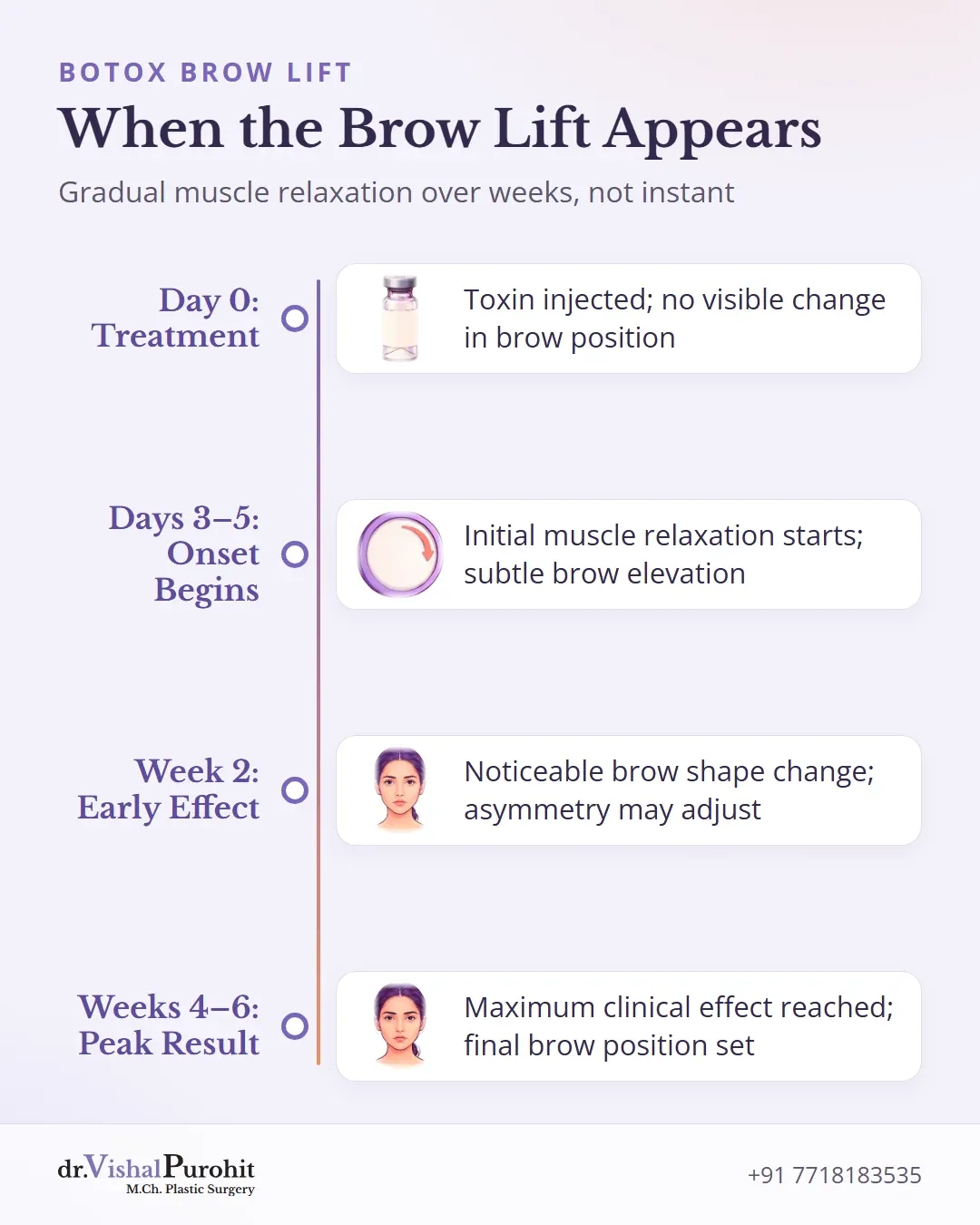
- Botox results develop gradually rather than appearing immediately after injection.
- Mild bruising and localized post-treatment changes take several days to settle.
- Full clinical effects typically peak several weeks after treatment.
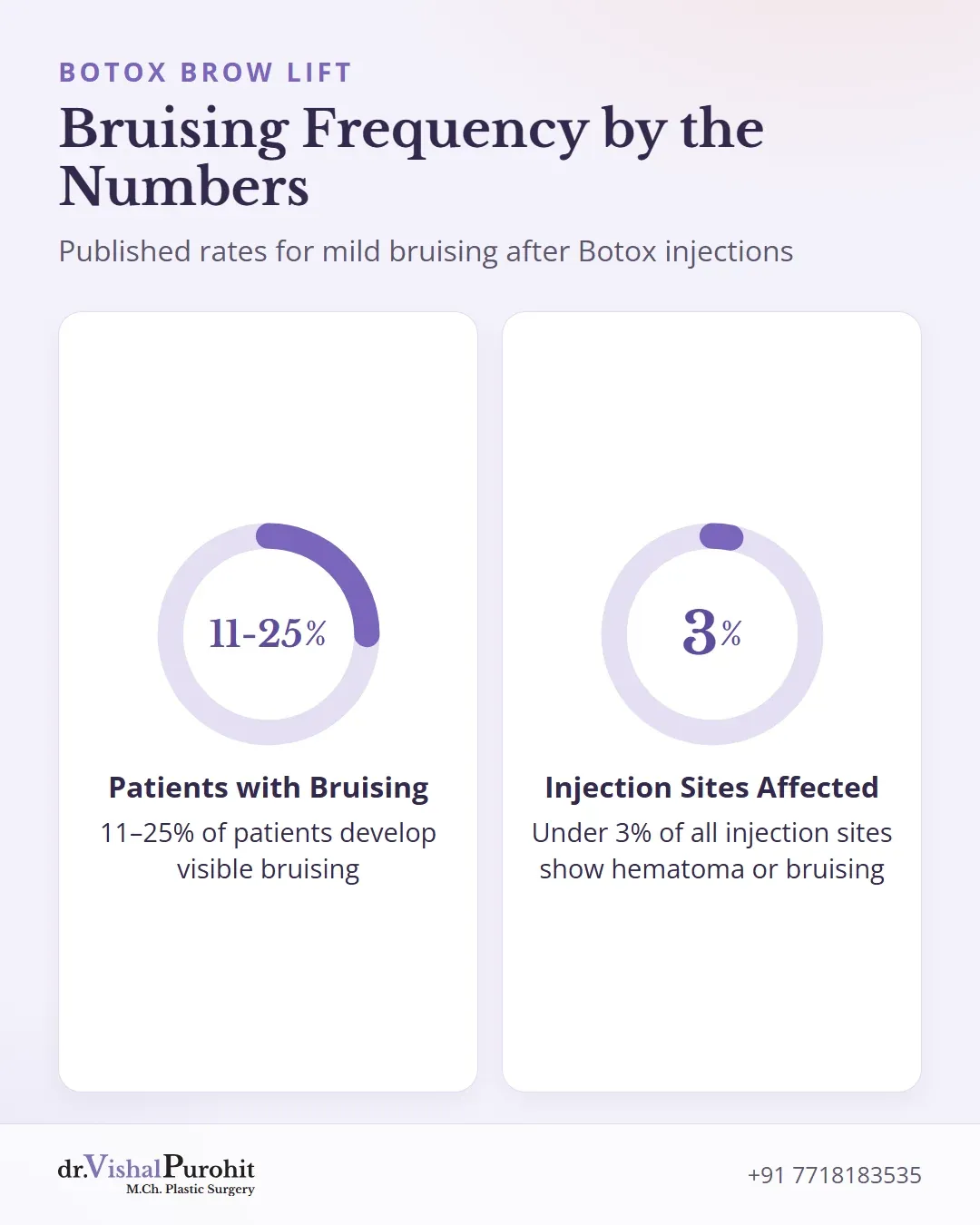
Small bruises can develop around delicate periocular capillary beds and require several days to resolve naturally. In medical literature, mild bruising and injection-site pain are recognized as common, mild complications following botulinum toxin administration6. Reports show mild bruising occurs in 11% to 25% of patients receiving Botox7, while minor injection site hematomas and bruising affect fewer than 3% of all injection sites in properly selected patients8.
Muscle relaxation occurs gradually over days rather than producing an instant transformation. Once administered, the toxin binds to motor nerve terminals to inhibit acetylcholine release, resulting in temporary chemodenervation910. In general clinical timelines, the onset of botulinum toxin type A activity begins within 3 to 5 days, reaching peak clinical effect at 4 to 6 weeks9.
Post-Procedure Instructions for Daily Activity and Skincare
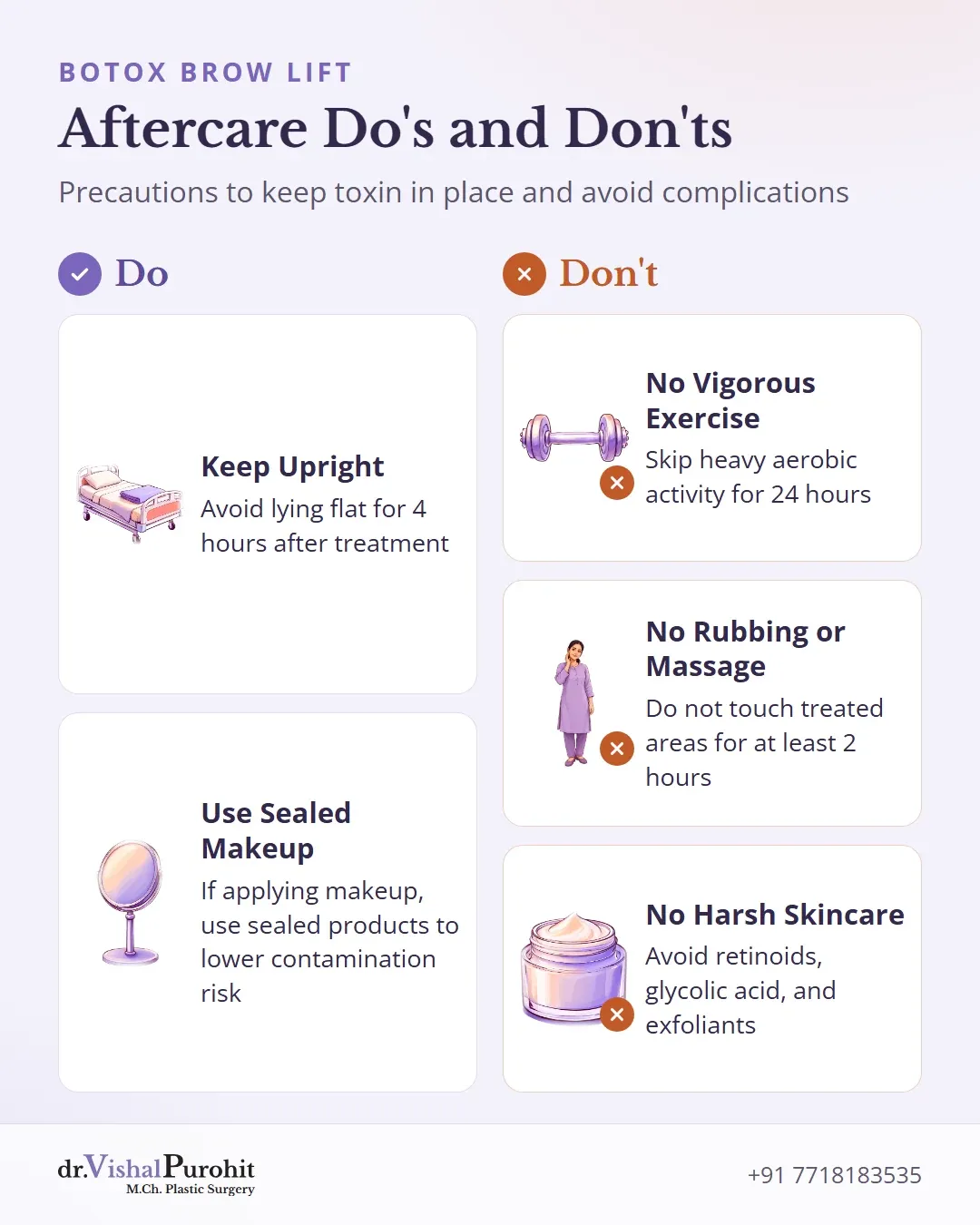
After receiving botulinum toxin injections, clinicians advise taking simple precautions to minimize product displacement to untargeted muscles11121314. Diffusion away from injection sites can lead to unwanted muscle weakness, such as eyelid ptosis or a quizzical brow appearance14.
Dr. Purohit’s note: Specific aftercare protocols are decided at the consultation with Dr. Purohit.
General clinical literature recommends several practical measures following treatment:
- Avoid massaging or rubbing treated areas for at least two hours11 and refrain from applying makeup too vigorously13.
- Refrain from vigorous aerobic activity or heavy physical exercise for 24 hours to prevent unwanted diffusion12.
- Avoid lying flat for four hours post-treatment15.
- Skip harsh exfoliating creams containing retinoids or glycolic acid, as they may irritate injection sites13.
- Avoid vigorous washing or exfoliation, extreme hot or cold temperatures, and activities causing heavy perspiration for the rest of the day15.
Maintaining clean skincare habits reduces contamination risks. When applying cosmetics, experts suggest avoiding makeup immediately after injection; if applied, sealed makeup helps keep the risk of contamination lower at puncture sites11.
Understanding the Limits of Standard Aftercare Rules
After receiving a botulinum toxin injection, individuals often encounter standard instructions aimed at minimising complications. Common traditional guidance includes remaining upright for several hours or limiting physical exertion.
In clinical texts, clinicians advise patients to refrain from vigorous aerobic activity for at least 24 hours after an initial botulinum toxin injection to prevent unwanted diffusion into adjacent muscle groups, which may be facilitated by increased blood flow12. The literature also notes that receptor-mediated binding is not dependent upon muscle contraction, meaning facial muscle exercises are not required after injections12.
While these precautions remain standard practice, comparative clinical evidence establishing their absolute necessity is scarce. In narrative reviews evaluating aesthetic complications, high-level evidence remains limited for less common adverse outcomes, and recommendations frequently rely on published clinical experience and consensus rather than formal trials16. Consequently, observing routine precautions does not provide absolute certainty against diffusion or asymmetrical outcomes1216.
Establishing Follow-Up Contacts Before Major Obligations
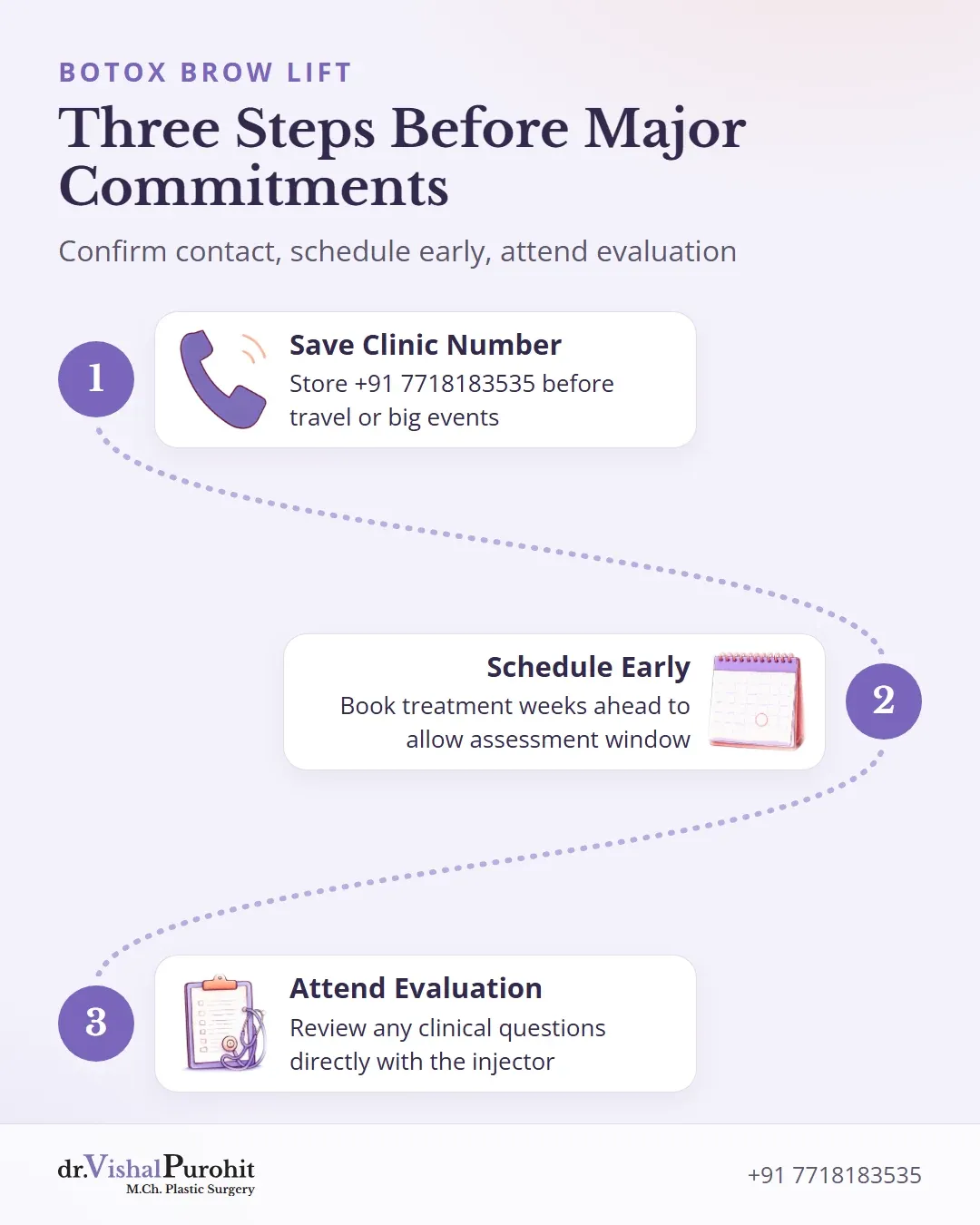
Patients scheduling Botox should confirm direct contact details with the clinic before attending major professional or public engagements. The confirmed telephone contact for Dr. Vishal Purohit is +91 7718183535.
Planning an evaluation window before critical events allows timely review so any questions can be evaluated directly by the injector. For cosmetic injectables, early recognition of complications is a primary goal to minimise long-term sequelae17, and a touch-up may sometimes be needed at one week post-treatment to balance results18.
In Dr.
Planning Considerations
- Confirm emergency clinic contact instructions before significant public or career commitments.
- Schedule the injection with enough time before an event to accommodate an assessment window.
- Attend an evaluation so that any clinical questions are reviewed directly.
Planning Around Indian Weddings and Family Celebrations
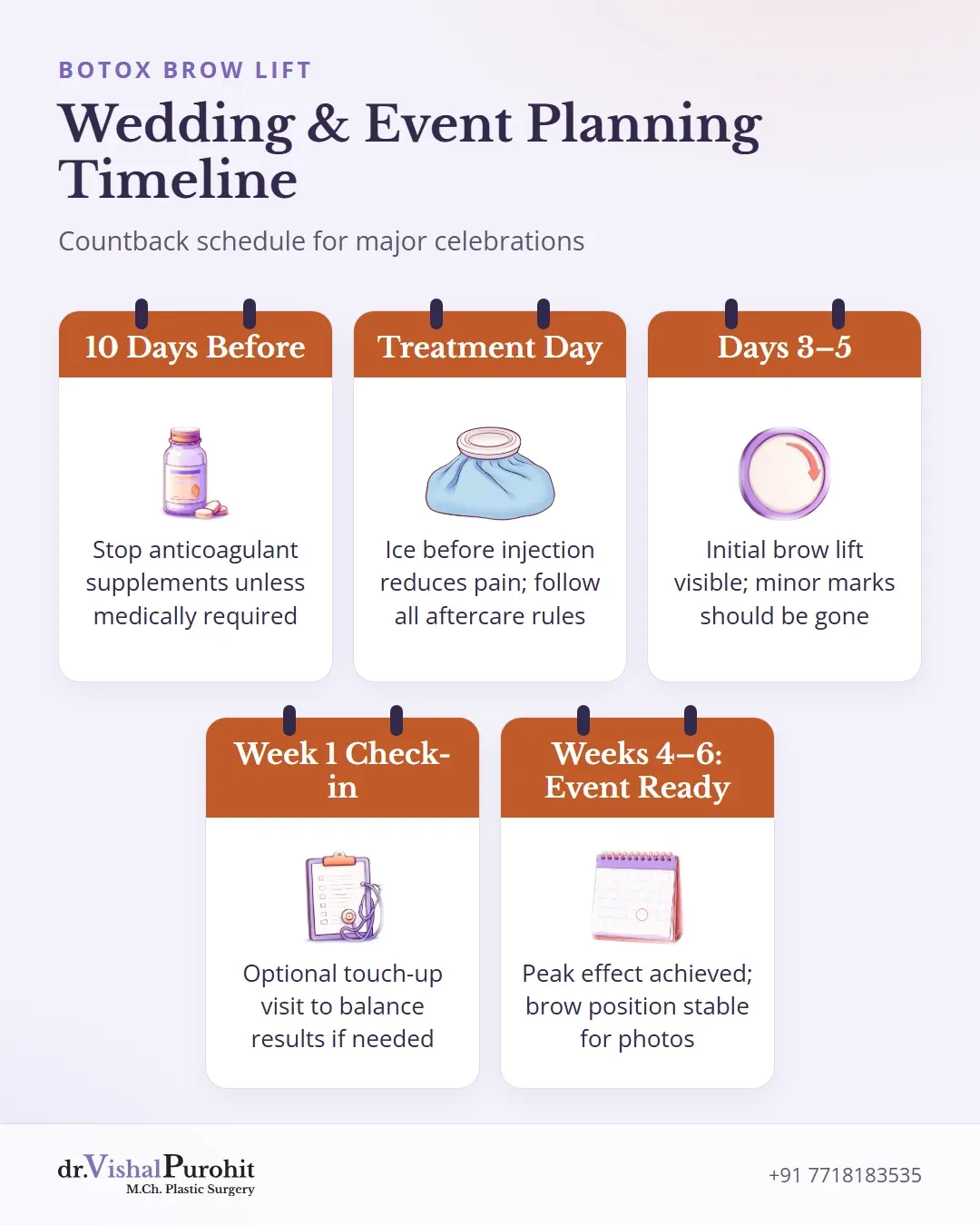
Planning a chemical brow lift for major Indian weddings or significant social functions requires scheduling well ahead of the festivities.
Key Timing Considerations
- The general clinical timeline of botulinum toxin type A effects shows onset at 3 to 5 days and peak effect at 4 to 6 weeks9.
- Supplements with anticoagulant effects should preferably be discontinued 10 days before treatment to minimize the risk of bruising and swelling, unless medically warranted19.
- For patients on prophylactic medications or supplements that may have an anticoagulant effect, it may be helpful to discontinue them a few days prior to injection20.
- Ice applied prior to injection facilitates vasoconstriction, which helps reduce mild injection pain20.
Dr. Vishal Purohit takes clinical photographs for treatment records only, and they are never shown publicly. Specific treatment schedules, review visit timings, and recovery plans are decided at the consultation.
Planning Your Chemical Brow Lift in Jaipur
Coordinating cosmetic procedures with professional calendars requires clear planning and clinical guidance. Learning more about a Botox Brow Lift in Jaipur assists individuals in organizing their treatment timeline effectively before important obligations. Reviewing Botox Brow Lift FAQs outlines foundational details regarding product activity, expected skin settling, and common procedural questions. Direct evaluation ensures recommendations match individual anatomical goals.
This is educational information, not medical advice.