
A chemical brow lift relies on botulinum toxin type A to adjust eyebrow position slightly without surgery. Before planning injections, a detailed evaluation of previous eyelid surgeries, prior toxin responses, and underlying periocular muscle dynamics is essential to minimize functional complications.
Evaluating baseline anatomy helps identify pre-existing eyelid asymmetry or underlying ptosis. Patients assessing brow dynamics can review Hooded Eyes, Low Brows or Drooping Eyelid Before Botox to understand why documented records and careful muscle examinations remain vital during clinical assessment.
Previous Facial Surgery and Toxin Records
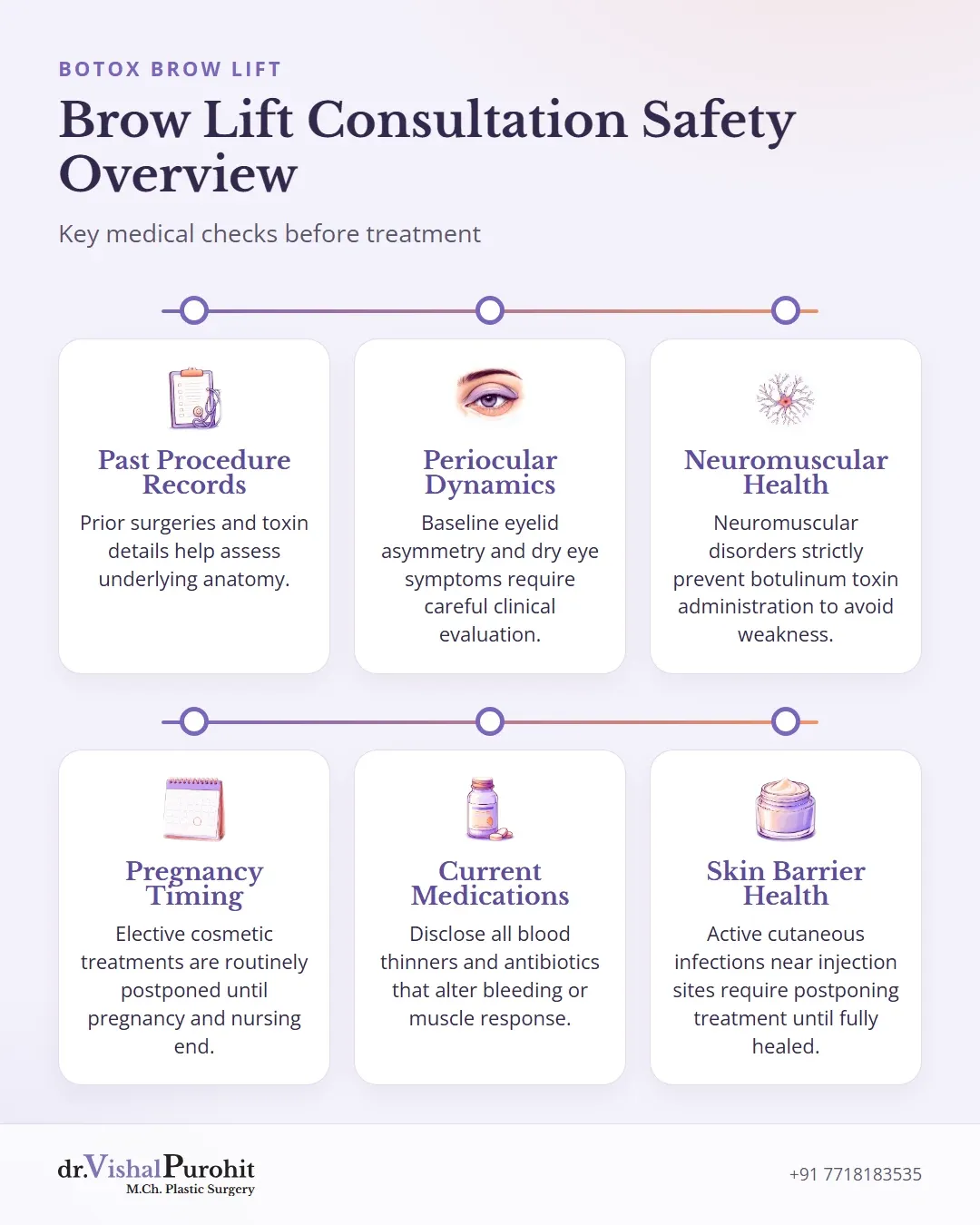
During an aesthetic consultation, patients should share details and clinical photographs of previous eyelid surgery, facial procedures, or prior botulinum toxin treatments.
Why Prior Records Matter
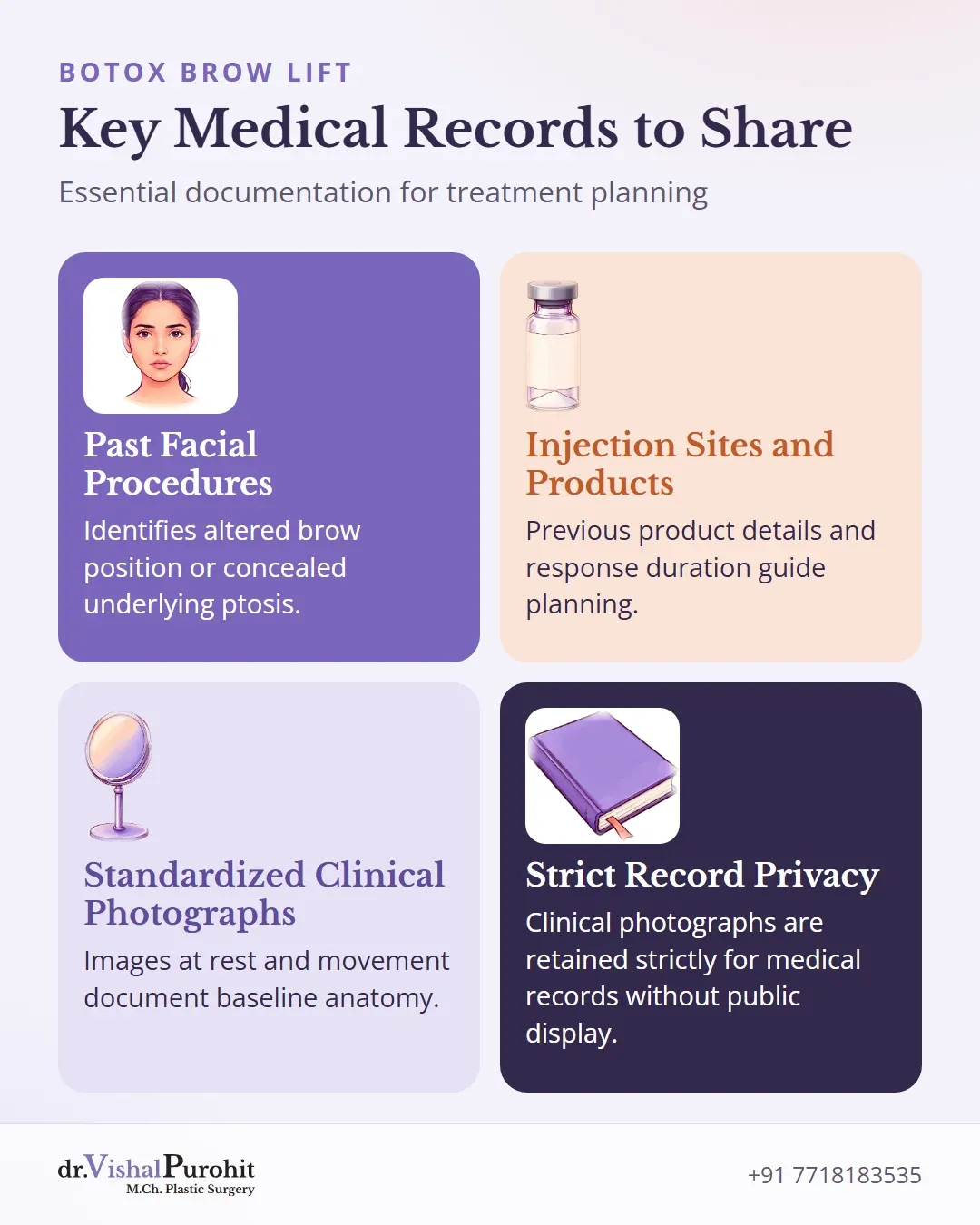
Documenting previous procedures helps the plastic surgeon evaluate underlying anatomical changes and understand individual response patterns before planning treatment:
- Awareness of previous procedures and recent botulinum toxin treatments is essential during initial assessment, particularly where past treatments altered brow position or masked an underlying ptotic brow1.
- Recording injection sites, product details, and the duration of a patient’s response provides important guidance for subsequent treatment planning2.
- Standardized photographs taken at rest and during dynamic facial movement help document baseline anatomy and support safety review34.
Any specific procedural plan or injection approach is decided at the consultation.
Dr. Purohit’s note: In his practice in Jaipur, Dr. Vishal Purohit retains clinical photographs strictly for treatment records, with no public sharing or display.
Ocular Surface Symptoms and Baseline Weakness
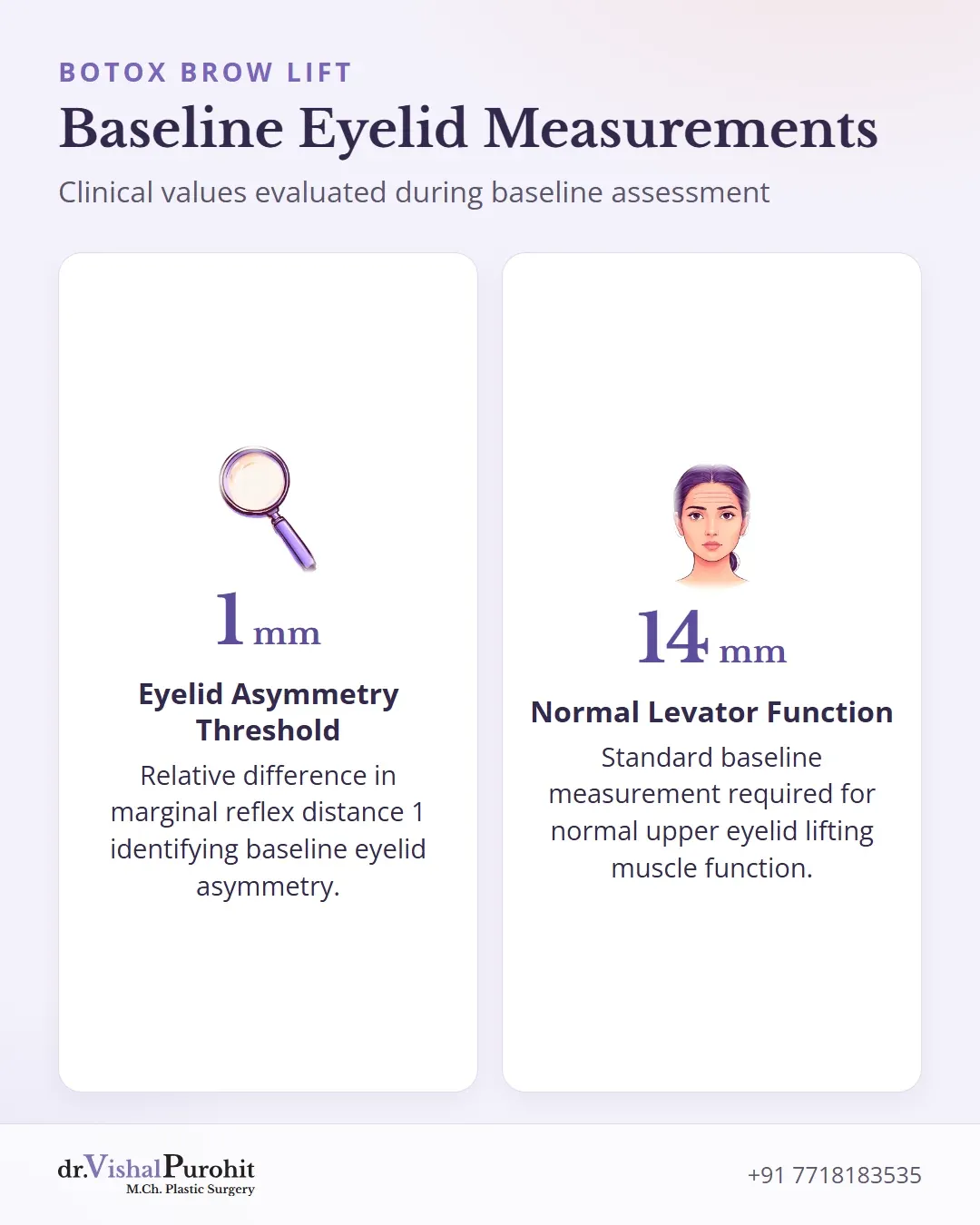
Before planning a chemical brow lift, pre-existing dry eye symptoms, baseline eyelid asymmetry, and forehead muscle dynamics require careful evaluation.
Weak periocular dynamics increase the likelihood of functional eye irritation after treatment. Weakening the orbicularis oculi muscle tone with botulinum toxin type A can cause alterations in eyelid positioning and lead to corneal exposure problems5. Repeated injections into the periocular area may cause or worsen dry eye syndrome manifestations, such as foreign body sensation, subtle eye irritation, and tearing (epiphora), through orbicularis oculi muscle weakness6. Decreased orbicularis function can also result in corneal exposure and increased dry eye symptoms7.
In clinical evaluation, baseline eyelid asymmetry is typically identified when the relative difference in marginal reflex distance 1 (MRD-1) between both eyelids is 1 mm or greater, with normal levator function measuring 14 mm or more8. Treatment planning should account for contraction strength, baseline eyelid function, and the risk of unintended muscle weakness9.
Neuromuscular Disorders and Systemic Contraindications
A chemical brow lift relies on botulinum toxin type A to adjust eyebrow position. Certain underlying health conditions significantly increase treatment risks. Dr. Vishal Purohit assesses each patient’s medical background during the consultation to determine suitability for treatment.
Key points
- Preexisting neuromuscular disorders significantly increase treatment risks with botulinum toxin.
- Conditions such as myasthenia gravis, ALS, and respiratory compromise are critical contraindications.
- A complete medical history is essential to prevent life-threatening systemic complications.
Critical Neuromuscular Conditions
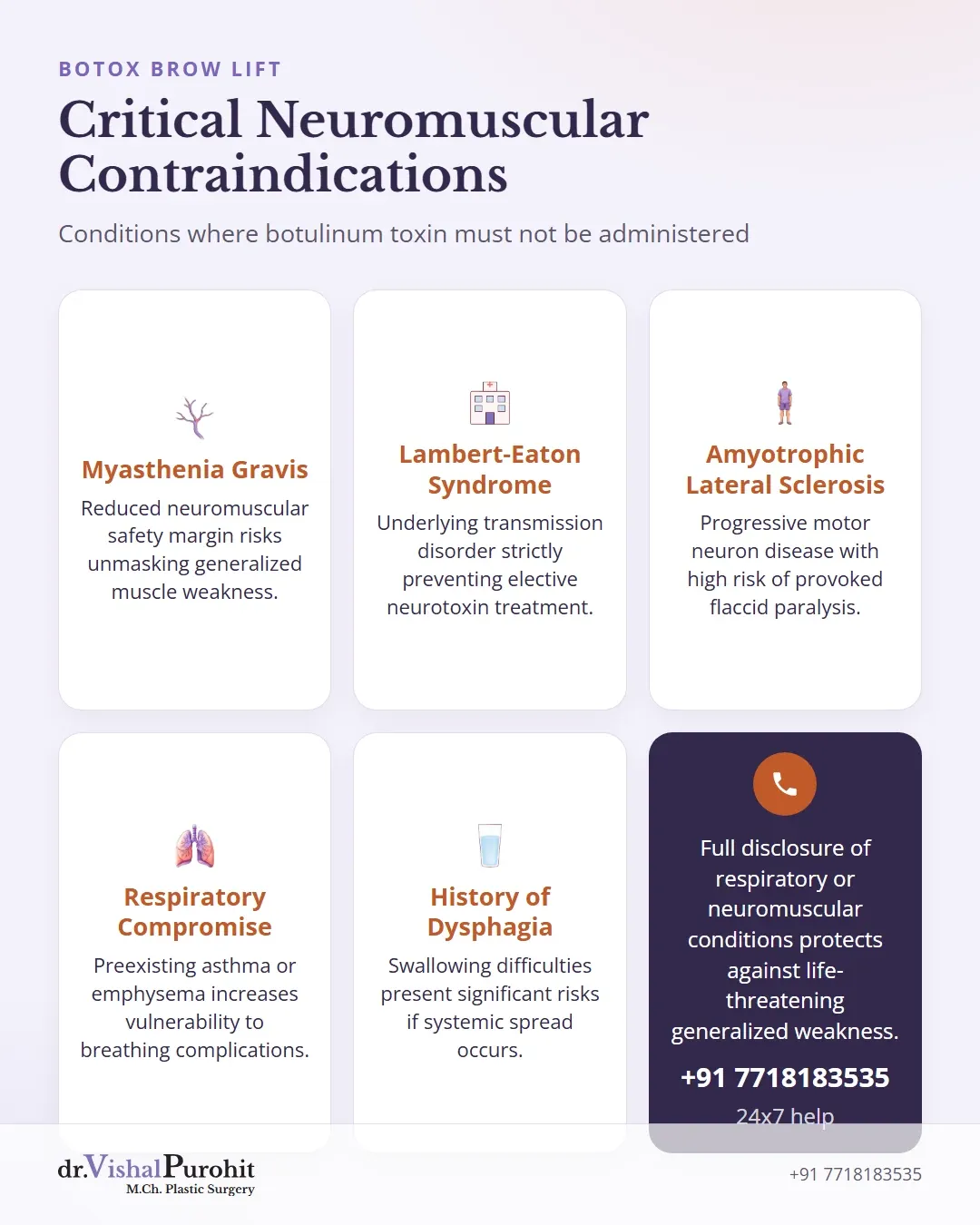
Patients with preexisting neuromuscular transmission disorders should not receive botulinum toxin injections1011. In these conditions, the safety margin at the neuromuscular junction is reduced, and administering the toxin can unmask or provoke generalized weakness12.
Important contraindications include:
- Myasthenia gravis101113
- Lambert-Eaton syndrome (also termed Eaton-Lambert syndrome)111314
- Amyotrophic lateral sclerosis (ALS)1113
- Preexisting respiratory compromise or breathing conditions such as asthma or emphysema1315
- A history of dysphagia or swallowing difficulties1315
Full disclosure of these medical conditions during the evaluation prevents serious systemic complications1315. In severe situations, systemic spread or botulism-like toxicity can result in flaccid paralysis, respiratory distress, and life-threatening complications1617. Sharing an accurate medical and medication history ensures that patient safety remains uncompromised before any chemical brow lift procedure is planned1012.
Pregnancy Breastfeeding and Elective Timing
Clinical safety data regarding botulinum toxin type A during pregnancy and lactation remain limited18. Botulinum toxins are categorized as pregnancy category C11192021. It is not known whether botulinum toxin type A affects reproductive capacity, causes harm to the fetus when administered to a pregnant woman, or is excreted in human milk1920. While animal reproduction studies have shown adverse effects, inadvertent exposure in humans has not resulted in problems19. Nevertheless, because conclusive safety evidence is lacking, its use in pregnant or breastfeeding women is not recommended1120.
Elective aesthetic procedures are routinely postponed until after pregnancy and breastfeeding have ended21. In clinical practice, Dr. Vishal Purohit adheres to this approach for elective treatments, ensuring patient safety remains uncompromised. Any non-urgent cosmetic intervention can wait until nursing is fully concluded. Patients planning a pregnancy or currently nursing are guided to schedule an evaluation at a later date.
Reviewing Medications Supplements and Skin Health

During the assessment for a Botox brow lift, patients must disclose all current medications and supplements. Certain substances can influence procedural safety, bleeding risk, and muscle responses:
- Anticoagulants and blood-thinning agents can increase the risk of bruising2223.
- Specific antibiotics, particularly aminoglycosides, can interfere with neuromuscular transmission and potentiate muscle weakness or the effect of the neurotoxin132425.
How medication adjustments are handled for treatment in his practice is decided at the consultation.
Myth: Patients should independently stop or adjust their prescribed medications before treatment.
Fact: Patients must never stop or alter any prescribed medications independently.
Local Skin Health
An active skin infection at or near the planned injection site is an absolute contraindication to botulinum toxin administration132325. In the presence of any active local cutaneous infection, treatment must be postponed until the skin barrier has completely healed132324. Specific rescheduling timelines and individual suitability decisions are evaluated and decided at the consultation.
Chemical Brow Lift Consultation in Jaipur
Careful disclosure of health history, eye symptoms, and current medications helps make treatment safer. Individuals seeking non-surgical brow rejuvenation can review the procedural overview for Botox Brow Lift in Jaipur or read Botox Brow Lift FAQs to learn more about clinical considerations. In his practice, clinical photographs are used strictly for treatment records and are never shown publicly. Suitability decisions, procedural approaches, and medication adjustments are always decided at the consultation with M.Ch. plastic surgeon Dr. Vishal Purohit (phone or WhatsApp: +91 7718183535).
This is educational information, not medical advice.