
Evaluating ocular surface health and eyelid dynamics before an aesthetic injection is a key clinical step. Incomplete blinking or subtle lid lag can lead to corneal exposure, causing eye dryness, persistent redness, and light sensitivity.
A thorough pre-treatment assessment guides safe planning, which is why reviewing your Botox Brow Lift Consultation: Eye History and Medicines helps identify pre-existing conditions like dry eye or lid laxity early.
The Role of Baseline Ocular Surface Health
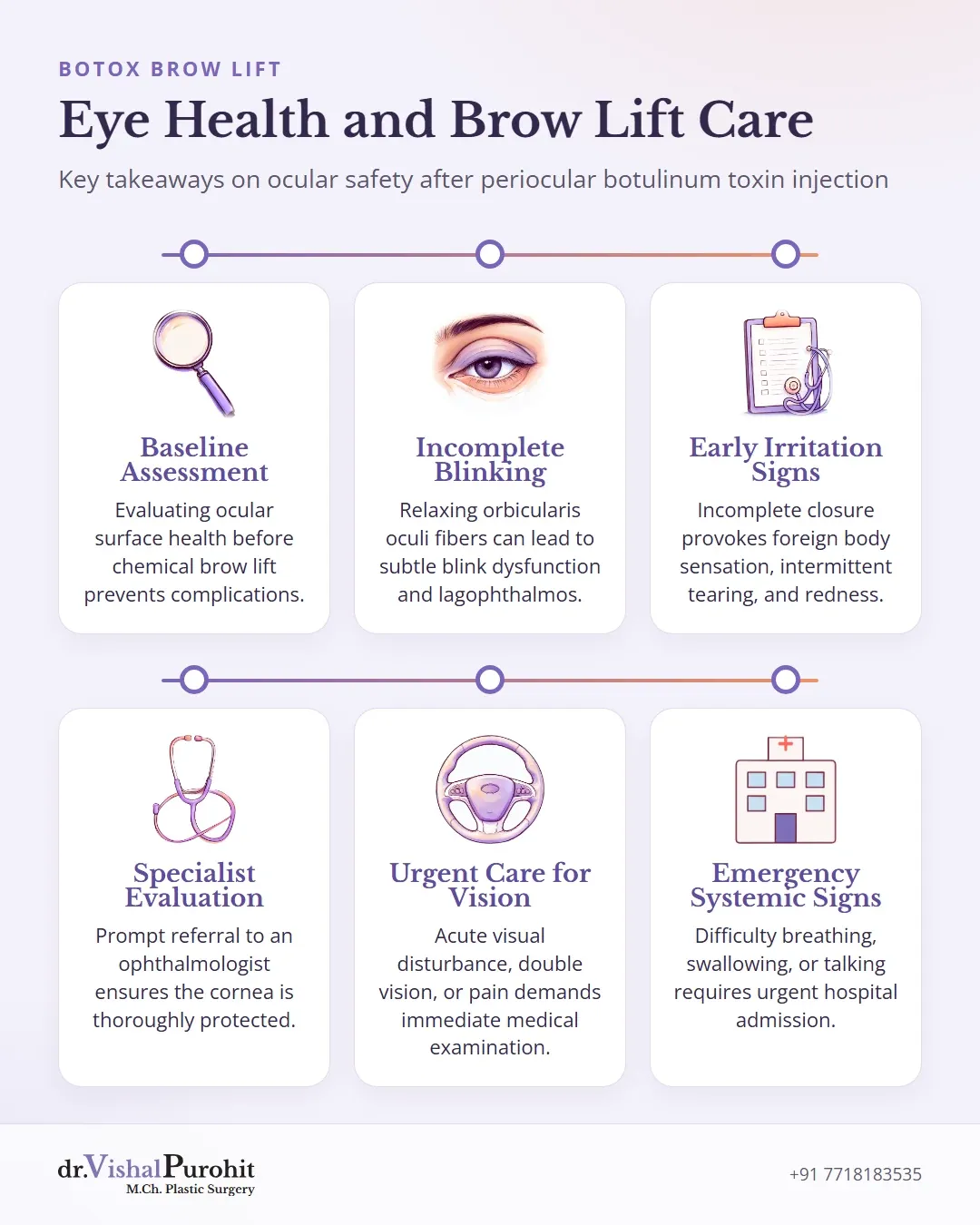
Evaluating ocular surface health before a chemical brow lift is an essential clinical step. In aesthetic treatment planning, clinicians must separate skin-quality concerns from pre-existing ocular-surface disease and eyelid malposition1. Addressing functional disease, active infection, or inflammation prior to elective intervention helps prevent complications1.
Patients with severe dry eyes and lid lag may experience a deterioration of their condition following botulinum toxin injection2. In literature on facial neuromodulation, treating a patient who has dry eye or lower-lid laxity identically to one with firm eyelid support and purely dynamic lines is considered clinically unsound3. Identifying pre-existing dry eye, tearing, contact-lens intolerance, or thyroid eye disease guides appropriate point selection and dosing considerations3.
Dr. Purohit’s note: At his practice in Jaipur, Dr. Vishal Purohit carefully evaluates eyelid support and eye symptoms during the consultation before planning treatment.
Dryness Irritation and Light Sensitivity Near Orbit
Botox injections near the periocular region act by chemodenervating muscles such as the orbicularis oculi4. Because the orbicularis oculi controls eyelid closure, relaxing its fibers can lead to subtle blink dysfunction, incomplete blinking, and lagophthalmos4. When the natural blink mechanism is impaired, the eyelids cannot close fully, resulting in direct corneal exposure45.
Key points
- Incomplete eyelid closure from relaxed periocular muscles leads to direct corneal exposure and surface drying.
- Early warning symptoms include irritation, tearing, redness, and increased sensitivity to light.
- Unresolved exposure can advance from subtle blink dysfunction toward corneal erosion.
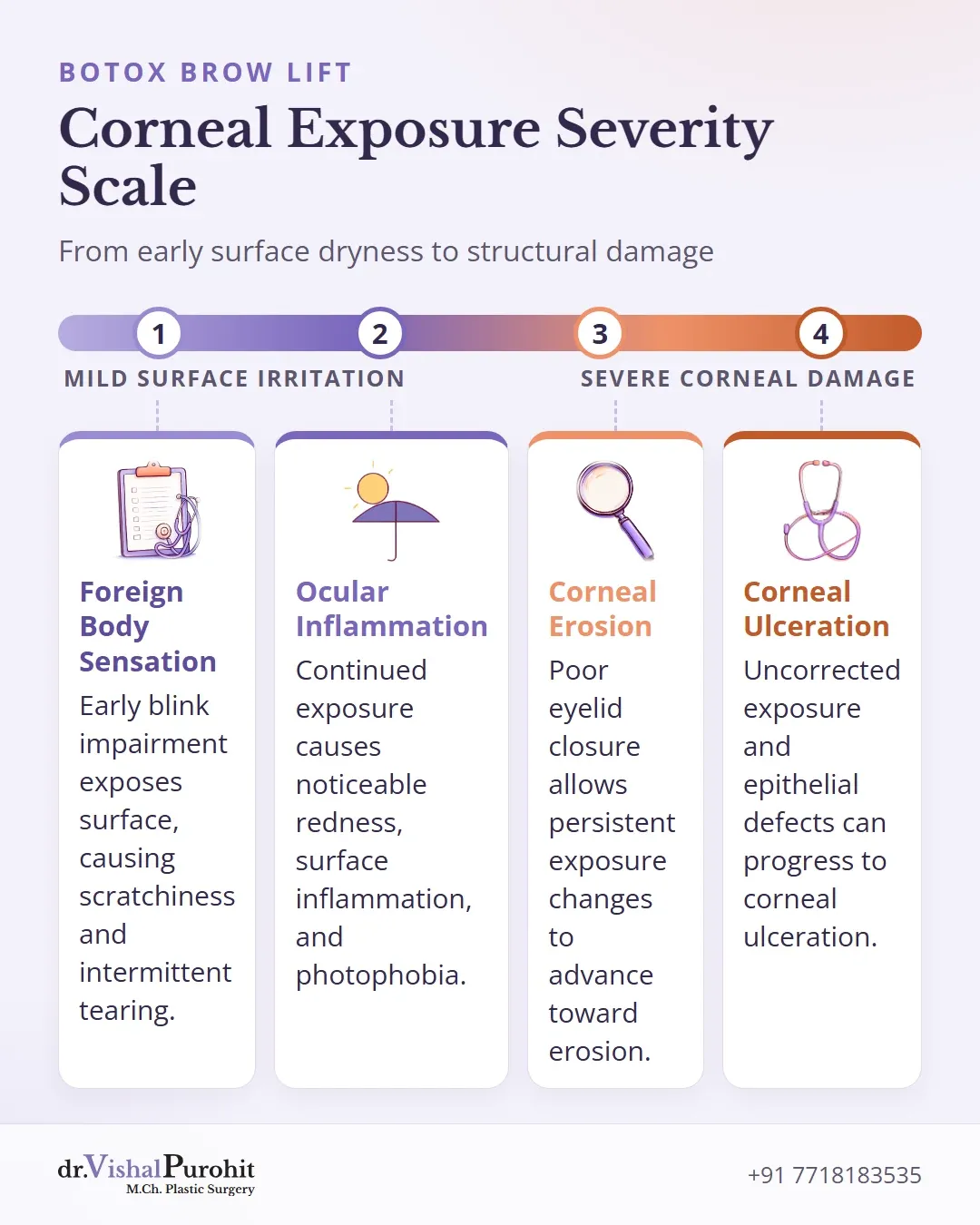
This incomplete coverage exposes the delicate ocular surface to environmental drying4. Clinical literature notes that this sequence commonly provokes early symptoms such as:
- Eye irritation and a foreign body sensation4
- Intermittent tearing or epiphora4
- Redness (red eye) and ocular surface inflammation4
- Photophobia and increased sensitivity to light in more advanced stages4
In literature reports, early blink impairment and lagophthalmos are often subtle and may be aggravated in dry, air-conditioned, or windy settings4. If botulinum neurotoxin exposure persists despite early ocular irritation, continued poor eyelid closure can allow exposure-related surface changes to advance toward corneal erosion4. At his practice in Jaipur, Dr. Vishal Purohit assesses facial and periocular muscle movement carefully before planning any aesthetic injection.
When to Contact Your Clinician and Specialist

Eye redness, tearing, or irritation can occur following botulinum toxin injections67. Persistent scratchiness, a chronic foreign body sensation, or noticeable redness requires prompt communication with the injector. In Dr. Vishal Purohit’s practice in Jaipur, patients receive individual contact instructions for reporting concerning symptoms.
Injection in or near the orbicularis oculi muscle can reduce blinking, which may lead to corneal exposure, persistent corneal epithelial defects, and corneal ulceration8. Other adverse ocular events documented in clinical studies include lagophthalmos, photophobia, keratitis, and diplopia9.
Prompt referral to an ophthalmologist ensures the cornea is thoroughly evaluated and protected from severe exposure damage810. Managing corneal exposure may require interventions such as protective drops, ointments, therapeutic soft contact lenses, or temporary closure of the eye8. If a patient experiences double vision or drooping eyelids that impair sight, an ophthalmologist should be alerted immediately6. Patients can reach Dr. Purohit’s team at +91 7718183535.
Urgent Care for Severe Pain or Vision Changes
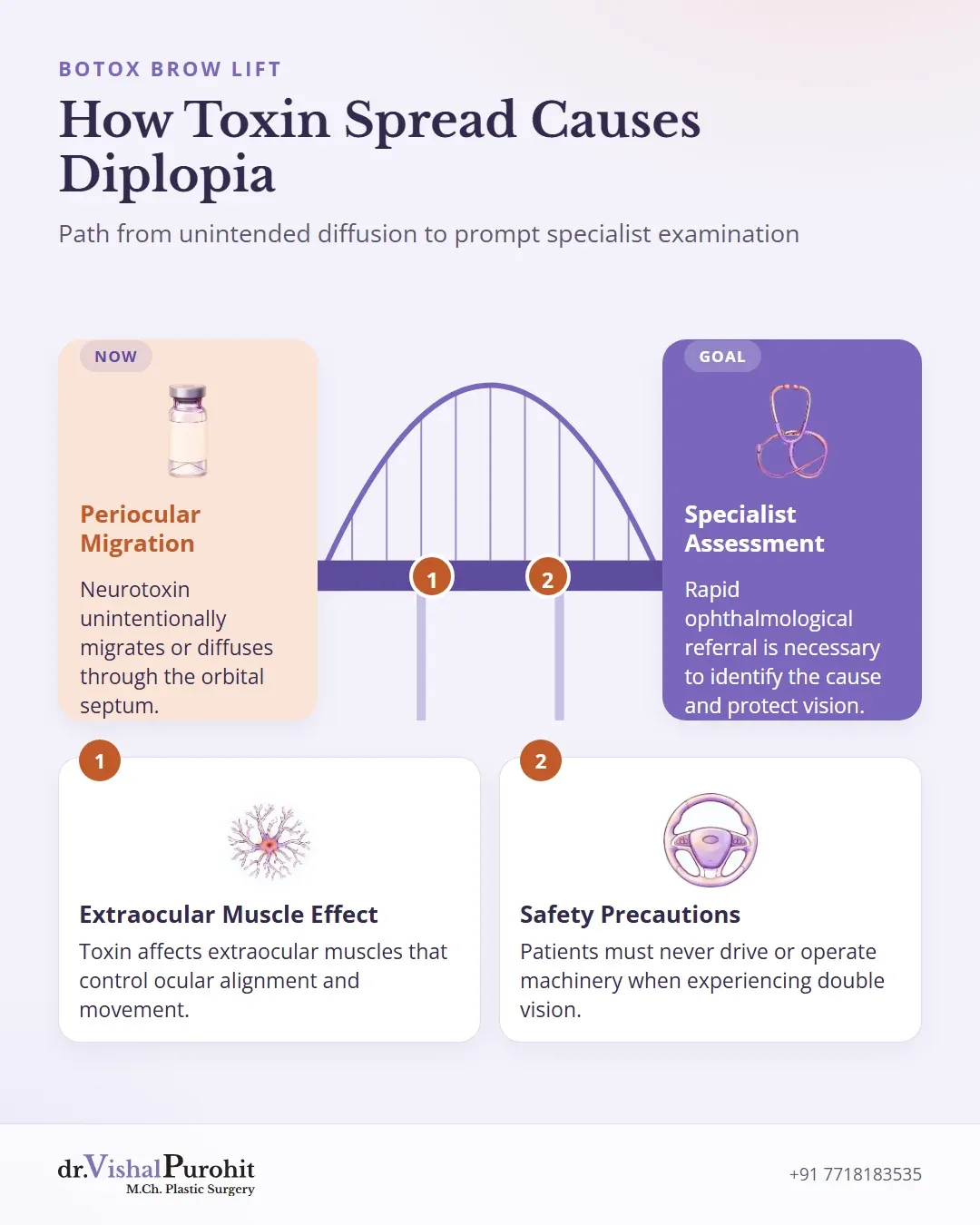
Double vision (diplopia) or strabismus can occur if botulinum toxin inadvertently spreads to extraocular muscles controlling eye alignment and movement11121314. Periocular migration or diffusion of the neurotoxin through the orbital septum can affect these surrounding muscles1213. While diplopia from extraocular muscle involvement is often managed conservatively, persistent or significant cases warrant prompt ophthalmological assessment1113.
Any acute visual disturbance, significant eye pain, or unexpected muscle weakness demands an immediate medical examination1113. For urgent complications, rapid specialist referral is necessary to identify the cause and protect vision1113. Patients should never attempt to drive or operate machinery when experiencing double vision, blurred sight, or compromised visual acuity.
For clinical concerns or to arrange an urgent in-person review following a procedure, Dr. Vishal Purohit can be contacted directly by phone or WhatsApp on +91 7718183535.
Recognizing Systemic Emergency Warning Signs
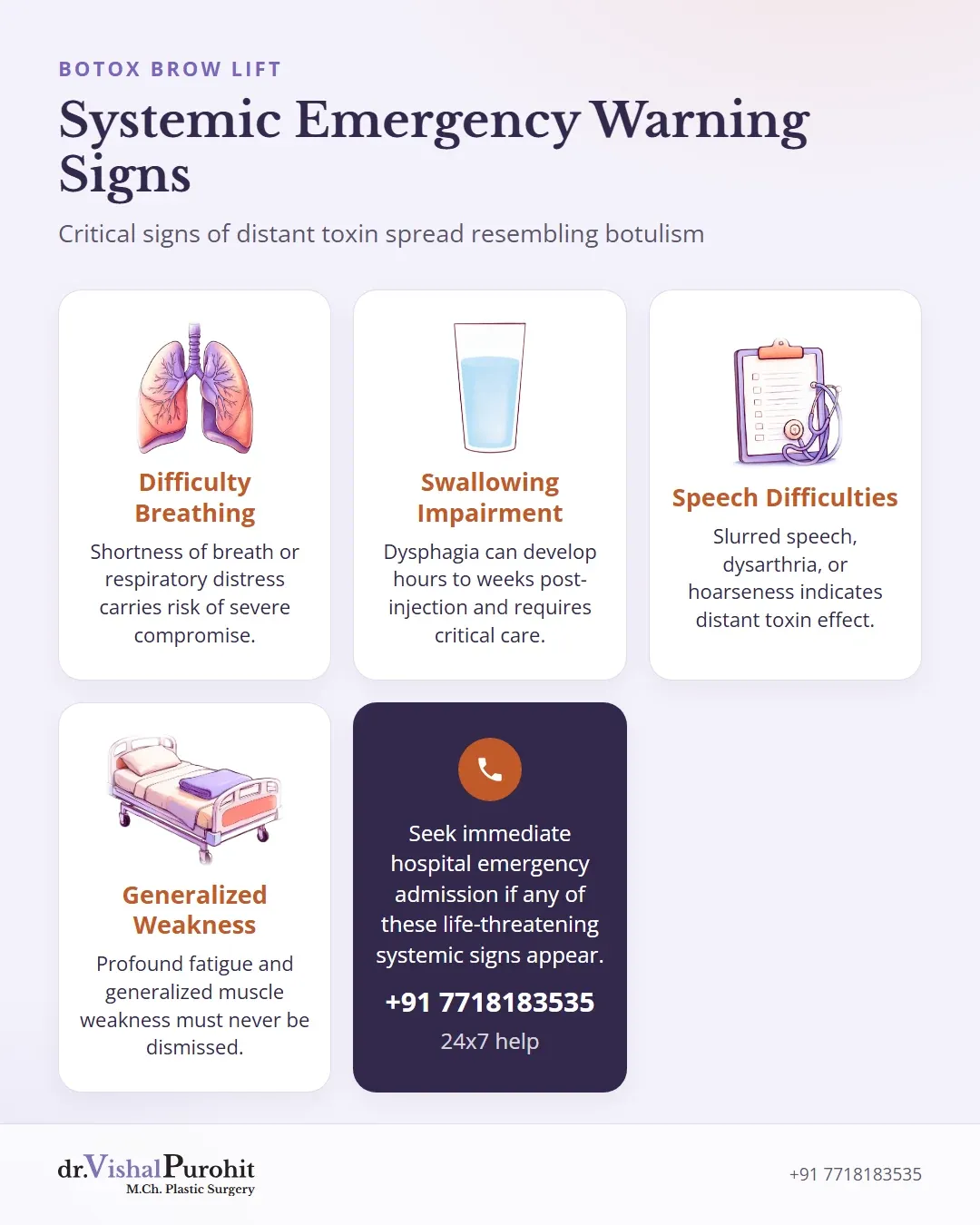
While local side effects around the brow and eyelids can occur, distant spread of botulinum toxin effect is a rare but critical complication1516. The spread of toxin beyond the injection area produces signs consistent with botulism, which can become life-threatening1517.
Key points
- Distant spread of botulinum toxin beyond the injection site is a rare but life-threatening emergency.
- Warning signs include difficulty breathing, swallowing, speaking, or widespread muscle weakness.
- Symptoms require immediate hospital emergency admission rather than a wait-and-see approach.
Patients must seek immediate emergency medical care at a hospital if they develop any of the following systemic warning signs1516:
- Difficulty breathing or shortness of breath1517
- Difficulty swallowing (dysphagia)1517
- Difficulty talking, slurred speech, or hoarseness (dysarthria or dysphonia)151718
- Generalized muscle weakness or profound fatigue (asthenia)1517
Postmarketing surveillance shows these symptoms can develop hours to weeks after an injection1719. Swallowing and breathing problems carry a risk of severe respiratory compromise or death, and affected individuals may need mechanical ventilation or intensive care management151719.
These systemic problems must never be dismissed as expected recovery reactions or addressed with a wait-and-see approach1516. Anyone encountering respiratory distress, speech impairment, swallowing impairment, or widespread weakness requires urgent hospital admission1516.
Post-Treatment Care and Specialist Support in Jaipur
Understanding early warning signs helps protect ocular surface health and vision after an aesthetic injection. To explore treatment details, visit Botox Brow Lift in Jaipur or read Botox Brow Lift FAQs for common questions. For clinical queries or an urgent review, Dr. Vishal Purohit can be contacted directly on +91 7718183535.
This is educational information, not medical advice.