
Perceived brow unevenness or heaviness after an injection treatment can cause understandable concern. In many individuals, pre-existing facial asymmetry becomes apparent only during close post-procedure evaluation, while in other instances, toxin spread into elevating muscles alters resting brow position.
Distinguishing whether an irregularity represents frontalis elevator relaxation or true upper lid descent helps guide appropriate next steps. Evaluating anatomical traits such as hooded eyes, low brows or drooping eyelid before Botox provides essential context when assessing changes in resting periocular balance.
Comparing Changes with Pretreatment Asymmetry
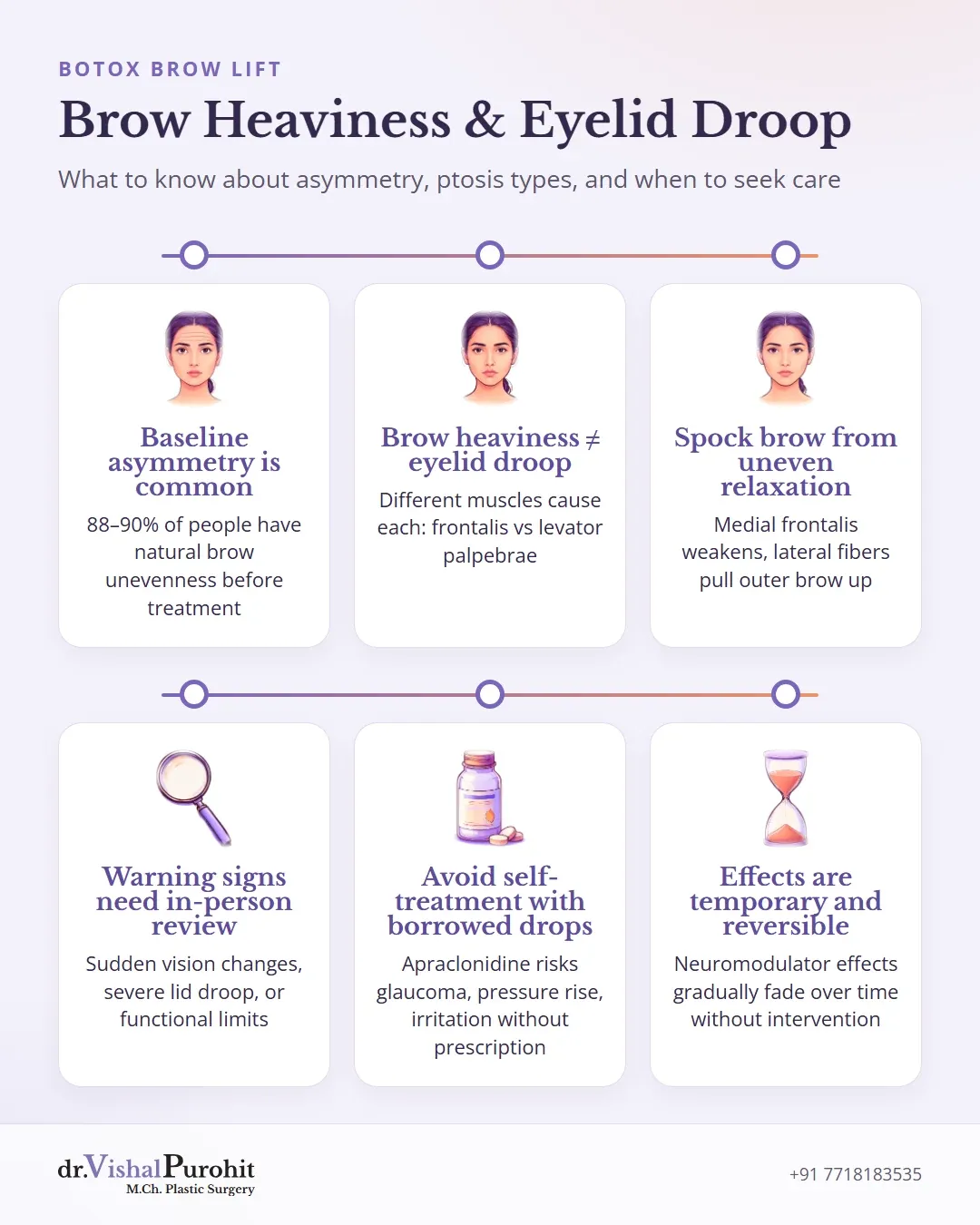
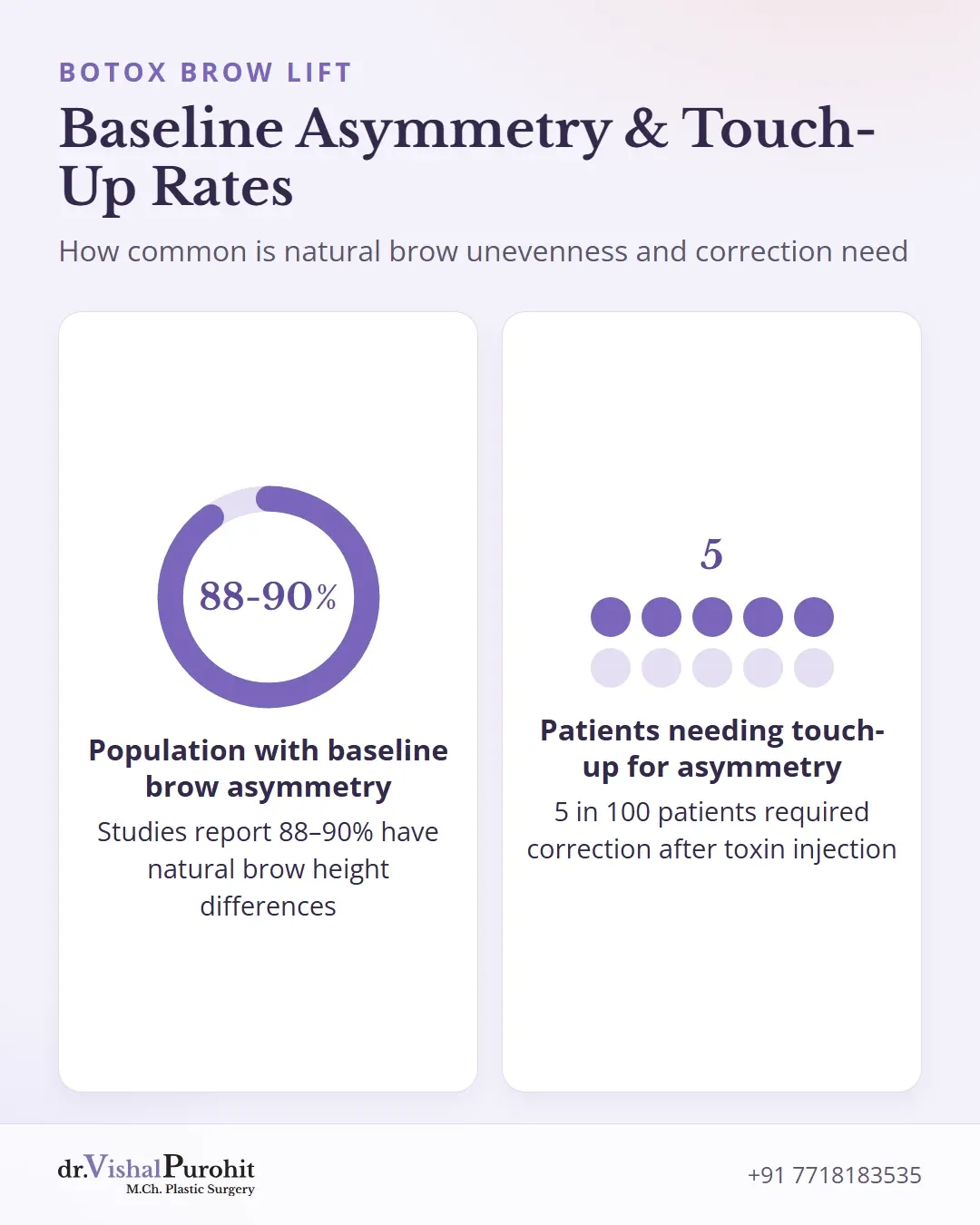

Evaluating perceived asymmetry after a chemical brow lift requires direct comparison with clear pre-treatment baseline photographs1. Natural facial asymmetries are common, with studies reporting that over 88% to approximately 90% of the population exhibit baseline asymmetry in brow position12.
Dr. Purohit’s note: In Dr. Vishal Purohit’s practice, clinical photographs are taken and retained strictly for treatment records, never for public display.
Subtle differences in brow height or movement often exist before injection but become noticeable only when an individual scrutinises the area closely after a procedure. In literature evaluating botulinum toxin injection protocols, 5% of patients required touch-ups to address eyebrow asymmetry2.
Pre-treatment assessment serves several functions:
Baseline Documentation
Comparing post-treatment findings directly against baseline photographs confirms whether an irregularity is a newly induced change or a pre-existing anatomical trait13.
Why Unintended Elevator Relaxation Lowers Brows
In a chemical brow lift, botulinum toxin type A targets depressor muscles around the eyes to permit subtle elevation456. The frontalis muscle serves as the primary elevator of the eyebrows47. If toxin spreads into the lower fibers of the frontalis, this lifting power is impaired48.
The Mechanism of Brow Heaviness
When botulinum toxin inadvertently affects the frontalis muscle, several changes occur:
- Upward elevator pull decreases, negating the lifting effect intended from treating the depressors49.
- Brow ptosis can occur if BoNT-A spreads into the lower fibers of the frontalis from rapid injection or overly vigorous post-treatment massage8.
- Patients who unconsciously engage the frontalis to lift their brows or expand their visual field lose this compensatory mechanism410.
When frontalis tone is cancelled, the reduced muscle action leads directly to a heavy or lowered brow sensation101112. In studies evaluating frontalis relaxation, participants with lower muscle bulk reported subjective brow heaviness even in the absence of complete objective ptosis11. Dr. Vishal Purohit notes that careful anatomical assessment is essential to avoid unwanted elevator weakening.
Differentiating Eyebrow Heaviness from True Eyelid Droop
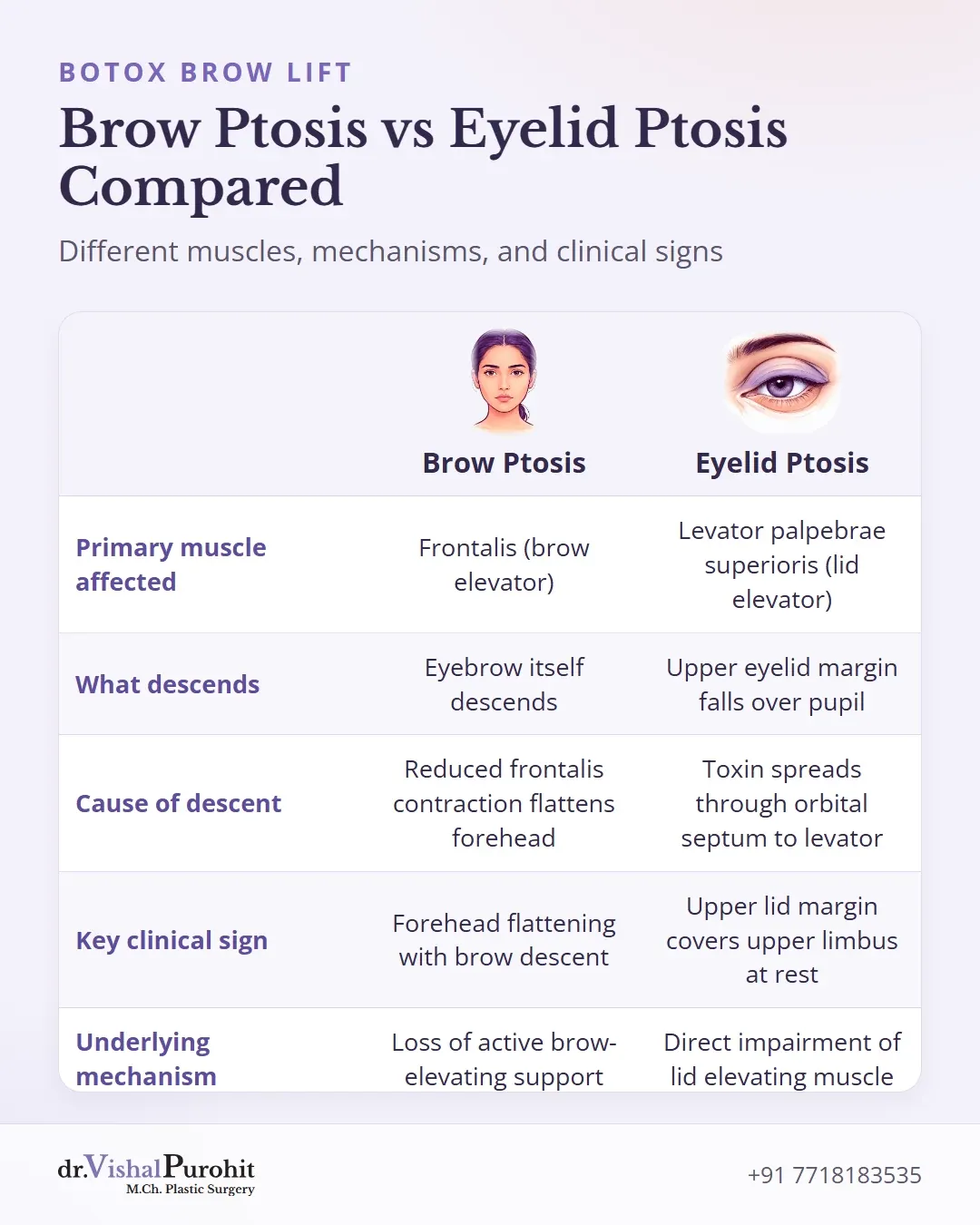
Eyebrow descent and upper eyelid droop are two separate post-treatment effects that originate from distinct anatomical mechanisms131415. Differentiating between brow position, eyelid margin position, and levator function during clinical evaluation is necessary to guide appropriate assessment13.
Key points
- Eyebrow heaviness stems from weakening of the frontalis muscle rather than the eyelid itself.
- True eyelid droop occurs when toxin affects the levator palpebrae superioris muscle.
- Clinical evaluation distinguishes brow descent from direct impairment of the upper eyelid’s elevator.
Forehead Support and Eyebrow Heaviness
Eyebrow heaviness (brow ptosis) occurs when the frontalis muscle is excessively weakened14. Because the frontalis provides active brow-elevating support, reduced contraction or diffusion affecting its lower fibers leads to forehead flattening and descent of the eyebrow itself1416. Patients who rely on frontalis contraction to keep their eyebrows lifted are particularly prone to feeling downward heaviness if this muscular support is diminished14.
Levator Involvement and True Eyelid Droop
True eyelid droop (blepharoptosis) involves the eyelid margin falling downward, which may hang over the pupil1317. This occurs when botulinum toxin inadvertently affects the levator palpebrae superioris muscle151618. The spread of injected toxin through the orbital septum weakens this upper lid elevator15. Unlike brow descent, true eyelid ptosis represents direct impairment of the upper eyelid’s elevating muscle rather than a lowered brow pushing on the lid131518.
When Clinical In-Person Review Is Required
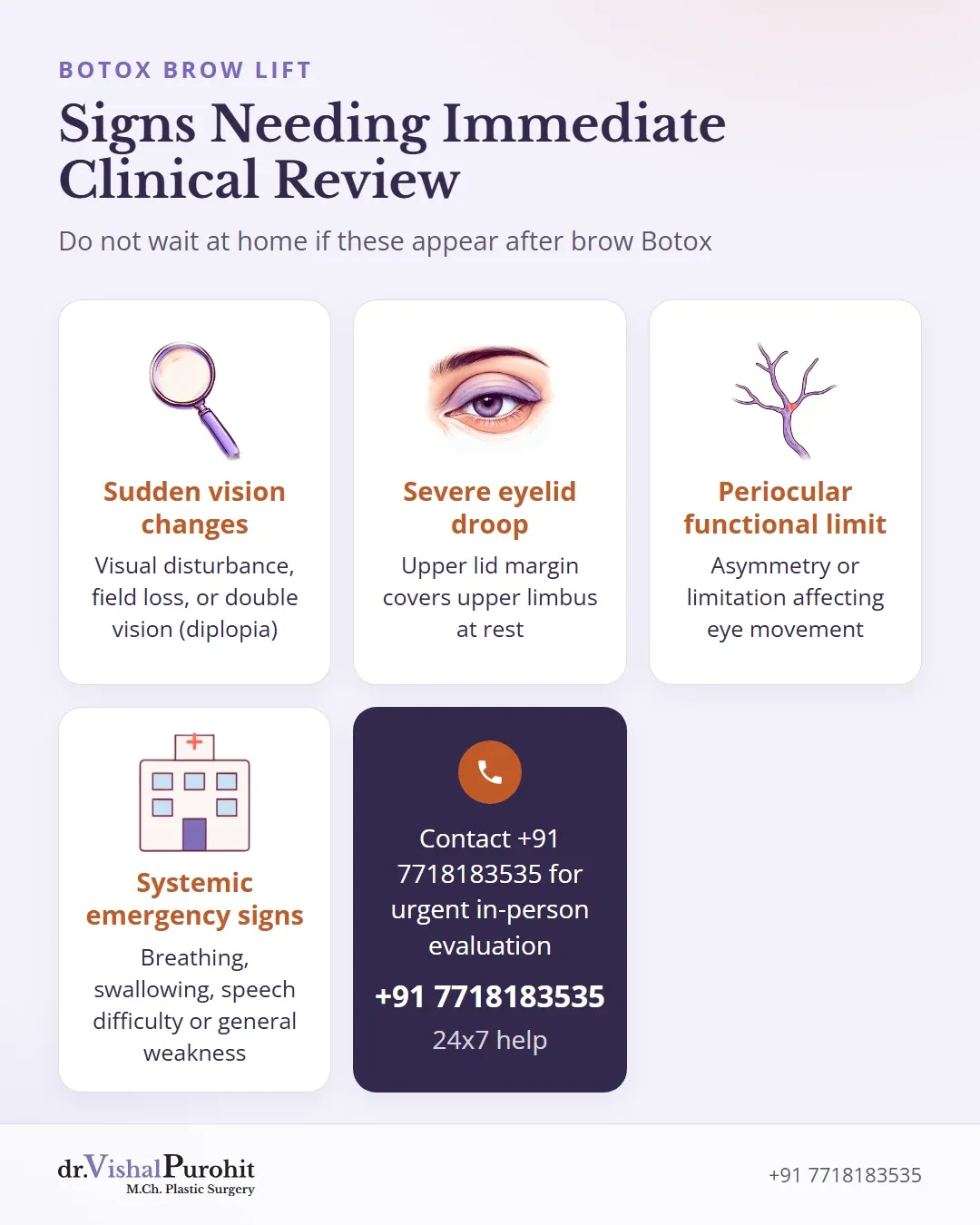
Prompt contact with the treating clinician for an in-person diagnostic evaluation is necessary if an eyelid or brow droop develops after treatment. While many adverse effects from botulinum neurotoxins are temporary and resolve as the effect diminishes1920, clinical evaluation allows the practitioner to accurately recognize the presentation, manage symptoms, and document progress1920.
Concerning findings need an in-person examination.
Signs Requiring Prompt Clinical Assessment
Home observation is not appropriate when functional or sudden visual changes occur. An in-person assessment is required for:
- Sudden visual disturbance, visual field impairment, or diplopia1321.
- Severe eyelid ptosis, where the upper lid margin covers more of the upper limbus at rest21.
- Asymmetry or functional limitation affecting periocular movement1321.
General weakness, blurred vision, or difficulties with breathing, swallowing, or speech after botulinum toxin administration represent urgent systemic complications requiring immediate emergency medical care rather than watchful waiting22. Patients experiencing brow or eyelid malposition can contact +91 7718183535 to arrange timely review.
Why Home Remedies and Self-Treatment Must Be Avoided

Unsatisfactory cosmetic effects resulting from neuromodulator injections are temporary and reversible by default4. The physiological effects of botulinum toxin gradually fade over time4. Despite this, patients experiencing brow asymmetry, heaviness, or eyelid ptosis must avoid attempting self-treatment.
Patients must never borrow or self-administer unprescribed ophthalmic drops. While prescription medications such as apraclonidine drops can stimulate Müller’s muscle to assist lid elevation in eyelid ptosis42324, they are not suitable for unverified home use. Medical literature highlights specific clinical cautions:
- Apraclonidine can cause contact dermatitis and ocular irritation123.
- It carries potential risks of mydriasis and closed-angle glaucoma1.
- It may increase intraocular pressure, requiring particular caution in patients with glaucoma or those suspected of having glaucoma4.
Initiating such therapy without an ophthalmic assessment is inadvisable25. Unexpected effects need an in-person examination of the eyelid and brow before any treatment is considered.
Managing Lateral Peaked Spock Brow and Heaviness
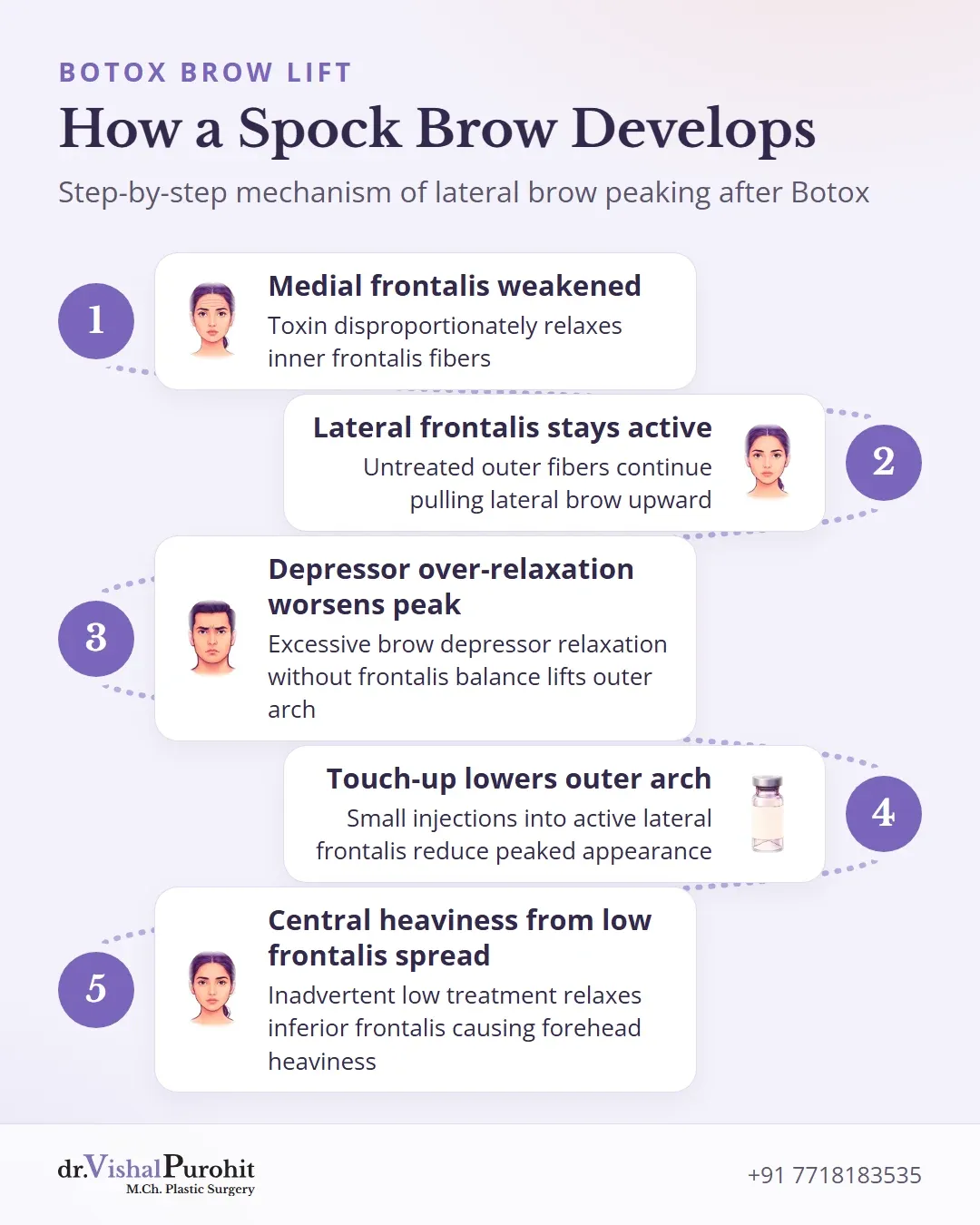
An exaggerated outer arch, often termed a “Spock” brow or Mephisto sign, is a recognized complication after botulinum toxin injection1426. This unnatural peak occurs when the medial portions of the frontalis muscle are weakened disproportionately, leaving untreated lateral frontalis fibers active to pull the outer brow upward1426. Excessive relaxation of the brow depressors without considering frontalis activity can also contribute to this appearance14.
Conversely, central forehead heaviness can develop when the medial or central frontalis is treated while lateral fibers continue to elevate, or when inadvertent low treatment relaxes the inferior frontalis2627. This regional resting of muscle fibers can create a feeling of dropping in the forehead or make skin appear heavier27.
Careful clinical review is required before considering any adjustment. Touch-up injections into the active lateral frontalis have been described in the literature to lower the elevated outer arch262728. However, Dr. Vishal Purohit’s approach to adjustments, top-ups, and review timing is decided at the consultation. Patients can arrange an assessment to discuss appropriate management options.
Clinical Assessment and Management in Jaipur
Unintended changes in brow height or eyelid position require careful anatomical evaluation. To learn more about treatment mechanics, explore the comprehensive guide to Botox Brow Lift in Jaipur or read the dedicated Botox Brow Lift FAQs. While neuromodulator effects gradually resolve as the product wears off, an in-person diagnostic review provides objective examination of frontalis and levator function. For questions regarding treatment records, clinical evaluation, or symptom management, contact +91 7718183535 to discuss appropriate care.
This is educational information, not medical advice.