
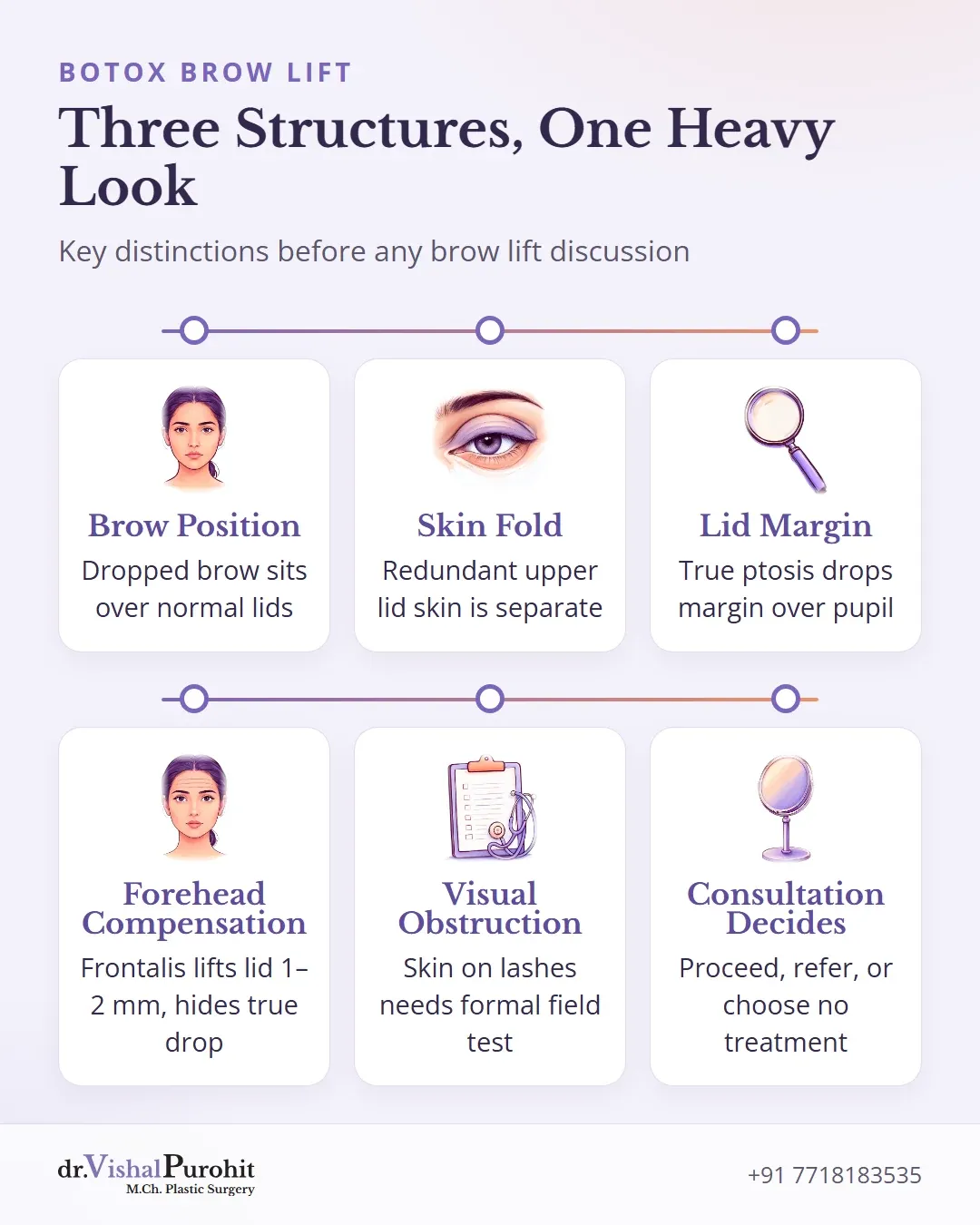
Looking in the mirror, a hooded eye, a low brow and a drooping eyelid can look like the same problem. They are not. The brow, the eyelid skin fold and the true lid margin are three separate structures, and each is assessed on its own before any treatment is planned.
That distinction decides whether a Botox brow lift is the right conversation or whether something else is going on. This post walks through the three landmarks, the way brow descent mimics extra lid skin, and the signs that call for a formal eye assessment first, as covered in Heavy or Uneven Brows and Eyelid Ptosis After Brow Botox.
Identifying Eyebrow Eyelid Skin and Margin Anatomy
Three landmarks, not one
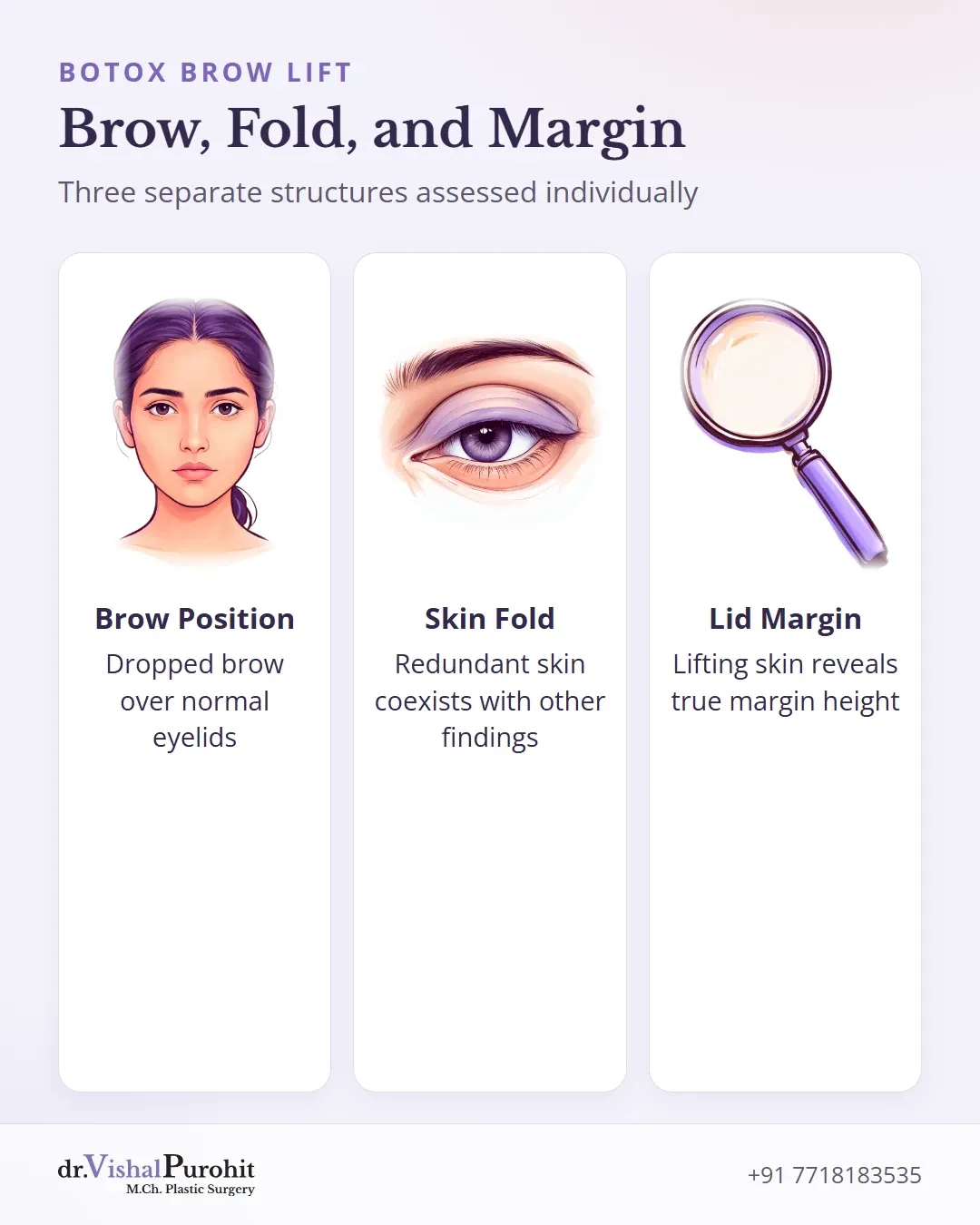
Heavy-looking eyes do not have a single origin. Assessment separates three structures: the bony position of the eyebrow, the fold of upper eyelid skin, and the true upper lid margin. Clinical assessment should document brow position, eyelid laxity and skin quality, with standardised photography at rest and during animation1.
Key points
- Evaluating heavy-looking eyes requires assessing the eyebrow, eyelid skin, and lid margin separately.
- Brow ptosis can be mistaken for excess eyelid skin.
- Lifting excess skin reveals whether the eyelid margin sits in a normal position or is truly drooping.
Distinguishing them
- Brow position: brow ptosis is a dropped brow that can sit over otherwise normal eyelids2.
- Skin fold: redundant upper lid skin may coexist with brow ptosis, true blepharoptosis and fat prolapse, and each is assessed separately1.
- Lid margin: lifting the excess skin fold shows whether the margin itself sits low; in pseudoptosis the lid margin is in a normal position and becomes apparent once the skin is lifted23.
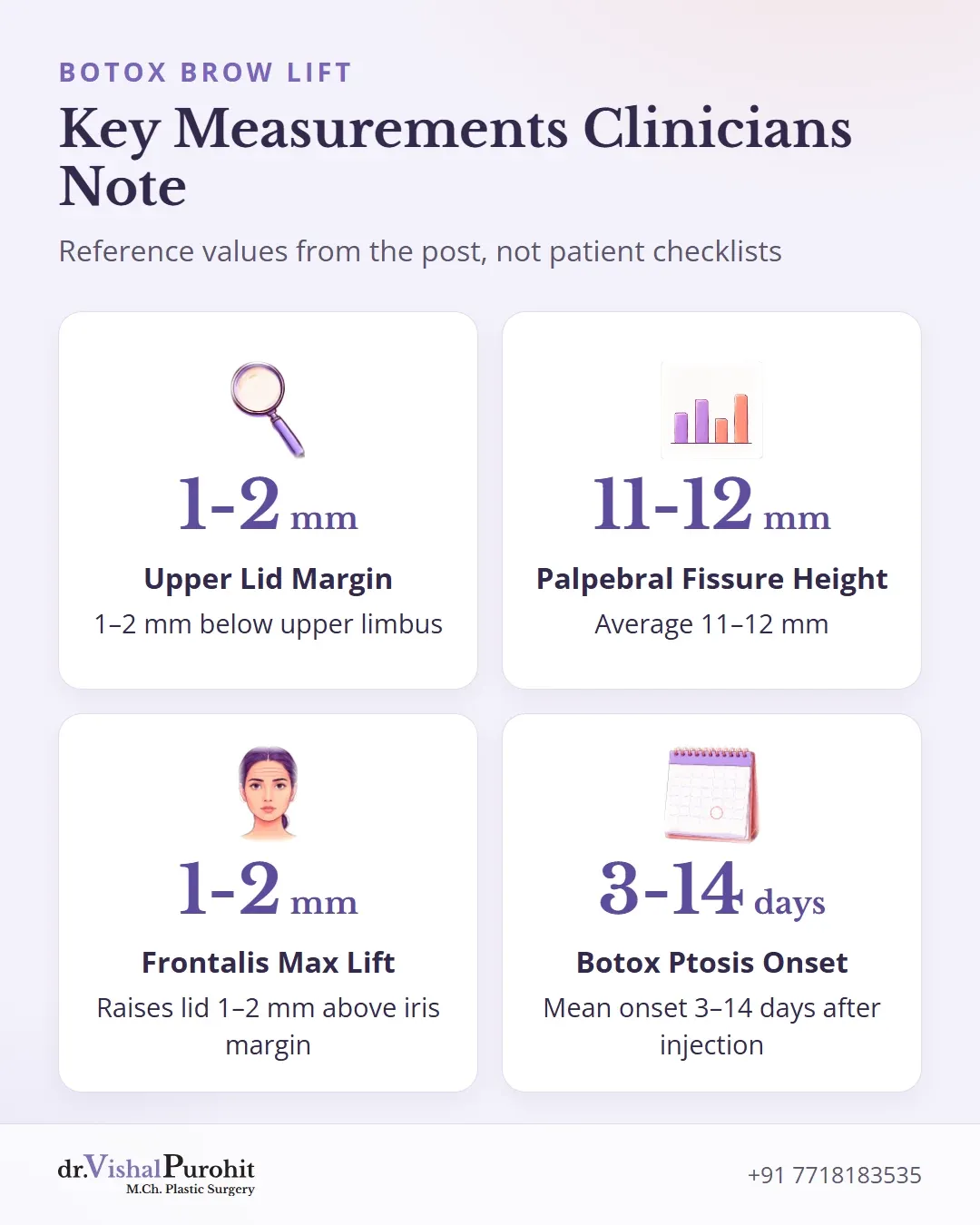
Reference values such as the upper lid margin hanging about 1–2 mm below the upper limbus and an average palpebral fissure height of around 11–12 mm are measurements clinicians note4, not a checklist a patient must meet. Brow ptosis is not uncommonly misdiagnosed as upper eyelid dermatochalasis2, which is why examination guidance asks clinicians to distinguish eyelid ptosis, brow ptosis and dermatochalasis5.
How Brow Descent Pushes Skin Downward
Where the downward push comes from
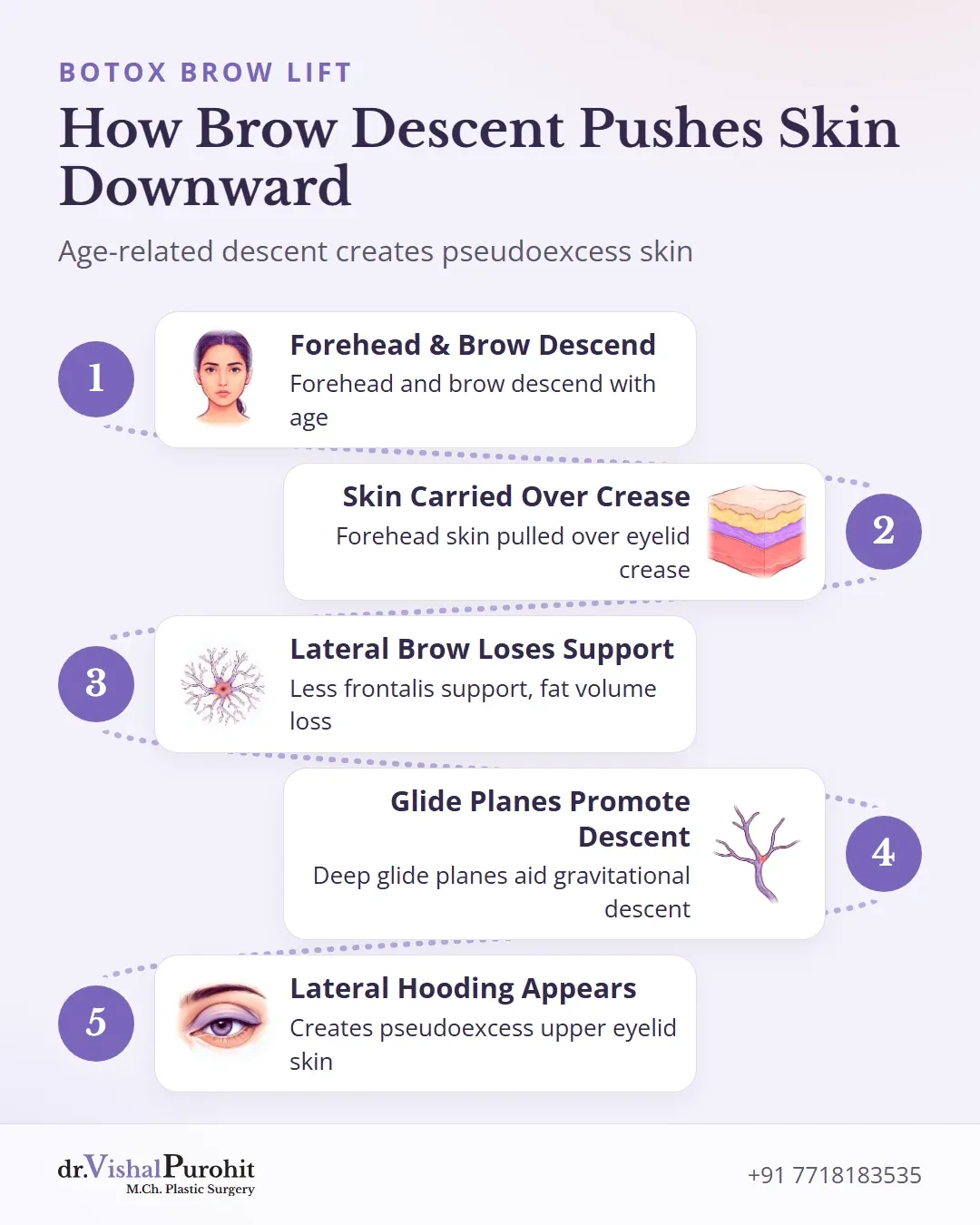
As the forehead and brow descend with age, the forehead skin is carried downward over the eyelid crease. The lateral brow has less support from the frontalis than the medial brow and loses supportive fat volume over the lateral forehead and temples with age6. Glide planes deep to the frontalis promote gravitational descent of the forehead, and as the lateral brow descends it creates lateral hooding and a pseudoexcess of upper eyelid skin7.
Why it mimics extra eyelid skin
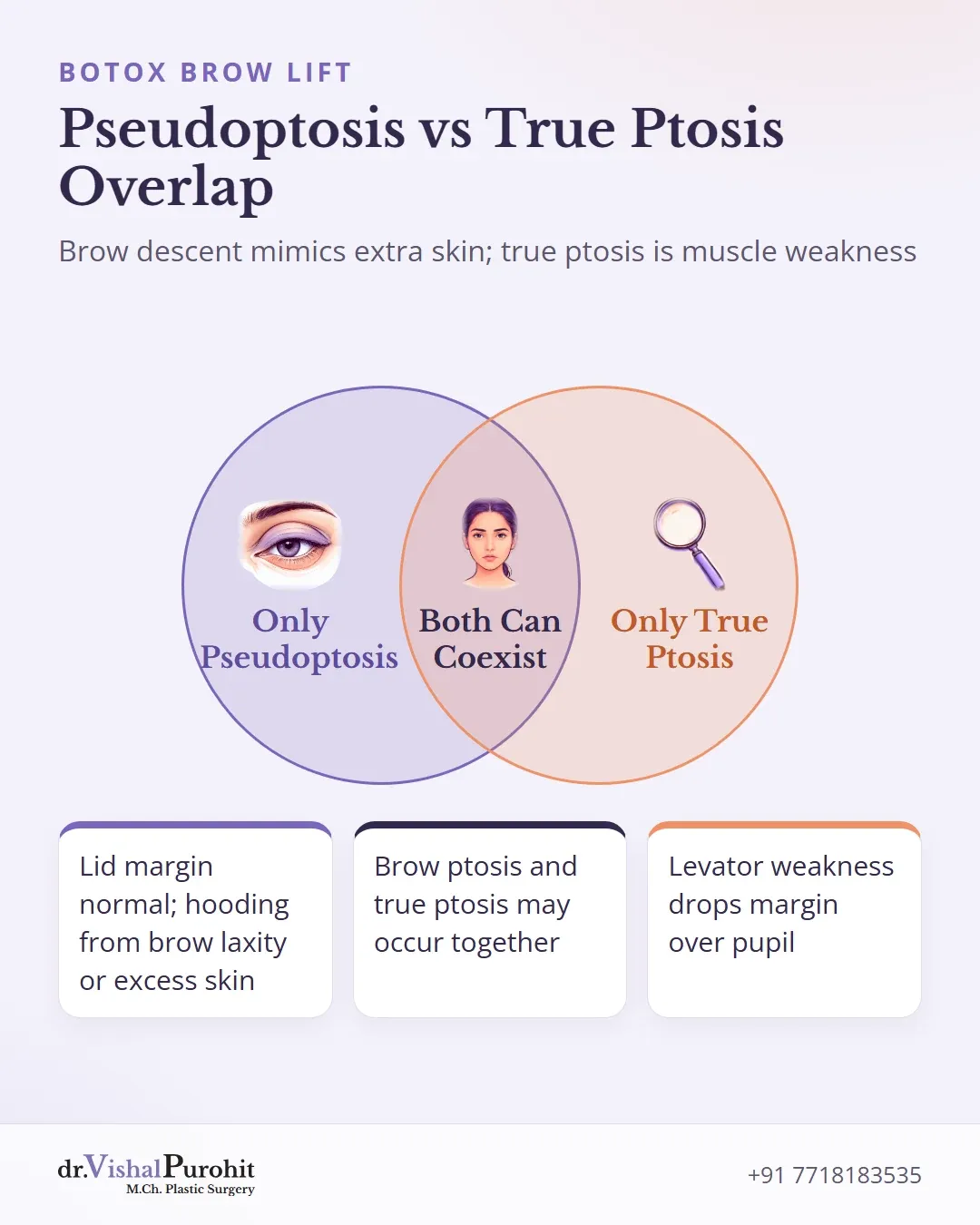
- Brow ptosis is often misdiagnosed as upper eyelid dermatochalasis2.
- Pseudoptosis can be caused by excess skin, fat or muscle, or by eyebrow ptosis6.
- Brow descent alters the upper eyelid contour and may worsen pseudoptosis1.
In pseudoptosis the lid margin stays in a normal position; the apparent hooding comes from brow laxity rather than the eyelid itself2.
True Eyelid Ptosis as a Separate Condition
What it involves
True blepharoptosis is drooping of the upper eyelid caused by weakness of the levator palpebrae superioris muscle, which lets the eyelid margin drop down over the pupil4. In more severe cases it can decrease or occlude vision and interfere with daily function4.
A distinct diagnosis
Blepharoptosis is a separate clinical finding from cosmetic brow lowering or excess upper-lid skin folds. It is assessed during examination by how the lid moves on upward gaze and by measurements such as the marginal reflex distance and palpebral fissure48. These values are recorded to judge severity, not applied as a single universal cut-off for every patient.
Why the distinction matters
Eyelid ptosis is a reported side effect of Botox when toxin spreads to the levator palpebrae superioris muscle49. Mean onset is 3–14 days after injection, and it usually resolves as the paralytic effect of the toxin wanes4.
Forehead Compensation and Muscle Weakness
Unconscious lifting through the day
The frontalis muscle on the forehead is a secondary helper in raising the eyelid. At maximum lift it can raise the lid about 1 to 2 mm above the upper margin of the iris6. When the main lifting muscle is weak, the frontalis contracts involuntarily through the day, holding the heavy eyelid up and clear of the line of sight6. This compensatory activation also deepens horizontal forehead lines10.
Key points
- The forehead’s frontalis muscle can involuntarily lift a drooping eyelid to keep vision clear.
- Constant compensatory lifting deepens horizontal forehead creases and masks underlying ptosis.
- Relaxing the frontalis with treatments like Botox can unmask the hidden eyelid droop.
What the examination may miss
This steady lift can hide the true lid position. Involuntary frontalis activity may mask a mild or compensated eyelid ptosis6, and static forehead lines above the brow at rest can point to it6. The droop can be brought out by temporarily blocking the frontalis and watching the brow settle6. Facial nerve weakness is one of the features reviewed before Botox is planned11.
Because the droop is unmasked rather than caused by treatment, weakening the frontalis with Botox may reveal it612.
When Visual Obstruction Requires Formal Medical Assessment
When hooding affects the vision
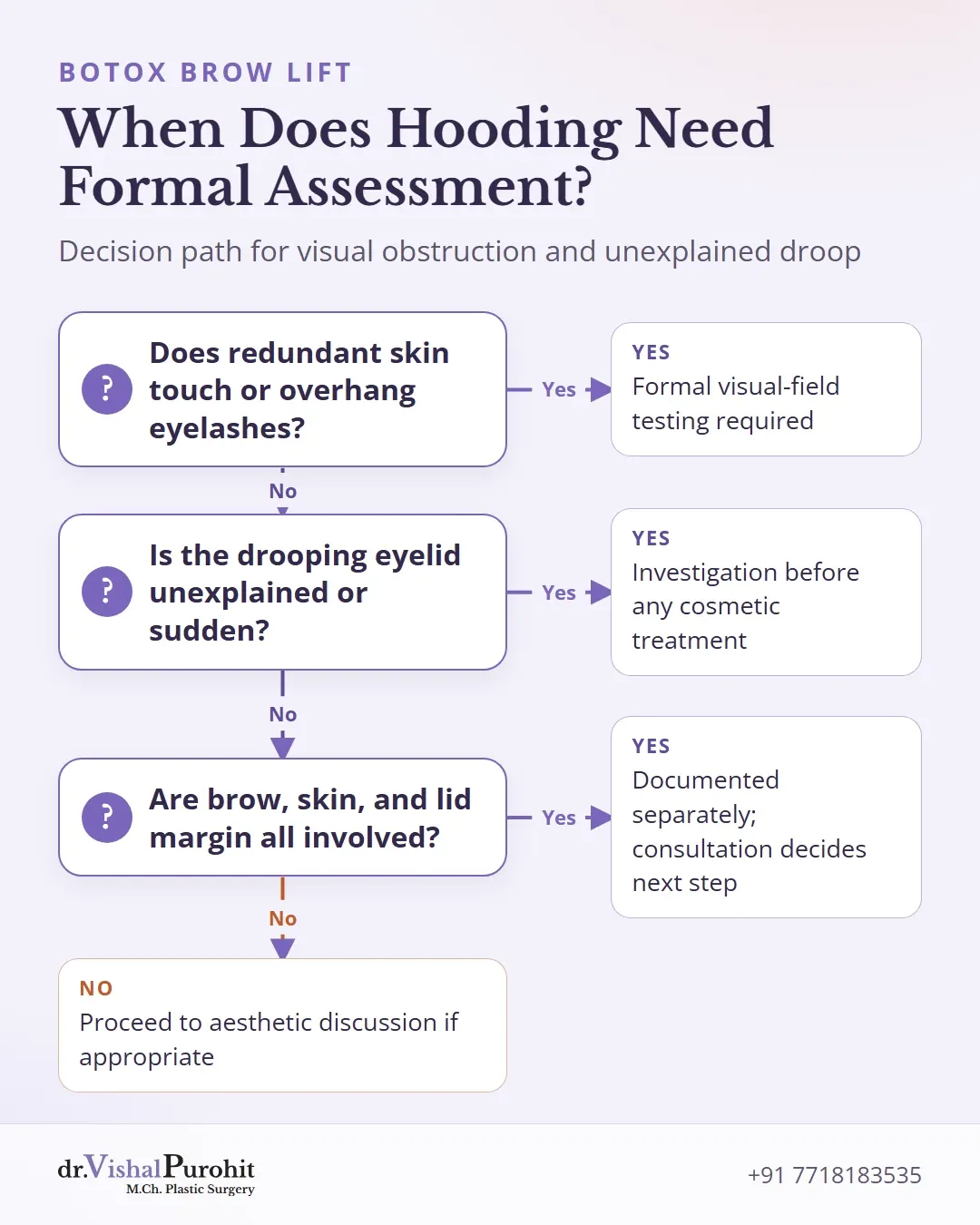
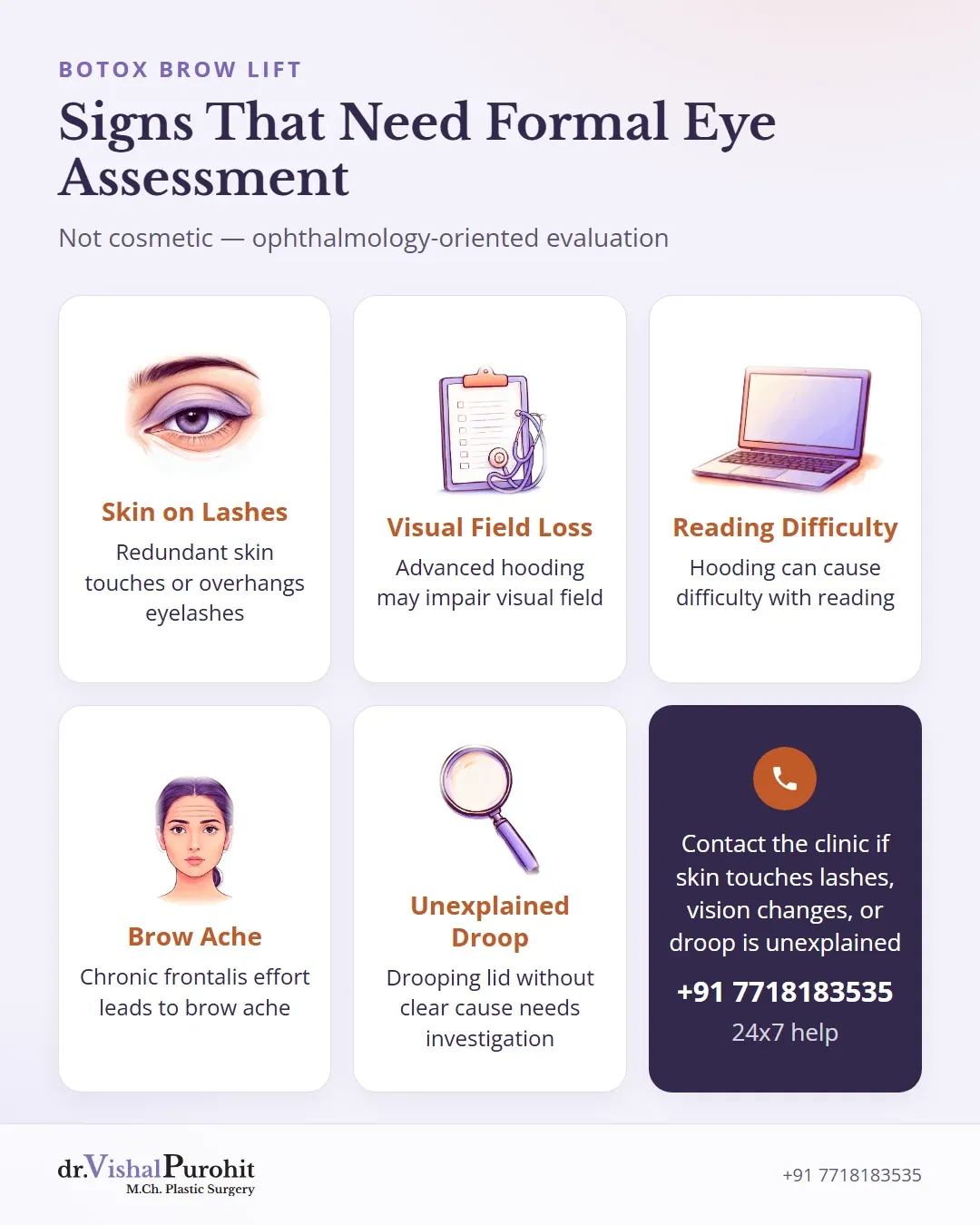
Heavy upper-eyelid hooding is not always a cosmetic concern. Advanced dermatochalasis may produce visual field impairment, difficulty with reading and brow ache1. When redundant skin touches or overhangs the eyelashes, formal visual-field testing is used to document the presence and degree of field loss13. This kind of check is an ophthalmology-oriented assessment, not an aesthetic one1.
Unexplained or sudden drooping
A drooping eyelid that cannot be explained warrants investigation before any cosmetic treatment1. Formal visual-field testing is appropriate when upper-eyelid skin or ptosis may be causing functional obstruction1. The examination also separates excess skin from brow droop and true lid droop, which may coexist and are assessed separately12.
The decision at the consultation
Whether a patient with visual obstruction proceeds with Botox, is referred for further assessment, or chooses no treatment is decided at the consultation. Choosing no treatment is a valid option.
Getting a clear answer in Jaipur
Hooded eyes, low brows and a drooping eyelid look alike in the mirror, but they are three different findings, and sorting them out comes before any decision about treatment. A consultation is where that sorting happens, and choosing no treatment remains a valid option. Further detail on the treatment itself is set out in Botox Brow Lift in Jaipur, while common questions are answered in Botox Brow Lift FAQs.
This is educational information, not medical advice.