
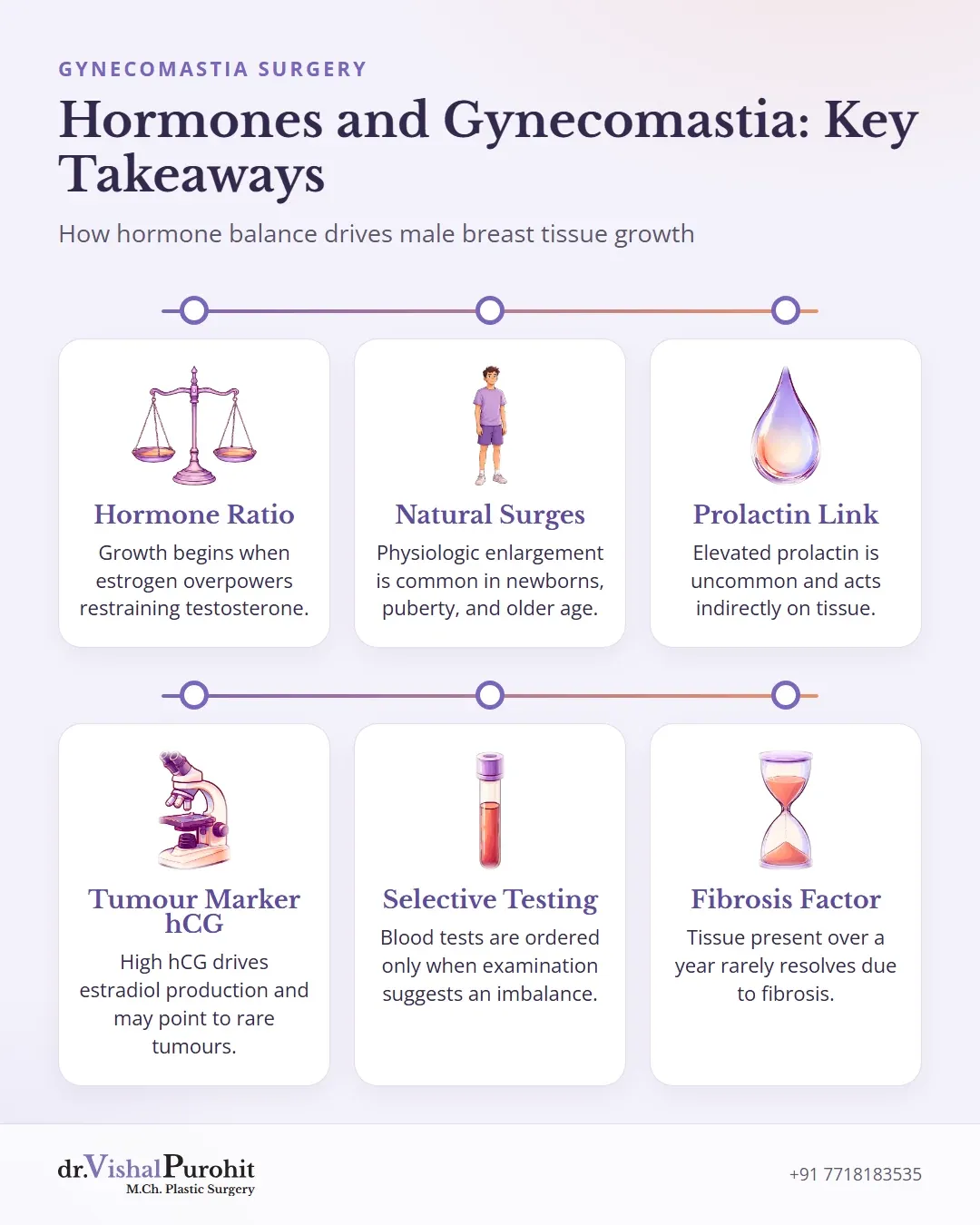
Gynecomastia is not simply fat. It begins when the balance between estrogen, which makes breast tissue grow, and testosterone, which restrains that growth, shifts. The ratio of active free estrogen to androgen is the key driver, and several conditions can alter it.
Prolactin and hCG matter in narrower situations. A raised prolactin is uncommon in men with gynecomastia, and its link is indirect. hCG can raise estradiol, and a raised level may point to a rare tumour. The wider range of causes is covered in the guide to what causes gynecomastia.
The Estrogen and Testosterone Balance
Two hormones pulling in opposite directions
Breast tissue in men responds to two hormones that pull against each other. Estrogen makes breast tissue grow, while testosterone stops estrogen from making it grow. Gynecomastia begins when that balance shifts.
Key points
- Estrogen promotes male breast growth; testosterone opposes it.
- Gynecomastia starts when the estrogen-to-testosterone ratio shifts.
- In older men, increased aromatization and lower testosterone raise estrogen levels.
The biological driver of true gynecomastia is a shift in the ratio of active free circulating estrogen to androgen. Estrogen acts as the main growth stimulant in the male breast, and androgen activity inhibits mammary tissue growth. Any process that raises bioavailable estrogen, lowers free testosterone, or impairs androgen receptor responsiveness can trigger glandular enlargement.
Where the extra estrogen comes from
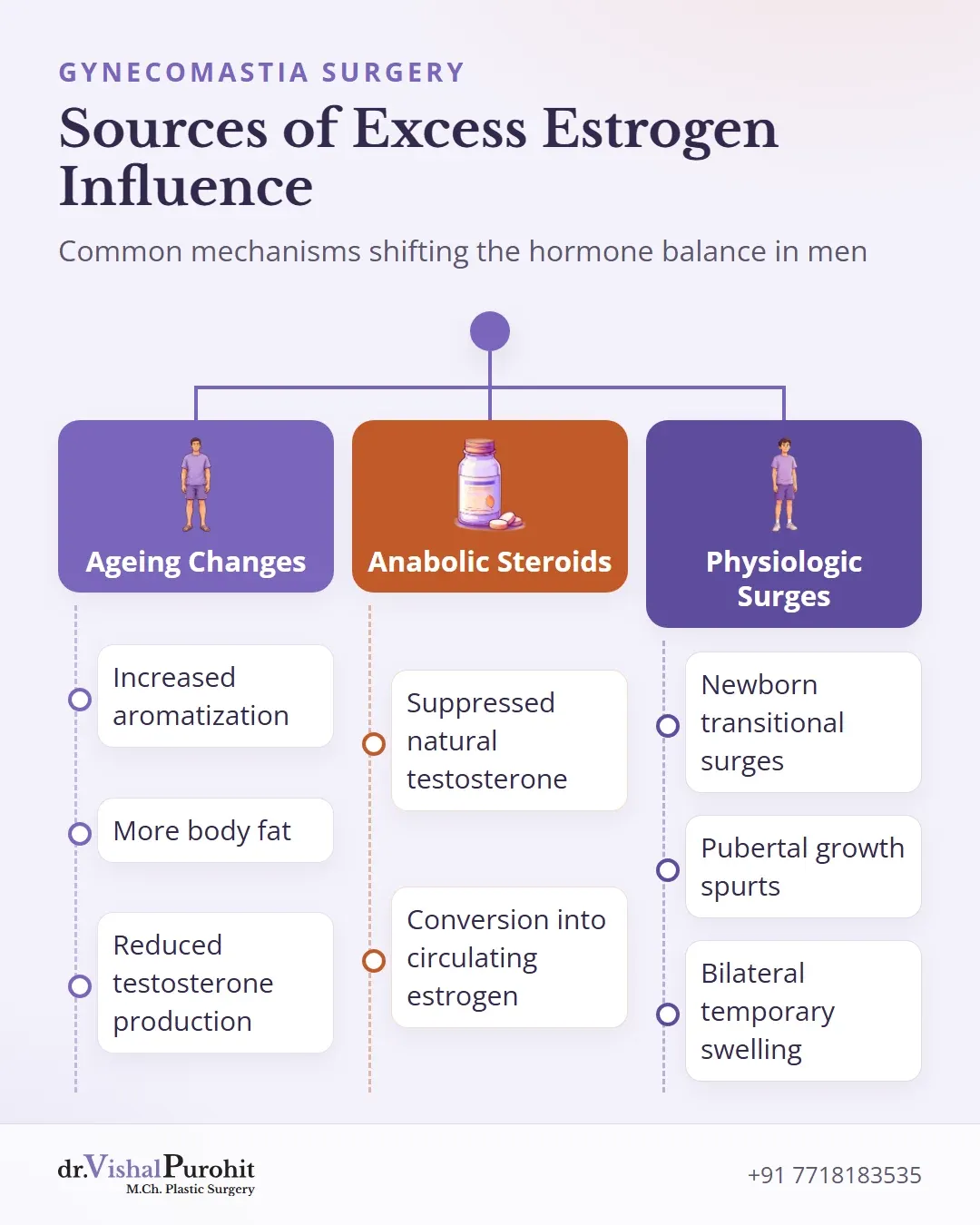
In older men, the conversion of androgens into estrogens, called aromatization, is believed to be an important factor. Older men also produce less testosterone and carry more body fat, which can increase estrogen levels.
Injected anabolic steroids can produce a similar effect, because they suppress the body’s natural testosterone production and testosterone converts into estrogen.
Normal hormonal surges explain the rest in some age groups. Physiologic gynecomastia is most often seen in newborns, at puberty and in old age, and adolescent enlargement is generally bilateral and temporary.
Prolactin and Gynecomastia
What the evidence says
A raised prolactin is not common in men with gynecomastia. The evidence here does not describe a direct effect of prolactin on breast tissue. One surgical text contrasts medicines that act directly on the breast with those that raise prolactin secretion from the pituitary. Some medicines that can cause gynecomastia are also listed as raising prolactin. The link is indirect rather than a direct effect at the breast.
When a raised prolactin is looked for
Prolactin is not a routine first test. Laboratory studies follow a stepwise approach guided by the history and physical examination. Treatment of a raised prolactin belongs to the treating physician or endocrinologist.
A visual field check is part of the examination because a large prolactin-producing pituitary tumour can press on the optic chiasm.
hCG: Tumours, Injections and Gynecomastia
How hCG can raise estrogen
Human chorionic gonadotropin (hCG) can drive the testicles to make more estradiol. In germ cell tumours of the testis, hCG stimulates Leydig cells to produce excessive estradiol, and the tumour also converts steroid precursors into estrogens.
hCG-secreting tumours are rare
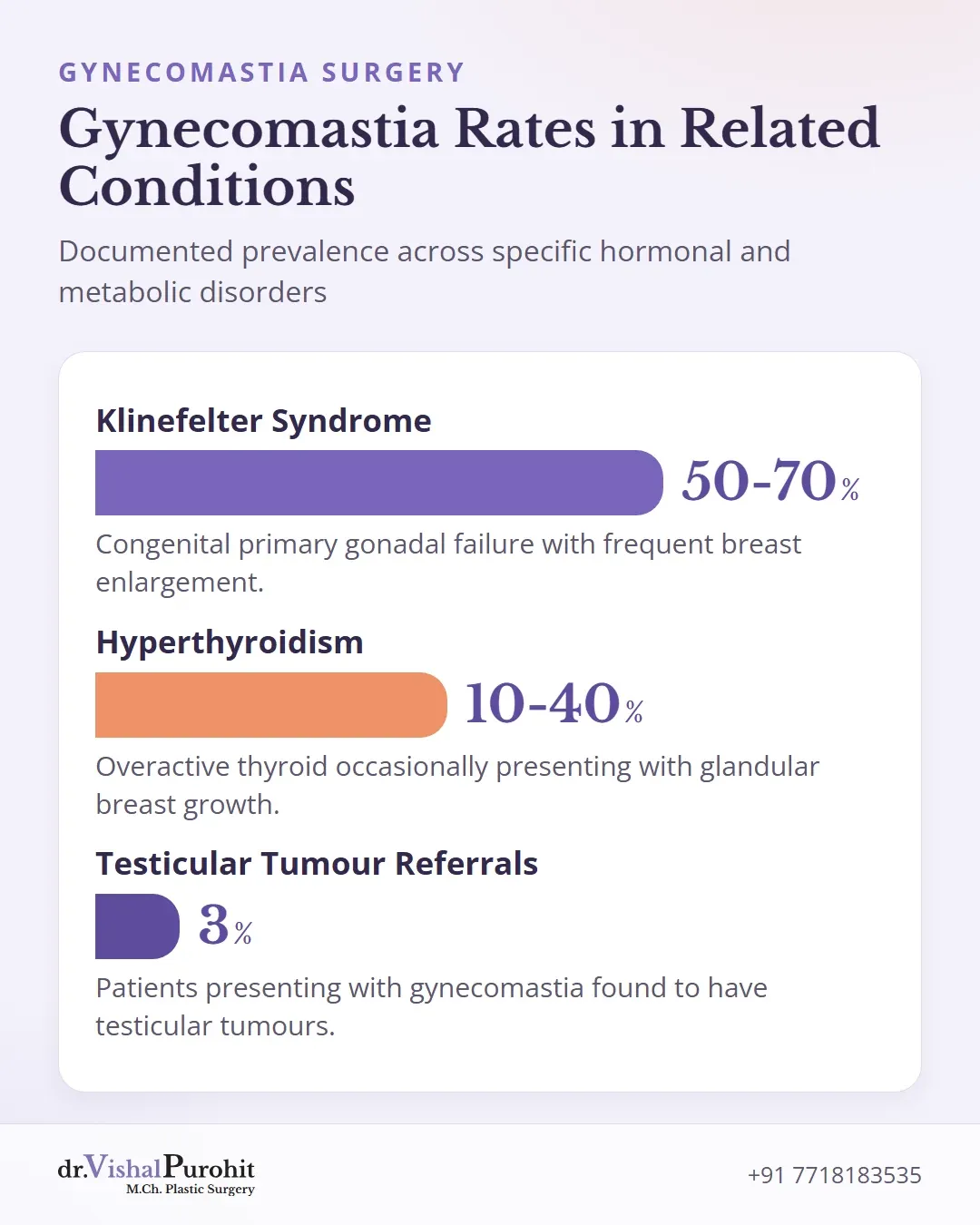
A raised hCG level can point to an hCG-secreting tumour, such as a testicular germ cell cancer or a cancer of the liver, stomach or bronchus. Leydig cell tumours are often benign but prone to cause gynecomastia because they secrete estradiol. Testicular tumours are rare; approximately 10 percent of these patients present with gynecomastia alone. Among 175 men referred to a breast surgeon for gynecomastia, a testicular tumour was found in 3 percent.
Why the testicles are examined
Testicular ultrasound may be indicated when a testicular tumour is suspected, and hCG may be considered if a Leydig cell tumour is suspected.
Dr. Purohit’s note: Dr. Purohit sends all tissue removed at surgery for histopathology.
Steroid cycles
hCG injections are sometimes used alongside anabolic steroid cycles; steroid-related causes are covered in the guide to steroids and gynecomastia.
Other Hormone-Related Conditions
Several other conditions are linked with gynecomastia.
Overactive Thyroid
Gynecomastia occurs in 10 to 40 percent of men with hyperthyroidism, though it is rarely the only symptom at presentation. Treating the thyroid condition may let it settle within one to two months.
Low Testosterone (Hypogonadism)
Hypogonadism is listed among the endocrinopathies that lead to gynecomastia. Free serum testosterone is decreased in gonadal failure, and primary and secondary gonadal failure are both recognised causes.
Klinefelter Syndrome
Klinefelter syndrome (47XXY karyotype) is a congenital form of primary gonadal failure in which gynecomastia is a common finding. It occurs in up to 50 to 70 percent of patients with Klinefelter syndrome.
Liver and Kidney Disease
- Chronic liver disease and chronic renal disease are both listed among the pathologic causes of gynecomastia.
- In cirrhosis, male hypogonadism produces an estrogen-androgen imbalance.
- In renal failure, testosterone production is suppressed and the testis is directly damaged by uremia. Malnutrition, seen in up to 40 percent of patients with renal failure, may add to it. Dialysis improves the malnutrition-related part, but only a renal transplant effectively resolves the hormonal causes.
When Hormone Tests Are Needed
Hormone blood tests are not a routine part of every gynecomastia assessment. In Dr. Vishal Purohit’s practice in Jaipur, clinical examination and direct palpation come first, then ultrasound or MRI when imaging is needed. Hormone blood tests are ordered only when there are other symptoms of hormonal imbalance; the steps are described in how gynecomastia is diagnosed.
Key points
- Hormone blood tests are not routine and are ordered only when other symptoms of hormonal imbalance are present.
- An endocrinologist referral is considered if gynecomastia appears suddenly, well after puberty, or with other hormonal symptoms.
- When tests are needed, they may include liver function, testosterone, estradiol, FSH, LH, prolactin, TSH, free T4, SHBG, and beta-hCG.
When an Endocrinologist Is Needed
Referral follows the same logic. It is arranged when gynecomastia develops suddenly, when it appears well after puberty is complete, or when there are other symptoms of hormonal imbalance.
What the Tests Can Include
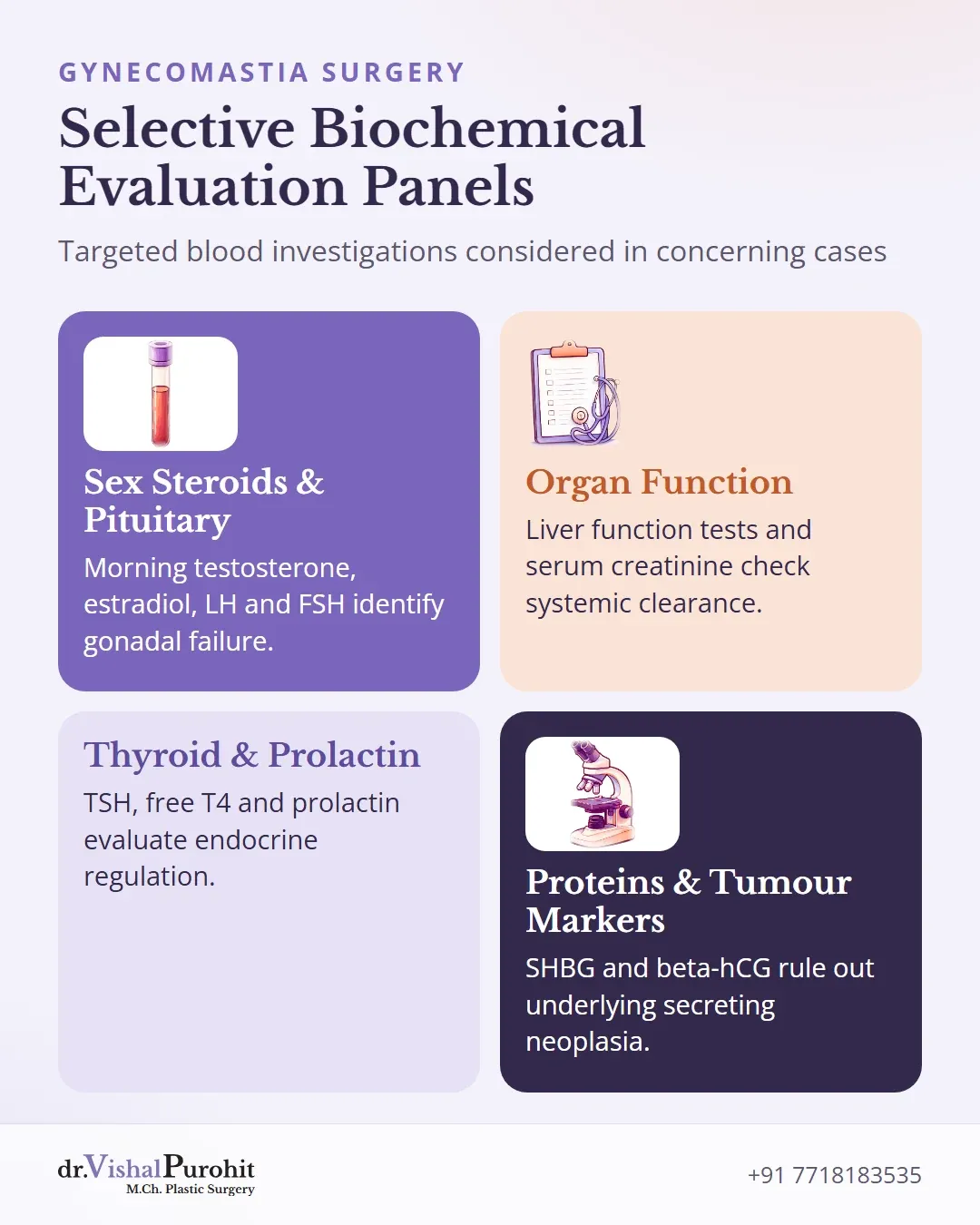
The published literature reflects this selective approach. Routine laboratory testing, in the absence of suspicious history or examination findings, is not recommended. In significant or concerning cases, a biochemical evaluation may be considered, and may include:
- liver function tests and serum creatinine
- testosterone, estradiol, FSH and LH
- prolactin, TSH and free T4
- SHBG and beta-hCG
A stepwise approach guided by history and examination is described, with total and free testosterone, estradiol, LH and FSH defining hormonal imbalances arising from primary or secondary hypogonadism. When drawn, testosterone and LH are measured in the morning, when levels are highest. Serum beta-hCG, DHEAS or urinary 17-ketosteroids can be used when testicular, adrenal or other tumours are suspected as a cause.
Hormones Treated, Tissue Still There
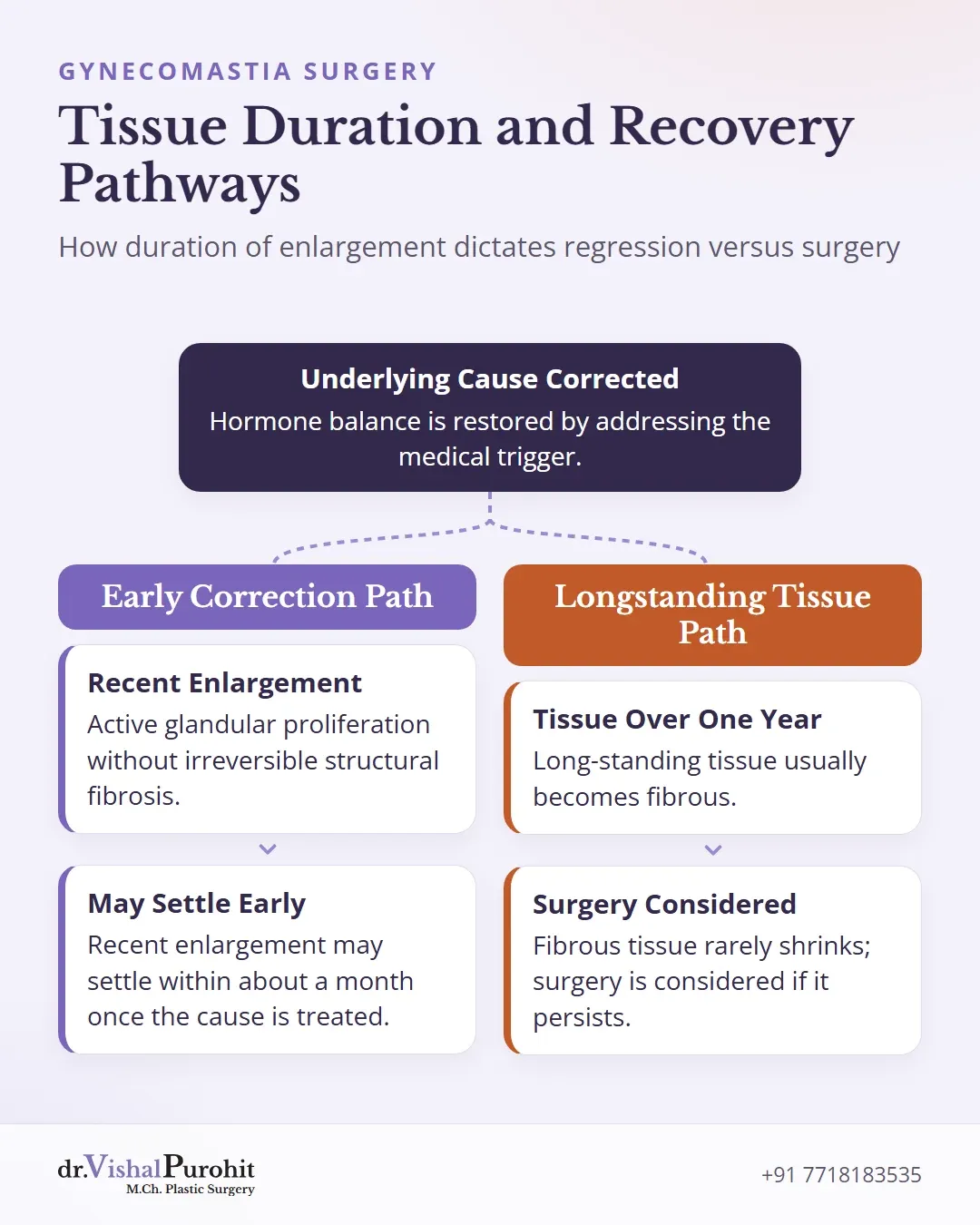
When the Cause Is Corrected Early
When a suspected acute underlying medical cause is identified and corrected, gynecomastia can resolve in a period as short as one month. Recent enlargement is therefore the more likely to settle. Early treatment is also described as maximising the benefit for patients with significant physical symptoms or emotional distress.
When the Tissue Has Been There Longer
- Gynecomastia present for longer than one year is less likely to regress spontaneously after hormonal balance is restored, because fibrosis is typically present.
- Enlargement present for one to two years or more is often refractory to drug treatment, given the fibrosis that develops over time.
Dr. Purohit’s Approach in Jaipur
Dr. Vishal Purohit does not prescribe medicines for gynecomastia. Where gland tissue persists after the underlying cause has been addressed, surgery is considered. What medicines can and cannot do is reviewed in the post on medical treatment for gynecomastia.
Getting Assessed in Jaipur
A hormonal cause is looked for before any operation is planned. Details of gynecomastia surgery in Jaipur are on the landing page, and common questions are answered in the gynecomastia FAQs.
This is educational information, not medical advice.