
A detailed health history ensures that botulinum toxin type A injections for forehead and glabellar lines are safe and appropriate for your anatomy. Underlying neuromuscular issues, current medications, and past aesthetic treatments can alter both suitability and clinical outcomes.
Patients should also evaluate pre-existing eyelid position, as detailed in Heavy Eyelids and Raised Brows: Why They Matter Before Forehead Botox, to help avoid unwanted weakness.
Why Your Health History Matters
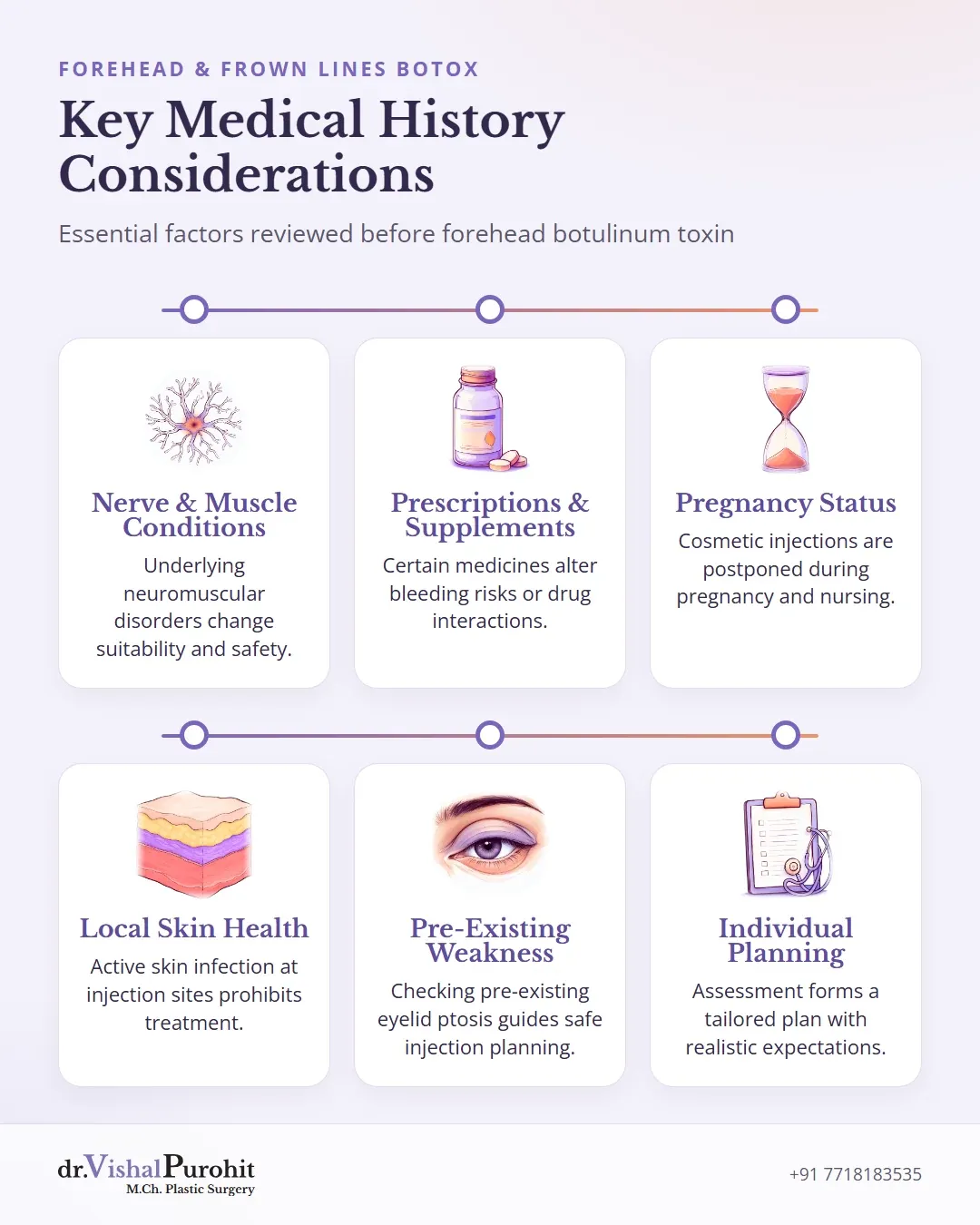
A thorough medical history during the initial consultation helps determine if, when, and how botulinum toxin type A injections for forehead and glabellar lines can proceed safely12.
Dr. Purohit’s note: A thorough medical history allows Dr. Vishal Purohit to evaluate personal goals, review past treatments, and form an individualized treatment plan while explaining realistic outcomes23.
Discussing medical background is vital because certain conditions and medications change whether treatment is appropriate:
- A complete medical history identifies key contraindications, including active skin infections at intended injection sites, neuromuscular disorders such as myasthenia gravis, Eaton-Lambert syndrome, or motor neuron diseases, and known hypersensitivity to ingredients such as albumin345.
- Pregnancy and breastfeeding are conditions where botulinum toxin type A is not recommended345.
- Disclosing all prescription medicines, vitamins, and herbal supplements is necessary67. Concomitant agents like aminoglycosides can potentiate the neuromuscular effects of the toxin345.
A detailed history also checks for pre-existing eyelid ptosis or muscle weakness before planning injections26.
Nerve and Muscle Conditions

Product labels and clinical guidelines advise patients to tell their doctor about any underlying muscle or nerve disorders8. These include:
Key points
- Underlying neuromuscular conditions significantly increase the risk of severe side effects from botulinum toxin.
- Preexisting disorders such as myasthenia gravis and ALS require extreme caution or are contraindicated.
- Emergency medical care is required immediately if breathing, swallowing, or speaking difficulties occur after injection.
- Myasthenia gravis8
- Lambert-Eaton syndrome (also known as Eaton-Lambert syndrome)89
- Amyotrophic lateral sclerosis (ALS)810
- Peripheral motor neuropathic diseases911
Official drug labels warn that individuals with neuromuscular junction disorders or motor neuropathies face an increased risk of clinically significant side effects from onabotulinumtoxinA1112. These effects include generalized muscle weakness, ptosis, double vision (diplopia), voice changes (dysphonia), slurred speech (dysarthria), severe swallowing problems (dysphagia), and respiratory compromise1112.
Literature notes that botulinum neurotoxin can worsen existing disease symptoms by interfering further with neuromuscular transmission13. In surgical literature, preexisting conditions such as myasthenia gravis and Eaton-Lambert syndrome are described as contraindications or situations requiring extreme caution91013.
Any breathing, swallowing, or speaking difficulty, or generalized weakness, after a botulinum toxin injection is a medical emergency requiring immediate emergency care11. Patients discuss their complete medical background during the initial assessment with Dr. Vishal Purohit in Jaipur so all health factors are reviewed before proceeding with forehead or frown line treatment.
Medicines and Supplements
Certain medicines and supplements can interact with botulinum toxin or affect recovery after forehead and frown line injections.
Antibiotics and Muscle Relaxants
Aminoglycoside antibiotics and other agents that interfere with neuromuscular transmission, such as curare-like compounds, require caution because they may potentiate the effect of botulinum toxin811. Aminoglycosides can inhibit neuromuscular transmission, and administering botulinum toxin during aminoglycoside treatment is not recommended1415. Using anticholinergic drugs alongside botulinum toxin may also increase systemic anticholinergic effects811.
Blood Thinners and Bruising
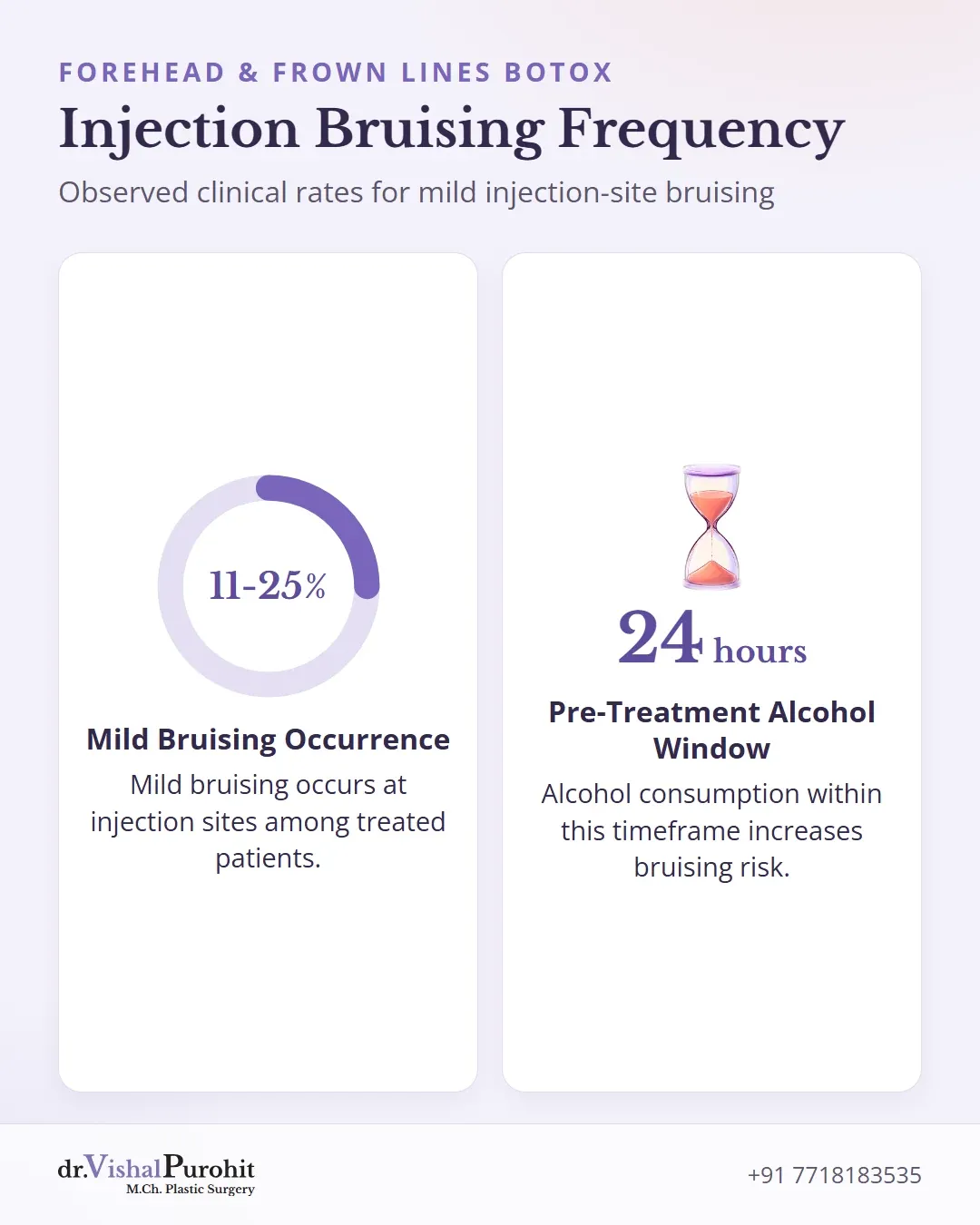
Medications and supplements that affect clotting increase the chance of redness or bruising at injection sites716. Mild bruising occurs in 11% to 25% of patients receiving injections17. The risk of bruising rises with:
- Prescription anticoagulants such as warfarin17
- Aspirin and nonsteroidal anti-inflammatory drugs (NSAIDs)1718
- Supplements including vitamin E, fish oil, ginkgo, garlic, and ginseng1617
Drinking alcohol within 24 hours before treatment also increases bruising7.
Myth: Natural dietary supplements are harmless and do not need to be paused or reported before injections.
Fact: Common supplements like vitamin E, fish oil, ginkgo, garlic, and ginseng thin the blood and significantly raise the risk of bruising at injection sites.
Medical Guidance
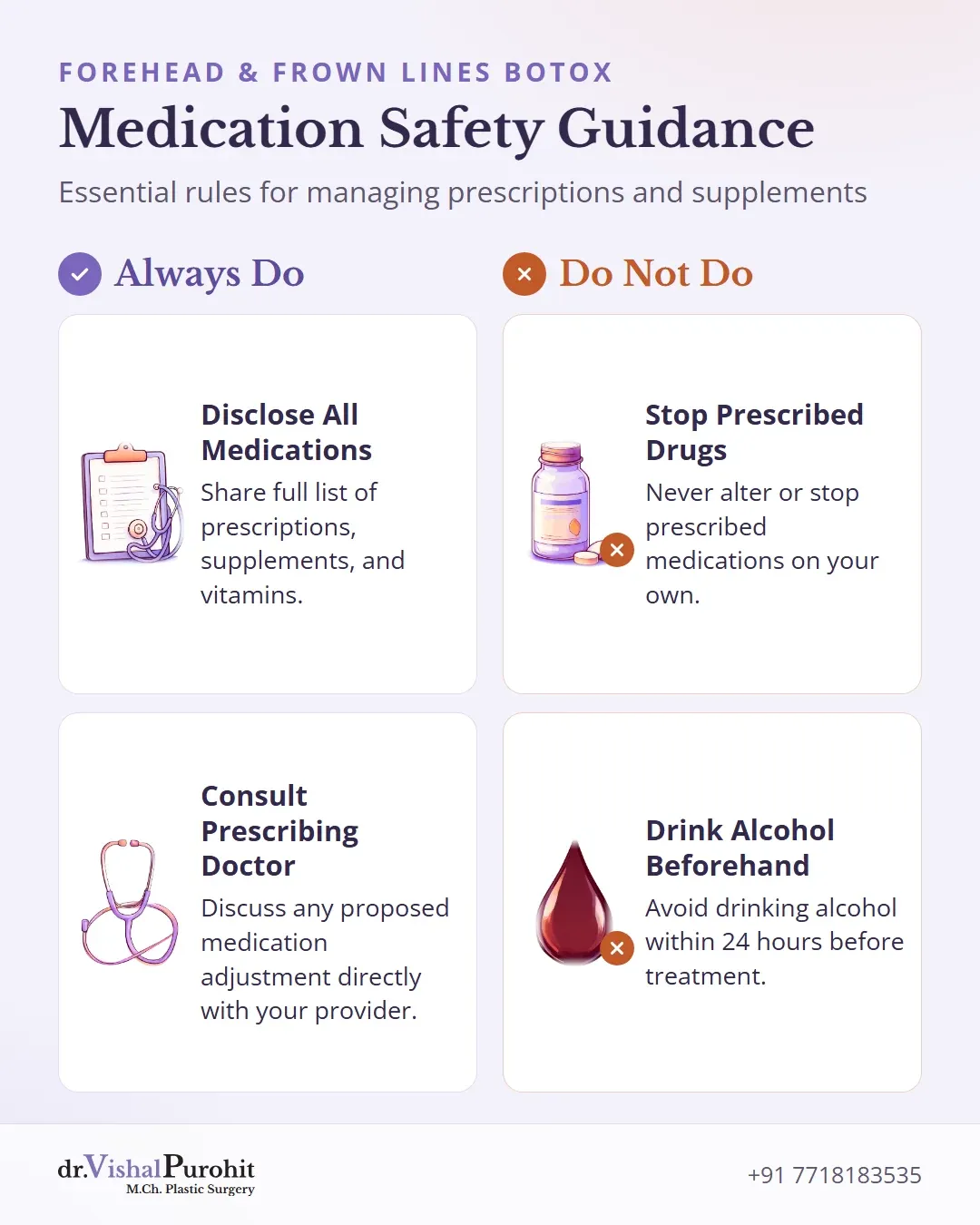
Patients must share a complete list of their medications, health conditions, and supplements with the doctor before treatment1516. A patient must never stop or alter any prescribed medicine on their own; any adjustment must be discussed directly with the prescribing healthcare provider716.
Pregnancy and Breastfeeding
A thorough health history is taken before treatment to ensure a patient is not pregnant or breastfeeding19. The safety of cosmetic botulinum toxin during pregnancy and lactation has not been established in clinical studies, so treatment is routinely postponed1219.
What the Evidence Shows
Clinical literature and prescribing data outline several key safety considerations:
- Formal clinical studies or adequate postmarketing surveillance data in pregnant women are lacking1219.
- Animal studies have shown adverse effects on fetal growth, such as decreased fetal weight and skeletal ossification, at clinically relevant doses associated with maternal toxicity1220.
- Reports indicate that inadvertent exposure during pregnancy has not resulted in problems or adverse sequelae in humans1920.
- It remains unknown whether botulinum toxin passes into human breast milk, making cosmetic treatment inadvisable during lactation420.
Because wrinkle treatment is never urgent, cosmetic injections are usually postponed until after pregnancy and breastfeeding. Patients are encouraged to share their family planning status openly during consultation.
Earlier Treatments and Skin at the Site

Before scheduling Botox for forehead or frown lines, a complete review of earlier aesthetic procedures and local skin health is necessary. Patients should share details regarding:
- Any recent botulinum toxin injections received elsewhere, as formulations differ and are not interchangeable1221.
- Previous dermal fillers in the upper face.
- Any active skin infection or rash on the planned injection site.
Having an active skin infection at the intended injection site is an absolute contraindication to receiving Botox58. Previous facial aesthetic treatments or structural alterations can influence treatment planning and tissue movement.
Whether treatment proceeds, requires waiting, or involves an adjusted technique is decided at the consultation. Dr. Vishal Purohit assesses each individual during the clinical examination to determine appropriate timing and suitability. For details on financial aspects and treatment agreements, review the cost and consent post.
Medical History Consultations in Jaipur
Reviewing your full health history and routine prescriptions ensures forehead treatments proceed with proper safety precautions. To evaluate your suitability, review details on forehead and frown lines Botox in Jaipur or read forehead Botox FAQs. Dr. Vishal Purohit conducts careful clinical assessments to guide your care.
This is educational information, not medical advice.