
Botox injections temporarily soften moderate to severe dynamic lines by relaxing underlying facial muscles. Because individual response patterns vary, treatment begins with a personal assessment rather than a fixed outcome.
While dynamic wrinkles soften as the medication takes effect, lines still visible at rest: what Botox can and cannot smooth outlines why static creases may persist. Understanding general biological timelines helps set realistic expectations before undergoing treatment.
When the Effect Starts
What to expect for an individual face is discussed at the consultation with Dr. Vishal Purohit.
Medical literature provides general information on when visible changes typically occur after injection:
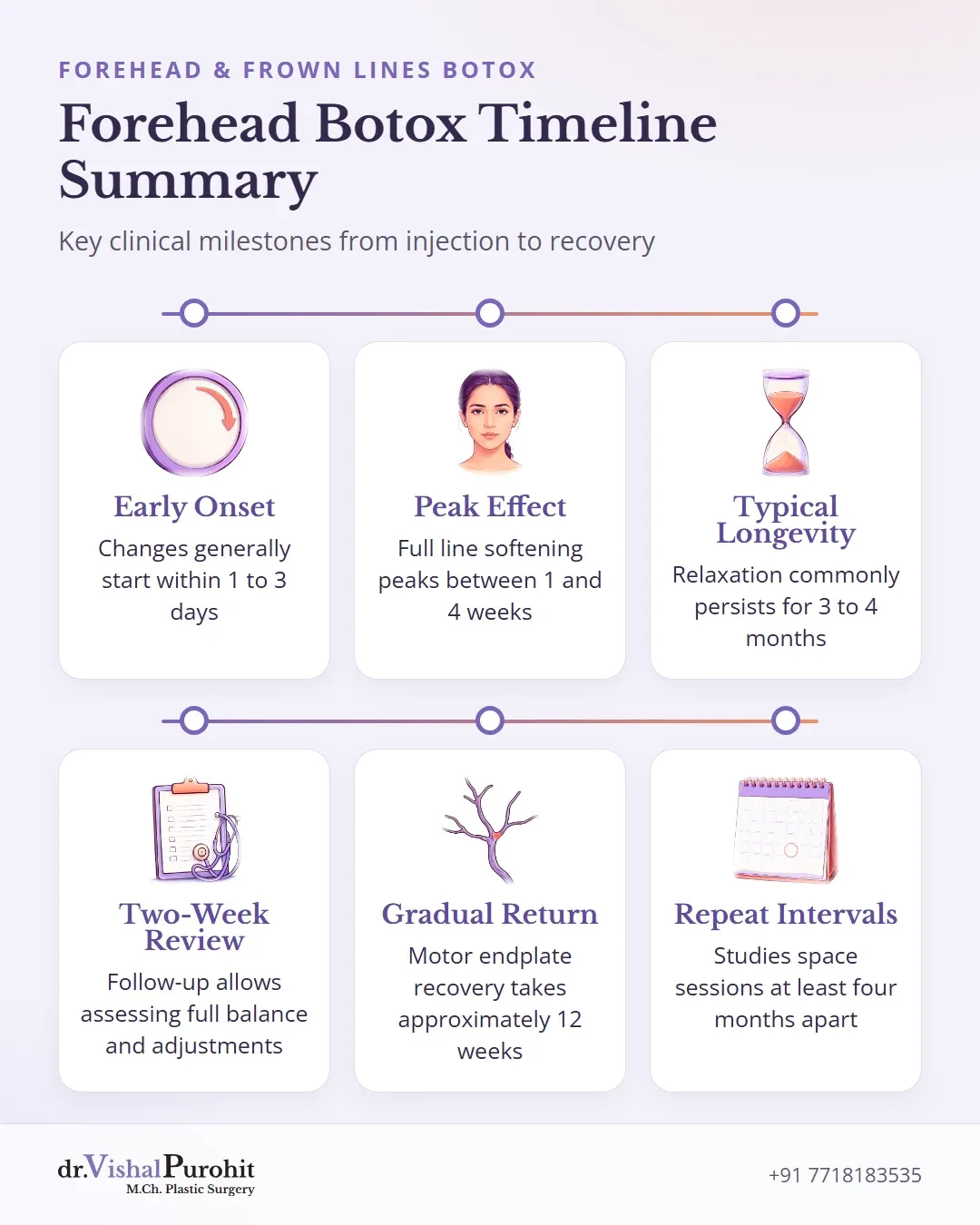
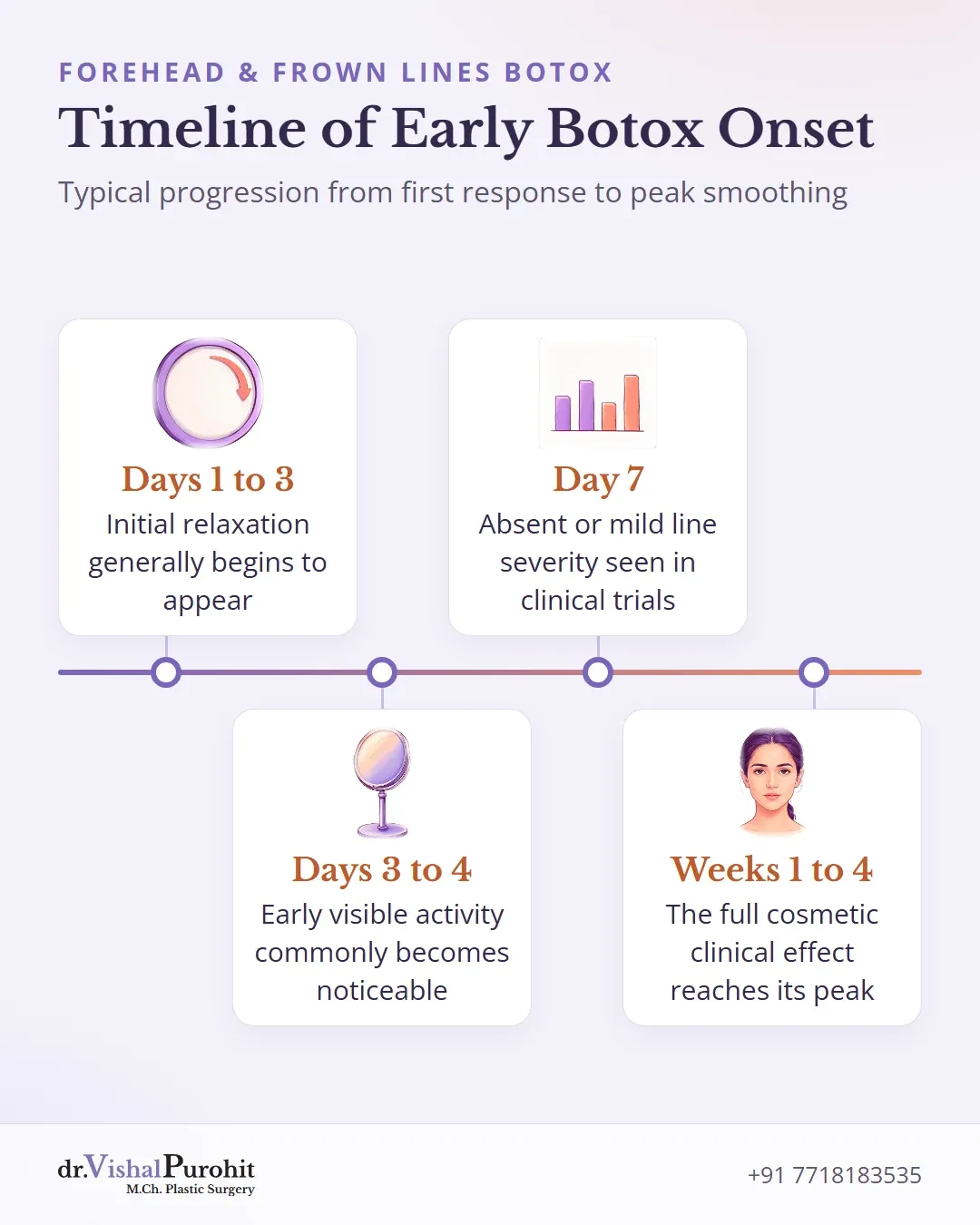
- Clinical effects of botulinum toxin generally begin to appear within one to three days1. Some clinical reports note that onset usually becomes apparent in one week2, taking approximately three to four days for early activity to become visible3.
- Individual onset times vary between patients, with some individuals noticing early changes in two days and others in nine days4.
- The full clinical effect peaks between one and four weeks following treatment1. In clinical trials of glabellar lines, day seven evaluations showed absent or mild line severity at maximum frown in 82 percent of patients receiving onabotulinumtoxinA1.
Dr. Purohit’s note: Expected timelines and individual response patterns are evaluated and discussed directly during each patient’s personal consultation in Jaipur.
How Long It Usually Lasts
In clinical trials for glabellar frown lines, the reduction in line severity typically lasts for up to 120 days or 4 months567. Textbooks similarly describe a variable response that averages 3 months8, with effects commonly persisting for 3 to 4 months910.
Key points
- Results typically last 3 to 4 months in most clinical studies.
- Individual metabolism, muscle strength, and product choice influence duration.
- Maintenance timelines are tailored during consultation based on your facial movement.
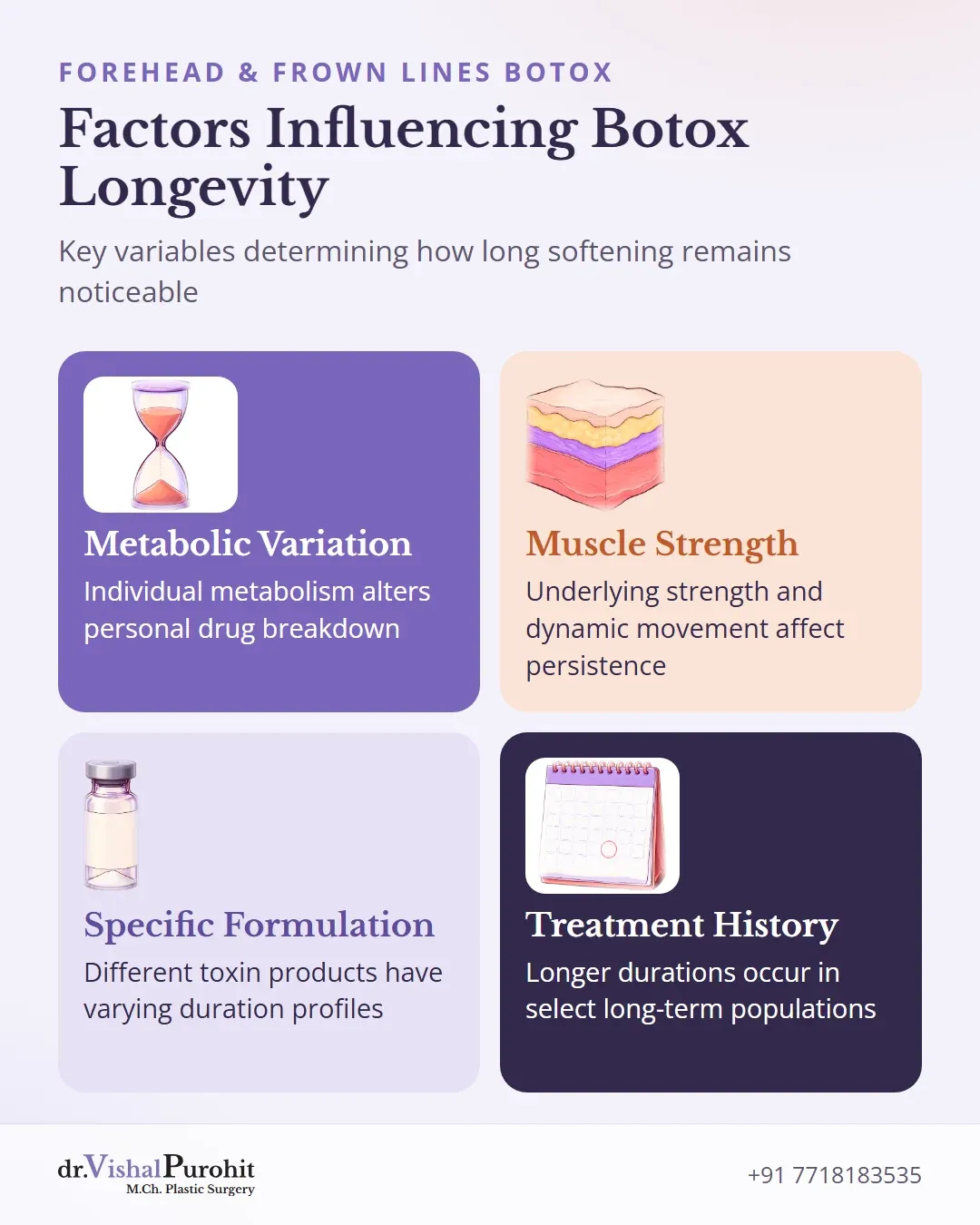
Because facial dynamics differ, treatment never comes with a fixed promise of duration. Several factors influence how long the softening effect remains noticeable:
- Individual metabolic variation and personal response across different people8.
- Muscle activity, dynamic line severity, and the underlying strength of the treated facial muscles56.
- The specific formulation selected, as duration of efficacy and clinical response can vary among different botulinum toxin products1112.
Longer periods of effect have been recorded in select long-term treatment populations, lasting 7 to 11 months8. Conversely, trials show that muscular activity gradually recovers as the temporary chemodenervation subsides910.
For patients visiting Dr. Vishal Purohit in Jaipur, the expected timeline and maintenance intervals are not predetermined by a rigid formula. Instead, what to expect is discussed at the consultation after looking at individual facial movement and goals.
The Review Visit
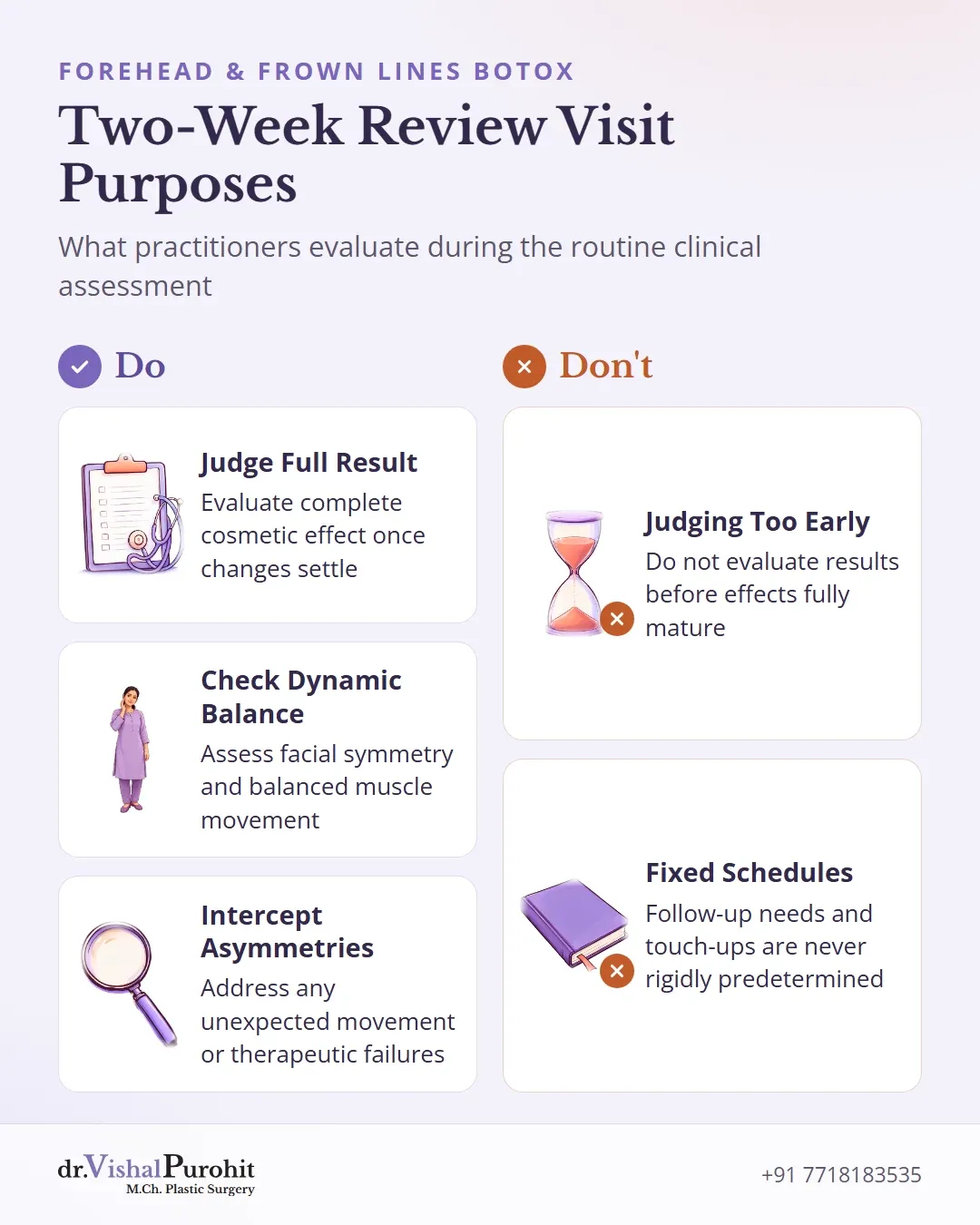
A follow-up assessment is routinely scheduled around two weeks after treatment in aesthetic practice13. At this point, the cosmetic effects of botulinum toxin are visible and unlikely to change acutely, allowing the practitioner to judge the complete result, identify any new dynamic lines, and intercept evolving complications13. It also provides an opportunity to evaluate facial balance and determine whether any minor adjustments or touch-ups are indicated1314. In clinical literature, patients are also advised to return within two weeks if they notice asymmetries, therapeutic failures, or complications15.
In Dr. Vishal Purohit’s practice, the timing and necessity of a review visit are decided at the consultation. During that initial discussion, he assesses each individual’s facial anatomy and outlines a tailored follow-up plan. Whether any secondary touch-up or dose adjustment is appropriate is also decided at the consultation. Patients who observe persistent asymmetry or unexpected muscle movement can have these findings evaluated during their clinical follow-up.
As It Wears Off
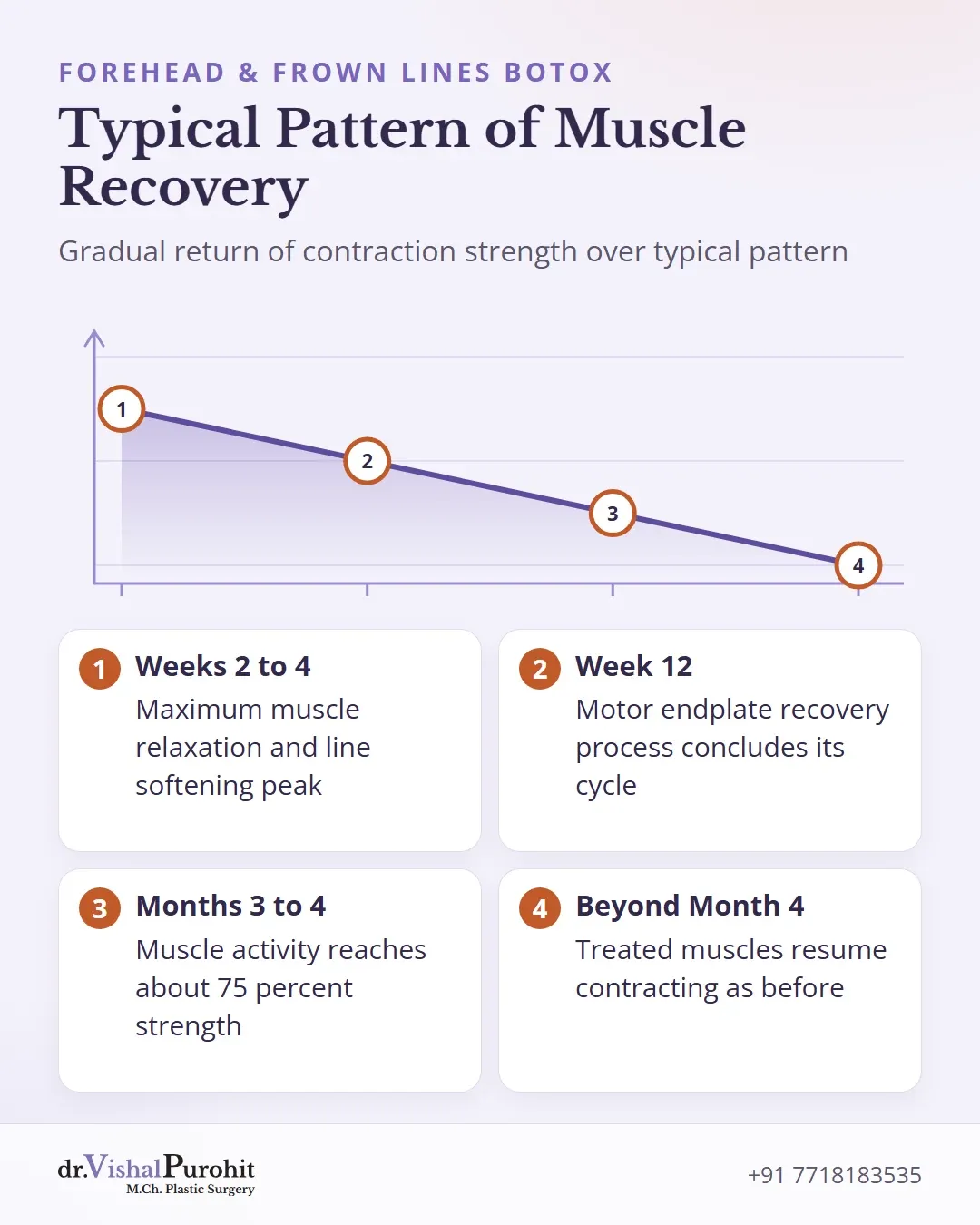
Botox provides temporary improvement for moderate to severe forehead lines and glabellar lines56. As the drug metabolises, the muscular relaxation does not stop abruptly. Instead, muscle activity returns gradually over time1617.
Clinical literature notes that botulinum toxin causes partial chemical denervation that results in temporary muscle paralysis18. The process of recovery at the original motor endplates takes approximately 12 weeks from start to finish, which reflects the advised length of time a patient can experience paralysis18. Patients are often instructed to seek retreatment in approximately 3 to 4 months, or once muscle activity is felt to have returned to about 75% of its original strength19.
When the treatment wears off, the underlying frontalis, corrugator, and procerus muscles resume contracting as before56. For patients who choose to maintain their results, subsequent sessions can be planned. In Dr. Purohit’s practice, retreatment timing and individual treatment plans are decided at the consultation.
Deciding on Repeat Treatment
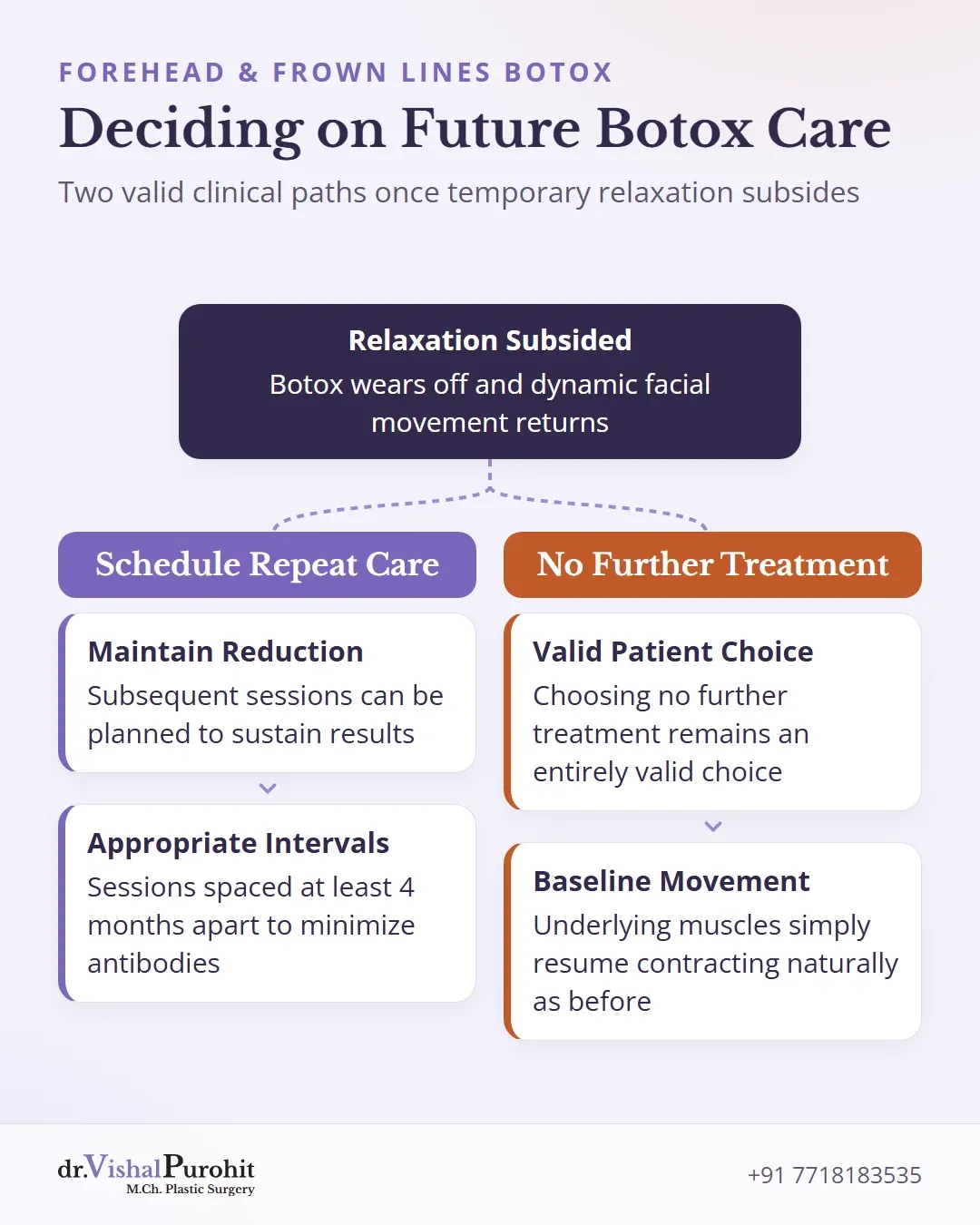
Repeat injections are entirely elective and should only be undertaken if the individual wishes to maintain line reduction. Choosing no further treatment remains an entirely valid choice.
Key points
- Repeat injections are elective and spaced at least three to four months apart.
- Neutralizing antibodies that reduce response are rare with current cosmetic formulations.
- Using the lowest effective amount at the longest feasible intervals minimizes antibody risk.
Surgical literature indicates that facial injection sessions should be spaced at least four months apart, allowing a schedule of up to three sessions per year20. In adult dosing guidelines across indications, treatments are evaluated over intervals of at least three months21. In Dr. Vishal Purohit’s practice, individual maintenance timing is decided at the consultation.
A common question is whether the body stops responding over time. The human immune system can form neutralizing antibodies against the active neurotoxin protein, which block its therapeutic effect and reduce clinical response2122. Studies indicate that neutralizing antibodies are rare with current cosmetic formulations compared with older preparations23, and clinical trials of purified formulations have reported no neutralizing antibody development in facial aesthetic use24. The likelihood of antibody development is minimized by administering the lowest effective amount at the longest feasible intervals21.
Financial considerations and session fees are addressed separately in the guide to Botox costs.
Consultation and Follow-up Planning in Jaipur
Planning aesthetic treatment requires careful evaluation of personal anatomy and muscle dynamics. Patients exploring options can learn more about forehead and frown lines Botox in Jaipur or review common concerns through forehead Botox FAQs. In his practice, Dr. Vishal Purohit assesses facial movement and outlines tailored schedules during the initial appointment.
This is educational information, not medical advice.