
Following botulinum toxin type A treatment for horizontal forehead and glabellar frown lines, patients often notice minor injection-site changes. Small raised wheals, localized skin redness, and mild tenderness represent normal physical responses to needle punctures and fluid placement.
Preparing in advance helps individuals distinguish self-limiting issues from complications. Sharing your full history, as detailed in Before Forehead Botox: Health History and Medicines to Discuss, allows for appropriate clinical planning and ensures any emerging post-procedure symptoms are evaluated safely.
The First Hours
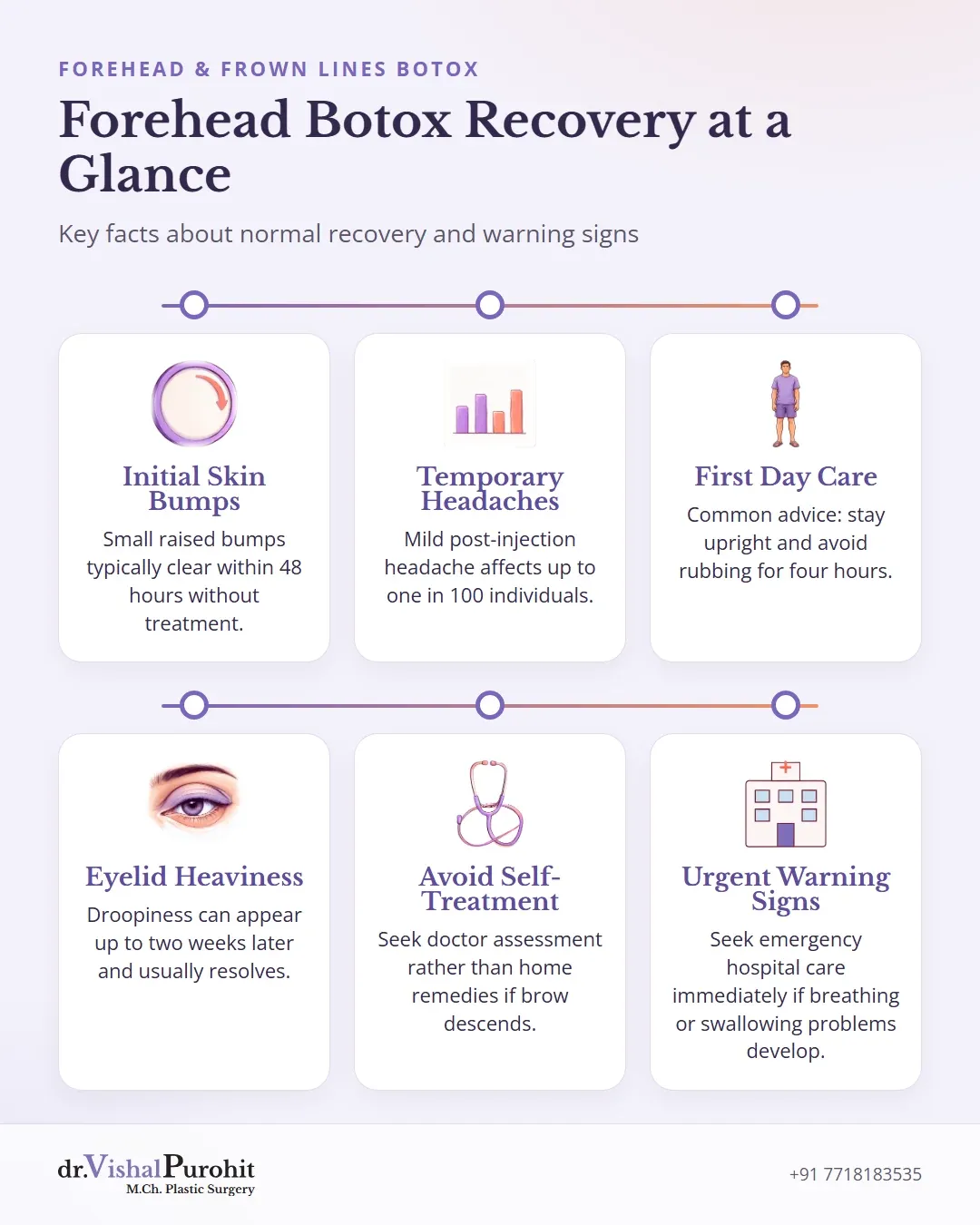
Immediately following injection for forehead and glabellar frown lines, local tissue responses around the needle insertion points are typical.
Expected Injection-Site Changes
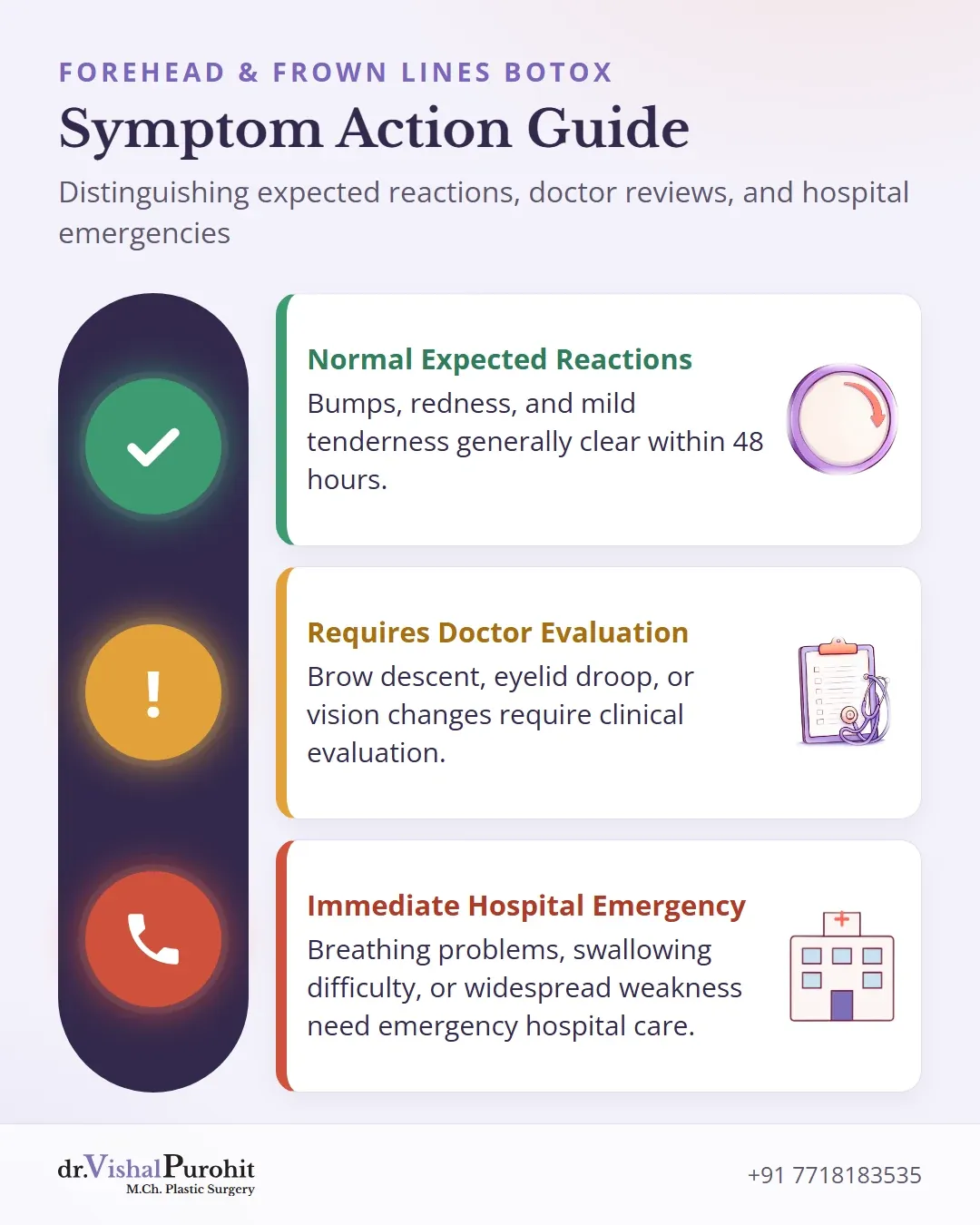
The physical passage of the needle and fluid placement can cause immediate, localised changes in the treated area:
- Raised wheals or bumps, where the fluid initially rests before absorbing1
- Erythema, or localized skin redness1234
- Local tenderness, pain, or edema14
In published clinical observations of upper facial lines, mild and transient local reactions typically resolve within 48 hours without intervention5. When superficial bleeding occurs, it may develop into ecchymosis or a localized hematoma14.
Post-Procedure Headache
Some individuals experience a mild headache shortly after receiving upper facial injections1234. Published clinical literature notes that headache is a recognized side effect occurring in up to one in 100 treated individuals6. These post-procedure headaches are generally self-limiting and short-lived6.
Bruising and Headache
Bruising at Injection Points
Bruising from needle punctures is a recognised side effect, and the forehead is reported as the second most common facial site for it after the crow’s feet area7. Mild bruising at the injection site may occur during or immediately following treatment8.
Key points
- Mild bruising and transient headache are common, temporary side effects following injections.
- Certain medications, supplements, and alcohol increase the likelihood of bruising.
- Headaches usually develop within a few hours and respond to simple over-the-counter pain relievers.
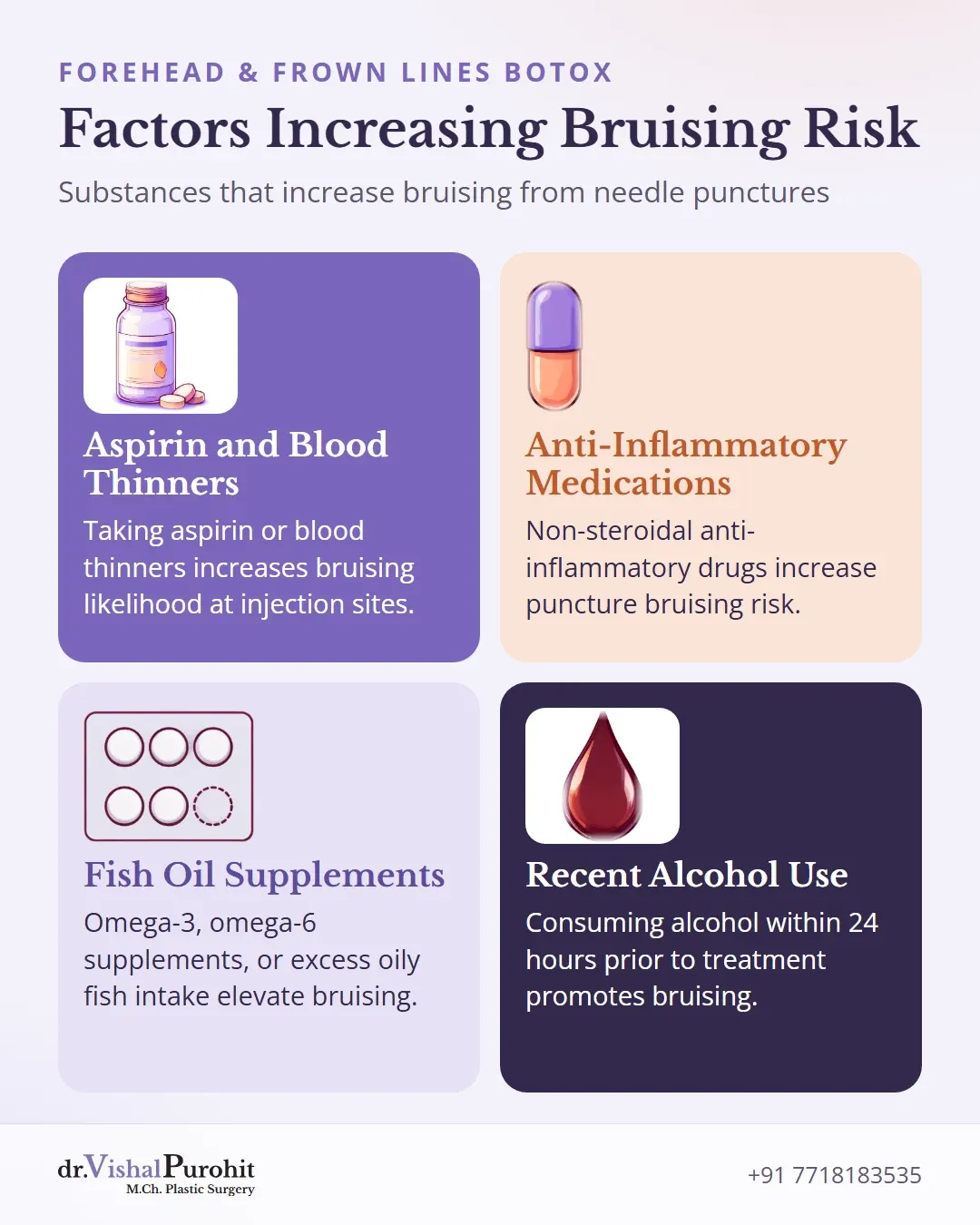
Factors that increase the likelihood of bruising include:
- Taking aspirin, non-steroidal anti-inflammatory agents, or blood-thinning medication27.
- Taking oral omega-3 or omega-6 fish oil supplements, or excessive ingestion of oily fish7.
- Consuming alcohol within 24 hours prior to treatment27.
Applying pressure after the injection and postprocedure ice may help minimise bruising9.
Headache Reported in Clinical Trials
Headache is among the most common adverse events recorded in clinical trials of botulinum toxin210. In facial trials, transient headache was the most frequently reported adverse effect following injections in the glabella, though this may represent an effect of the injection process itself rather than the toxin11.
A headache may develop within a few hours following application8. Mild headaches can be managed with over-the-counter analgesics9. Persistent headaches lasting several days are rare79.
Advice for the First Day
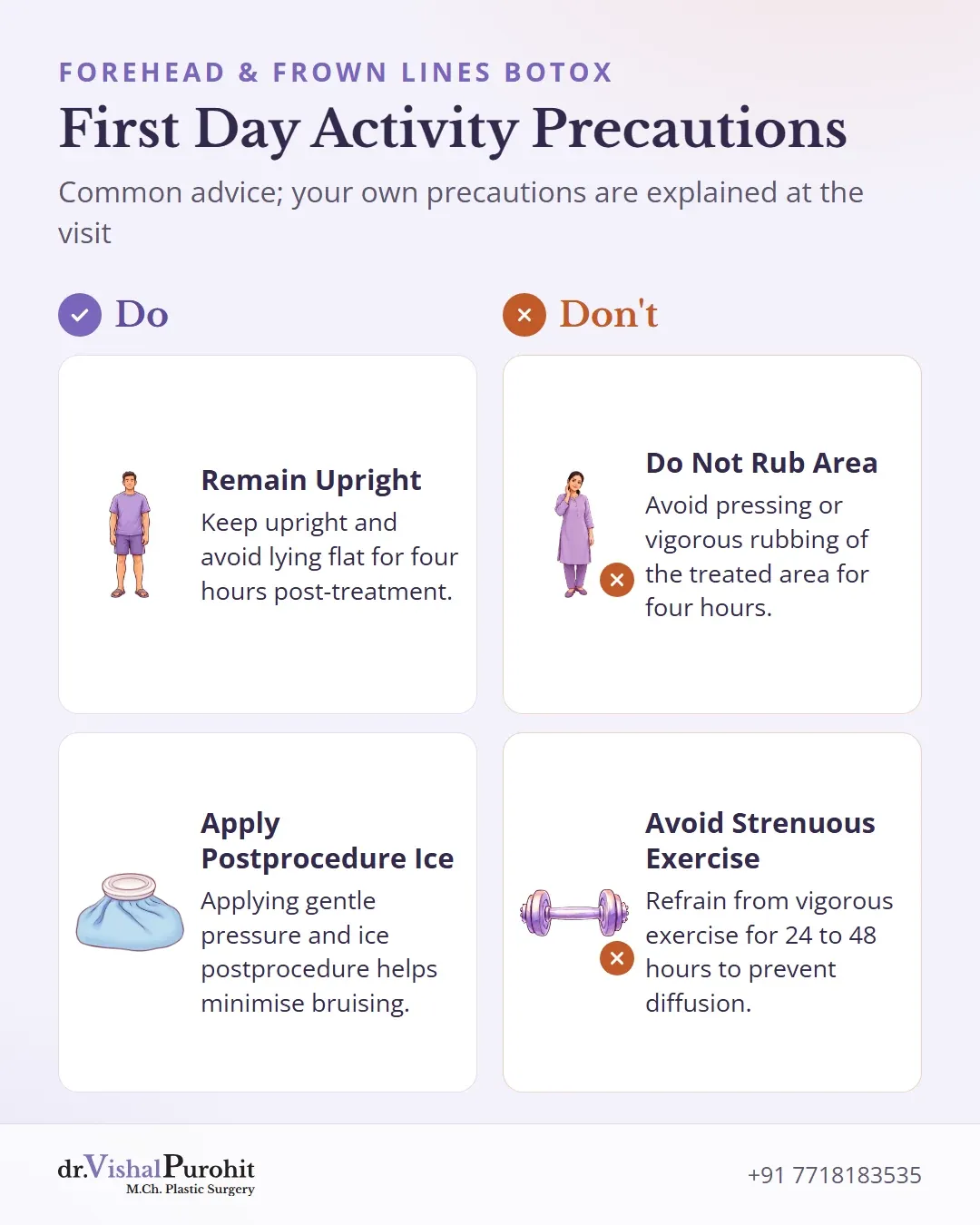
Common post-treatment guidance often includes practical precautions to reduce potential side effects. Clinical texts and guidance suggest:
- Avoiding pressing on the treated area or vigorous rubbing for about four hours2312.
- Refraining from vigorous aerobic activity or strenuous exercise for 24 hours213, or 24 to 48 hours3, to prevent unwanted diffusion into adjacent muscle groups13.
- Remaining upright and avoiding lying flat for four hours post-treatment2312.
However, the scientific evidence supporting each specific daily restriction remains limited. For instance, while some clinicians advise against active facial contraction, receptor-mediated binding does not depend on muscle movement13.
The precautions for each patient are explained at the treatment visit. Patients who notice unusual symptoms should seek medical review promptly.
Heavy Brow or Droopy Eyelid
Timing of Symptoms
After injections for forehead or frown lines, unwanted heaviness in the eyebrow or drooping of the upper eyelid can occasionally occur1415. An eyelid droop may present as early as day one or two15, or develop between 48 hours and 14 days following treatment16.
Expected Course
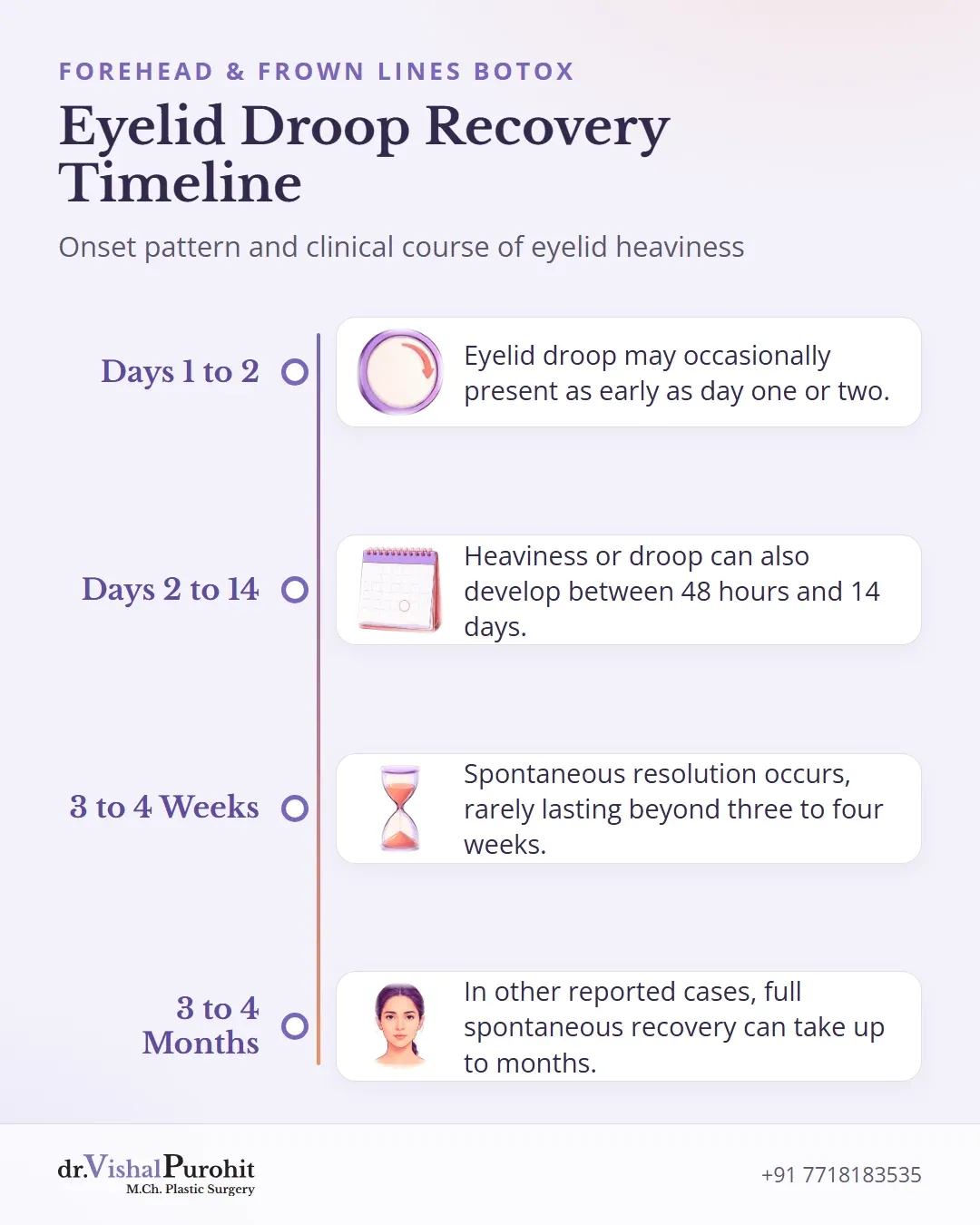
These changes are generally transient1417. Brow heaviness or descent is usually managed conservatively with observation and reassurance, as spontaneous recovery is expected as neuromuscular activity returns17. An eyelid droop can resolve spontaneously, though it may persist for several weeks14, rarely lasting more than 3 to 4 weeks according to some reports16, or between three to four months in others15.
Medical Review Over Self-Treatment
Patients should not attempt any self-treatment if brow descent or eyelid drooping occurs. Safe management requires a professional evaluation rather than home remedies:
- Pre-existing asymmetries, underlying ptosis, and injection placement must be clinically reviewed1415.
- Any corrective options must be evaluated by a doctor, as unguided interventions can worsen muscle imbalances18.
Dr. Purohit’s note: For any concerns or to schedule a clinical evaluation, contact Dr. Vishal Purohit at +91 7718183535.
Symptoms That Need Urgent Help

Certain reactions after botulinum toxin type A treatment require immediate medical evaluation. Official drug labeling warns that toxin effects can spread beyond the injection site, producing botulism-like symptoms hours to weeks later1920.
Key points
- Toxin effects can spread beyond the injection site and cause serious botulism-like symptoms hours to weeks later.
- Seek emergency hospital care immediately for trouble breathing, difficulty swallowing, or generalized muscle weakness.
- New vision changes such as double vision or drooping eyelids require prompt medical evaluation.
Seek emergency medical care at a hospital immediately if any of the following occur1921:
- Trouble breathing or shortness of breath1920
- Difficulty swallowing (dysphagia) or speaking (dysphonia or dysarthria)1922
- Generalized muscle weakness or profound fatigue (asthenia)1920
Swallowing and breathing problems can be life-threatening1920. Regulatory updates from the MHRA note that symptoms of iatrogenic botulism typically emerge between 4 and 8 days post-injection, but can take up to 4 weeks to manifest20. In these situations, patients must obtain urgent emergency treatment at once before contacting the doctor.
Eye and Vision Changes
Drug safety warnings and clinical literature indicate that distant spread or local diffusion can cause vision-related complications, such as double vision (diplopia), blurred vision, or eyelid ptosis91922. Any new vision change requires prompt in-person medical review1920.
Clinical Consultation for Upper Facial Treatments in Jaipur
Understanding normal reactions and rare warning signs supports a calm, informed recovery after upper facial injections. For comprehensive details on treatment protocols, explore forehead and frown lines Botox in Jaipur or review common patient questions in the forehead Botox FAQs. As recovery precautions are decided at the consultation, patients with persistent concerns or unusual symptoms can schedule an in-person assessment by calling +91 7718183535.
This is educational information, not medical advice.