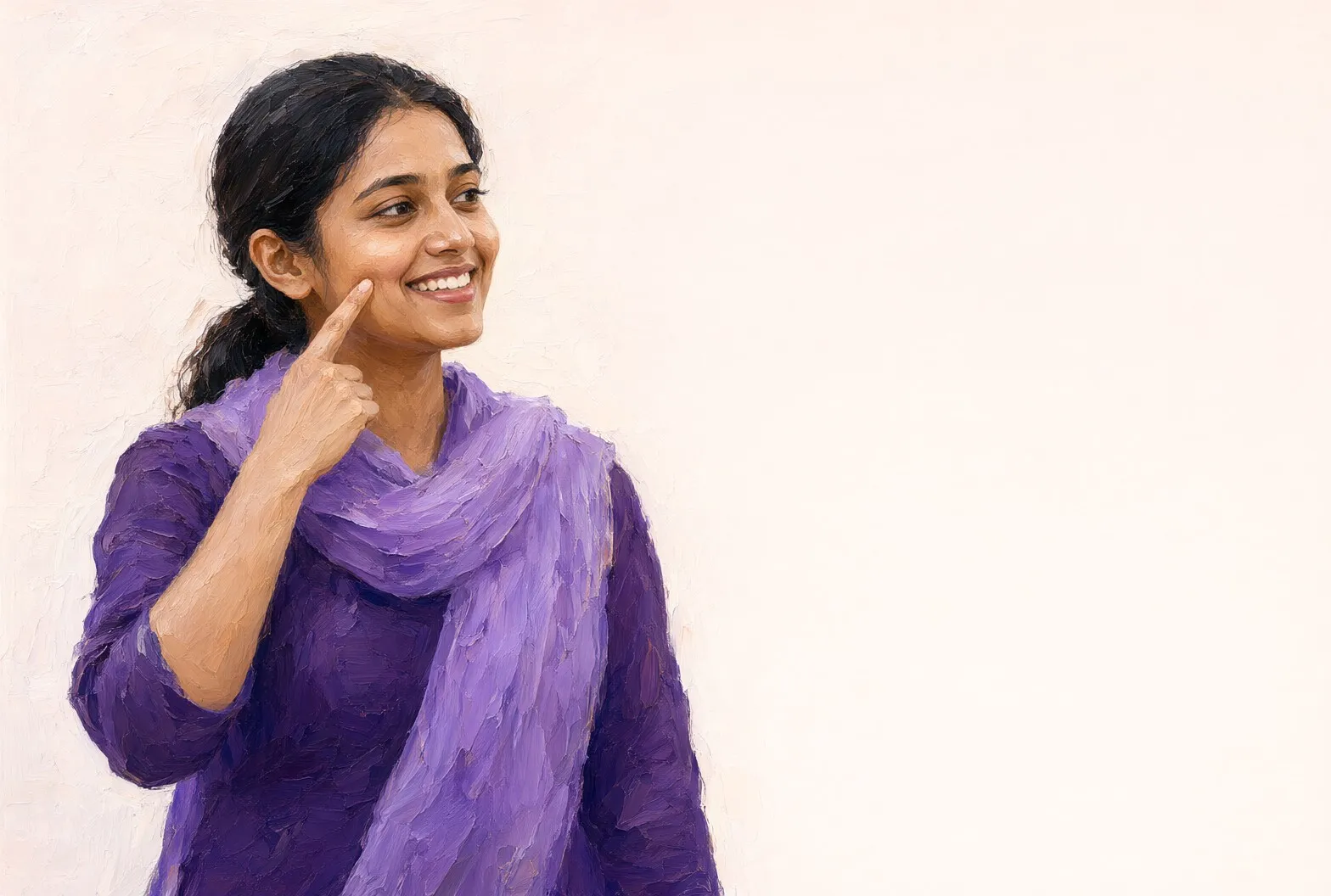
Immediately after cheek dimple creation, the newly formed indentation remains noticeable even when the face is completely still. This initial static indentation occurs because an internal stitch tethers the cheek skin to the deeper muscle while local tissue swelling temporarily accentuates the depth of the site.
Over about 6 to 8 weeks, internal healing creates a dynamic band between the buccinator muscle and dermis. Patients preparing for healing can review Dimpleplasty Recovery: Swelling, Eating and Work to understand diet adjustments, activity resumption, and post-procedure care.
Why It Shows at Rest at First
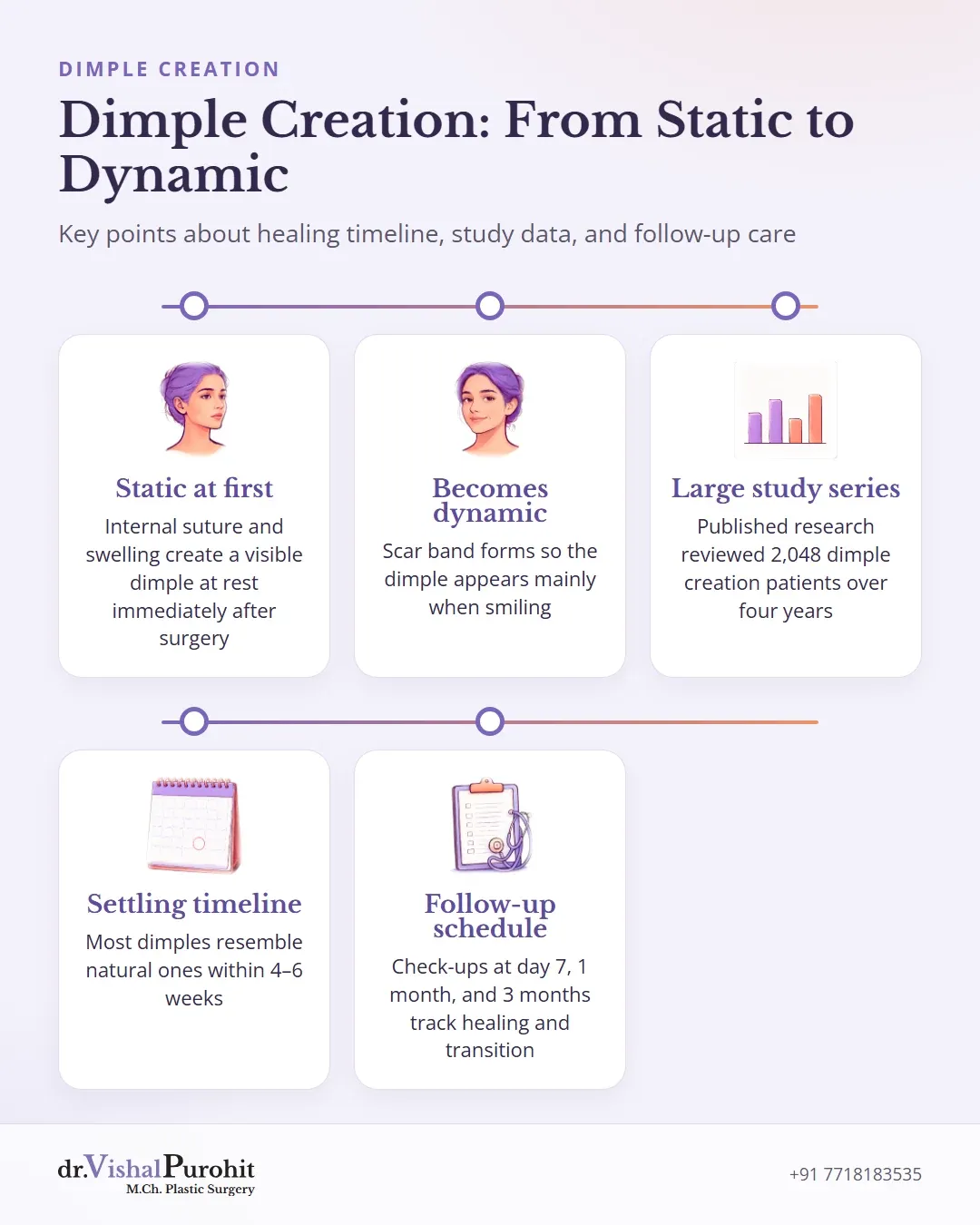
Immediately after cheek dimple creation (dimpleplasty: a small operation through the inside of the cheek that creates a cheek dimple), the newly formed indentation remains noticeable even when the face is not moving.
Dr. Purohit’s note: In the practice of Dr. Vishal Purohit, an M.Ch. plastic surgeon in Jaipur, the dimple shows at rest at first and settles by about 6 to 8 weeks (about 2 months) to show mainly on smiling. Soreness, tightness, and swelling usually last about 1 month.
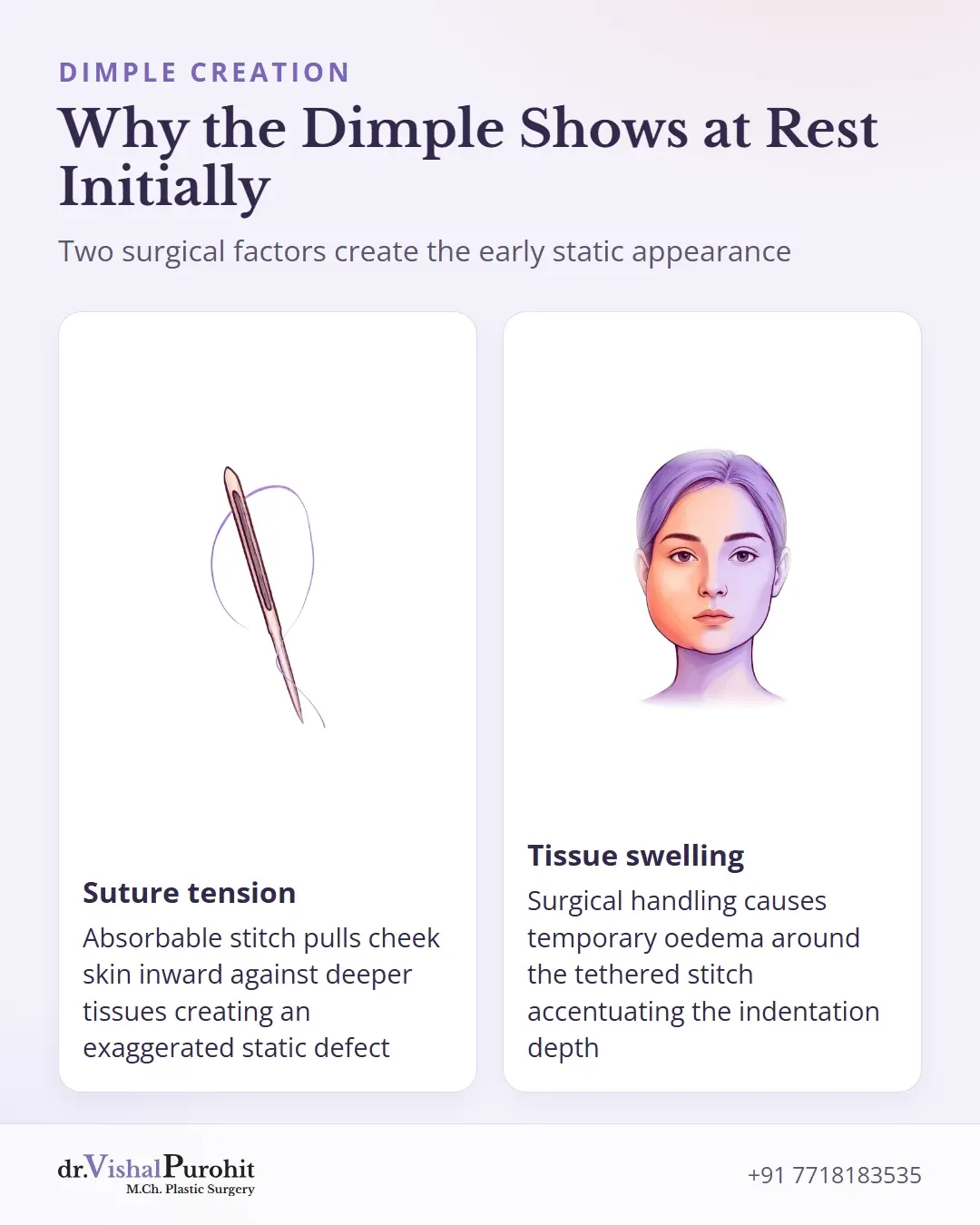
Two surgical factors explain this initial static appearance:
- Suture tension: Dr. Purohit places an absorbable internal suture through a small incision inside the cheek with very slight electrocautery to the muscle. This fresh stitch holds the cheek skin inward against the deeper tissues to create the indentation. In published surgical literature, tying the suture brings the active facial muscles and the dermis together, which creates an exaggerated static defect at first.
- Local tissue swelling: Surgical handling causes temporary oedema in the cheek tissues. This early swelling around the tethered stitch accentuates the depth of the indentation while the tissues are inflamed. In Dr. Vishal Purohit’s experience, soreness, tightness, and swelling usually last about 1 month.
Surgical reports describe an initial static dimple that deepens during animation, gradually softening until it resembles a natural dimple that appears only on smiling within 4 to 6 weeks. Other surgical series note that the appearance becomes more natural by the end of the first week as early oedema resolves.
How the Dimple Settles
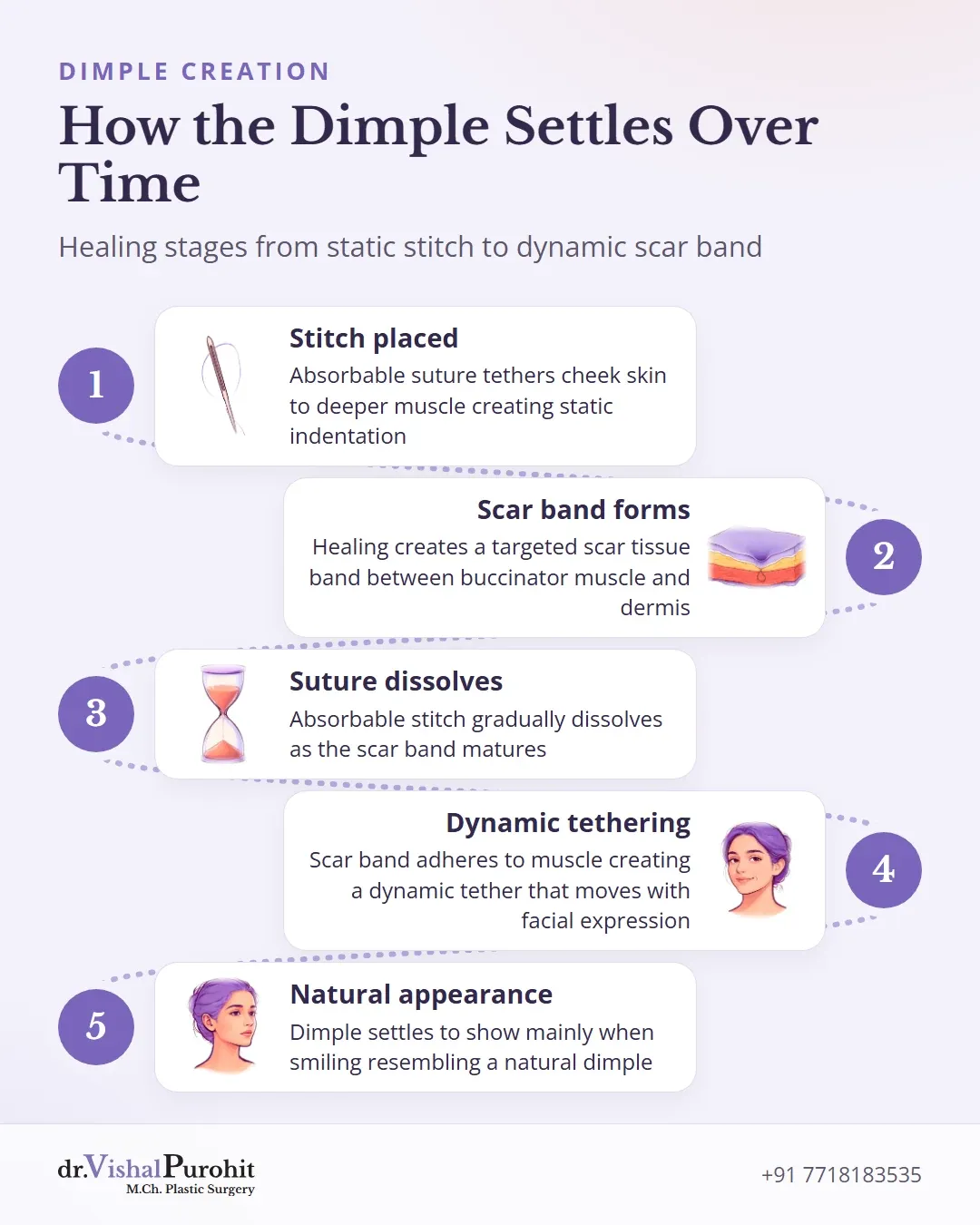
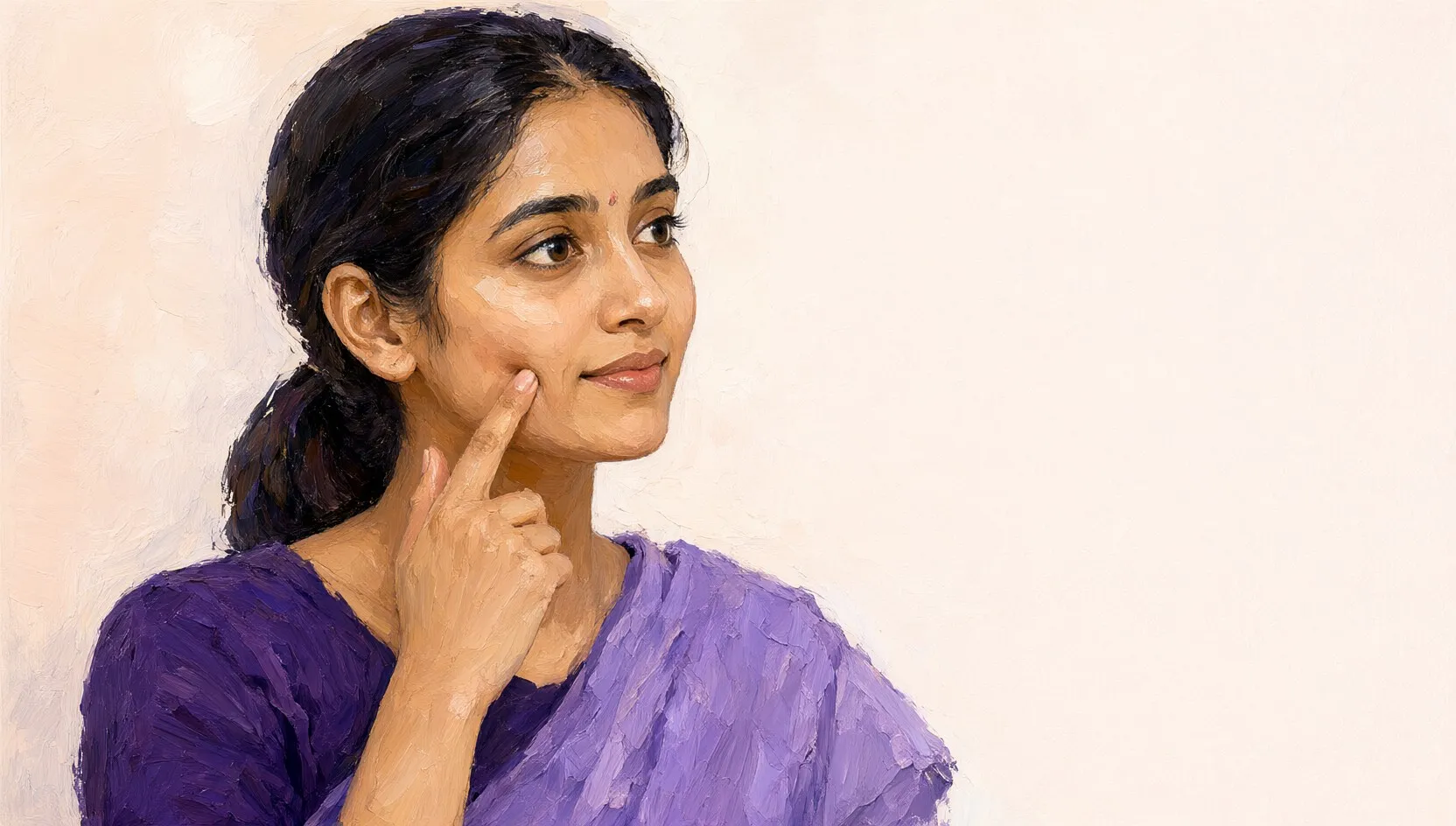
Immediately after surgery, the cheek shows a visible indentation even when the face is completely still. This early appearance occurs because the internal stitch actively pulls the deep layers of the cheek toward the inner muscle.
Key points
- The dimple is initially visible at rest due to an internal stitch holding the tissue.
- Internal scar tissue forms over time between the muscle and skin to take over the connection.
- As healing progresses over several weeks, the indentation settles to appear primarily on smiling.
Dimple creation surgery aims to form a targeted area of scar tissue between the buccinator muscle and the dermis. Rather than relying on the suture indefinitely, healing progresses so that a band of internal scar tissue forms and adheres to the underlying muscle, establishing a dynamic tethering effect. As the tissue matures and the stitch dissolves, this scar band takes over the mechanical connection from the suture.
In Dr. Vishal Purohit’s practice, the dimple shows at rest at first and settles by about 6 to 8 weeks (about 2 months) to show mainly on smiling. Patients are instructed to avoid wide smiling for the first 2 weeks.
Published literature notes that a dimple is initially static and deepens during facial animation. Over time, only a faint hint remains at rest while it accentuates on animation, typically resembling a natural dimple that appears primarily on smiling within 4 to 6 weeks, or after 1 month.

What Studies Report
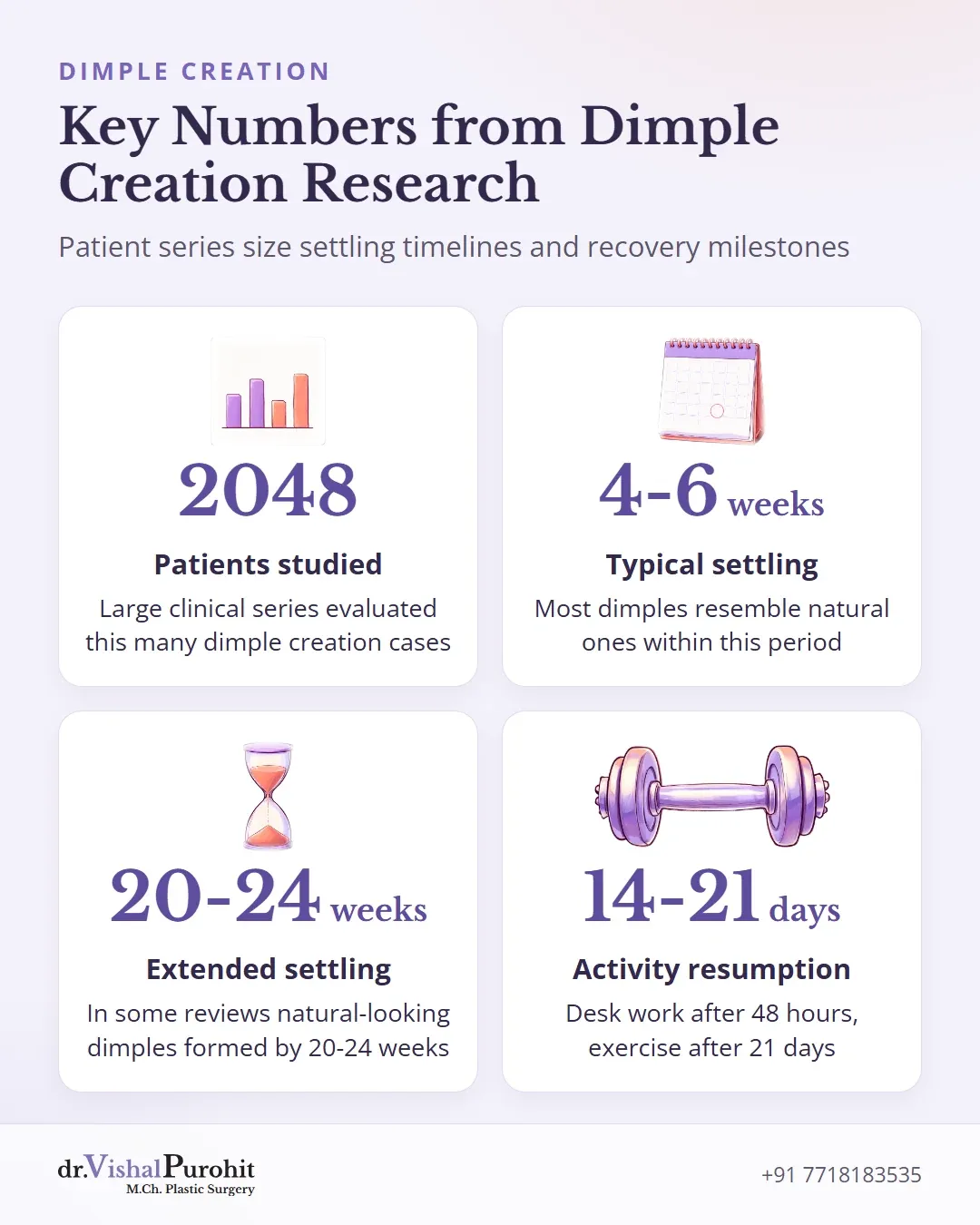
Published studies describe dimple creation as a straightforward surgical technique that accentuates facial expressions and delivers good cosmetic satisfaction. Because natural dimples are innate and dynamic, surgical techniques create a tethering scar tissue band between the buccinator muscle and the dermis.
Documented Series and Observations
In one large clinical series reviewing medical records between April 2010 and June 2014, dimple creation surgery was evaluated in 2,048 patients. Authors noted that although surgical principles remain consistent across procedures, detailed surgical tips and reports on outcomes are limited in the medical literature. Furthermore, studies utilizing three-dimensional facial scans observe that most published assessments remain subjective, with few studies applying standardized objective measurements or facial ratios; Dr. Purohit does not use 3D scanning in his practice.
Documented surgical outcomes and complications noted across literature reports include:
- Sudden disappearance or fading of the dimple
- Asymmetry between the two sides
- Bleeding or infection
- Foreign body reaction
- Injury to the buccal branch of the facial nerve or Stensen duct
When Settling Is Slower
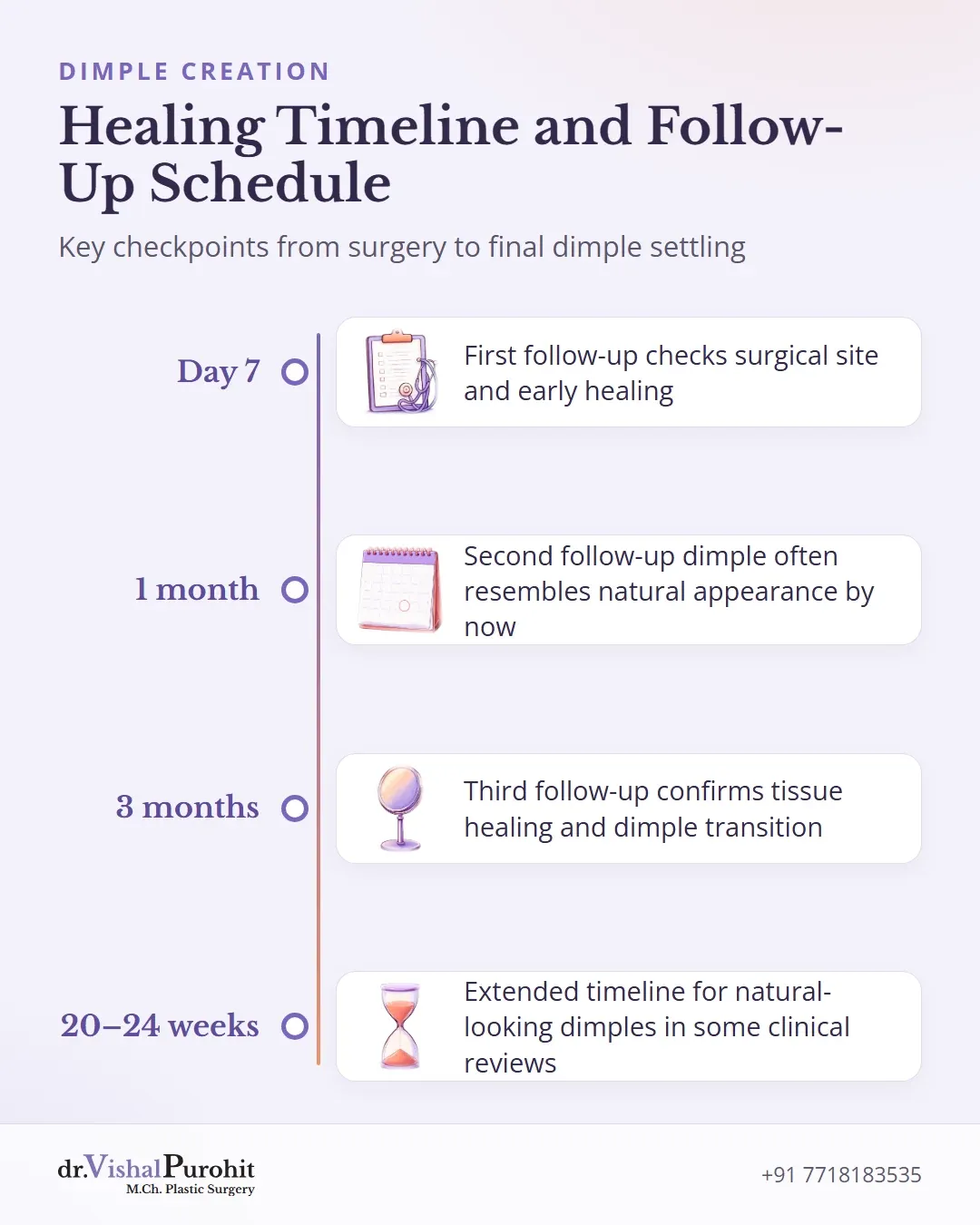
The rate at which a dimple settles varies because each person heals differently. At first, an indentation appears continuously at rest. Over about 6 to 8 weeks (about 2 months), tissue changes allow the cheek to relax so that the dimple appears mainly during facial animation.
Key points
- In Dr. Purohit’s practice the dimple settles by about 6 to 8 weeks; published timelines vary.
- Planned follow-up visits ensure proper healing and monitor the transition from rest to smiling.
- Uneven settling or fading can be addressed if the dimple does not form as expected.
In published literature, natural-looking dimples formed by 20 to 24 weeks after surgery in one clinical review, while another study noted that a static indentation gradually accentuates on animation and resembles a natural dimple appearing only on smiling within 4 to 6 weeks. Possible issues documented after dimple creation include asymmetry and sudden disappearance of the dimple.
Planned follow-up visits allow healing to be monitored closely. In Dr. Vishal Purohit’s practice, reviews are scheduled at:
- About day 7
- 1 month
- 3 months
These scheduled appointments check the surgical site, verify tissue healing, and track how the dimple transitions from rest to smiling. If a dimple fades or heals unevenly over time, a redo procedure can be planned after about 6 months and is provided without charge in his practice.

Judging the Result
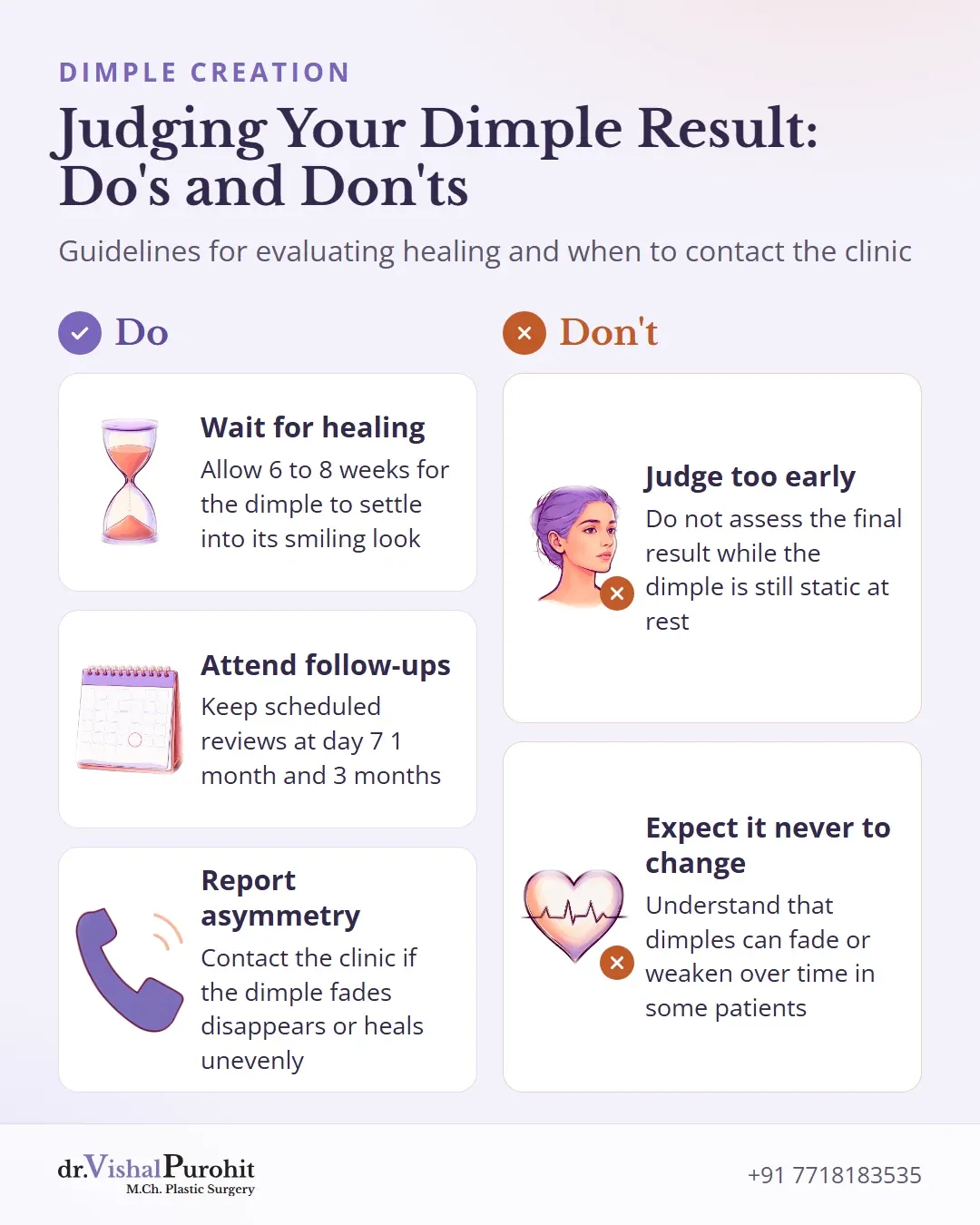
Healing takes time, and patience is necessary before evaluating the final appearance. After dimple creation, the dimple shows at rest initially. Over about 6 to 8 weeks (about 2 months), tissue healing allows it to settle so that it shows mainly when smiling. Published literature notes that an initial static indent gradually softens and resembles a natural dimple that appears only on smiling within 4 to 6 weeks.
In his practice, Dr. Vishal Purohit schedules follow-up reviews at about day 7, 1 month, and 3 months to monitor healing. The dimple lasts for most patients, but surgical literature notes that dimples can fade, weaken, disappear, or present depth asymmetry over time. In Dr. Purohit’s practice, the dimple lasts for most patients, though it can fade in some. If a dimple fades or is uneven, a redo can be planned after about 6 months and is performed without charge, whereas reversal of a dimple the patient no longer desires carries a fee. Detailed considerations regarding longevity and corrective options are addressed in the guides on permanence and revision.
Cheek Dimple Consultations in Jaipur
Planning dimple creation requires understanding how internal stitches and healing tissue mature together. In his practice, Dr. Vishal Purohit evaluates facial anatomy and usually performs dimpleplasty under local anaesthesia through the inside of the cheek, with general anaesthesia available on request. Under local anaesthesia, patients remain awake, require no fasting, and go home the same day as a daycare procedure. Individuals considering dimple creation in Jaipur can review expected healing milestones and common patient concerns in the dimple creation FAQs before their clinical visit.
This is educational information, not medical advice.