
Cheek dimple creation is performed entirely through a small cut inside the mouth, leaving no incision on the facial skin. Because the procedure is focused within a small area of the cheek lining and muscle, extensive anaesthesia is unnecessary, allowing patients to remain awake throughout.
Understanding Your Dimpleplasty Day: Arrival to Going Home helps clarify how local numbing enables a daycare experience. Patients avoid an overnight hospital stay and return home on the same day under local anaesthesia.
Why Local Anaesthesia Is Used
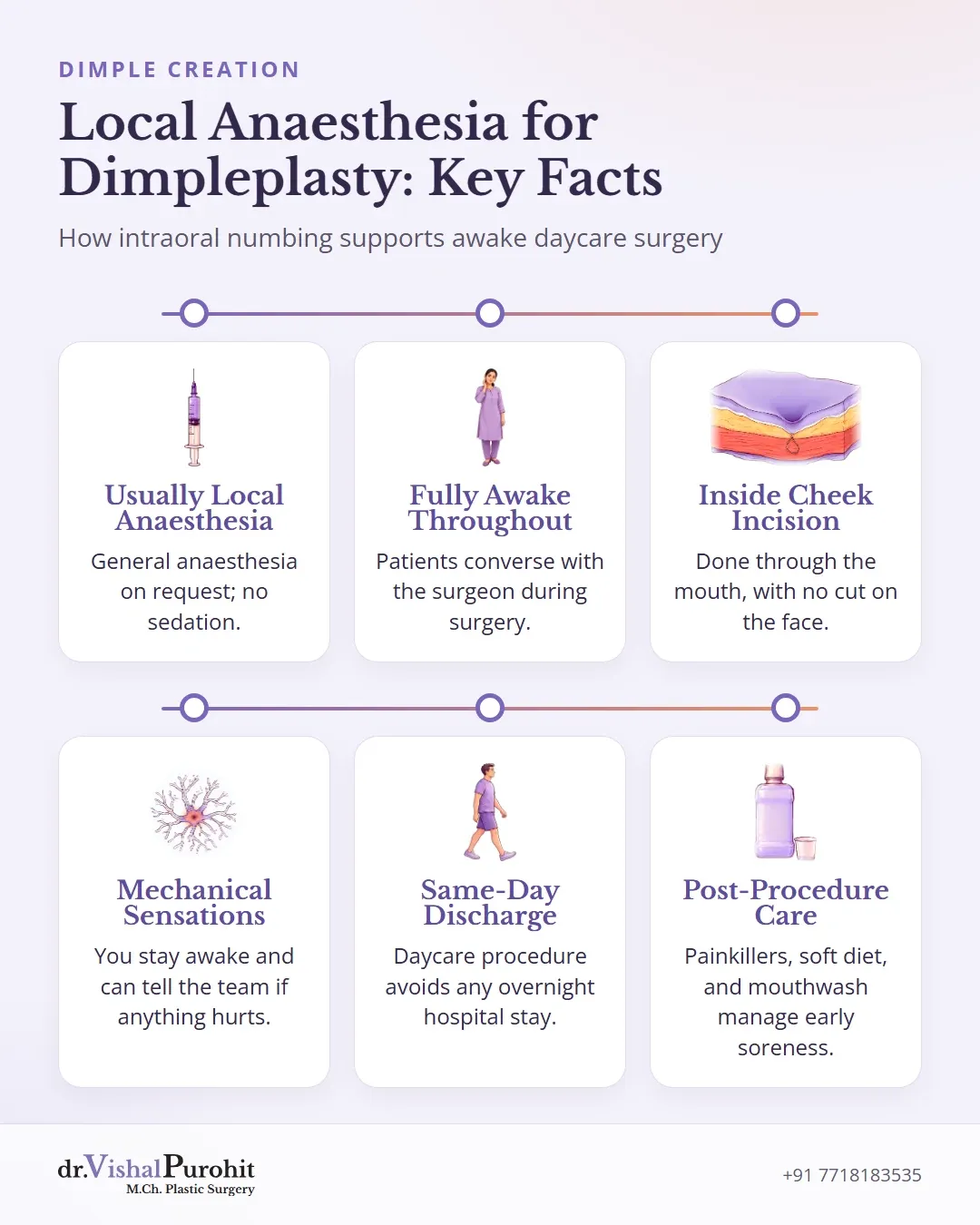
Dimple creation is a short daycare operation carried out through a small incision inside the cheek, leaving no cut on the facial skin. The procedure takes about 30 minutes for one cheek dimple and about 60 minutes for two. Because the surgical work is focused within a small area of the cheek lining and muscle, extensive anaesthesia is not required.
Dr. Purohit’s note: In Dr. Vishal Purohit’s practice, dimple creation is usually performed under local anaesthesia, though general anaesthesia is available on request. He does not use sedation.
The surgical literature also documents cheek dimple creation under local anaesthesia as an outpatient or daycare procedure. Administering local anaesthesia directly into the tissue numbs the operative area while allowing the patient to remain fully awake throughout the procedure.
Under local anaesthesia, the patient does not need an overnight hospital stay and returns home the same day.
What the Injection Feels Like
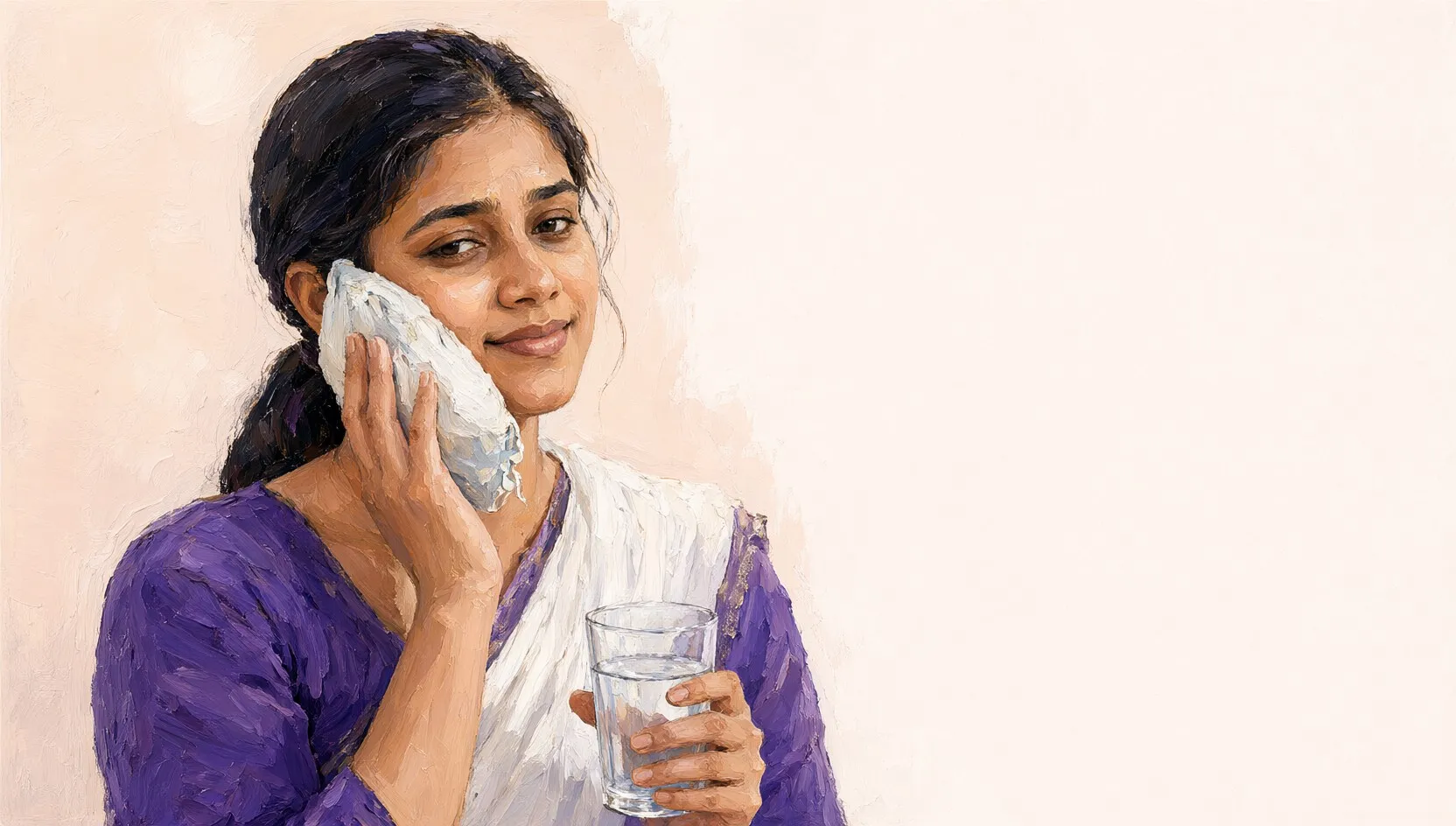
At his practice in Jaipur, Dr. Vishal Purohit usually performs dimpleplasty under local anaesthesia without sedation, with general anaesthesia available on request.
In published surgical series, cheek dimple creation is routinely carried out under local anaesthesia as an outpatient or daycare procedure. Published studies note that surgical procedures under local anaesthesia can involve temporary alterations in muscle movement around the mouth, along with postoperative swelling, pain, bruising, and numbness.
The procedure cannot be described as entirely without discomfort, and pain medications are provided to manage post-procedure soreness. In addition, acute sensitivity or localised mucosal ulceration may occasionally develop around intraoral injection sites within approximately two days following local anaesthetic administration.
During the Operation
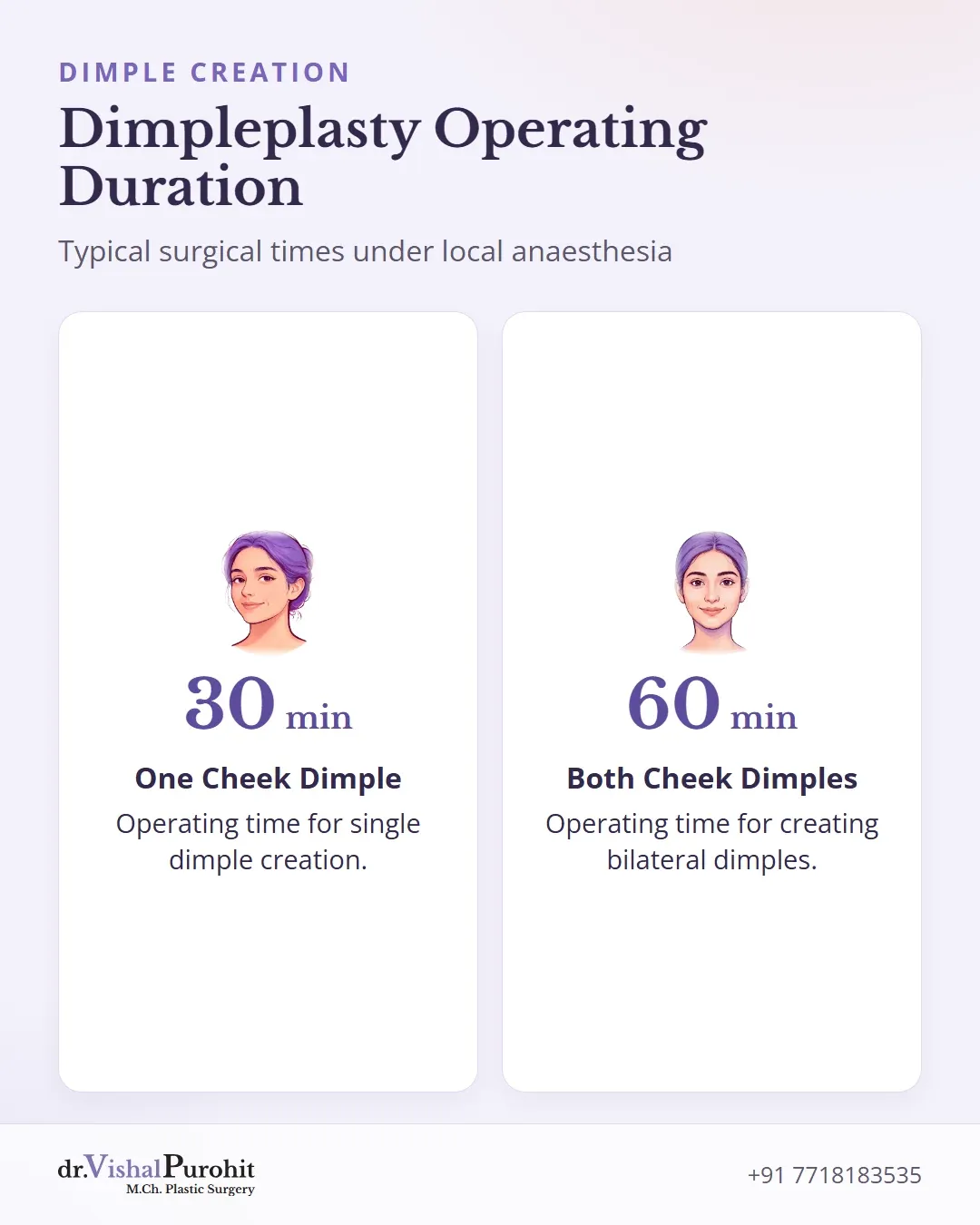
Dimple creation is usually performed under local anaesthesia, with general anaesthesia available on request and no sedation. Under local anaesthesia, the patient remains fully awake throughout the procedure. The operating time takes about 30 minutes for one dimple and about 60 minutes for two dimples.
Sensations and Communication
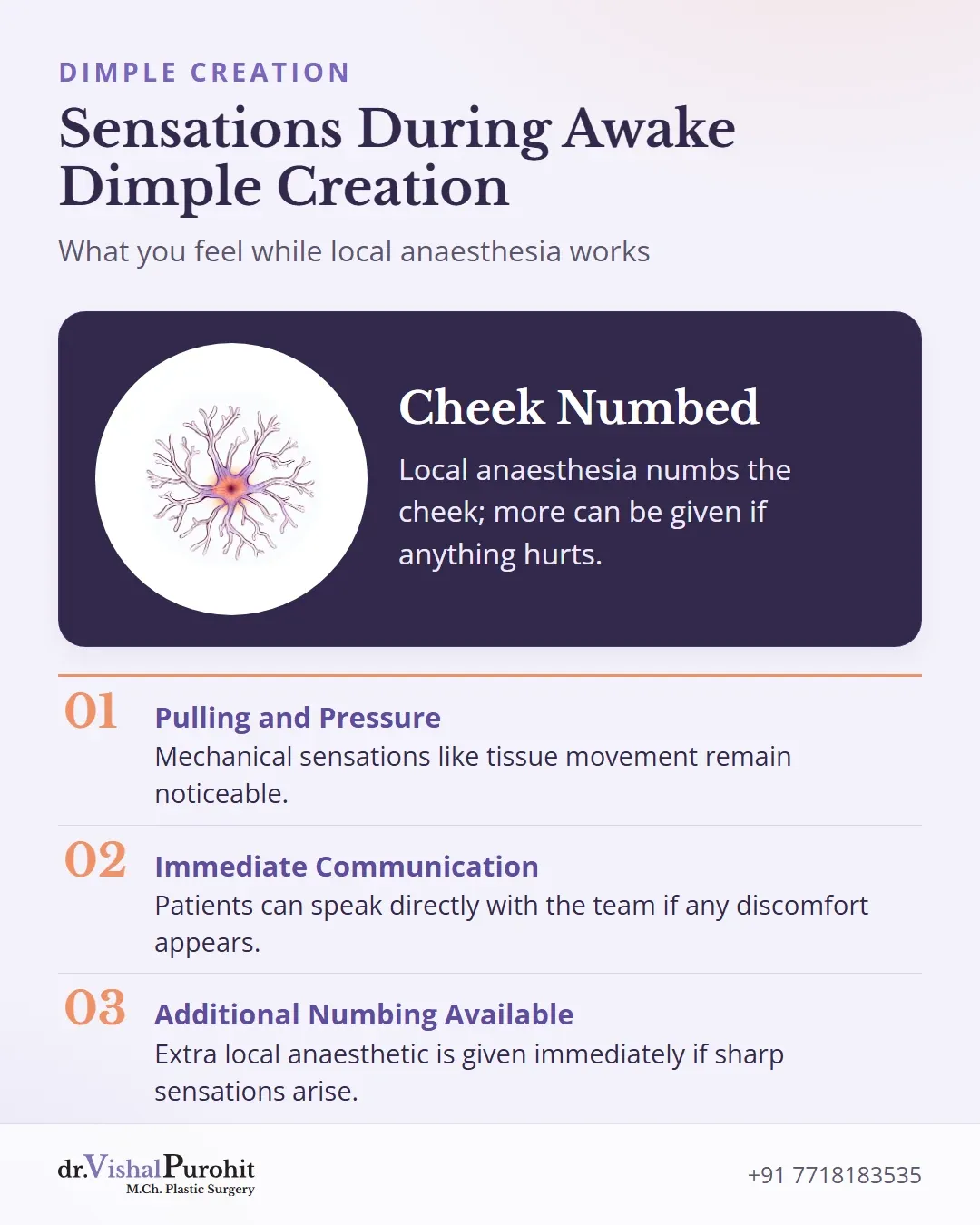
Being awake allows the patient to speak and interact with the surgical team during the procedure.
- Pulling or pressure: While local anaesthesia numbs sharp pain, the patient may feel mechanical sensations such as tissue manipulation, pulling, or firm pressure inside the cheek.
- Speaking up: Complete absence of pain is never promised. If any sharp discomfort or pain occurs at any stage, the patient should immediately tell the team so additional local anaesthesia can be administered.
Through a small cut inside the cheek, an absorbable internal stitch is placed with very slight electrocautery to the muscle. Because the entire procedure is performed from the inside of the mouth, there is no cut on the facial skin.

When the Numbness Wears Off
Once the local anaesthesia begins to fade, patients notice a sensation of soreness and tightness in the treated cheek. The internal suture binds the muscle to create the dimple, which naturally causes a firm or tight feeling inside the mouth during initial healing.
Key points
- Soreness and cheek tightness are expected once local anaesthesia fades.
- Prescribed medications and proper oral hygiene keep healing on track.
- Prompt medical contact is essential if unexpected warning signs develop.
Dr. Vishal Purohit prescribes painkillers and antibiotics after surgery to manage discomfort and support recovery. Published surgical studies also describe discharging patients immediately after dimple creation with prescriptions for analgesics and antibiotics.
In Dr. Vishal Purohit’s experience, soreness, tightness and swelling usually last about 1 month.
Managing Early Discomfort
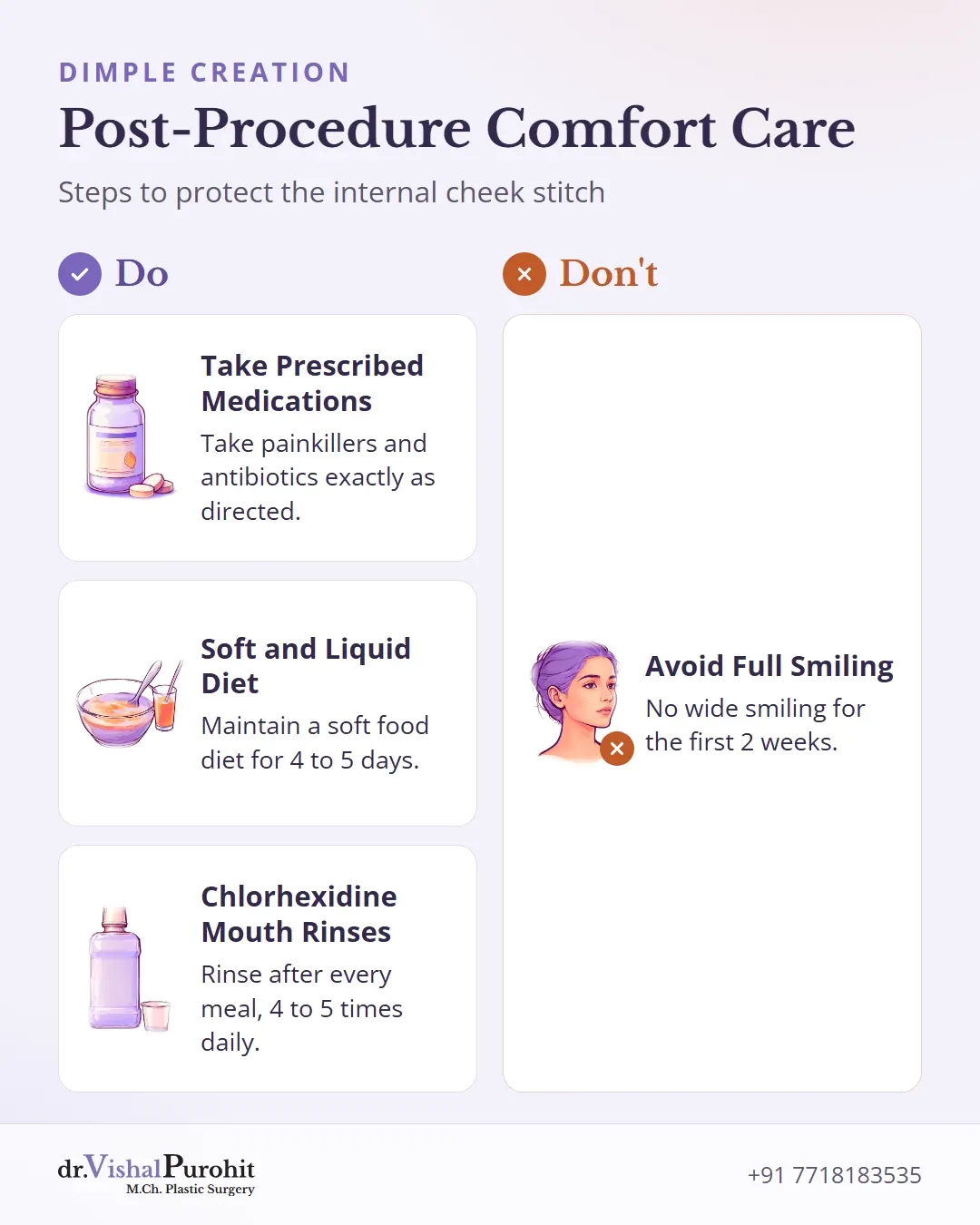
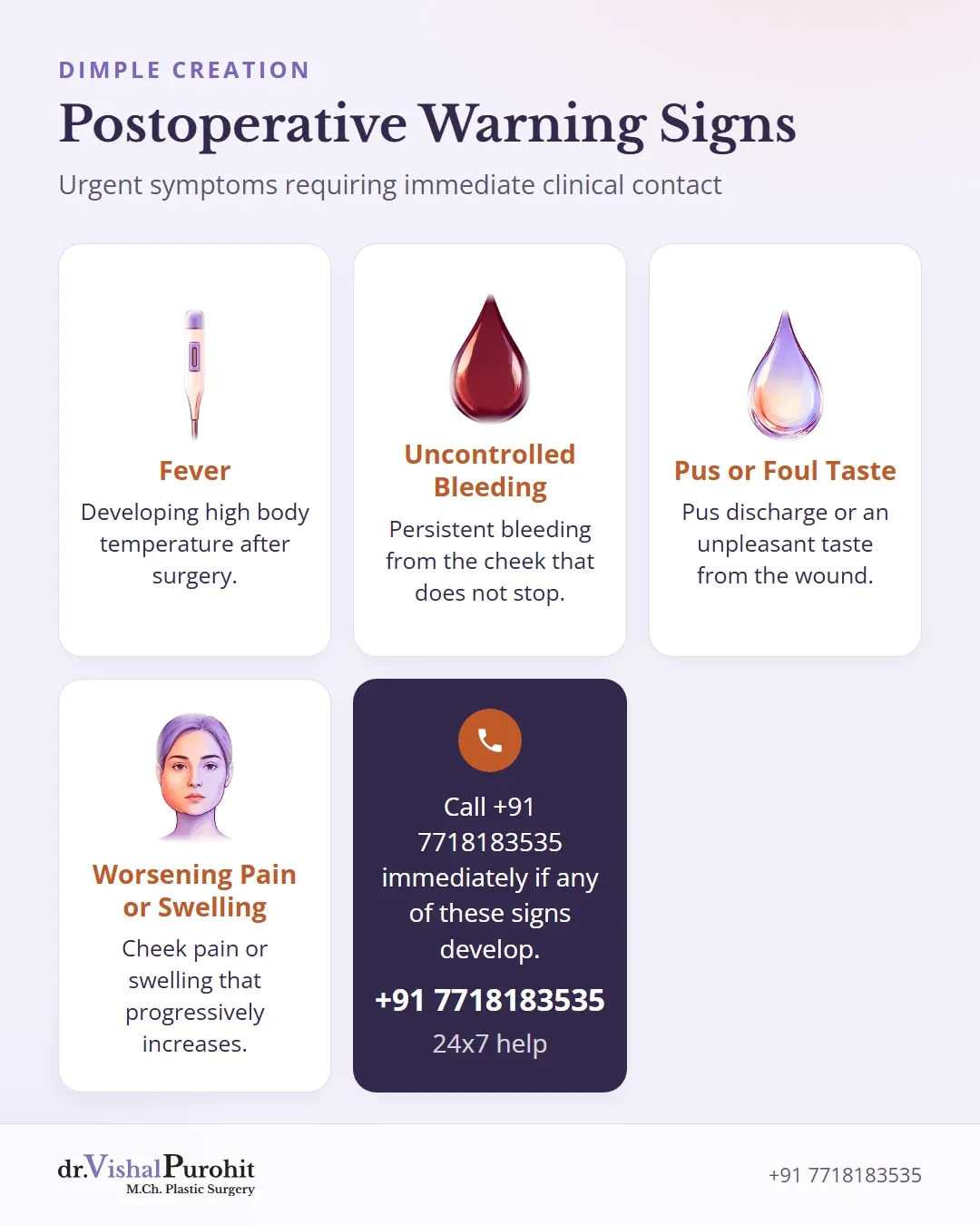
To keep the cheek comfortable as sensation returns, patients follow these key postoperative steps:
- Take prescribed painkillers and antibiotics as directed.
- Maintain a liquid and soft diet for 4 to 5 days.
- Rinse with chlorhexidine mouthwash after every meal, 4 to 5 times a day.
- Avoid wide smiling for the first 2 weeks.
If warning signs occur—such as fever, increasing pain or swelling, pus or an unpleasant taste from the wound, or bleeding that does not stop—patients should call +91 7718183535 immediately.
Who Should Mention What
During the preoperative assessment, patients should inform the surgical team about any previous adverse events during medical or dental care.
Key points
- Patients must inform the surgical team about prior adverse reactions to dental or local anaesthetics.
- Never stop prescribed blood thinners without direct coordination between the surgical team and the prescribing doctor.
Medical History to Share
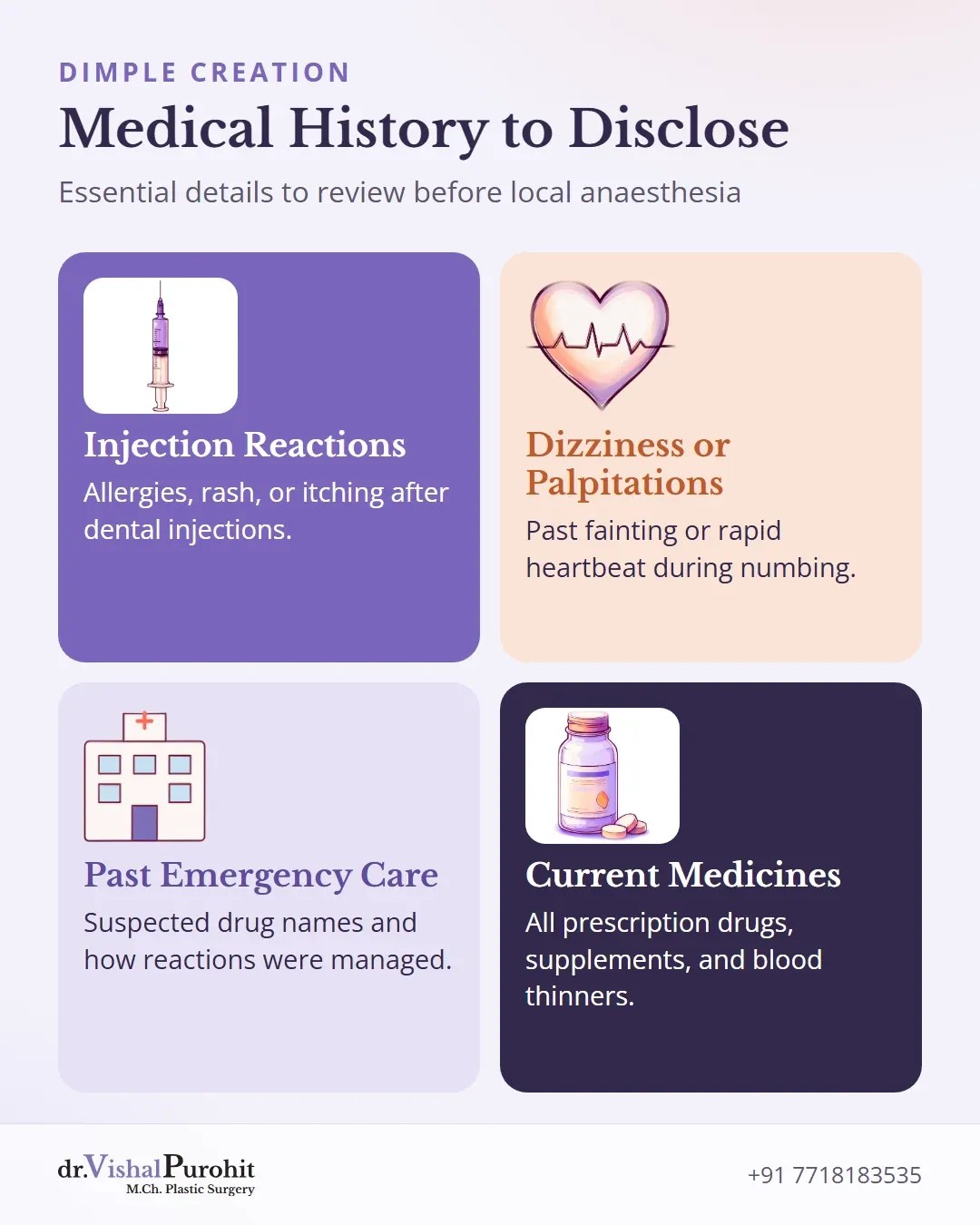
Before surgery under local anaesthesia, no fasting is needed, but good oral hygiene with chlorhexidine mouthwash is a must.
Patients should report:
- Any previous allergic reactions, itching, rash, dizziness, fainting, or palpitations experienced after dental injections or local anaesthetics.
- The name of the suspected medicine, how the reaction was managed, and whether emergency medical care was required.
- All current prescribed medicines, over-the-counter drugs, and herbal supplements.
Prescribed Medications
Individuals must never stop medically necessary anticoagulants or antiplatelet drugs on their own before minor procedures. Discontinuing essential blood thinners without supervision can lead to serious thrombotic complications that exceed the risk of surgical bleeding. Any decision to adjust or pause prescribed medication requires direct coordination between the surgical team and the prescribing doctor.
General criteria regarding who is suited for the procedure are detailed in the candidate post.
Consulting for Dimple Creation in Jaipur
Adults considering cheek dimple creation can learn more about surgical planning and recovery through dimple creation in Jaipur. Reviewing dimple creation FAQs provides further clarity on intraoral numbing and comfort. Consultations confirm medical suitability and procedure details before scheduling daycare surgery under local anaesthesia.
This is educational information, not medical advice.