
Dimple creation is a minor procedure carried out through the inner cheek, but patients should be aware of potential surgical risks. Although early complications remain uncommon in clinical literature, issues such as infection, stitch reactions, or uneven results can occasionally happen.
Understanding facial anatomy and postoperative wound care is essential to avoid unwanted outcomes. Healing takes place inside the mouth, making hygiene and adherence to Dimpleplasty Recovery: Swelling, Eating and Work protocols critical for safe healing.
What Can Go Wrong
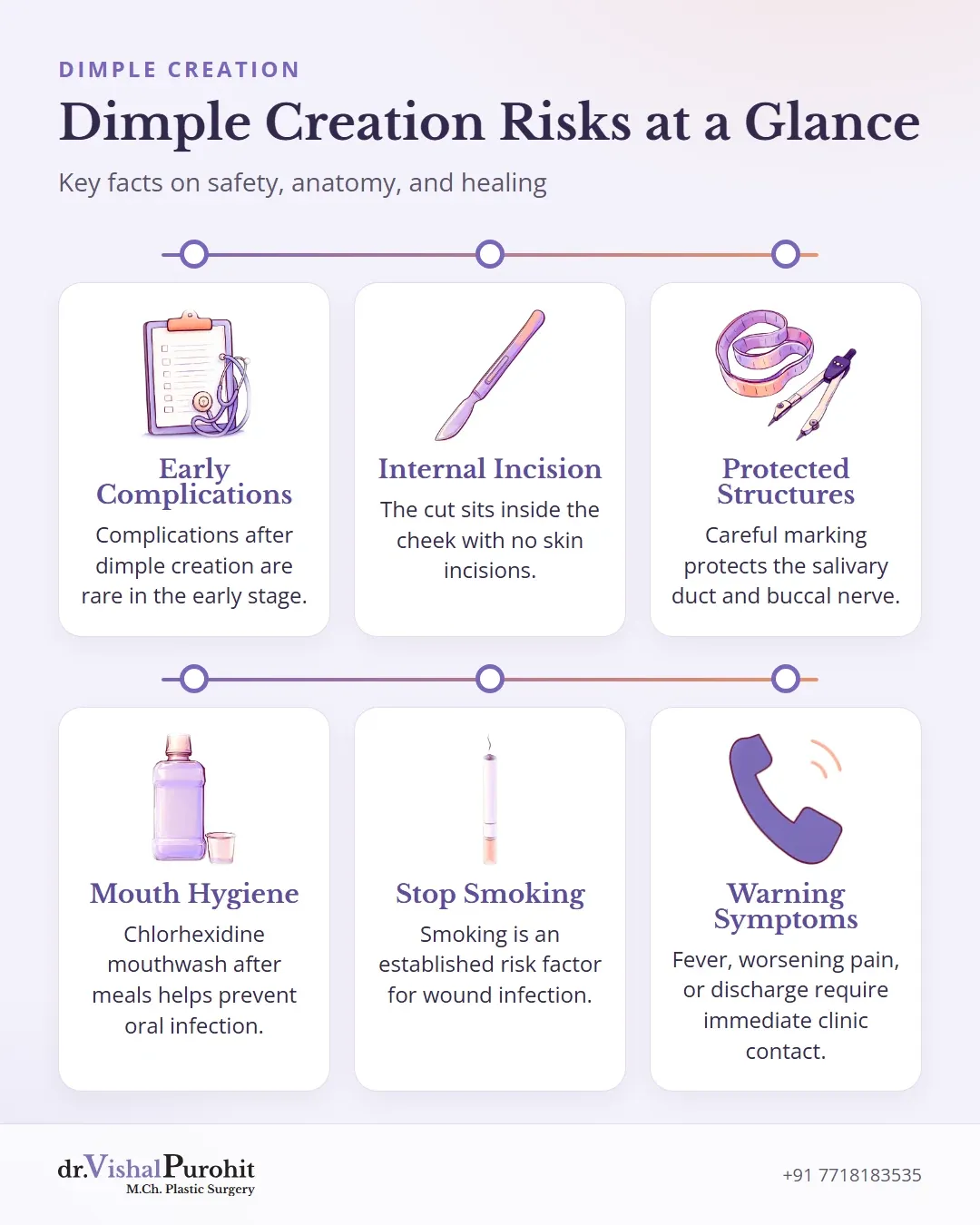
Published series report that complications after dimple creation are rare in the early stage. Reported problems include infection, uneven or faded dimples, and a reaction to the stitch.
Infection
Infection is possible but uncommon. In a series of 2,048 patients, five of the reoperations (3.1%) were stitch removal because of infection.
In another series of 100 dimples, three had infection around the bolster stitch inside the mouth. These were treated by removing the bolster and antibiotics, and the infection did not spoil the dimple. If infection is treated incorrectly at first, a scar may remain in an undesirable shape.
Uneven or Faded Dimples
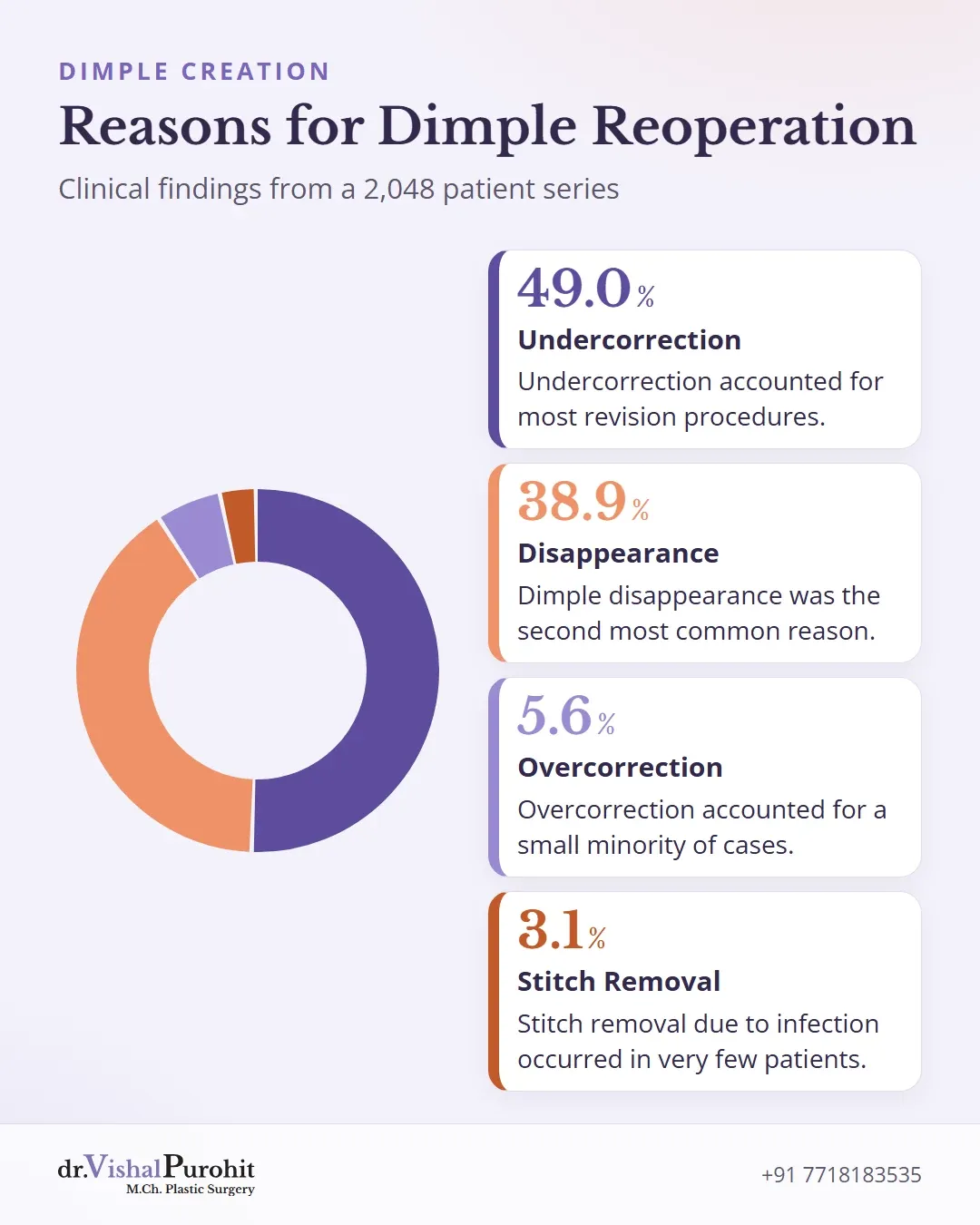
A published list of dimple surgery complications includes sudden disappearance of the dimple and asymmetry. In a series of 2,048 patients, 159 (7.7%) had a further operation; among them, undercorrection accounted for 78 cases (49.0%), disappearance of the dimple for 62 (38.9%) and overcorrection for nine (5.6%).
A Stitch Reaction
A foreign body reaction to a stitch is listed among the rare early complications, and none was observed among those 2,048 patients.
In Dr. Vishal Purohit’s clinical experience, soreness, tightness and swelling usually last about 1 month.

Structures Near the Dimple Point
Two structures to avoid
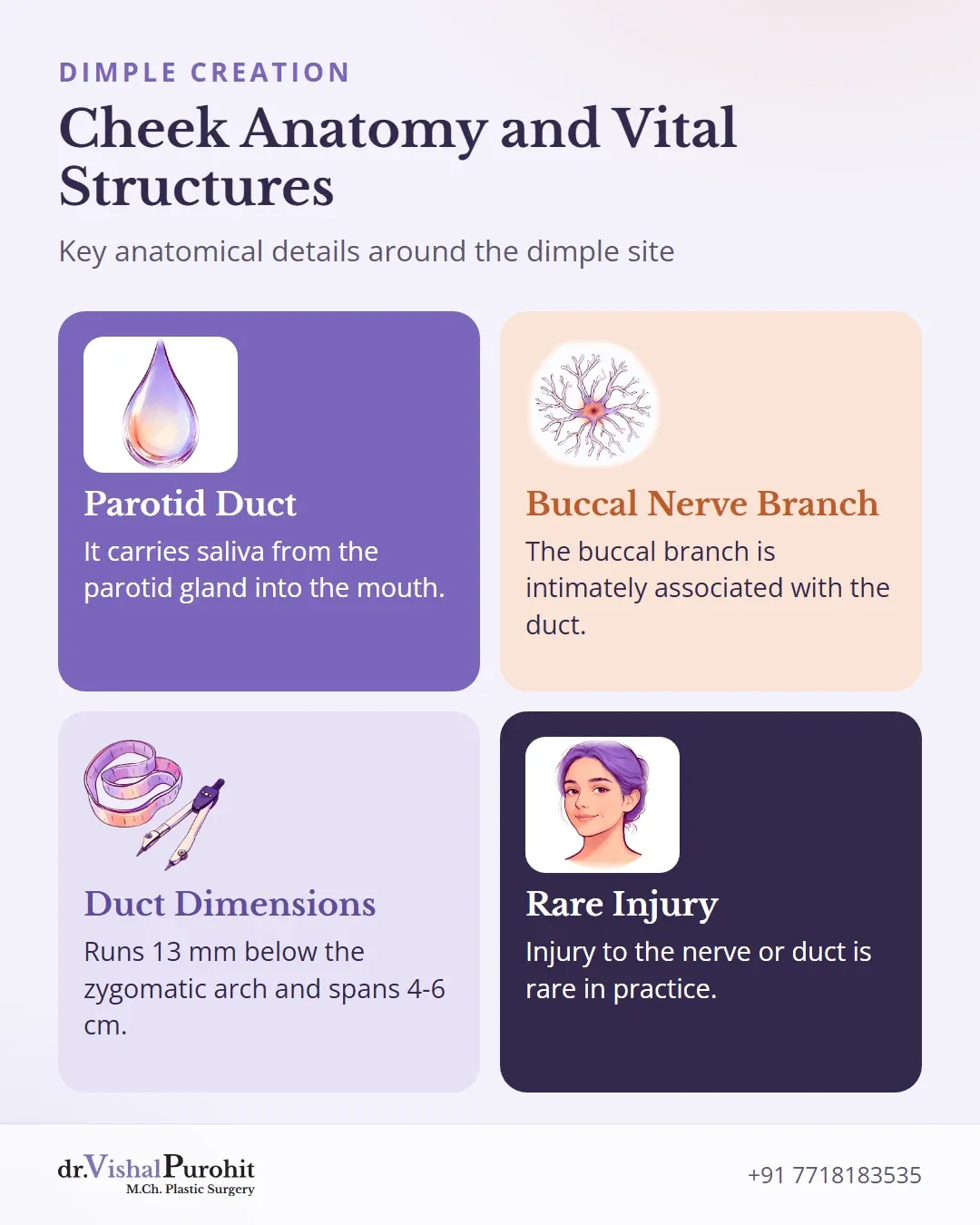
The cheek contains the parotid (Stensen’s) duct, which carries saliva from the parotid gland into the mouth, and the buccal branch of the facial nerve. The buccal branch is intimately associated with the duct, so injury to either raises concern about the other. Both the zygomatic and buccal branches may cross the duct’s path. The duct is about 4 to 6 cm long and runs about 13 mm below the zygomatic arch. Injury to the nerve or the duct is a possible complication of dimple creation, but it is rare.
How they are protected
Careful marking and controlled depth protect these structures. The skin mark is matched to the inner cheek, the duct opening sits above and behind the incision, and most incisions fall in front of and below it. Because most dimples are positioned at the terminal branches of the buccal nerve, damage there is rarely seen in practice.
Dr. Purohit’s note: In his own practice, Dr. Purohit works through a small incision inside the cheek with an absorbable internal suture, and makes no cut on the skin of the face.

Infection and Mouth Care
The cut sits inside the mouth
Dimpleplasty is done through a small incision inside the cheek, so the healing wound lies in the oral cavity, a clean-contaminated surgical site. In general oral surgery, postoperative infection occurs in about 6% to 9% of clean-contaminated cases, and perioperative antibiotics can lower this to about 3.3%. After dimple creation, infection is possible but rare. If it is not treated correctly at first, a scar may remain in an undesirable shape. In one series of 100 dimple procedures, 3 patients developed infection inside the mouth around the stitch, with poor maintenance of oral hygiene noted as a factor. An active mouth or gum infection is a reason to wait or not operate.
Mouthwash, medicines and smoking
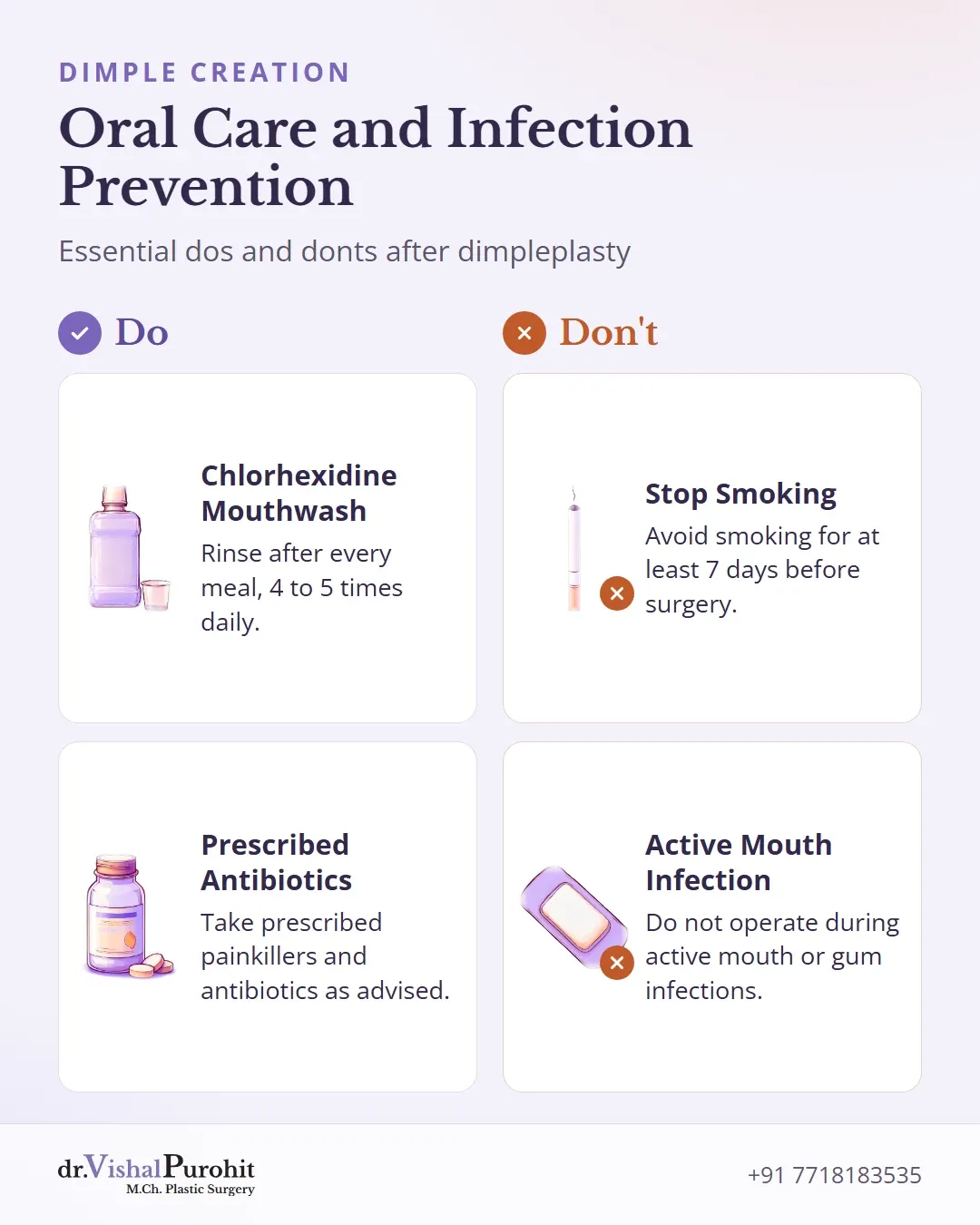
Dr. Purohit’s protocol requires good oral hygiene with chlorhexidine mouthwash before surgery, and no tooth brushing for the first 48 hours followed by gentle brushing at the back of the mouth with chlorhexidine mouthwash. He also prescribes chlorhexidine mouthwash after every meal, 4 to 5 times a day, with painkillers and antibiotics after surgery. Chlorhexidine binds to the mouth’s tissues and keeps working over time, and chlorhexidine-containing mouthwashes are more effective than others in controlling oral bacterial diseases. He also asks patients to stop smoking ideally 1 month before surgery and at least 7 days before; smoking is a recognised risk factor for wound infection in oral surgery.

Who Performs It and Where
Dimpleplasty is done inside the cheek, so anatomy matters. Good knowledge of anatomy, especially the vascularity and shape of the face, is important to deliver a good outcome. The nearby structures are part of the picture: infection, bleeding, and injury to a nerve (buccal branch of the facial nerve) or salivary gland duct (Stensen duct) are listed complications of dimple creation. Sudden disappearance of the dimple and asymmetry are listed as well.
Key points
- Thorough anatomical knowledge is essential to avoid complications such as nerve or salivary duct injury.
- Discussing risks and surgeon qualifications helps ensure safety and realistic expectations.
- The procedure is typically performed under local anaesthesia as a daycare surgery with scheduled follow-ups.
Questions worth asking
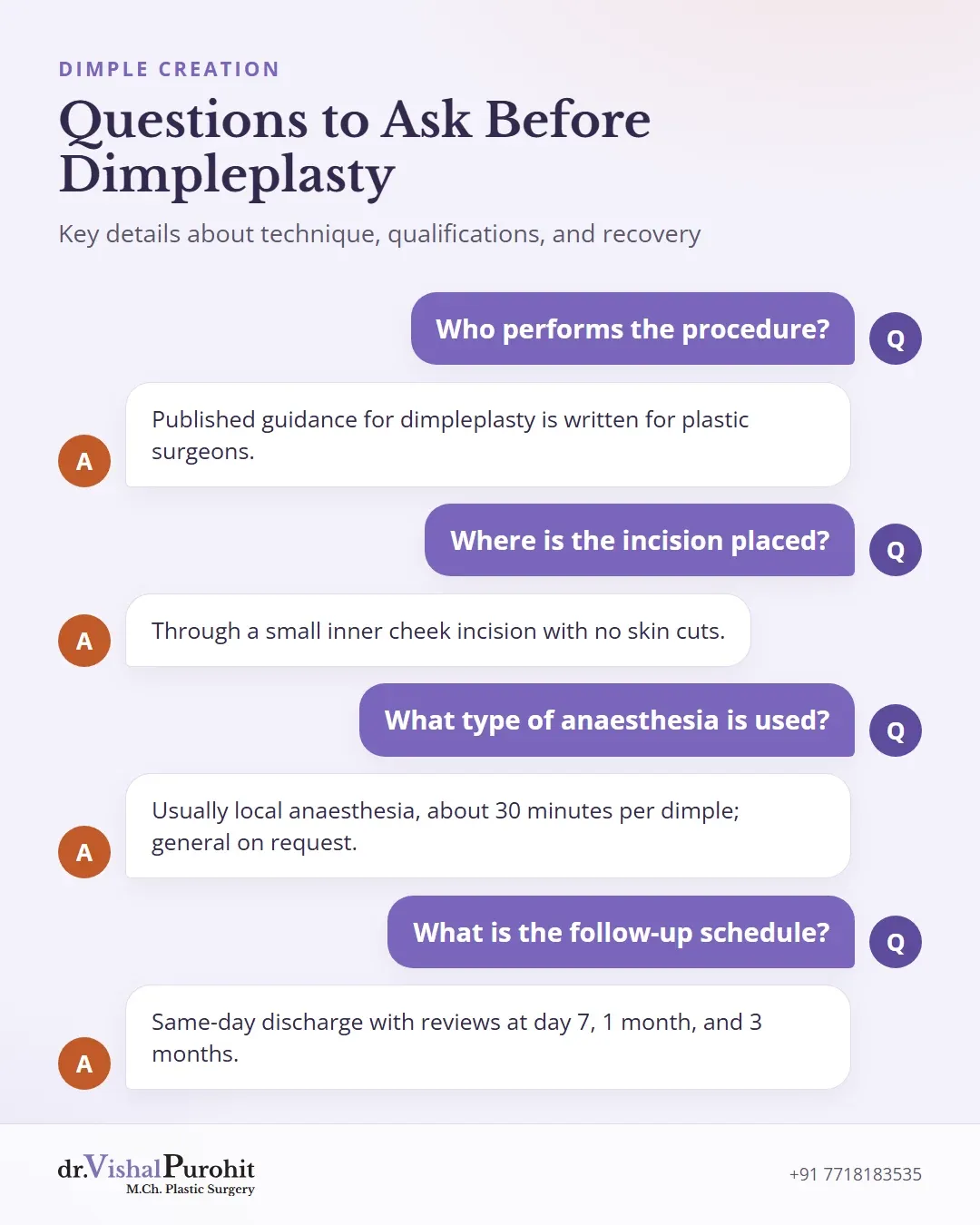
A full discussion of benefits and risks improves mutual trust and respect between the physician and patient, and ultimately improves patient satisfaction. Published guidance for dimpleplasty is written for plastic surgeons performing the procedure, so training and the setting are reasonable things to ask about.
Dr. Purohit is an M.Ch. plastic surgeon in Jaipur. At his practice, dimple creation uses a small incision inside the cheek, an absorbable internal suture and very slight electrocautery to the muscle, with no cut on the skin of the face. He usually uses local anaesthesia, under which the patient is awake with no fasting required, though general anaesthesia is available on request; sedation is not used. The operation takes about 30 minutes for one dimple. It is a daycare procedure: the patient goes home the same day, with reviews at about day 7, 1 month and 3 months.
Warning Signs
What needs attention
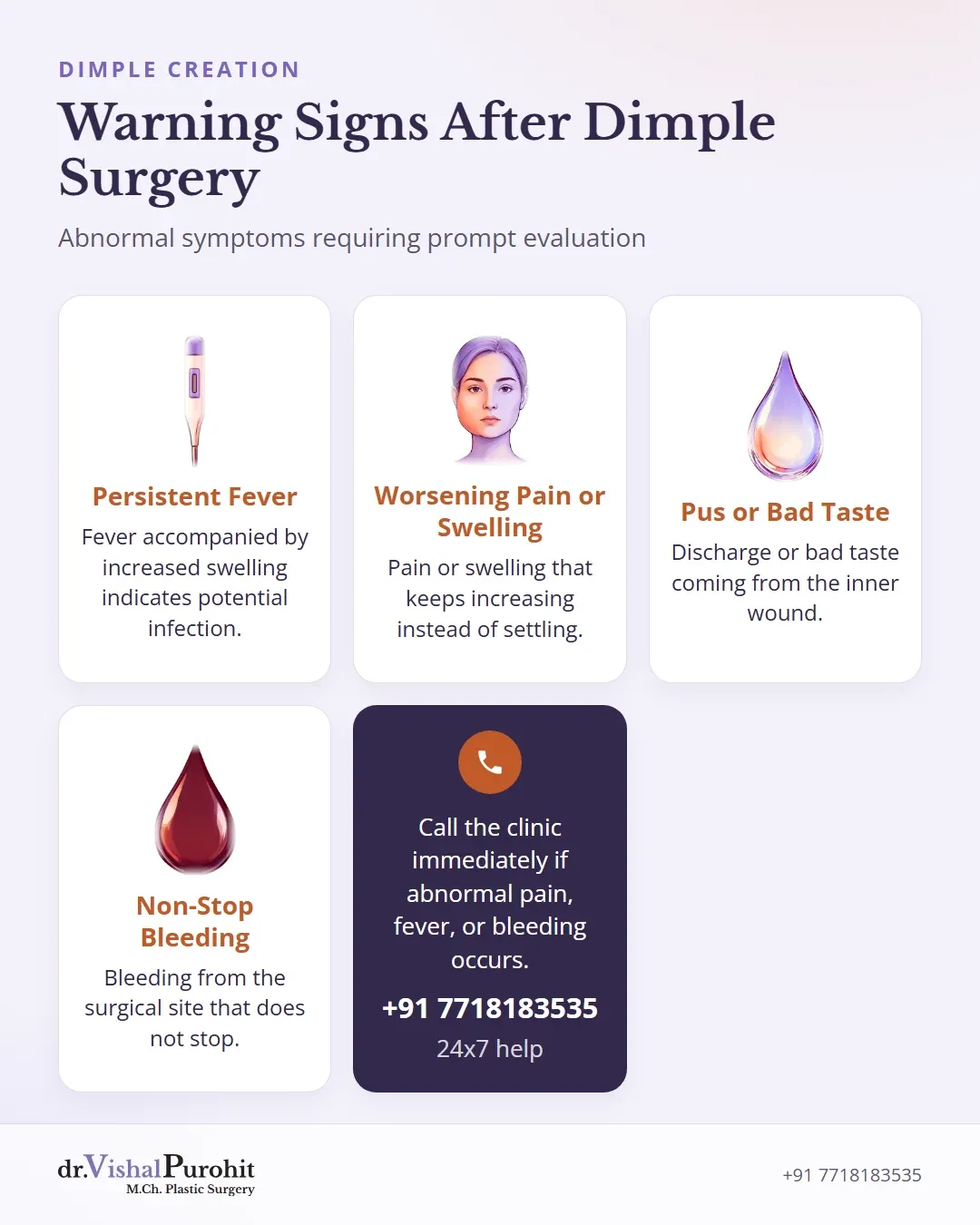
Some swelling is normal after dimple creation and settles within about two weeks. The signs that are not normal are:
- Fever
- Pain or swelling that keeps increasing instead of settling
- Pus or a bad taste from the wound
- Bleeding that does not stop
Infection after dimple creation is rare but possible. In one series of 23 dimple procedures, infection occurred in two cases, and reported infections appeared within two weeks of surgery. More pain, swelling and tenderness than expected, together with fever, is how infection usually shows itself after facial surgery.
When to call
Dr. Purohit’s protocol at his practice in Jaipur is to call +91 7718183535 at once if any of these signs appear, rather than waiting. If an infection is not treated correctly at first, a scar may remain in an undesirable shape.
Call the surgical team immediately if you notice fever, bleeding that does not stop, pus or a bad taste from the wound, or pain and swelling that keep increasing.
Consulting for Dimple Creation in Jaipur
Understanding potential complications helps patients approach surgery with realistic expectations. When performed with meticulous attention to cheek anatomy, risks remain low and manageable. For tailored advice on planning dimple creation in Jaipur, scheduling a clinical consultation allows for a thorough evaluation of cheek structure and individual suitability. You can also explore answers to common concerns in the dimple creation FAQs before making your decision.
This is educational information, not medical advice.