
Cheek dimple creation involves an internal surgical approach that requires careful postoperative attention while the mucosal tissues heal. Understanding early physical changes and daily mouth care helps individuals plan their healing period comfortably.
Patients often observe that the surgical site changes over the initial weeks, as explained in detail regarding why the dimple shows at rest first, then only when smiling. Planning meals and physical rest ensures recovery progresses without unnecessary disturbance to internal cheek sutures.
The First Few Days
After dimpleplasty, mild postoperative swelling, tightness, and soreness in the cheek are expected. In published clinical series, minor complications including swelling and haematoma have been reported after cheek dimple creation. Because the procedure is performed without skin excision, excessive postoperative oedema is generally uncommon.
In Dr. Purohit’s experience, soreness, tightness, and swelling usually last about 1 month.
Appearance at Rest
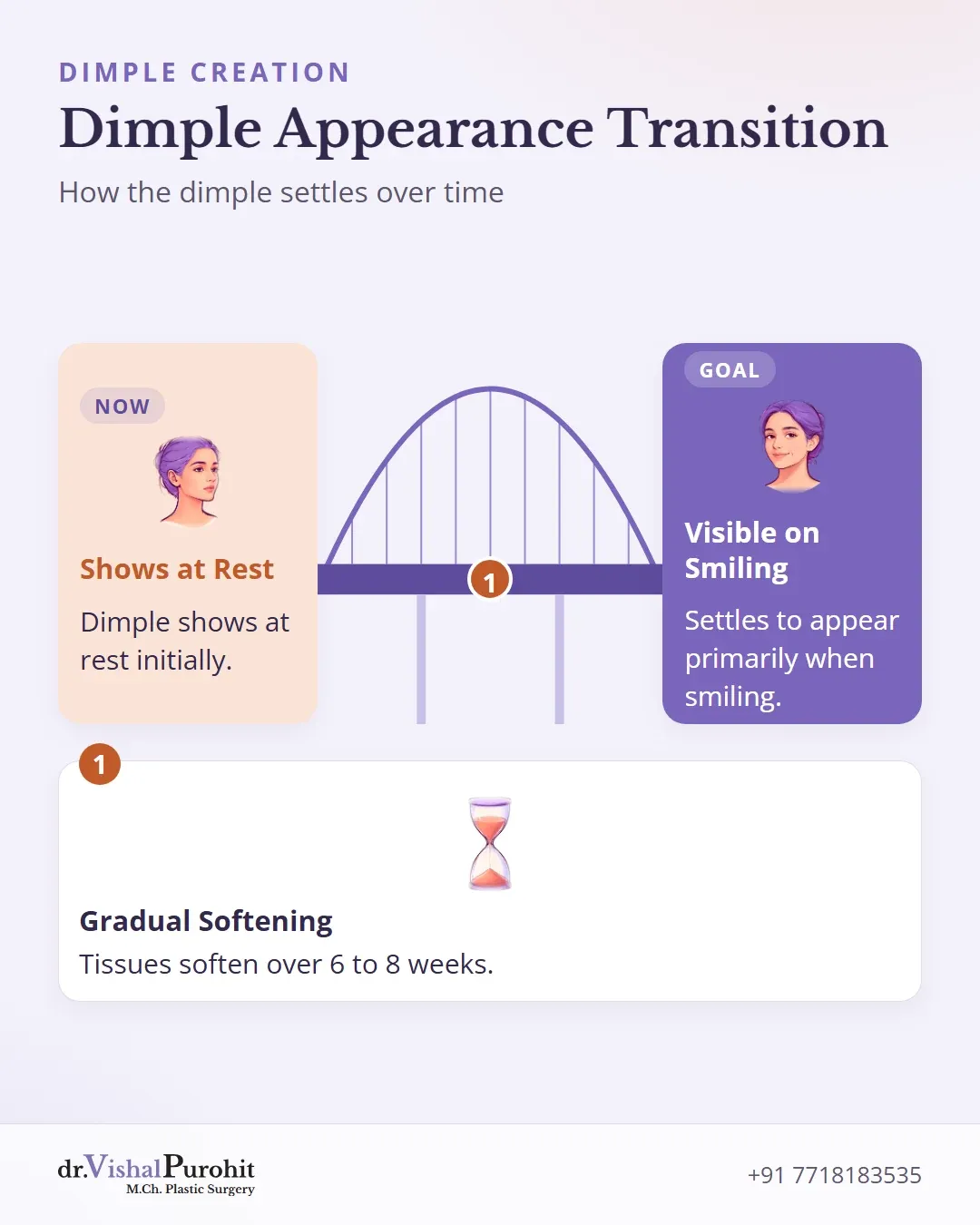
Patients often notice that the new dimple is visible even when the face is still.
Dr. Purohit’s note: In Dr. Vishal Purohit’s practice, the dimple shows at rest at first and settles by about 6 to 8 weeks (about 2 months) to show mainly on smiling.
Literature similarly notes that a static dimple is present initially before gradually softening to appear primarily during facial movement or smiling.
Early Postoperative Care
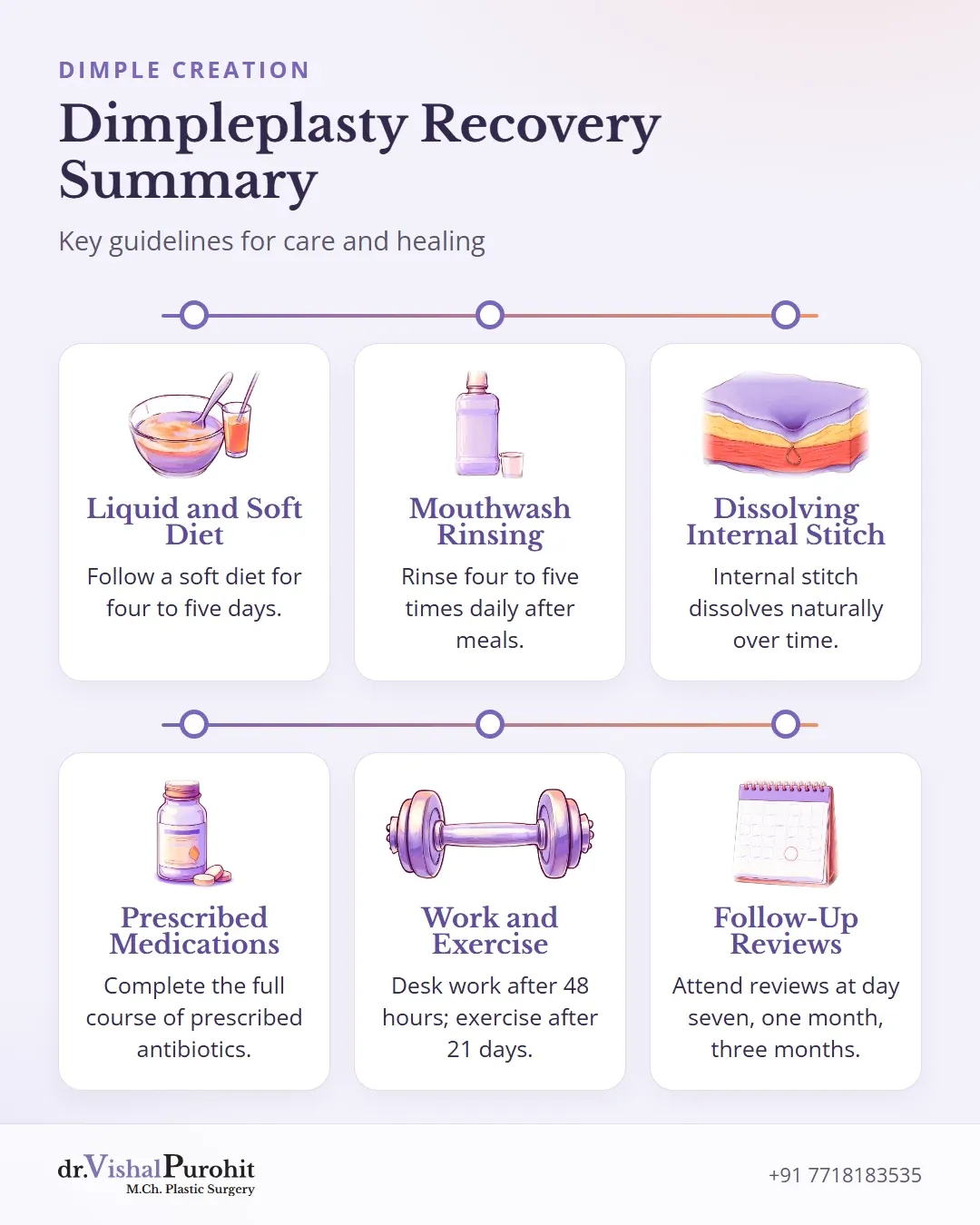
To manage discomfort and protect the healing tissue, Dr. Purohit prescribes painkillers and antibiotics after surgery. He also advises maintaining specific mouth hygiene and eating habits:
- Follow a liquid and soft diet for 4 to 5 days.
- Rinse with chlorhexidine mouthwash after every meal, 4 to 5 times a day.
- Do not attempt to pull or remove the internal stitch, which dissolves on its own.
Eating and Mouth Care
Following cheek dimpleplasty, protecting the internal incision site inside the mouth is necessary for uncomplicated healing.
Diet Recommendations
Dr. Vishal Purohit advises a liquid and soft diet for 4 to 5 days after surgery. Taking soft and liquid foods helps prevent disturbance to the internal cheek tissues while initial tissue healing takes place.
Oral Hygiene Routine
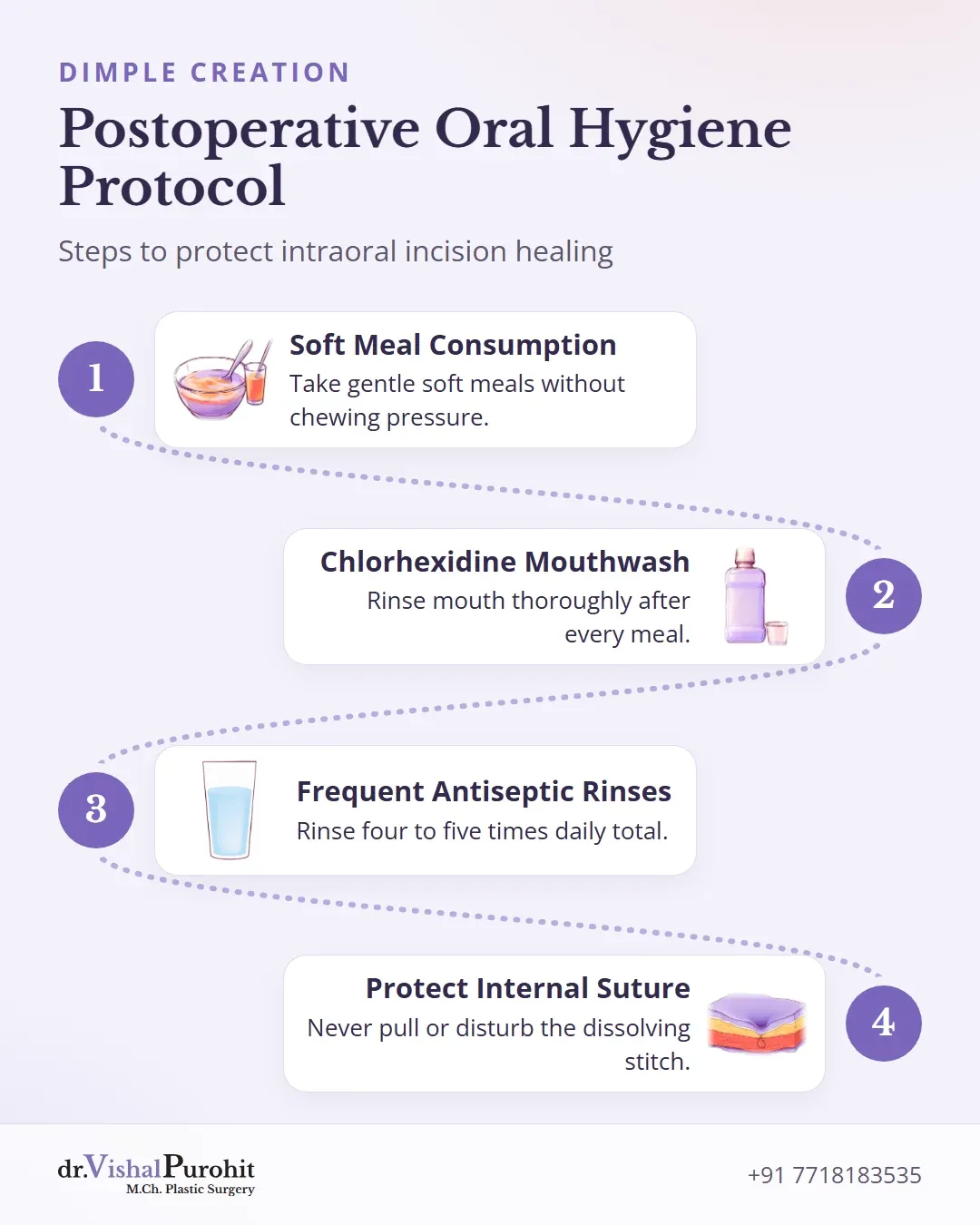
Because the surgical cut is located inside the oral cavity, maintaining cleanliness prevents food collection around the healing tissue. The prescribed protocol involves specific daily oral hygiene steps:
- Use a chlorhexidine mouthwash after every meal.
- Rinse 4 to 5 times a day in total.
Studies in oral and maxillofacial procedures emphasize that meticulous oral hygiene with antiseptic rinses supports intraoral wound healing and helps avoid localized infection. Chlorhexidine adheres to oral tissues, providing a prolonged antiseptic effect.
Internal Suture Care
The procedure uses an absorbable internal stitch placed within the cheek tissue. Patients do not need to attend a clinic appointment for suture removal, as the stitch dissolves on its own over time.
Dr. Purohit advises no tooth brushing for the first 48 hours, followed by gentle brushing at the back of the mouth, along with chlorhexidine mouthwash.

Medicines
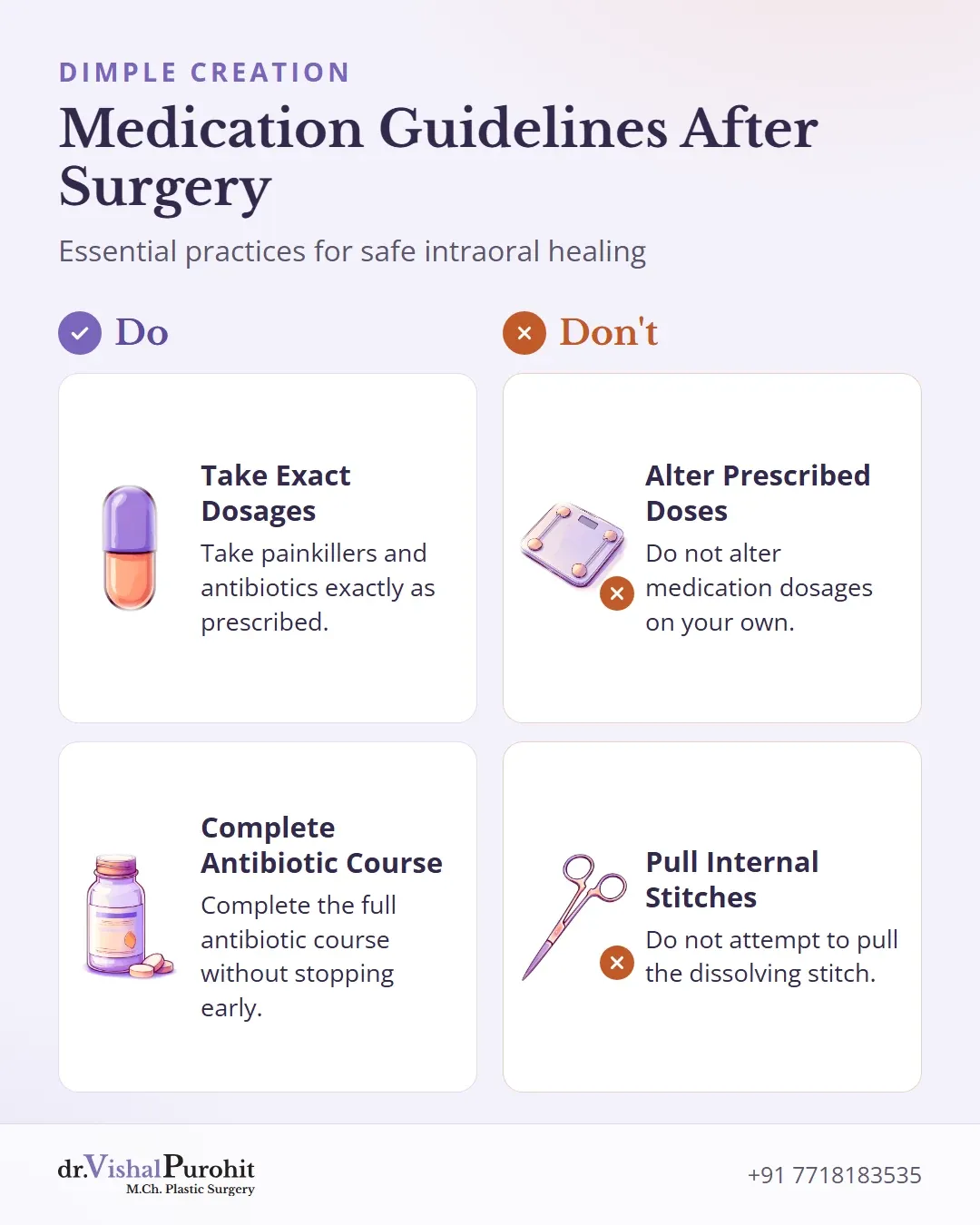
After cheek dimpleplasty, Dr. Vishal Purohit prescribes painkillers and antibiotics as part of standard postoperative care.
In clinical reports of dimple creation, patients are discharged immediately with oral antibiotics and analgesics to support recovery and reduce the risk of surgical-site issues. Published series indicate that postoperative infection remains infrequent, occurring in two cases out of 23 in one report, and in three out of 100 dimples in another series where mucosal infection was managed with antibiotics and stitch release without losing the dimple.
To promote proper healing inside the cheek, patients should observe the following guidelines:
- Take both the painkillers and the antibiotics exactly as prescribed.
- Complete the full course of antibiotics without stopping early or altering dosages.
- Follow all accompanying wound instructions, including prescribed mouth care, to keep the surgical site clean.
Work, College and Exercise
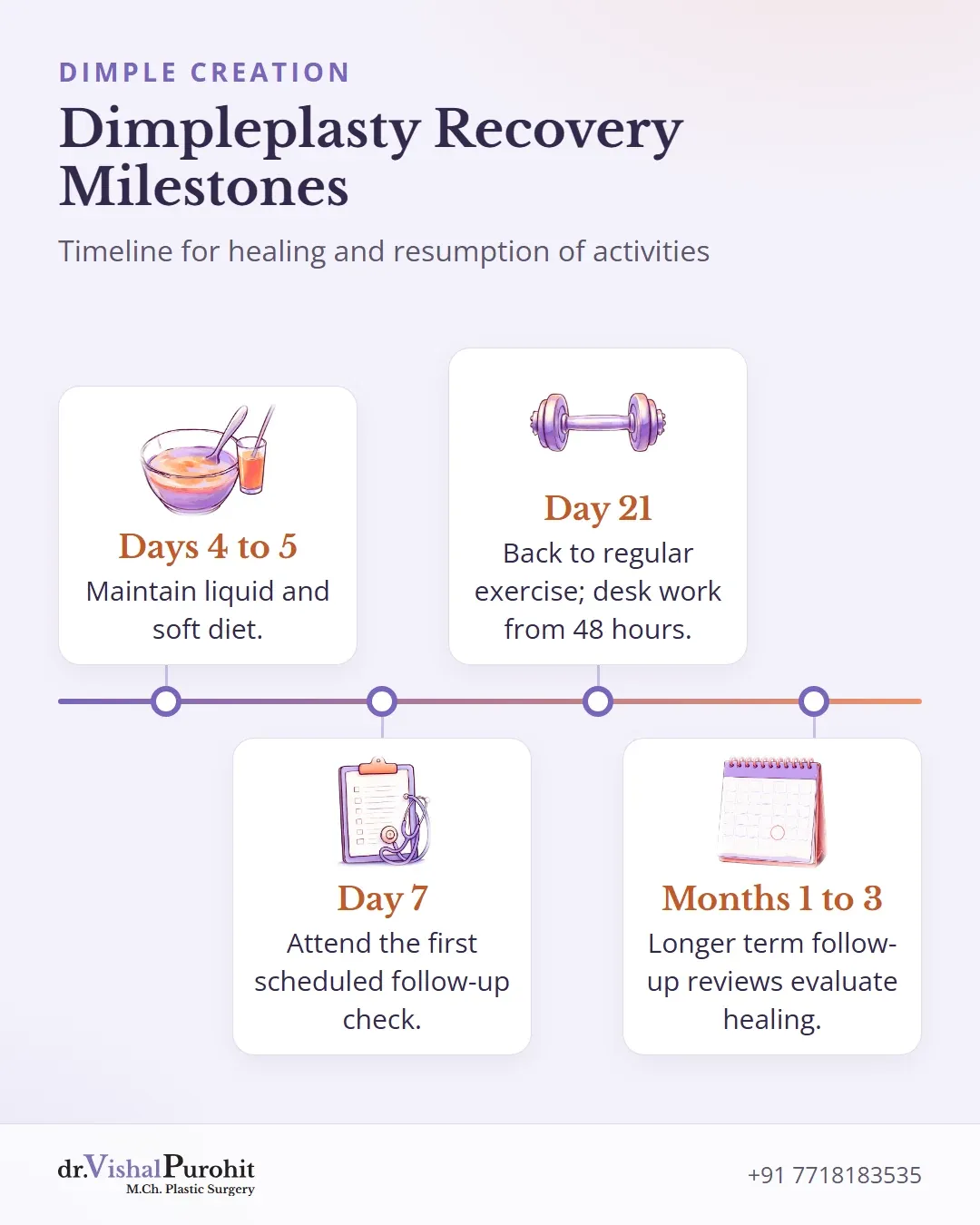
Resuming everyday routines requires giving the internal cheek tissue sufficient time to heal. In the practice of Dr. Vishal Purohit, M.Ch. plastic surgeon in Jaipur, patients can return to desk work after about 48 hours, simple outdoor work after about 7 days, and exercise after about 21 days.
Key points
- Published literature reports return-to-work timelines ranging from two days to longer depending on technique.
- Dr. Purohit advises returning to desk work after about 48 hours, simple outdoor work after about 7 days, and exercise after about 21 days.
- Follow-up visits are scheduled at day 7, 1 month, and 3 months to track recovery.
Medical literature on dimple creation reports a range of postoperative timelines depending on the surgical technique:
- Some authors report that following a suture technique with mild postoperative swelling, individuals can return to work or other activities two days after the operation.
- Other surgeons consider a two-day timeframe before resuming work or other activities to be long for dimple creation.
- Following surgery, instructions often advise patients not to fully smile during the first 2 weeks. In line with this, Dr. Purohit advises no wide smiling for the first 2 weeks.
Dr. Purohit advises returning to desk work after about 48 hours, simple outdoor work after about 7 days, and exercise after about 21 days. This allows the absorbable internal stitch and mucosal healing to progress without unnecessary strain. Scheduled follow-up reviews occur at approximately day 7, 1 month, and 3 months to monitor healing progress.

When to Call
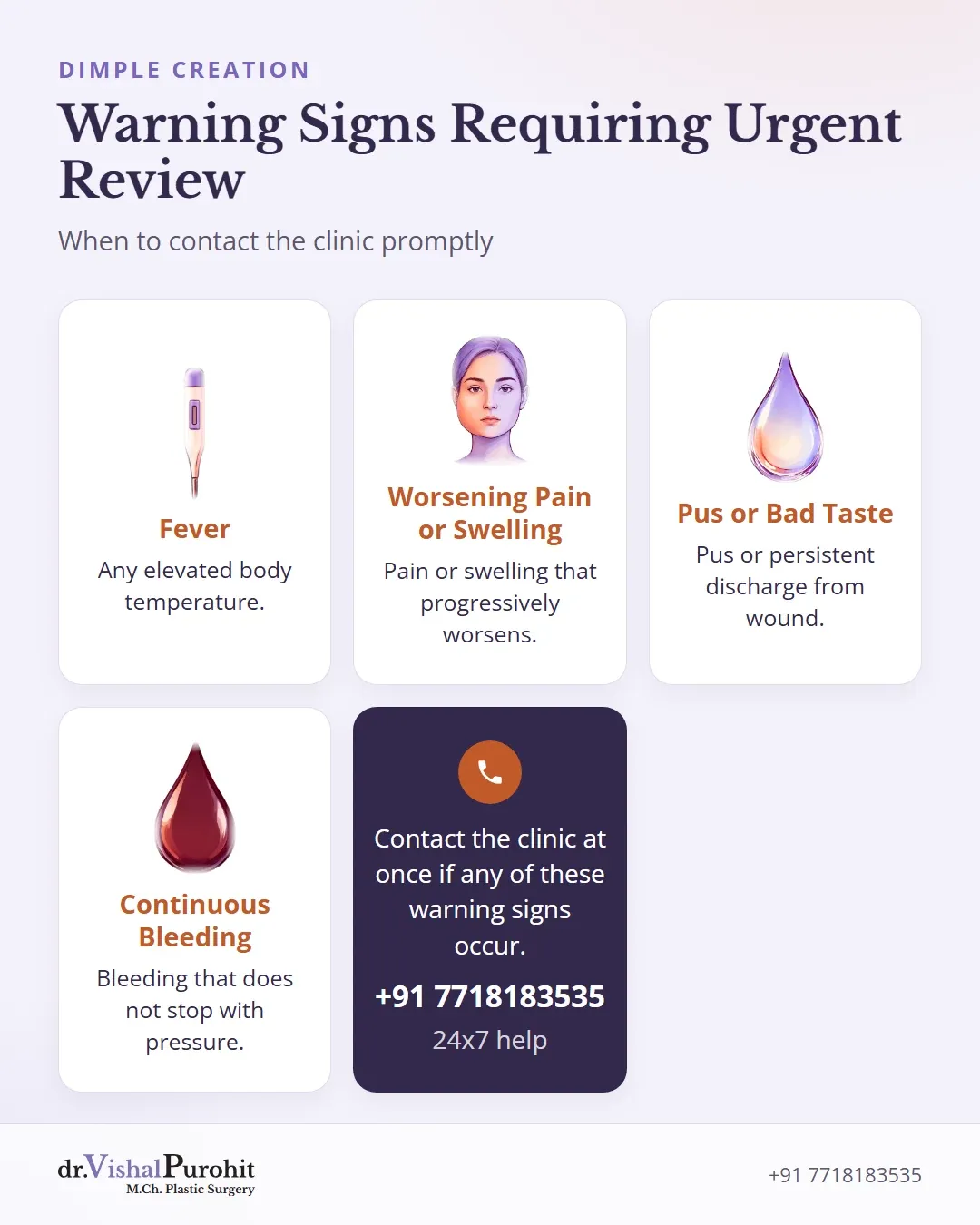
While healing after dimpleplasty is usually straightforward, certain symptoms require immediate evaluation. In Dr. Purohit’s practice, patients receive clear guidance to monitor their recovery closely during the initial days.
Key points
- Healing after dimpleplasty is usually straightforward, but certain warning signs require immediate clinic evaluation.
- Fever, worsening pain or swelling, pus, and persistent bleeding should be reported at once.
- Prompt intervention for suspected infection is essential to prevent adverse scarring.
Contact the clinic at once on +91 7718183535 if any of the following warning signs occur:
- Fever
- Increasing pain or swelling that worsens rather than improves
- Pus or a bad taste from the internal wound
- Bleeding that does not stop with gentle pressure
In clinical reports on cheek dimple creation, bleeding usually subsides within a few minutes with compression. Postoperative swelling typically resolves within two weeks. However, infections can develop within the first two weeks following surgery. Although rare, prompt intervention is necessary if an infection is suspected to prevent undesirable scar formation. In documented cases, infection management involved surgical drainage or stitch removal.
Any persistent fluid discharge or unexpected worsening of symptoms should never be ignored. Patients who notice concerning signs should reach out immediately rather than waiting for their scheduled review, and they can review the risks post for further details on potential complications.
Postoperative Care Consultations in Jaipur
Planning ahead for swelling, mouth care, and adequate rest ensures a predictable recovery. For comprehensive details on surgical steps, explore dimple creation in Jaipur before your consultation. Individuals seeking further clarity on postoperative protocols, dietary changes, and mouthwash routines can also consult dimple creation FAQs to support smooth healing.
This is educational information, not medical advice.