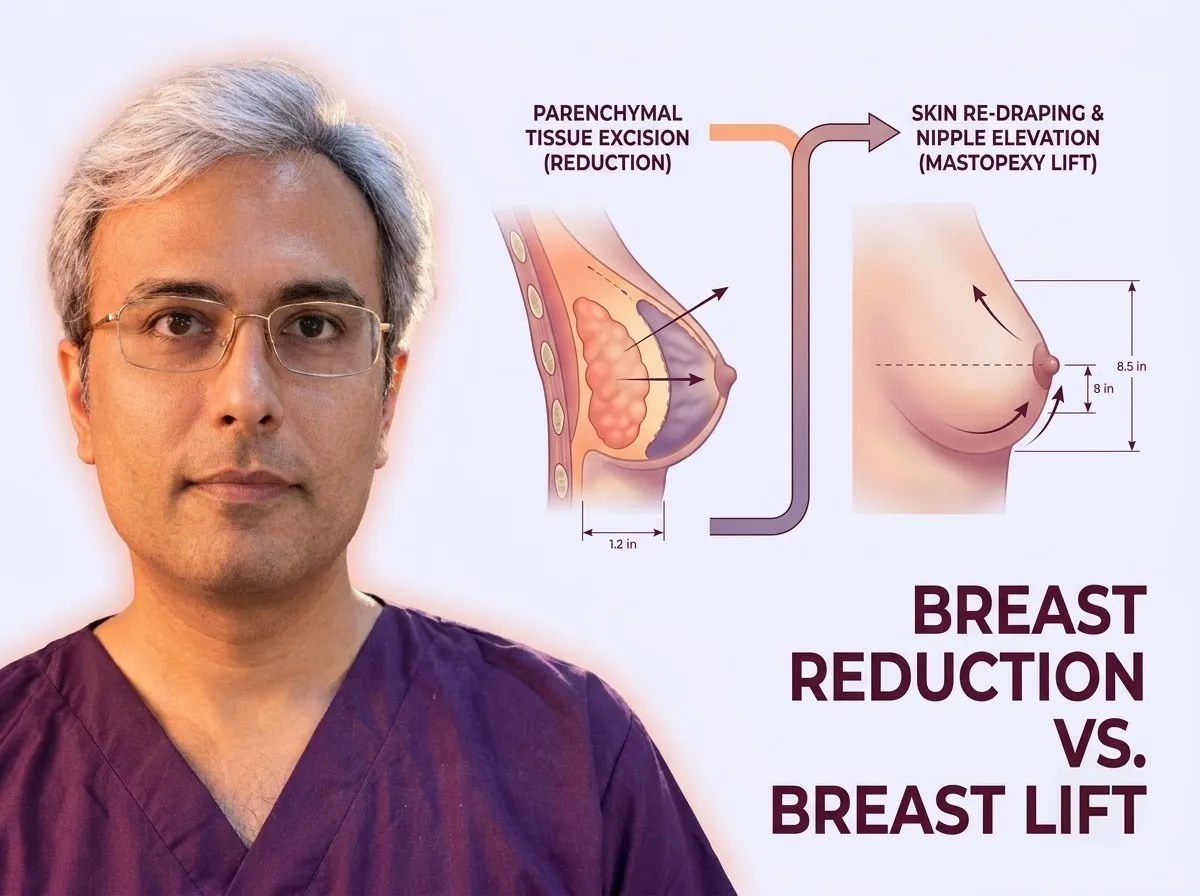
Breast Reduction Surgery vs. Breast Lift: Determining the Right Procedure for Your Anatomy
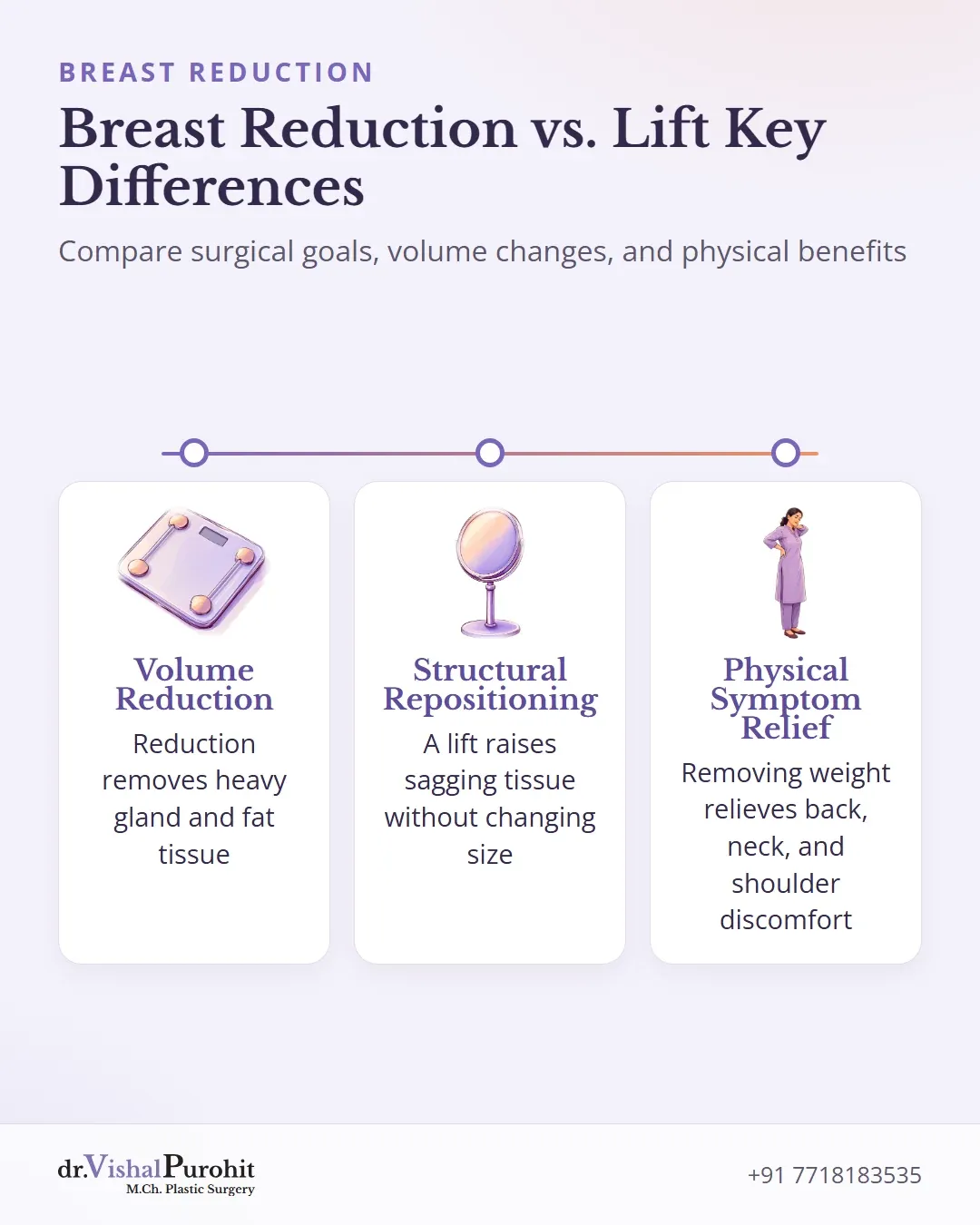
Should you choose a breast reduction or a breast lift? It depends on if you want to remove extra tissue or just move it.
A breast reduction lowers the size and weight of your breasts. This helps stop physical pain and discomfort.
A breast lift, or mastopexy, raises sagging tissue. It gives you a firmer look without changing your breast size.
Knowing the difference is the first step to feeling confident. Every body is unique, so you need a plan that fits your shape.
If you are considering breast reduction surgery in Jaipur, pick a plan that fits your goals. Your health and self-esteem come first.
You might want to end back pain or simply feel beautiful. The right choice will improve your look and your quality of life.
Primary Surgical Objectives: Volume vs. Position
The Primary Surgical Objective is different for these two surgeries. A breast reduction focuses on volume reduction. The surgeon removes extra breast tissue to make the breasts smaller and lighter.
A breast lift focuses on structural repositioning. It does not remove size. Instead, it reshapes the breast and moves the nipple higher to fix sagging.
The right choice depends on your body. To achieve natural-looking results, surgeons use techniques that account for several individual tissue dynamics:
- Proportion
- Structure
- Volume
- Elasticity
- Blood flow
Tissue Volume Reduction: Does a Lift Reduce Size?
Many people think a lift makes breasts smaller. This is not true.
Myth: A lift makes breasts smaller.
Fact: A lift only changes the shape and position.
To change your breast size, you need tissue removal. This means taking out the gland and fat that cause the weight.
In aesthetic surgery, doctors match the skin to the remaining tissue. Without removing the gland, the skin cannot fit a smaller shape.
Dr. Purohit's note: In Dr. Vishal Purohit's practice in Jaipur, typically 400 to 1,500 grams of tissue are removed per breast during a reduction.
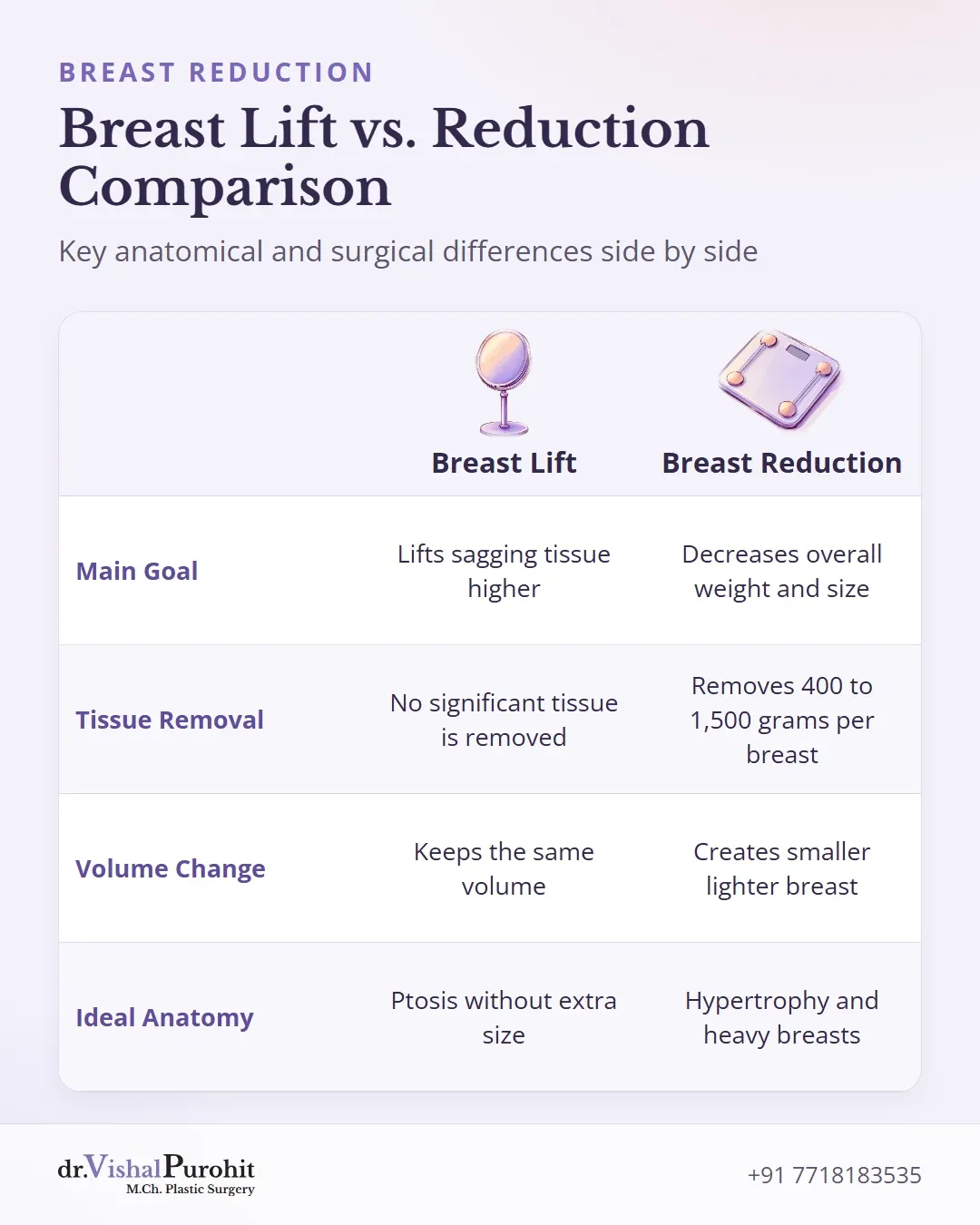
The table below shows how Tissue Volume Reduction works for each procedure.
| Feature | Breast Lift (Mastopexy) | Breast Reduction |
|---|---|---|
| Main Goal | Lifts sagging tissue higher. | Decreases overall weight and size. |
| Tissue Removal | No significant tissue is removed. | Removes “a suitable amount of gland and adipose tissue” Reduction Mammoplasty1 to ensure a good long-term look (Dr. Purohit typically removes 400 to 1,500 g per breast). |
| Volume Change | Keeps the same volume. | Focuses on Mammary Tissue Removal to create a smaller, lighter breast. |
| Suited To | Ptosis (sagging) without extra size. | Hypertrophy (excessive growth) and heavy breasts. |
Physical Symptom Relief: Functional vs. Aesthetic Needs
A breast lift is mostly about looks. It fixes sagging so you can feel more confident.
A breast reduction is different because it provides Physical Symptom Relief. For women with very heavy breasts, this surgery is often a medical necessity.
The surgery relieves back, neck, and shoulder pain that many patients struggle with every day.
Large breasts create “important functional problems, including shoulder, lumbar, and neck pain” macromastia symptoms2.
The main goal is functional relief. This means removing weight to stop long-term pain.
Many patients find that “symptomatic relief will far outweigh any possible psychological disturbance” reduction benefits3 after surgery. This change helps you move easier. You can finally live without daily discomfort.
Nipple-Areola Complex (NAC) Repositioning
Both surgeries move the Nipple-Areola Complex. This is your nipple and the dark circle around it.
Your surgical goals and technique depend on your anatomy and tissue needs when repositioning the nipple-areola complex.
- Breast Lift (Mastopexy): Choose this for NAC repositioning if you want a higher look but not smaller breasts. It moves the central breast segment upward to carry the nipple-areola complex into its new position. This fixes the anatomical placement of the nipple.
- Breast Reduction: This moves the nipple and removes heavy tissue. Doctors must avoid “lateral displacement of the nipple-areola complex” reduction mammaplasty to keep things natural. In Dr. Vishal Purohit’s practice, the new nipple position is placed about 19 to 22 cm from the sternal notch, and the areola is resized to about 38 to 42 mm in diameter. This creates symmetry and reduces weight.
- Key Difference: A lift just slides the nipple up. A reduction changes the breast size and then puts the nipple in the right spot.
Incision Patterns and Scarring Comparison
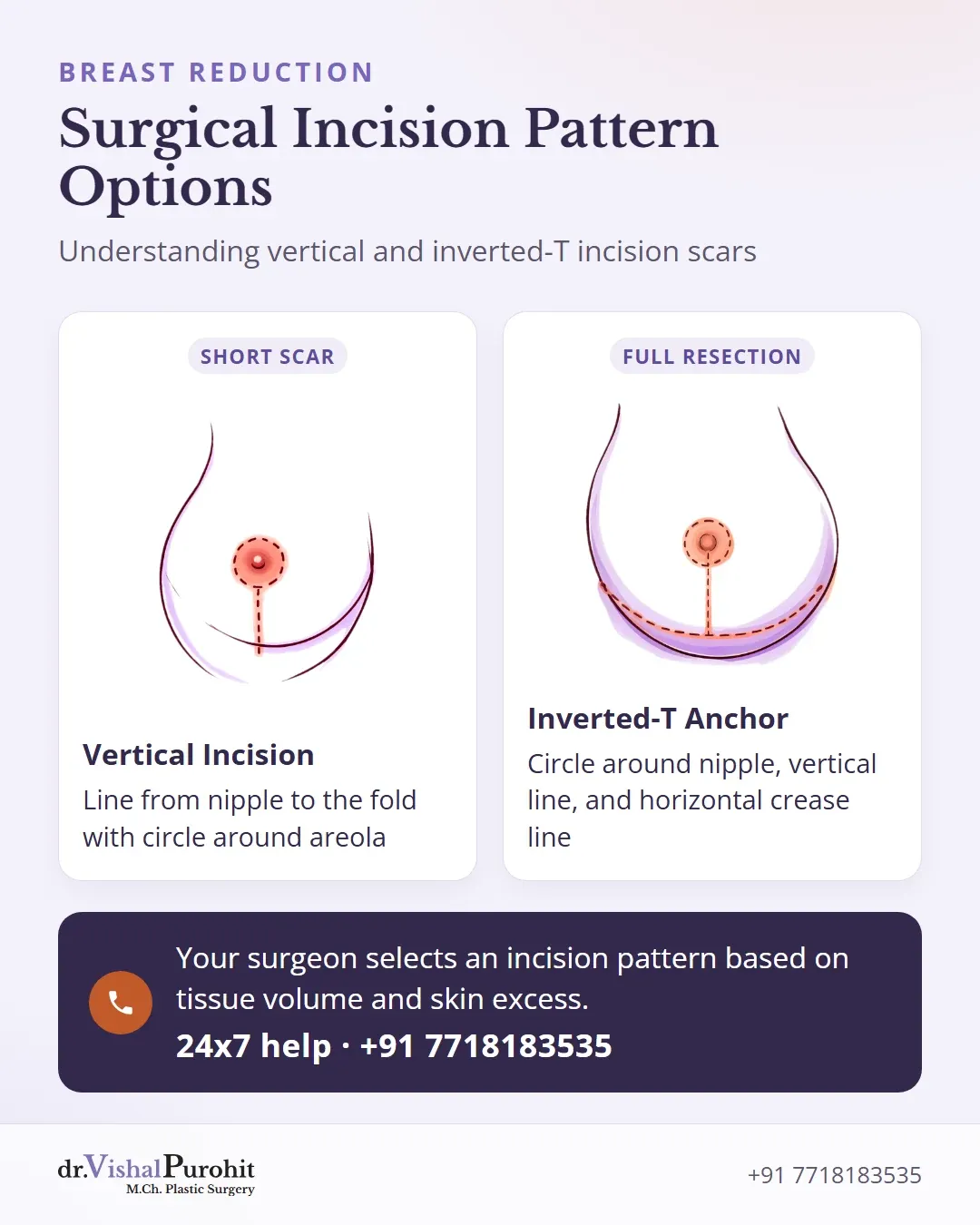
Every surgery leaves a mark. Knowing the aesthetic footprint helps you pick the right path for your body.
Here is how the incision pattern differs between these two procedures:
If your breasts are mostly fatty tissue with mild sagging, ask about liposuction-assisted breast reduction as a smaller-scar option; Dr. Vishal Purohit offers liposuction-only breast reduction for suitable patients.
Breast Lift (Mastopexy)
- A lift usually uses shorter lines.
- You may have a circle around the nipple and a vertical line.
- This creates less overall scarring because less skin is removed.
Breast Reduction
- Needs more complex incision types to remove heavy tissue.
- Vertical Scar: A line from the nipple down to the fold; a line that is too long can lead to a "banana or squash-shaped breast"4.
- Inverted-T (Anchor): Uses a circle around the nipple, a vertical line, and a horizontal line to "obtain a superior aesthetic result" inverted-T benefits for larger breasts.
-
Scar Management: Your surgeon picks a pattern based on your shape. In Dr. Purohit’s practice, the superomedial pedicle is preferred (the inferior pedicle is also used), and the skin is closed with subcutaneous (buried) stitches in layers using internal Monocryl sutures, without skin glue or waterproof taping; scars are kept covered from the sun.
Some techniques let the nipple move with “the minimum of tension, minimising the risk to perfusion as well as minimising later scarring”5. This helps your results look natural and heal well.
Recovery Compared
Both breast reduction and breast lift (mastopexy) involve skin excision and tissue reshaping, meaning patients undergo an overlapping healing trajectory (Breast Lift Results (plasticsurgery.org); Breast Reduction Recovery (plasticsurgery.org)).
Key points
- Breast reduction and breast lift follow an overlapping healing process involving tissue reshaping and skin excision.
- Swelling and settling continue over several months, with support garments aiding tissue healing.
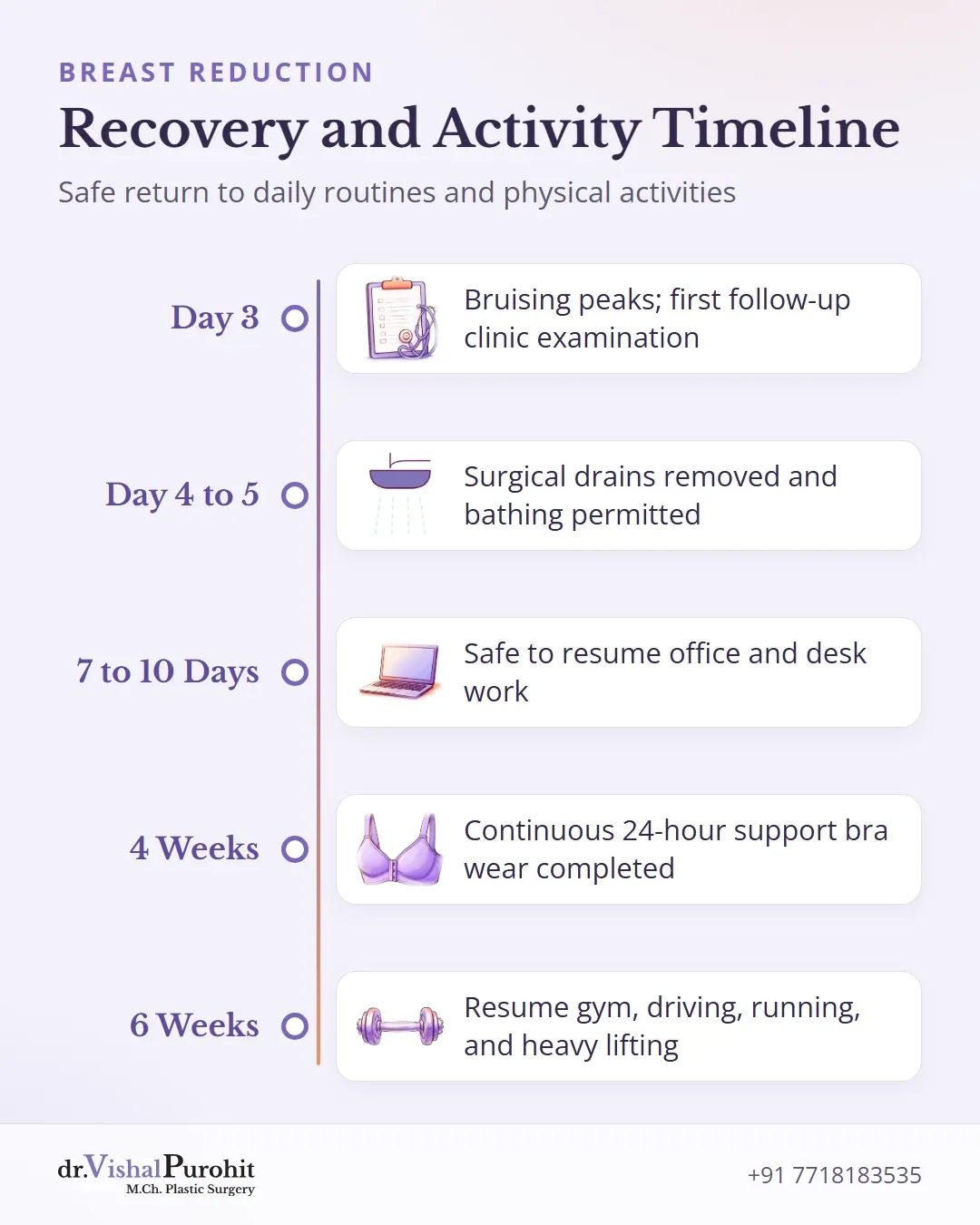
- Patients can typically resume desk work within 7 to 10 days, while strenuous activity waits until 6 weeks.
However, recovering from a breast reduction also involves tissue resection (Breast Reduction Recovery (plasticsurgery.org)).
Swelling and Settling
Following a breast lift, initial results are visible immediately, though post-surgical swelling takes time to resolve and breast shape settles over several months (Breast Lift Results (plasticsurgery.org)). In breast reduction, postoperative swelling and bruising can similarly obscure early outcomes, and full recovery can take several months (Breast Reduction Recovery (plasticsurgery.org)).
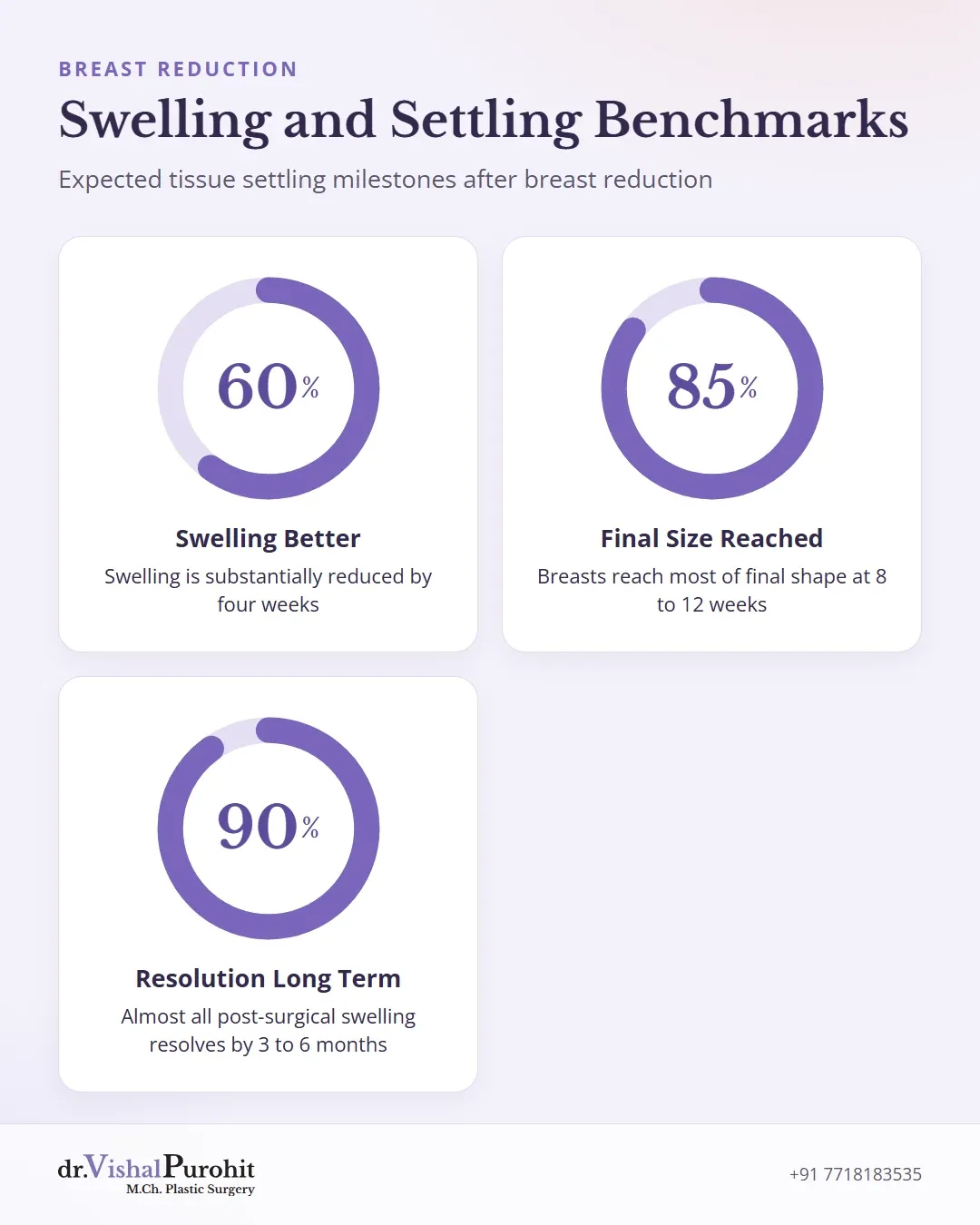
In Dr. Vishal Purohit’s practice, bruising peaks around day 3, swelling is about 60% better at 4 weeks and about 90% by 3 to 6 months, and the breasts reach about 85% of their final size at 8 to 12 weeks.
Gauze, bandages, and an elastic bandage or support bra help reduce swelling and support healing tissues (Breast Reduction Recovery (plasticsurgery.org)).
Resuming Daily Activities
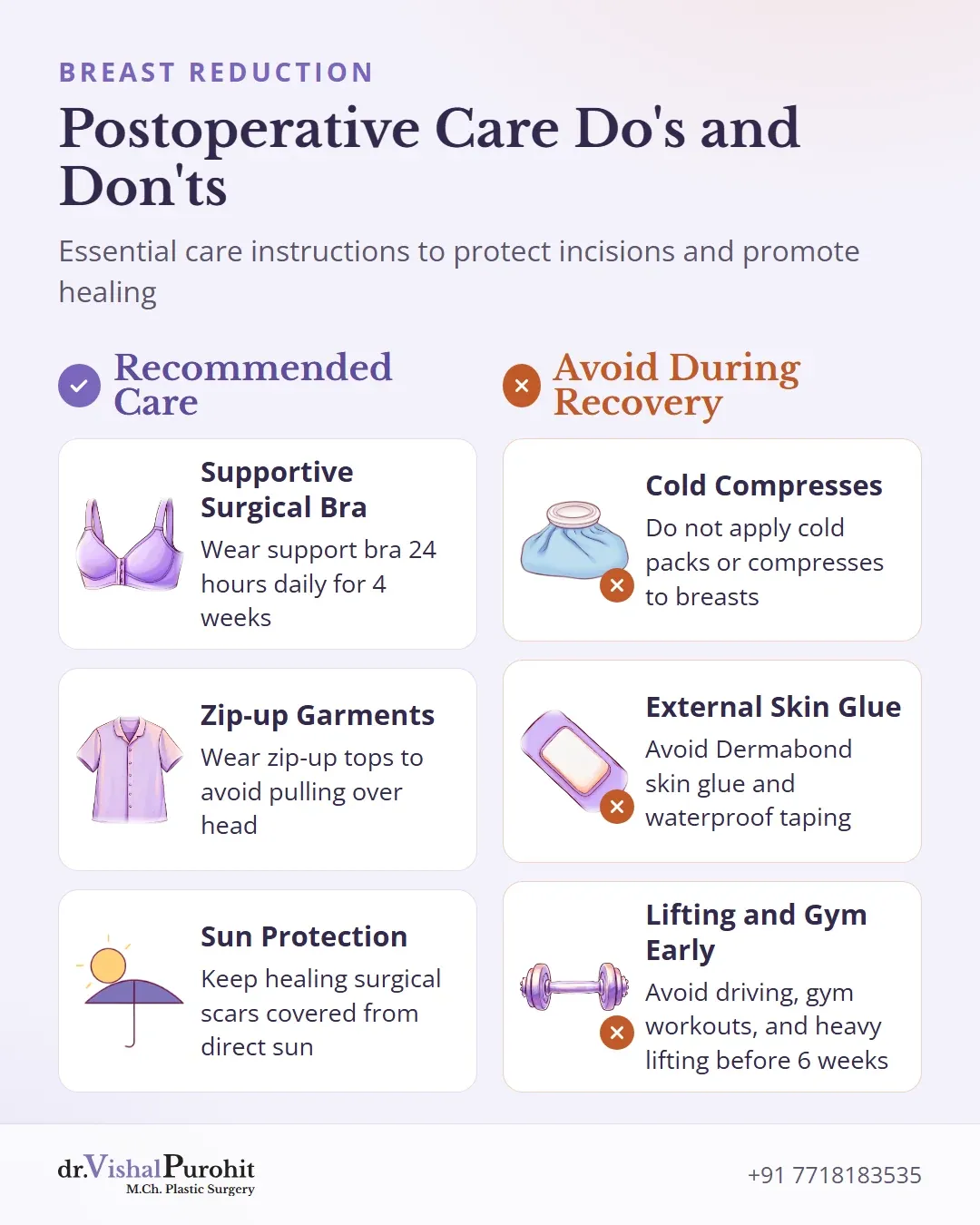
Patients recovering from breast surgery are advised to wear zip-up tops to avoid the discomfort of pulling garments overhead (Breast Lift Candidates (plasticsurgery.org)).
Across both operations, incisions must be shielded from excess force, swelling, abrasion, and motion while healing (Breast Lift Results (plasticsurgery.org); Breast Reduction Recovery (plasticsurgery.org)).
Resuming normal activity, exercise, and work varies by individual assessment and specific postoperative directions (Breast Reduction Recovery (plasticsurgery.org)). In Dr. Purohit’s practice, patients may resume desk work at 7 to 10 days, while everything else—including driving, lifting, gym, running and other exercise—can be resumed at 6 weeks, subject to normal recovery progress.
Scar Maturation
In both operations, incision lines are permanent but continue to fade over time (Breast Lift Results (plasticsurgery.org)).
In Jaipur, Dr. Vishal Purohit performs breast reduction under general anaesthesia, with an operative time of 3 to 4 hours and a hospital stay of 48 hours to 5 days.
Key aspects of post-surgical wound care and protocol include:
- Drains are used and removed on day 4 to 5, once the fluid is clear.
- The skin is closed with subcutaneous (buried) stitches in layers using internal Monocryl sutures.
- Skin glue (Dermabond) and waterproof taping are not used, and bathing is allowed from day 5.
- Scars are kept covered from the sun.
- The support bra is worn 24 hours a day for 4 weeks, and for the next 4 weeks it may be taken off only while lying down.
- No cold packs or cold compresses are used.
Follow-up visits are scheduled according to a structured timeline:
- Day 3
- Day 7
- 4 weeks
- 3, 6 and 12 months
Patients can call the surgical team at any time, day or night, on +91 7718183535; for any warning sign after surgery, the instruction is to call the surgical team immediately on +91 7718183535.
Reshaping, Lifting and Implants
A standard reduction mammaplasty naturally accomplishes reshaping alongside volume reduction. During the operation, extra breast tissue is excised in a specific pattern, which preserves the nipple-areola complex and repositions the remaining breast tissue higher on the chest wall. Your surgeon also explains how much smaller breasts can be for your frame.
In Dr. Vishal Purohit’s practice, breast reduction is carried out using a superomedial or inferior pedicle technique—with the superomedial pedicle being his preferred approach—along with a Wise-pattern anchor or vertical scar.
This pedicled transposition keeps the nipple-areola complex attached, aiming to preserve the fourth lateral intercostal cutaneous nerve branch for sensation, though the chances of breastfeeding afterwards are slim. Because the tissue is reshaped and repositioned, a reduction inherently lifts the breast and elevates the nipple without requiring a separate lifting step.
Where Breast Implants Fit In
Breast implants are not part of a standard breast reduction. While a reduction focuses on relieving excess weight and repositioning natural tissue, implants serve to add volume or upper pole fullness.
When a patient seeks both elevation of drooping tissues and increased volume or upper pole projection, the procedure discussed is an augmentation-mastopexy (breast lift combined with implants). A clinical study notes that the complication rate of combined mastopexy-augmentation was 1.86%, compared to 1.15% for mastopexy alone, showing a higher incidence of complications such as infection6.
The decision between undergoing a reduction mammaplasty, a mastopexy, or an augmentation-mastopexy is determined individually after a comprehensive clinical examination, taking into account how long reduction results last over time.