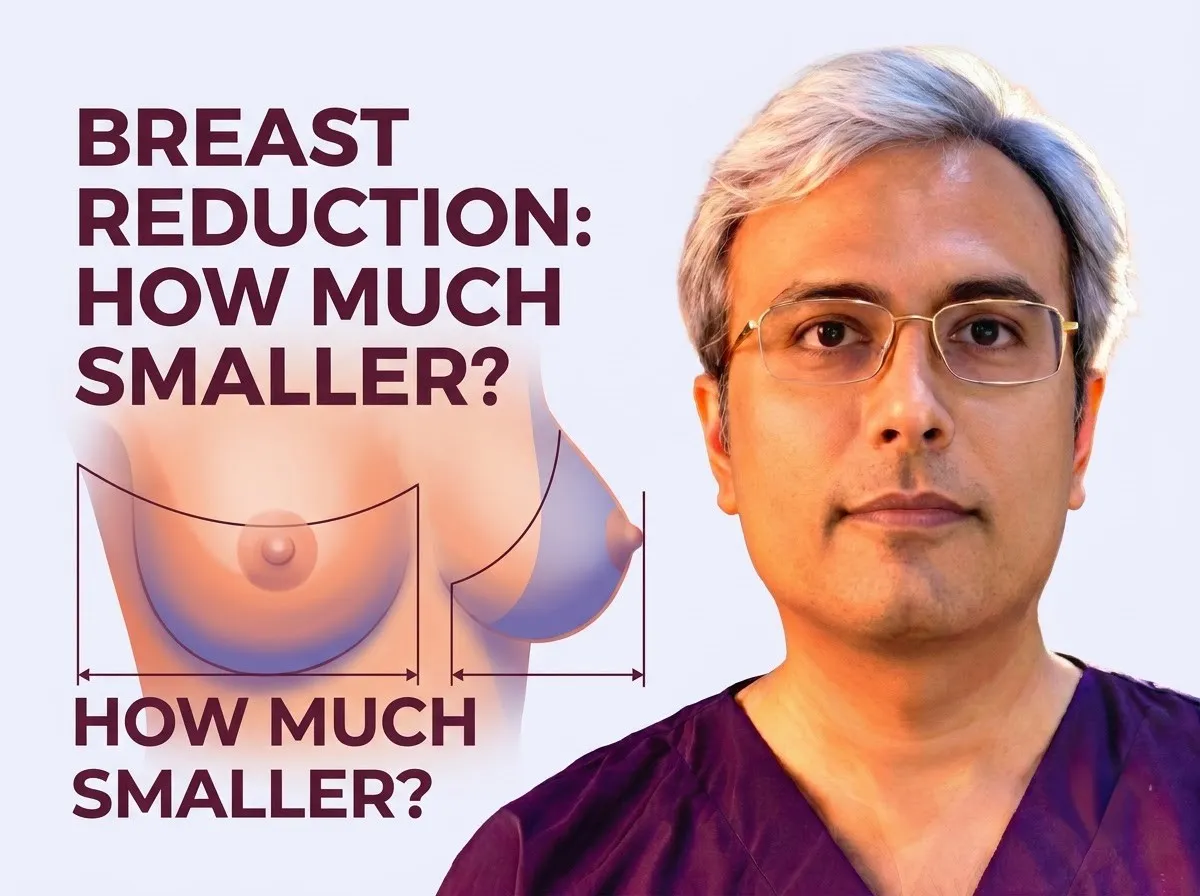
When considering reduction mammaplasty, many patients wonder how small their breasts can become after surgery. Planning focuses on relieving physical discomfort and achieving balanced proportions rather than targeting an arbitrary commercial bra cup measurement.
Surgical boundaries depend on individual anatomy, baseline tissue volume, and blood supply. Learning what happens during a breast reduction consultation helps patients understand how tissue resection is customized to maintain chest balance while preserving nipple viability.
Size After Breast Reduction at a Glance
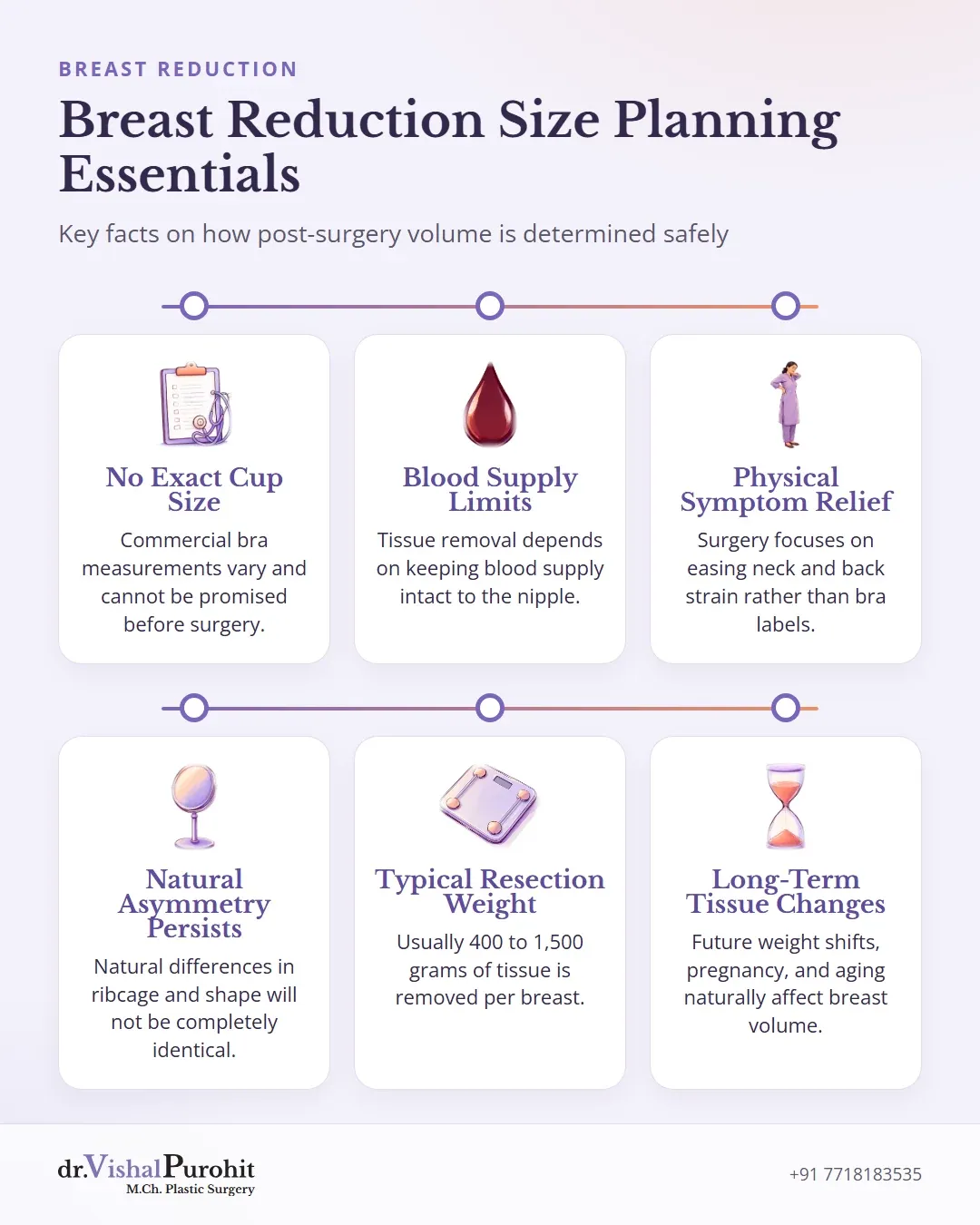
Planning a reduction mammaplasty involves balancing symptom relief, tissue removal, and natural proportion, rather than aiming at a bra size.
| Question | What decides it | What to expect |
|---|---|---|
| Choosing an exact cup size | Standard cup measurements are imprecise across commercial brands [1]. Final volume depends on safe glandular resection, blood supply, and bodily frame [1]. | Specifying a precise post-operative cup or bra size is not possible [2]. Surgery aims for proportional reduction and symptomatic ease rather than a specific bra label [1, 2]. |
| How much tissue can be removed | Preoperative breast measurements, body mass index (BMI), sternal notch-to-nipple distance, and incision technique decide resection boundaries [1, 3]. In Dr. Vishal Purohit’s practice, weight must be within the normal BMI range before surgery. | Inverted-T anchor incisions allow the largest volume of tissue and skin removal [3]. Resection is calculated individually to preserve tissue and nipple viability [1]. In Dr. Vishal Purohit’s practice, typically 400 to 1,500 g of tissue is removed per breast. |
| Achieving equal sides | Natural baseline breast asymmetry, chest wall footprint, and ribcage position [1, 2]. | Breast shape, tissue volume, and scars will not be completely identical between sides [2]. Existing skeletal or positional asymmetries persist after surgery [2]. |
| Size changing later | Natural tissue healing, aging, and skin laxity over time [4]. | Long-term changes can occur as the lower skin envelope stretches over time [4]. |
Talking About Size, Comfort and Proportion
Planning the target breast size involves balancing physical relief, individual wishes, and overall body proportion.
Dr. Purohit’s note: At Kalpana Aesthetics in Jaipur, Dr. Vishal Purohit assesses each patient individually, evaluating how breast volume relates to the wider chest and frame.
Aligning Comfort and Body Proportion
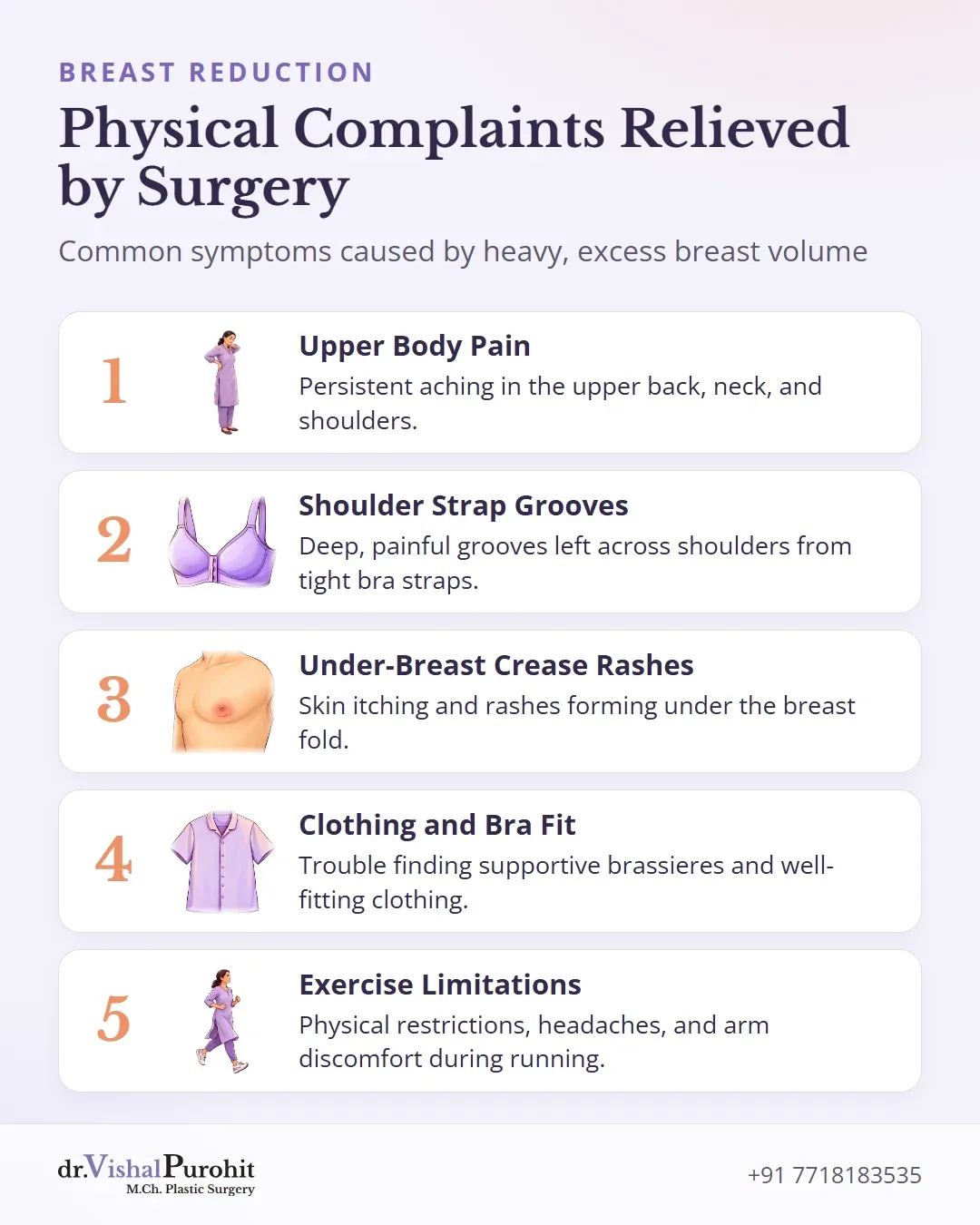
Patients often seek reduction mammaplasty to address physical symptoms linked to large breast volume [3]. Published clinical tools record a wide range of common complaints [5]:
- Upper back, neck, and shoulder pain [5]
- Painful bra strap grooves across the shoulders [5]
- Rashes or skin itching developing under the breast creases [5]
- Difficulty finding supportive clothing or bras that fit comfortably [5]
- Headaches, arm pain, or limitations when exercising and running [5]
Surgery reduces breast volume by removing excess glandular tissue, fat, and skin to help establish a more proportionate contour [3].
Setting Realistic Expectations
An exact post-operative cup or bra size cannot be promised prior to surgery [2].
The footprint of the breast on the chest wall is anatomically fixed, meaning surgery cannot alter its base position on the ribcage [2]. Furthermore, natural pre-existing asymmetries in shape, tissue volume, and nipple position between the right and left sides may remain noticeable after healing [2].
Why Cup Sizes Are an Unreliable Target
Many women consult for reduction mammaplasty hoping to achieve a specific bra cup size. However, clinical evidence shows that brassiere cup sizes are a crude, unscientific, and subjective way to describe breast volume [6].
Variation Between Manufacturers
Cup sizes do not represent a standardized physical measurement. In surgical research, bra sizing is often evaluated using only chest band width rather than cup designations because cup sizes vary substantially depending on the manufacturer [7].
Furthermore, standard cup measurements are recognized in published literature as imprecise, inconsistent, and unable to account for natural breast asymmetry [1]. Because of these commercial discrepancies, a cup label from one brand rarely matches another.
Why Grams Do Not Equal Cup Sizes
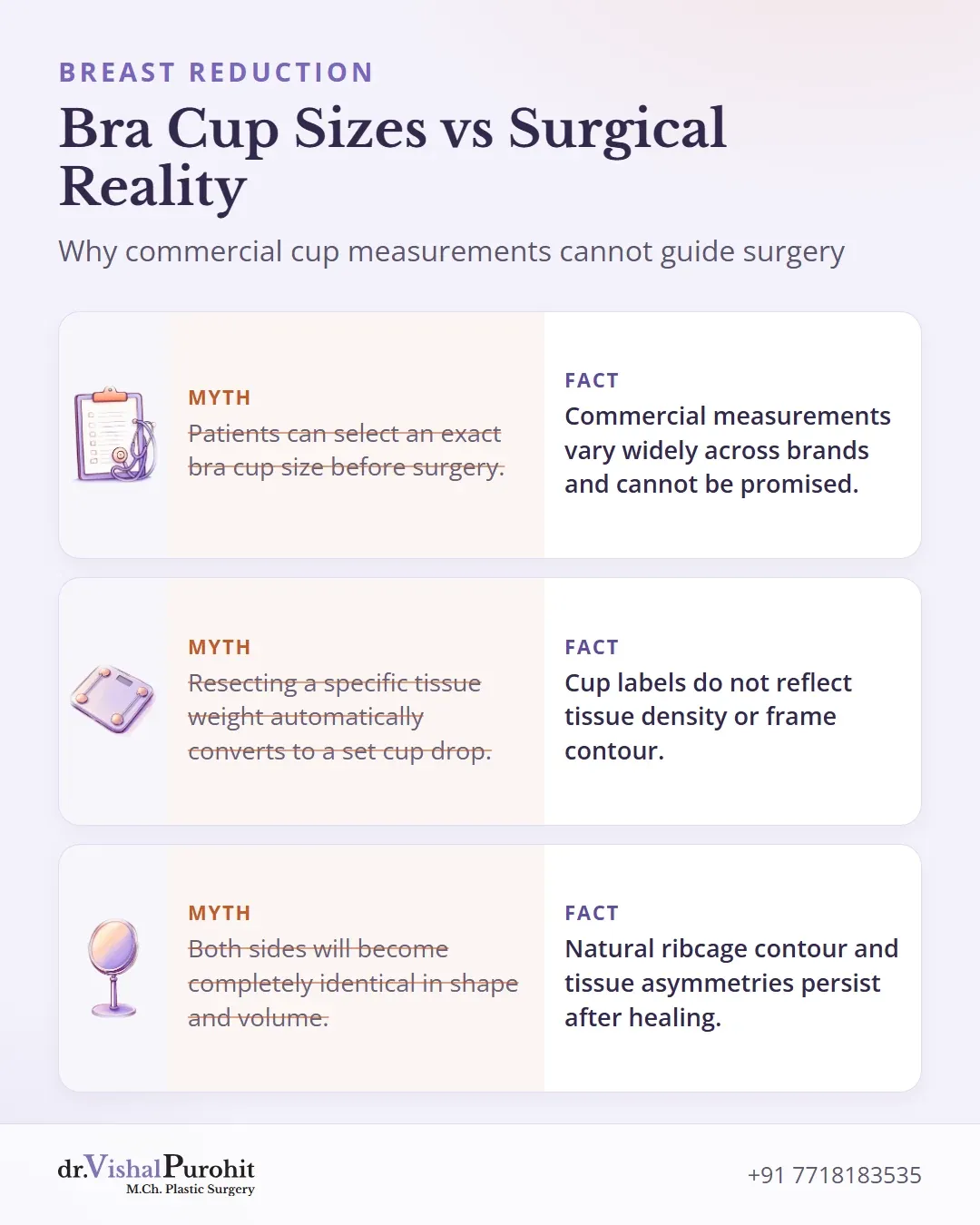
A common misconception is that resecting a specific weight of tissue automatically converts to an exact drop in cup size.
Myth: Resecting a specific weight of tissue automatically converts to an exact drop in cup size.
Fact: Surgical studies emphasize that determining resection weight based solely on a desired cup size is not reliable [1].
Planning by Anatomy, Not Cup Targets
Rather than aiming for an arbitrary commercial bra cup label, surgical planning focuses on tissue characteristics and overall proportion:
Individual Assessment
Resection requires balancing sufficient tissue removal to relieve physical symptoms while maintaining tissue viability and aesthetics [1].
Incision Design
At Kalpana Aesthetics in Jaipur, Dr. Vishal Purohit plans reduction mammaplasty using superomedial or inferior pedicle techniques with a Wise pattern (anchor) or vertical scar, with the superomedial pedicle being his preferred approach.
Nerve Preservation
This approach prioritizes breast shape, tissue contour, and pedicled transposition to safeguard the fourth lateral intercostal cutaneous nerve branch for sensation, though the chances of breastfeeding afterwards are slim.
Safety Limits: Blood Supply and Remaining Tissue
During breast reduction surgery (reduction mammaplasty), preserving a continuous blood supply to the nipple-areola complex dictates how much tissue can safely be removed.
Key points
- Preserving blood supply to the nipple-areola complex sets the safety limits for tissue removal.
- Pedicled transposition maintains tissue connection to protect circulation and sensation.
- Severe cases may require free nipple grafting when pedicle length compromises safety.
The remaining mound must maintain a functional pedicle—a bridge of glandular tissue, dermis, and blood vessels—to keep the nipple viable.
The Role of the Pedicle
In reduction mammaplasty, large volumes can place the nipple-areola complex at increased risk of reduced blood flow or tissue necrosis because longer pedicles can have a more tenuous blood supply [8, 9].
At Kalpana Aesthetics in Jaipur, Dr. Vishal Purohit performs reduction mammaplasty using pedicled transposition, which keeps the nipple attached to its living base to protect nipple sensation and circulation.
Large Reductions and Free Nipple Grafting
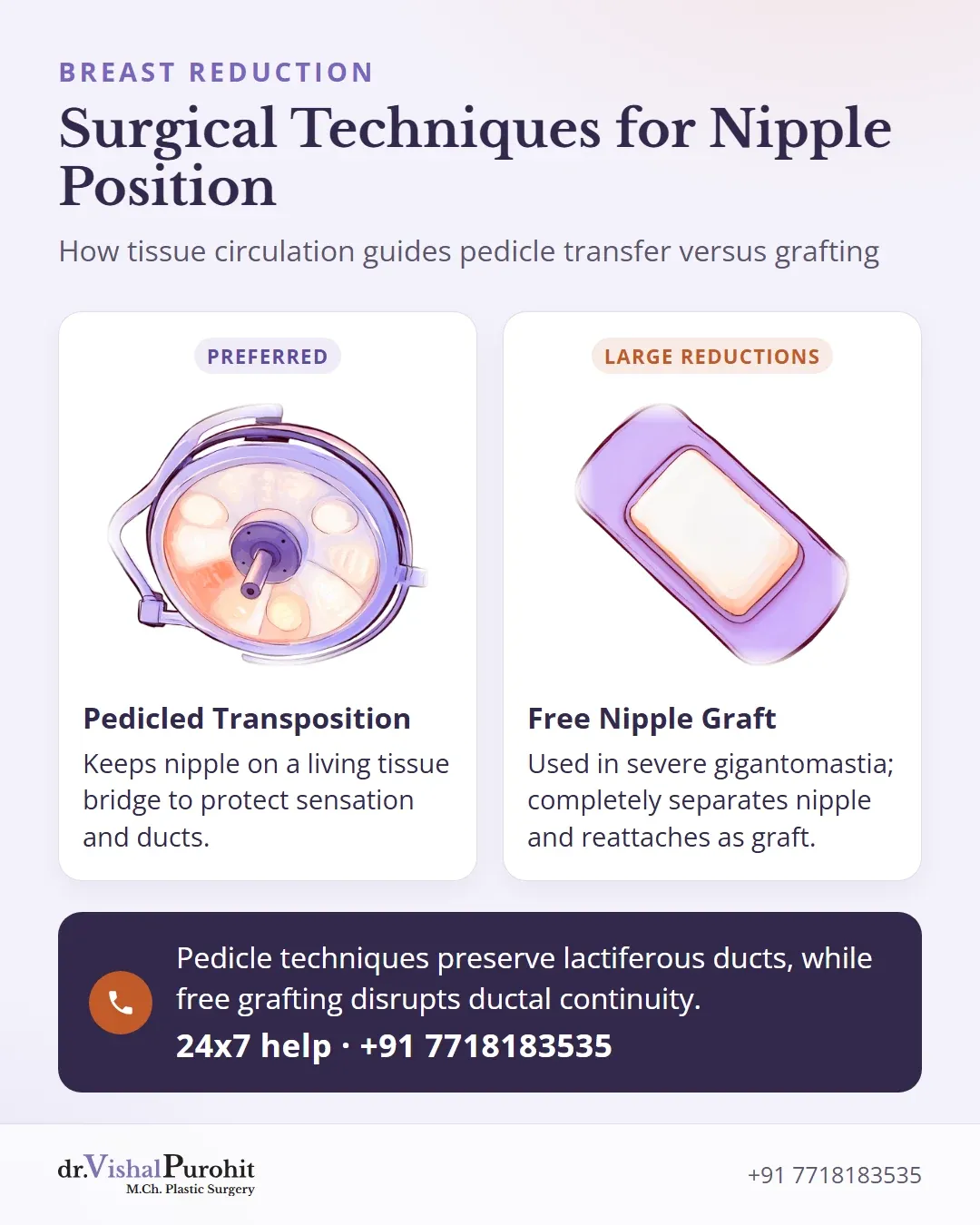
In severe gigantomastia or when a nipple must be shifted over an extended distance, some surgical approaches evaluate whether a pedicled transfer remains safe or if a free nipple graft should be considered [9, 10].
Rather than relying on rigid universal cutoffs, the literature notes that individual measurements alone should not serve as mandatory criteria for choosing a free nipple graft over a pedicled technique [11]:
- Resection weight
- Sternal-notch-to-nipple distance
- Body mass index
Dr. Vishal Purohit offers free nipple grafting for very large breasts at Kalpana Aesthetics in Jaipur.
A free nipple graft involves completely separating the nipple-areola complex from the underlying breast parenchyma and reattaching it as a skin graft [12].
While pedicle-based techniques are designed to safeguard the lactiferous ducts and nerve branches, separating the nipple entirely disrupts ductal continuity and underlying cutaneous nerves. Every surgical plan therefore balances total volume reduction against the preservation of tissue circulation.
Asymmetry and Changes After Surgery
Natural Asymmetry and Surgical Matching
Natural breasts are rarely completely identical in volume, contour, or position [13]. Small variations between both sides are considered normal, and patients may not always notice subtle baseline unevenness before surgery [13].
Key points
- Natural breast asymmetry is normal, and surgery aims to improve balance rather than achieve absolute symmetry.
- Postoperative swelling resolves gradually, with most settling occurring over three to six months while wearing a support bra.
- Long-term breast shape and volume remain subject to hormonal influences, future weight fluctuations, and pregnancy.
In a surgical review of 500 mammaplasty procedures, 5.2% of patients presented with significant asymmetry requiring targeted surgical management [13]. While operative planning aims to improve balance, exact matching has anatomical limits [13].
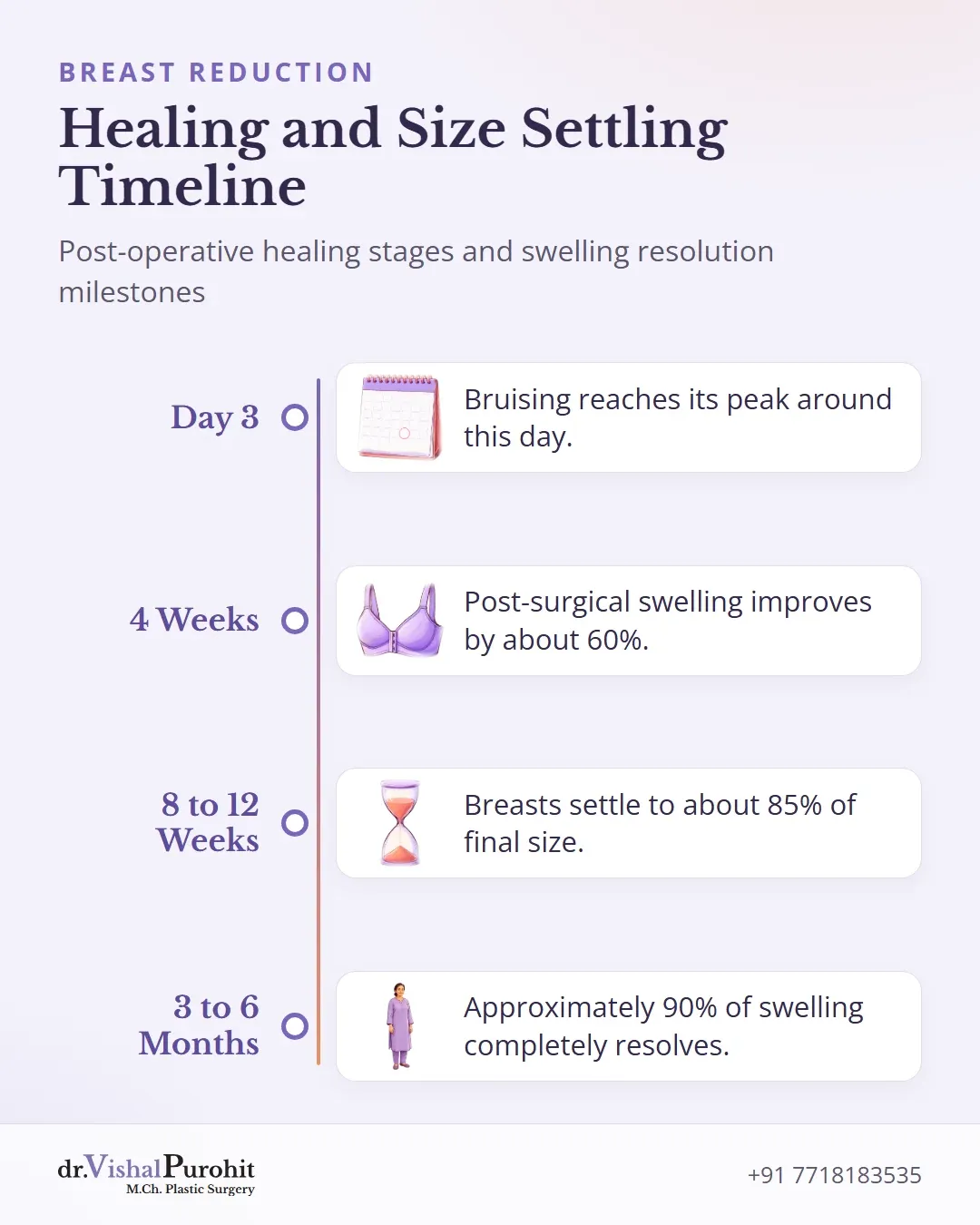
In Dr. Vishal Purohit’s practice in Jaipur, bruising peaks around day 3, swelling improves by about 60% at 4 weeks, and approximately 90% resolves by 3 to 6 months, with the breasts reaching about 85% of their final size at 8 to 12 weeks.
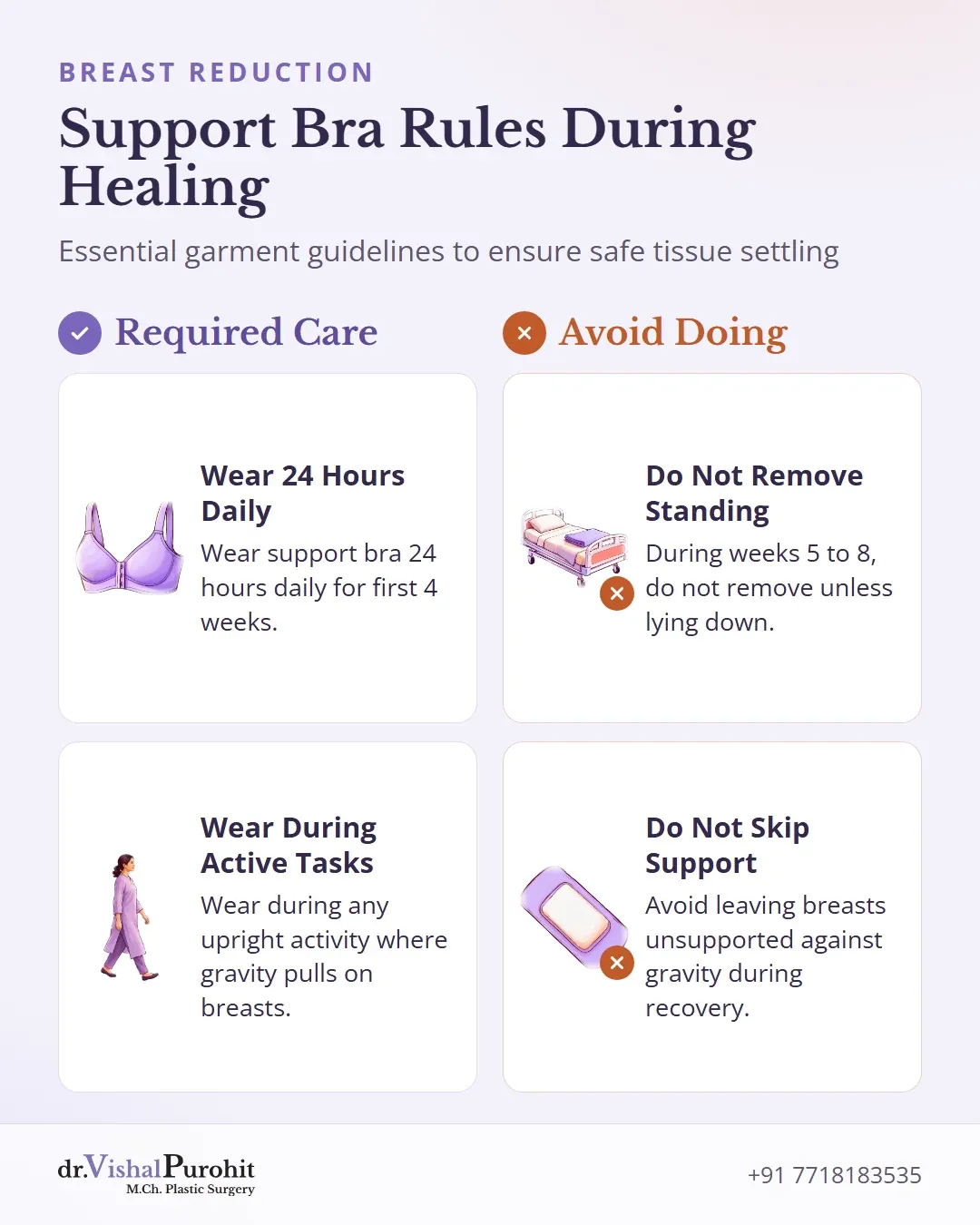
To support healing and tissue settling, the support bra must be worn 24 hours a day for 4 weeks. For the subsequent 4 weeks, it may be removed only while lying down and must be worn during any activity where gravity exerts pull on the breasts.
Long-Term Changes and Tissue Regrowth
After reduction mammaplasty, breast tissue remains biological and subject to future hormonal and physiological influences:
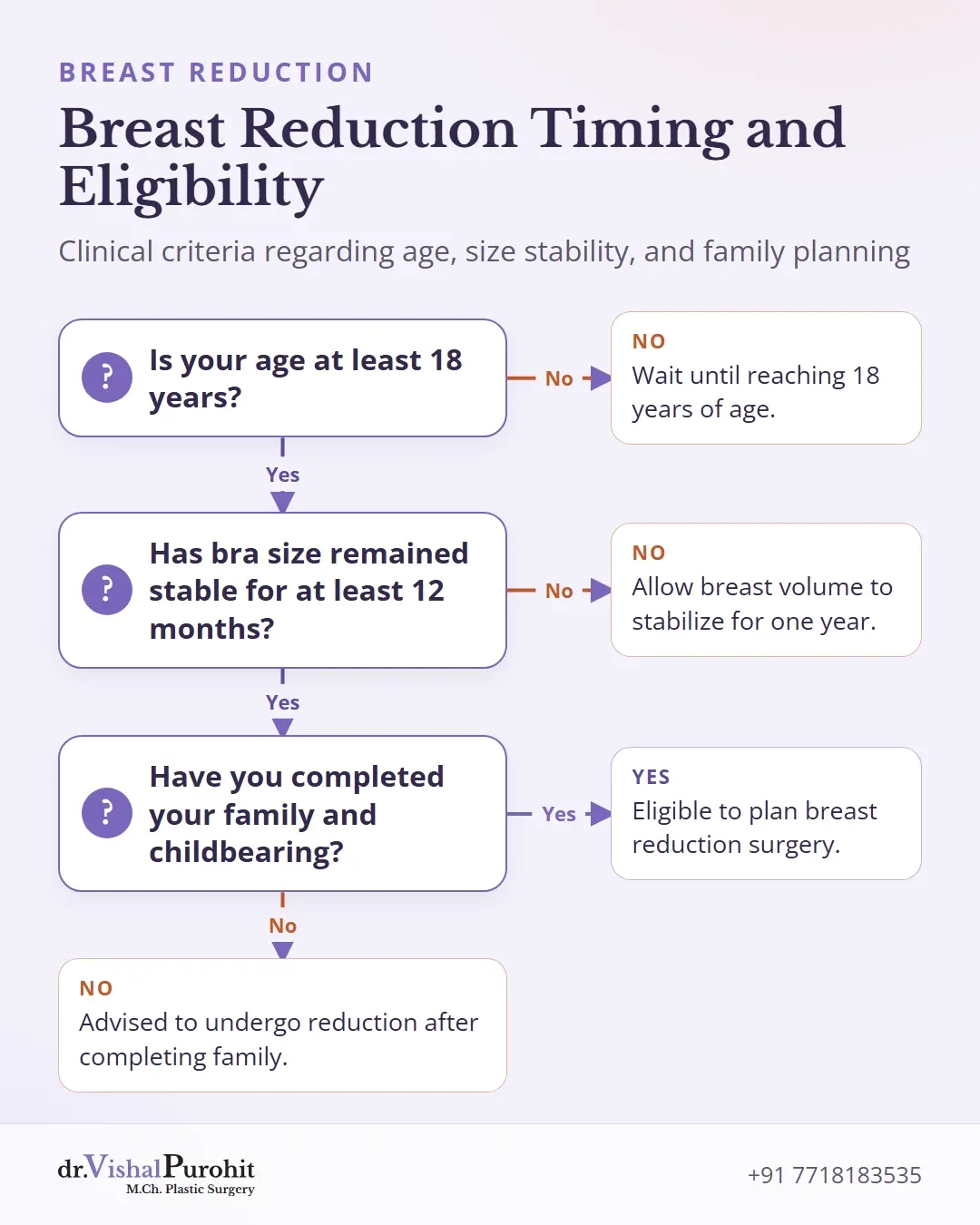
- Surgical age: Reduction mammaplasty is frequently performed in mature individuals, though younger individuals also present for surgery [14]. Historical discussions regarding surgery in younger patients have noted concerns regarding tissue regrowth [14]. In Dr. Purohit’s practice, the minimum age for breast reduction is 18 years, and the bra size must have been stable for at least 12 months.
- Weight fluctuations: Significant weight loss causes noticeable changes and deformation to breast shape and volume, while body mass index (BMI) correlates with post-surgical outcome measures [14].
- Hormonal stimulation: True glandular regrowth after reduction mammaplasty is unusual, but documented reports confirm that breast regrowth can occur in certain clinical settings [15].
Because future pregnancy and lactation induce glandular changes, Dr. Purohit advises patients to undergo breast reduction after completing their family.
Planning Breast Reduction Size at Kalpana Aesthetics in Jaipur
Planning breast reduction focuses on relieving physical strain while creating balanced proportions suited to your body frame. During your consultation, you can explore surgical options and discuss realistic size goals through breast reduction surgery in Jaipur.
Understanding breast size, shape, and expected results provides additional insight into tissue healing, symmetry, and what to expect throughout the planning process.
This is educational information, not medical advice.