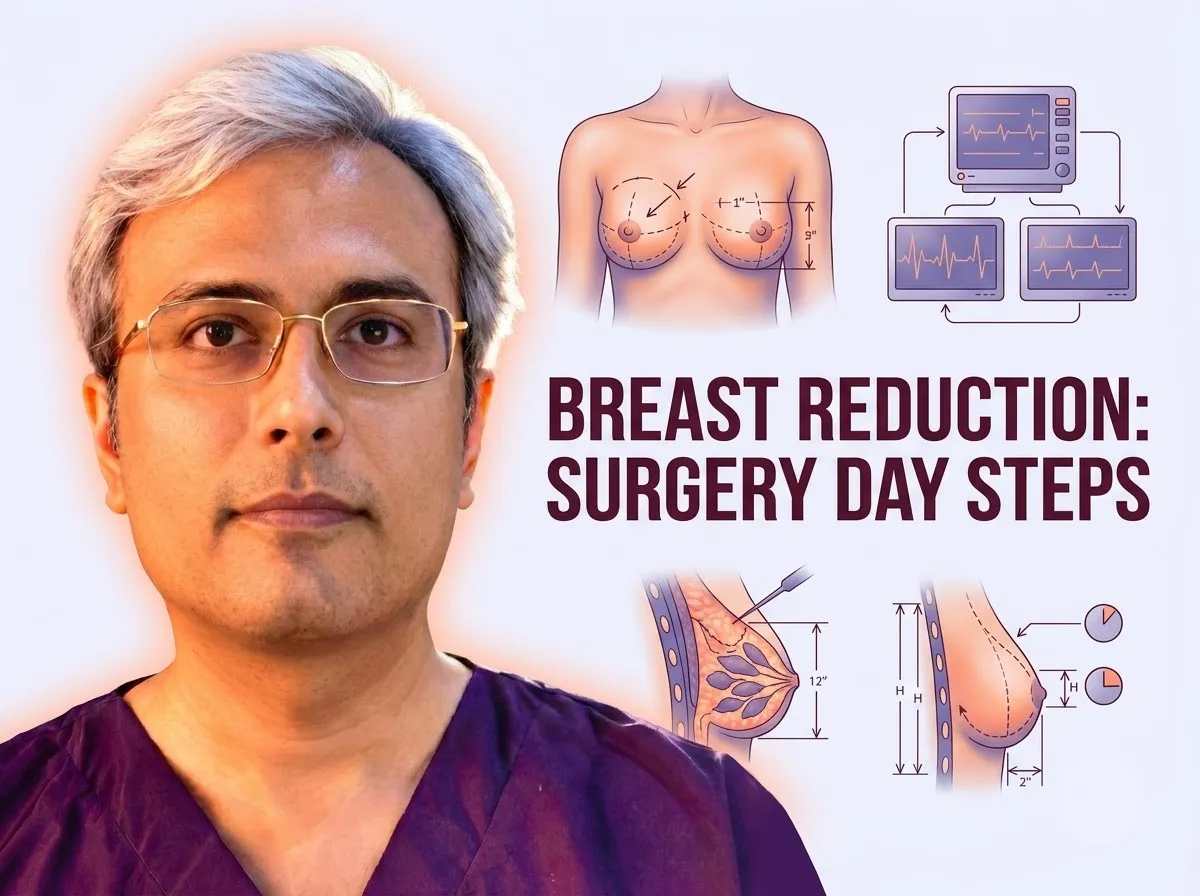
On the morning of reduction mammaplasty, knowing the clinical sequence helps reduce uncertainty and allows patients to prepare mentally for each stage of care. The process begins with administrative check-ins, medical verifications, and detailed surgical markings drawn while standing.
From there, surgical care proceeds through tissue excision, anatomical contouring, and close postoperative monitoring in the recovery area. Reviewing the Breast Reduction Packing List: Your Stay at Jaipur Hospital can help ensure all personal essentials and documents are ready before admission.
The Day at a Glance
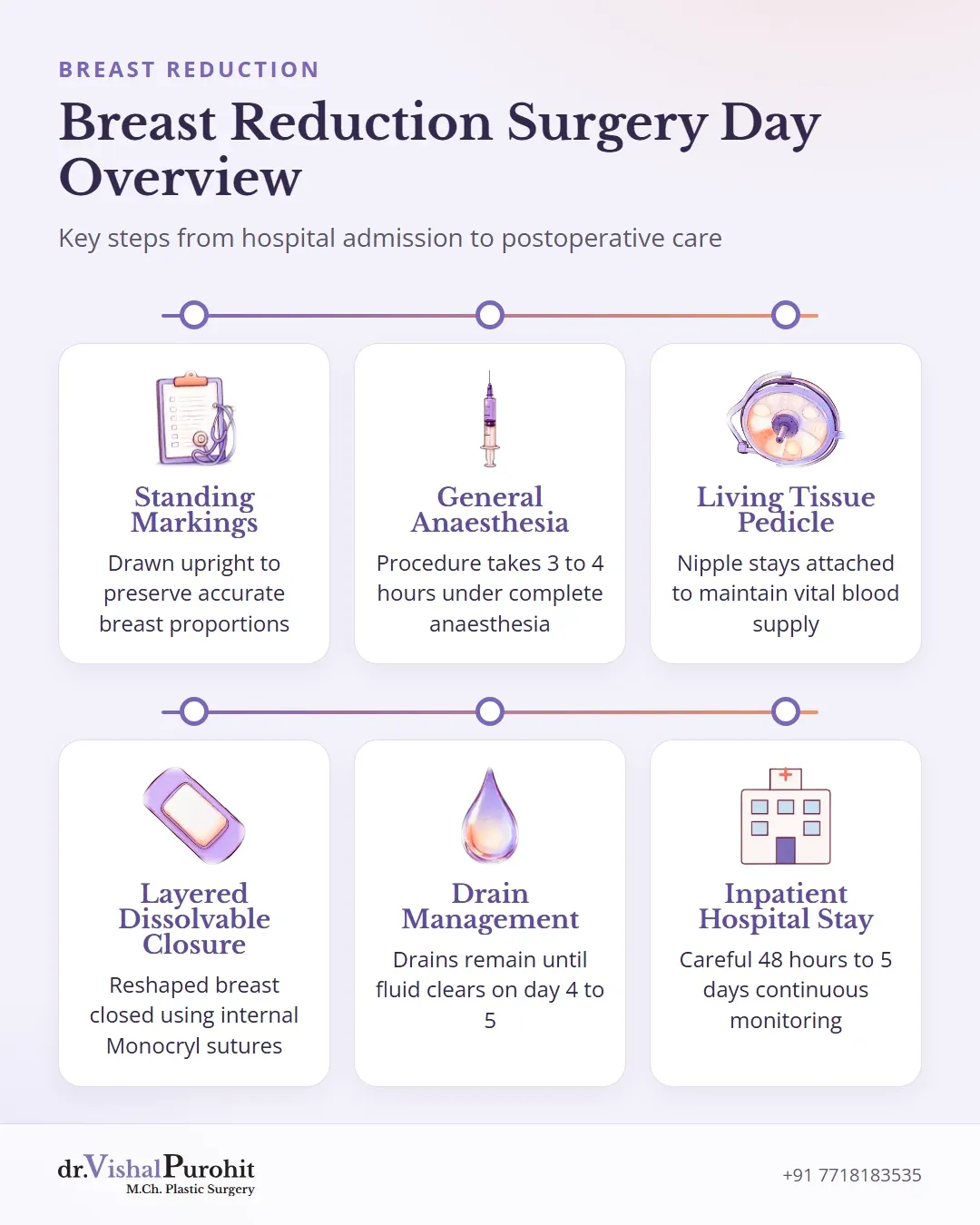
For women planning reduction mammaplasty in Jaipur, understanding the clinical sequence helps prepare for surgery day.
At Kalpana Aesthetics, Dr. Vishal Purohit performs breast reduction using a superomedial or inferior pedicle technique with a Wise-pattern anchor or vertical scar. He keeps the nipple attached to its pedicle to preserve sensation, though the chances of breastfeeding afterwards are slim.
| Stage | What happens | Typical points from studies |
|---|---|---|
| Arrival and consent | Admission and paperwork completion | Confirmed at consultation |
| Markings | Surgical mapping on the breast skin | Incisions include lollipop or keyhole patterns [1] |
| Anaesthesia | Medication given for surgical comfort | Always done under general anaesthesia [1] |
| The operation | Reshaping, tissue excision, and layered wound closure | Excess tissue and skin are removed, the nipple is repositioned, and deep sutures reshape the breast [1]; operative time is 3 to 4 hours |
| Recovery room | Post-anaesthetic monitoring | Confirmed at consultation |
| Going home or staying | Transfer to a room or discharge planning | Hospital stay is usually 48 hours to 5 days; an overnight stay alone is not enough |
Arrival, Consent and Surgical Markings
On the morning of the operation, the patient arrives at the surgical facility for admission and preparatory checks.
Clinical Checks and Informed Consent
Before any surgical preparation begins, administrative and clinical verifications take place:
Identity Verification
Identity and scheduled procedural details are confirmed before surgery.
Risk Review
Potential risks of reduction mammaplasty—including haematoma requiring expeditious treatment, as well as tenuous blood supply or nipple ischemia in large-volume reductions—are reviewed with the patient.
Informed Consent
Written, signed informed consent is completed to confirm that the patient understands the proposed surgery and discussed risks before proceeding.
Pre-Operative Markings
Once consent is documented, surgical planning markings are drawn on the skin.
Accurate skin markings are drawn while the patient is in an upright, standing position, because breast tissue shifts significantly when lying down [2, 3, 4]:
- Reference Anatomical Landmarks: Markings are established for the breast meridian (measured from the midclavicular point), the inframammary fold, and the anterior axillary line [2, 4].
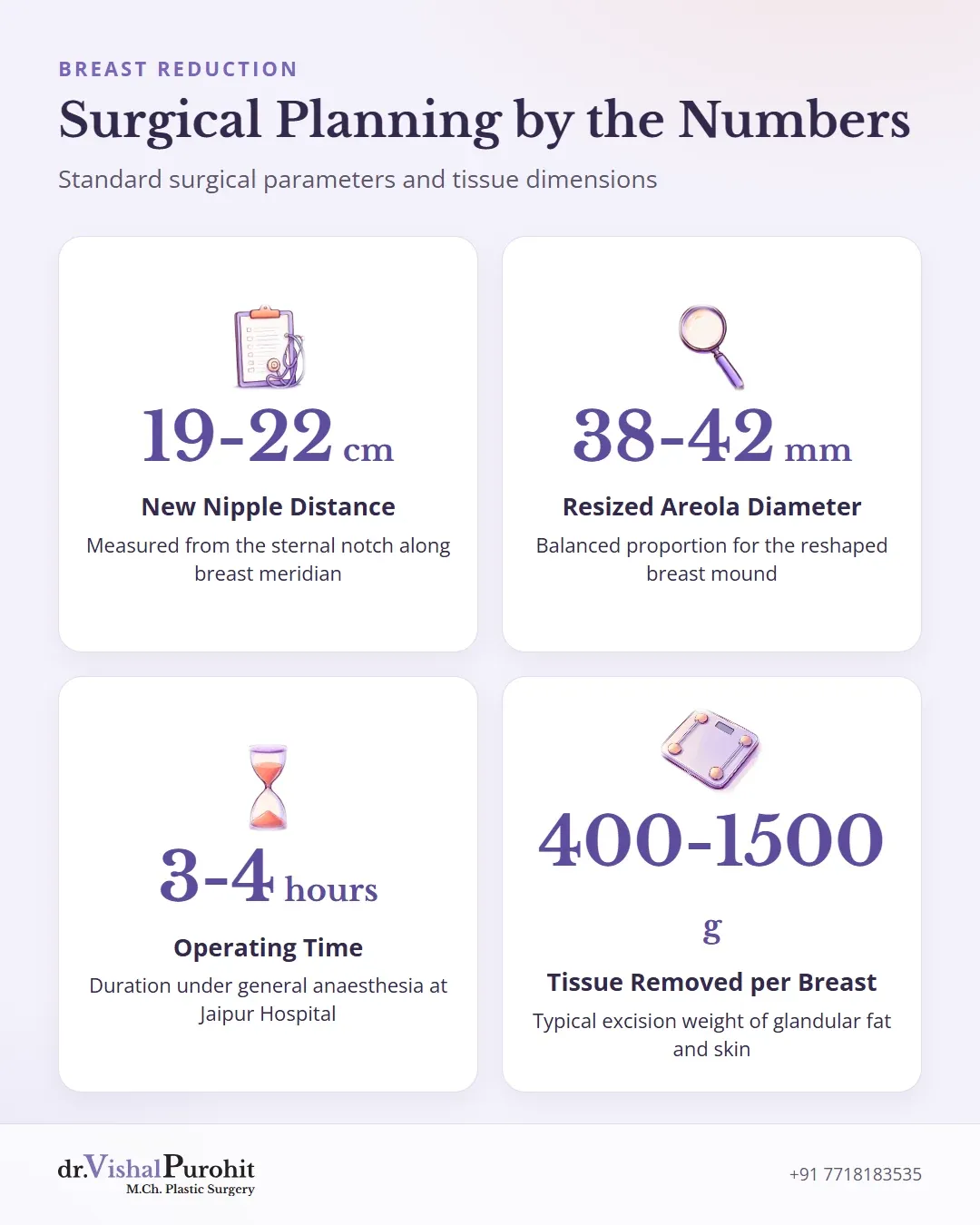
- New Nipple Position: The new nipple position is mapped out along the breast meridian, typically placed at the level of the submammary fold [2] and about 19 to 22 cm from the sternal notch, with the areola resized to about 38 to 42 mm in diameter.
- Incision Pattern and Pedicle: The planned excision borders and skin flaps are outlined according to the chosen pattern, such as a Wise-pattern (anchor) or vertical scar, where the pedicle base and margins are measured and drawn directly on the breast skin prior to surgery [2, 4].
Dr. Purohit’s note: The superomedial pedicle is Dr. Purohit’s preferred pedicle, though an inferior pedicle is also used.
Anaesthesia and Monitoring
In published surgical literature, breast reduction (reduction mammaplasty) is commonly performed under general anaesthesia [5, 6, 7], while some protocols also describe epidural block [5]. Studies note that surgery is frequently carried out under general anaesthesia to avoid extensive infiltration of the breast, which may alter the intraoperative evaluation of breast size and shape [7].
Local anaesthetic infiltration is often administered alongside general anaesthesia [5, 6]. For example, infiltration of saline, adrenaline, and lidocaine is used in surgical protocols to help decrease the consumption of inhaled anaesthetics [5].
In Dr. Vishal Purohit’s practice at Kalpana Aesthetics, breast reduction surgery is always done under general anaesthesia, with an operative time typically lasting 3 to 4 hours.
Intraoperative Safety and Monitoring
For major plastic surgery procedures performed by M.Ch. plastic surgeon Dr. Vishal Purohit at Kalpana Aesthetics, surgeries take place at Jaipur Hospital, Tonk Road, Jaipur. The facility provides 24/7 ICU backup to ensure patient safety throughout the surgical procedure and immediate recovery period.
The Operation: Removing Tissue and Reshaping the Breast
During reduction mammaplasty, the surgeon reshapes the breast profile by excising excess glandular tissue, fat, and skin while maintaining tissue health and vascular supply.
Key points
- The nipple-areola complex remains attached to a vascular pedicle to protect blood supply and sensation.
- Excess skin, fat, and glandular tissue are excised, and the remaining parenchymal tissue is reshaped for balanced contour.
- Incisions are closed in meticulous layers, and all excised tissue is sent for routine histopathology.
Pedicle Choice and Nipple Transposition
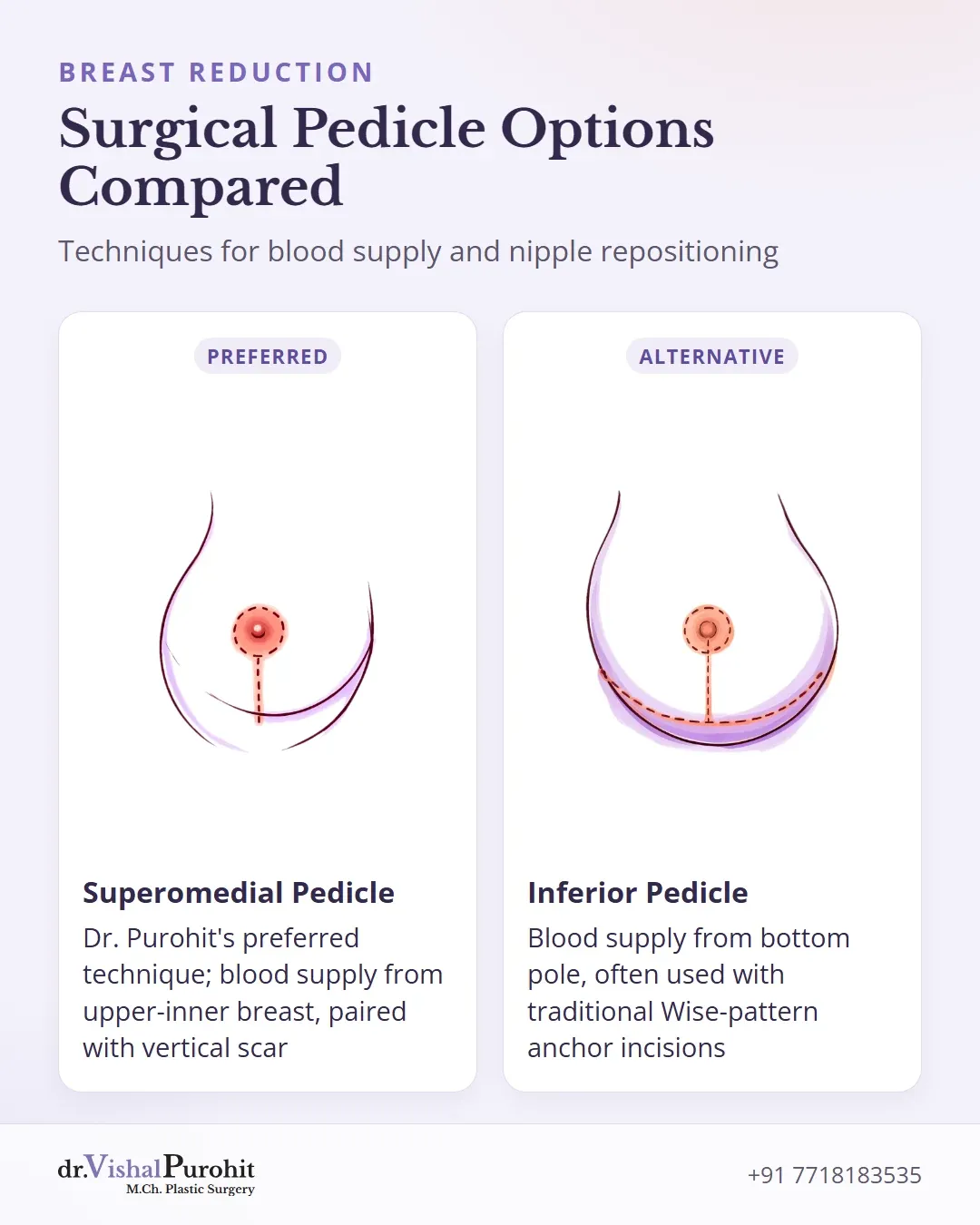
To preserve natural breast function, the nipple-areola complex is not detached as a free graft; instead, it remains attached to a vascular bridge of living tissue known as a pedicle. Free nipple grafting is offered for very large breasts.
In Dr. Purohit’s practice, this pedicled transposition is designed to preserve the fourth lateral intercostal cutaneous nerve branch to support nipple sensation.
- Superomedial pedicle: Dr. Vishal Purohit’s preferred pedicle. Uses blood supply from the upper and inner aspects of the breast. It provides effective tissue mobility [8] and can be paired with a vertical scar pattern, which results in a shorter incision and increased breast projection [9, 10].
- Inferior pedicle: Bases the tissue attachment along the bottom pole of the breast. It is also used by Dr. Purohit, and is frequently utilized in traditional Wise-pattern incisions, particularly when substantial tissue volume needs repositioning [9, 10, 11].
Comparative clinical evaluations show no significant difference in overall complication rates between the superomedial pedicle and inferior pedicle techniques across varied breast sizes [10].
Tissue Resection, Reshaping, and Closure
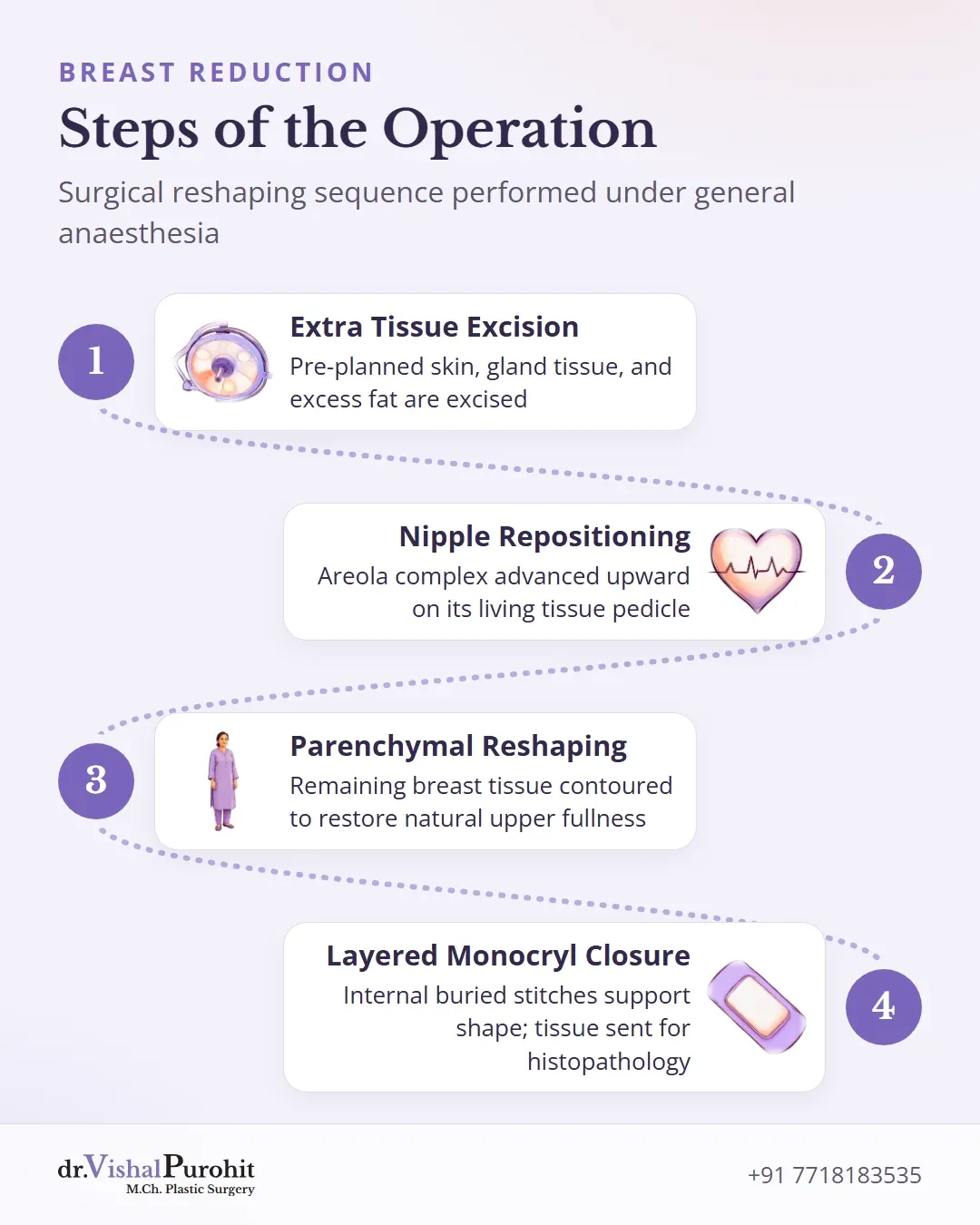
Once surgical plans are initiated:
- Excision of extra tissue: Pre-planned amounts of extra skin, underlying glandular tissue, and excess fat are removed [1]. In Dr. Purohit’s practice, typically 400 to 1,500 grams are removed per breast.
- Nipple repositioning: The nipple-areola complex, remaining supported on its nourished dermoglandular pedicle, is carefully advanced upward into a higher, anatomical position on the breast mound [8, 12]. In Dr. Purohit’s practice, the new nipple position is placed about 19 to 22 cm from the sternal notch, and the areola is resized to about 38 to 42 mm in diameter.
- Parenchymal reshaping: Dr. Purohit reshapes the remaining breast tissue to restore upper fullness and a balanced contour [1].
- Layered closure: The deeper parenchymal structures and skin margins are aligned and closed in layers with subcutaneous (buried) stitches using internal Monocryl sutures to support the new shape [1]. Skin glue (Dermabond) and waterproof taping are not used, because small micro-abscesses can go unnoticed under them and spoil the stitch line.
All removed breast tissue is always sent for histopathology, and the result is given to the patient as a printed report.
Drains, Dressings and the Recovery Room
Surgical Drains and Dressings
In reduction mammaplasty, closed suction drainage has historically been used to reduce complications such as haematoma, seroma, wound-healing issues, and nipple-areola loss [13]. In an informal survey, approximately 80 percent of practitioners reported using drains routinely on every case [13].
Key points
- Surgical drains are traditionally used to prevent fluid collections, though omitting them does not increase complication rates.
- Postoperative protocol includes supportive bra wear, internal sutures, and close drain monitoring until removal.
- Recovery room care prioritises checking nipple circulation, bleeding, pain, and vital signs.
However, studies note that drainage tubes can cause pain, discomfort, anxiety during removal, and additional scars if placed through separate stab incisions [13]. They may also carry a potential increase in postoperative infections and higher care needs after discharge [13].
Research demonstrates that omitting closed suction drainage in reduction mammaplasty is safe. It shows no increase in overall or individual complication rates compared to drained procedures [13].
Published surgical descriptions also report closing the skin around the areola with sutures and applying a dressing shaped like a bra, sometimes with suction drains removed after 24 hours [14].
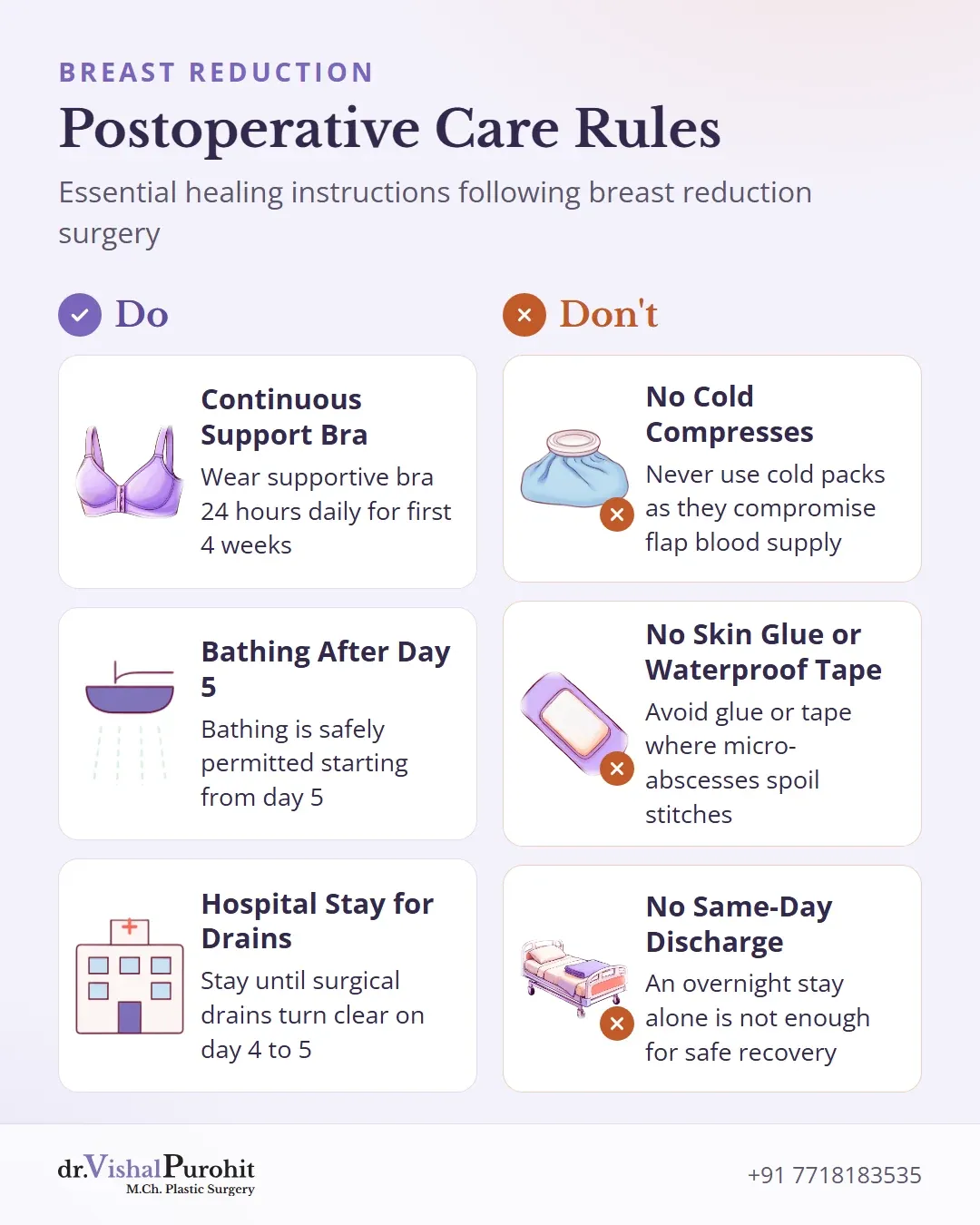
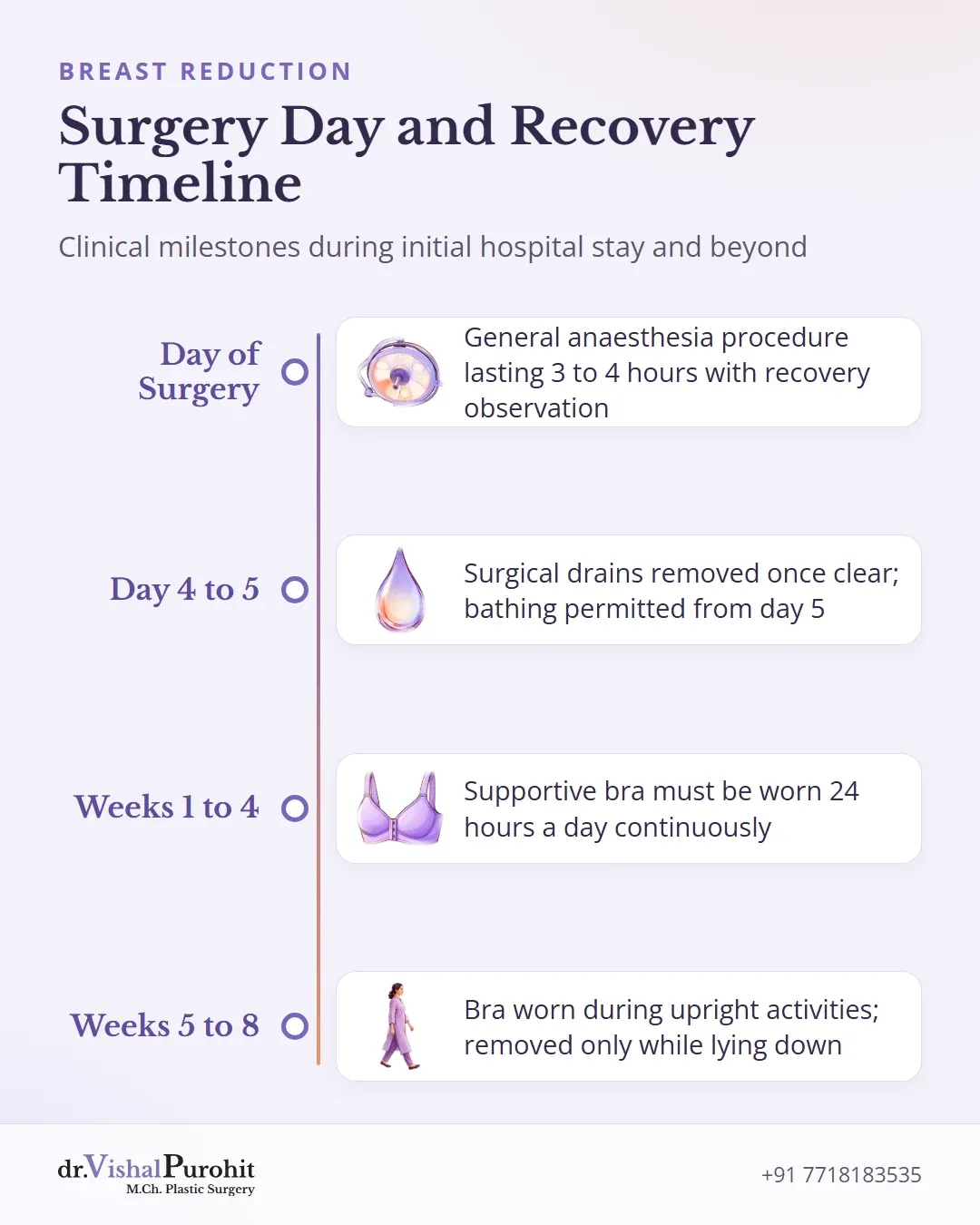
In his practice at Kalpana Aesthetics in Jaipur, Dr. Vishal Purohit places surgical drains and removes them on day 4 to 5 once the drain fluid is clear. He closes the skin in layers with internal, subcutaneous Monocryl sutures.
Skin glue (Dermabond) and waterproof taping are not used, because small micro-abscesses can go unnoticed beneath them and compromise the stitch line. Bathing is permitted from day 5.
Following surgery, a supportive bra must be worn 24 hours a day for 4 weeks. For the subsequent 4 weeks, it may be removed only while lying down and must be worn during any activity where gravity pulls on the breasts. Cold packs or cold compresses are never used, as overapplication can compromise the blood supply to the breast pedicle flap.
Monitoring in the Recovery Room
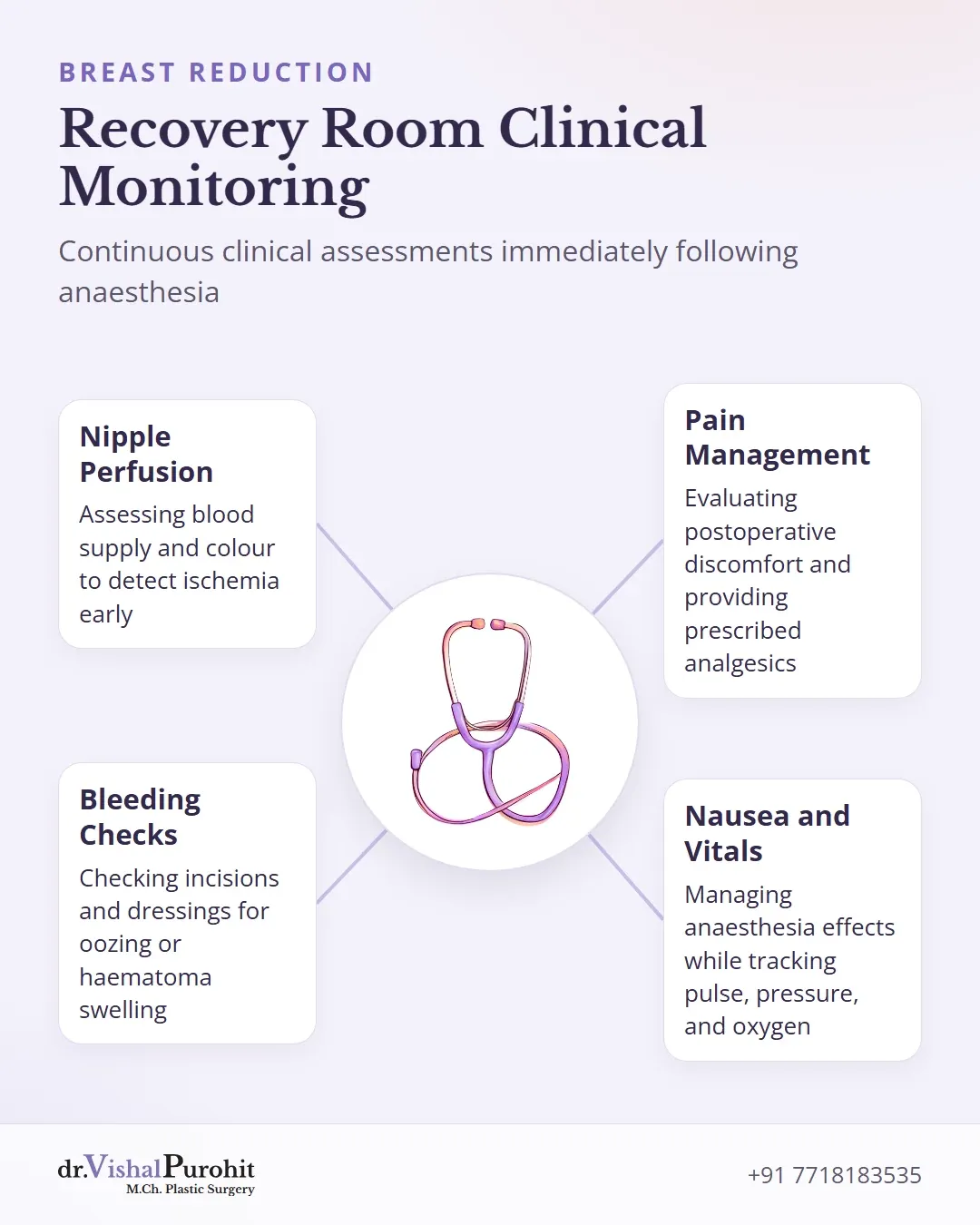
Following surgery under anaesthesia, patients are transferred to the recovery room for close observation by the medical team. Because tissue necrosis remains a potential risk during reduction mammaplasty [15], continuous clinical monitoring focuses on:
- Nipple perfusion and colour: Assessing blood flow and circulation to the areola and skin flaps to detect any early signs of ischemia [15].
- Bleeding and haematoma: Checking incision sites and dressings for active oozing or sudden swelling that may signal a haematoma.
- Pain control: Evaluating postoperative discomfort and administering prescribed analgesics.
- Nausea and vital signs: Managing common post-anaesthesia side effects and monitoring blood pressure, pulse, and oxygen levels.
Dr. Vishal Purohit performs breast reduction exclusively under general anaesthesia, with procedures lasting 3 to 4 hours. Following initial monitoring in the recovery area, an overnight stay alone is not sufficient.
If any warning signs develop after surgery, the instruction is to call the surgical team immediately on +91 7718183535; patients can reach the team day or night.
Going Home or Staying Overnight
In published surgical guidance, breast reduction is frequently treated as a same-day procedure with no requirement for an overnight hospital stay [16].
However, in Dr. Vishal Purohit’s practice, breast reduction is performed under general anaesthesia. An overnight stay alone is not enough; patients are discharged once the surgical drains have been removed.
At Kalpana Aesthetics in Jaipur, surgical procedures directed by Dr. Vishal Purohit are carried out at Jaipur Hospital, which provides 24/7 ICU backup for major plastic surgery procedures. Patients should discuss their specific admission and discharge plan during their surgical consultation.
Planning Your Breast Reduction Surgery Day in Jaipur
Preparing for surgery day involves understanding each stage of care, from initial clinical consent and standing markings to layered closure and recovery monitoring.
In Dr. Vishal Purohit’s practice, breast reduction surgery in Jaipur is always performed under general anaesthesia and takes 3 to 4 hours. You can review how each operative step is managed in the breast reduction procedure FAQs.
This is educational information, not medical advice.