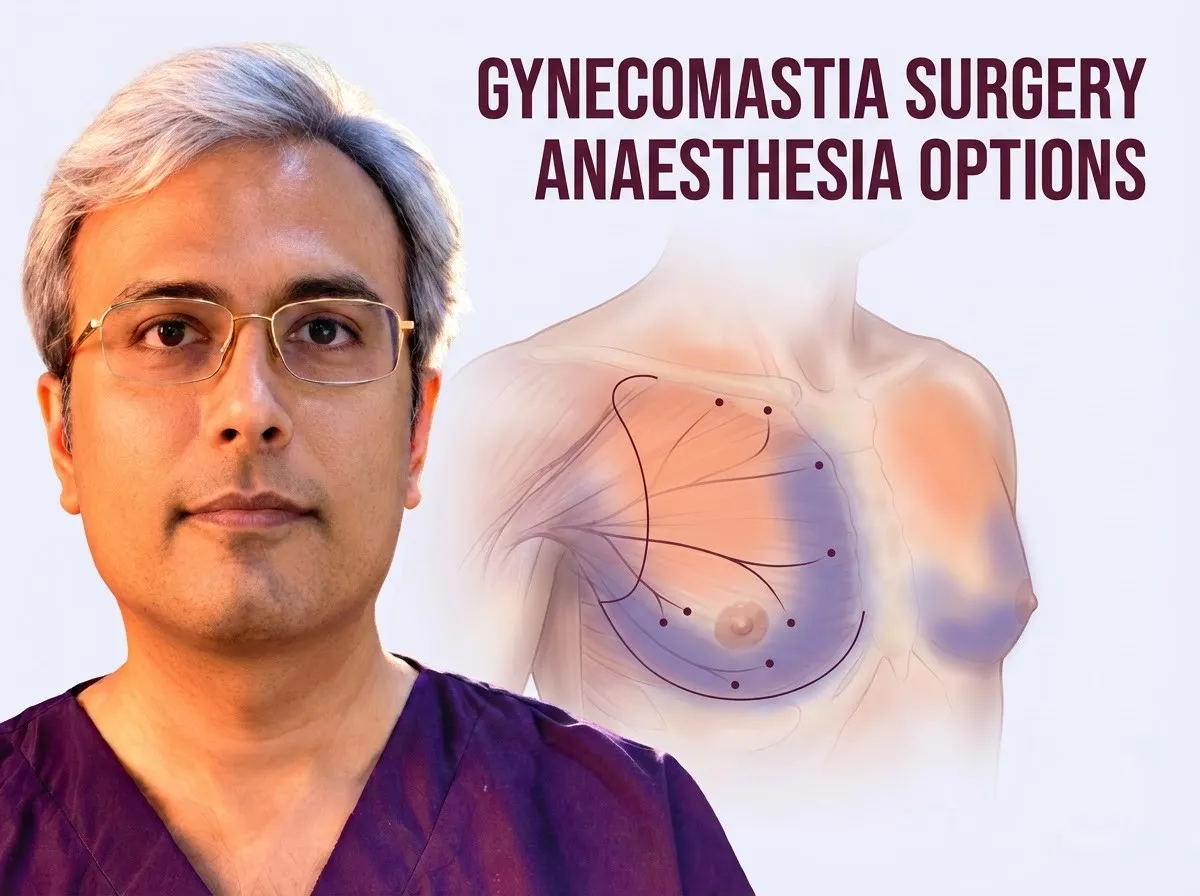
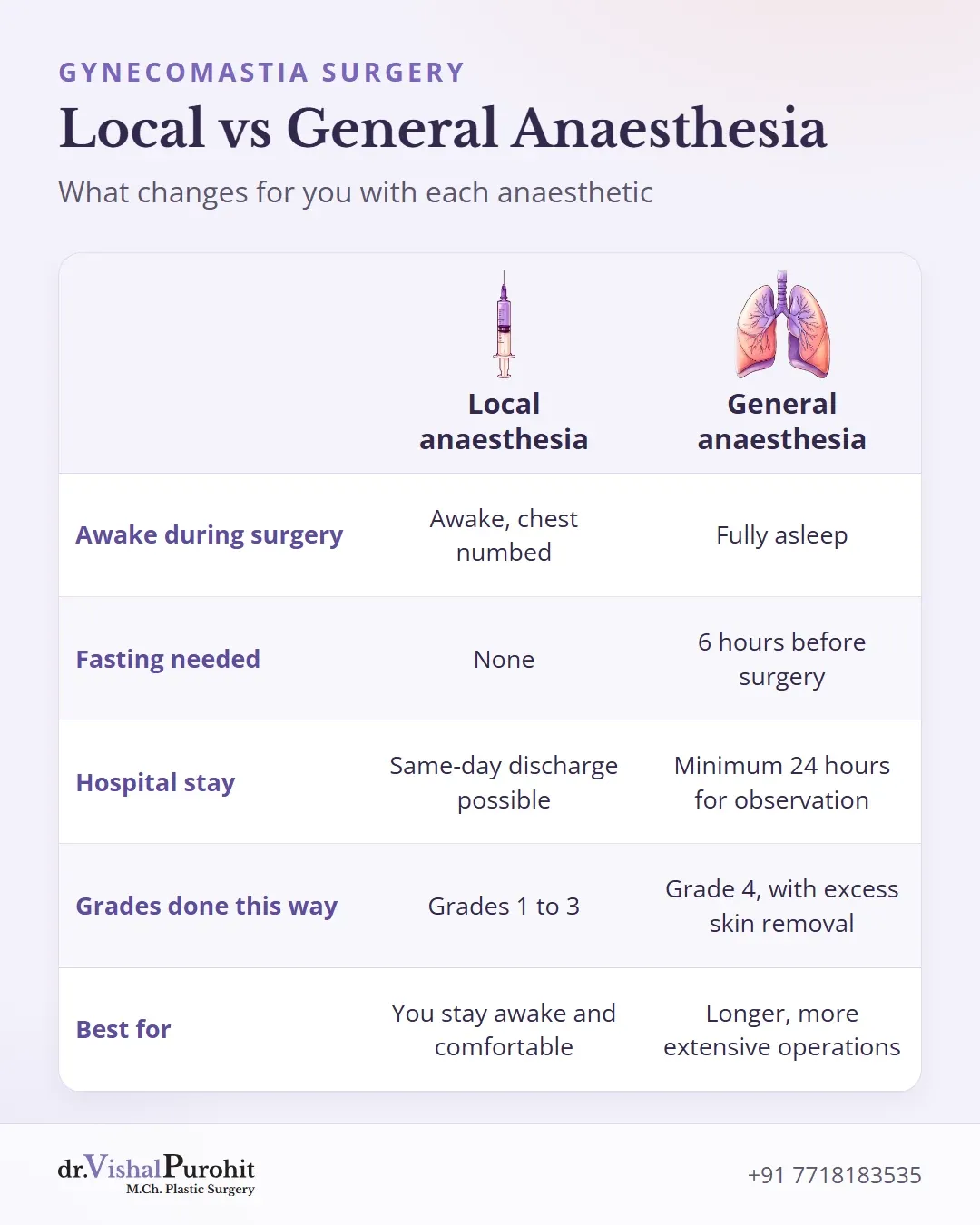
Most men planning gynecomastia surgery ask one question first: will I be awake? The answer depends on the grade of the enlarged gland and the length of the operation. Tumescent local anaesthesia numbs the chest while the patient stays awake, whereas general anaesthesia means the patient is fully asleep and lets the team work longer without fatigue, which suits more extensive operations.
Before surgery, checks for anaesthesia fitness, fasting rules and medicines decide how the day runs. The Preparing for Gynecomastia Surgery: Eligibility, Tests & Consultation guide explains how eligibility is assessed before a date is fixed.

Local and General Anaesthesia Explained
Tumescent Local Anaesthesia
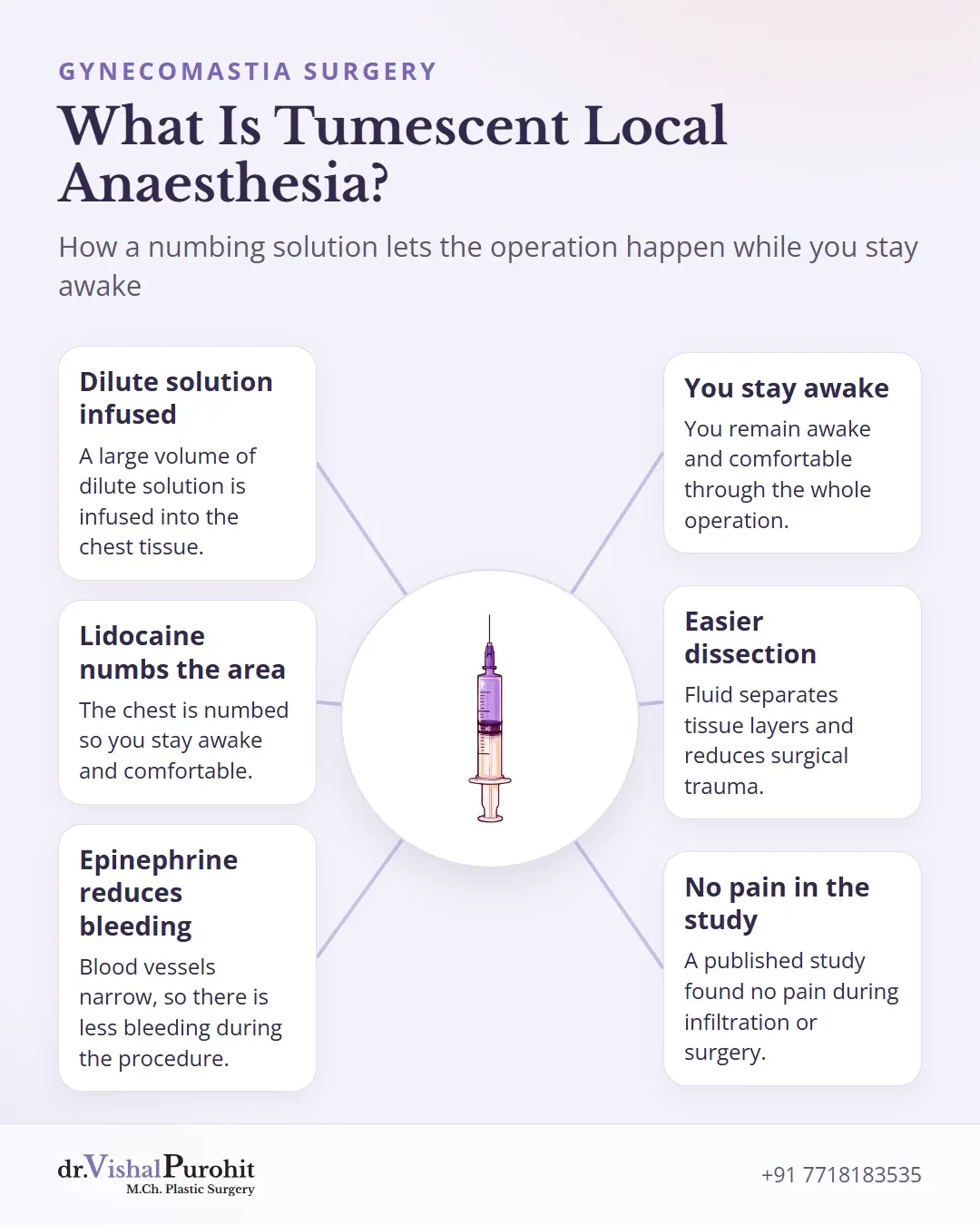
Tumescent local anaesthesia (TLA) involves infusing a large volume of dilute solution — typically containing lidocaine and epinephrine — into the subcutaneous tissue of the chest [1]. The epinephrine causes blood vessels to narrow, which reduces bleeding during the procedure, while the lidocaine numbs the area so the patient remains awake and comfortable throughout [1]. In a published study on gynecomastia correction under TLA, patients reported no pain or discomfort during infiltration or surgery [1].
Key points
- TLA numbs the chest with a dilute lidocaine and epinephrine solution while you stay awake and comfortable.
- The epinephrine narrows blood vessels, which reduces bleeding during the procedure.
- General anaesthesia keeps you fully asleep and suits longer, more extensive operations.
TLA also aids the surgery itself: the fluid separates tissue layers, making precise dissection easier and reducing surgical trauma [1].
General Anaesthesia
Under general anaesthesia the patient is fully asleep and feels nothing during the procedure. It allows the surgical team to work for longer without the patient experiencing fatigue or discomfort, which is why it is better suited to more extensive operations.
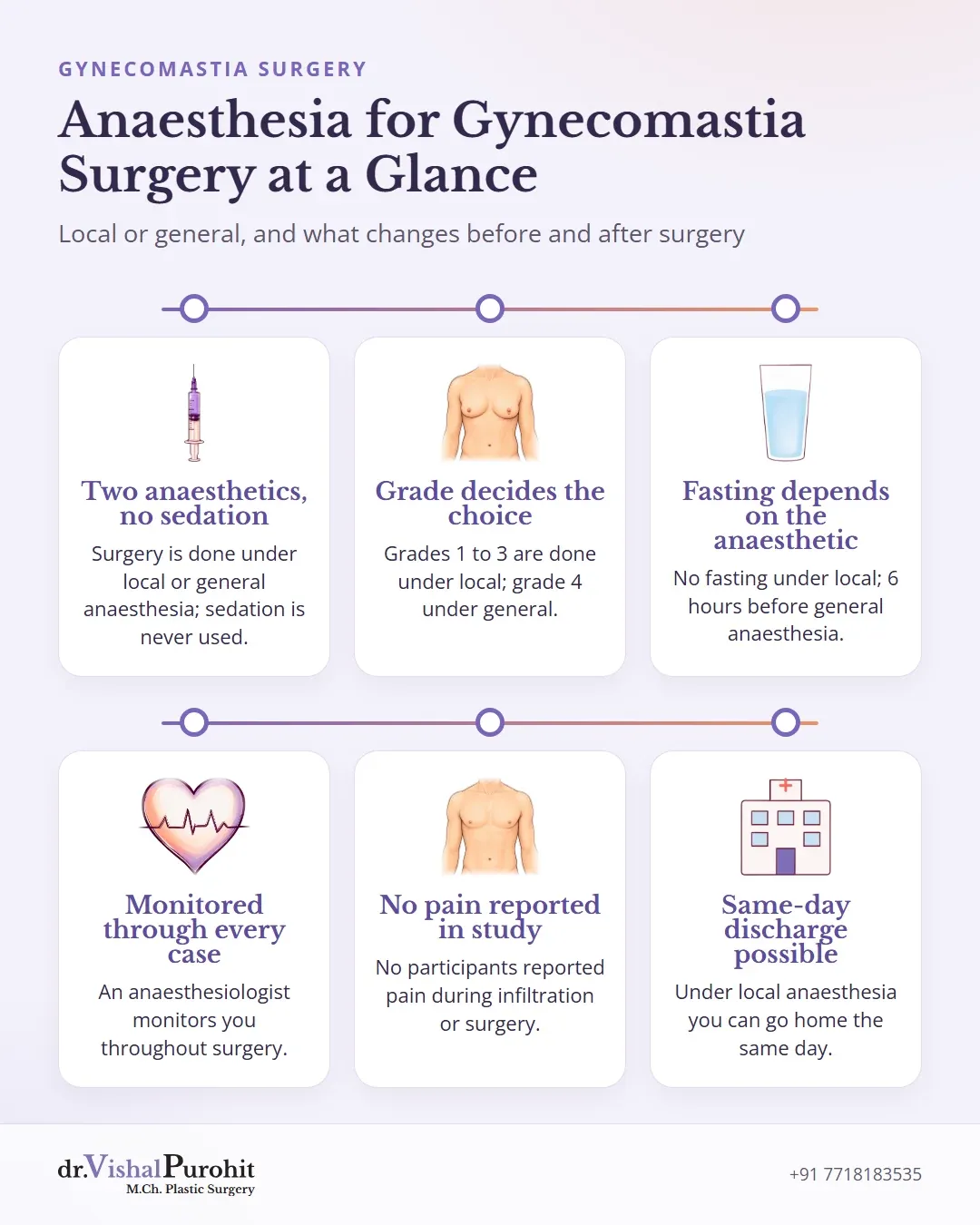
In Jaipur, gynecomastia surgery is done under either local or general anaesthesia; sedation is never used.
Which One Is Used, and Why
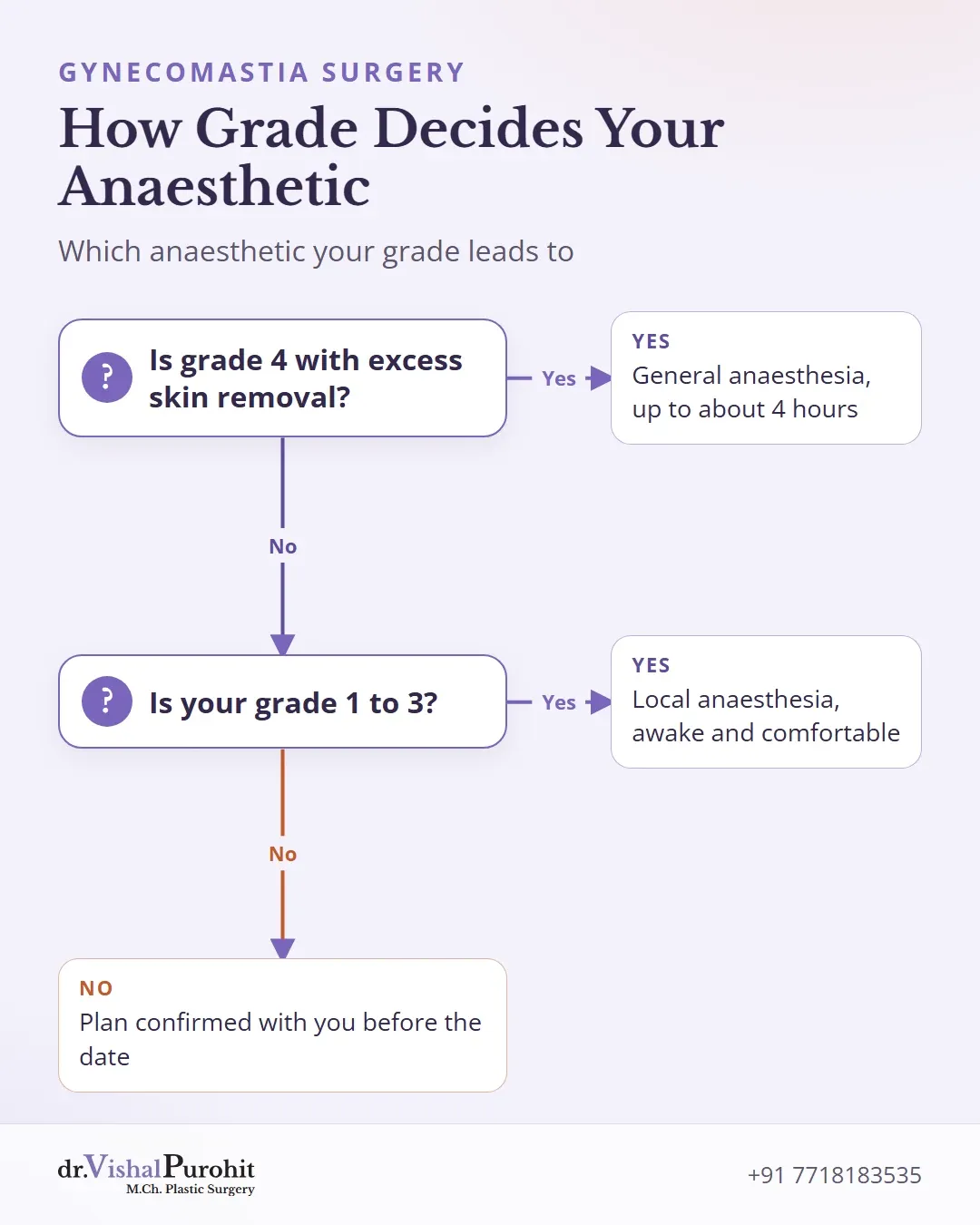
How Grade Decides the Choice
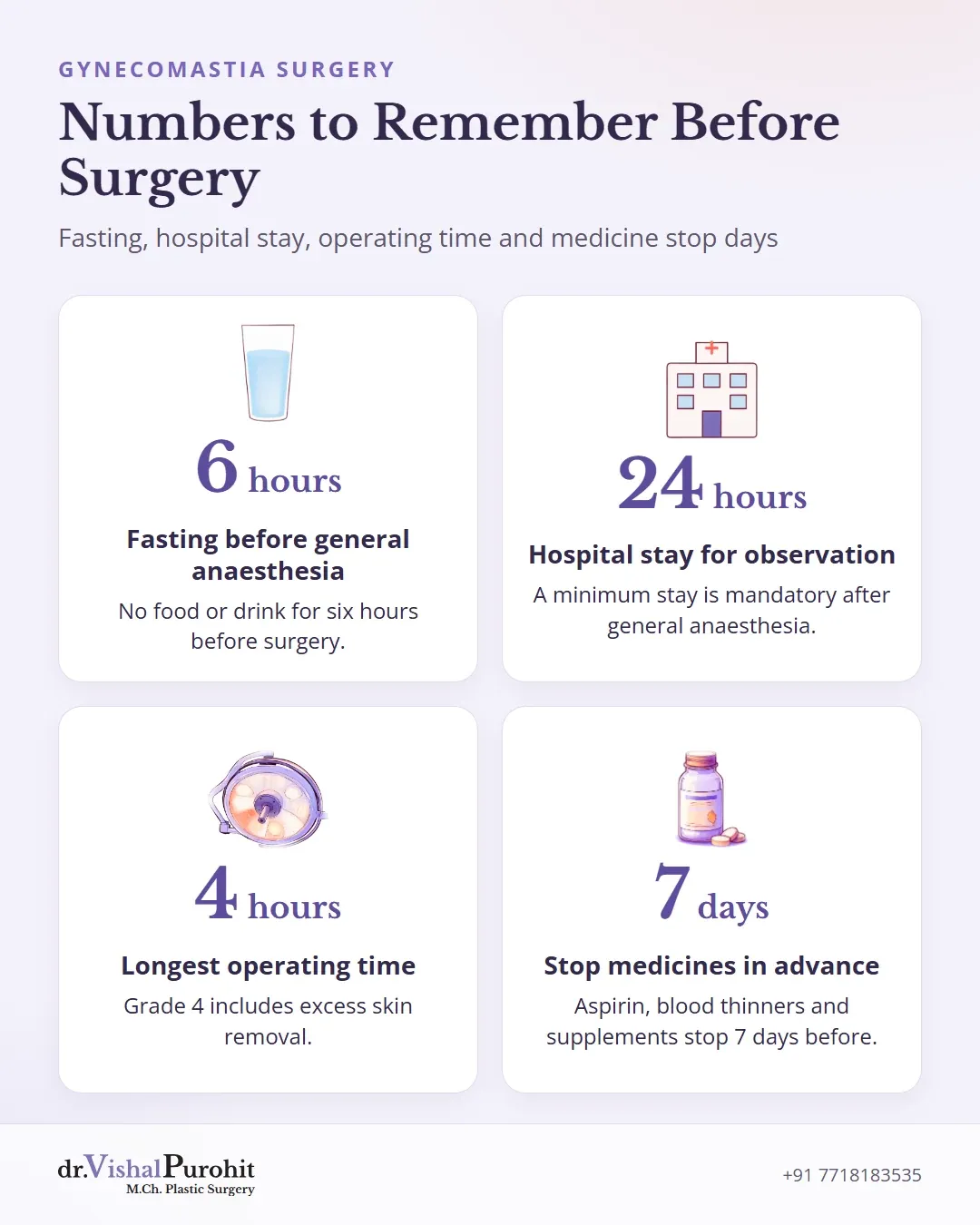
In Jaipur, Dr. Vishal Purohit performs grades 1 to 3 gynecomastia under local anaesthesia. Grade 4, which involves excess skin removal and a longer operative time of up to about 4 hours, is done under general anaesthesia.
Who Is Eligible
General health must be within tolerable limits for anaesthesia and healing before surgery can be planned, regardless of grade. The eligibility and preparation guide explains the checks before surgery.
Safety and Monitoring
Anaesthesia monitoring in Jaipur
In Jaipur, an anaesthesiologist monitors the patient throughout surgery under both local and general anaesthesia. This applies to every case, regardless of grade or technique.
Pre-operative preparation
Before surgery, Dr. Vishal Purohit requires the following tests:
- Complete blood count (CBC)
- Renal function tests (RFT)
- Other routine tests as required for anaesthesia
Fasting requirements differ by anaesthesia type:
| Anaesthesia | Fasting required |
|---|---|
| Local anaesthesia | None |
| General anaesthesia | 6 hours before surgery |
Discomfort During and After Surgery
During the Procedure
When gynecomastia surgery is performed under local anaesthesia, the infiltration of the anaesthetic solution numbs the tissue before any surgical work begins. In a published study of this technique in gynecomastia patients, none of the participants reported pain or discomfort during the preoperative infiltration or the surgical procedure itself [1]. Patients who find the experience stressful may find the procedure harder to tolerate, even when pain is controlled [1].
In the First Days After Surgery
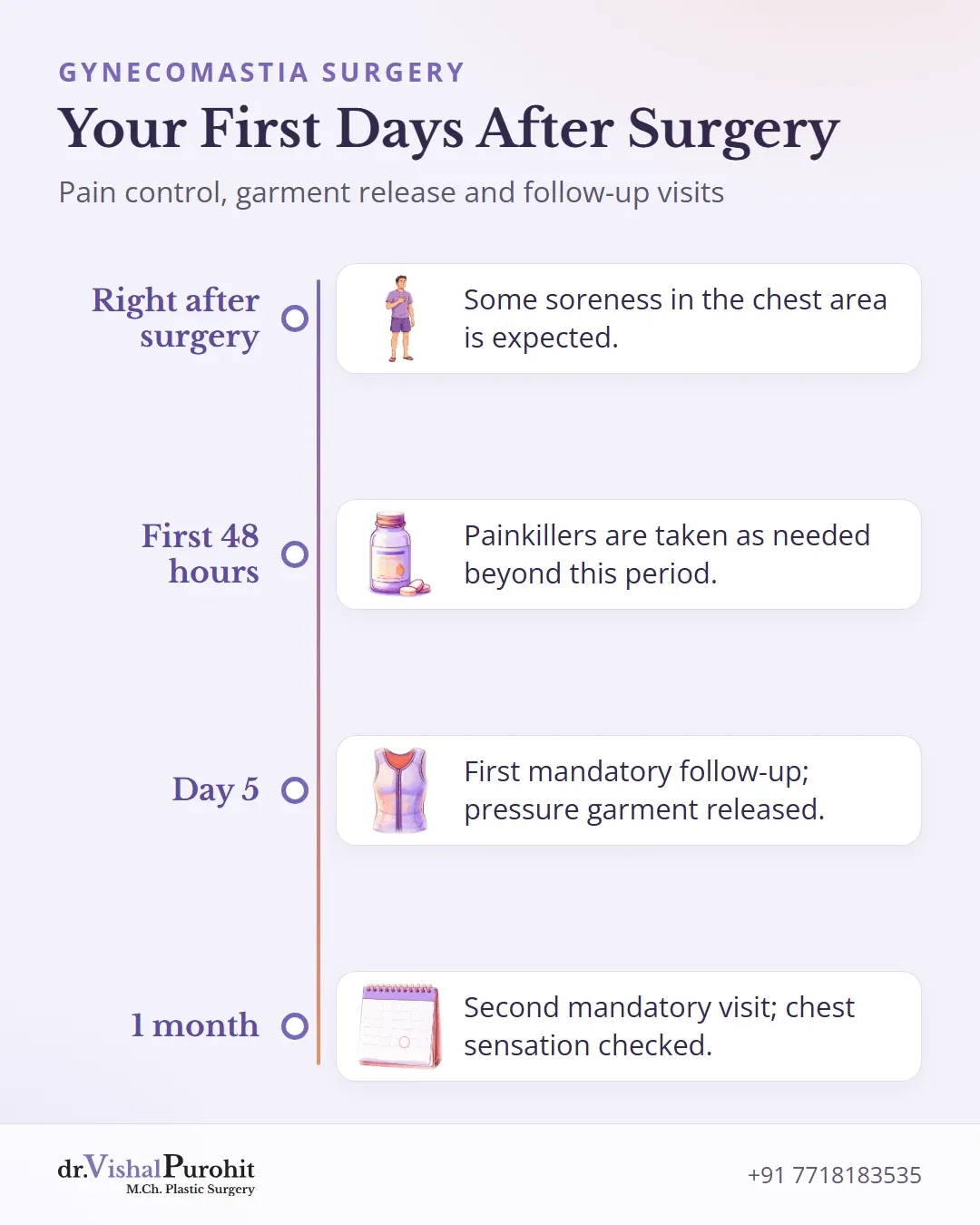
Some soreness in the chest area is expected in the period immediately after surgery. In Dr. Vishal Purohit’s Jaipur practice, painkillers are taken as needed beyond the first 48 hours. Numbness over the chest usually lasts only a few days, though in some patients sensation takes a little longer to return.
Dr. Purohit’s note: Dr. Purohit checks sensation at the day-5 and 1-month follow-up visits.
Pain that increases instead of settling is one of the warning signs listed in the recovery timeline, and it means an immediate return to the clinic.
Going Home and Hospital Stay
Under Local Anaesthesia
In Jaipur, same-day discharge is possible after surgery under local anaesthesia. Patients travelling from outside Jaipur may choose to stay overnight, and should plan to stay in Jaipur for 1 day.
Under General Anaesthesia
A minimum 24-hour hospital stay for observation is mandatory after general anaesthesia.
What to Expect on Discharge Day
- Walking and moving about is encouraged from the start; bed rest is never advised.
- The first mandatory follow-up visit is on day 5, when the pressure garment is released and the dressing is reviewed or changed if needed.
- A second mandatory visit is at 1 month.
- 24×7 support is available to all patients after surgery.
Questions for Your Anaesthetist
Before surgery, a brief discussion with the anaesthesiologist helps the patient prepare and set realistic expectations.
Health and Medicines
-
Mention all existing health conditions, especially heart, lung, kidney or blood-pressure problems.
-
List every medicine, supplement and herbal product being taken.
-
Confirm that aspirin, blood thinners and supplements have been stopped 7 days before the procedure.
-
Ask what you will feel during the operation and how long you will stay before going home.
Planning Anaesthesia With Dr. Vishal Purohit in Jaipur
Anyone weighing anaesthesia for breast gland removal can start with a consultation with Dr. Vishal Purohit in Jaipur, who grades the condition and plans the anaesthetic accordingly. The gynecomastia surgery in Jaipur page sets out the technique, grades and hospital stay in detail. The gynecomastia FAQs answer the questions patients most often ask before surgery. Questions about anaesthesia, fasting and recovery are welcome at that visit.
This is educational information, not medical advice.