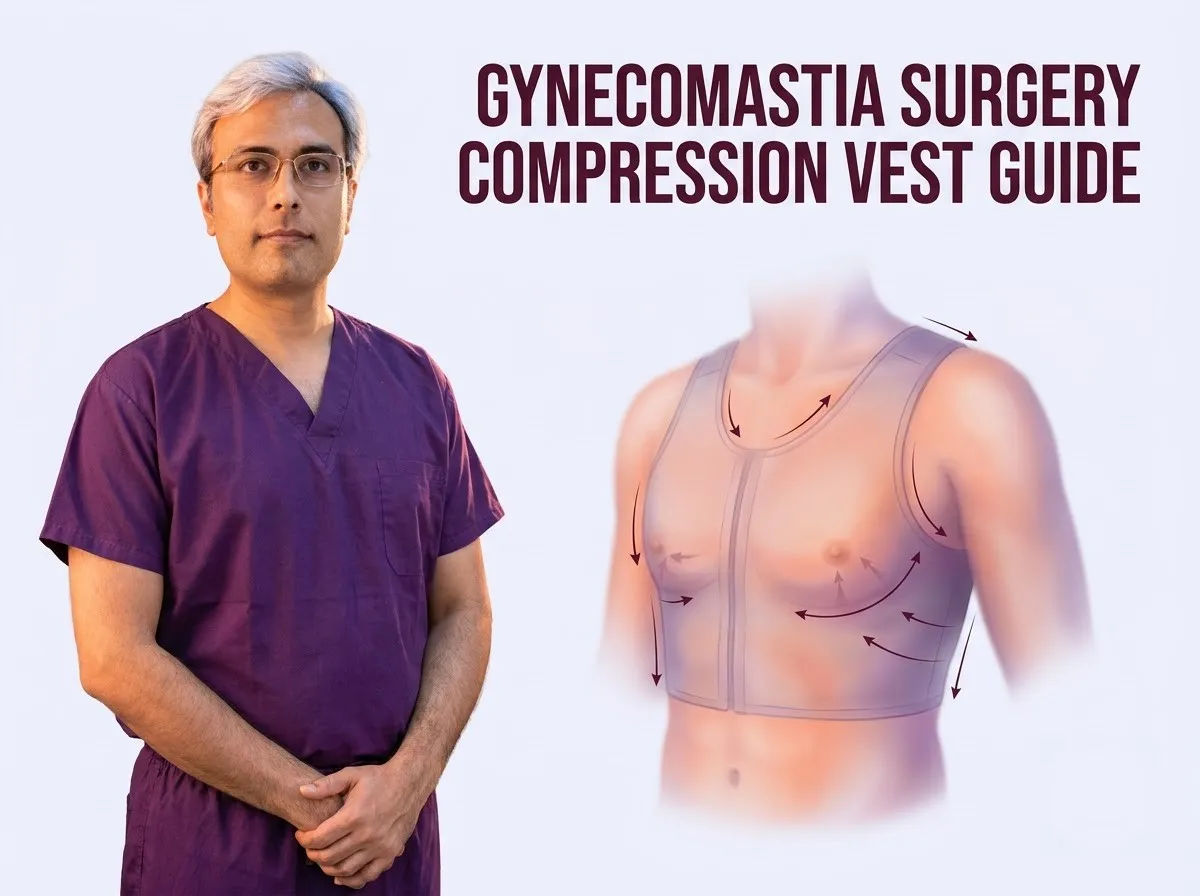
A gynecomastia compression vest is part of the routine after surgery, but it raises practical questions: how tight it should feel, when it can come off, and what to do when it rubs or rolls up. The general risks of the operation are covered separately in Is gynecomastia surgery safe?.
This page explains what the garment can and cannot do, how long it is normally worn, and how to recognise a poor fit. It also covers showering, short breaks and the signs that need a call to the clinic straight away.
What the Vest Does, and What It Cannot Do
How compression helps after surgery
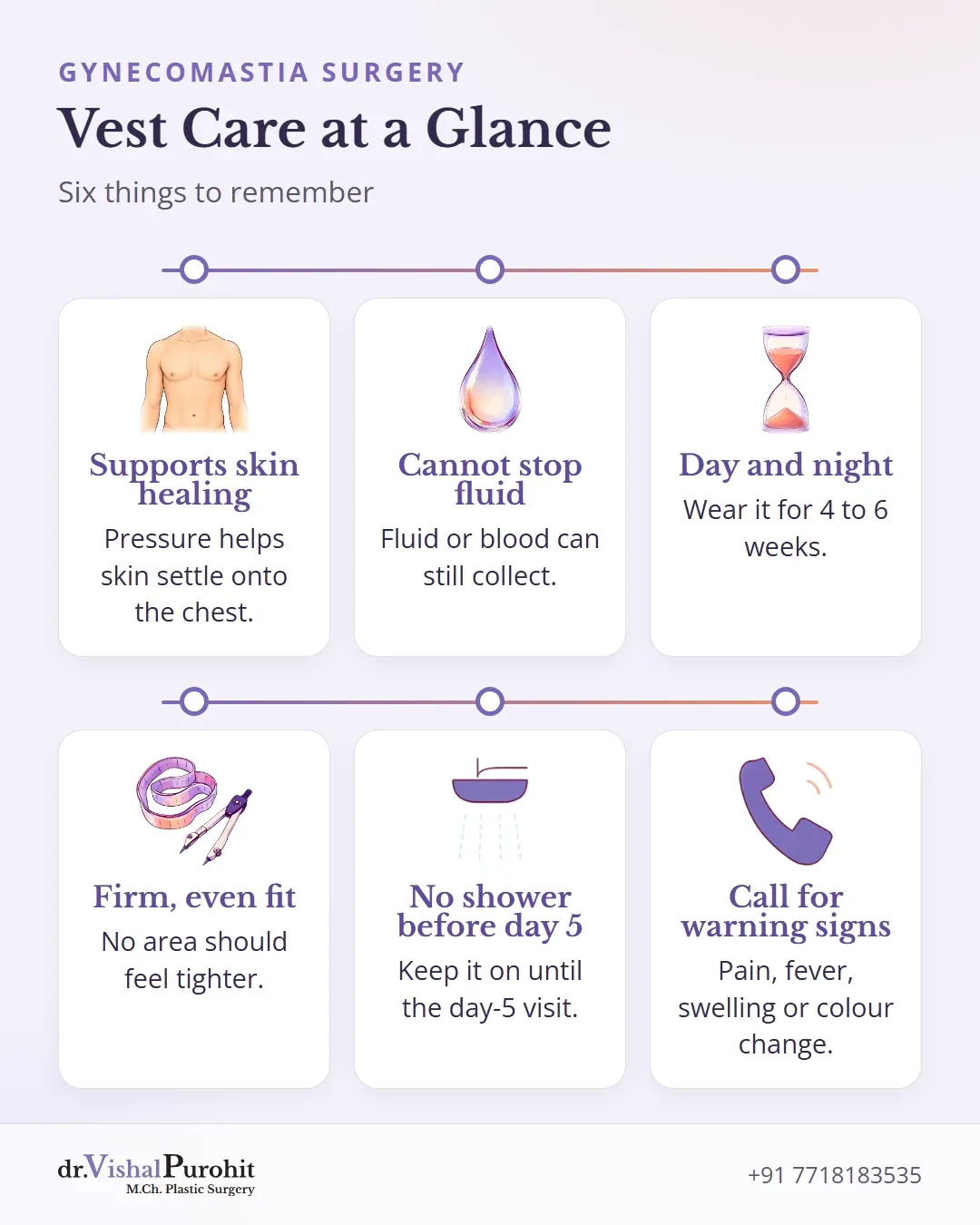
After gynecomastia surgery, the skin needs time to re-drape over the newly contoured chest. The pressure from the garment supports the skin as it adheres to the underlying tissue.
A supportive garment around the chest also works to reduce swelling in the early healing period [1].
Limits of compression
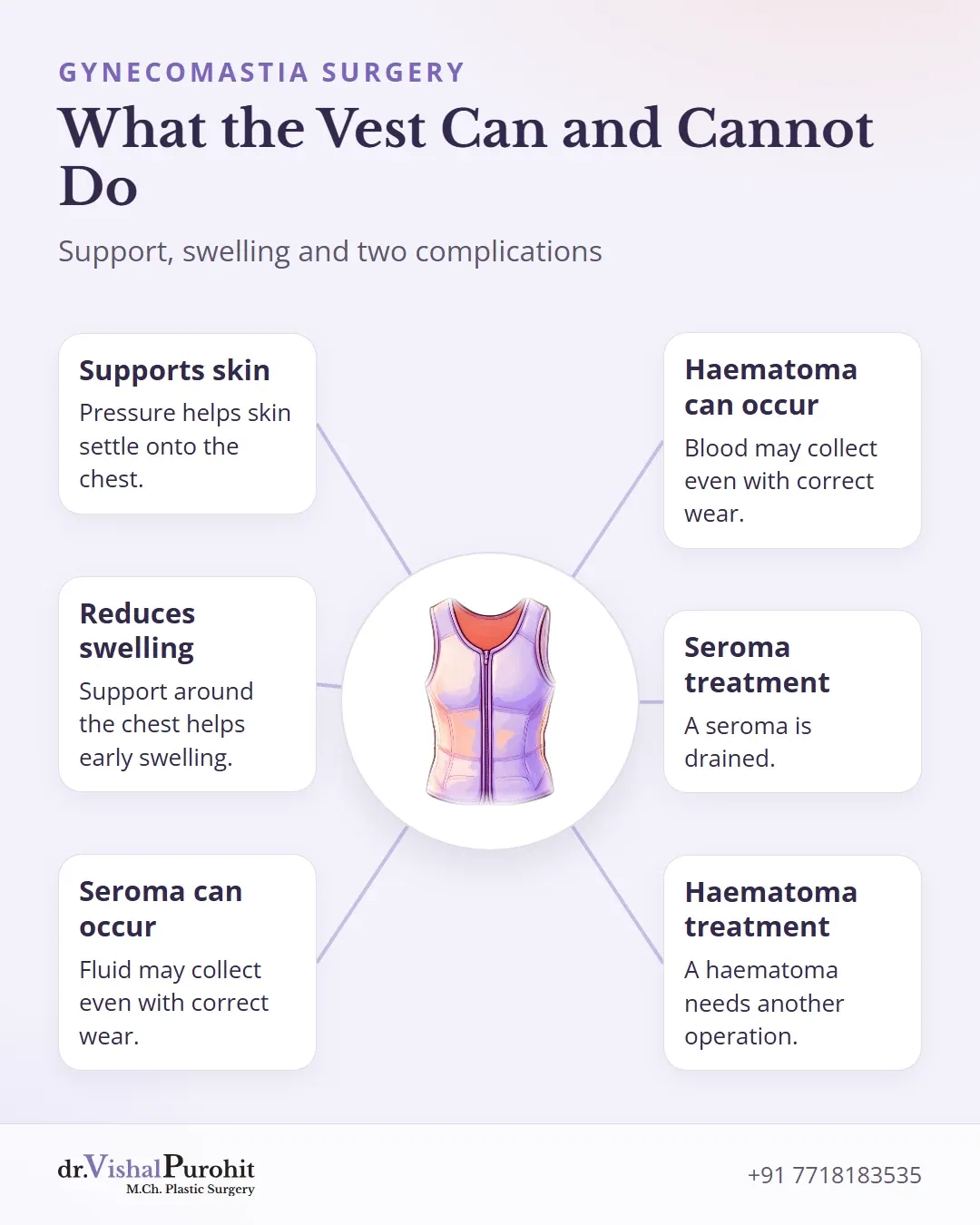
Compression assists healing; it does not eliminate every possible complication. Fluid collection (seroma) and blood collection (haematoma) can still occur after gynecomastia surgery even when the vest is worn correctly. When a seroma develops, it is treated by aspiration. A haematoma requires a return to the operating theatre.
How Long the Vest Is Worn
In Jaipur, Dr. Vishal Purohit uses a custom medical-grade compression vest.
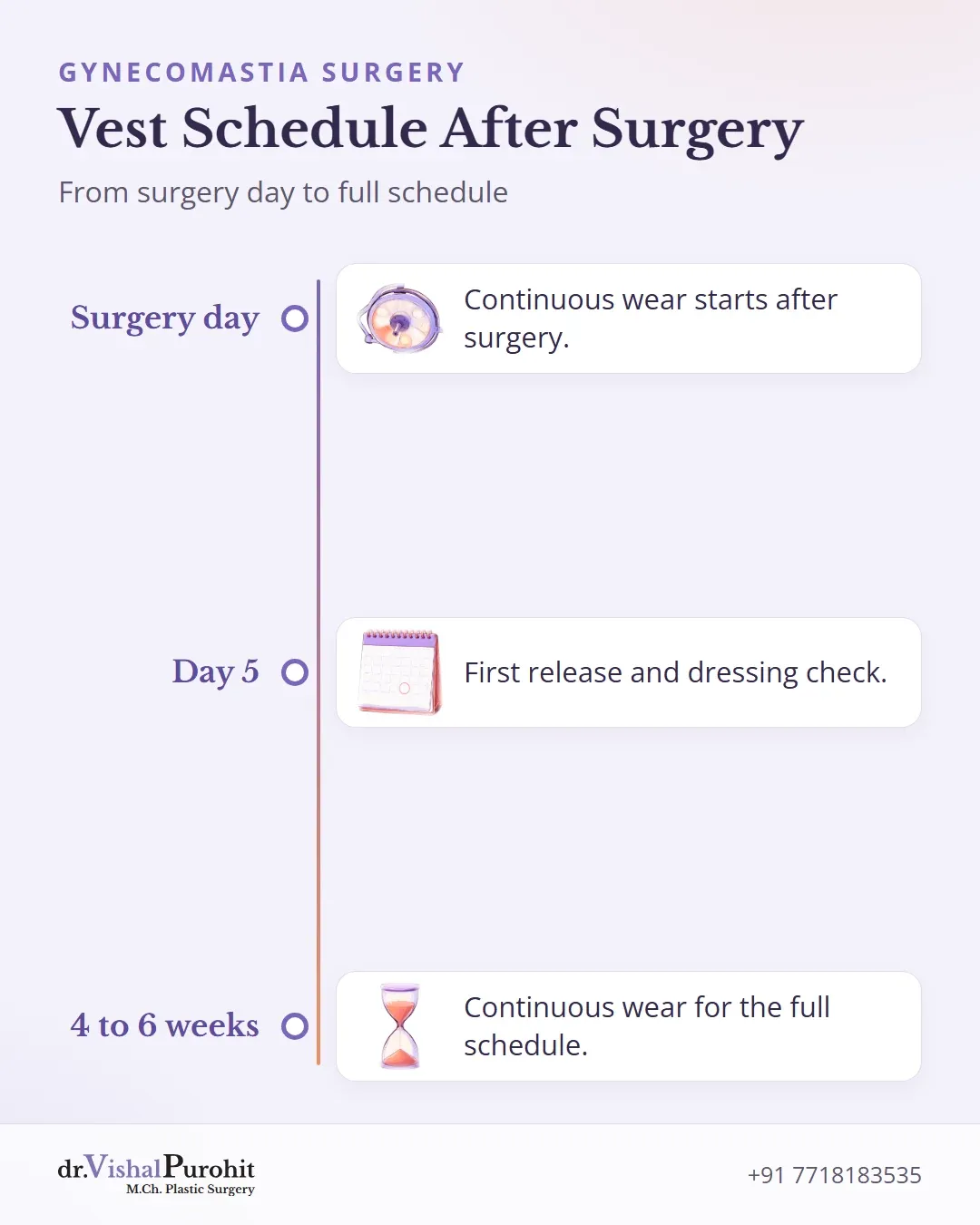
Dr. Purohit’s note: In Dr. Purohit’s practice, the vest is worn continuously, day and night, for 4 to 6 weeks after gynecomastia surgery.
The Day-5 Milestone
The first scheduled release of the vest happens at the mandatory clinic visit on day 5. At that appointment, the pressure garment is released and the dressing is removed or changed if required.
Why Published Durations Vary
Patients reading online will find different compression timelines. Surgeons set them for their own technique, and how much skin has to redrape differs from one operation to another, so the schedule given by your own surgical team is the one to follow.
Fit and Comfort
What a well-fitting vest feels like
A correctly fitted compression vest should feel firm and even across the entire chest. Pressure should be distributed uniformly, with no area feeling tighter than another. There should be no deep folds of fabric pressing into the skin and no digging edges at the armholes, underarm seams, or lower hem. The garment should stay flat against the chest when the wearer stands, sits, or moves gently.
Key points
- Pressure should feel firm and evenly spread over the whole chest.
- No area should feel tighter, fold deeply, or dig in at the edges.
- The vest should stay flat whether you stand, sit, or move gently.
Common problems to watch for

- Fabric folding or bunching, particularly under the arms or along the lower edge, can create uneven pressure and mark the healing skin.
- A garment that rides up or shifts may leave areas unsupported.
- Edges that dig into the axilla or upper arm are a sign of poor sizing.
When to seek advice
Change how the vest is worn only on the instruction of the surgical team, and mention any marks, folds or rubbing at the next visit.
Showering, Washing and Breaks
Before the Day-5 Visit
In Jaipur, Dr. Vishal Purohit instructs patients not to remove the compression vest for showering before the first dressing on day 5.
From Day 5 to Day 7
After the first pressure-garment release and dressing on day 5, patients can shower from day 5 to 7. Any further adjustments to how or when the vest is removed during bathing are guided by the team at that visit, not by a fixed universal schedule.
Breaks from the Vest
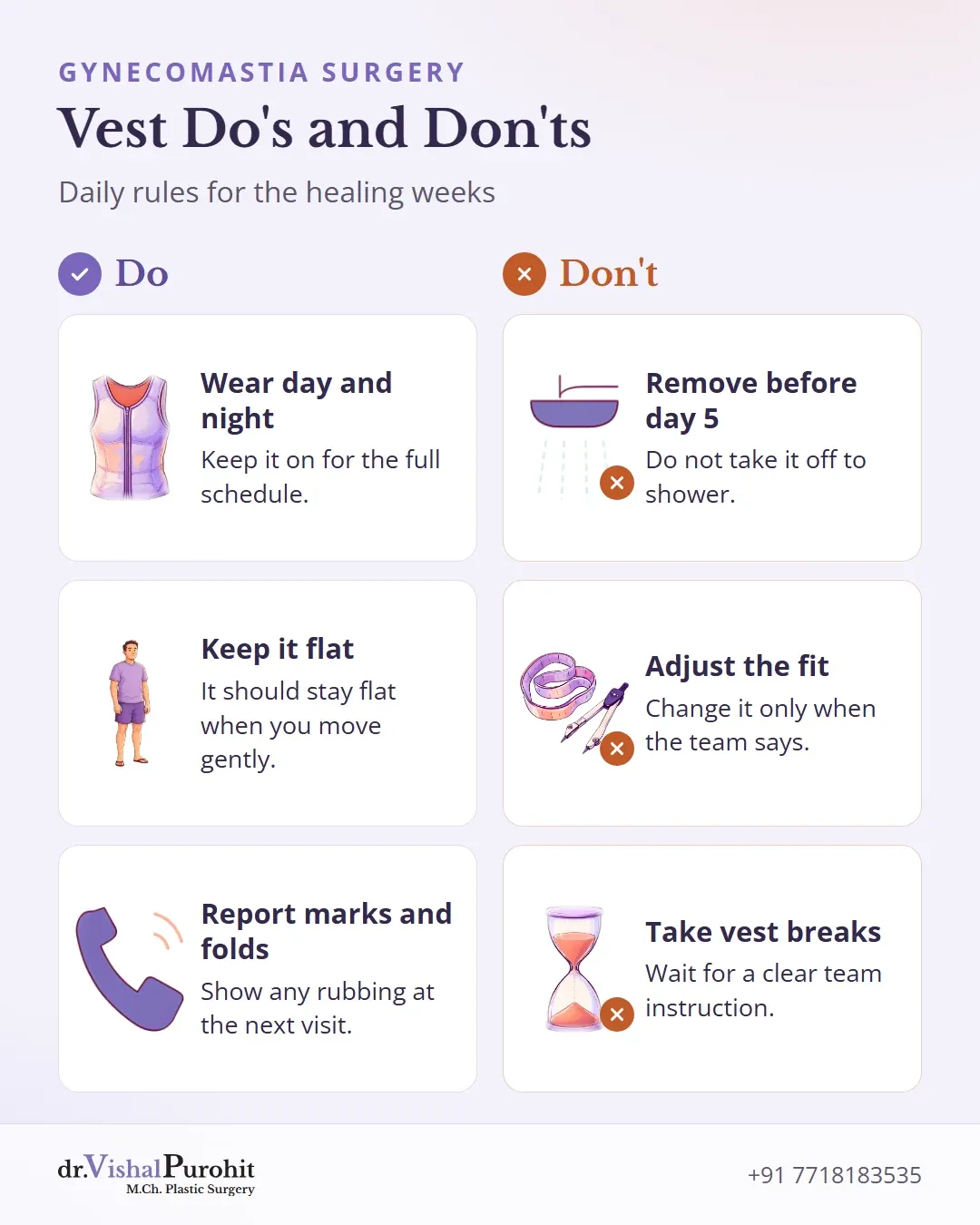
Any break beyond the shower allowance described above is taken only when the clinical team specifically instructs it.
- No universal schedule applies for vest breaks.
- Every patient’s instructions are given individually at the day-5 and follow-up visits.
When to Contact the Surgical Team
Most patients recover without incident between the operation and the day-5 visit, but certain signs mean an immediate return to the clinic rather than waiting.
Signs That Need Immediate Attention
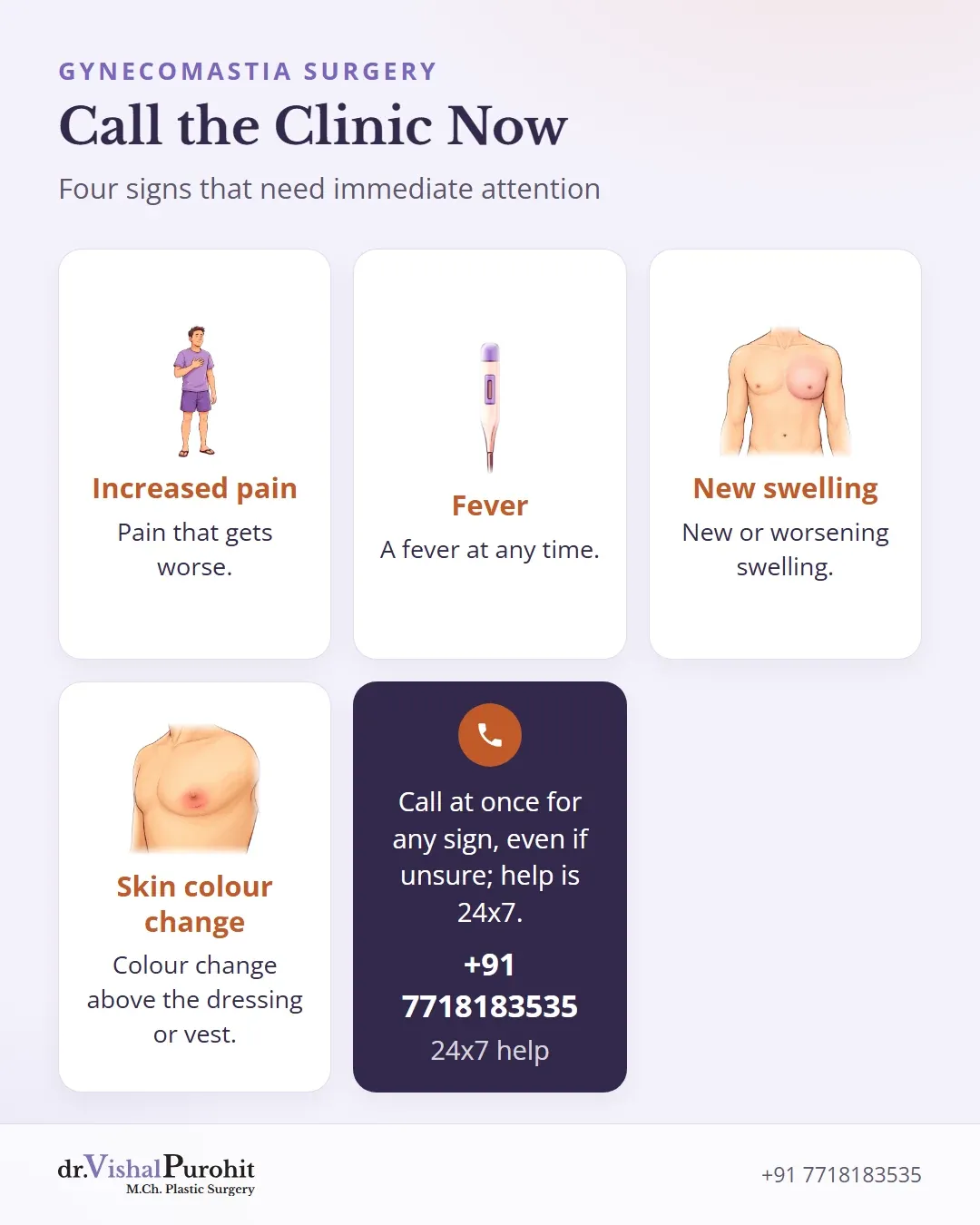
Contact the clinic at once if any of the following appear:
- Increased pain
- Fever
- New or worsening swelling
- Skin discoloration above the dressing or pressure vest
Around-the-Clock Support
Patients do not need to feel uncertain about whether a symptom is serious. Dr. Vishal Purohit’s team offers 24x7 support after surgery. If anything seems abnormal, patients are encouraged to call the clinic at once, even if unsure, because early intervention in a complication is the most important factor in the outcome.
Week by week, the rest of the healing is described in the gynecomastia surgery recovery timeline.
Compression Vest Help in Jaipur
Most vest problems are simple to fix once they are seen. Patients who notice folds, rubbing or new swelling should bring them to a review rather than adjusting the garment alone. Details of the operation and its risks are set out on the page for gynecomastia surgery in Jaipur, and the gynecomastia FAQs answer further questions about garments, dressings and wound care. Dr. Vishal Purohit in Jaipur reviews compression at the day-5 and 1-month visits.
This is educational information, not medical advice.