
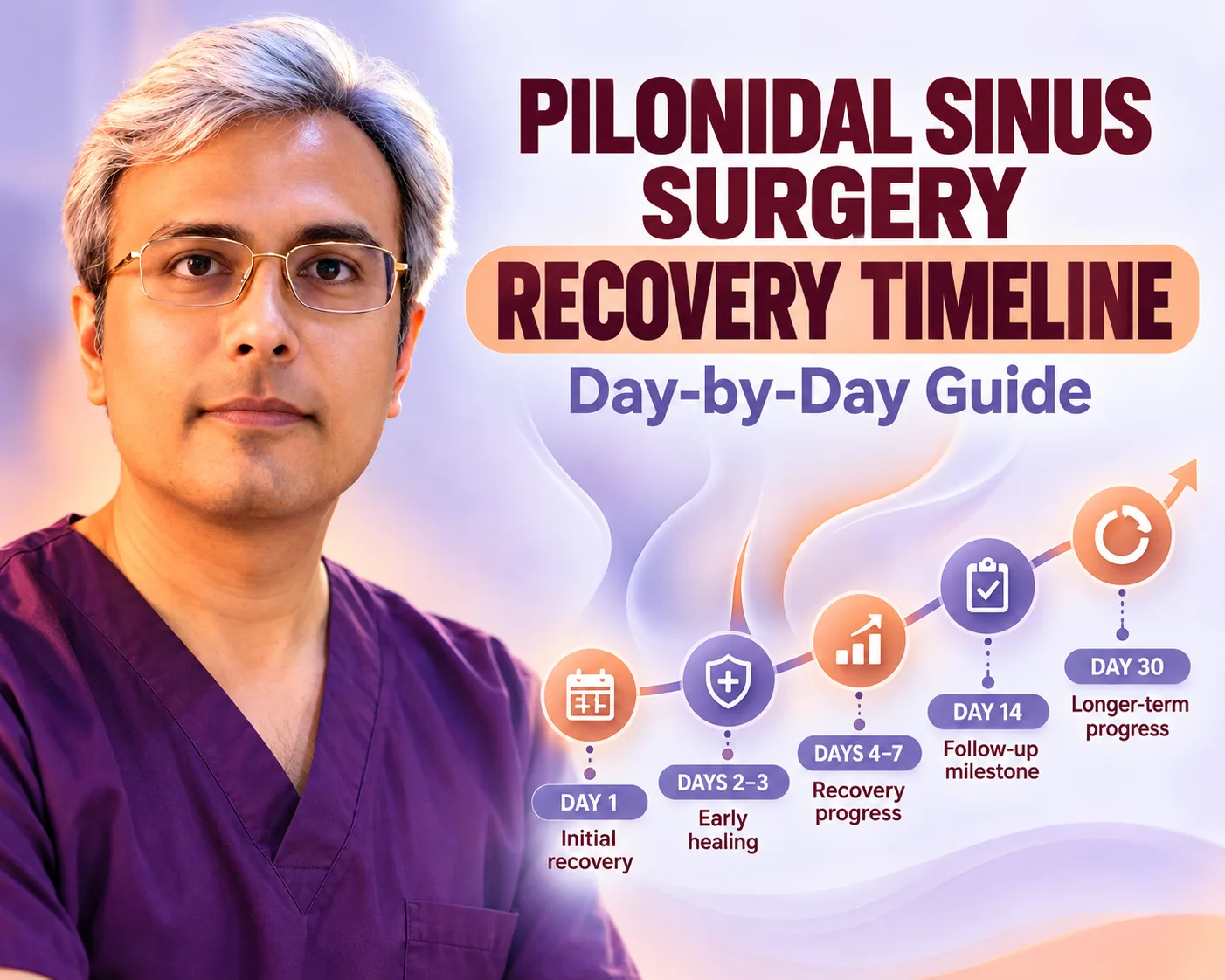
In short
- Week one is drain and dressing, side lying, and short walks.
- Sitting grows in small steps; desk return sits near weeks two to four.
- Running, cycling, gym, and swimming wait till weeks four to six with permission.
Whose timeline this is
This plan is for Limberg or Karydakis flap repair. These are the flap operations done in Jaipur practice. It runs from operation day to week six.
It is written for patients, helpers, students, and staff who plan leave. Small clinic burn or glue paths in papers heal faster at first but repeat more. Open wounds that fill from below take far longer.
Each case shifts by days. Space size, old pus or operations, numbing type, and health all move dates. Dr. Vishal Purohit in Jaipur gives dated personal marks that beat any web chart.
Eat for healing from day one. Protein, fruit, and water build tissue. Fiber plus fluids stop hard stools. Hard pushing strains the fresh flap.
Keep review dates even when pain fades. Looks can fool early. The surgeon checks depth, edges, and drain need. Skipped visits miss silent problems.
Days 1 to 7: rest, walks, and pain care
Days 0 to 2 mean watched rest. Pain control, urine flow, and drain flow are checked. Short aided walks start the same or next day. Pain feels like tight pulling, not sharp tearing.
Useful rules for week one:
- Take drugs on the clock — do not wait for pain spikes.
- Lie on belly or side — pillow between knees, back not straight.
- Keep drain low — bulb flat, tube kink-free; see flap drain care at home.
- Stay dry — sponge baths till allowed.
Days 3 to 5 bring the first wound check. Edges, drain flow, and pads are seen. Removal nears when 24-hour flow stays thin and light below 20 to 30 mL.
By days 6 to 7 most walk well at home and need fewer pills. Side sleep gets easy. Any spreading redness, opening, smelly leak, fever, fast swelling, or blocked drain with new fullness breaks routine — call the same day.
School notes cover week one for most teens. Exams need a cushion and breaks. Inform teachers before surgery day. Light half days bridge the return.
Carry a cushion everywhere till cleared. School chairs and office seats run hard. Short standing breaks each hour help. Log sitting time and pain scores for the next review.
Night sleep improves nightly. Belly or side rest guards the cut. A pillow ring can help sitters. Turn often to spare pressure spots.
Drugs need a taper plan. Strong pills stop first, mild ones later. Drowsy drugs and driving never mix. Constipation meds stop once stools run soft. Ask before adding herbal mixes.
How to sit again safely
Sitting loads a fresh flap. So it returns in steps. Week one means near-zero sitting. Eat and read on belly or side where you can.
- Week 1: only brief sits, 10–15 minutes on a soft cushion, then stand and walk.
- Week 2: once the drain is out, add 10–15 minutes per block every day or two.
- Weeks 3–4: near-normal blocks with cushion and breaks; skip hard marathon sits.
Skip hard wood seats, low stools, cycle rides, and floor cross-legs early. They drag the cut. Cushion type matters — a soft ring or tailbone-cutout pad spreads load, while hard foam helps little. Pain that fades fast on standing is normal. Pain that grows all day, new swelling, or pad stains mean you rose too fast.
Stop sitting and call for
- Leaks turning cloudy or smelly after more sitting
- Edges tearing or swelling after long sits
- Fever or throbbing that grows through the day
Weeks 2 to 6: work, drive, and sport
Work tracks sitting. Desk students and staff often restart light half days in week two. Full days come near weeks three to four if the wound stays closed and dry. Bumpy road drives, lifting, heat, and dust roles need three to four weeks off.
| Task | Usual span | Green flag |
|---|---|---|
| Desk or school | Week 2 light, weeks 3–4 full | Closed dry wound, cushion plus breaks |
| Car drive | Weeks 2–3 short trips | Clean brake test, no wound tug |
| Run, cycle, gym, swim | After weeks 4–6 | Permission plus fully grown skin |
Drive only when you sit well, brake hard without pause, and turn for blind spots. Bikes and long highway runs wait longer than short car hops.
Walk from day one and grow distance. Add light limb moves once closed. Hold squats, deadlifts, contact sport, cycling, running, and pools till clear word — weeks four to six. Pools need a fully closed leak-free wound. Then start cleft hair control — see laser hair control after healing and daily habits that prevent return. This is educational information, not medical advice.
Scar care starts after full closure. Gentle wash and sun cover help. Thick or sore scars need a look. Massage only when the surgeon allows.
Key figures from published series
- Drain removal mark in flap paths: below 20–30 mL per 24 hours of thin light fluid.
- Plastic flap review for tailbone pilonidal disease — reported rate: 38% (endpoint as published).
- Limberg flap patient guides — drain, wash, sitting, and review steps as published.
What Dr. Vishal Purohit does in Jaipur
Dr. Vishal Purohit in Jaipur performs Limberg and Karydakis flap surgery with a set path: drain notes, sitting marks, wound checks, and clear points for work, drive, and sport.
Abscess gets drainage first, flap later. Care ends on a guard plan — washing, sitting care, and timed cleft hair control — not an empty discharge. No phenol, laser, scope, or pick methods are used for tracts.
Leave papers follow wound stage, not fixed days. Desk staff often need two weeks. Field and driving roles need three to four. Each review stamps the next step, so keep every date. Missed visits delay sitting, driving, and sport clearances. The chart only works when the surgeon sees the wound on schedule. Bring the log book, drug list, and old photos each time.