
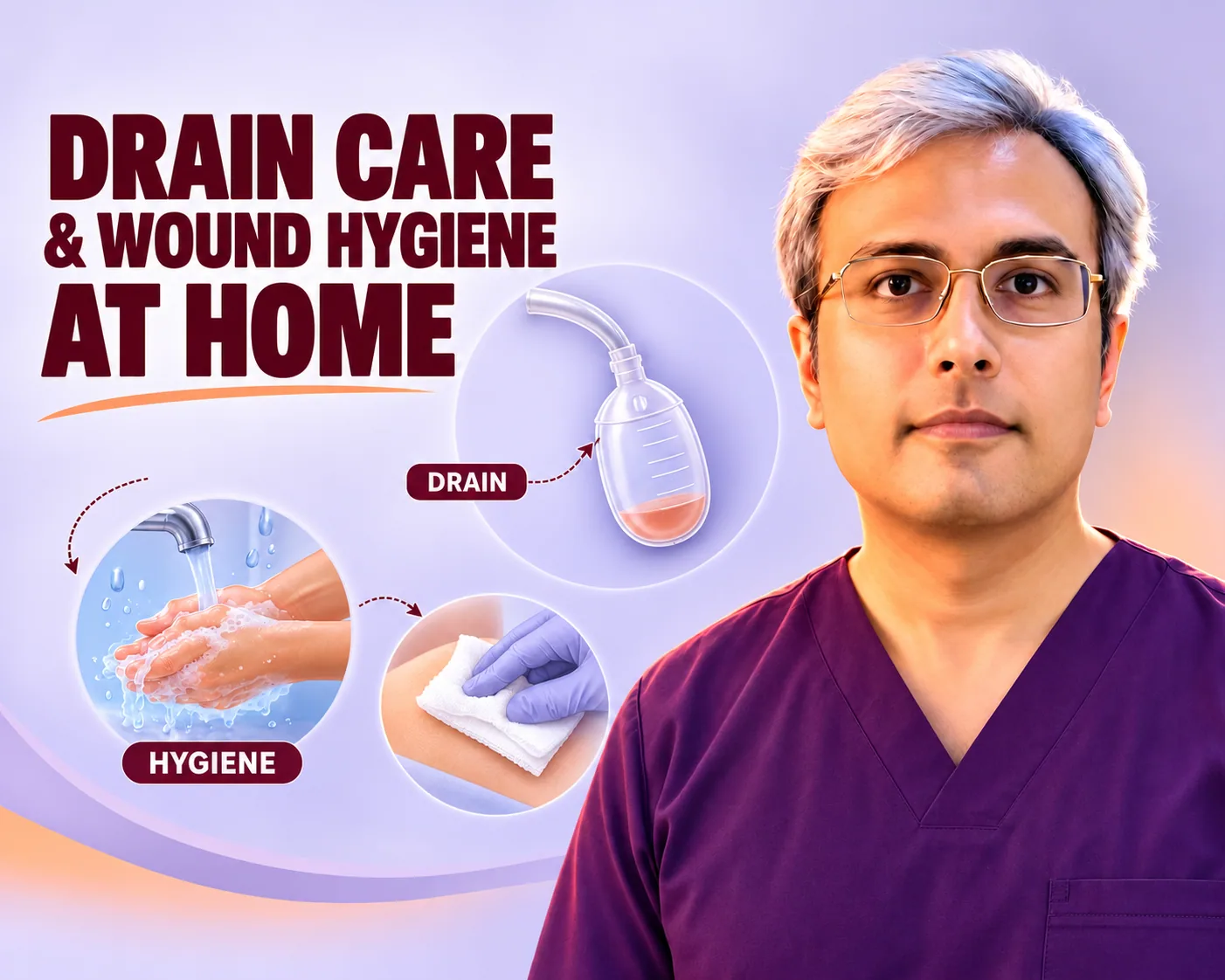
In short
- Keep the bulb flat, the tube kink-free, and log output daily.
- Stay dry until the drain is out; pat the cleft fully dry each time.
- Call the same day for spreading redness, odor, fever, or tense swelling.
Why a drain tube is placed
Flap surgery closes a wide space left by shifted skin and fat. Blood and serum can pool under the flap. A suction drain pulls that fluid out for some days.
This guide is for patients sent home with a drain. It is also for family helpers. It covers tube care, output logs, wash rules, and danger signs.
These notes support the discharge slip, not replace it. If they differ, the discharge slip wins. For sitting and work steps, follow the full surgery recovery timeline.
Keep all papers in one folder. Discharge slip, drug chart, log sheet, and review dates travel together. Bring the folder to every check. Lost sheets delay removal calls.
Daily drain care
Keep the bulb squeezed flat with the cap shut. Keep the tube free of kinks. Tape the tube so its weight does not tug the skin.
Do these steps two to three times daily:
- Strip the tube — hold near the skin, slide down toward the bulb.
- Check the bulb — flat means suction holds; puffed means call.
- Look at entry skin — note redness, leaks, or loose stitch.
- Log the output — empty into a clean cup; write mL and color.
Write the 24-hour total each day. Note the color: bright red, dark red, pink, straw, or cloudy. Removal often comes when flow stays thin and light below 20 to 30 mL a day. This often falls in the first week.
A sudden stop with new swelling is not healing — it is a block. Report it the same day. Never pull, flush, or cut the tube at home. When walking, keep the bulb below wound level.
Sleep on your side or belly. A pillow between knees stops rolling. Pin the bulb to clothing below wound level. A safety pin through the loop works well.
Hard stools strain the wound. Drink water and eat fiber from day one. Ask about a mild stool softener. Do not push hard on the toilet in week one.
Washing and drying rules
Most paths advise sponge baths until the drain is out. Short showers only when allowed. No tub baths, buckets, or ponds — soaking softens edges and brings germs.
When washing is allowed:
- Wash hands before and after each touch.
- Clean outward from the cut with the advised fluid and clean gauze.
- Cover dry with a fresh sterile pad, without tight pull.
- Change early once wet or soiled.
Dry fully each time. The cleft traps dampness and softens healing skin. Pat with clean gauze, let some air reach it, then re-dress. Ask about laser hair removal after healing only once closure is confirmed.
Train one helper at home. They check tape, bulb, and skin colour daily. They learn the strip-and-log steps with you. They call early when unsure.
Note tape allergies early. Red itchy squares under tape need a swap. Cloth tape and skin barriers help. Tell the nurse before discharge.
Call the same day if
- Redness spreading past a light pink edge
- Pain that eases then throbs back worse
- Smelly or green-yellow cloudy leak, or fever above 38°C
- Fast painful swelling, brisk red drain surge, or black wound edge
Infection vs fluid pooling
Infection shows as spreading redness, new throbbing, edge opening, smelly leak, or chills. Published flap series report surface infection in low single digits in some groups (near 2.5% in one Limberg group) and near 7.5% in a mixed flap group. So watch closely even while most wounds heal well.
Fever after flap surgery needs a call, not waiting. A single spike above 38°C with wound pain counts. Keep a thermometer at home. Note the time and reading before you ring.
Travel to reviews with the drain needs care. Sit on a cushion with breaks. Carry spare pads and a bag for empties. Keep the log book in hand.
Keep clinic hours saved in your phone. Daytime oozing can wait for review. Night fever, fast swelling, or black edges cannot. When in doubt, call.
| Sign | Likely problem | What to do |
|---|---|---|
| Red, warm, smelly leak, fever | Wound infection | Call clinic same day |
| Soft fullness, clear-yellow leak | Serum pooling (seroma) | Clinic check; no home needle |
| Fast swelling, red drain surge | Blood pooling | Urgent review |
A serum pool feels like soft fullness under or near the cut. It may leak clear-yellow fluid. Large or tense pools need clinic care. Home needling is never safe.
Keep the log and drug list ready when you call. Attend every wound check even if healing looks good. This is educational information, not medical advice.
Key figures from published series
- Drain removal mark in flap paths: below 20–30 mL per 24 hours of thin light fluid with a stuck flap.
- Surface wound infection near 2.5% in one published Limberg flap group.
- Wound infection near 7.5% in a published mixed-flap pilonidal group.
- Serum pooling treated as a known flap event; seen more in Limberg than Karydakis groups in one review.
What Dr. Vishal Purohit does in Jaipur
Dr. Vishal Purohit in Jaipur performs Limberg and Karydakis flap surgery with suction drainage where the space demands it. Every patient leaves with tube-cleaning, log, and dressing steps plus a removal mark and review date.
Abscess cases get drainage first, then planned flap care. Visits cover tube removal, wound checks, sitting and work rules, and hair control after healing. No phenol, laser, or scope tube methods are used.
Removal takes minutes in clinic. The tube slides out with a short pull. Mild sting fades fast. A final pad covers the dot wound. Wound photos at each visit track healing, so bring old photos to reviews. Most patients feel relief once the tube is out. The dot wound closes in a day or two. Keep it dry till the next check confirms sealing.