
In short
- Stand every 30 to 45 minutes and use a U-shaped cushion for 6 to 8 weeks after surgery.
- Keep the cleft dry, light, and hair-controlled — cotton wear, pat-dry habits, steady weight.
- Quit smoking 4 weeks before surgery and stay stopped for 6 to 8 weeks of healing.
Why habits shape results
Surgery clears diseased tissue. It does not change your job, weight, or smoking. Late failures come from friction, moisture, hair, pressure, and smoke. These forces work for years after the wound closes.
This page serves two groups. First, patients who want to guard results after Limberg or Karydakis flap surgery. Second, quiet disease waiting for surgery with fewer flare-ups. Technique plus habits make a lasting cure.
Sit smart, spare the cleft
Long sitting is the main daily strain. Students, drivers, and desk staff press the cleft for hours. Heat, sweat, and friction push loose hair into soft midline skin.
Three rules cut the load:
- Break sitting — stand and walk briefly every 30 to 45 minutes.
- Sit upright — pelvis neutral, weight on sit bones, no sinking into soft sofas.
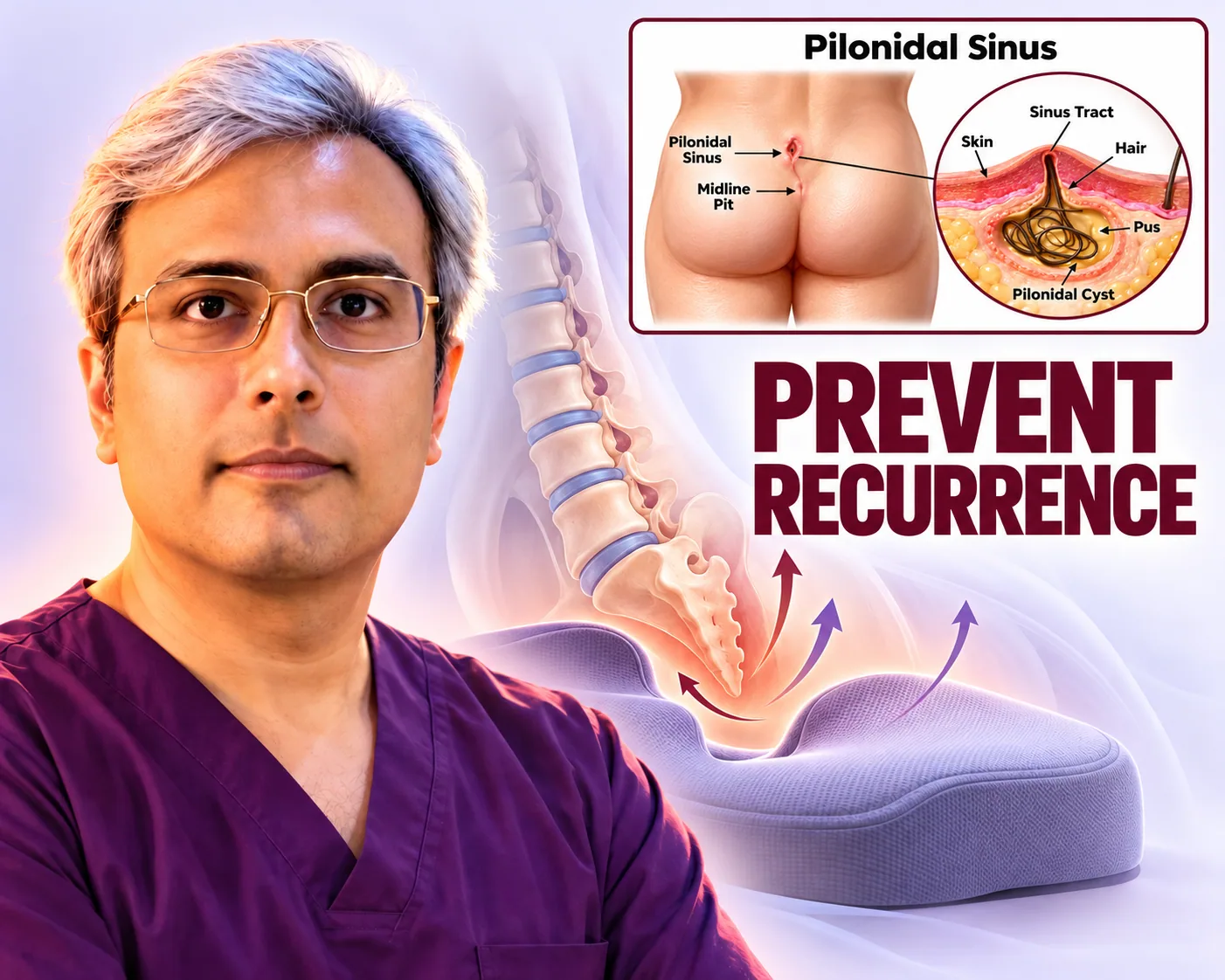
- Unload the tailbone — use a U-shaped coccyx cushion for 6 to 8 weeks after surgery, and later on long desk days.
Watch three high-risk seats. Soft sofas that swallow the hips. Car seats with a hard tailbone ridge. Narrow two-wheeler pads on long rides. Fixes include firm chairs, lumbar rolls, wide padded seats, and planned stand breaks. Sleep on the side for the first weeks. Skip heavy squats until wound review allows. Full week-by-week sitting guidance is detailed in the recovery timeline.
Weight, sweat, and clothes
Extra weight deepens the cleft. It adds friction and sweat. All three push disease ahead. Reports count obesity among severity-worsening factors, with smoking and diabetes. The fix is steady, not harsh — move toward a healthy weight with walking and, once the wound closes, swimming or a wide-saddle cycle.
Sweat harms lean people too, most in hot weather. Wet cleft skin softens and hairs pierce it with ease. Wet wounds also split more. Daily steps that help:
- Wear airy cotton or moisture-wicking underwear; change as soon as damp.
- Pat dry, never rub the cleft after bathing.
- Change fast out of sweat-soaked clothes after sport or long travel.
- Manage the hair load — taught gentle cleft cleaning; laser hair removal after healing can cut long-term hair load.
Call the clinic promptly for
- Wound edges opening, thick or smelly discharge, or fever return
- Redness spreading fast, or pain blocking sitting and sleep
- Smoking or diabetes — healing needs closer watch
Quit smoking to save the flap
Smoking hits healing head-on. Nicotine narrows tiny vessels. Carbon monoxide cuts oxygen in blood. The flap edge — the very tissue the closure rests on — starves. Edges darken, open at the lower pole, and need weeks of dressing.
The plan is clear:
- Stop fully 4 weeks before planned flap surgery where dates allow.
- Stay stopped 6 to 8 weeks after, with no single-cigarette gaps.
- Take help — quitlines, counselling, or doctor-led drugs beat willpower alone; discuss nicotine aids with the surgeon first.
With diabetes, pair this with sugar control, and have immunity-lowering drugs reviewed by both doctors. A flap is living tissue on its blood flow. Each step that guards flow guards closure. This is educational information, not medical advice.
Key figures from published series
- Tailbone pilonidal disease is reported as morbid, with high after-surgery return dominating its course — the baseline risk these habits address.
- Obesity, smoking, diabetes, and immunity-lowering drugs are reported as severity-worsening factors in pilonidal disease.
- Left-behind diseased tissue is reported as a cause of return — habits add up, but never replace full removal and off-midline closure.
What Dr. Vishal Purohit does in Jaipur
Dr. Vishal Purohit is an M.Ch plastic surgeon treating pilonidal sinus disease in Jaipur, performing definitive Limberg and Karydakis off-midline flap surgery. No phenol, laser, or endoscopic shortcuts; matched to your anatomy.
Each plan comes with written lifestyle orders — cushion use, weight and moisture goals, hair-cleaning steps, and a quit timeline tied to the surgery date. Reviews at 1, 3, and 6 weeks check both wound and habits. This is educational information, not medical advice.