
Tummy Tuck Recovery Timeline: A Guide to Healing
Recovering from a tummy tuck takes a few weeks to a few months. Most people return to light activities in 2 to 4 weeks.
Full healing and your final shape can take up to six months. Your recovery depends on the type of surgery you had.
At Kalpana Aesthetics, Dr. Vishal Purohit (M.B.B.S., M.S., M.Ch. Plastic Surgery) uses a careful, patient-first approach. He makes sure your path back to confidence is smooth.
He provides personalized care and professional guidance. This helps you get natural results and a better quality of life.
Knowing each step of your healing helps you get the best results. Whether you are preparing for surgery or recovering now, we can help.
Exploring comprehensive cosmetic surgery in Jaipur gives you the support you need. We want you to feel beautiful and empowered.
Phase 1: Immediate Post-Operative Care (The First 48 Hours)
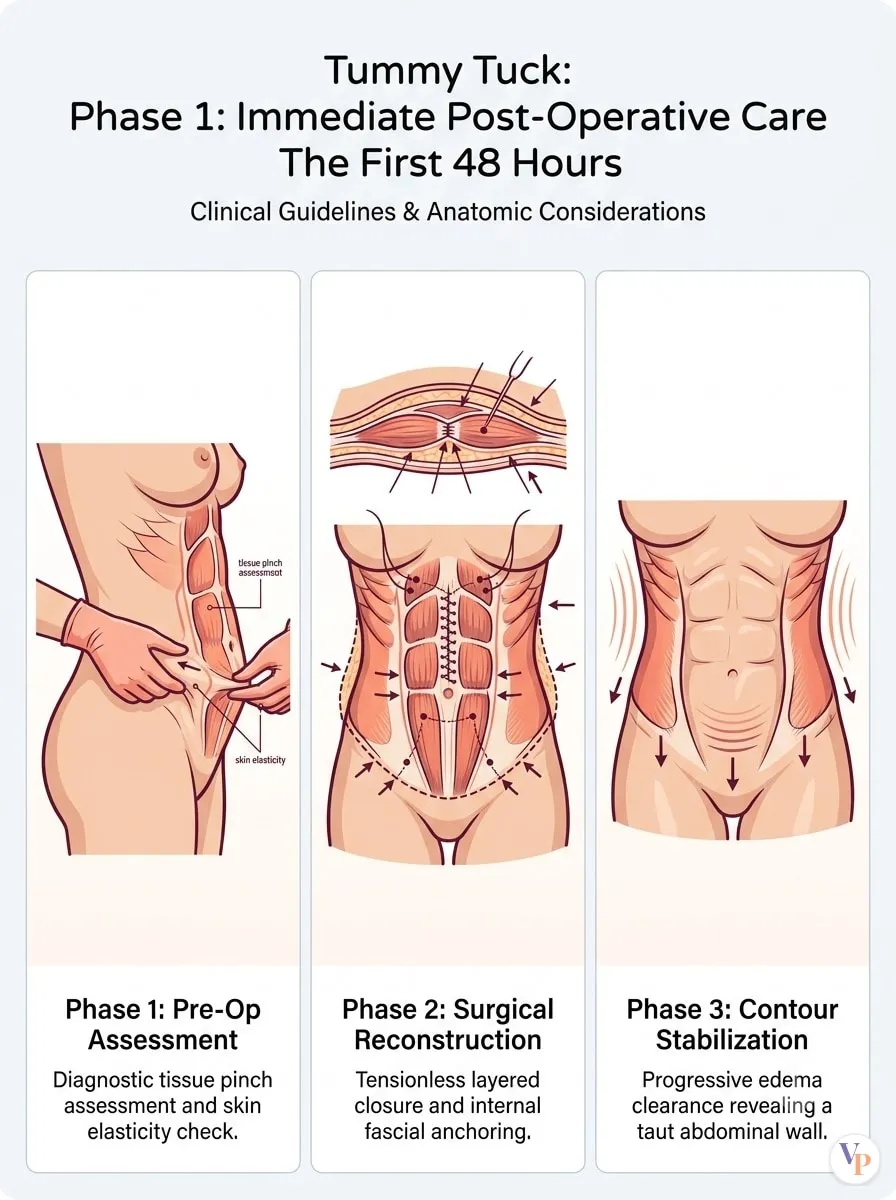
You will start with a short hospital stay. The team at Kalpana Aesthetics will provide close post-surgical monitoring.
We watch for deep vein thrombosis (DVT)1 (“deep vein thrombosis (DVT), skin injury, infection”), which are blood clots in your legs.
Your pain management is a top priority. We keep you comfortable so you can start moving quickly.
This helps you avoid respiratory compromise (“respiratory compromise, deep vein thrombosis (DVT), skin injury”) and other lung problems.
We will teach you immediate precautions. You will learn how to move and breathe safely.
Our goal is to make you feel secure. We want to help you become a more confident you.
Hospital Discharge and Initial Monitoring
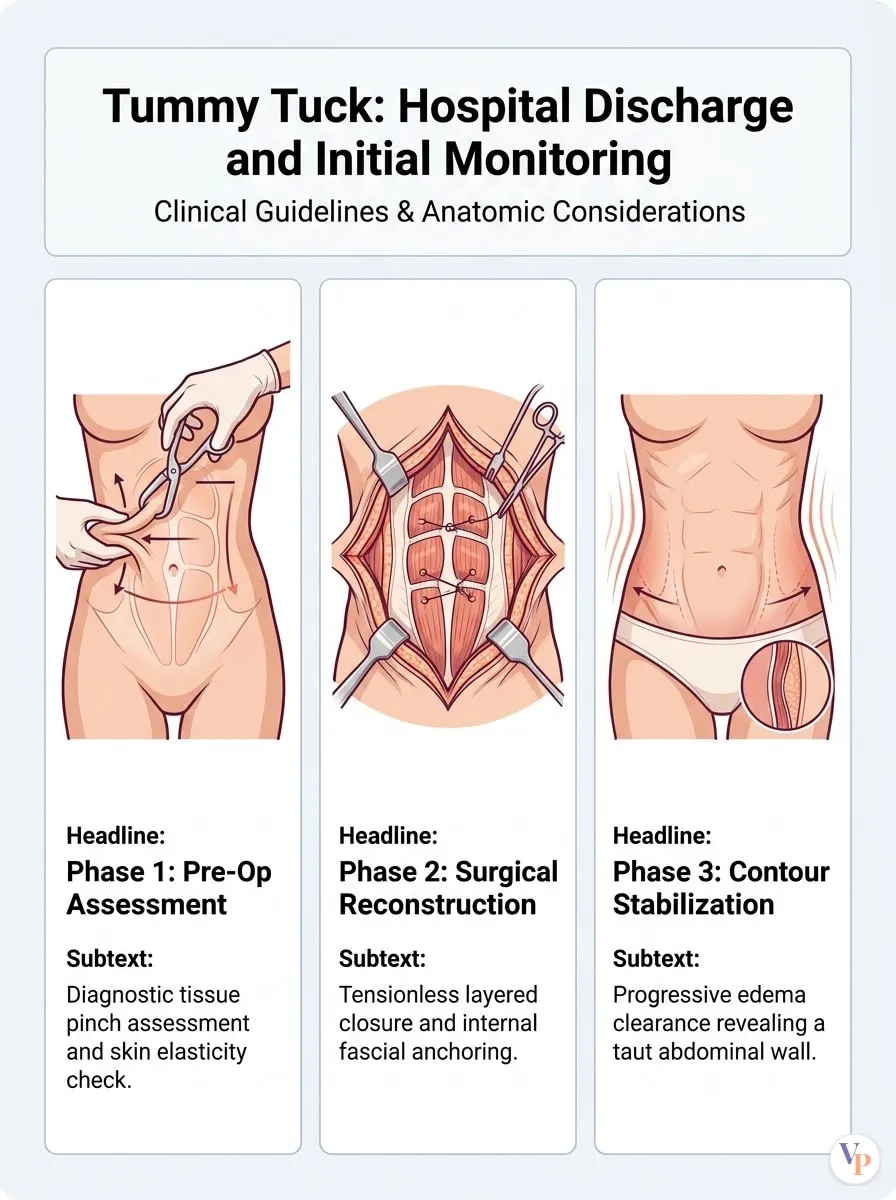
Before you leave, your medical team must check your discharge criteria. This makes sure it is safe for you to recover at home.
We monitor these key factors before you go:
- Vital Signs: We check your heart rate, blood pressure, and temperature. We want to ensure they are stable.
- Surgical Stability: The team checks your incision sites. They make sure there is no active bleeding or leaking.
- Pain Control: We make sure your pain is managed well. We will use the provided medication.
- Mobility: You must be able to stand. You also need to walk a short distance with help.
- Hydration: We confirm you can drink fluids. You should not feel sick when you do.
Critical Precautions for the First 48 Hours
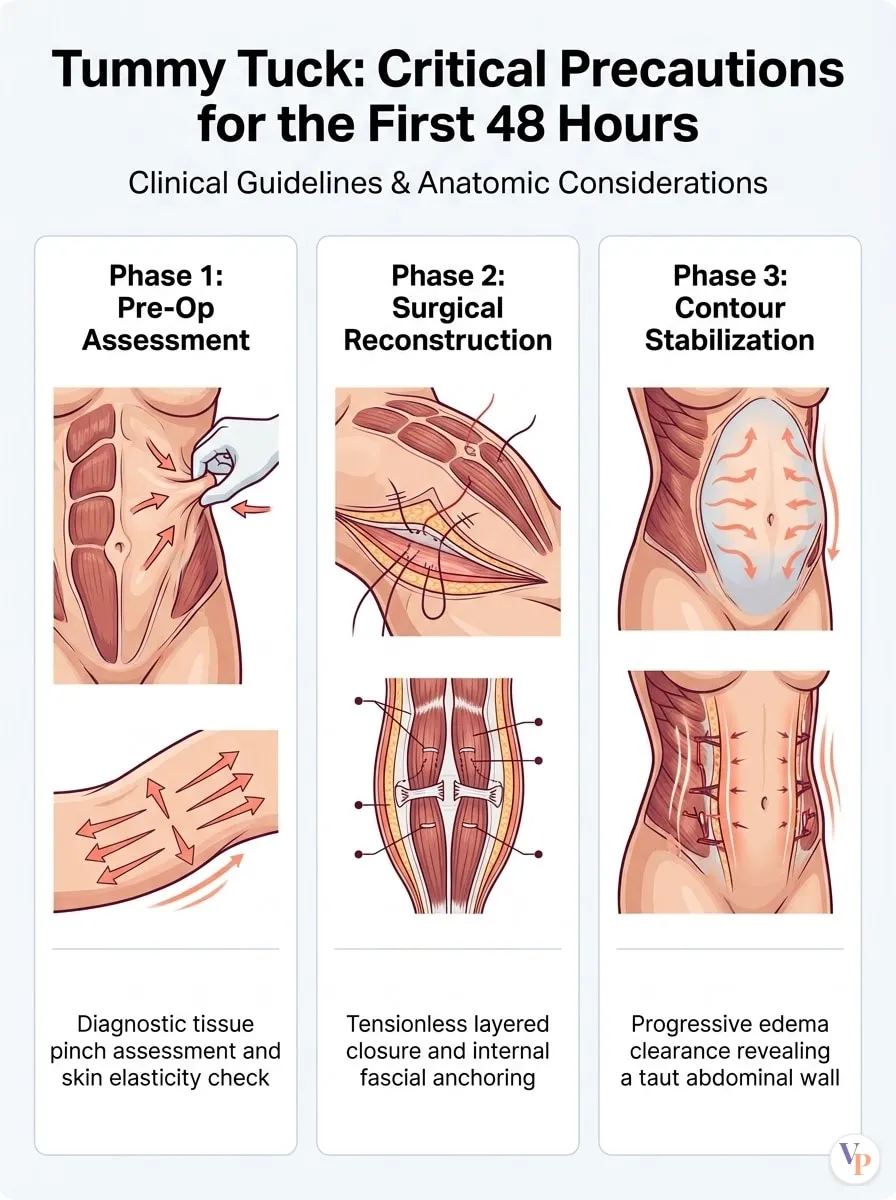
Follow these safety steps after you leave the hospital. These rules protect your new shape and help you heal faster.
- Maintain Proper Post-Op Positioning: Keep your upper body propped up. Do not lie flat. This lowers swelling and helps you breathe.
- Prioritize Hydration: Drink lots of water and clear fluids. Good hydration keeps your blood moving and clears out the anesthesia.
- Gentle Mobility: Take short, slow walks around your home. Better mobility stops blood clots and wakes up your bowels.
- Monitor for Warning Signs: Watch your body for sudden changes. Call your surgeon right away if you see these warning signs:
- Sudden shortness of breath or chest pain.
- Extreme redness or heat around the incision.
- A high fever or chills.
- Calf pain or swelling in one leg.
- Avoid Heavy Lifting: Do not lift anything heavier than a gallon of milk. This protects your stitches and keeps the wound closed.
- Rest and Recovery: Sleep as much as you need. Your body needs energy to heal and restore your confidence.
Managing Surgical Drains and Fluid Output
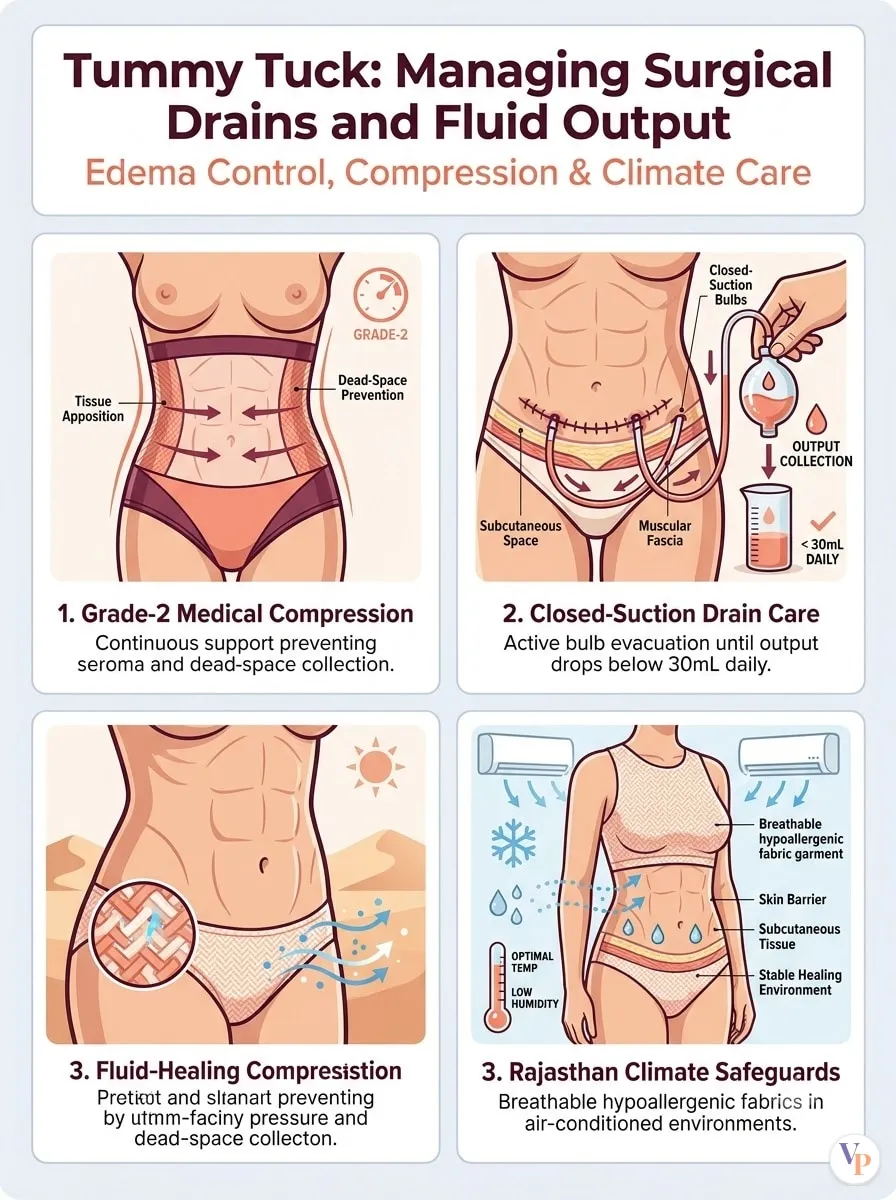
After surgery, you might have small tubes called drains. These tubes pull extra fluid from your body to help you heal.
Good drain management helps your skin heal smoothly against the muscle. This is key for seroma prevention2. It stops fluid from building up under your skin.
Use this table to learn how to handle your drains and what to expect.
| Recovery Step | What You Need to Do | Why It Matters |
|---|---|---|
| Output Recording | Use a measuring cup to track daily fluid. | Your surgeon uses this to track your healing. |
| Drain Maintenance | Keep tubes secure. Empty them as directed. | This stops fluid buildup and lowers infection risks. |
| Monitoring Fluid | Note the color and amount of the fluid. | This helps the team identify hemorrhagic and serous exudate (“Postoperative drainage fl uid comprises hemorrhagic and serous exudate”). |
| Drain Removal | Visit the clinic when fluid levels drop. | Drain removal3 makes you more comfortable. |
The Role of Compression Garment Compliance
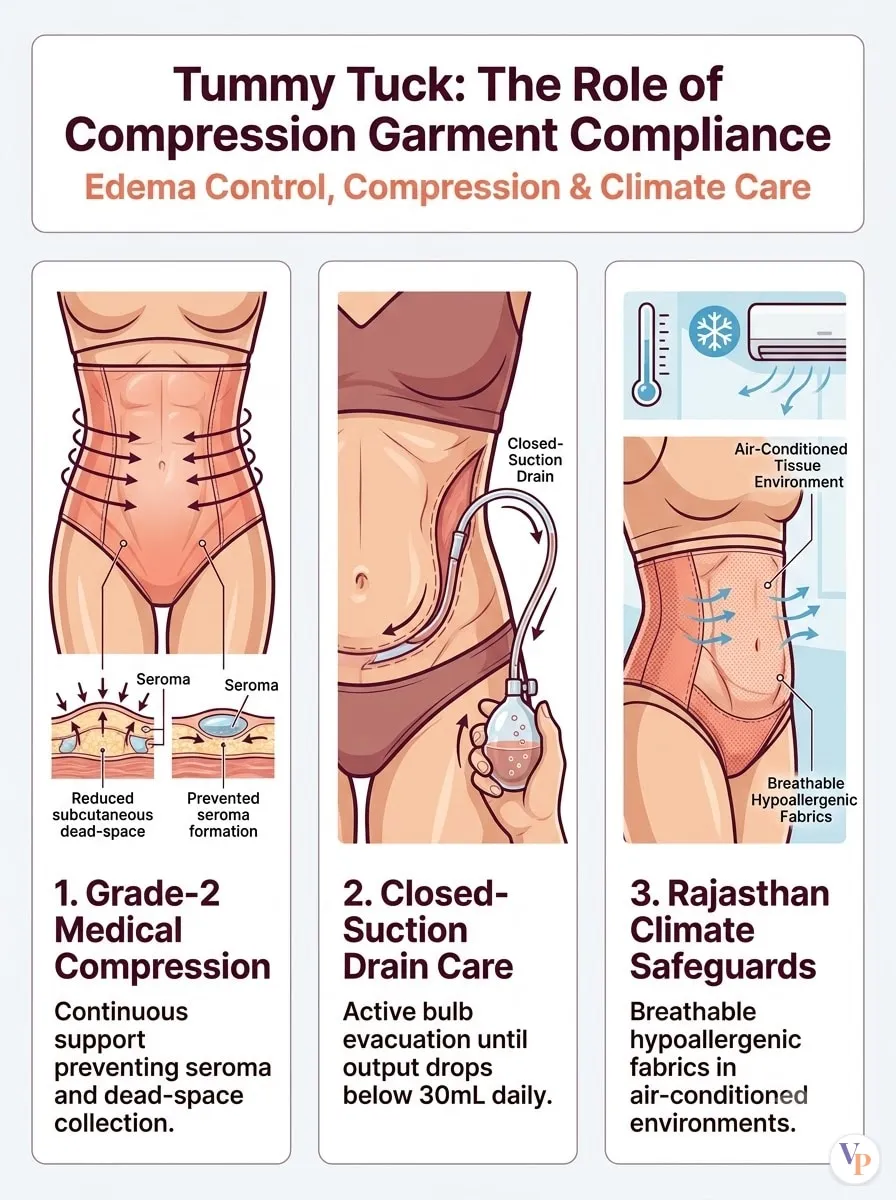
A compression garment, or surgical binder, is a tight elastic wrap for your midsection. This wrap puts steady pressure on your skin and muscles. It is vital for importance of compression garments to make sure you heal correctly.
The main goal of the binder is edema reduction. Edema is the medical name for swelling from fluid buildup.
By limiting this fluid, the wrap helps your skin stick to the tissue underneath. This step is key for achieving smooth contouring results.
Wear your binder as directed to protect your new shape. It supports your stomach wall while you move.
This constant support lowers your pain. It also helps you feel confident again faster.
Guidelines for Wearing Your Compression Binder
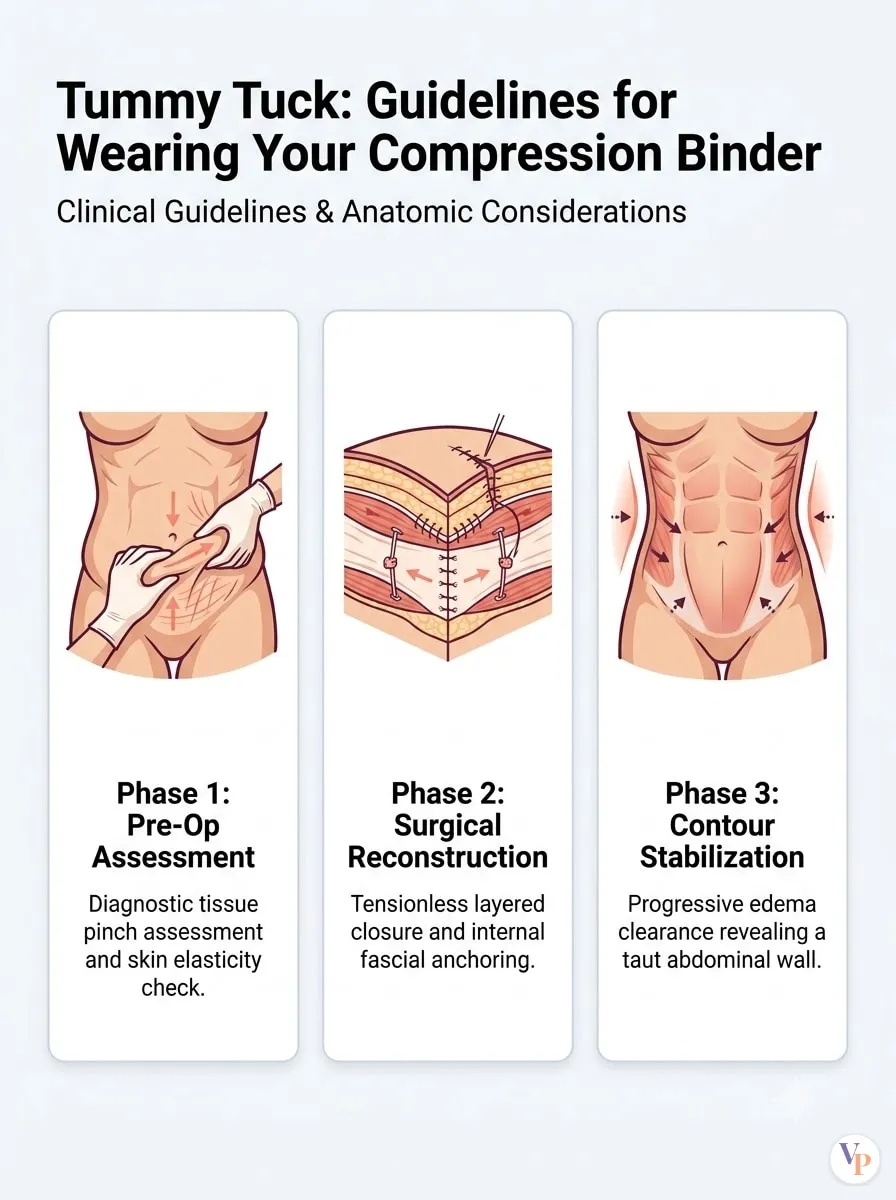
Stick to your compliance timeline to help your body heal with a natural shape. Use these tips to care for your garment and your skin.
- Daily Wear Hours: Wear your binder 24 hours a day for the first few weeks. Only take it off to bathe or if your surgeon tells you to.
- Skin Hygiene: Keep the skin under your wrap clean and dry. Gently wash and pat your skin dry to stop rashes.
- Gradual Transition: Only wear the binder less often after your doctor says it is okay. Most people switch to part-time wear once the swelling drops.
- Proper Fit: Make sure the binder is snug but does not block blood flow. It should feel like a firm hug around your middle.
- Layering for Comfort: Put a thin cotton shirt under the binder if the fabric bothers you. This helps with skin hygiene and stops rubbing.
Activity Restriction Schedule: Returning to Daily Life
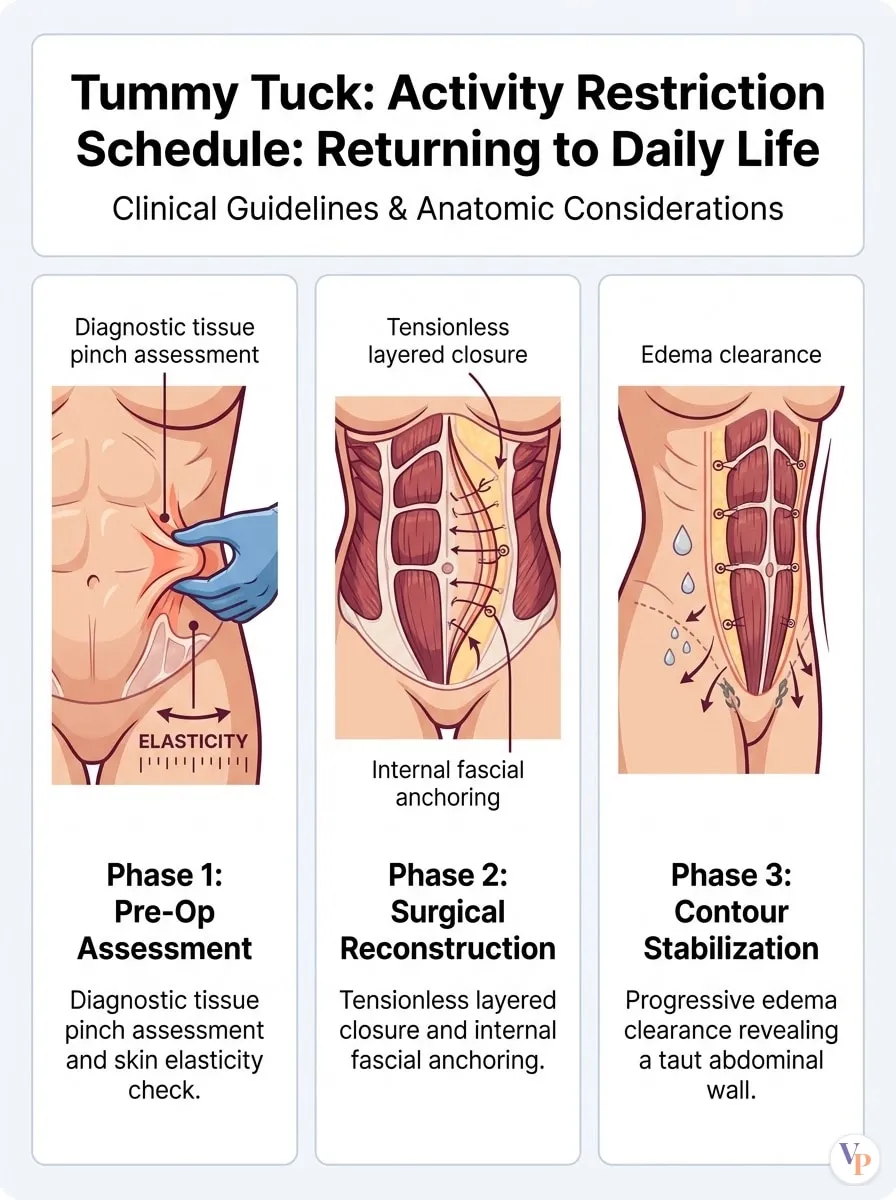
Follow this physical activity timeline to protect your results. Moving too fast can stress your incisions.
-
Week 1: Basic Mobility Take short, slow walks around your home. Avoid moderate load activities (“sitting to standing or standing to sitting”) to prevent strain. Do not bend at your waist.
-
Weeks 2 to 3: Transitioning You can start a gradual return to work if you have a desk job. Avoid work return tasks that require twisting or reaching. Keep your movements gentle.
-
Weeks 4 to 6: Light Movement Start light exercise like gentle stretching or longer walks. Do not do any workouts that use your core. Focus on your energy and flexibility now.
-
Week 6 and Beyond: Full Activity Most patients can exercise fully after a doctor’s visit. You must still follow heavy lifting restrictions for a few more weeks. Do not lift anything over 10 pounds to keep your abdominal wall strong.
Long-term Outcomes: Scar Maturation and Revision
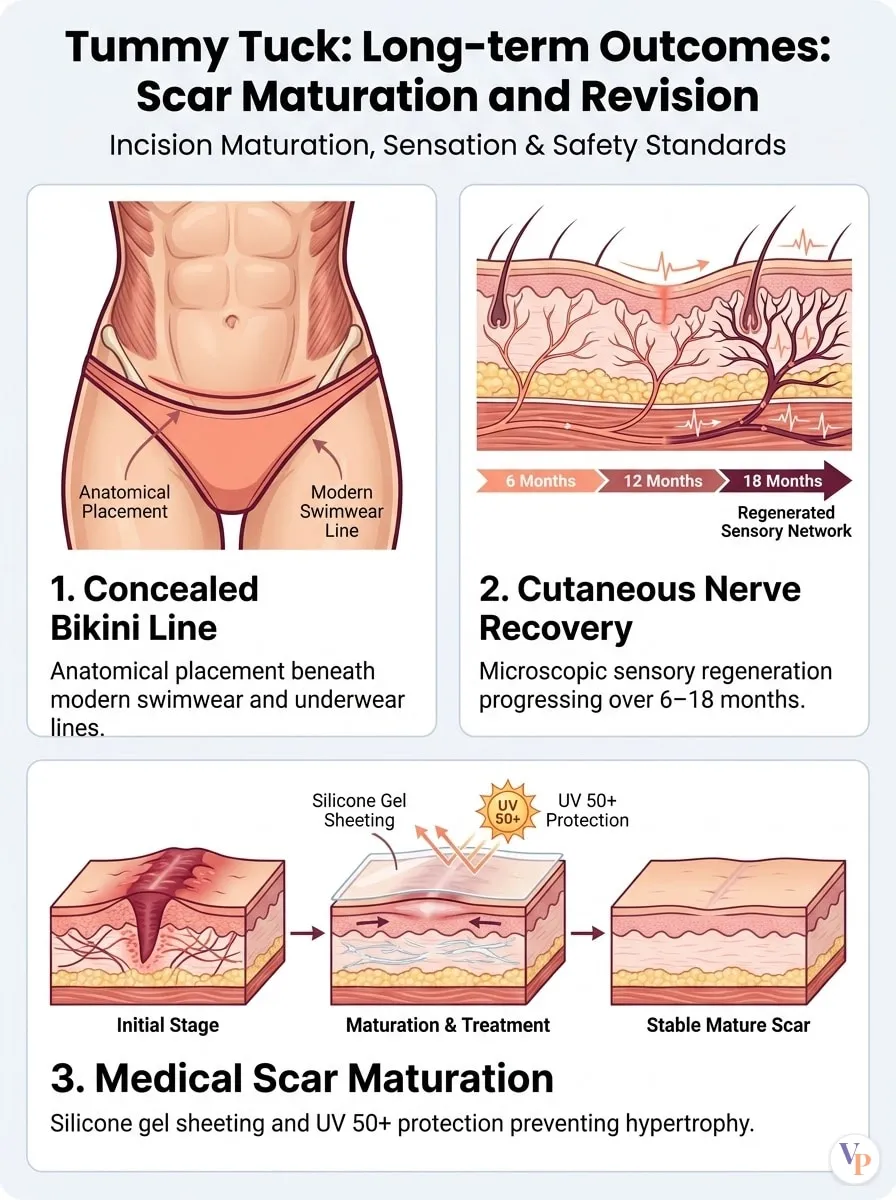
Your scar will change as you heal. At first, the line might look red or raised.
This is a normal part of scar maturation. Your body is simply reorganizing the tissue.
Doctors track this via late scar maturation (“obtained at postoperative day 30 ± 3, day 90 ± 7, and day 180 ± 14”) to see how your skin settles.
Soon, you will notice incision fading. The scar usually turns pale and becomes flatter.
You can follow skin care steps to fade your incision and make it less visible. Most people see their aesthetic surgery results improve after one full year.
Rarely, a scar does not heal as expected. Some patients scar retraction4.
If your scar stays thick or uneven, your surgeon can do a scar revision. This small touch-up refines the line and boosts your confidence.
Frequently Asked Questions
What can I expect during the first 48 hours after tummy tuck surgery?
During the first 48 hours, patients rest in a flexed ‘beach chair’ position with knees elevated, wear an abdominal compression binder, and manage closed-suction drains, guided by Dr. Vishal Purohit in Jaipur. Mild-to-moderate soreness is controlled with oral analgesics, and light standing walking is assisted every 2 to 3 hours to prevent blood clots. As an M.Ch plastic surgeon, Dr. Purohit provides attentive hospital nursing care prior to discharge.
What milestones occur between week 1 and week 2 of abdominoplasty recovery?
Surgical drains are typically removed between days 3 to 7, and patients can stand noticeably more upright by days 10 to 14 under Dr. Vishal Purohit’s protocols in Jaipur. Most individuals stop prescription pain medications by day 5 and resume light sedentary desk work at two weeks. Dr. Purohit conducts milestone clinical evaluations at days 7 and 14 to verify excellent incision apposition.
When does swelling subside and when will I see my final waistline?
Postoperative swelling decreases by 60% by week 6, with 85% resolving at month 3 and final, definitive waistline refinement achieved at 6 to 9 months with Dr. Vishal Purohit in Jaipur. Residual fluid above the scar softens gradually as lymphatic channels regenerate. As an M.Ch. plastic surgeon, Dr. Purohit takes 6-month comparative photographs to document your transformation.
When can I resume driving, gym workouts, and lifting heavy weights?
Driving can safely resume at 10 to 14 days once you can press brakes without abdominal pain, while light treadmill cardio begins at 3 to 4 weeks with Dr. Vishal Purohit in Jaipur. Heavy weightlifting, core exercises, and contact sports resume at 6 to 8 weeks following clinical clearance. Dr. Purohit tailors exercise resumption to each patient’s individual healing rate.
How long must I wear the compression garment throughout recovery?
Patients wear the medical compression garment 24 hours daily for the first 3 to 4 weeks, followed by 12 hours daily (daytime or night) for an additional 2 to 4 weeks under Dr. Vishal Purohit’s care in Jaipur. Continuous compression prevents seromas and ensures smooth skin redraping. Dr. Purohit inspects skin contour at follow-ups to advise on garment tapering.
Summary of Your Recovery Journey
Your path to a more confident you has a few key milestones:
- Days 1-2: Focus on rest and basic movement.
- Weeks 1-3: Slowly return to light daily tasks and desk work.
- Weeks 4-6: Start light exercise and move more.
- Month 3+: Scars finish healing and you can do all activities.
To get the best results, you must follow the personalized post-op instructions from Dr. Vishal Purohit.
Every body heals differently. Your specific plan is made to protect your new look.
Ready to start your transformation? Schedule your follow-up consultation at Kalpana Aesthetics today to keep your recovery on track.
If you would like to discuss your condition or book a consultation, contact Dr. Vishal Purohit in Jaipur at +91-7718183535. Our specialist team is here to guide you through every step of your care. For the full picture, see our complete guide to Tummy Tuck.
For full details on hospital facilities, OT safety protocols, and personalized surgical pricing, explore our comprehensive guide on Tummy Tuck Surgery in Jaipur or review our main Tummy Tuck Guide.