
Am I a Good Candidate for a Tummy Tuck? Eligibility and Selection Criteria
Are you a good fit for a tummy tuck? It depends on your skin elasticity, muscle strength, and overall health.
Many people think this is for weight loss. Actually, it removes extra skin and fixes separated muscles. Diet and exercise often cannot fix these issues.
Dr. Vishal Purohit is an expert plastic surgeon. He checks these markers to make sure the surgery works for you.
He analyzes your body to create a personal plan. His goal is to help you look, feel, and live beautiful.
Do you want a transformation? Exploring professional cosmetic surgery in Jaipur is your first step.
Learn how a custom plan can boost your confidence and quality of life.
Evaluation of Skin Elasticity and Excess Tissue
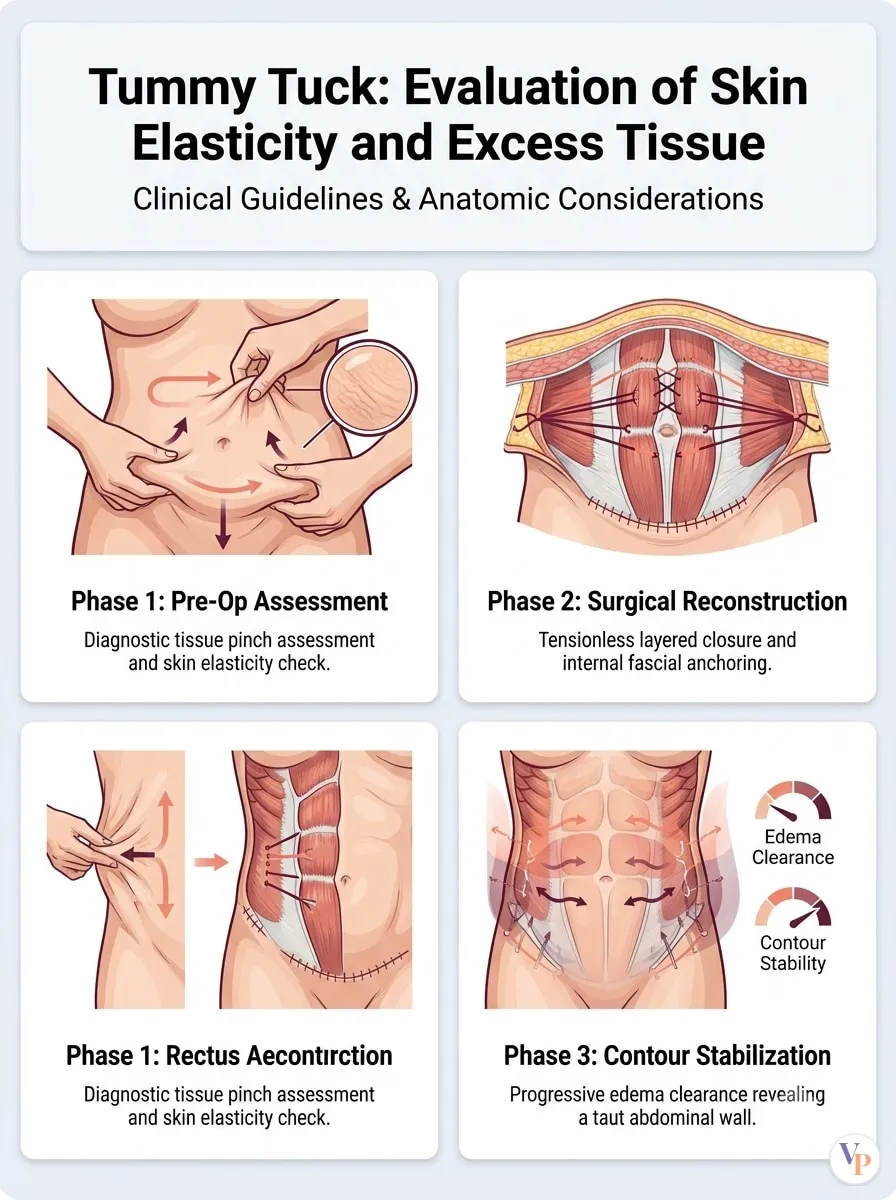
First, your doctor will check your skin elasticity. This is how well your skin snaps back after it is stretched.
If your skin is still firm, non-surgical options may work. These can help refresh your look.
But some people have loose skin that will not shrink. For them, surgical excision is the best choice. This means the doctor physically removes the extra skin.
This step ensures your abdominoplasty results look smooth and natural.
During your visit, the surgeon will feel your stomach. He wants to see if the extra skin is “grabbable” and “squeezable” to determine the quantity of skin to be removed.
This quick check helps the doctor decide if surgery is right for you. It is the best way to restore your confidence.
Assessment of Abdominal Muscle Diastasis
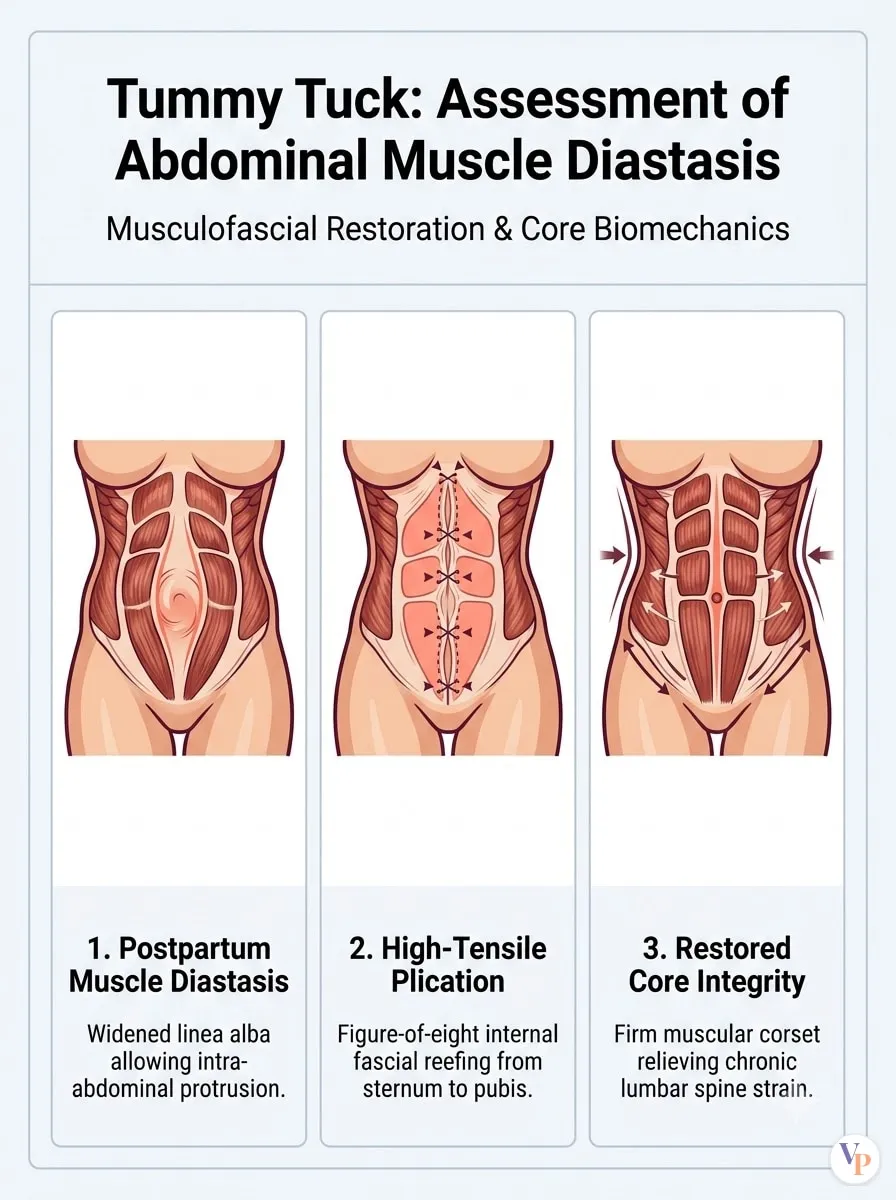
Many people have muscle diastasis. This happens when your separated stomach muscles pull apart.
It often happens after you have a baby or change weight.
This gap makes a bulge that looks like a “pooch.” Crunches or gym workouts cannot fix it.
You need fix diastasis recti to get a flat stomach again.
During surgery, the doctor uses internal suturing. He uses strong stitches to pull the muscles back together.
This reconstructive surgery gives you a tighter core.
Fixing the abdominal wall is very important. This is because diastasis recti1 and can change how your body works.
Tightening these muscles helps you stand taller. It also makes your waist look narrower and more natural.
Weight Stability and Body Mass Index (BMI)
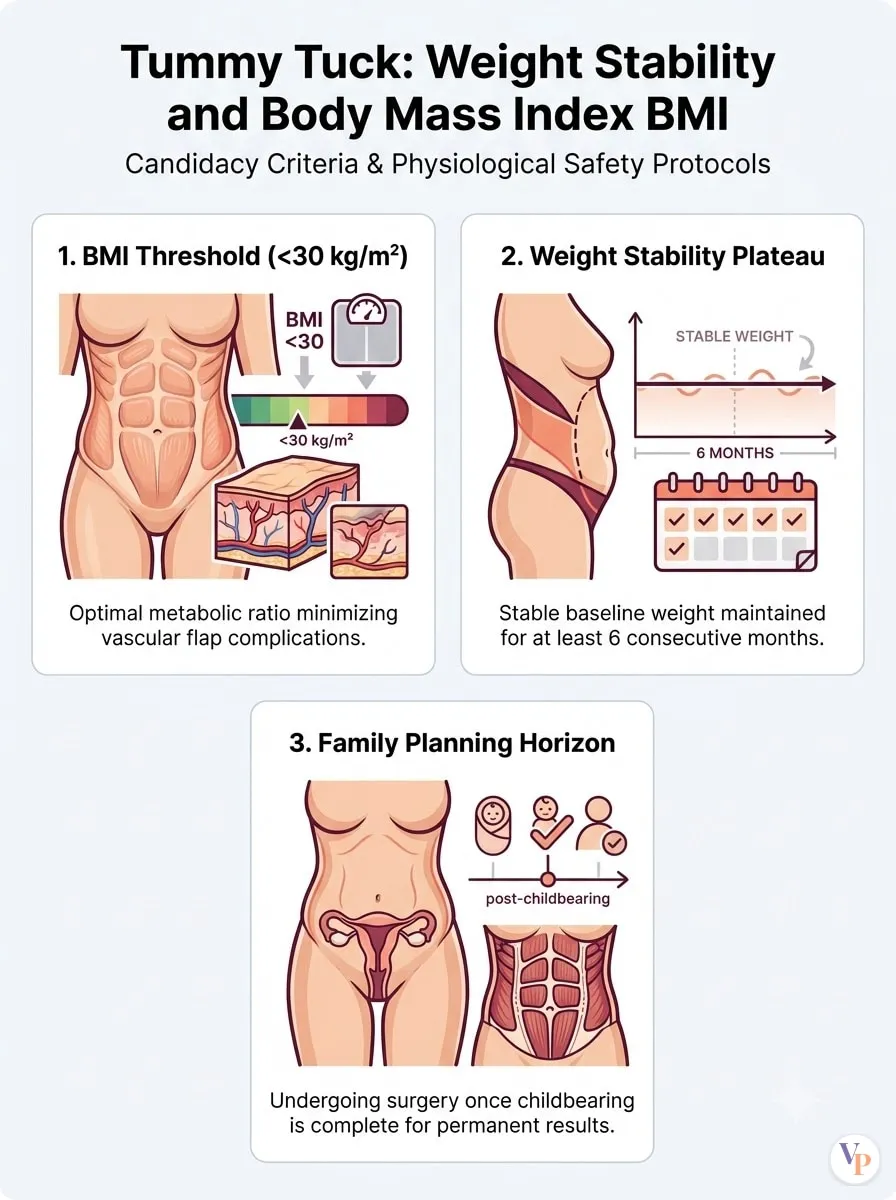
Your weight is a big part of your surgery plan. Remember, a tummy tuck is not a weight loss tool. It is meant to shape your body.
Weight stability helps you get the best results. Here is why your weight and BMI matter:
- Better Safety: A lower BMI often means fewer risks. Patients with a BMI over 30 may face “increased rates of wound complications, bleeding, and venous thromboembolism (VTE)” during surgery2.
- Long-Term Aesthetic Outcome: Keeping a steady weight protects your new look. Big weight fluctuations can stretch your skin again. This can hide the smooth lines from body contouring.
- Consistent Results: Your surgeon needs a steady target. When your weight stays the same, the doctor can remove extra skin more precisely. This fits the result to your unique frame.
- Health Goals: Doctors track your body mass index (BMI)3 (“defined as BMI greater than or equal to 25” for overweight). They do this to make sure you are healthy enough for surgery. This helps you recover faster.
Impact of Previous Surgical Scarring
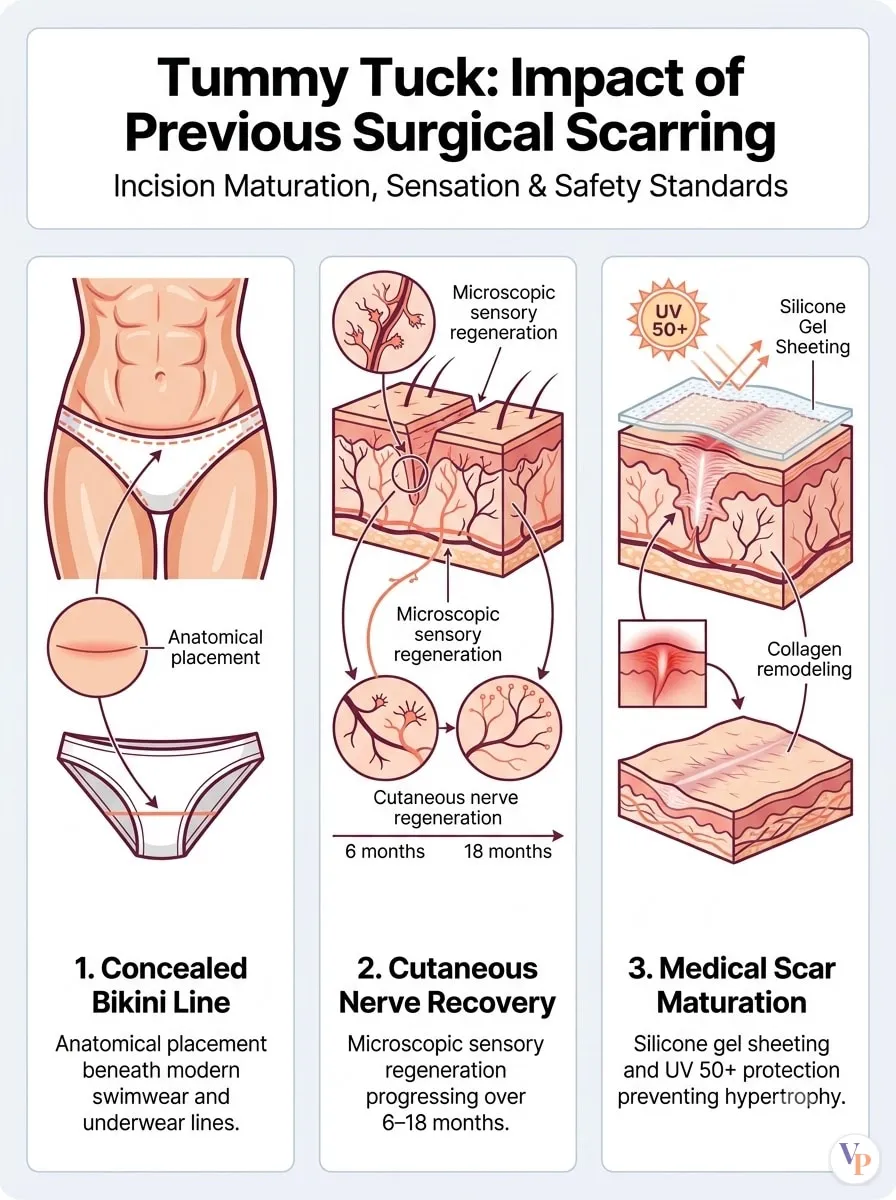
Past abdominal surgeries can change how your surgeon plans your operation. Many women have a C-section scar (“in the form of scars (normotrophic, atrophic, hypertrophic, keloid)”), which is very common.
Your doctor can often remove these old marks during a tummy tuck. This gives you a cleaner, more natural look.
Your surgery history helps your doctor create a personalized surgical plan. Old scars can change how your skin stretches and heals.
Because of this, you need reconstructive expertise to handle deep skin layers. Your doctor wants to hide new cuts under your clothes.
Different skin types heal in different ways. Some people develop thick scars that have a “significant impact on the quality of patients life” after surgery.
Your surgeon will check your skin to pick the best closing method. This helps you feel confident and beautiful with your final results.
Medical Clearance and Anesthesia Safety
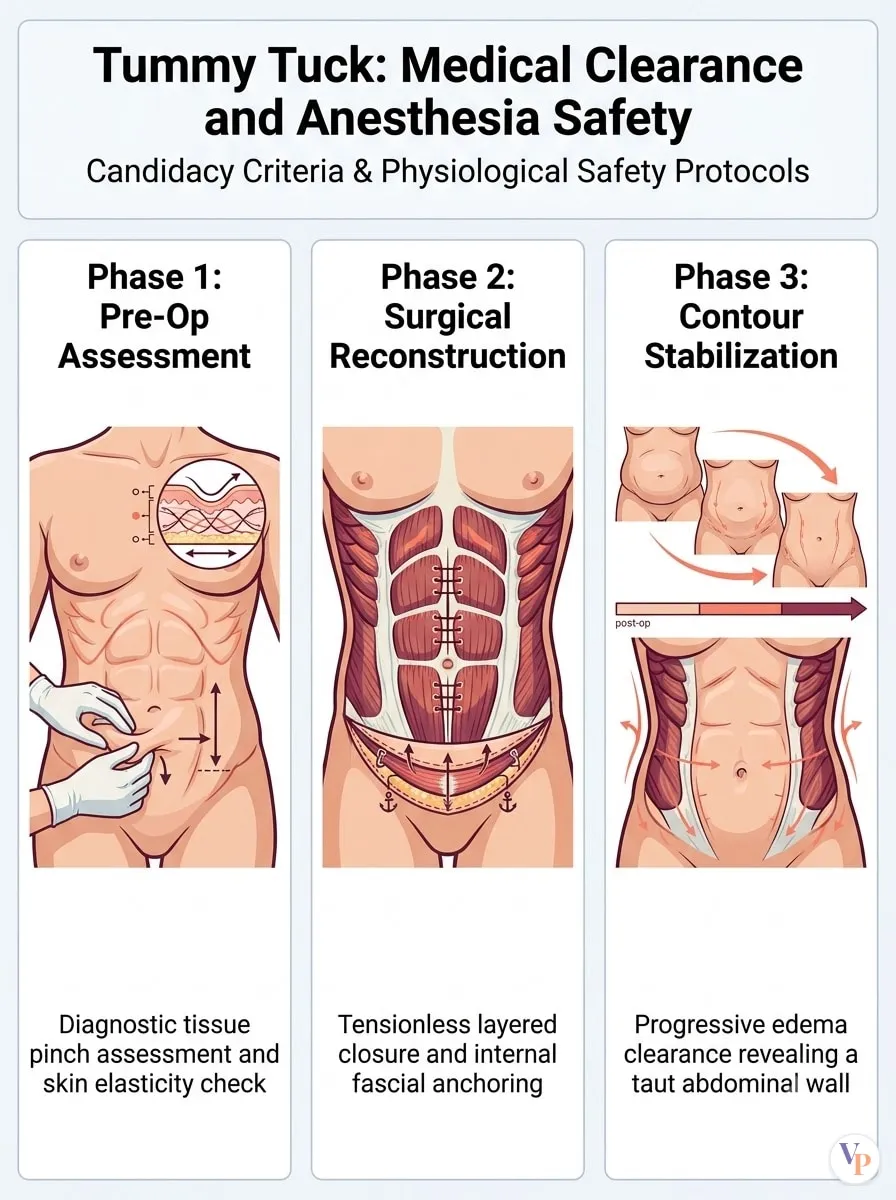
Your safety comes first. Before surgery, you need medical clearance. This is a sign-off from your doctor saying your body is ready.
Your surgeon will check these factors. They want to make sure you are fit for general anesthesia (sleep medication that keeps you unconscious):
- Chronic Health Conditions: You must manage things like diabetes or high blood pressure. Stable health conditions lower your risk during and after surgery.
- Heart and Lung Health: Your doctor will check your breathing and heart rate. This proves your body can handle a major operation.
- Medication Review: Tell us about every pill and supplement you take. Some meds thin your blood or change how anesthesia works.
- Hospital Standards: We follow strict safety rules at our Jaipur Hospital partner facilities. This keeps you in a safe, controlled space.
- Blood Tests: Simple tests check your iron and how your blood clots. This helps the team stop bleeding during the process.
Suitability for Combined Body Contouring
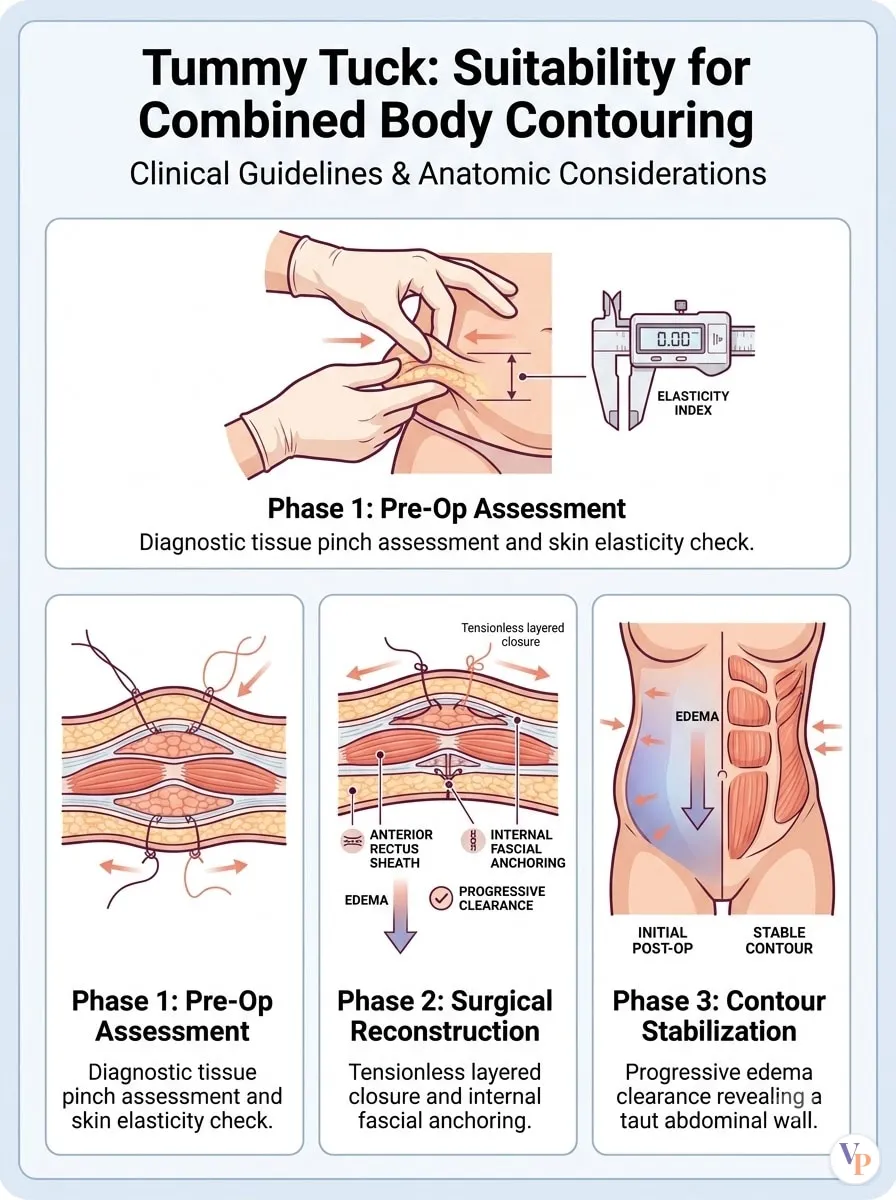
Many patients want a total change. Your combination suitability depends on your goals and your health.
Combining a tummy tuck with other treatments often looks more balanced. You also save time since you only recover once.
| Combined Procedure | Purpose and Benefit | Ideal Candidate |
|---|---|---|
| Liposuction | Uses liposuction to “refining the waistline contour” by removing fat. | People with stubborn fat that skin tightening cannot fix. |
| Mommy Makeover | A mommy makeover pairs tummy tucks with breast and body aesthetic surgery. | Mothers who want to regain their pre-pregnancy shape. |
| Lipoabdominoplasty | This mixes fat removal and skin tightening to “enhance overall abdominal definition” and shape. | People who want a flat stomach and a sculpted waist. |
Related Clinical Guide: To understand how your current weight affects candidacy, read our clinical breakdown on the role of BMI and weight stability before a tummy tuck.
Frequently Asked Questions
Does a previous C-section scar disqualify me from getting a tummy tuck?
A previous Pfannenstiel C-section scar does not disqualify you from abdominoplasty or tummy tuck surgery performed by Dr. Vishal Purohit in Jaipur. During surgery, Dr. Purohit routinely incorporates and completely excises the old Cesarean scar within the new lower suprapubic incision line positioned 5 to 7 cm below the navel. As an M.Ch plastic surgeon, Dr. Purohit releases internal scar tethering to ensure a smooth, flat lower abdominal contour.
What Body Mass Index (BMI) is required for tummy tuck surgery?
An ideal candidate for tummy tuck surgery performed by Dr. Vishal Purohit in Jaipur maintains a stable Body Mass Index (BMI) below 30 kg/m² for at least 3 to 6 months before surgery. Higher BMI values increase risks of seroma, wound healing delays, and anesthetic complications while obscuring waistline contouring results. Dr. Purohit performs calibrated pinch tests and medical evaluations at Kalpana Aesthetics to verify that abdominal fullness is subcutaneous rather than internal visceral fat.
Can a tummy tuck permanently correct severe diastasis recti after pregnancy?
Abdominoplasty or tummy tuck surgery permanently repairs separated rectus abdominis muscles (diastasis recti) through internal plication sutures performed by Dr. Vishal Purohit in Jaipur. Re-approximating the midline abdominal wall with permanent high-tensile sutures flattens the bulging belly and restores 100% of core intra-abdominal tension. As an M.Ch. plastic surgeon, Dr. Purohit ensures reconstructed abdominal fascia provides lifetime stability, with patients resuming core workouts after 6 to 8 weeks.
How does Dr. Vishal Purohit determine if I need a mini or a full tummy tuck?
Candidacy between a mini and full tummy tuck is determined by whether muscular separation and skin laxity extend above the umbilicus during evaluation by Dr. Vishal Purohit in Jaipur. A mini tummy tuck addresses mild lower belly laxity below the navel, while a full abdominoplasty relocates the umbilicus and plicates the entire length of the rectus muscle. As an M.Ch plastic surgeon, Dr. Purohit customizes incision length to deliver natural, proportional body contours.
When is the right time to undergo tummy tuck surgery after childbirth?
Women should wait at least 6 months after childbirth and at least 3 to 6 months after completely stopping breastfeeding before undergoing tummy tuck surgery with Dr. Vishal Purohit in Jaipur. This waiting period allows stretched uterine and abdominal tissues to involute naturally and stabilizes postpartum hormonal levels. Dr. Purohit guides patients through personalized pre-operative nutritional and recovery roadmaps to achieve safe, long-lasting aesthetic transformations.
Your Path to Confidence Your body is unique. Only a physical exam can show the best plan for you.
A personal clinical review makes sure your results match your goals.
Ready to restore your shape? Schedule a consultation with Dr. Vishal Purohit at Kalpana Aesthetics to start your journey.
If you would like to discuss your condition or book a consultation, contact Dr. Vishal Purohit in Jaipur at +91-7718183535. Our specialist team is here to guide you through every step of your care. For the full picture, see our complete guide to Tummy Tuck.
For full details on hospital facilities, OT safety protocols, and personalized surgical pricing, explore our comprehensive guide on Tummy Tuck Surgery in Jaipur or review our main Tummy Tuck Guide.