
Tummy Tuck Recovery Timeline: When to Return to Work and Resume Exercise
If you work at a desk, you can usually return in 1 to 2 weeks. You can start walking and light exercise within 2 to 4 weeks.
Wait 6 to 8 weeks before doing heavy lifting or hard workouts. This helps your stomach heal and keeps your results looking great.
At Kalpana Aesthetics, Dr. Vishal Purohit (M.Ch. Plastic Surgery) wants you to feel confident and beautiful. He knows that every body heals differently.
He will create a recovery plan just for you. Whether you want a tummy tuck or other professional cosmetic surgery in Jaipur, your safety comes first.
Remember, everyone recovers at their own pace. We want you to get back to your routine safely.
Always talk to your surgeon at your follow-up visits. They will tell you when it is safe to start hard activities again.
Return to Work After a Tummy Tuck
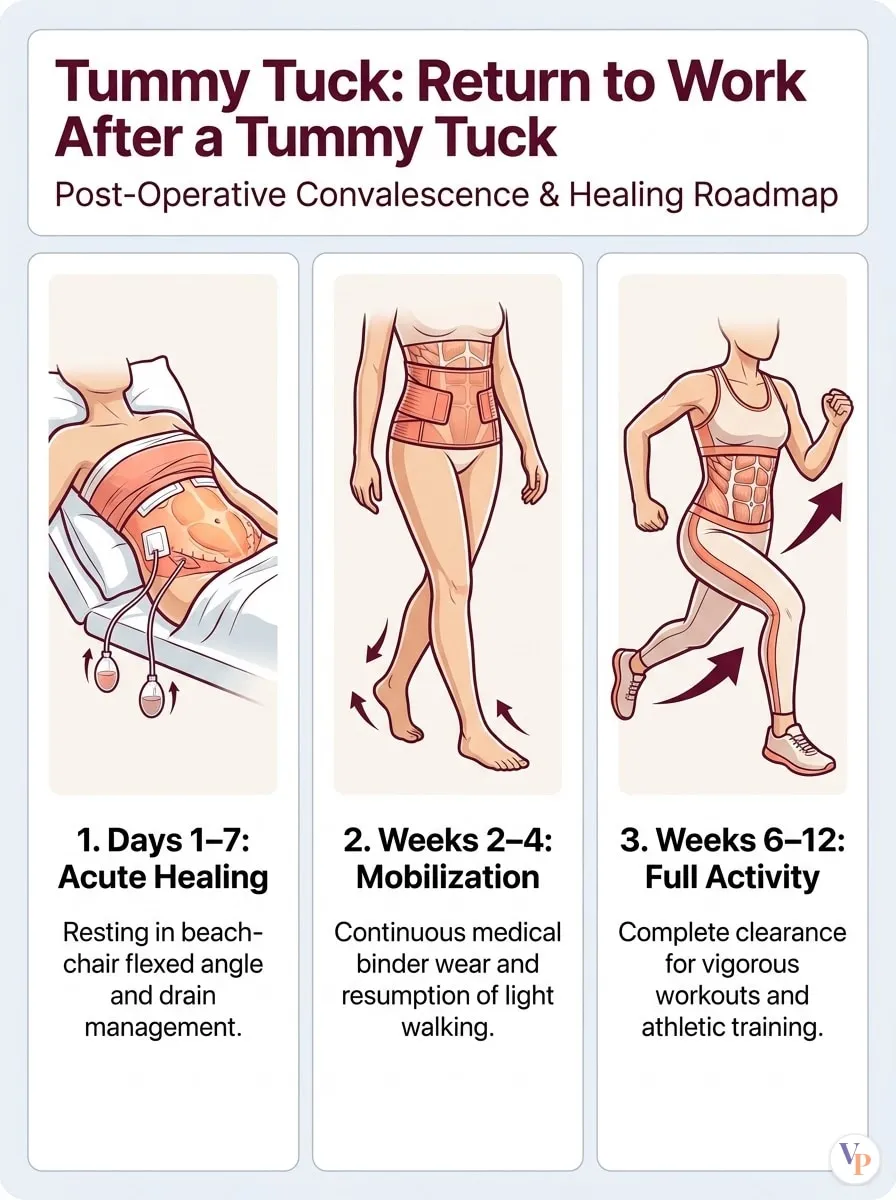
When you go back to work depends on what you do. You can often return sooner if you have a desk job. This kind of sedentary work does not strain your muscles.
Most patients use a tummy tuck recovery timeline to stay safe. Good post-operative care helps you avoid problems.
Get professional postoperative care1 because “in the case of complications or poor results, patients should seek a plastic surgeon for assistance.”
Do not lift heavy things after abdominal surgery. Some people start with “light duty, also referred to as ‘transitional work’” to return to their roles safely light duty2. This keeps you from getting hurt while you heal.
Sedentary and Desk-Based Roles
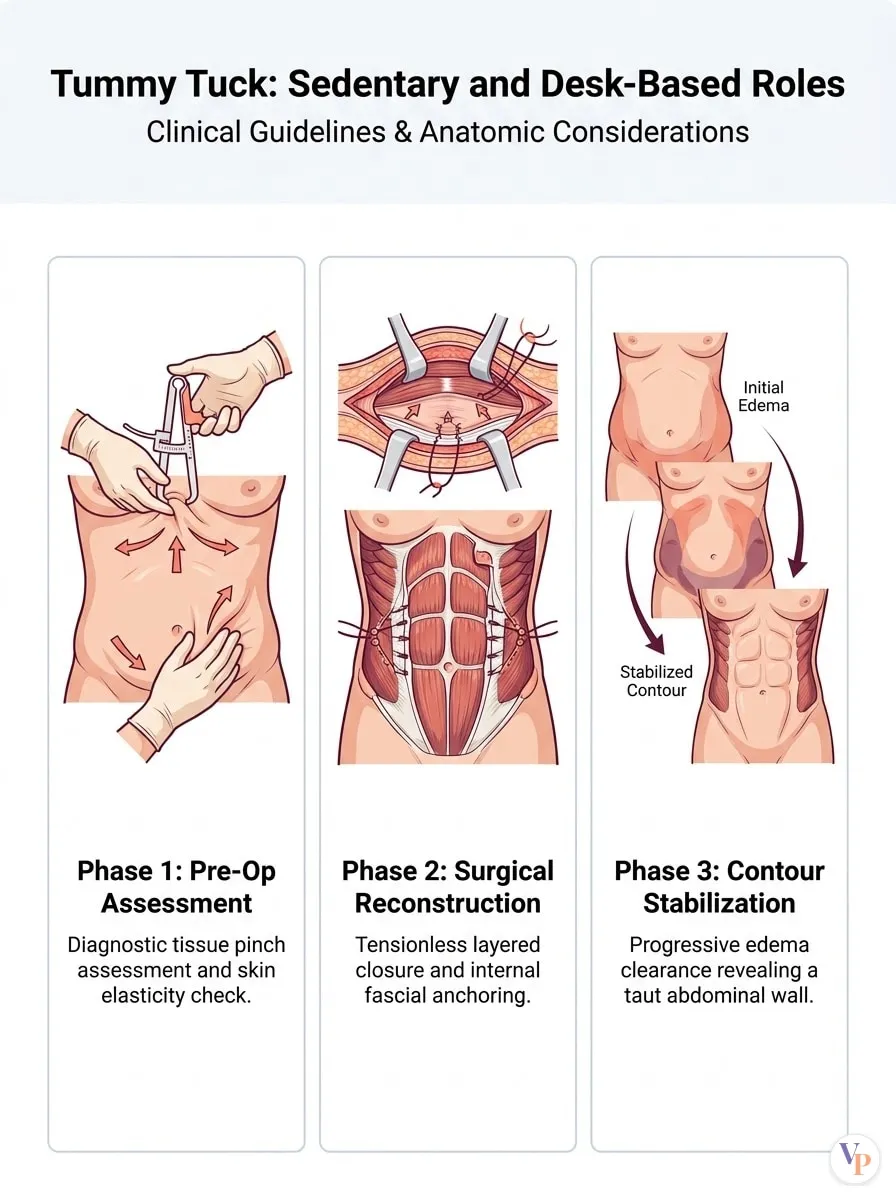
Returning to office work is usually faster if you have a low-impact job. Your return depends on your comfort and your healing.
Follow these steps to get back to your desk safely:
- Days 1 to 7: Rest at home. Focus on incision healing so your skin can close properly.
- Days 7 to 14: Start light mobility. Take short walks around your home to keep your blood flowing.
- Week 2: Go back to work if you can sit comfortably. Working from home for a few days can build your confidence.
- Ongoing: Take breaks often. Stand up and stretch every hour to keep your stomach from feeling stiff.
Physically Demanding Occupations
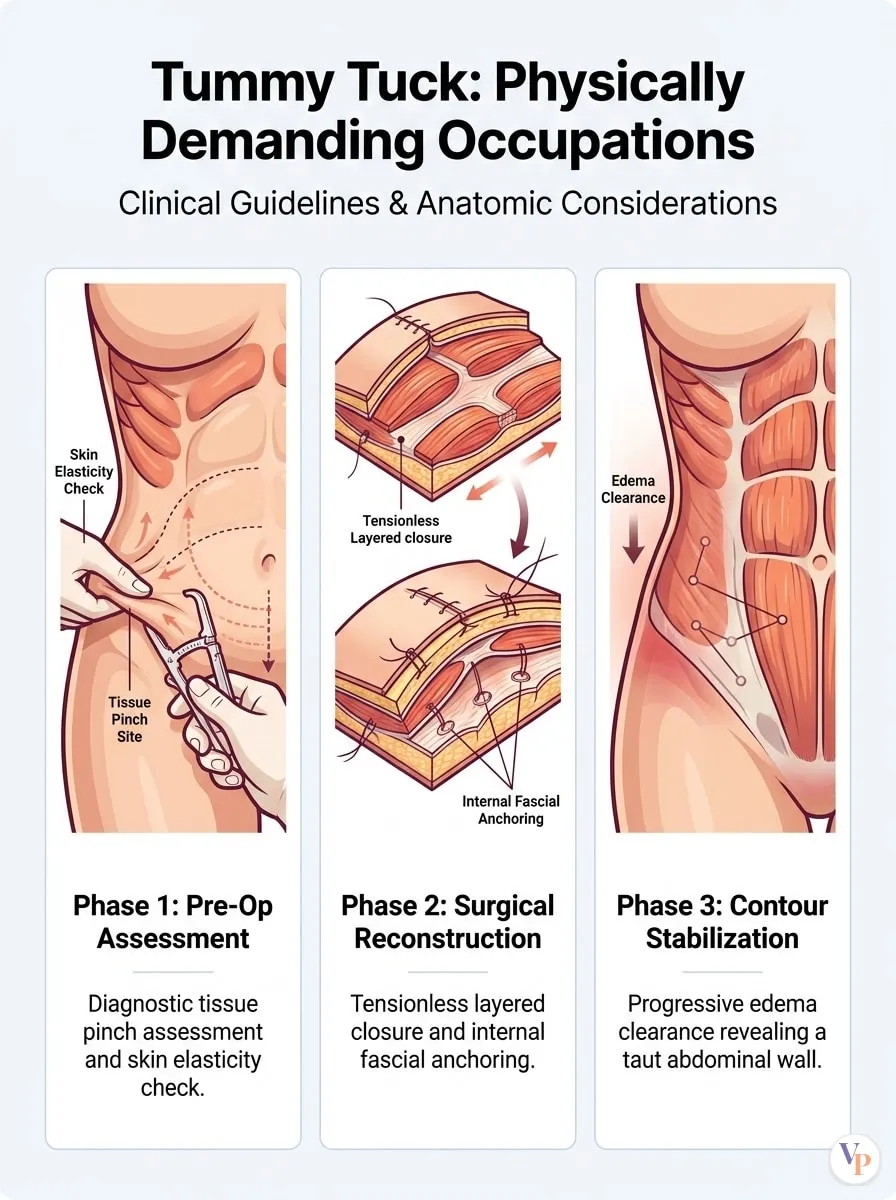
If your job is physically demanding, you will need more time to heal. Manual labor puts extra stress on your stomach muscles.
This can risk your surgical integrity. This means your internal stitches might not stay strong or stable.
Follow this timeline if your work involves heavy lifting or lots of movement:
- Weeks 1 to 4: Do not do any physical labor. Focus on resting so your tissues can heal.
- Weeks 4 to 6: Start with very light tasks. Do not bend, twist, or pull in ways that strain your core.
- Weeks 6 to 8: Slowly add more movement. You can return to work if you do not lift heavy objects.
- Month 3 and Beyond: Return to full duties only after your surgeon says it is okay.
Be careful with manual labor because “the prevalence of back disorders in manual labor is eight times higher” than in other jobs.
High physical workloads can also “increase the risk of bodily fatigue, injury, and sickness-absence.” Take your time returning to work so you feel strong.
Physical Activity Gradation: Resuming Exercise
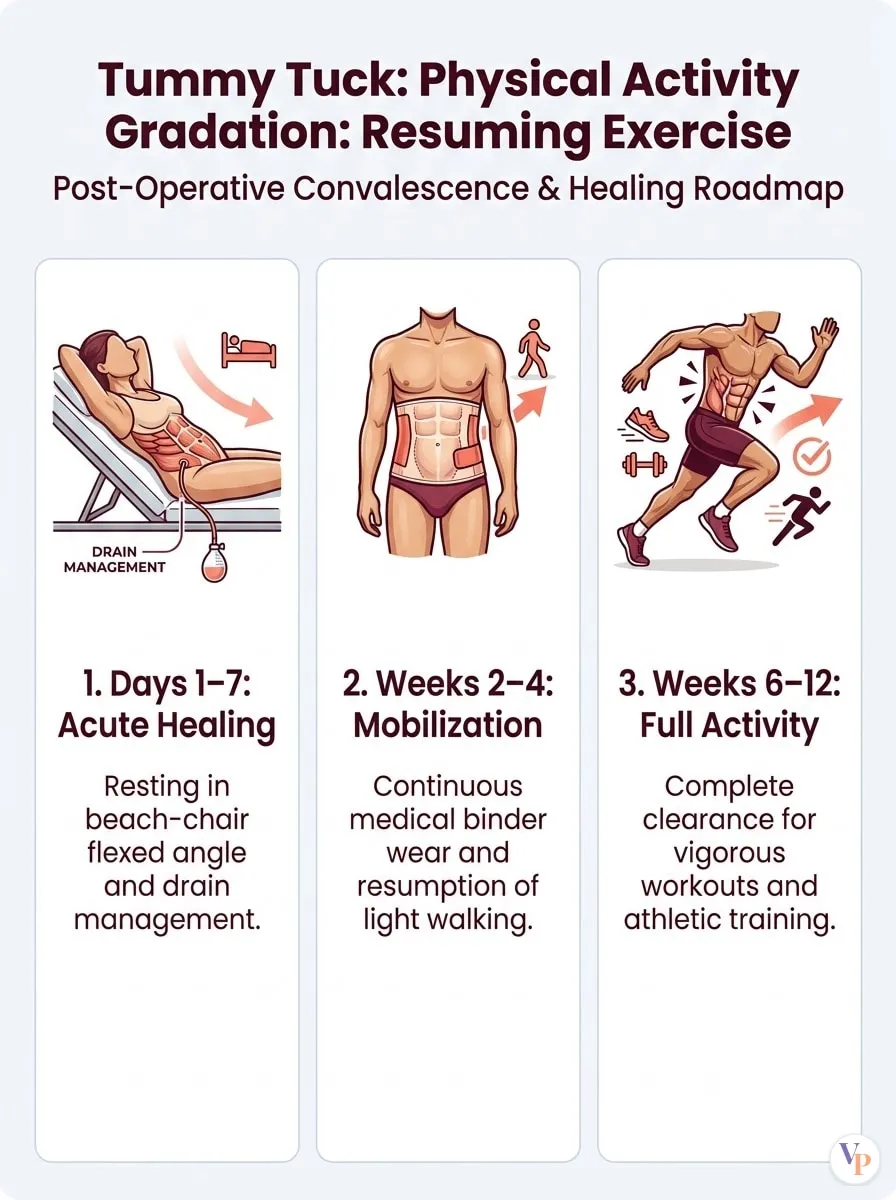
You need to go slow when you start exercising again. Your body needs time to heal from the reconstructive work done to your stomach muscles.
Moving too fast can hurt your internal stitches. Be careful with your movements.
Start by walking only. This helps your blood flow and prevents clots. It also protects your core.
Your surgeon will tell you when to move to the next step. Wait for their okay.
Once cleared, you can start light exercise. Choose activities that do not pull or stretch your stomach.
Listen to your body. This helps keep your results natural and firm.
Phase 1: Early Mobility and Walking
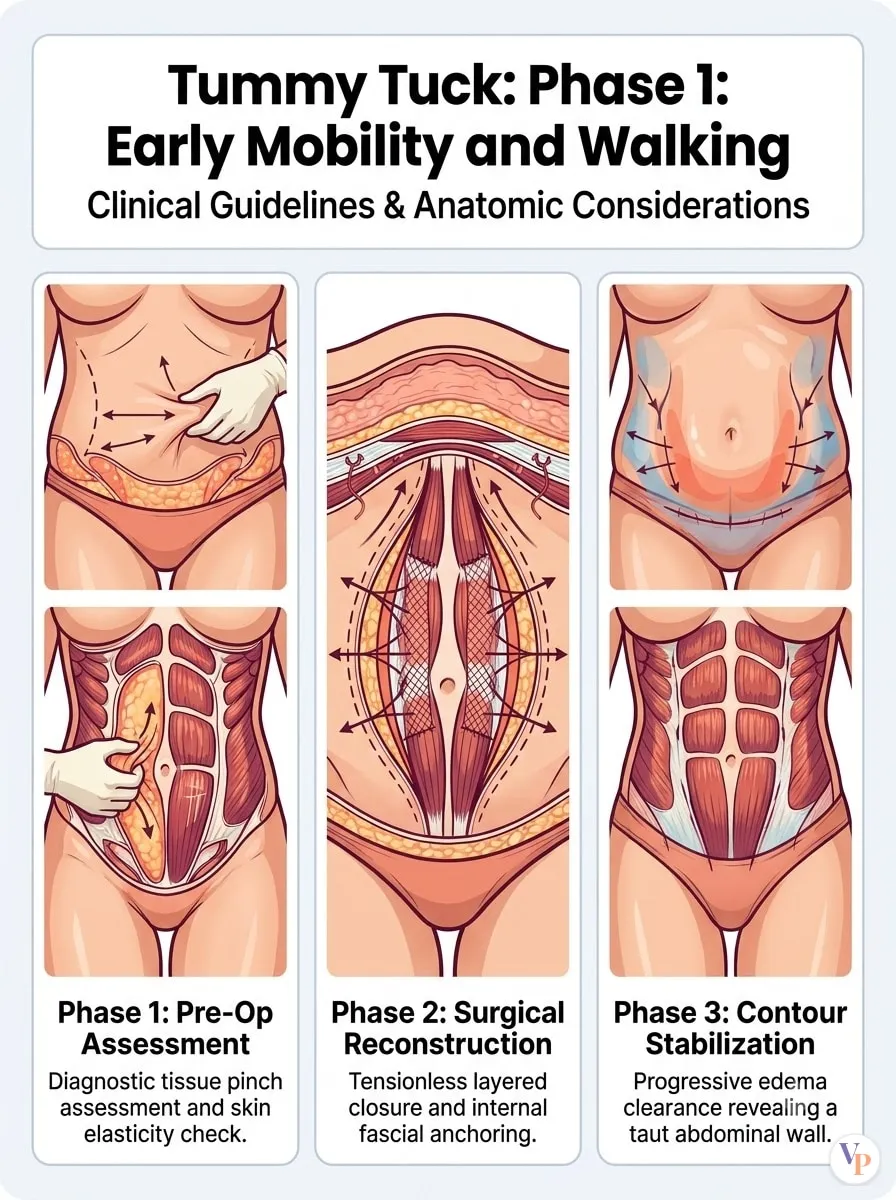
Gentle movement is a big part of your healing. Your goal is to move without straining your stomach muscles.
Follow these tips to get moving:
- Start with short walks: Take very brief trips around your room or home. These short walks keep your joints from getting stiff.
- Boost your circulation: Moving your legs helps your circulation. This sends oxygen to the tissues that are healing.
- Prevent blood clots: Light movement is the best way to stop blood clots in your legs. This keeps you safe during your first few weeks.
- Listen to your body: Stop and rest if you feel pain or pulling. Your comfort comes first as you build confidence.
Phase 2: Low-Impact Cardiovascular Activity
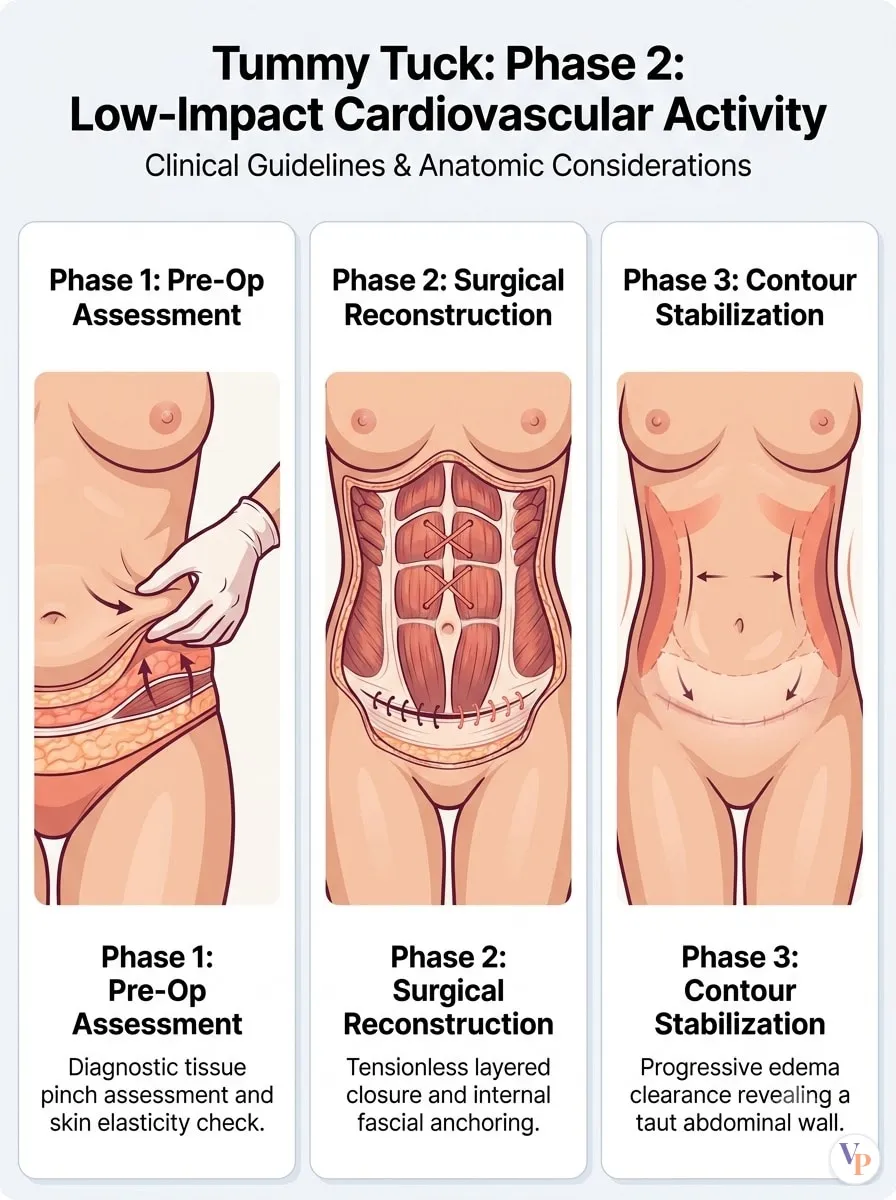
Now that you can handle short walks, you can move more. This phase helps raise your heart rate without stressing your surgical site.
Follow these steps to stay safe:
- Begin steady-state walking: Walk at a steady, medium pace for longer times. Steady-state walking builds your stamina without sudden jerks to your body.
- Monitor your effort: Walk slowly enough so you can still talk. This stops too much abdominal tension, which is the feeling of tightness or pressure in your stomach muscles.
- Avoid twisting: Walk in a straight line to protect your internal stitches. Do not do any activity that makes you rotate your torso.
- Use low-impact machines: Ask your doctor before using a stationary bike or an elliptical. These tools move your legs while keeping your core stable.
- Increase time slowly: Add a few minutes to your walk each day. This slow start protects your results and builds your confidence.
Core-Straining Restrictions and High-Risk Activities
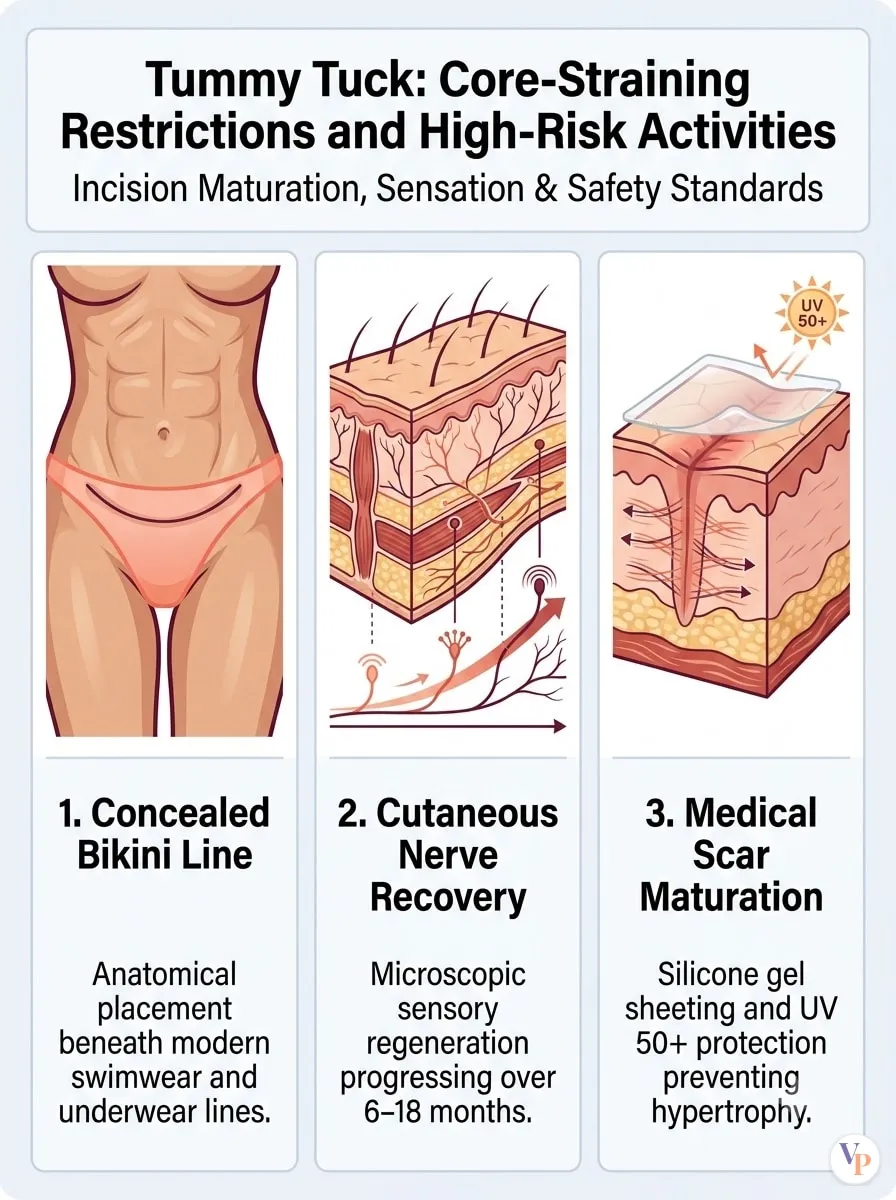
Do not do any core-straining moves that press on your stomach. These can stretch your stitches or ruin your surgical results.
Use this guide to see what to avoid to prevent strain while you heal.
| Activity Type | What to Avoid | Why It Is Risky |
|---|---|---|
| Abdominal Work | Abdominal crunches, planks, and sit-ups. | These put direct pressure on the repaired muscles. |
| Strength Training | Heavy lifting of weights, luggage, or children. | Lifting heavy objects creates too much internal tension. |
| High-Impact Sports | Running, jumping, or contact sports. | Sudden jolts can pull at your incisions. |
| Stretching | Deep torso twists or intense yoga poses. | Twisting can tear the internal sutures. |
The Role of Incision Type in Mobility Recovery
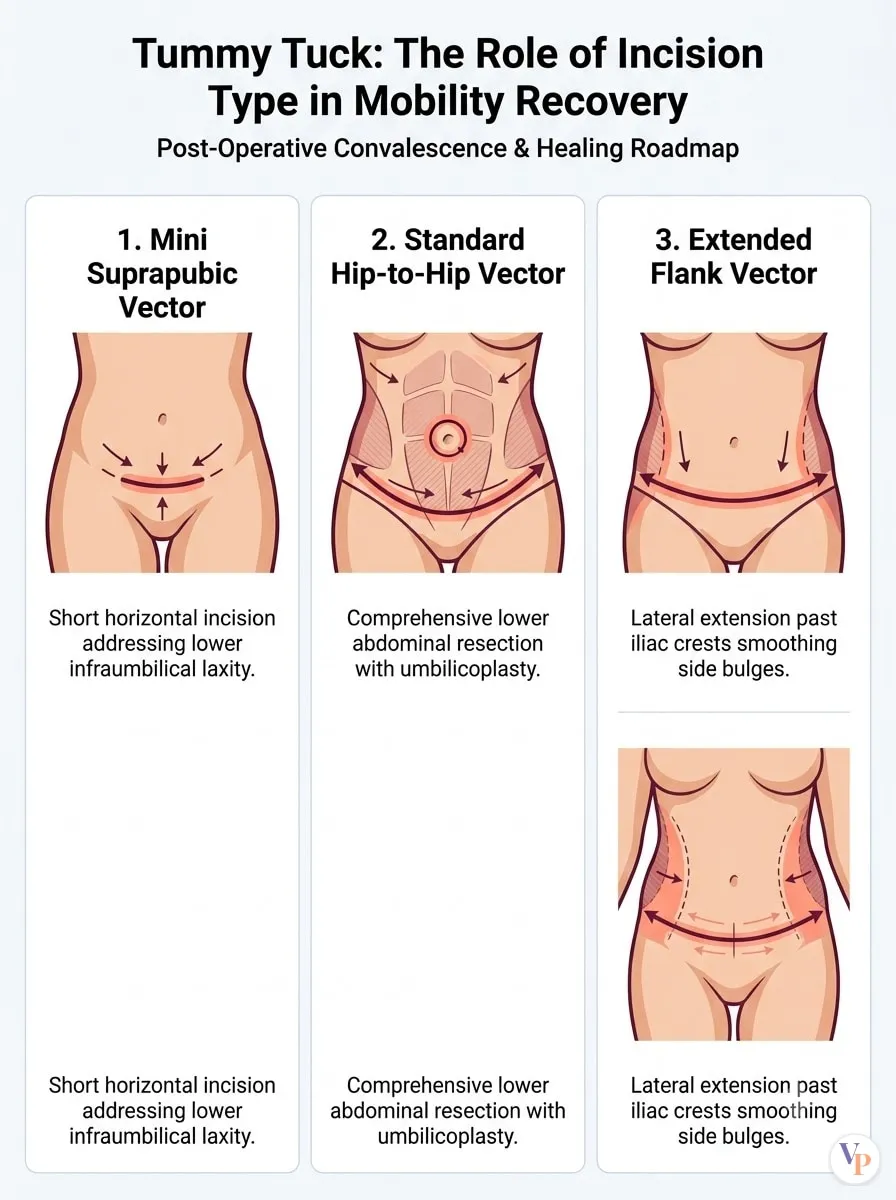
The type of surgery you choose changes your functional speed. This is how fast you return to normal movement.
A mini tummy tuck involves a shorter incision length. The cut is smaller and only affects your lower belly. You will often feel mobile sooner.
A full tummy tuck covers a larger area from hip to hip. This larger incision length takes more time to heal.
Your skin and muscles need more time to knit back together. Be patient with your movement to protect your new shape and confidence.
Clinical Clearance Protocol at Kalpana Aesthetics
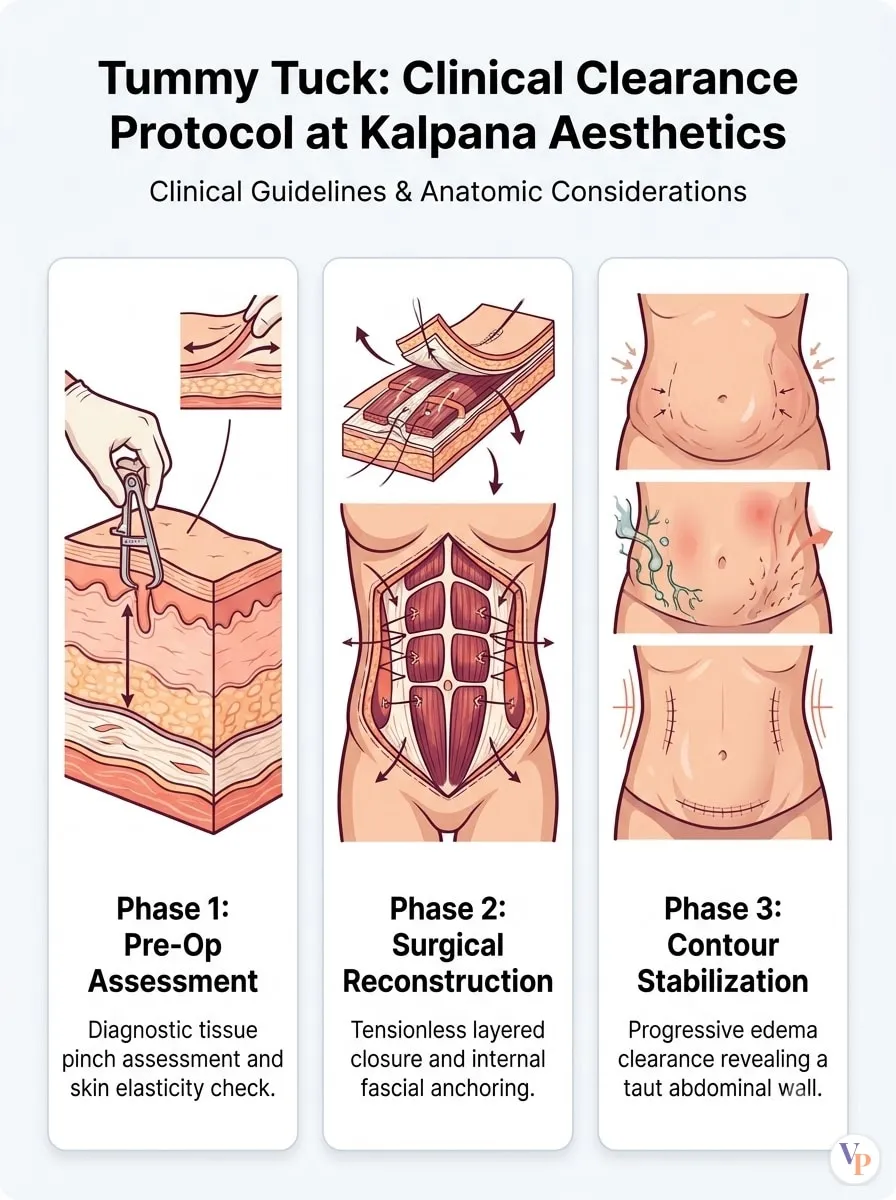
Your path back to activity is guided by a surgeon-led clearance. This means Dr. Vishal Purohit reviews your healing before you start heavy exercise.
Never guess when it is safe to push your body.
Official approval happens during your post-operative check-up. Your doctor will look for specific clinical milestones.
These signs show your skin has closed. They also show your muscles are strong enough for stress.
Following this protocol protects your new look and your health. It helps you return to your favorite activities with confidence.
This personal approach keeps your recovery safe and your results natural.
Frequently Asked Questions
When is it safe to return to sedentary office work after a tummy tuck?
Most patients safely return to sedentary desk jobs within 10 to 14 days following abdominoplasty performed by Dr. Vishal Purohit in Jaipur. If your work involves light walking or driving, 2 to 3 weeks of recovery is recommended before resuming duties. As an M.Ch plastic surgeon, Dr. Purohit provides formal medical certificates and gradual return-to-work recommendations.
When can I resume strenuous physical labor or jobs requiring heavy lifting?
Jobs requiring heavy lifting over 10 kg, repetitive bending, or strenuous physical exertion require 6 to 8 weeks of convalescence before safe resumption with Dr. Vishal Purohit in Jaipur. Returning to heavy physical labor prematurely risks disrupting the internal rectus plication repair. Dr. Purohit performs core stability tests at your 6-week checkup to clear occupational activities.
What is the week-by-week exercise resumption schedule after abdominoplasty?
Gentle indoor walking starts on day one; brisk treadmill walking resumes at week 3; stationary cycling and light arm weights resume at week 4; running, swimming, and heavy lifting resume at week 6 to 8 under Dr. Vishal Purohit’s protocols in Jaipur. Core sit-ups and crunches must be avoided until week 8 to 10. As an M.Ch. plastic surgeon, Dr. Purohit customizes athletic progression to protect internal repairs.
Why must core exercises and abdominal crunches be delayed for 8 weeks?
Direct abdominal crunches generate significant intra-abdominal pressure that can pull on permanent plication sutures before the linea alba fascia has fully synthesized mature collagen, warns Dr. Vishal Purohit in Jaipur. Premature abdominal workouts can tear internal stitches and compromise muscle repair. Dr. Purohit verifies fascial integrity before clearing strenuous core training.
How do I know if I am pushing myself too hard during post-op workouts?
If you experience sudden localized pain, increased swelling, throbbing near the incision, or bloody drain discharge during or after exercise, stop immediately and contact Dr. Vishal Purohit in Jaipur. These symptoms indicate tissue strain and require resting with compression. Dr. Purohit provides reassuring clinical guidance to keep your fitness resumption safe and steady.
For full details on hospital facilities, OT safety protocols, and personalized surgical pricing, explore our comprehensive guide on Tummy Tuck Surgery in Jaipur or review our main Tummy Tuck Guide.