
The Importance of Compression Garments After a Tummy Tuck: Optimizing Post-Surgical Recovery
Getting a toned stomach takes more than just a great surgery. Your recovery phase is where you get your final results.
Compression garments are a key part of this process. They help reduce swelling and support your healing skin.
These garments apply gentle pressure to your body. This stops fluid buildup and helps your skin smooth out.
Every body is different. You need a garment with the right fit and pressure for your specific shape.
This is why you need an expert like Dr. Vishal Purohit. A skilled plastic surgeon creates a care plan just for you.
They balance your comfort with your medical needs. This protects your results and boosts your self-esteem.
You might be planning your surgery or recovering now. Learning about these garments helps your cosmetic surgery journey in Jaipur.
Using them can build your confidence. They also help you get back to your active life faster.
Managing Post-Operative Edema and Swelling
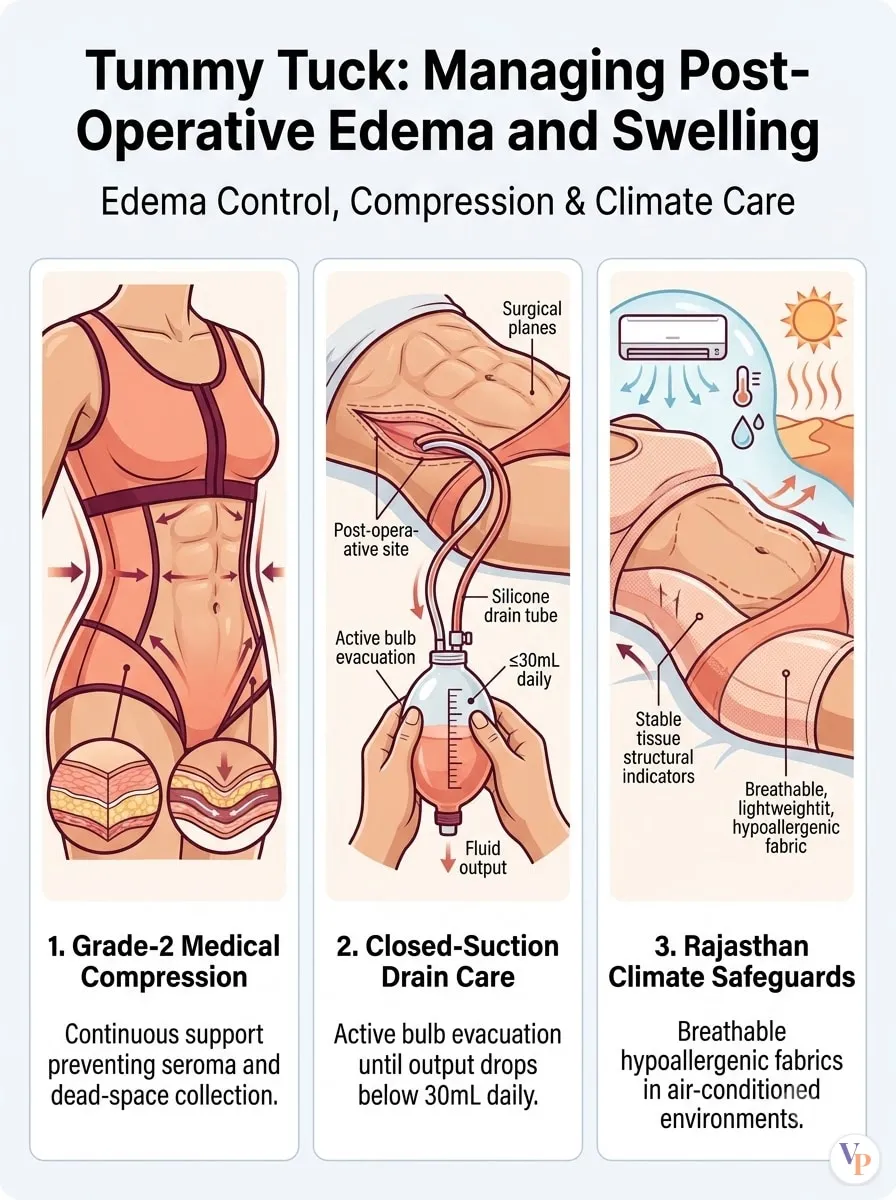
After surgery, your body naturally holds onto extra liquid. This is called interstitial fluid. It is fluid that builds up between your cells.
This leads to edema management needs. Swelling is very common around the abdominal wall.
Compression garments put steady pressure on your skin. This stops fluid accumulation from pooling in your midsection.
This pressure pushes the fluid back into your lymph nodes. Your body can then clear it away.
This method is a great way to manage tummy tuck swelling. The right pressure helps you heal faster. It also restores your natural shape.
Doctors use these tools and other methods to help you recover. For example, Dynamic drainage monitoring may guide compression therapy (“Dynamic drainage monitoring may guide compression therapy and activity restrictions for diverse patients to enhance recovery”). This ensures your body drains fluid correctly.
Prevention of Seromas and Fluid Pockets
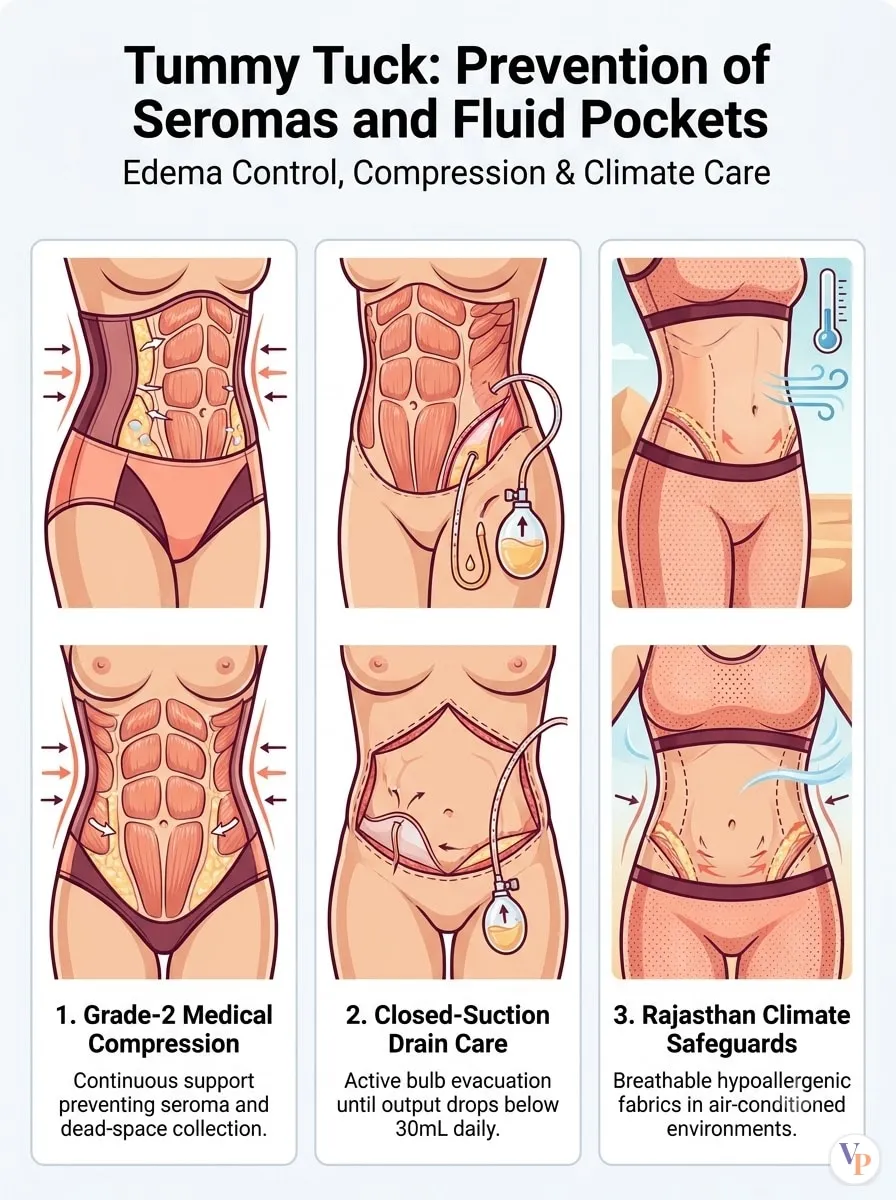
A seroma is a pocket of clear fluid under your skin. This is one of the risks and common side effects of the surgery.
If you don’t treat it, it can become a surgical complication. This can slow down your healing process.
Your garment is key for seroma prevention. Surgery creates a gap between your skin and muscle. This gap is called dead space.
The garment uses mechanical pressure to close this gap. It pushes your skin firmly against the inner tissue.
This stops fluid from collecting in that space. This support helps you keep a smooth, flat stomach.
Enhancing Skin-to-Muscle Adhesion for Better Contouring
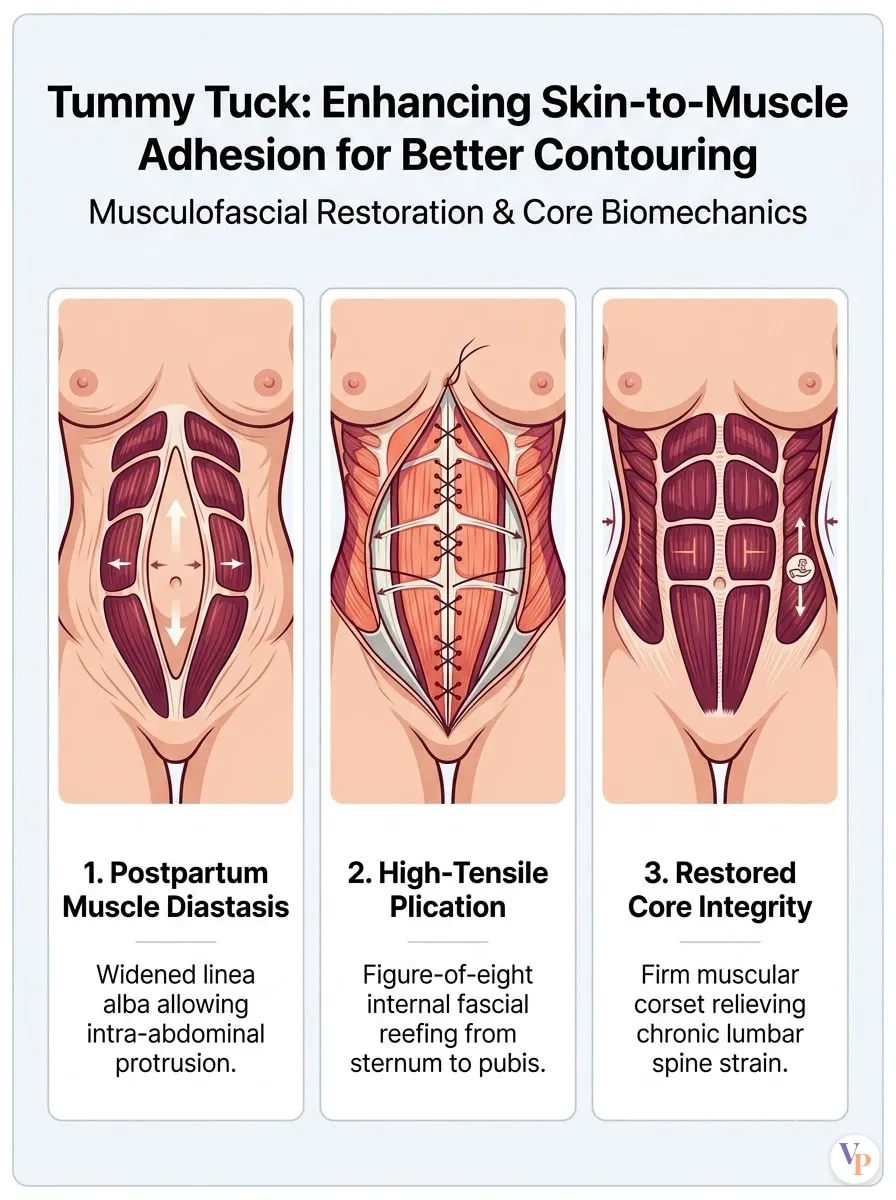
A tummy tuck removes extra skin and tightens your muscles. Your skin must stick to the fascia. This is the thin layer of tissue over your muscle.
This bonding process is called skin-to-muscle adhesion. If the skin does not bond firmly, you might see sagging or ripples.
Compression garments provide the steady pressure you need for this bond. This pressure keeps your skin flat against your body.
This creates a smooth contour across your midsection. It helps you get the best aesthetic outcome for your new shape.
Guidelines for Wearing Your Compression Garment
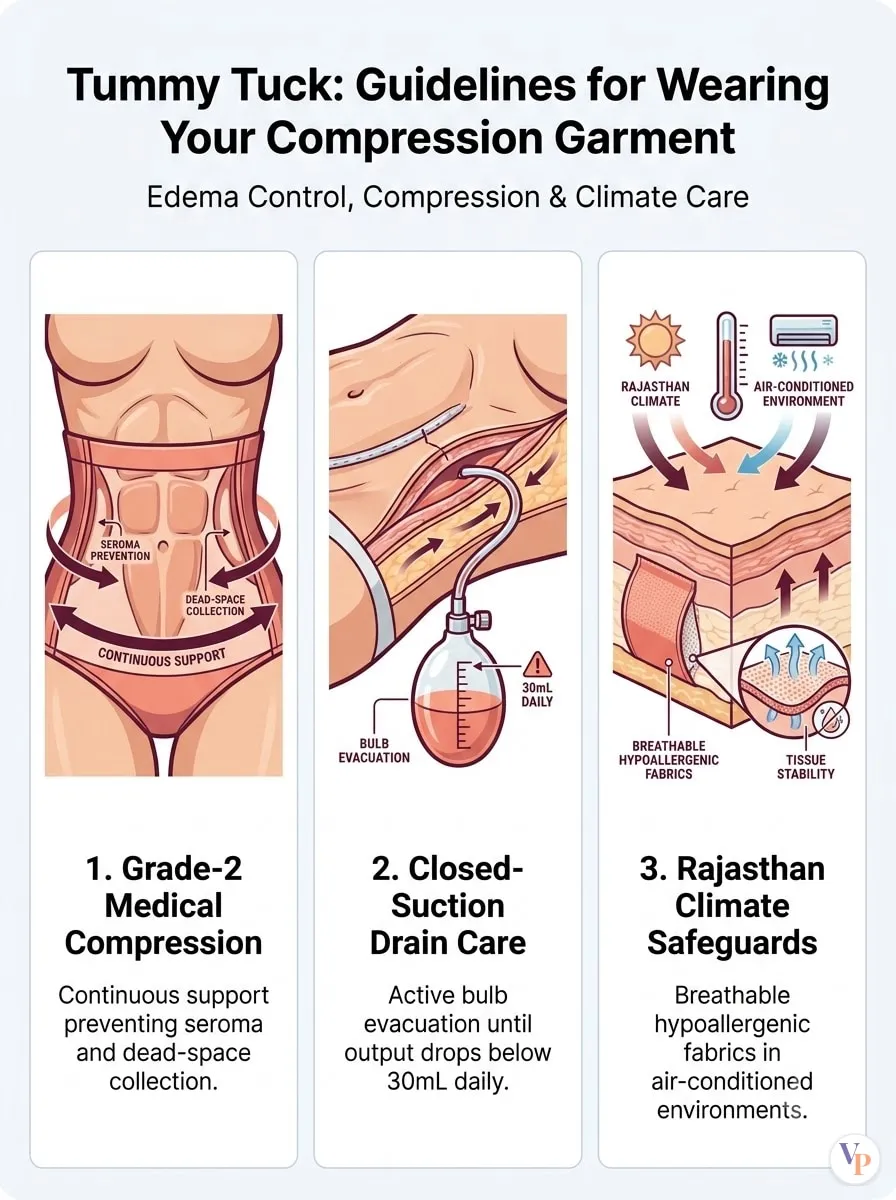
Your recovery timeline depends on how well you follow your schedule. You must be consistent with your wearing duration for the best results.
Follow these steps to help your body heal and shape correctly:
- Immediate Post-Op Phase: Put on your tummy tuck binder right after surgery. Wear it 24 hours a day for the first two weeks. This gives you the most support while swelling is high.
- The Transition Phase: Your doctor will tell you when to wear the garment less. You might only wear it during the day or when you move around. This change depends on how you heal.
- The Maintenance Phase: In the final stage, wear the garment a few times a week. This keeps your new shape as your tissue settles. Only stop wearing it when your surgeon says it is okay.
- Ongoing Follow-up Care: Go to every follow-up care visit to check your skin. Your surgeon will make sure the garment fits right. They will change your schedule if you have extra swelling.
Immediate Post-Operative Phase (Days 1-14)
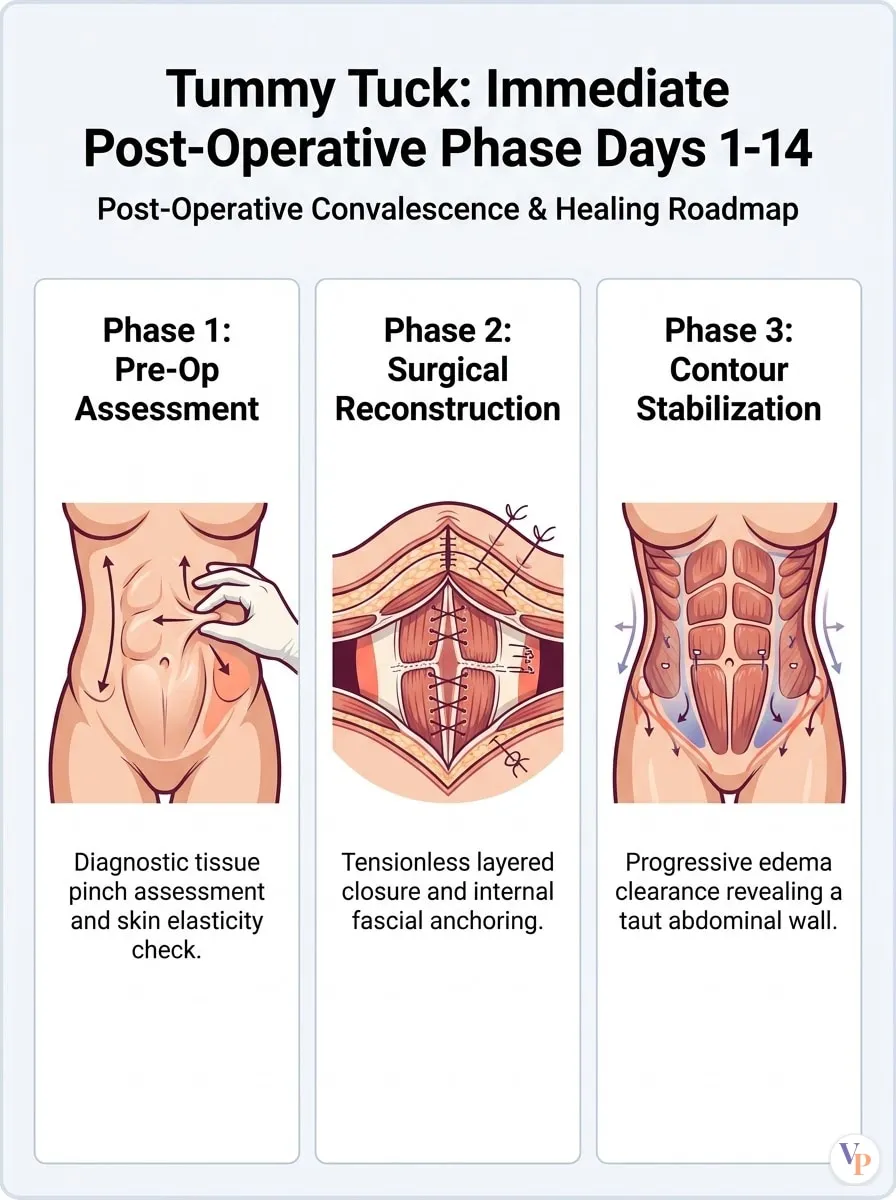
The first 14 days are the most important part of your tummy tuck recovery timeline. You must wear your compression garment 24 hours a day.
Only take it off for quick showers or to clean the garment.
Steady pressure is the only way to control initial swelling. This is your body’s natural reaction to surgery.
Keeping the garment tight stops fluid from pooling. It also protects your new shape.
Stay disciplined so you feel secure. This helps you stay confident as you heal.
Intermediate Recovery Phase
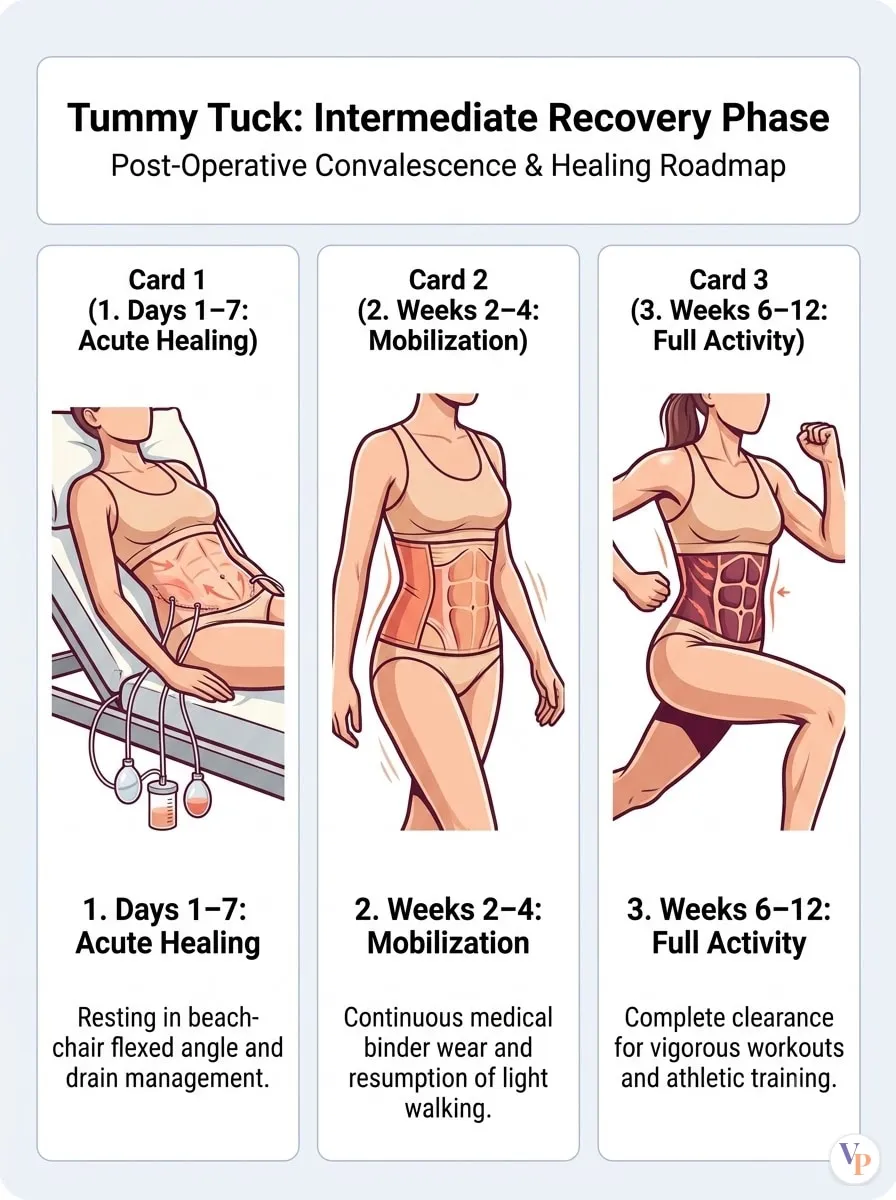
Between weeks three and six, you will gradually reduce how much you wear your garment. You no longer need to wear the binder all day.
Your body has handled the worst swelling. Your skin is also starting to bond.
You will move toward intermittent wear. Wear your garment during the day or when you are active.
You can leave it off while you sleep or relax. This helps your skin adjust to your new waist shape.
Selecting the Right Material for Comfort and Hygiene
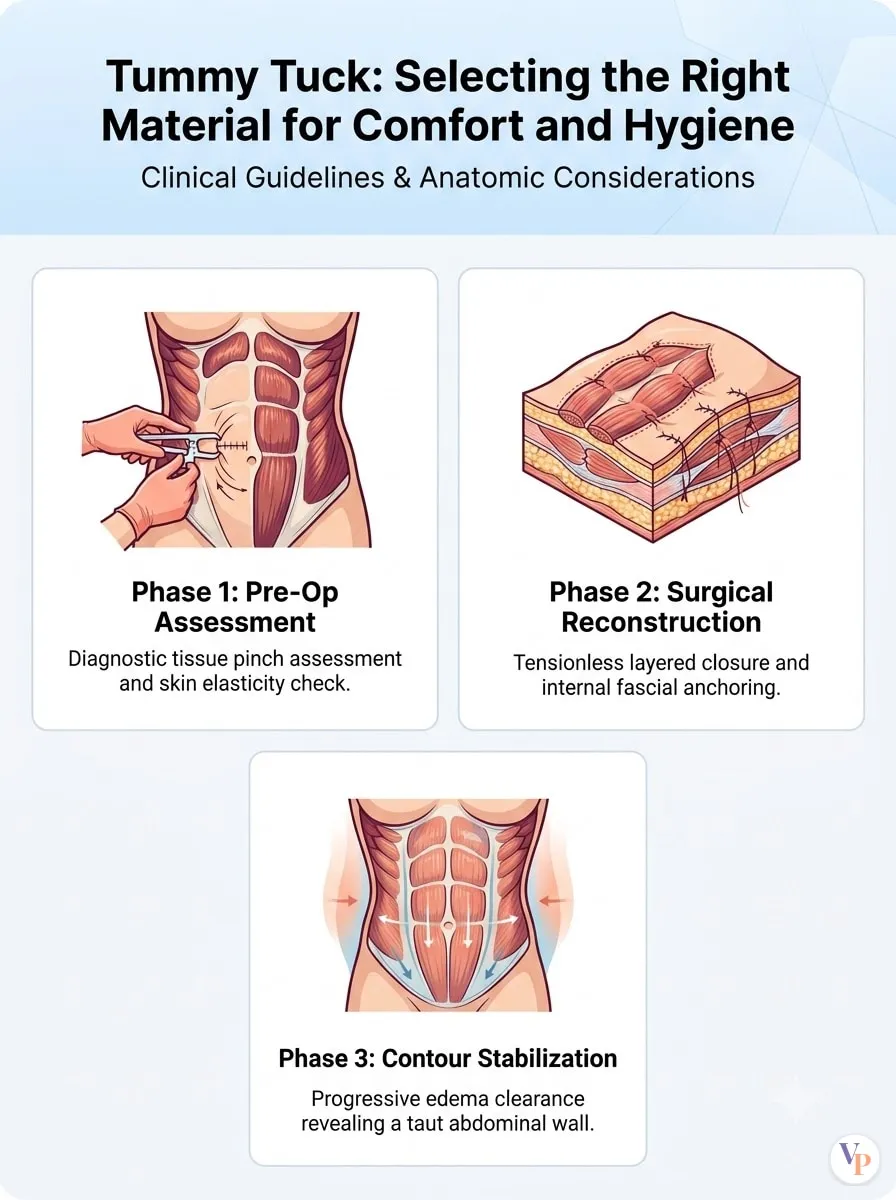
Picking the right fabric helps you feel fresh and confident. In humid places like Jaipur, the wrong material traps heat and moisture. This can cause rashes or skin irritation.
Medical-grade fabric gives you the right pressure without hurting your skin. Look for breathability. This lets air flow through the fabric to keep you cool and dry.
Good skin hygiene is key to avoiding infections. High-quality materials protect your skin integrity, which is the strength and health of your outer skin layer.
| Material Feature | Benefit for Your Recovery | Why It Matters in Jaipur |
|---|---|---|
| Medical-Grade Fabric | Provides steady, even pressure to the abdomen. | Stops swelling without irritating sensitive skin. |
| High Breathability | Allows sweat to evaporate and air to reach the skin. | Prevents heat rashes and sweat buildup in humidity. |
| Moisture-Wicking | Pulls wetness away from the body. | Keeps the surgical site dry and clean. |
| Hypoallergenic | Reduces the risk of allergic reactions. | Maintains skin integrity during the healing process. |
Frequently Asked Questions
Why is wearing an abdominal compression garment critical after a tummy tuck?
Wearing a medical-grade compression garment applies constant, uniform external pressure that obliterates dead space between the skin flap and muscle, preventing seromas and reducing edema, explains Dr. Vishal Purohit in Jaipur. It also stabilizes the internal muscular plication sutures and guides skin redraping into a smooth, sculpted contour. As an M.Ch plastic surgeon, Dr. Purohit prescribes medical compression as an indispensable phase of surgical healing.
How many weeks must I wear the compression garment after abdominoplasty?
Patients must wear the compression garment 24 hours a day for the first 3 to 4 weeks (except when showering), followed by 12 hours daily for an additional 2 to 4 weeks, under protocols established by Dr. Vishal Purohit in Jaipur. Premature removal of the garment significantly increases the risk of chronic fluid accumulation and delayed skin retraction. Dr. Purohit checks dermal adaptation at follow-ups before tapering garment use.
How tight should the tummy tuck compression garment feel?
The compression garment should feel snug and supportive like a firm hug, but must never cause severe pain, numbness in the thighs, or skin blistering, advises Dr. Vishal Purohit in Jaipur. Overly tight garments can compromise cutaneous capillary blood flow and risk skin necrosis along the lower incision. Dr. Purohit personally fits and adjusts the initial post-operative binder before hospital discharge.
What should I do if my compression garment causes skin irritation or folds?
If the garment rubs or creases against your skin, wear a thin, seamless 100% cotton tank top underneath or place sterile foam pads between the garment and your abdomen, recommends Dr. Vishal Purohit in Jaipur. Keep the skin clean and dry to avoid sweat rashes. As an M.Ch. plastic surgeon, Dr. Purohit assists patients in resizing garments at week 3 as swelling subsides.
Can I wash my compression garment during the recovery period?
Yes, having two compression garments allows you to wash one in cold water with mild detergent while wearing the other, ensuring continuous, uninterrupted abdominal support under Dr. Vishal Purohit’s guidance in Jaipur. Air-dry the garment away from direct heat to preserve its elastic polymer tension. Dr. Purohit’s clinic stocks specialized medical-grade garments for patient convenience.
Summary of Recovery Benefits Wearing your garment is vital for three reasons:
- Edema Control: It stops fluid buildup to lower swelling.
- Seroma Prevention: It stops painful fluid pockets from forming.
- Contour Optimization: It helps your skin stick to the muscle for a smooth look.
Your path to confidence is personal. Talk to Dr. Vishal Purohit at Kalpana Aesthetics for a plan made just for you.
If you would like to discuss your condition or book a consultation, contact Dr. Vishal Purohit in Jaipur at +91-7718183535. Our specialist team is here to guide you through every step of your care. For the full picture, see our complete guide to Tummy Tuck.
For full details on hospital facilities, OT safety protocols, and personalized surgical pricing, explore our comprehensive guide on Tummy Tuck Surgery in Jaipur or review our main Tummy Tuck Guide.