
Can a Tummy Tuck Fix Diastasis Recti After Pregnancy? Surgical Solutions for Abdominal Separation
Yes, a tummy tuck is a great way to fix diastasis recti. Some women find that exercise cannot close the gap in their stomach muscles.
Surgery can restore your core strength. This is about more than looks. It helps you feel strong and comfortable again.
A basic tummy tuck removes extra skin. To fix diastasis recti, surgeons use a method called plication.
During this process, the surgeon tightens and stitches your muscles back together. This flattens your stomach and improves your posture.
For a full change, you can pair this repair with expert cosmetic surgery in Jaipur. This ensures your results look natural and work well.
Dr. Vishal Purohit is an M.Ch. Plastic and Reconstructive surgeon. He specializes in these repairs at Kalpana Aesthetics.
He creates custom plans for every patient. He helps women regain their strength and confidence after motherhood.
How Muscle Repair Works: Understanding Plication
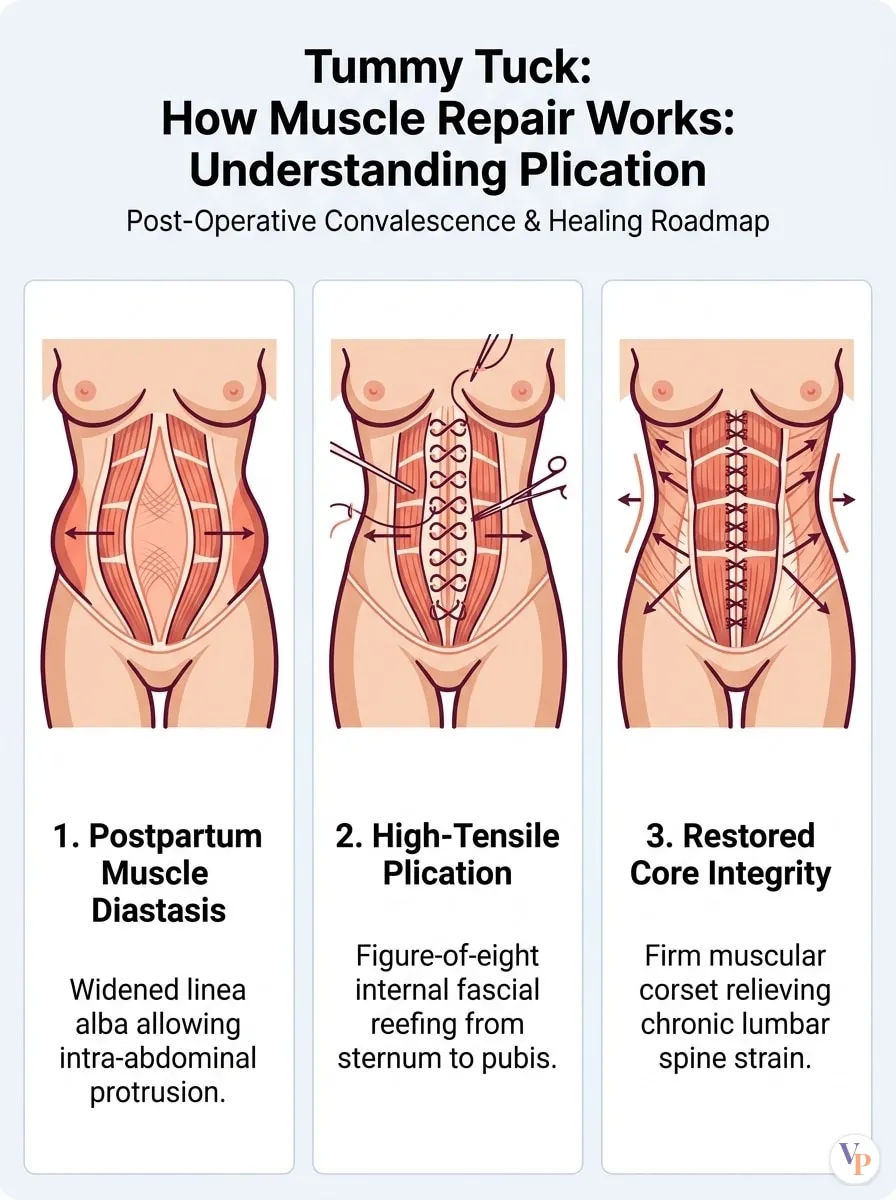
Muscle Plication is a surgery used to fix a separated stomach. During pregnancy, your Rectus Abdominis (the “six-pack” muscles) stretch apart.
This creates a gap in the Linea Alba. This is the tissue that usually holds your muscles together.
To fix this, the surgeon does an Abdominal Wall Closure. They pull the muscles back to the center and stitch them tight.
This works well because wide abdominal rectus plication abdominoplasty1.
This repair does more than flatten your belly. It gives your body the support it needs.
Tightening your core helps increase spine stability (“increase spine stability and decrease low back pain”). It also improves your posture.
How the Muscle Gap is Surgically Closed
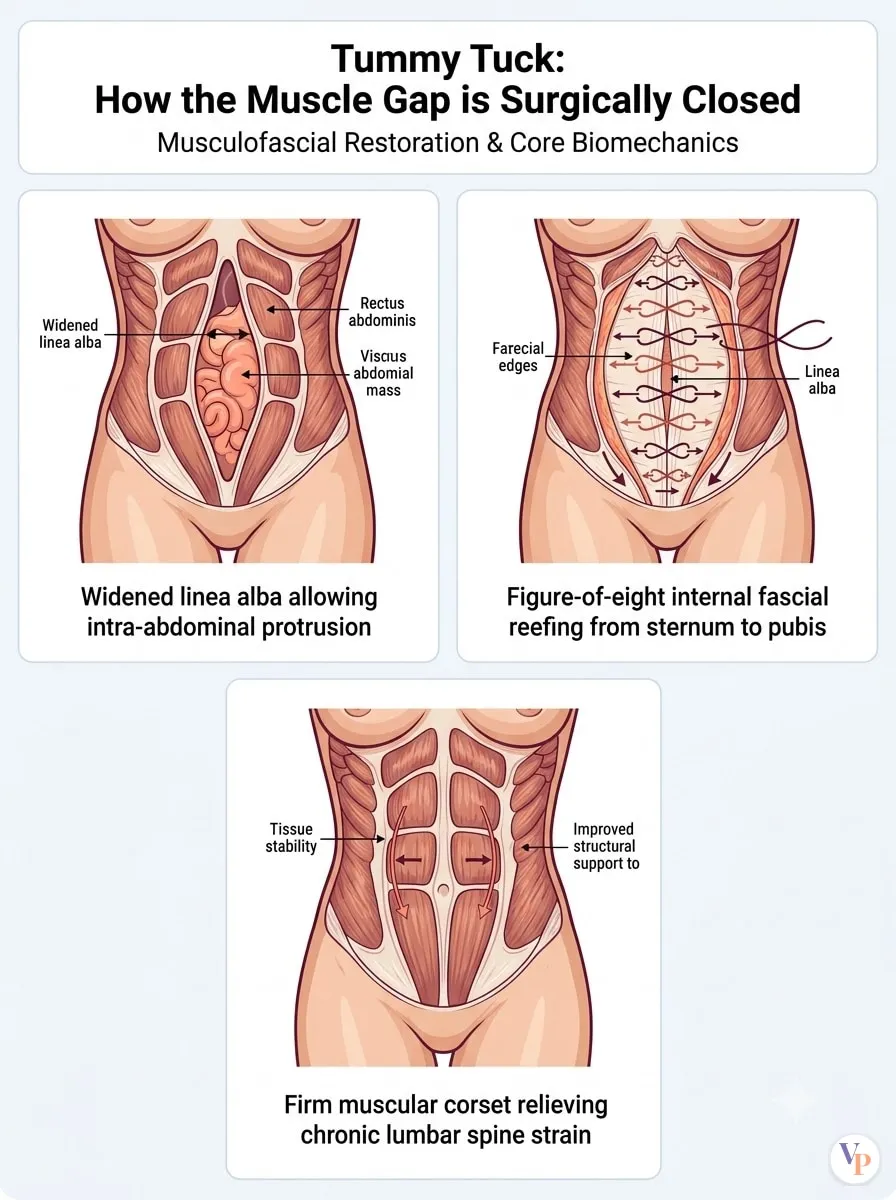
Closing the gap in your stomach muscles is a precise process. Here is how the repair works step-by-step:
- Accessing the Muscle: The surgeon makes a cut. They move the skin and fat aside to find the separated muscles.
- Aligning the Core: The surgeon pulls the separated sides of the Rectus Abdominis back to the center.
- Applying Internal Stitches: The surgeon uses strong internal stitches. These bind the muscle walls together to close the gap.
- Managing Tension: The surgeon makes sure the wall is tight but feels natural. They often use barbed sutures (“placed with progressive tension (PTS) during abdominoplasty closure”) to create a secure hold.
- Securing the Area: The surgeon adds final sutures. These stabilize the repair and smooth your belly’s shape.
- Skin Closure: The doctor removes extra skin. Then, they stitch the skin closed over your new, tight muscle wall.
Restoring Core Functional Recovery After Childbirth
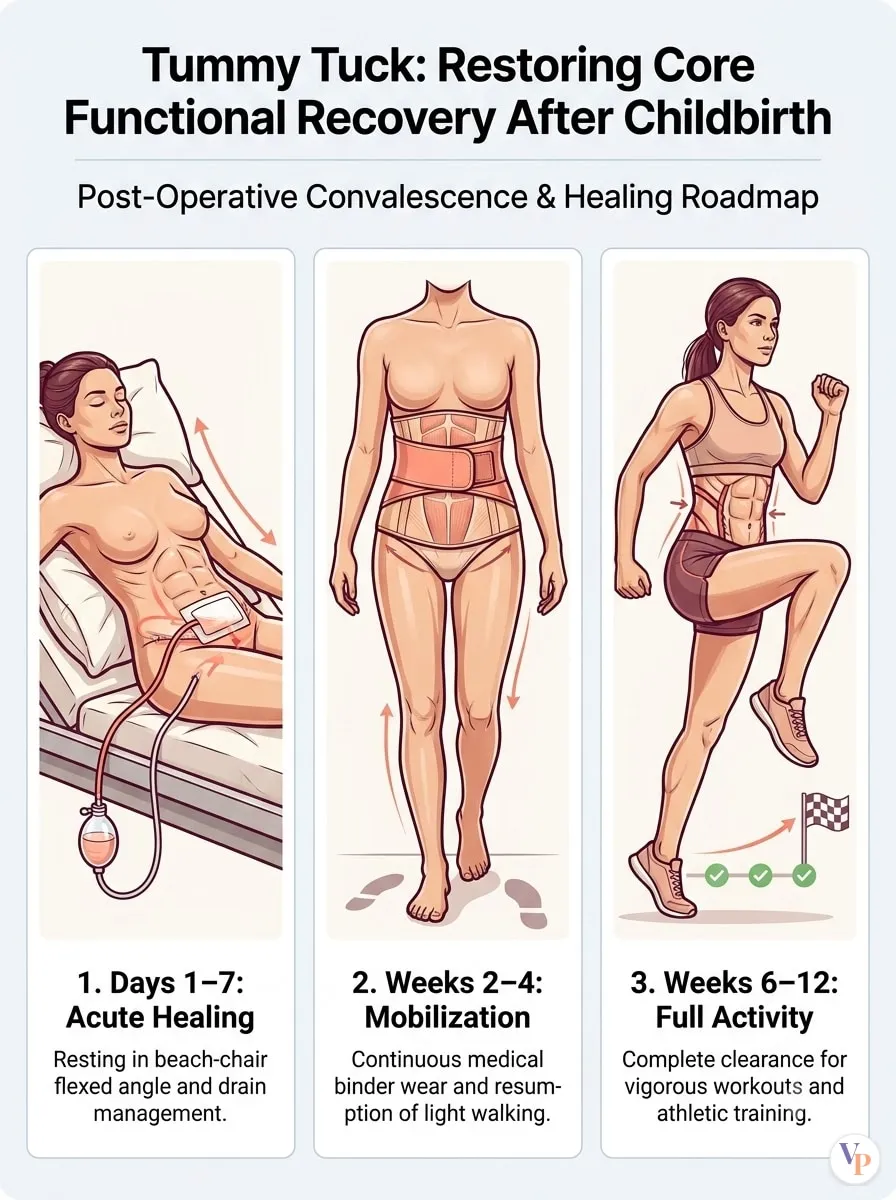
A tummy tuck does more than remove a post-pregnancy pooch. It brings back your Abdominal Stability. This is “the way your core supports your inner organs.”
This stability helps you move easily. It makes you feel strong again.
Fixing the muscle gap restores your Core Strength. Your spine gets better support when your stomach muscles are tight.
This often reduces back pain and posture issues.
Many women see their Lower Back Pain fade after the repair. You can return to the activities you love with more confidence.
This change lets you focus on living your most beautiful life.
Optimal Timing: When to Seek Surgery After Pregnancy
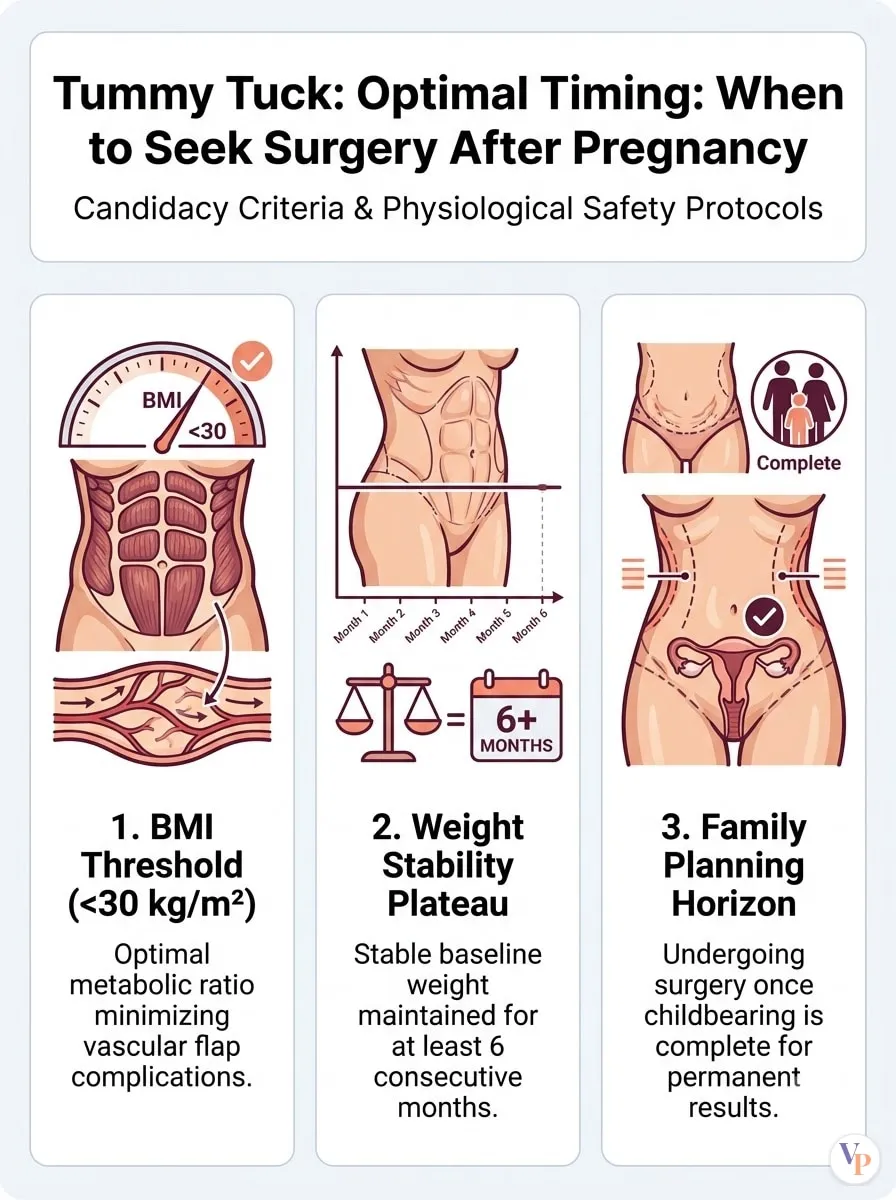
Picking the right time for your procedure helps your body and mind heal best. Think about these factors before you schedule your surgery:
- The Wait Period: Most surgeons suggest a Wait Period of six months to a year after birth. This gives your body time to recover.
- Hormonal Balance: Your body needs time to reach a stable Hormonal Balance. This helps your wounds heal and keeps your weight steady.
- Breastfeeding: Many women wait until they finish Breastfeeding. This protects your milk supply and your comfort.
- Skin Elasticity: Waiting lets your Skin Elasticity settle. This helps your surgeon remove the right amount of skin for a natural look.
- Family Planning: Wait until you are done with future pregnancies. New pregnancies can stretch your repaired muscles again.
Surgical Synergy: Combining Tummy Tuck with Liposuction
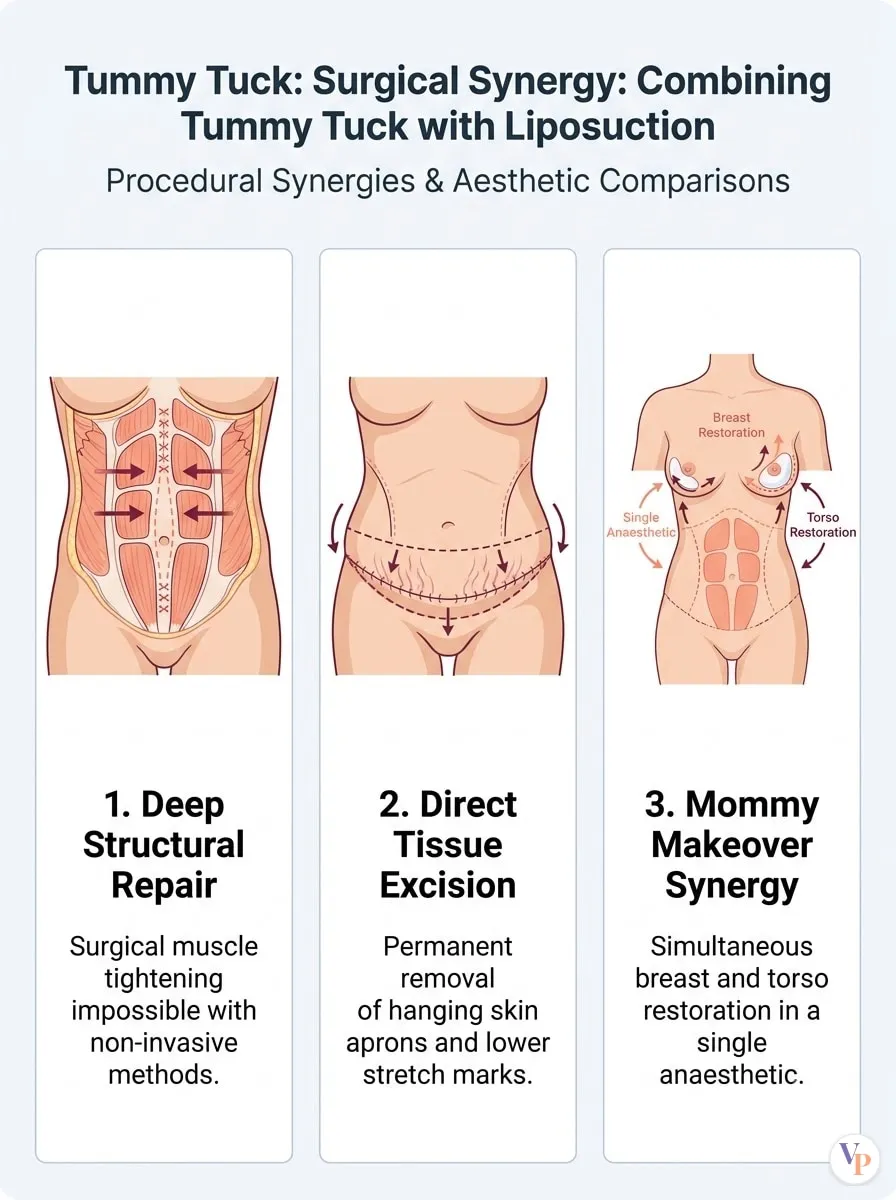
A tummy tuck repairs your muscles and removes extra skin. But some areas have Stubborn Fat that skin removal cannot fix.
Adding Liposuction lets your surgeon vacuum out these fat pockets. This Combined Procedure gives you a smoother, more sculpted look.
Using both methods improves Body Contouring. This is how surgeons shape your body.
This approach helps remove “fullness of the epigastric and flank area” wide lipoaspiration at the time of abdominoplasty2. It also means “removing the flanks and epigastric fullness result in a shorter incision line and more natural-looking abdomen” wide lipoaspiration at the time of abdominoplasty.
| Feature | Tummy Tuck Alone | Combined with Liposuction |
|---|---|---|
| Muscle Repair | Tightens the gap in abdominal muscles. | Tightens the gap in abdominal muscles. |
| Skin Removal | Removes hanging or loose skin. | Removes hanging or loose skin. |
| Fat Targeting | Removes skin and fat in the lower belly. | Targets Stubborn Fat in flanks and upper belly. |
| Final Shape | Flatters the stomach area. | Provides a more natural, sculpted curve. |
| Incision Size | Standard incision length. | Can result in a “shorter incision line” liposuctioning of the whole abdomen (“removing the flanks and epigastric fullness result in a shorter incision line”). |
Managing Scarring and Incision Placement
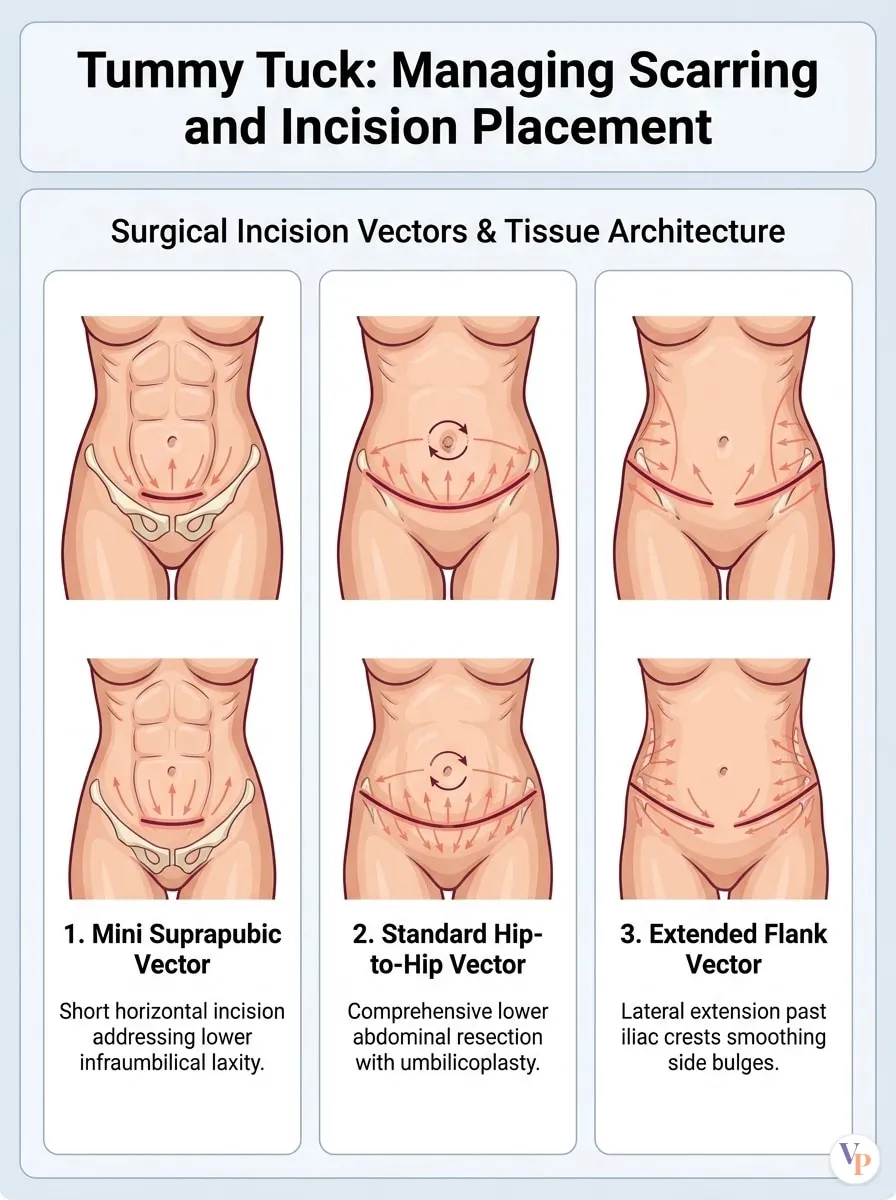
Many women worry about scars after surgery. To keep the Cosmetic Outcome discreet, your surgeon uses a Low-profile Incision.
This cut is placed low on your belly. It stays hidden beneath your Bikini Line.
Scar Healing happens in stages. It is different for everyone.
Some people get different types of marks. These can be “normotrophic, atrophic, hypertrophic, keloid” Polski Merkuriusz Lekarski3 (“in the form of scars (normotrophic, atrophic, hypertrophic, keloid), which have a significant impact on the quality of patients life”).
Good wound care helps these lines fade. This makes them less noticeable over time.
Your surgeon also makes sure your belly button looks natural. New methods help create a “natural, aesthetically pleasing umbilical shape” A novel technique for flat umbilicus repair in abdominoplasty (“confirm that the technique is safe and effective in creating a natural, aesthetically pleasing umbilical shape with a high level of patient satisfaction”).
This careful work helps you feel confident. You will love how your body looks.
Frequently Asked Questions
How does a tummy tuck surgically repair diastasis recti after pregnancy?
Diastasis recti is surgically repaired during abdominoplasty by re-approximating the separated rectus abdominis muscles along the midline linea alba using permanent braided sutures, performed by Dr. Vishal Purohit in Jaipur. This internal muscular corset restoration pulls the core together, eliminating the postpartum abdominal bulge. As an M.Ch plastic surgeon, Dr. Purohit uses multi-layer double-row plication techniques to guarantee lifetime structural integrity.
Can exercise alone close wide abdominal muscle separation without surgery?
Physical therapy and core exercises like transverse abdominis activation can strengthen deep muscles but cannot mechanically bridge or heal separated fibrous linea alba tissue exceeding 2 to 3 cm, as verified by Dr. Vishal Purohit in Jaipur. When connective fascia has overstretched, surgical plication is the only permanent anatomical repair. Dr. Purohit evaluates muscle gap width using ultrasound imaging before formulating surgical plans.
How long does diastasis recti plication take to heal internally?
The internal muscular plication requires 6 to 8 weeks to achieve 80% tensile strength and up to 6 months for complete collagen remodeling under Dr. Vishal Purohit’s care in Jaipur. Patients must avoid heavy lifting over 5 kg and strenuous abdominal crunches for 8 weeks to prevent suture disruption. As an M.Ch. plastic surgeon, Dr. Purohit monitors fascial healing closely during routine milestone follow-ups.
Will a tummy tuck diastasis repair improve back pain and core strength?
Yes, repairing separated abdominal muscles re-establishes intra-abdominal pressure, stabilizes the pelvis, and significantly alleviates chronic lumbar spine pain during surgery with Dr. Vishal Purohit in Jaipur. Patients frequently report improved posture, easier breathing, and enhanced athletic endurance by 8 to 12 weeks post-operatively. Dr. Purohit combines aesthetic contouring with functional musculoskeletal restoration for holistic patient recovery.
Can future pregnancy undo a diastasis recti surgical repair?
Future pregnancy can re-stretch the plicated abdominal fascia and recur diastasis recti, though the permanent internal sutures provide significant residual resistance, explains Dr. Vishal Purohit in Jaipur. To ensure lifetime permanence of your aesthetic and functional results, Dr. Purohit strongly recommends completing childbearing prior to abdominoplasty. Personal consultations at Kalpana Aesthetics establish customized surgical timing tailored to family planning.
For full details on hospital facilities, OT safety protocols, and personalized surgical pricing, explore our comprehensive guide on Tummy Tuck Surgery in Jaipur or review our main Tummy Tuck Guide.