
Tummy Tuck Scar Management: Expert Guide to Fading Your Abdominoplasty Incision
Yes, you can fade and shrink your tummy tuck scars over time. Scars are a normal part of healing. Most lines turn from red to a pale, thin line in 12 to 18 months.
Your final look depends on two things. First, the surgeon must be precise. Second, you must follow your aftercare steps carefully.
At Kalpana Aesthetics, Dr. Vishal Purohit (M.B.B.S., M.S., M.Ch. Plastic Surgery) helps you get natural results. He focuses on your shape and your confidence.
He uses modern techniques and personal care. This ensures you get the best clinical support in a friendly environment.
Are you planning surgery or recovering now? Knowing about cosmetic surgery in Jaipur helps you get the best results.
Keep your skin hydrated and protect it from the sun. You can also use professional scar therapies to help your incision blend in.
The Foundation of Minimal Scarring: Incision Placement Strategy
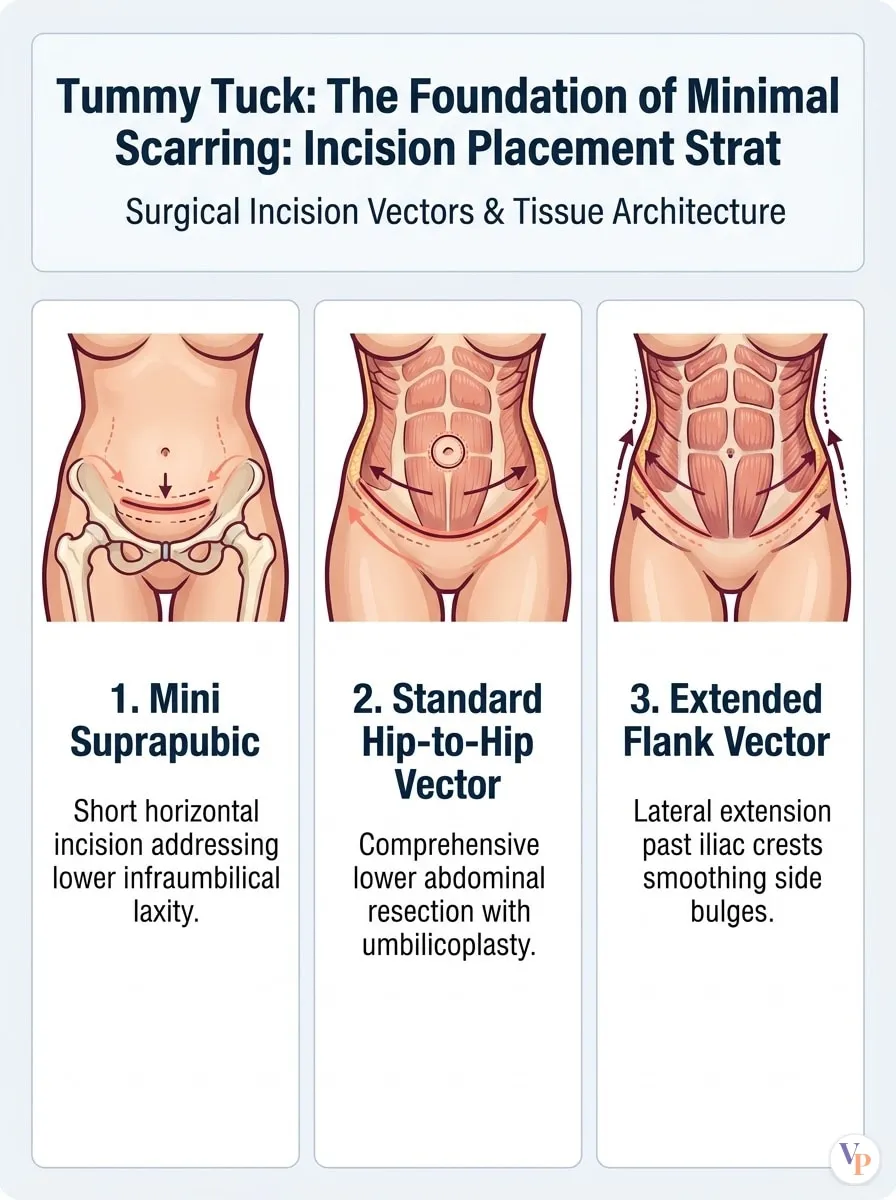
Your scar’s look starts with surgical precision during the planning stage. Your surgeon picks a specific incision placement to keep the mark discreet.
For an abdominoplasty (tummy tuck), the cut is usually low on the belly. This keeps the scar hidden under your normal clothing lines.
If you have less loose skin, a Mini Tummy Tuck uses a smaller, more hidden cut.
Surgeons may use a progressive tension suture placement (“Three-point sutures of 2-0 vicryl are used between the superficial fascia of the abdominal flap and muscle fascia”) to keep skin smooth. This method reduces pull on the skin. It helps the scar heal as a thin, pale line.
Surgical Closure Techniques for Optimal Healing
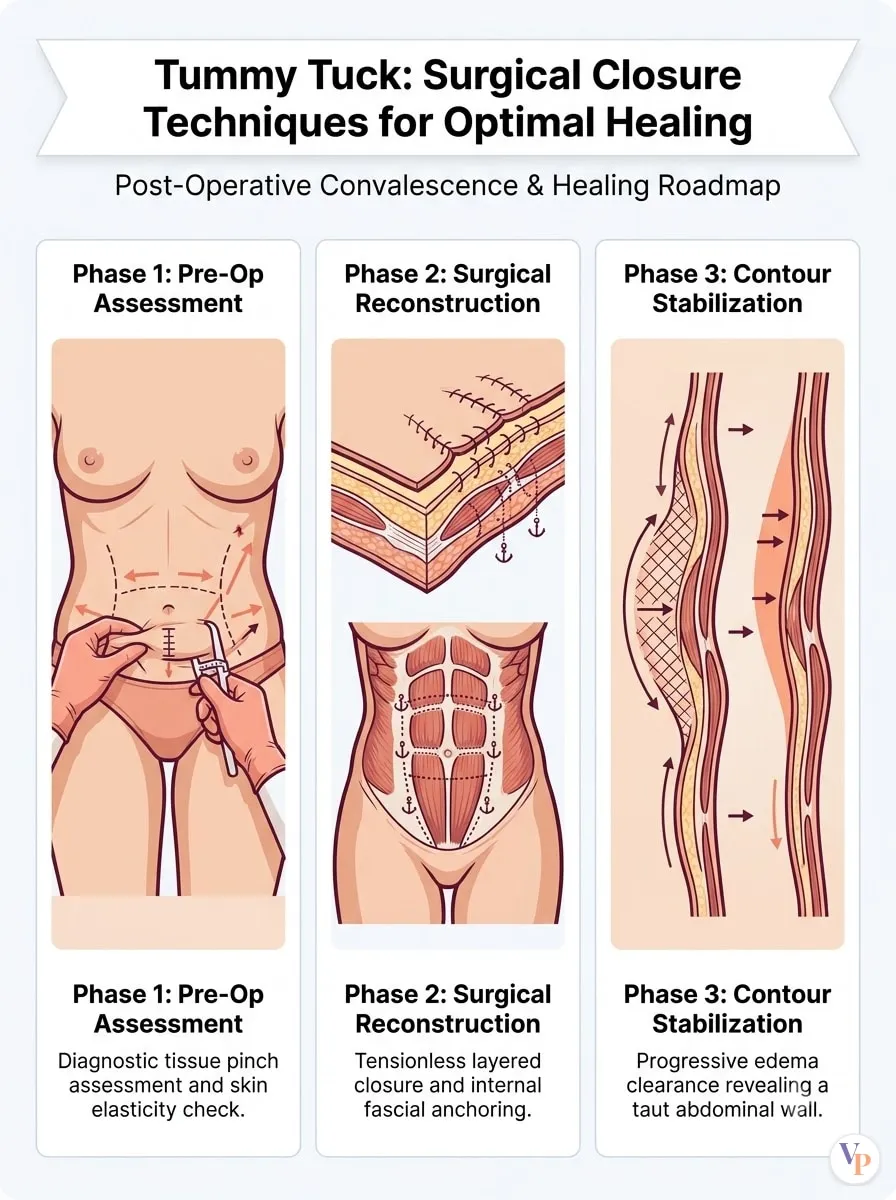
How your surgeon closes your skin affects your final scar quality. Following high plastic surgery standards keeps the incision thin. This stops the skin from stretching.
Here is how suturing techniques and wound closure methods protect your results:
- Tension-Free Closure: Your surgeon makes sure the skin edges do not pull. This is a tension-free closure (“higher tension on the postoperative wound closure, making it susceptible to dehiscence”). This stops the scar from opening or getting wider.
- Layered Stitching: Doctors sew deeper tissues before closing the top layer. This spreads out the pressure. It keeps the surface skin smooth and relaxed.
- Precise Tissue Excision: It is key to remove the exact amount of skin and fat. A careful approach (“precise tissue excision, strategic utilization of PTS… and meticulous umbilicoplasty”) helps with “scar minimization”. This creates a more natural look.
- Optimal Closure Choice: Every patient is different. Choosing the optimal method of surgical wound closure1 is vital. This matters because different scars have a “significant impact on the quality of patients life.”
Post-Operative Topical Interventions to Fade Incisions
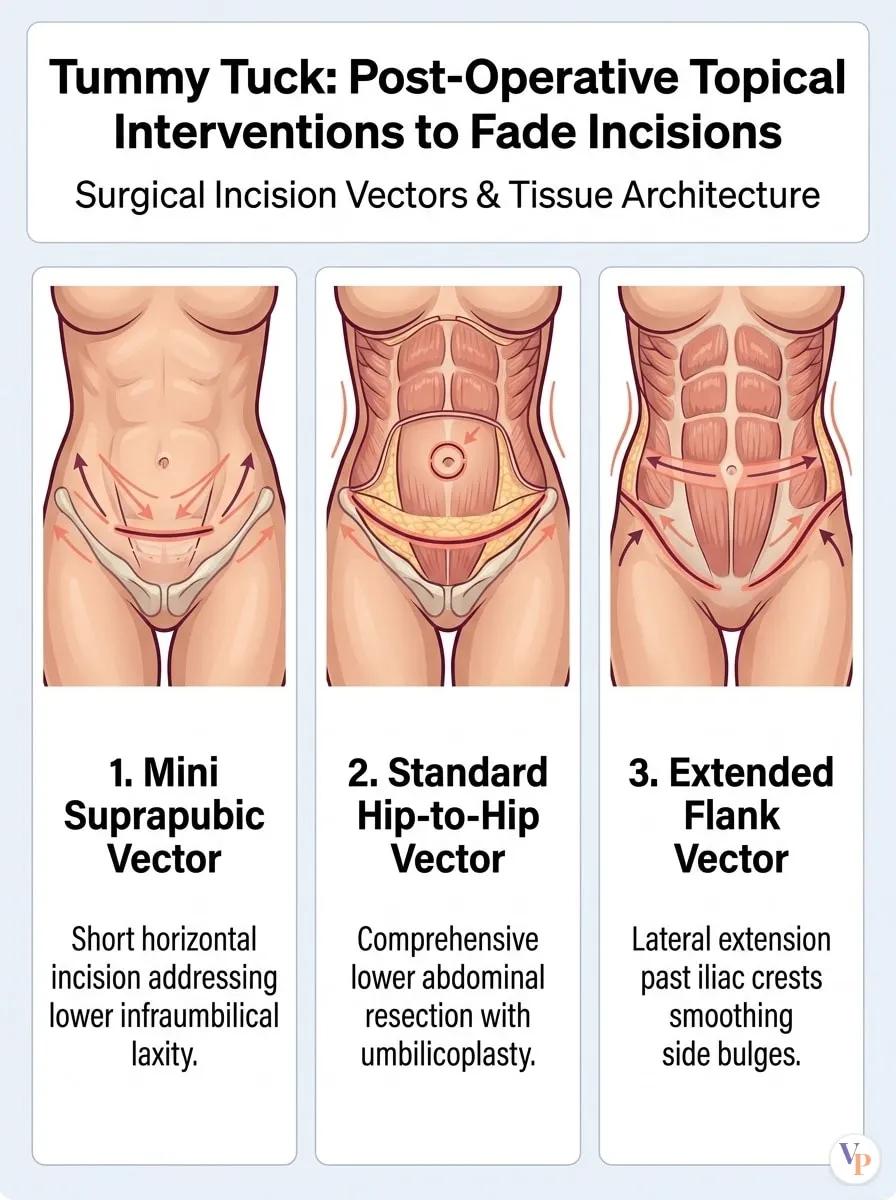
Once your incision closes, focus on skin hydration and protection. Using the right topical treatments at the right time helps your scar fade faster.
Check your Tummy Tuck recovery timeline to see when to start these products.
Starting too early can irritate the wound. Starting too late might miss your best chance for improvement. Use this guide to manage your healing timeline for a smoother result.
| Treatment Type | When to Start | Primary Purpose | How it Works |
|---|---|---|---|
| Medical Ointments | First 5-7 Days | Protect and clean | Uses topical mupirocin 2% ointment2 to keep the area sterile. |
| Silicone Gels | After wound closes | Flatten and fade | It locks in moisture to make the scar thinner. |
| Scar Creams | Once skin is healed | Soften and brighten | It uses vitamins to improve skin color and texture. |
| Hydrating Lotions | Late recovery stage | Maintain elasticity | It keeps skin supple so it doesn’t pull on the incision. |
Identifying Scarring Complications: Hypertrophic vs. Keloid Scars
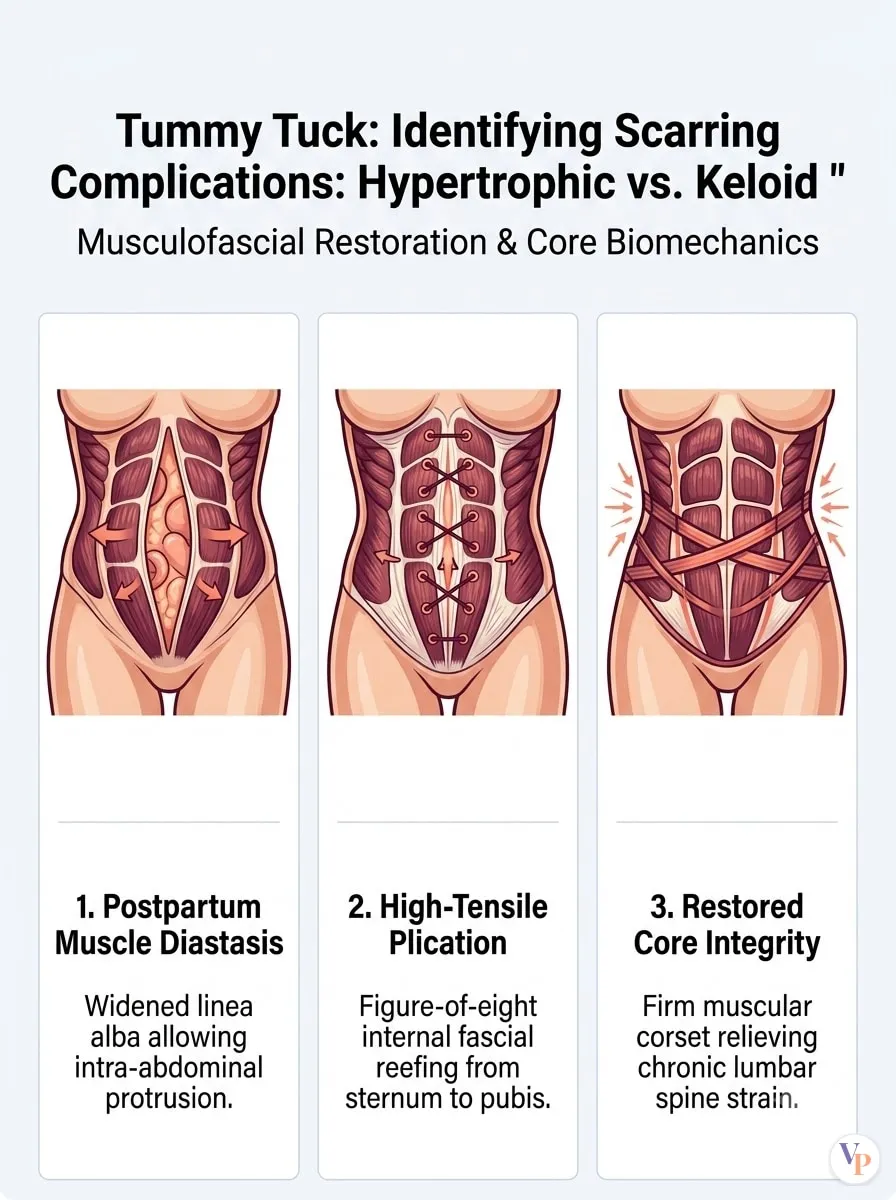
Most cuts turn into a thin white line. However, some bodies heal differently.
Knowing the difference between raised scars and abnormal growth helps you manage your results.
Use this guide for your own risk assessment. See if your healing is normal or needs extra care:
- Hypertrophic Scarring: This is a common type of tissue overgrowth. The scar stays inside the borders of your cut. It often feels firm and looks red, but it usually flattens over time.
- Keloid Scars: These are more aggressive than typical scars. They grow beyond the original cut and can spread to healthy skin. This happens when the body makes too much collagen.
- Keloid Risk: Some people have a higher keloid risk because of genetics or skin type. This can lead to thick, permanent bumps that do not go away alone.
If you notice these changes, check our guide on Risks and Common Side Effects for more details.
Always tell your surgeon if your scar feels hard or keeps growing.
Advanced Non-Surgical Revision Modalities for Persistent Scars
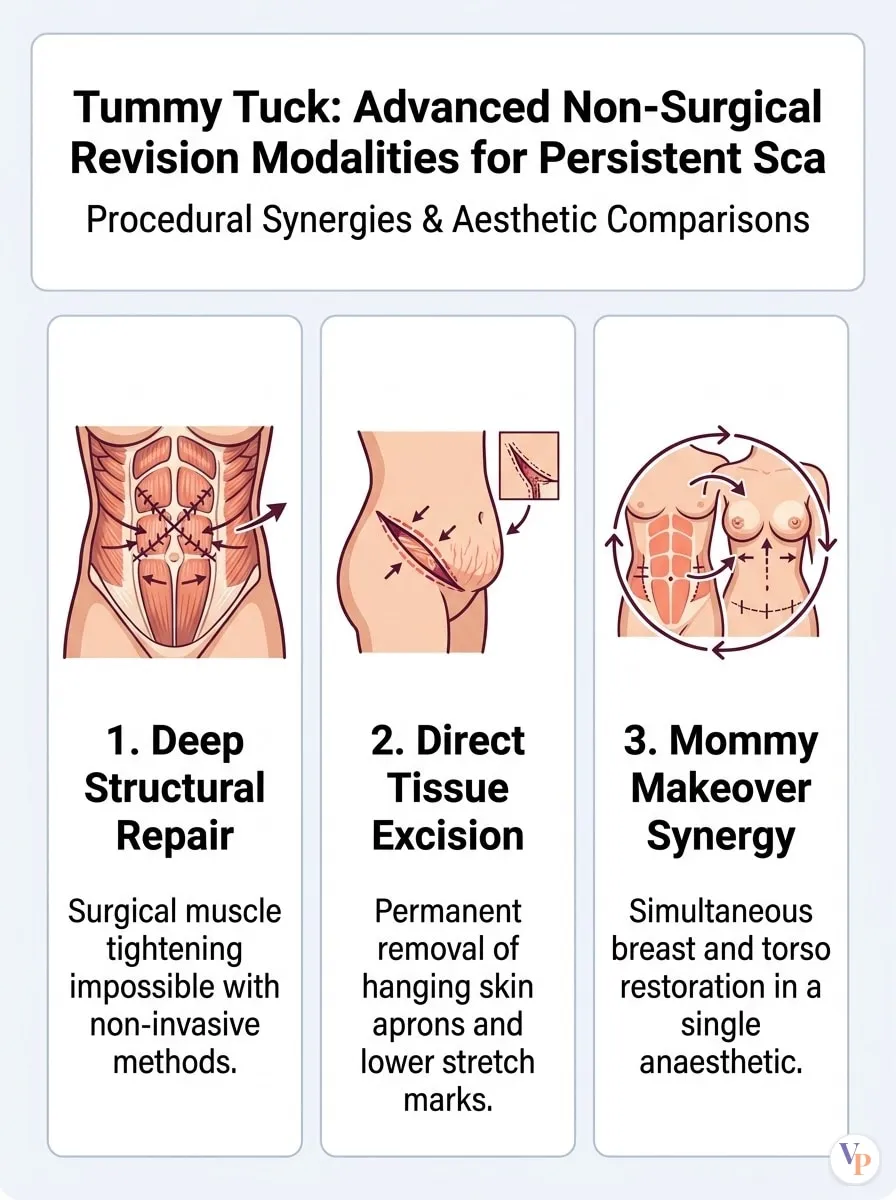
If home care isn’t working, professional non-surgical treatments can help. We offer scar revision to make your skin look and feel better. These methods focus on aesthetic refinement for a more natural look.
Laser therapy is a great way to fade marks. It uses light to start collagen remodeling. This process rebuilds your skin tissue to make it smoother.
It helps the scar blend into your skin for a softer look. Our team cares about your full recovery and quality of life.
We believe in a team approach. We know that collaboration between plastic surgeons, neurologists, and other medical specialties (“can lead to a more comprehensive understanding of peripheral nerve injuries, improved prevention strategies, and better treatment options”) ensures you get the safest care.
We customize every plan to bring back your confidence.
Related Clinical Guide: Find out which stretch marks are permanently excised in can a tummy tuck remove stretch marks.
Frequently Asked Questions
What is the most effective protocol for fading a tummy tuck scar?
The clinically proven scar protocol involves 100% medical-grade silicone gel sheeting applied for 12 to 16 weeks, daily circular massage, and broad-spectrum SPF 50+ UV protection, supervised by Dr. Vishal Purohit in Jaipur. Silicone application starts at week 2 to 3 once incisions are dry, maintaining stratum corneum hydration and preventing hypertrophic collagen synthesis. As an M.Ch plastic surgeon, Dr. Purohit customizes scar protocols for each skin type.
How does a tummy tuck scar change during the 12-to-18-month healing timeline?
A tummy tuck scar progresses through inflammatory (weeks 1-6), proliferative (months 2-6), and remodeling phases (months 6-18) under Dr. Vishal Purohit’s clinical care in Jaipur. Scars naturally peak in redness and firmness around month 3 before gradually softening, flattening, and fading to a thin, silver-white line by month 12. Dr. Purohit evaluates scar maturation at 3, 6, and 12-month checkups.
When can I start applying scar creams and performing scar massage?
Patients should begin applying silicone scar gels and performing gentle two-minute circular scar massage 2 to 3 weeks after surgery once all surgical tapes are removed and skin edges are completely sealed, directed by Dr. Vishal Purohit in Jaipur. Massage breaks down disorganized collagen bundles and softens tissue firmness. As an M.Ch. plastic surgeon, Dr. Purohit inspects incision integrity before clearing topicals.
Can laser scar revision help if my tummy tuck scar becomes thick or dark?
Yes, fractional CO2 laser, pulsed-dye laser, and radiofrequency microneedling can dramatically accelerate scar smoothing and reduce pigmentation if thickening occurs, performed by Dr. Vishal Purohit in Jaipur. In-clinic laser treatments stimulate fresh collagen remodeling. Dr. Purohit provides advanced scar revision therapies at Kalpana Aesthetics for patients desiring maximal cosmetic blending.
Where is the incision positioned to keep it hidden beneath clothing?
Dr. Vishal Purohit in Jaipur strategically marks the incision within the natural suprapubic fold, positioned 5 to 7 cm below the navel so that even low-rise underwear and swimwear completely conceal the scar. Patients are invited to bring their favorite swimwear to the pre-op marking session to ensure precise alignment. Dr. Purohit’s meticulous placement guarantees discreet, confident results.
Final Thoughts on Your Journey to Confidence
Smooth results need two things. You need a skilled surgeon and great aftercare.
Your surgeon makes a careful cut. Your daily habits help the skin heal beautifully.
This teamwork makes your results look natural. It also helps them last longer.
Every body heals differently. Do not guess about your recovery.
Talk to an M.Ch. Plastic Surgeon for a professional check. They can give you a plan made just for you.
Ready to refine your results? Schedule your professional scar evaluation at Kalpana Aesthetics, Jaipur today to restore your confidence.
If you would like to discuss your condition or book a consultation, contact Dr. Vishal Purohit in Jaipur at +91-7718183535. Our specialist team is here to guide you through every step of your care. For the full picture, see our complete guide to Tummy Tuck.
For full details on hospital facilities, OT safety protocols, and personalized surgical pricing, explore our comprehensive guide on Tummy Tuck Surgery in Jaipur or review our main Tummy Tuck Guide.