
Risks and Common Side Effects of a Tummy Tuck: A Comprehensive Clinical Guide
Getting a flatter stomach can boost your confidence. However, it is important to be honest about the process.
A tummy tuck removes extra skin and tightens muscles. Like any surgery, it does come with some risks.
Most people deal with temporary side effects. You may see swelling, bruising, or feel some numbness. These are normal as your body heals.
Rare problems, like infections, can happen. An M.Ch Plastic Surgeon helps lower these risks.
Your surgeon will create a plan just for your body. This personalized approach keeps you safer and improves your results.
If you want professional cosmetic surgery in Jaipur, knowing these details helps you feel confident.
We want you to feel informed and empowered. We focus on expert care and a great recovery plan.
Our goal is to lower risks and improve your life. We help you look, feel, and live beautiful.
Common Post-Surgical Complications and Side Effects
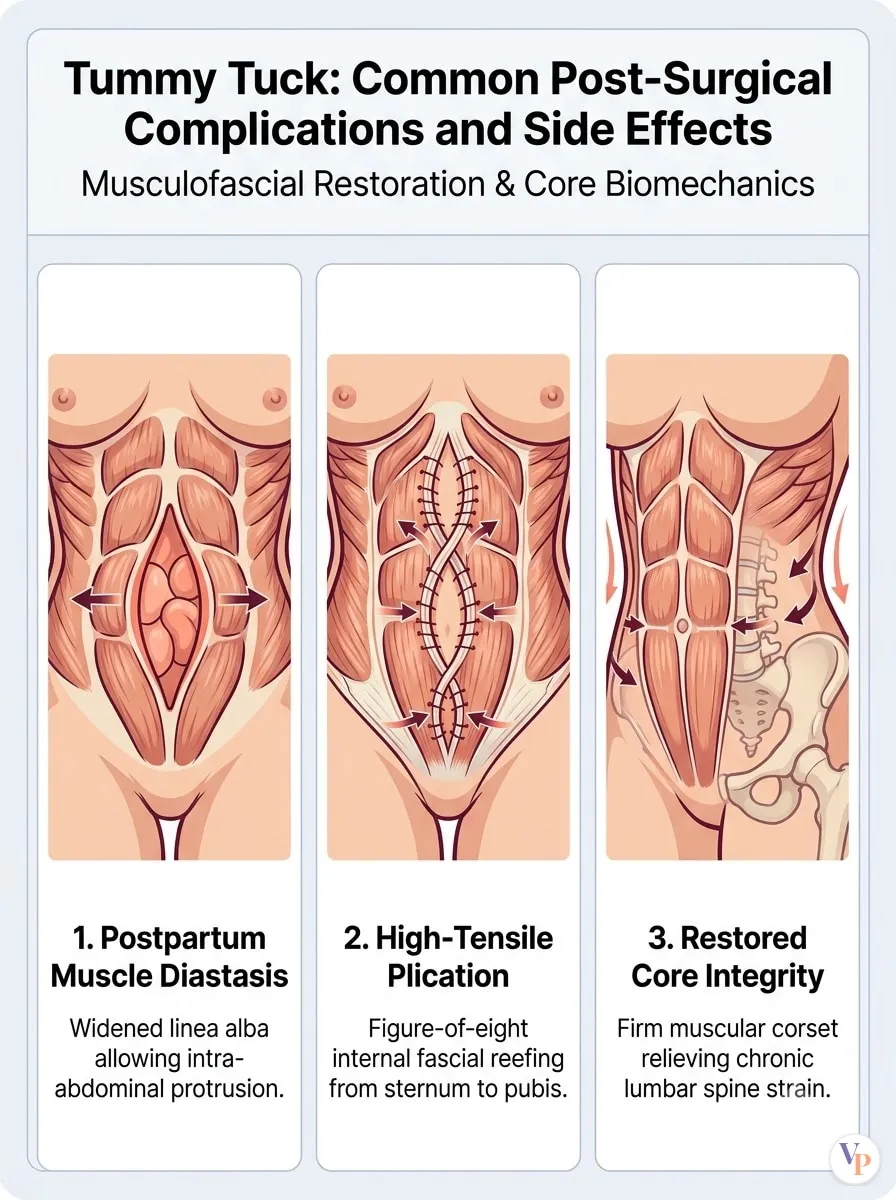
It helps to know the difference between a normal side effect and a complication. Most people have minor issues after an abdominoplasty (a medical term for a tummy tuck).
You might see bruising or mild swelling. These are not problems. They are just signs your body is healing.
Some issues are minor complications1. Doctors often treat these with simple care or pills.
Read more about what to expect in our tummy tuck recovery timeline.
Major complications are rare but more serious. These might include deep vein thrombosis (DVT) (“Deep vein thrombosis (DVT), pulmonary embolism, pneumonia, sepsis”). These need immediate medical care.
Your surgeon focuses on patient safety to stop these events. They use thorough surgical planning to lower your risk.
We also use informed consent. This makes sure you understand every part of the process. It helps you feel confident and safe.
Clinical Analysis of Specific Tummy Tuck Risks
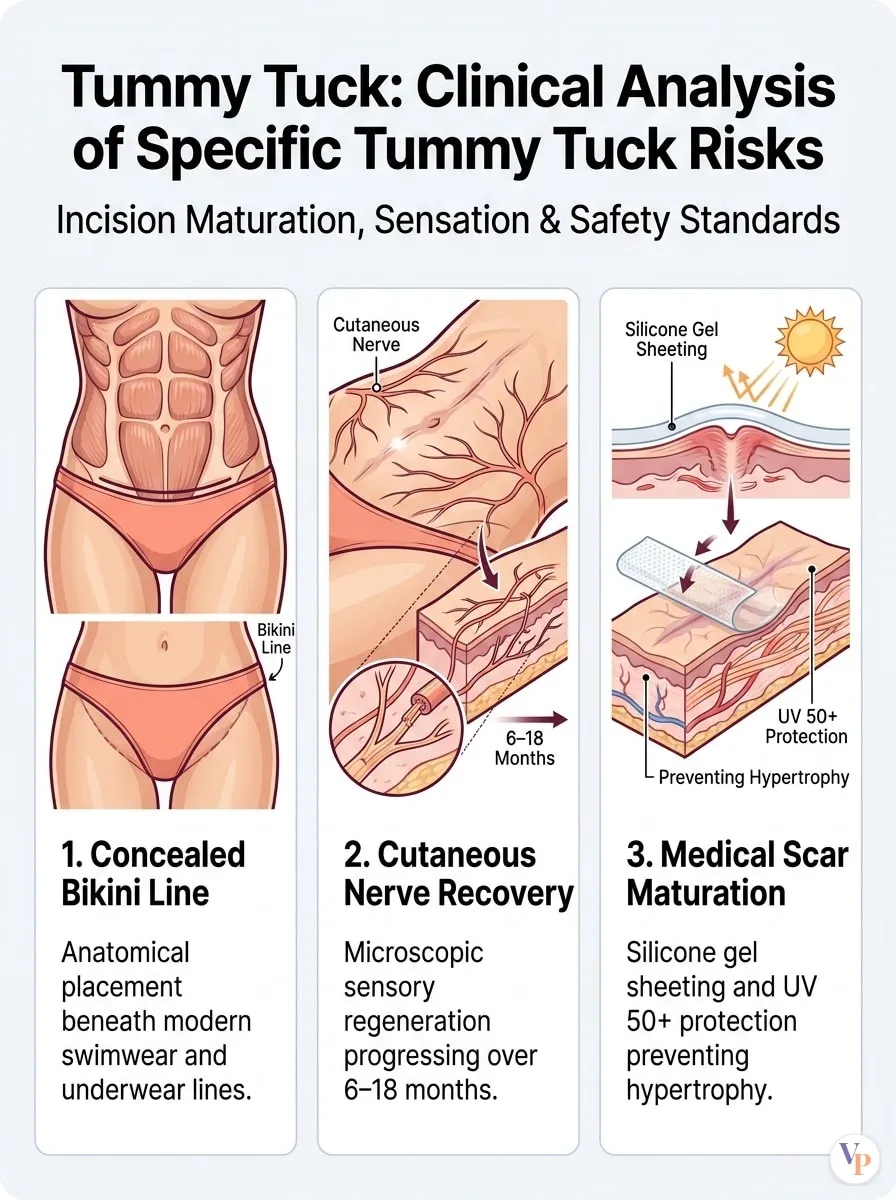
Every surgery has a surgical risk. These risks change based on your health and the type of tummy tuck you pick. Knowing these details helps you prepare to feel more confident.
Your surgeon uses clinical management to keep you safe. This is a medical plan for your care before and after surgery. They watch for early warning signs so they can act fast.
Good post-operative care is the best way to stop problems. Follow your recovery plan and go to every follow-up visit. These steps help your body heal and make your results look natural.
Seroma Formation and Fluid Accumulation
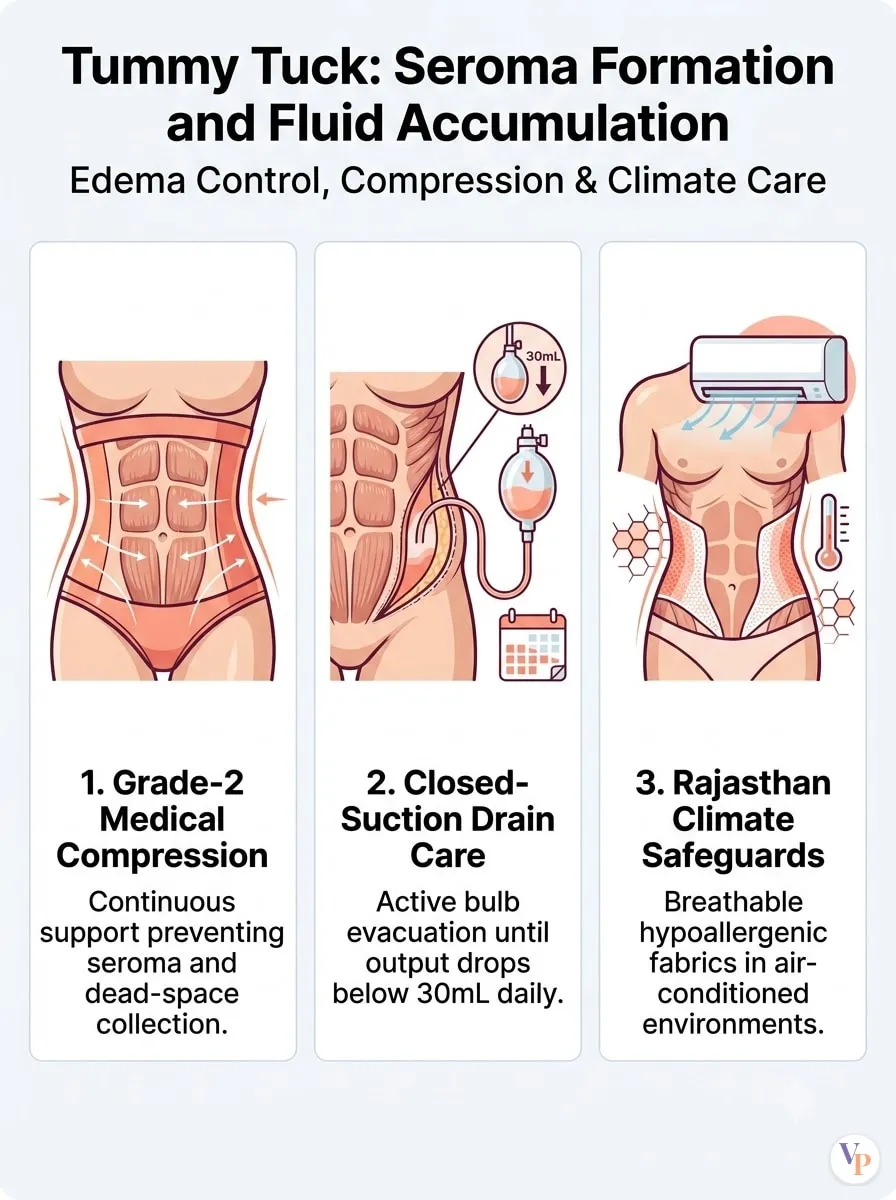
A seroma is a common side effect. It happens when your body collects extra fluid after surgery.
Your M.Ch. Plastic Surgeon will watch you closely. They want to make sure you heal well.
Here is how we handle this process:
- What it is: A seroma is a buildup of clear fluid (“Seroma refers to serous fluid accumulation, typically caused by postoperative tissue exudation”). This fluid buildup happens as your skin and muscle heal.
- Why it happens: Liquid fills the space between your skin and muscle. Some people are more likely to get them, as diabetics were more likely to develop a seroma2 (“diabetics were more likely to develop a seroma ( p =0.04)”).
- How it is prevented: Surgeons use tools to stop fluid from pooling. Many use closed suction drains3 to pull liquid out.
- Professional clinical management: Your doctor has a plan if fluid collects. They may use a small needle to drain it. They might also use special stitches to close gaps.
- Your role in recovery: You can help your body heal. Follow your care plan closely. Learn how to manage tummy tuck swelling to stay on track.
Scarring and Hypertrophic Skin Response
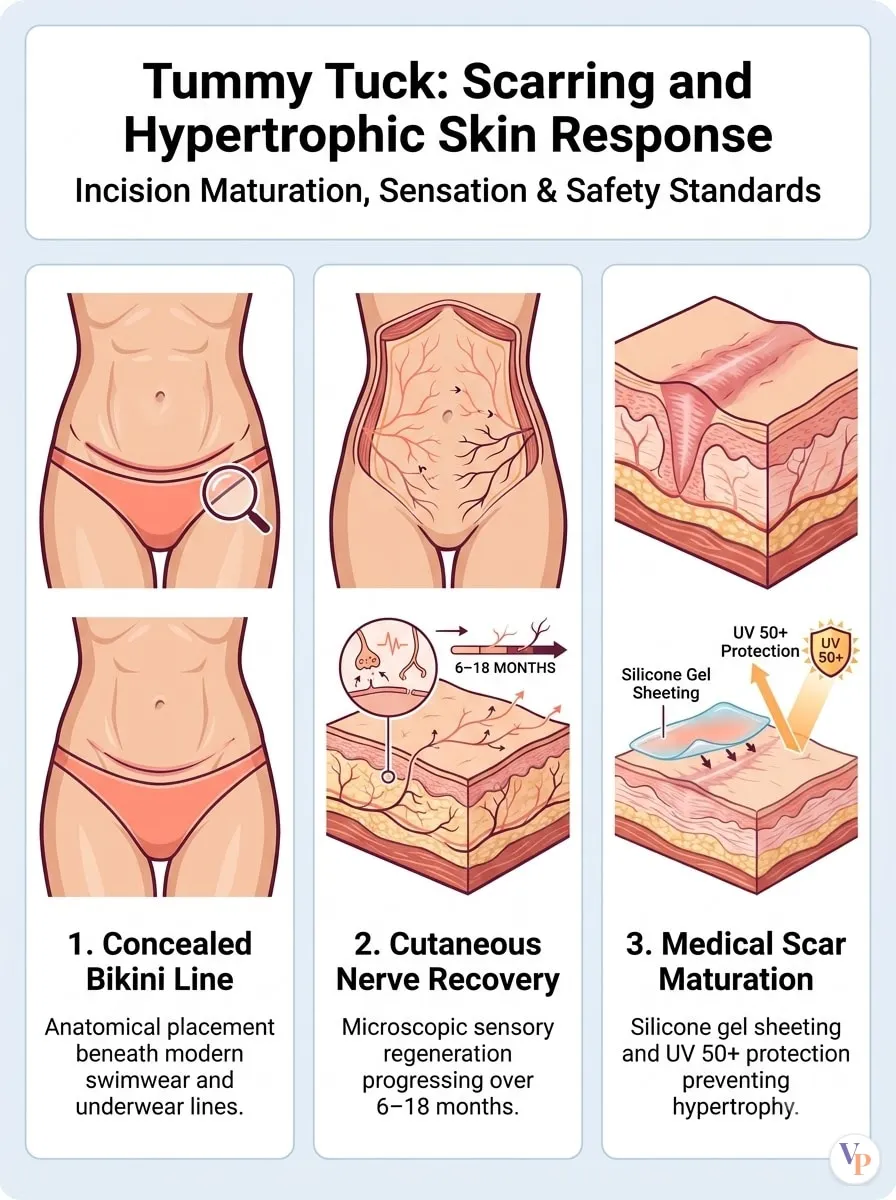
Every tummy tuck leaves a visible scar. Your surgeon puts this line low on your hips. This keeps it hidden under your underwear.
Scars are a natural part of the reconstructive process. Most scars fade over time. This helps improve your aesthetic outcomes.
Some people have a stronger hypertrophic response. This happens when a scar becomes thick or raised. In some cases, hypertrophic scarring in 9.6% (“hypertrophic scarring in 9.6%”) of patients may occur.
Other patients may develop keloids in 5.5% (“keloids in 5.5%”). These are thick scars that grow past the original cut.
You can take steps to fade your incision. Your doctor might suggest silicone sheets or special creams.
These tools keep your skin soft and flat. Following these tips helps your results look natural. This will boost your confidence.
Anesthetic Reactions and Systemic Risks
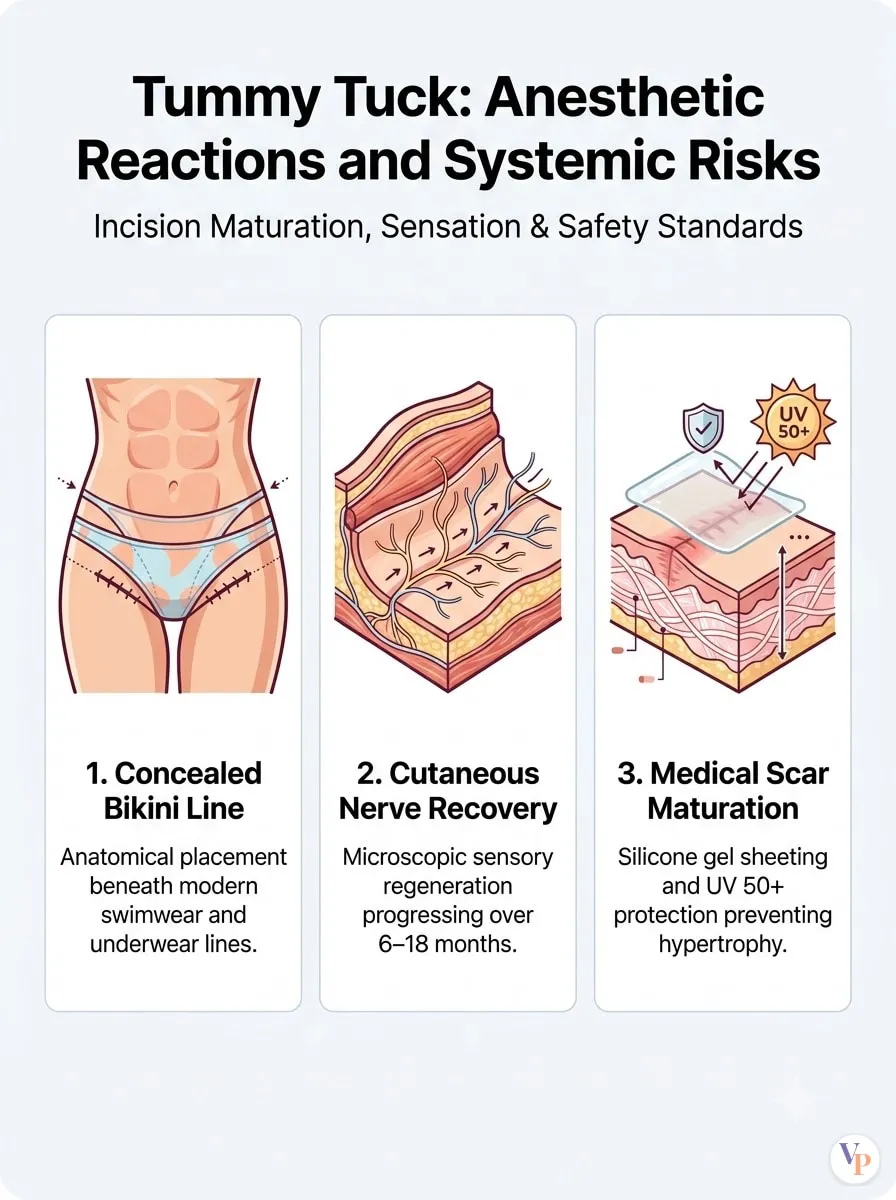
Every tummy tuck needs anesthesia. This is medicine that numbs your body or puts you to sleep.
These drugs are safe, but they have some risks. Your surgical team watches your vitals every second to keep you safe.
Most surgeries happen in a hospital setting. This gives you the best care possible.
This setup helps the team handle any breathing changes. It also helps them treat sudden allergic reactions.
| Risk Type | What it Means | How the Surgical Team Protects You |
|---|---|---|
| General Anesthesia Risks | Your body may react to the sleep medicine. | Specialists track your heart rate and oxygen levels constantly. |
| Allergic Reactions | Your body may react poorly to a specific drug. | Doctors screen your medical history to avoid known triggers. |
| Systemic Issues | Your whole body system may feel the stress of surgery. | The hospital setting provides immediate access to emergency equipment. |
| Wake-up Nausea | Feeling sick to your stomach after waking up. | The team gives you anti-nausea medication during and after the process. |
Skin Necrosis and Vascular Compromise
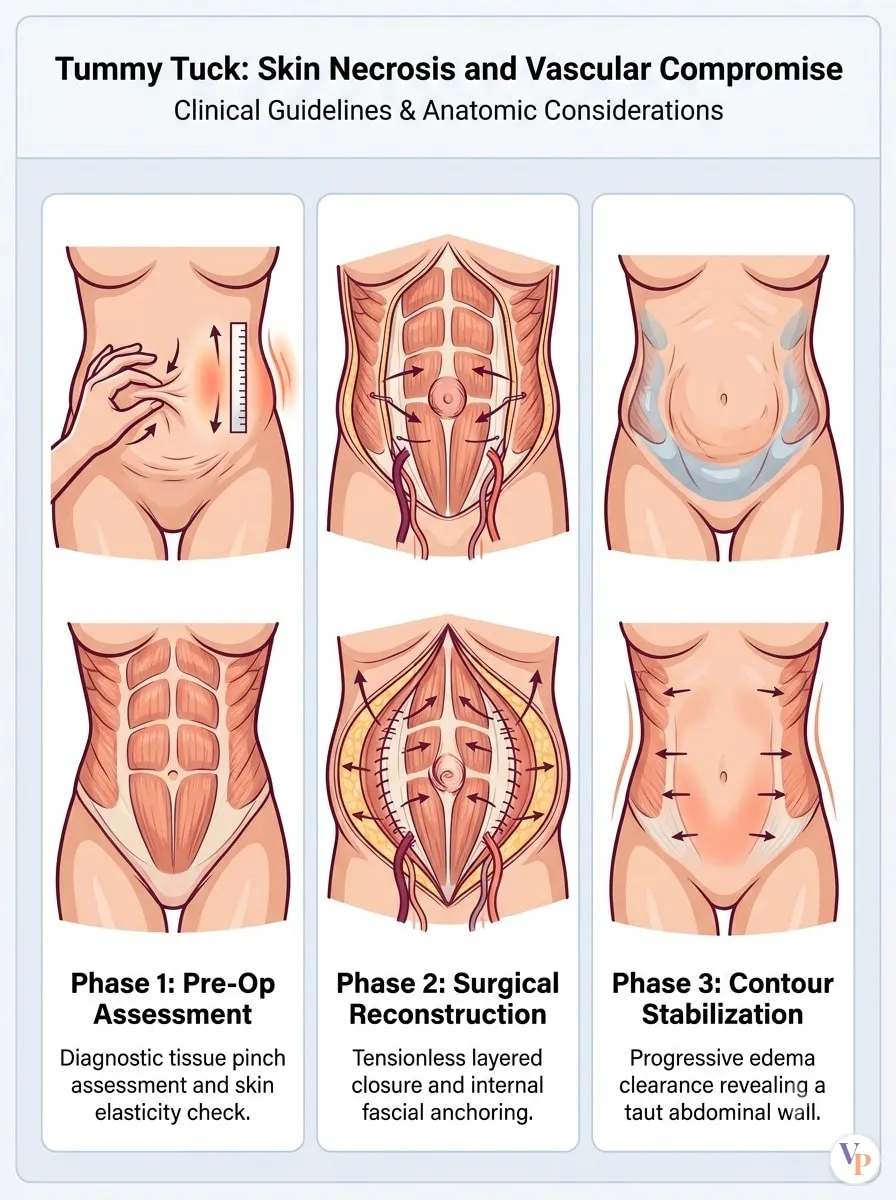
In very rare cases, you may experience skin necrosis. This is a medical term for tissue death.
It happens during a vascular compromise. This means blood flow to a part of your skin is blocked or too low.
Your surgeon uses precise skin-flap techniques (“the vascularity of the newly created flap is not always predictable”) to move and tighten your skin. These methods work very well.
However, some challenges related to perfusion (“challenges related to perfusion can cause significant tissue loss”) can occur. This stops oxygen from reaching your skin cells.
These skin complications post-abdominoplasty are rare (“Skin complications post-abdominoplasty are rare”). Most patients heal without any problems.
Your doctor will watch your skin closely. They want to ensure you get the best, most natural results.
Frequently Asked Questions
What are the recognized clinical risks associated with tummy tuck surgery?
Recognized clinical risks of abdominoplasty include seroma (fluid accumulation, 3-5%), temporary swelling, bruising, hypertrophic scarring, minor wound healing delays near the midline, and rare hematoma (<1%), documented by Dr. Vishal Purohit in Jaipur. Severe complications like deep vein thrombosis remain below 0.5% in accredited surgical suites. As an M.Ch plastic surgeon, Dr. Purohit employs rigorous clinical protocols to minimize complications.
How does Dr. Vishal Purohit prevent blood clots (DVT) during abdominoplasty?
Dr. Vishal Purohit in Jaipur prevents deep vein thrombosis through intraoperative sequential pneumatic calf compression, active warming blankets, early ambulation within 6 hours of surgery, and prophylactic low-molecular-weight heparin when indicated. Keeping patients well-hydrated and mobile stimulates healthy venous return. Dr. Purohit’s comprehensive DVT prevention protocol adheres to international plastic surgery standards.
What should I do if a seroma (fluid collection) develops under the skin?
If a seroma develops, contact Dr. Vishal Purohit in Jaipur at +91-7718183535 for a quick, painless in-clinic needle aspiration that removes the fluid in less than 5 minutes. Wearing your compression garment 24/7 and avoiding premature heavy lifting significantly reduces fluid recurrence. As an M.Ch. plastic surgeon, Dr. Purohit monitors all surgical sites closely until the tissue adheres firmly.
What causes delayed wound healing along the lower incision line?
Delayed wound healing occasionally occurs at the central lower incision where skin tension is greatest, particularly in patients with previous scars, high BMI, or poor microcirculation, explains Dr. Vishal Purohit in Jaipur. Dr. Purohit manages minor separations with specialized hydrocolloid dressings and topical growth factor gels, ensuring uncomplicated secondary closure. Dr. Purohit’s deep fascial anchoring relieves surface tension to protect healing.
Why is absolute smoking cessation mandatory before and after tummy tuck surgery?
Nicotine causes severe microvascular vasoconstriction, reducing capillary blood flow to the redraped abdominal skin flap by up to 50% and dramatically increasing necrosis and infection risks during surgery with Dr. Vishal Purohit in Jaipur. Patients must abstain from smoking and nicotine vapes for at least 4 to 6 weeks before and after surgery. Dr. Purohit verifies nicotine clearance to safeguard patient health.
For full details on hospital facilities, OT safety protocols, and personalized surgical pricing, explore our comprehensive guide on Tummy Tuck Surgery in Jaipur or review our main Tummy Tuck Guide.