
How to Manage Tummy Tuck Swelling and Bruising: A Guide to Post-Surgical Recovery
It is normal to have swelling and bruising after a tummy tuck. This happens because your body is healing and moving fluids around.
These changes are temporary. They are a standard part of getting your new look.
At Kalpana Aesthetics, Dr. Vishal Purohit (M.Ch. Plastic Surgery) gives you personal care. He makes sure your recovery is smooth and comfortable.
He uses medical plans to help you get natural-looking results. If you want to learn more, check out expert cosmetic surgery in Jaipur to get started.
Most swelling and bruises go away slowly. However, you must know the difference between normal healing and warning signs.
Mild soreness and fluid are typical. But call a doctor immediately if you feel extreme warmth or have trouble breathing.
Knowing these signs helps you relax. You can focus on your recovery while your body heals.
Understanding the Post-Surgical Inflammation Timeline
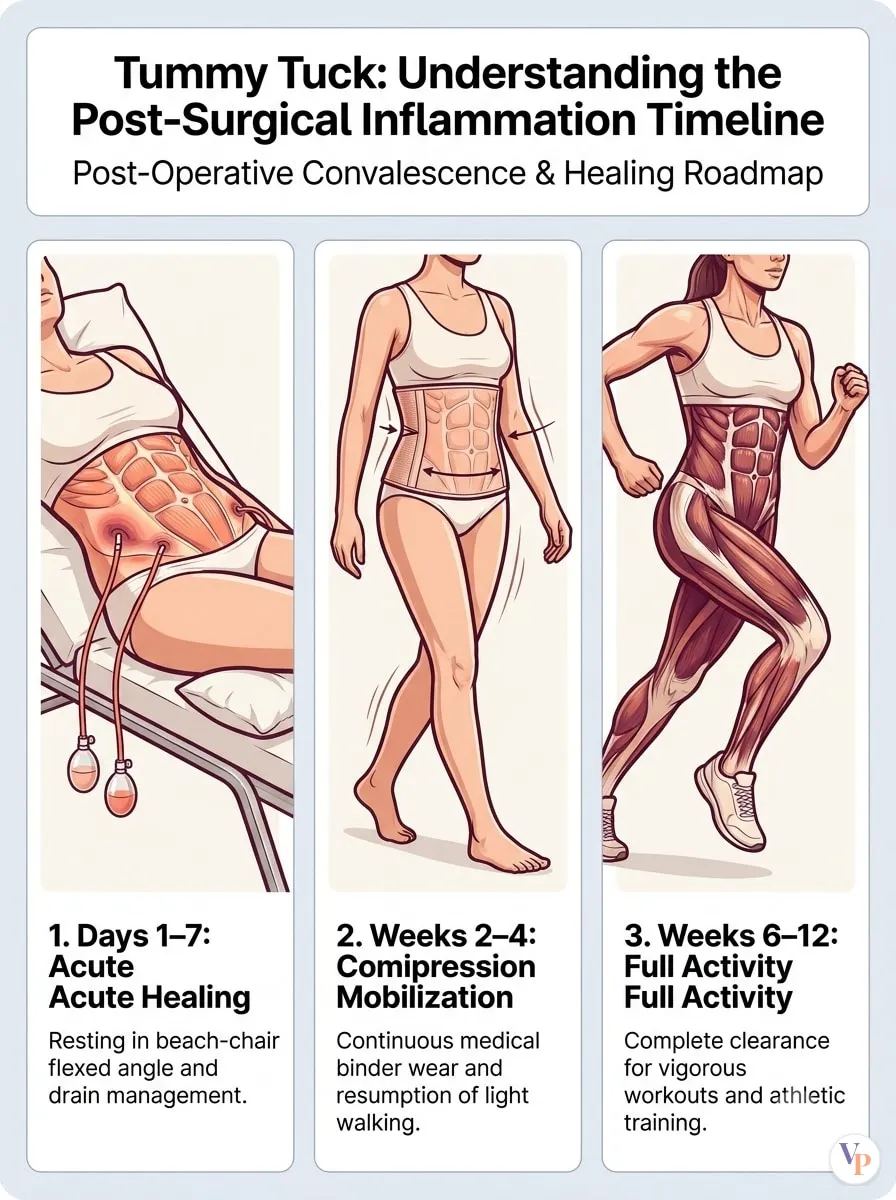
Your body goes through several healing phases after an abdominoplasty (tummy tuck). This starts with an inflammatory response. This is just how your body fixes damaged tissue.
Check your tummy tuck recovery timeline to see what to expect:
- Days 1 to 3 (The Initial Peak): You will see the most swelling and bruising now. You may get a hematoma1 if blood pools under your skin.
- Week 1 to Week 3 (Fluid Shift): Swelling might move to lower parts of your body. You may notice a seroma (“refers to serous fluid accumulation, typically caused by postoperative tissue exudation”), which is a buildup of clear fluid.
- Week 4 to Month 3 (The Fade): Bruises will turn from purple to yellow and then fade away. Most visible swelling goes down as your body absorbs the fluid.
- Month 3 to Year 1 (Final Refinement): Some light swelling stays until deep tissues heal. You will see your final, natural results during this time.
Critical Strategies for Reducing Tummy Tuck Swelling
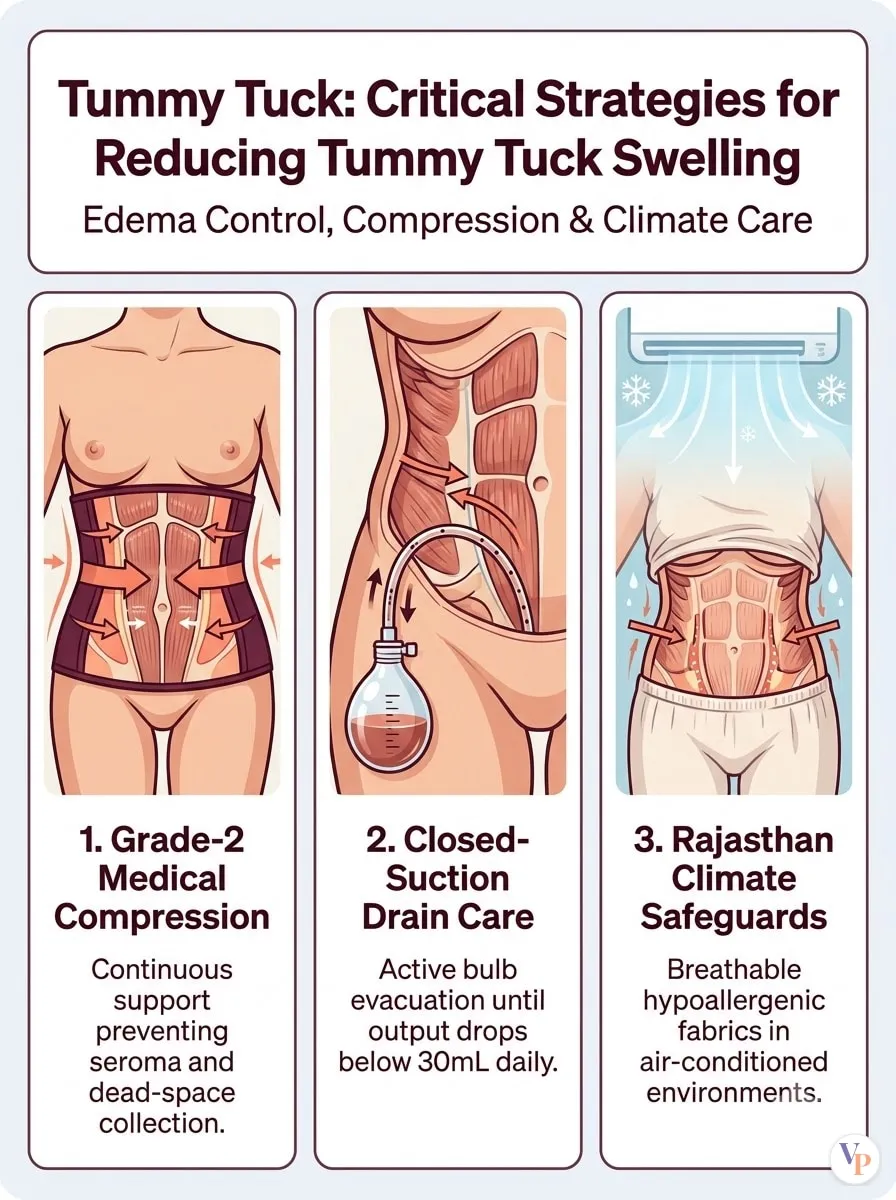
Controlling edema (the medical term for swelling) is the first step to feeling like yourself again. This stops fluid accumulation from building up under your skin.
It helps your body push waste and fluids out of the area faster.
Consistent surgical site support is the best way to handle this. Keeping the skin firm and secure reduces the space where fluid can collect.
This ensures your new shape looks natural and heals correctly.
Compression Garment Compliance
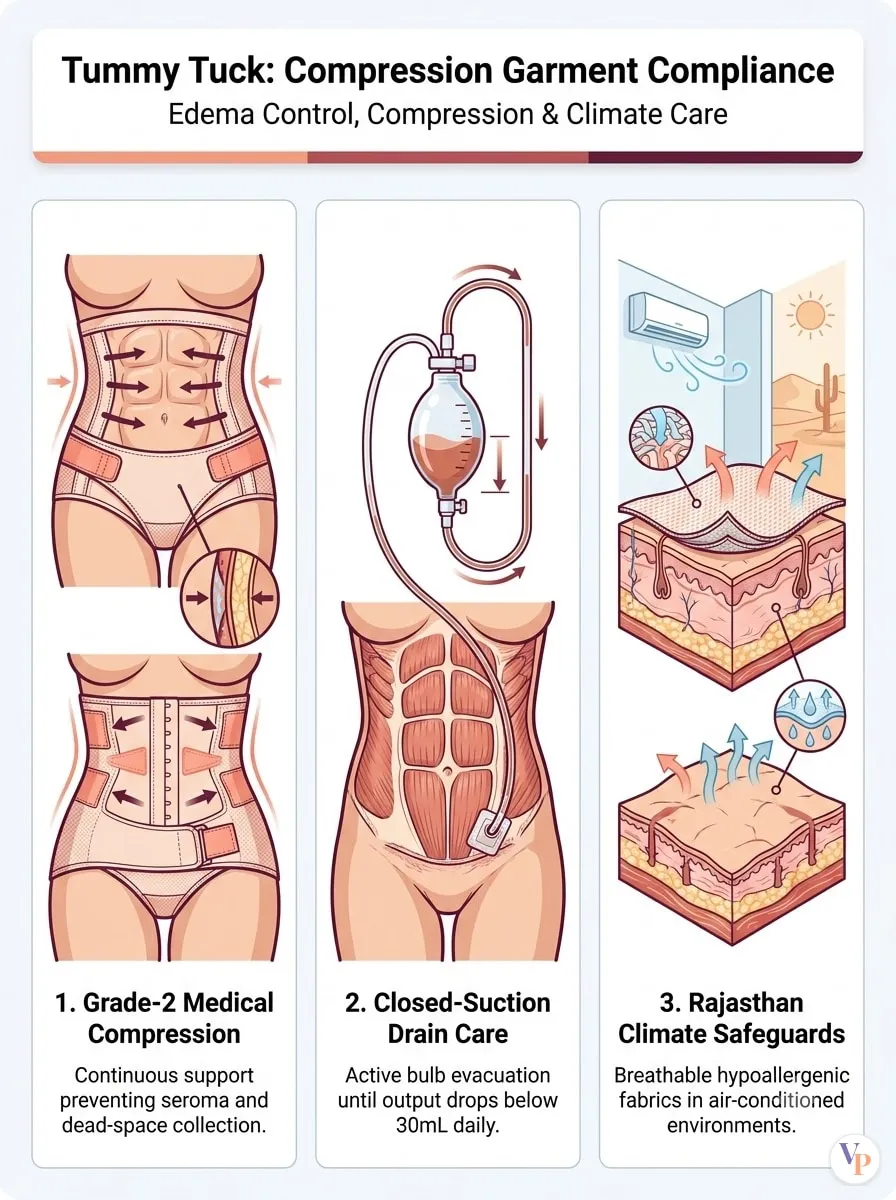
Wearing a compression garment is a big part of your healing. This tight, stretchy wrap supports your midsection. It smooths your shape and helps you feel more confident.
Learn more about the importance of compression garments with these tips:
- Prevents Fluid Retention: The wrap puts light pressure on your skin. This stops fluid retention from building up under the skin.
- Improves Skin Adherence: It helps your skin stick to the muscle below. Good skin adherence makes your results look flat and natural.
- Follow Your Wearing Schedule: Your surgeon will give you a wearing schedule. Follow it closely to stop swelling and protect your cuts.
- Reduces Bruising: Steady, light pressure stops blood and fluid from pooling. This helps your bruises go away faster.
2. Professional Lymphatic Drainage Protocol
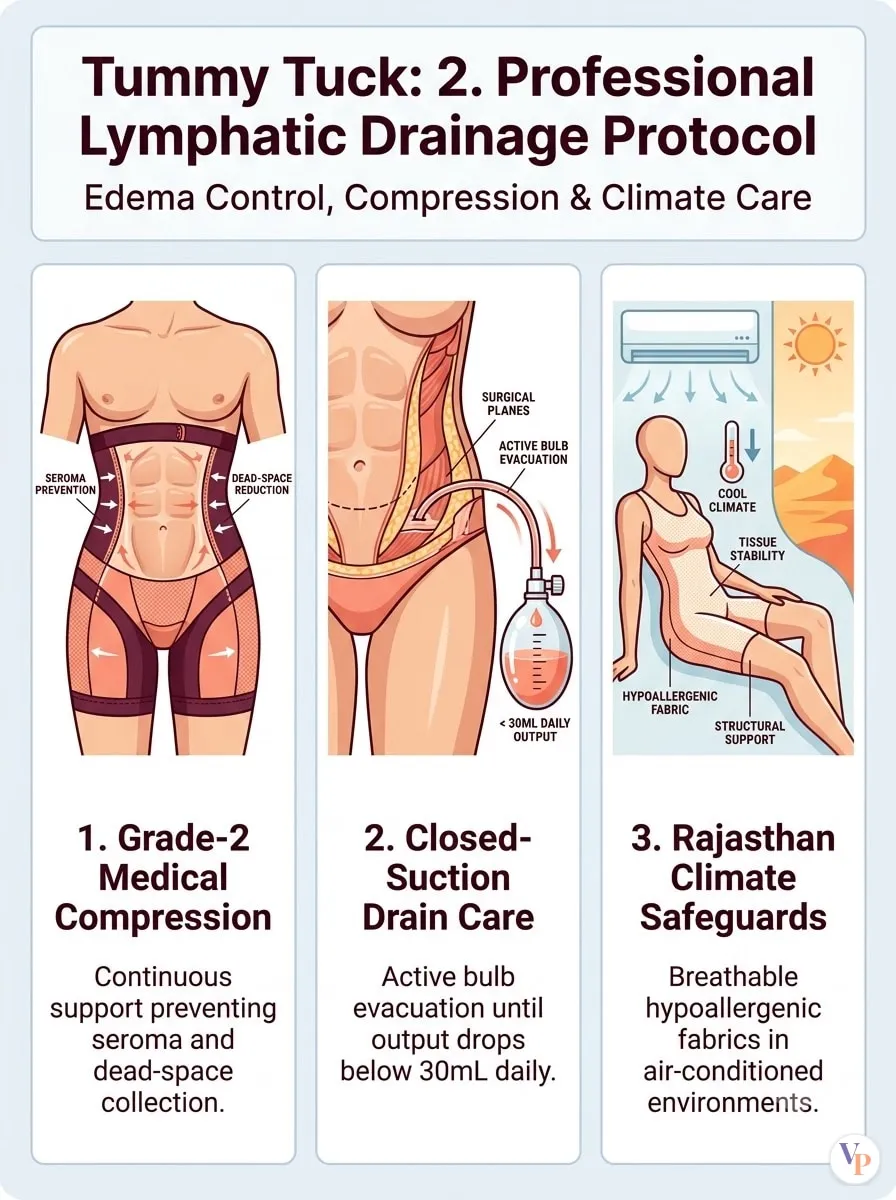
Manual lymphatic drainage is a gentle, special massage. It helps your body move extra fluid away from your surgery area.
This process speeds up edema removal, which just means clearing swelling from your tissues. It lowers the pressure on your skin. This helps you feel more comfortable.
At Kalpana Aesthetics, we create a personal plan for your healing. A professional lymphatic massage uses light pressure. This pushes fluid toward your lymph nodes.
This care works great for clearing bruises. Clinical guidelines say manual lymphatic drainage2 can be used several times a week to improve recovery.
These sessions help you feel confident. You will see your new shape sooner.
3. Surgical Drain Management
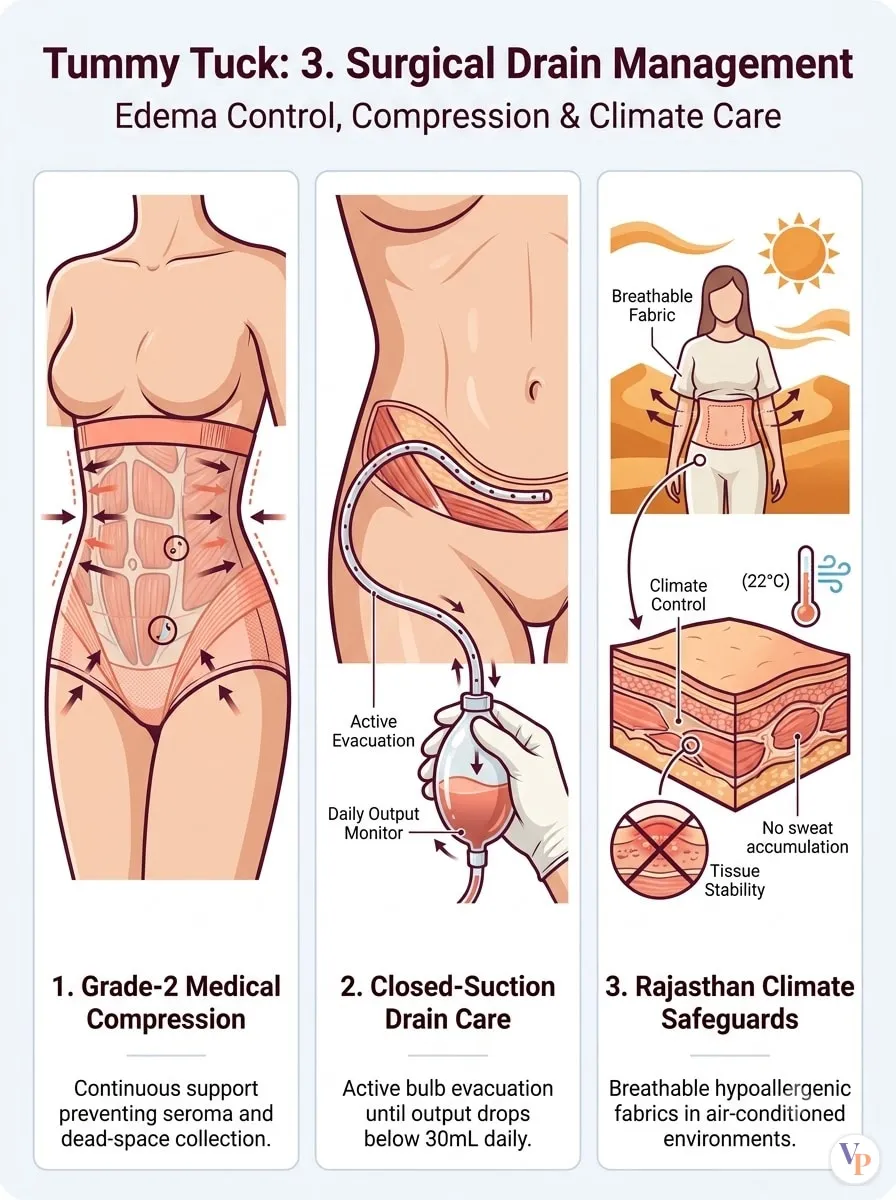
Some patients use surgical drains to heal. These are small tubes that pull extra fluid out of your body.
This fluid evacuation helps stop early swelling. It also prevents seromas, which are pockets of clear fluid under your skin.
Taking good care of your tubes helps you feel better. Use this guide to manage your drains:
| Action | Why It Matters | Goal |
|---|---|---|
| Daily Tracking | A log of fluid levels helps your doctor track your healing. | Ensure steady fluid evacuation. |
| Gentle Handling | Moving carefully stops the tubes from pulling your skin. | Protect the surgical site. |
| Timely Drain Removal | Removing tubes on time stops new fluid from building up. | Avoid seroma formation3. |
| Hygiene Care | Cleaning the area stops germs from getting inside your body. | Support a healthy healing process. |
Managing Activity-Induced Edema during Recovery
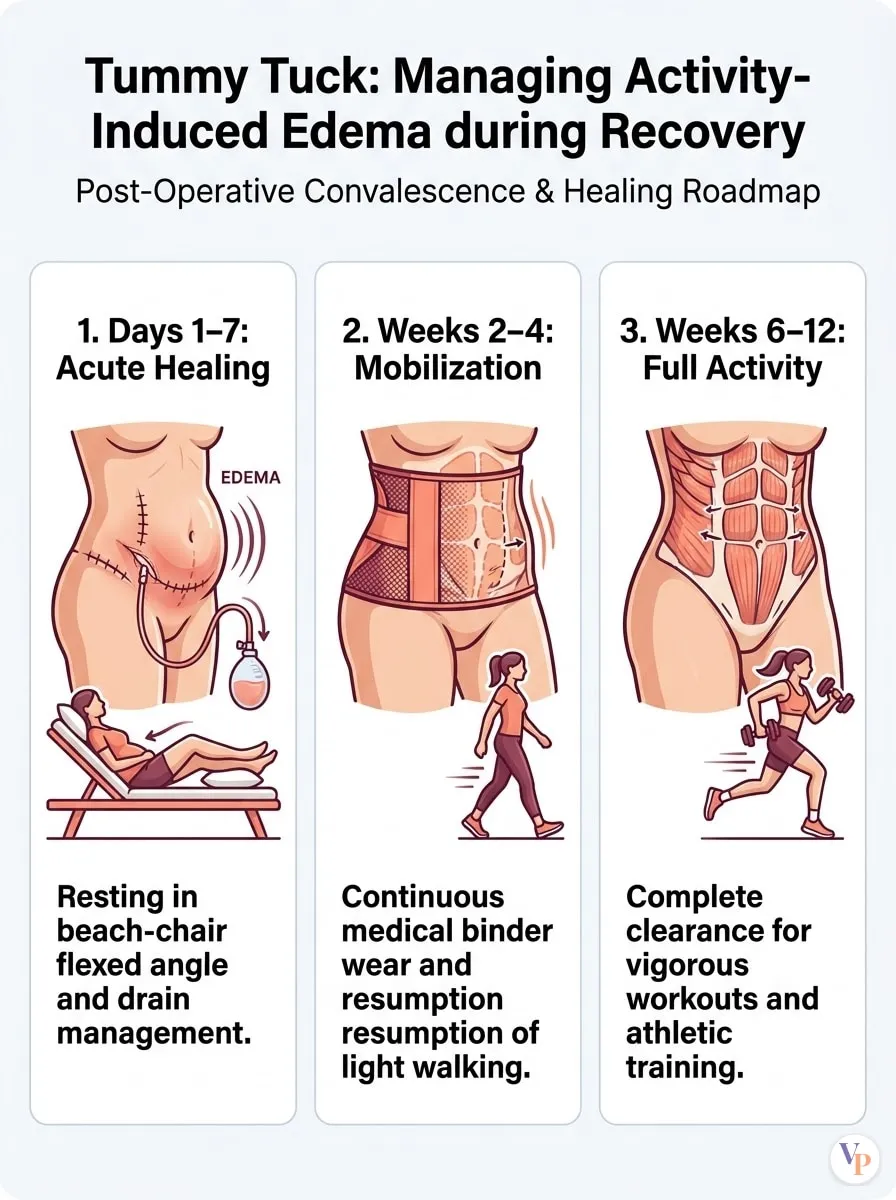
Moving your body helps you heal. However, too much movement too soon can cause postoperative edema.
This is the medical term for swelling after surgery. You must balance rest and gentle physical activity to keep your results looking natural.
Follow these tips to manage swelling as you get active:
- Start with short walks: Walk often for short periods. This keeps your blood flowing and stops fluid from pooling in your legs and stomach.
- Follow activity restrictions: Do not lift heavy objects or bend deeply for a few weeks. Pushing too hard can cause inflammation and stress your stitches.
- Listen to your body: Stop and rest if you see a sudden increase in swelling. Lift your legs to help the fluid drain.
- Gradual progression: Increase your movement slowly each day. Learn more about when you can safely return to work and exercise to protect your new shape.
- Stay hydrated: Drink plenty of water. This helps your body flush out the waste and fluids that cause swelling.
Frequently Asked Questions
What is the typical timeline for swelling and bruising after a tummy tuck?
Bruising typically peaks on day 3 and completely fades within 2 to 3 weeks, while post-surgical swelling (edema) resolves by 60% at 6 weeks and 90% by 3 to 6 months under Dr. Vishal Purohit’s care in Jaipur. Residual fluid accumulation in the lower abdomen just above the incision is normal due to temporary lymphatic disruption. As an M.Ch plastic surgeon, Dr. Purohit monitors edema reduction at regular clinical reviews.
How many hours a day must I wear the compression garment to control swelling?
Patients must wear the medical-grade abdominal compression garment 24 hours a day for the first 3 to 4 weeks, removing it only for showering, followed by 12 hours daily for an additional 2 to 4 weeks, prescribed by Dr. Vishal Purohit in Jaipur. Consistent compression applies even pressure that eliminates dead space and moves fluid toward functional lymph nodes. Dr. Purohit inspects garment fit to ensure optimal contour adhesion.
What are the warning signs of a seroma (fluid pocket) after surgery?
A seroma presents as a soft, fluctuating fluid wave under the lower abdominal skin, localized swelling on one side, or an increase in fullness accompanied by a feeling of water sloshing, explains Dr. Vishal Purohit in Jaipur. If noted, Dr. Purohit performs a gentle, painless in-clinic syringe aspiration taking under 5 minutes. Dr. Purohit’s closed-suction drain protocols minimize seroma occurrence to under 3%.
Can lymphatic drainage massage speed up tummy tuck recovery?
Gentle manual lymphatic drainage (MLD) performed by trained physical therapists beginning 2 weeks post-operatively accelerates fluid reabsorption and softens firm subcutaneous tissue, recommends Dr. Vishal Purohit in Jaipur. Light circular strokes stimulate collateral lymph pathways around the surgical zone. As an M.Ch. plastic surgeon, Dr. Purohit provides approved post-surgical massage guidelines upon clearance.
Why does abdominal swelling worsen toward the evening or after activity?
Swelling increases in the late afternoon because gravity and daily upright physical movement draw extracellular fluid downward into the lower abdominal tissues, explains Dr. Vishal Purohit in Jaipur. Resting with the hips slightly flexed and elevating the legs reverses this dependent edema. Dr. Purohit advises patients to listen to their body and pace daily activities during the first 6 weeks.
Summary for Your Recovery You get the best results by wearing your garment and managing drains. You also need the professional care provided by Dr. Vishal Purohit.
These steps help flatten your stomach and speed up healing. This plan helps you feel confident with a natural look.
If you would like to discuss your condition or book a consultation, contact Dr. Vishal Purohit in Jaipur at +91-7718183535. Our specialist team is here to guide you through every step of your care. For the full picture, see our complete guide to Tummy Tuck.
For full details on hospital facilities, OT safety protocols, and personalized surgical pricing, explore our comprehensive guide on Tummy Tuck Surgery in Jaipur or review our main Tummy Tuck Guide.