
Botox injections for lateral canthal lines involve quick outpatient treatment, but patients should understand the healing process. After injections, minor surface marks and temporary swelling represent normal tissue responses that generally resolve on their own.
Planning around social commitments and reviewing Before Crow’s-Feet Botox: Eye History, Health and Medicines helps individuals prepare appropriately. Understanding realistic recovery milestones ensures patient comfort while allowing subtle tissue responses to settle completely.
Immediate Swelling and Small Injection Marks
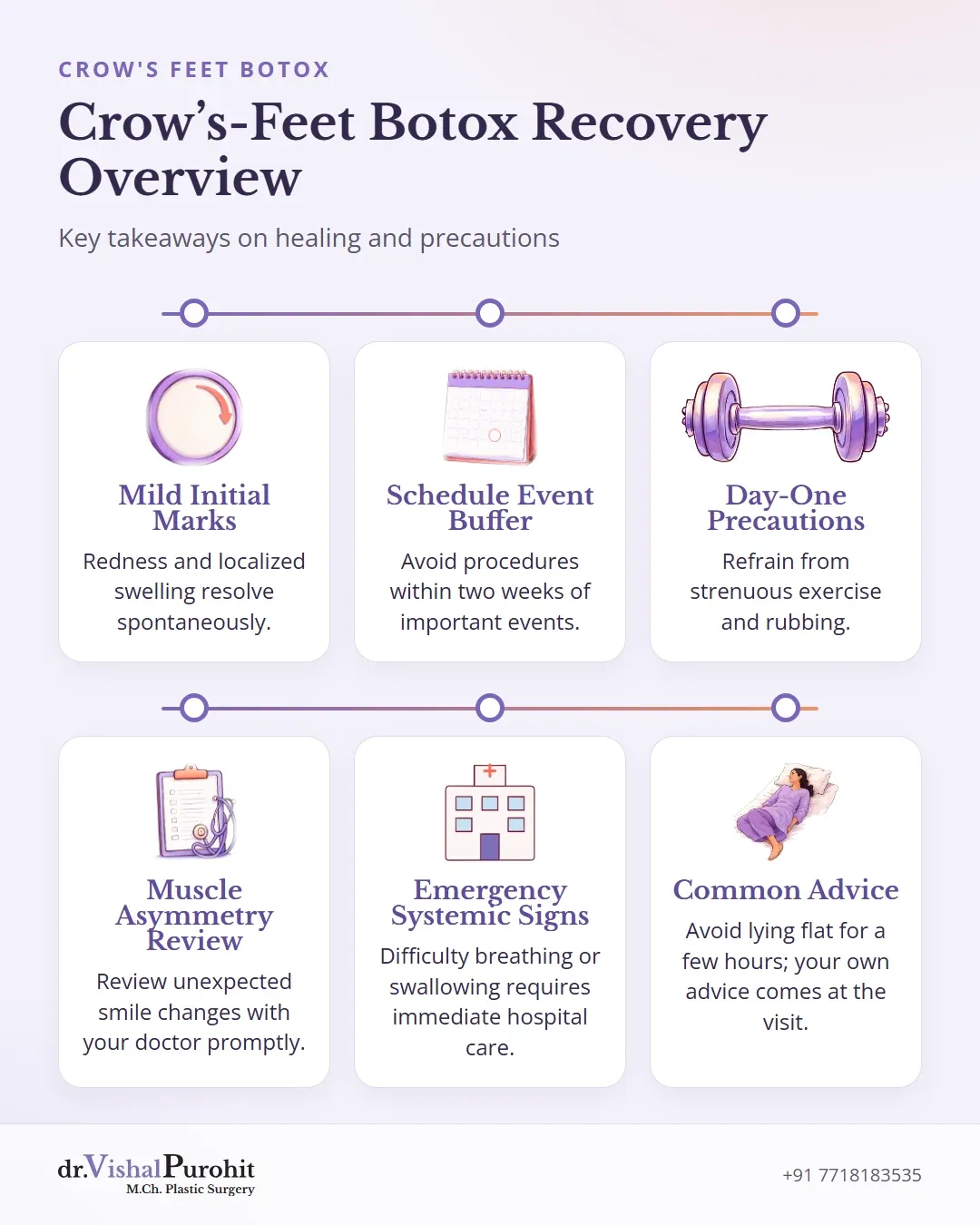
Receiving Botox injections around the lateral canthal region is a quick outpatient procedure, but subtle tissue changes appear right away at the needle insertion points.
Common localized responses noted immediately in clinical literature include:
- Localized redness in the treated injection area12
- Temporary swelling or localized edema associated with needle trauma3
These small surface marks and raised areas are expected tissue responses to the injection process. In published clinical studies of botulinum toxin type A, treatment-related injection site events are predominantly localized, mild in severity, and resolve spontaneously4. Literature also indicates that drinking alcohol within 24 hours prior to treatment can increase localized redness12.
During post-treatment recovery, any localized edema or minor surface marks typically settle on their own.
Dr. Purohit’s note: Dr. Vishal Purohit advises patients that choosing no treatment remains an entirely valid aesthetic choice, and all individual post-procedure steps are discussed directly during the clinical consultation.
Planning Work and Social Schedules Around Bruising
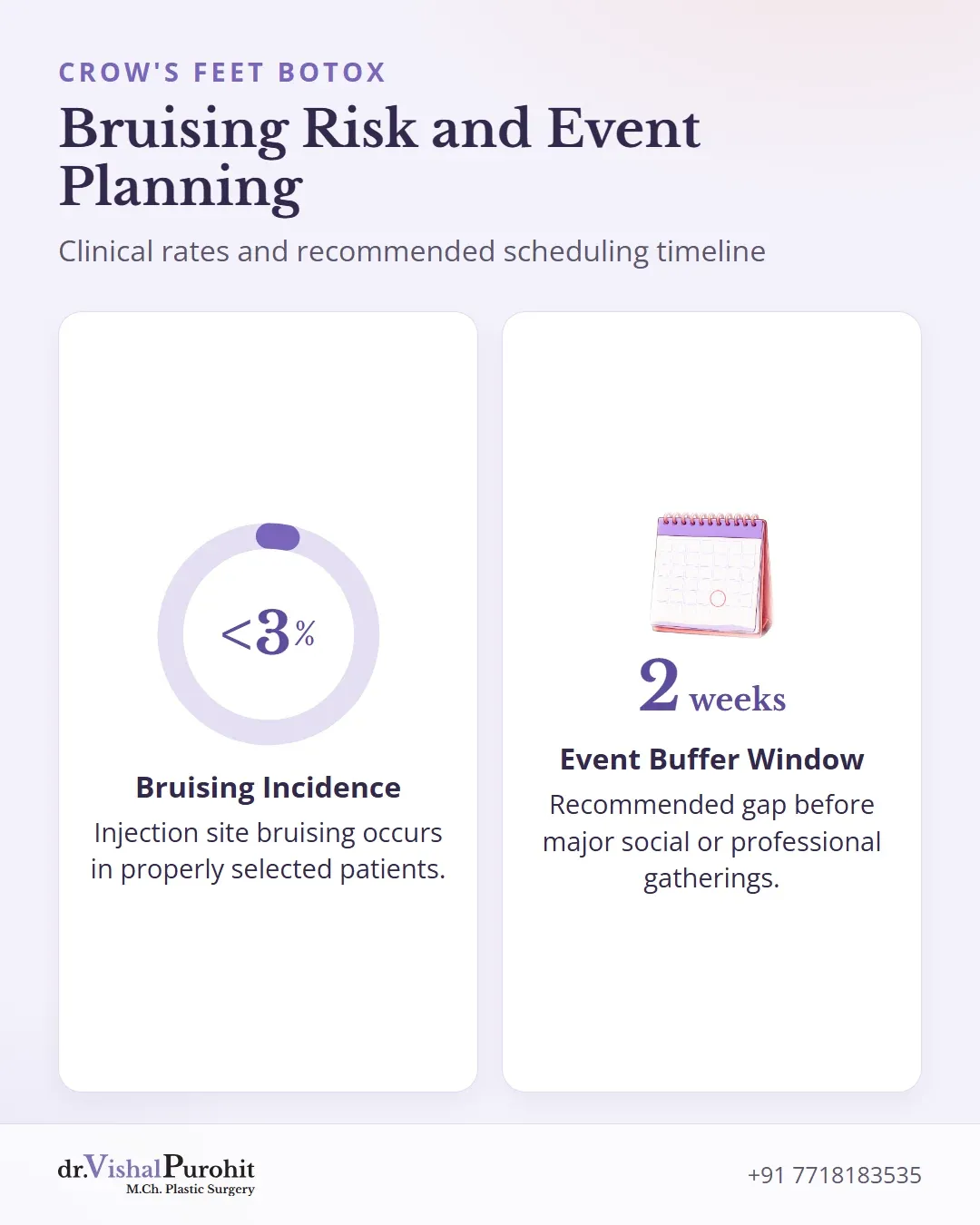
The delicate skin around the lateral orbital rim contains superficial microvessels that can occasionally form small bruises. In the published literature, minor injection site hematomas and bruising involve less than 3% of all injection sites in properly selected patients5. The periocular area has numerous vessels, making it particularly prone to bruising6. Bruising is noted as the most common complication following Botox injection7.
Botox treatment should not be assumed to have no recovery period. Because vessel injury during injection can cause localized ecchymosis, social gatherings and professional events require careful scheduling8. In published clinical guidance, elective aesthetic procedures in vascular areas are preferably avoided within two weeks of important social or professional events8. Planning treatment with an adequate calendar buffer allows minor marks to settle before critical gatherings or planned photographs.
Dr. Purohit evaluates individual scheduling needs and recovery expectations during the consultation. Clinical photographs taken at his practice are used strictly for treatment records and are never displayed publicly.
First-Day Activity and Aftercare Precautions
Clinicians generally instruct patients to avoid vigorous eye rubbing, intense exercise, and heavy makeup for the remainder of the day after treatment91011. These common recommendations are typically aimed at reducing pain and bruising and preventing the unwanted spread of toxin to nearby muscles9.
Key points
- Common first-day aftercare rules aim to minimize bruising and prevent toxin diffusion.
- Patients are routinely advised to avoid strenuous exercise, facial manipulation, makeup, and lying flat.
- Most postprocedure precautions are rooted in clinical experience rather than strong scientific evidence.
Standard clinical guidance often includes:
- Refraining from vigorous aerobic activity or strenuous exercise for several hours or at least 24 hours910
- Avoiding facial massage, manipulation, vigorous washing, or exfoliation911
- Avoiding makeup on the treated area for the rest of the day11
- Avoiding lying flat for several hours after treatment911
- Avoiding activities that cause significant vasodilation or sweating, such as hot baths or saunas911
The scientific evidence behind specific duration rules varies widely across clinical practices9. Most postprocedure care recommendations following botulinum toxin injection are anecdotally based and have limited supporting evidence in the medical literature9.
Specific aftercare rules for Dr.
Unintended Eyelid Droop or Changed Smile
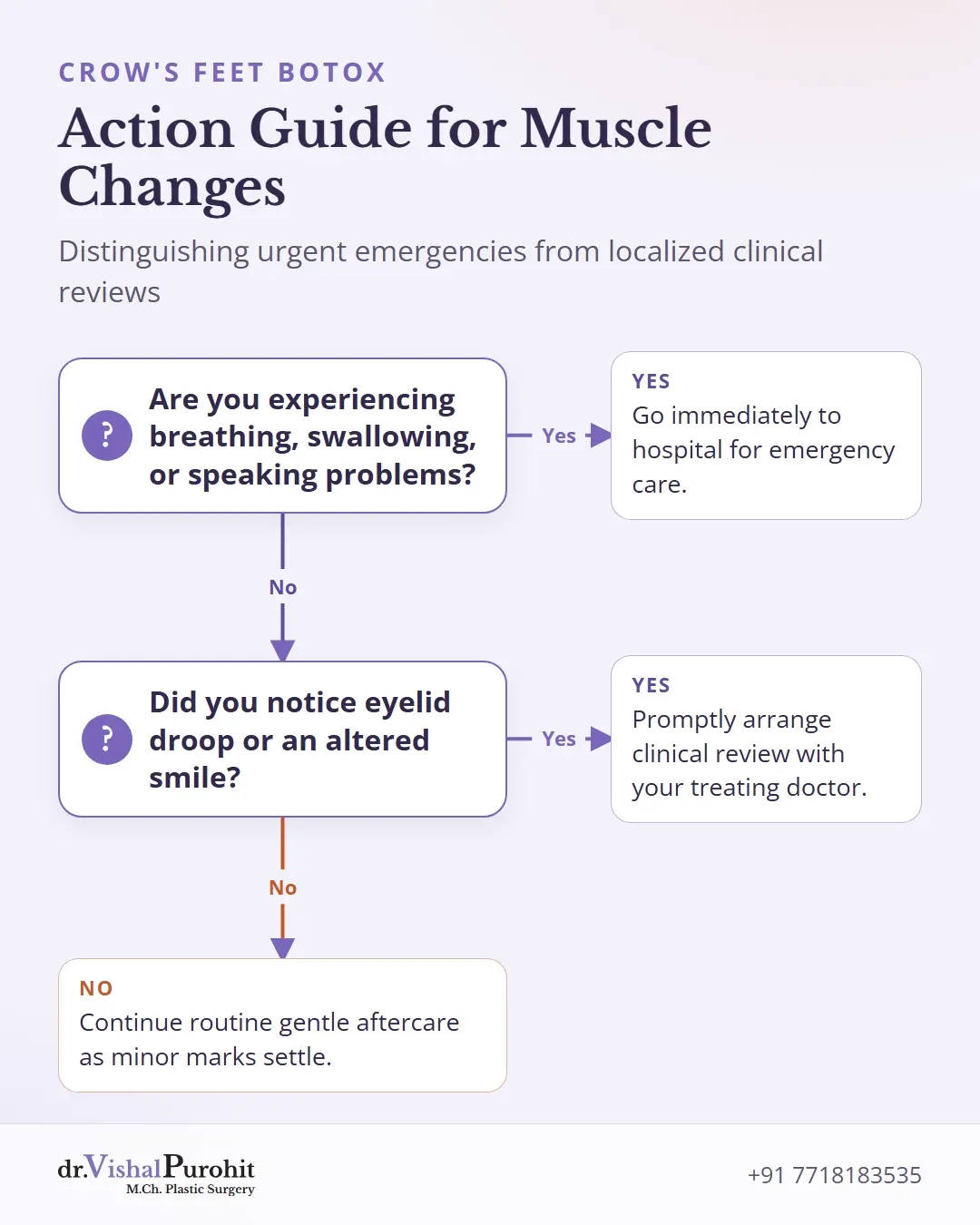
Botox works by blocking nerve signals that cause muscles to contract, allowing targeted facial muscles to relax2. When addressing lines at the outer eye corners, unexpected changes in surrounding muscular movement require prompt clinical evaluation.
A patient may notice new upper eyelid drooping, brow displacement, or an altered, asymmetric cheek movement while smiling. In periorbital treatments, softening lines near the lower lateral cheek can risk unintended blockade of the zygomaticus muscles, leading to an altered smile12. Inadvertent spread or overtreatment can also affect adjacent eyelid or forehead musculature1213.
If unexpected facial asymmetries or muscle changes develop:
- Review facial movements promptly with the injecting clinician rather than waiting for them to resolve unexamined.
- Contact Dr. Vishal Purohit’s team directly on +91 7718183535 to report the asymmetry and arrange clinical review.
Any signs of distant muscular weakness, swallowing difficulty, or breathing problems require urgent medical care rather than routine review14.
Emergency Symptoms Requiring Immediate Medical Care
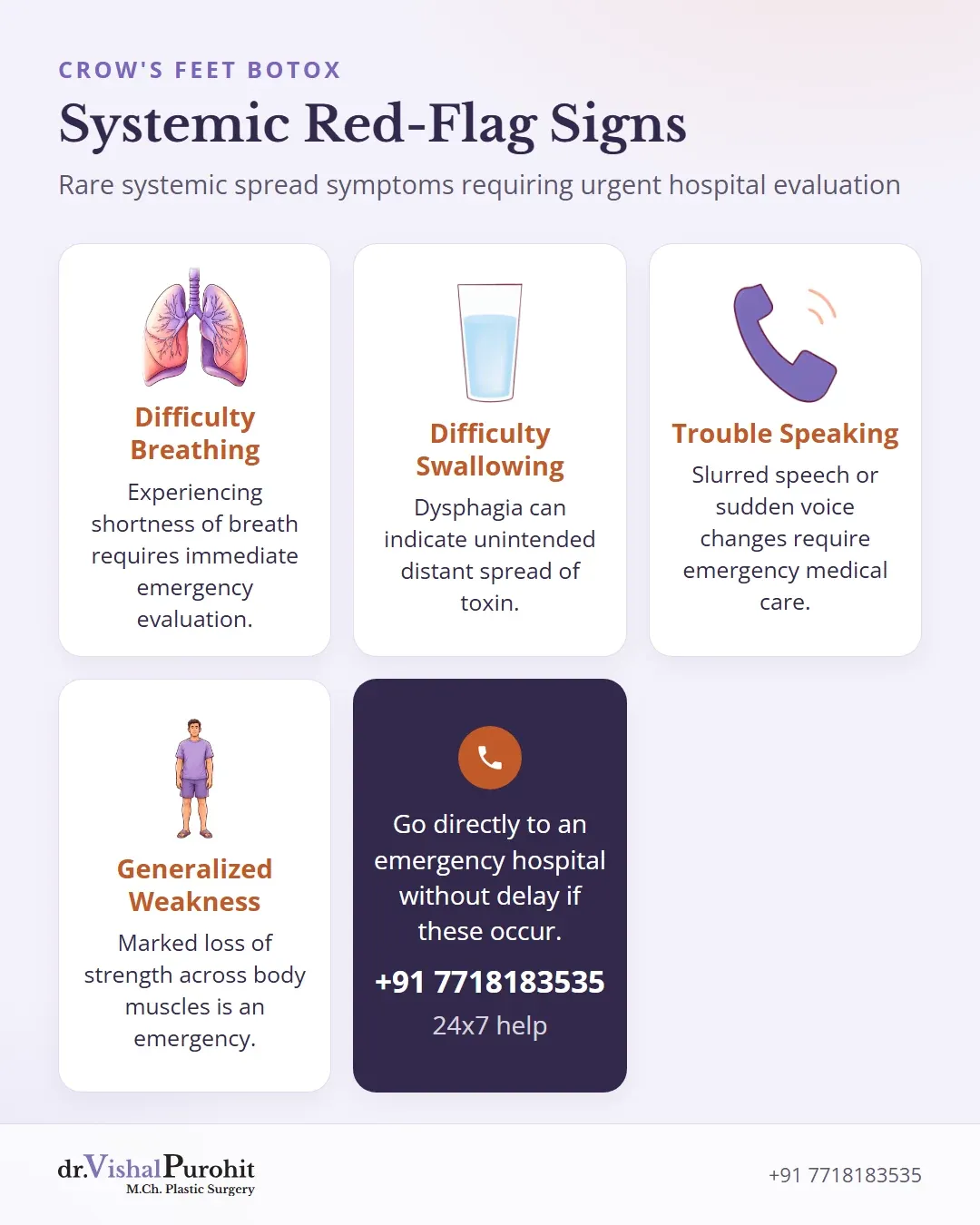
Difficulty breathing, swallowing, or speaking, or developing generalized muscular weakness after botulinum toxin administration requires emergency hospital medical care at once81516. These systemic symptoms represent serious medical emergencies that must be evaluated without delay815.
Although rare in cosmetic practice, adverse reactions caused by the distant spread of the toxin beyond the injection site can be life threatening and may take hours to four weeks to develop151718. Regulatory product guidance and postmarketing literature note that such spread can produce iatrogenic botulism or severe systemic manifestations1518. In severe cases, patients may require intensive care treatment and mechanical ventilation15.
Red-Flag Signs Requiring Emergency Evaluation
Patients must go directly to a hospital if any of the following warning signs occur81516:
- Difficulty breathing or shortness of breath1517
- Difficulty swallowing (dysphagia)81517
- Trouble speaking, slurred speech, or voice changes (dysarthria or dysphonia)81517
- Generalized muscle weakness or marked loss of strength81517
Get emergency care at once if difficulty breathing, difficulty swallowing, trouble speaking, or generalized muscle weakness occurs, then tell the doctor.
There has not been a confirmed serious report of distant spread when onabotulinumtoxinA is used at recommended doses for crow’s feet lines1920. However, any systemic symptoms must never be ignored815.
Consulting Dr. Vishal Purohit in Jaipur
Understanding recovery expectations allows patients to plan work and social commitments with confidence. For detailed procedural guidance, review Crow’s Feet Botox in Jaipur to explore available non-surgical options. Additional questions regarding common treatment concerns can be reviewed in the Crow’s Feet Botox FAQs. To discuss personalized treatment planning or to schedule a clinical consultation, contact the practice directly on +91 7718183535.
This is educational information, not medical advice.