
Evaluating the periocular region requires careful attention to eye health, muscle tone, and eyelid mechanics before considering non-surgical injections. Relaxing the orbicularis oculi muscle can affect tear stability and blinking dynamics, making pre-treatment screening essential.
Patients with pre-existing ocular irritation or closure concerns can review Dry, Watery or Irritated Eyes After Crow’s-Feet Botox: Warning Signs to understand related symptoms. Disclosing previous refractive procedures, eyelid surgeries, and medical conditions helps ensure that clinical care accounts for tissue support and eye comfort.
Screening for Dry Eyes and Closure Problems

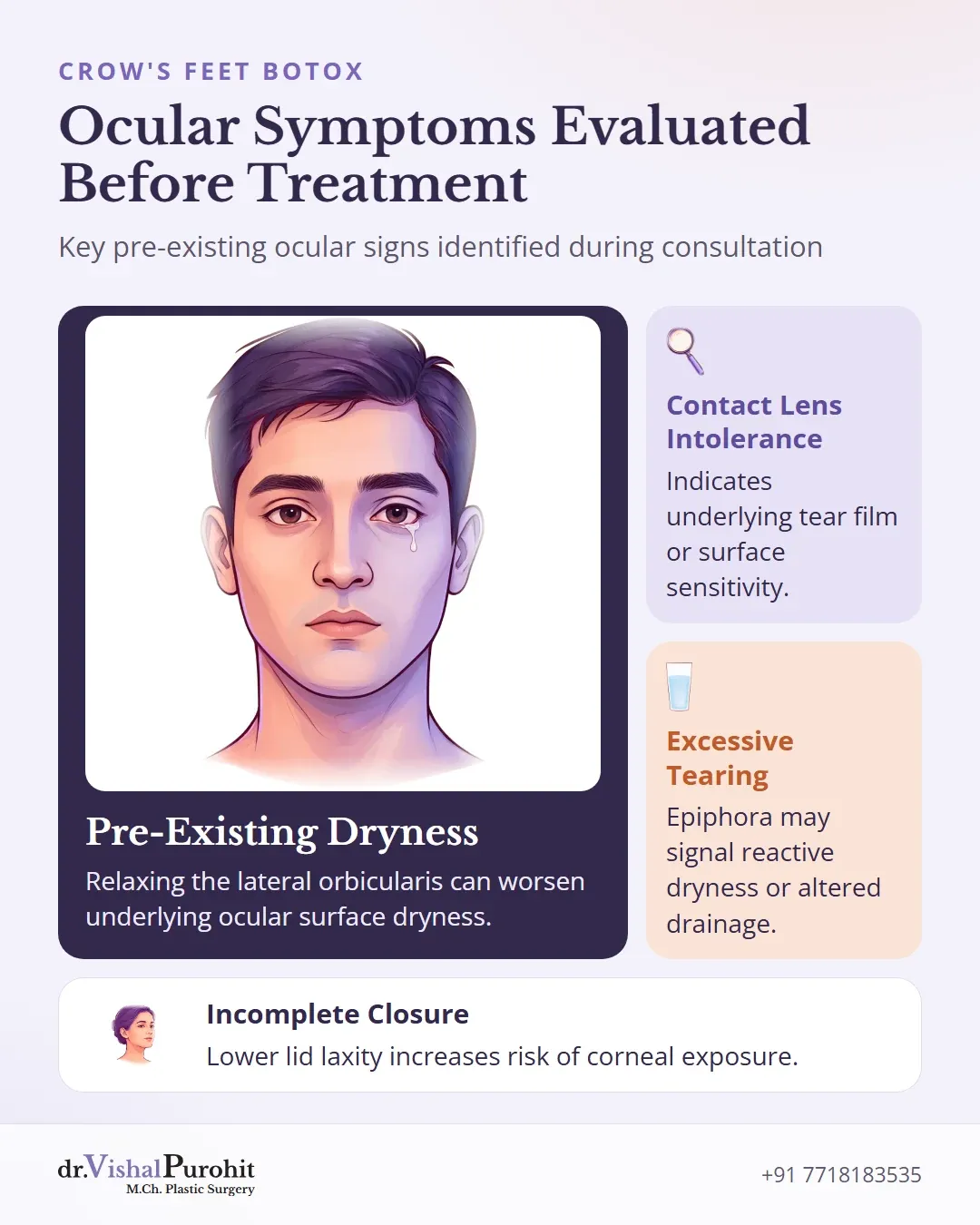
Before treating crow’s feet with Botox, Dr. Vishal Purohit assesses each patient for underlying eye surface conditions and eyelid issues during the clinical evaluation.
A detailed preoperative history must identify specific symptoms and signs before proceeding:
- Pre-existing ocular dryness or irritation12
- Contact lens intolerance12
- Excessive tearing1
- Incomplete eyelid closure or lower eyelid laxity12
Dr. Purohit’s note: Dr. Purohit assesses each patient for underlying eye surface conditions and eyelid issues during the clinical evaluation before treating crow’s feet with Botox.
Neuromodulation targets the contraction of the orbicularis oculi muscle12. Relaxing this muscle around the eyelid can worsen pre-existing ocular surface dryness or exposure issues12. Botulinum toxin type A injection into the lateral canthal area for crow’s feet has been reported as a cause of dry eye syndrome3. In addition, altered blinking and diminished punctal drainage may fail to relieve severe dry eye symptoms3.
Evaluating tear-film stability, corneal exposure, and eyelid mechanics ensures that treatment planning accounts for ocular surface health rather than wrinkle patterns alone12.
Eye Surgery and Prior Refractive Procedures
Patients considering Botox for crow’s feet should disclose any prior eye or eyelid interventions during evaluation.
Prior Surgeries to Disclose
A complete history helps assess periocular risks and plan safe care:
- Past vision correction procedures such as LASIK or SMILE
- Prior cataract surgery
- Previous eyelid surgery, including blepharoplasty
Prior surgical procedures and eyelid alterations can affect clinical safety and diagnosis in the periocular area2. In patients with prior blepharoplasty, lower-eyelid laxity, or a tendency toward dry eyes, literature notes that cautious dosing at the lower end of the range and precise anatomical placement are beneficial4.
Pre-existing eyelid or brow ptosis, periocular asymmetry, lid laxity, and a history of dry eyes require evaluation before injection5. Repeated injections into the lateral canthal area can lead to dry eye syndrome of varying severity due to orbicularis oculi weakness, presenting with eye irritation, foreign body sensation, or epiphora3.
Clinician Examination of Blink and Eyelid Tone
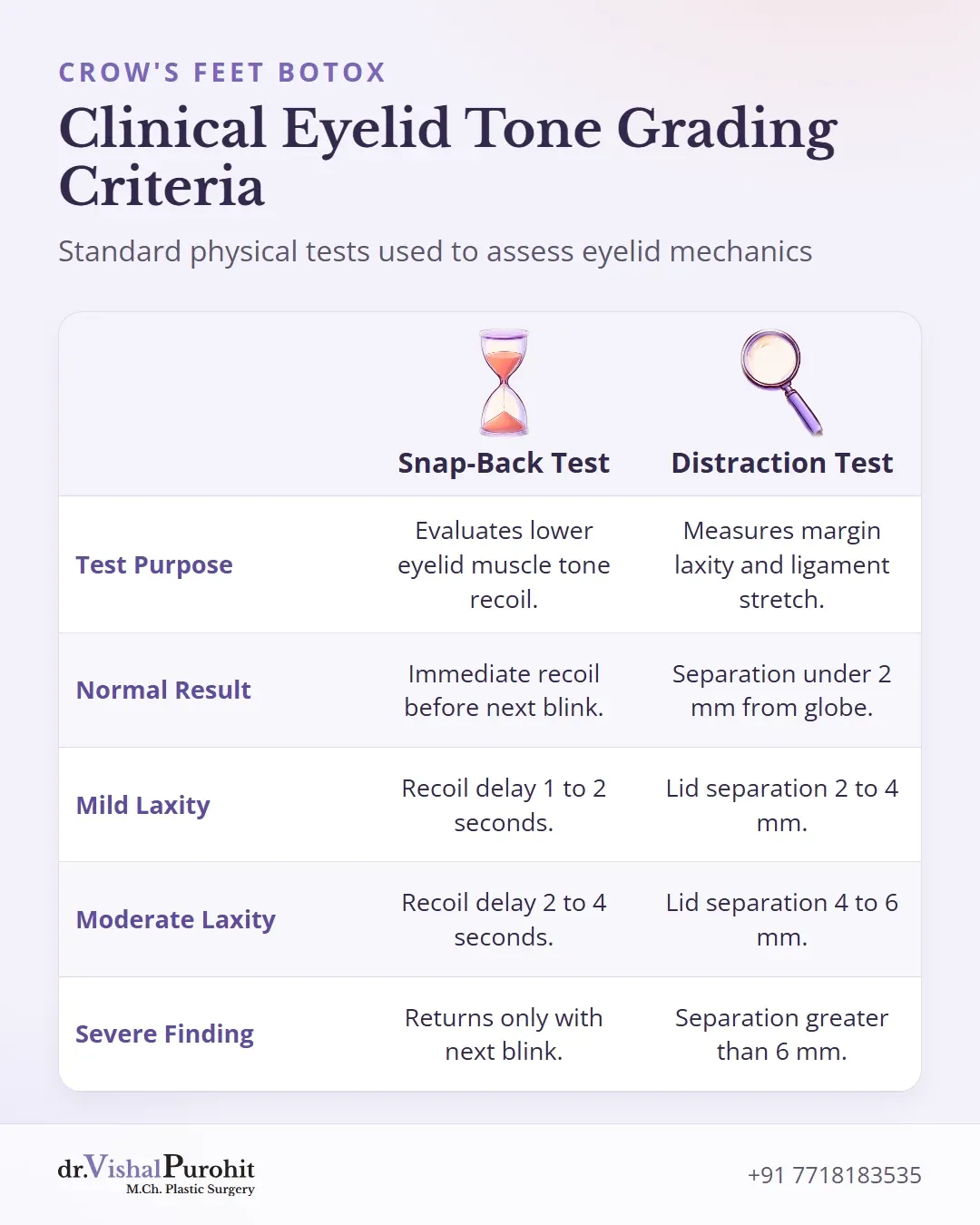
Before administering Botox for crow’s feet, an M.Ch. plastic surgeon examines the structural integrity of the periocular tissues during the consultation. This formal assessment evaluates orbicularis muscle tone and canthal support around the lateral eye.
Key points
- A formal clinical evaluation checks eyelid muscle tone and support before crow’s feet Botox.
- Standardised physical tests measure lower lid recoil and laxity in millimetres and seconds.
- Eyelid mechanics must be examined in person by a specialist rather than tested at home.
Clinical Tone and Laxity Assessments
A clinical evaluation relies on standardised physical tests to evaluate eyelid mechanics:
- Snap-back test: Evaluates muscle tone by pulling the lower eyelid inferiorly while the patient looks straight ahead without blinking3. Immediate recoil before the next blink indicates normal function, while delayed recoil is graded in seconds (1 to 2 seconds as mild, 2 to 4 seconds as moderate, and returning only with the next blink as severe)3.
- Distraction test: Evaluates lower eyelid margin laxity and canthal ligament stretch by gently pulling the lid away from the globe3. Separation under 2 mm is considered normal, 2 to 4 mm mild, 4 to 6 mm moderate, and greater than 6 mm severe3.
Patients should rely entirely on in-person clinical examination by a specialist rather than attempting self-testing at home.
Neuromuscular Conditions and General Health Contraindications

Certain health conditions require postponing or avoiding Botox injections for crow’s feet:
Key points
- Neuromuscular disorders, active skin infections, and pregnancy or breastfeeding require avoiding or postponing Botox injections.
- Disclosing all pre-existing medical conditions protects against adverse neuromuscular interactions and complications.
- A comprehensive medical history review ensures underlying contraindications are identified before treatment.
- Pre-existing neuromuscular disorders, such as myasthenia gravis, Lambert-Eaton syndrome, or motor neuron diseases, can potentiate the effects of botulinum toxin and increase the risk of systemic weakness678.
- Active skin or cutaneous infections at or near the planned injection sites around the eyes require deferring treatment until the skin has completely healed78910.
- Pregnancy and breastfeeding are standard contraindications because clinical safety in these populations remains unestablished and unknown78101112.
Disclosing every pre-existing medical diagnosis, nerve or muscle condition, and general health issue is an essential safety precaution613. These disclosures protect patients against unintended adverse neuromuscular interactions, abnormal weakness, and drug-related complications68.
During the initial assessment, Dr. Vishal Purohit reviews the patient’s full medical history and current physical health before deciding whether cosmetic injection is appropriate. Providing a complete health summary ensures that underlying contraindications are identified before any injection takes place611.
Prescribed Medicines and Blood Thinning Agents
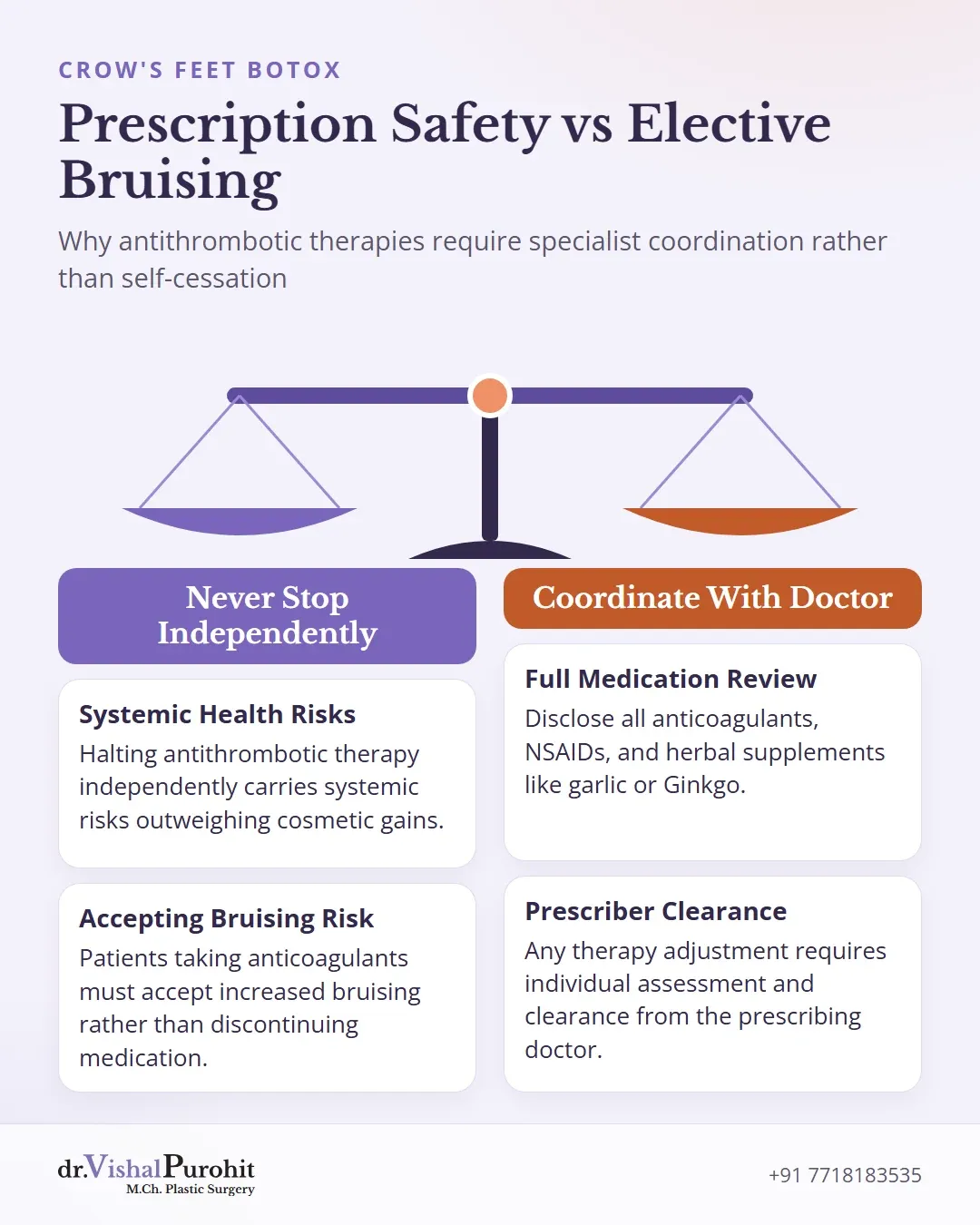
Patients must share a full record of all current medications, herbal supplements, and health therapies before crow’s-feet injections. Injections around the outer eye carry bleeding considerations, as vascular perforations during injectable treatments present the greatest risk for bleeding and hematomas in the periorbital region14.
Agents that alter normal coagulation can increase the likelihood of skin discoloration:
- Anticoagulant and antiplatelet therapies increase bleeding tendency1516.
- Non-steroidal anti-inflammatory drugs (NSAIDs) influence hemostasis15.
- Supplements such as garlic, high-dose vitamin E, and Ginkgo biloba also affect coagulation15.
Patients taking anticoagulation medications must be willing to accept a higher risk of bruising before proceeding16.
Crucially, prescribed antithrombotic medications must never be altered or stopped independently solely to reduce bruising from an elective aesthetic procedure15. Interruption carries systemic risks that may outweigh cosmetic benefits15. Any proposed modification requires clearance and individual risk assessment coordinated directly with the prescribing physician15. Additionally, co-administration with aminoglycosides requires caution because the neurotoxin effect may be potentiated6.
Confirming Product Approvals and Clinic Quotation
In India, patients should verify Central Drugs Standard Control Organisation (CDSCO) regulatory registration, batch traceability, and unbroken cold-chain storage for any dispensed prescription botulinum toxin. Foreign regulatory approvals do not substitute for Indian indication status.
Furthermore, units of biological activity between different botulinum toxin type A products cannot be compared or converted into units of other brands, as potency units are specific to each preparation1718. Storage conditions also vary across brands; unopened Botox vials require refrigeration at 2°C to 8°C1920.
Itemised Quotations and Review Visits
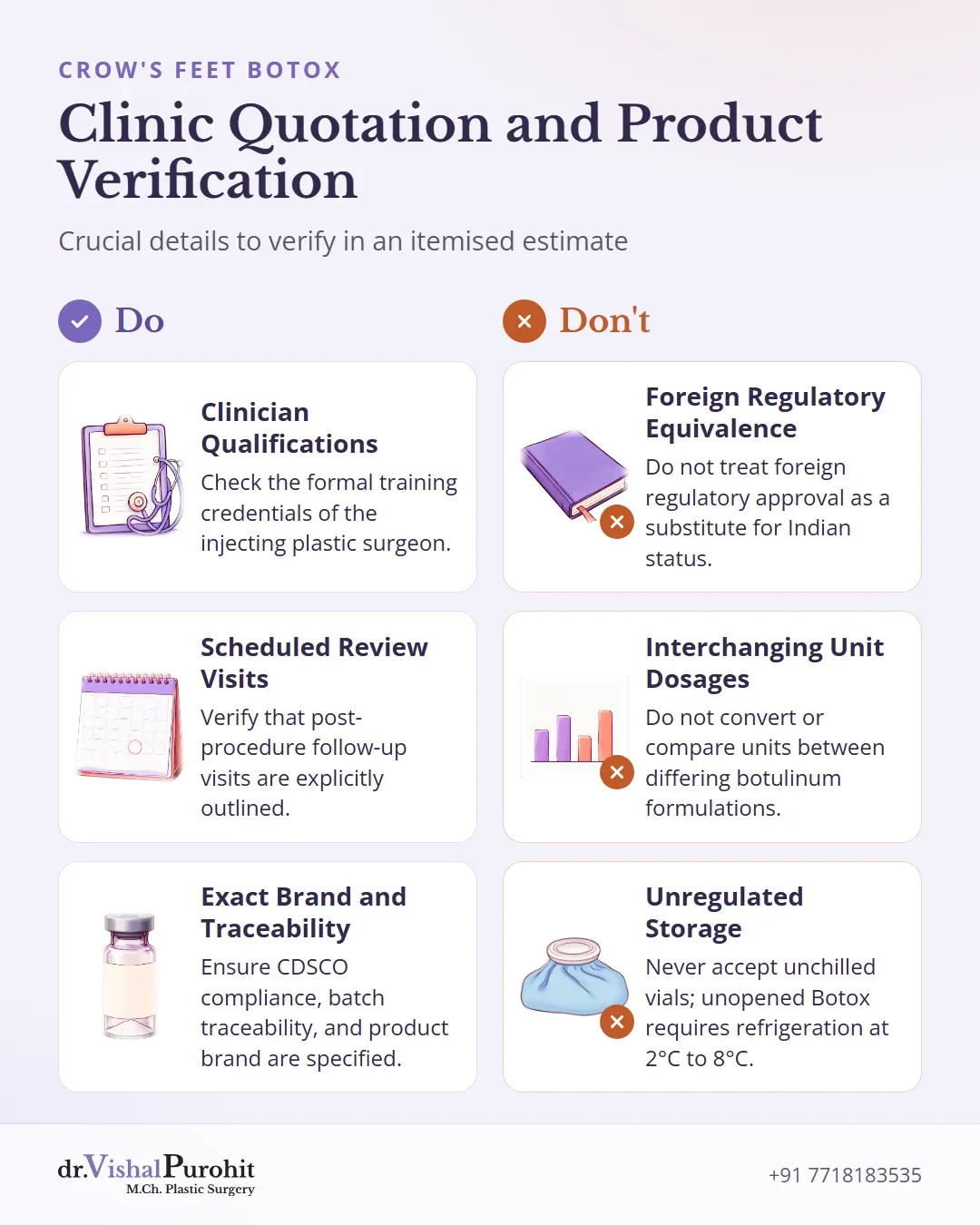
When reviewing a clinic quotation, patients should ensure that the itemised estimate clearly specifies the following details:
- The formal qualifications of the treating clinician
- Scheduled follow-up and review visits
- The exact product brand and scope of the procedure
At his practice in Jaipur, the product, what the quote includes and the review visit are explained at the consultation.
Arranging a Periocular Consultation in Jaipur
Underlying eye health, eyelid tone, and medical history play critical roles when planning non-surgical care for lateral canthal lines. For personalised evaluation and planning, explore options for Crow’s Feet Botox in Jaipur with an M.Ch. plastic surgeon. Reviewing Crow’s Feet Botox FAQs can also help clarify common queries regarding treatment considerations, medication precautions, and consultation scheduling.
This is educational information, not medical advice.