
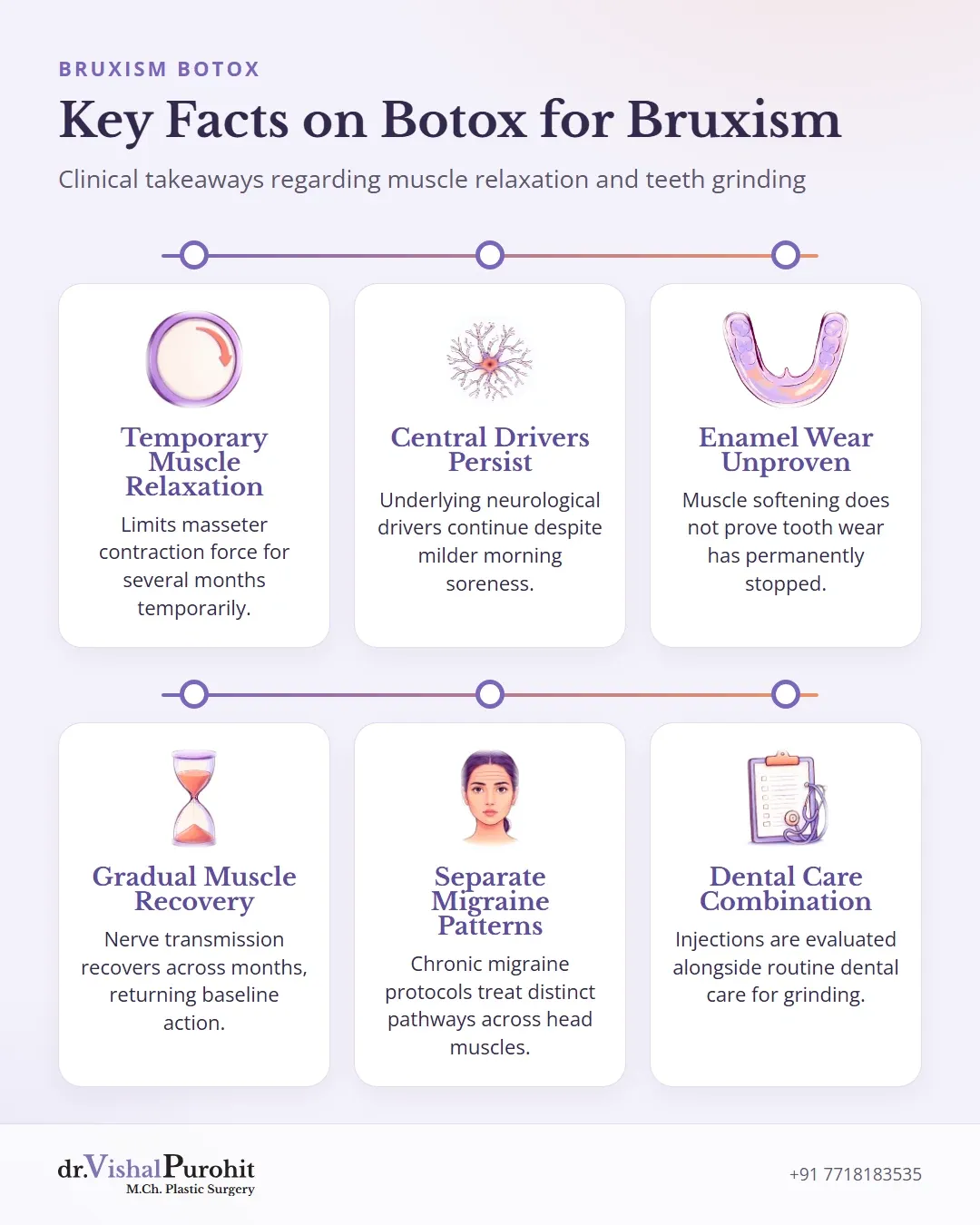
Botulinum toxin type A injections into the jaw muscles help ease severe clenching by temporarily limiting masseter contraction forces. While this non-surgical approach softens muscular tension and reduces daily jaw soreness, it acts on peripheral motor endplates rather than central neurological triggers.
A thorough Jaw Pain, Tooth Wear and Headaches: Pre-Botox Assessment helps evaluate whether physical symptoms stem from localized clenching or broader joint strain. Clinical trials indicate that functional relaxation gradually declines over several months as nerve signals recover, meaning injections do not eradicate nocturnal grinding patterns.
Chewing Muscle Relaxation Across Patient Groups
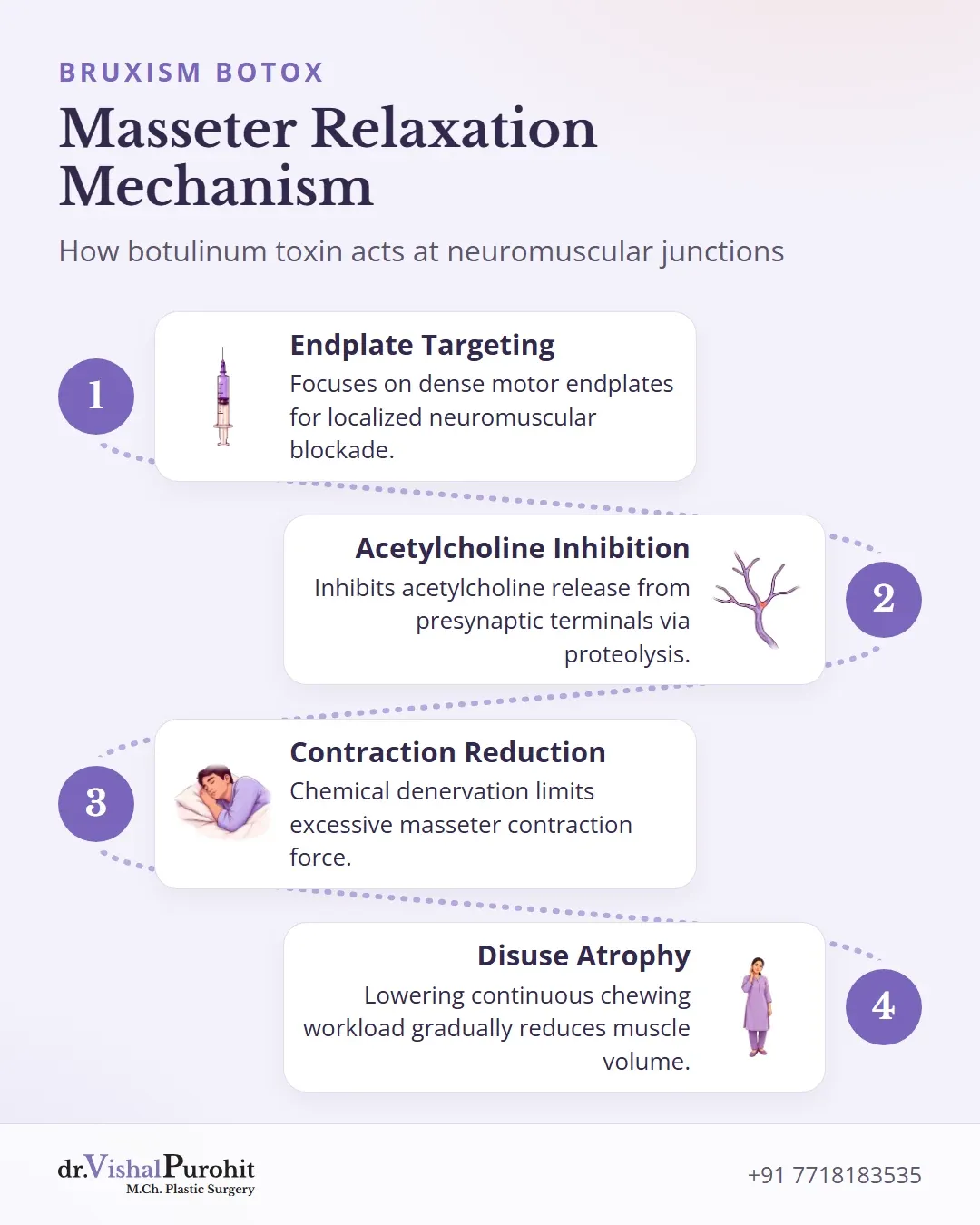
Botulinum toxin type A acts predominantly at the neuromuscular junction by inhibiting the release of acetylcholine from presynaptic nerve terminals123. In jaw muscles such as the masseter, this interference causes chemical denervation and limits muscle contraction3. Over time, reducing the continuous workload induces disuse atrophy, lowering muscle volume3.
Because botulinum toxin A transiently inhibits acetylcholine release through SNAP-25 proteolysis3, the resulting muscular blockade is temporary rather than permanent. The treatment modulates peripheral muscle response instead of addressing central neurological triggers.
Dr. Purohit’s note: Dr. Vishal Purohit provides Botox as a non-surgical injection treatment alongside routine dental care for adults experiencing jaw clenching and teeth grinding.
Key aspects of this muscular approach include:
- Target sites focus on dense motor endplate zones within the muscle to facilitate localised neuromuscular blockade12.
- Limiting excessive masseter contraction reduces muscular strain without altering underlying central grinding patterns3.
- Treatment planning and follow-up schedules are evaluated individually, with all specific protocols decided at the consultation.
Objective Activity vs Subjective Pain Relief
Clinical evaluations of botulinum toxin type A for jaw muscle clenching examine distinct clinical endpoints4. Diagnostic assessments in comparative trials frequently track electromyographic or polysomnographic measures alongside clinical pain scores and bite force4. In masticatory myofascial studies, earlier trials focused on pain outcomes, while newer research assesses electromyographic activity, bite force, muscle morphology, and mandibular function5.
Measurement Disconnect
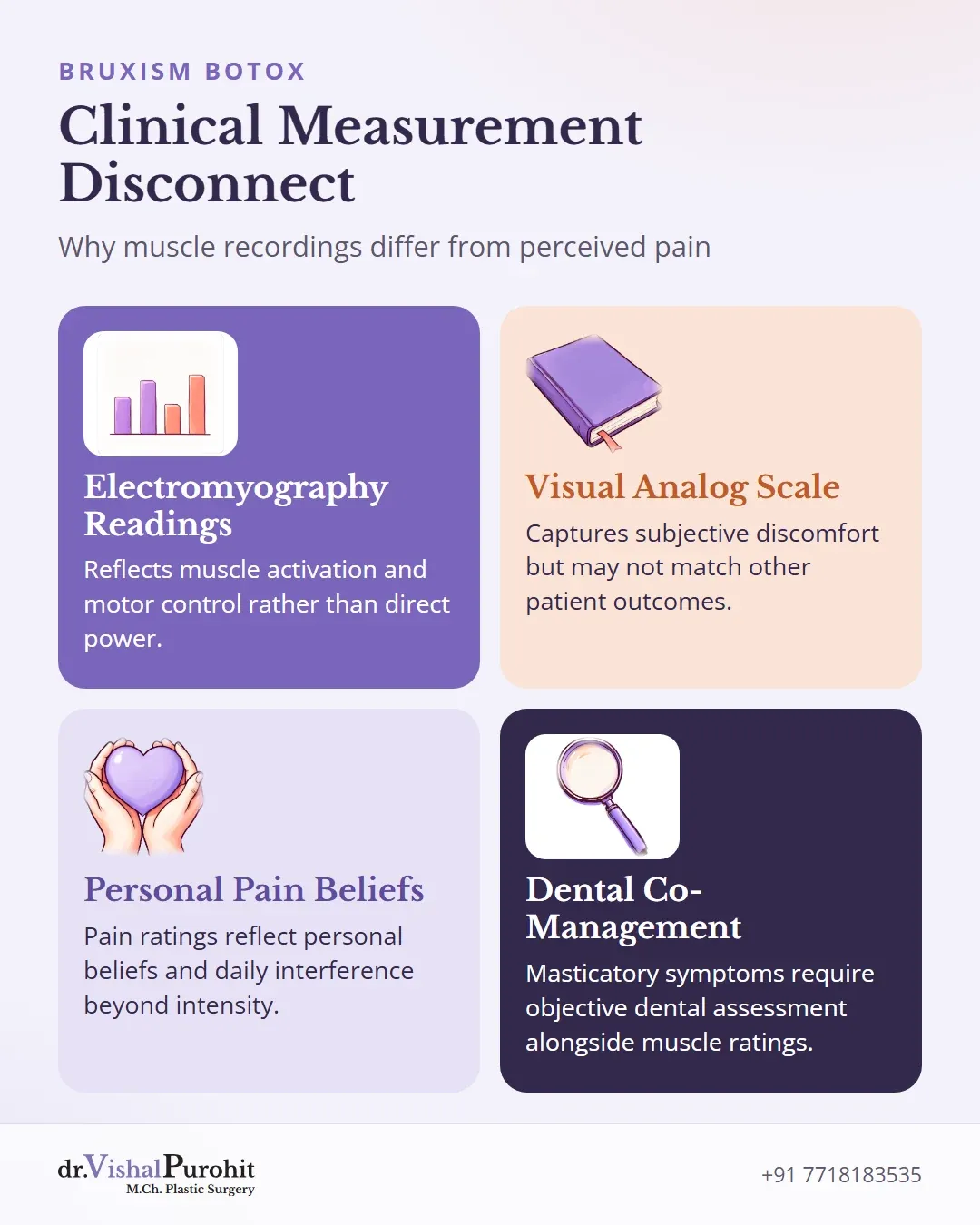
Research evaluations show that physiological activity and patient-reported symptoms do not always align directly:
Physiological Measures
- Electromyography reflects muscle activation and motor control rather than direct muscle power6.
Subjective Pain Ratings
In his Jaipur practice, Dr. Vishal Purohit assesses jaw muscle symptoms carefully alongside dental management.
Findings from Small Clinical Trials
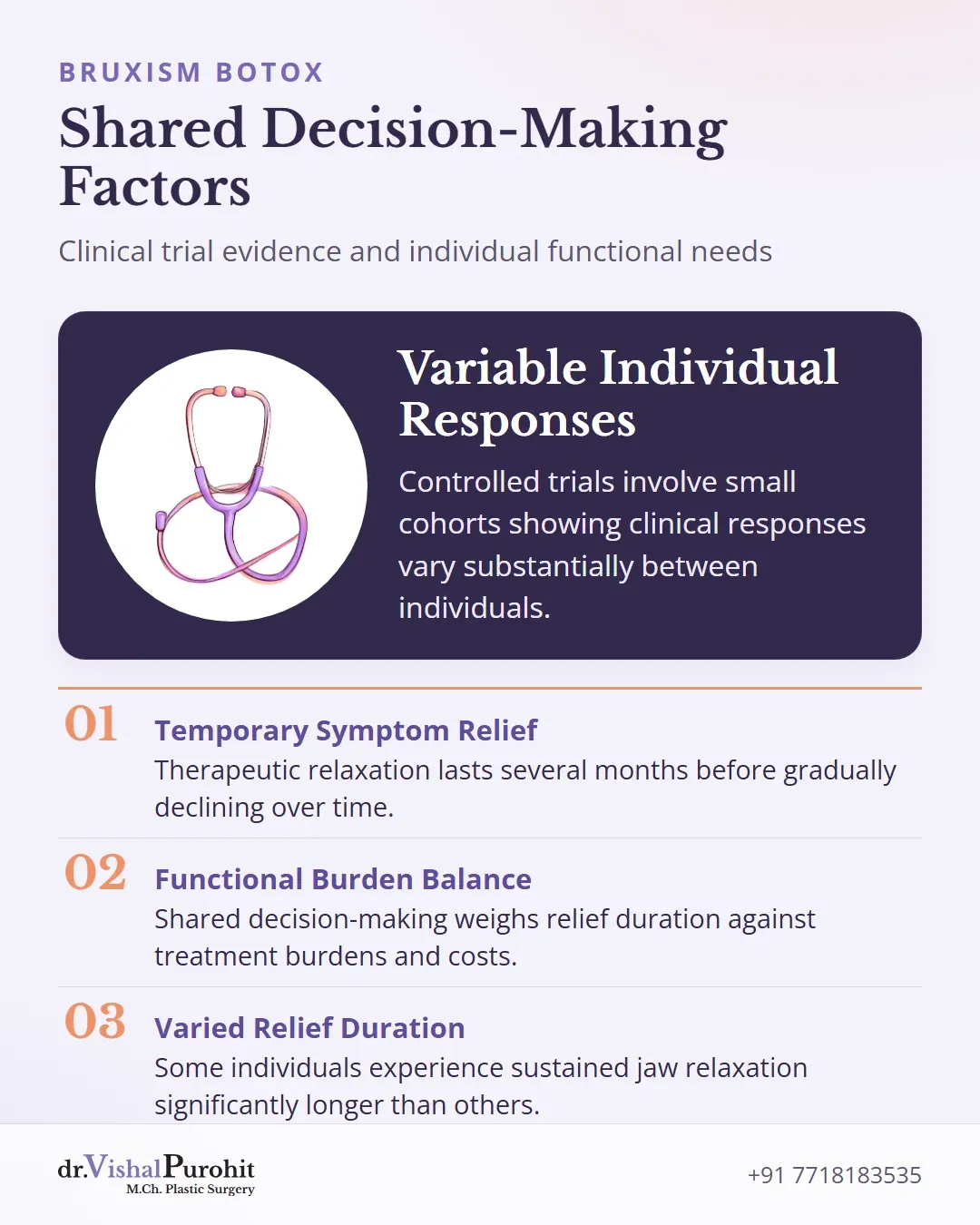
Controlled clinical trials assessing botulinum toxin type A for sleep bruxism typically involve small study cohorts910. These trials serve as general background and demonstrate that clinical responses vary substantially between individual patients91112.
Research indicates that the therapeutic effect of botulinum toxin is temporary, often lasting several months before gradually declining1213. Shared clinical decision-making is necessary to weigh the expected duration of symptom relief against individual functional needs, treatment burdens, and financial considerations11. Rather than providing a universal outcome, literature trials show that responses differ widely, with some individuals experiencing sustained relief longer than others1112.
Why Apparent Relief Is Not a Cure
A temporary softening of jaw tension or lighter morning discomfort can feel like a resolution, but it does not mean the underlying condition has been eradicated. In clinical literature, botulinum neurotoxin is recognized as a targeted intervention rather than a routine treatment for every individual or a treatment for the grinding behavior itself2.
Key points
- Symptom relief from botulinum neurotoxin does not mean the underlying bruxism has been cured.
- The medication temporarily lowers muscle contraction force while the neurological drivers of clenching persist.
- Muscle activity and grinding patterns commonly return once the toxin wears off over several months.
The primary action of the medication temporarily reduces muscular contraction force. However, this physiological relaxation does not provide proof that ongoing dental wear or enamel loss has permanently stopped. The underlying neurological and behavioral drivers of nocturnal clenching often persist despite changes in perceived discomfort2.
Return of Grinding Activity
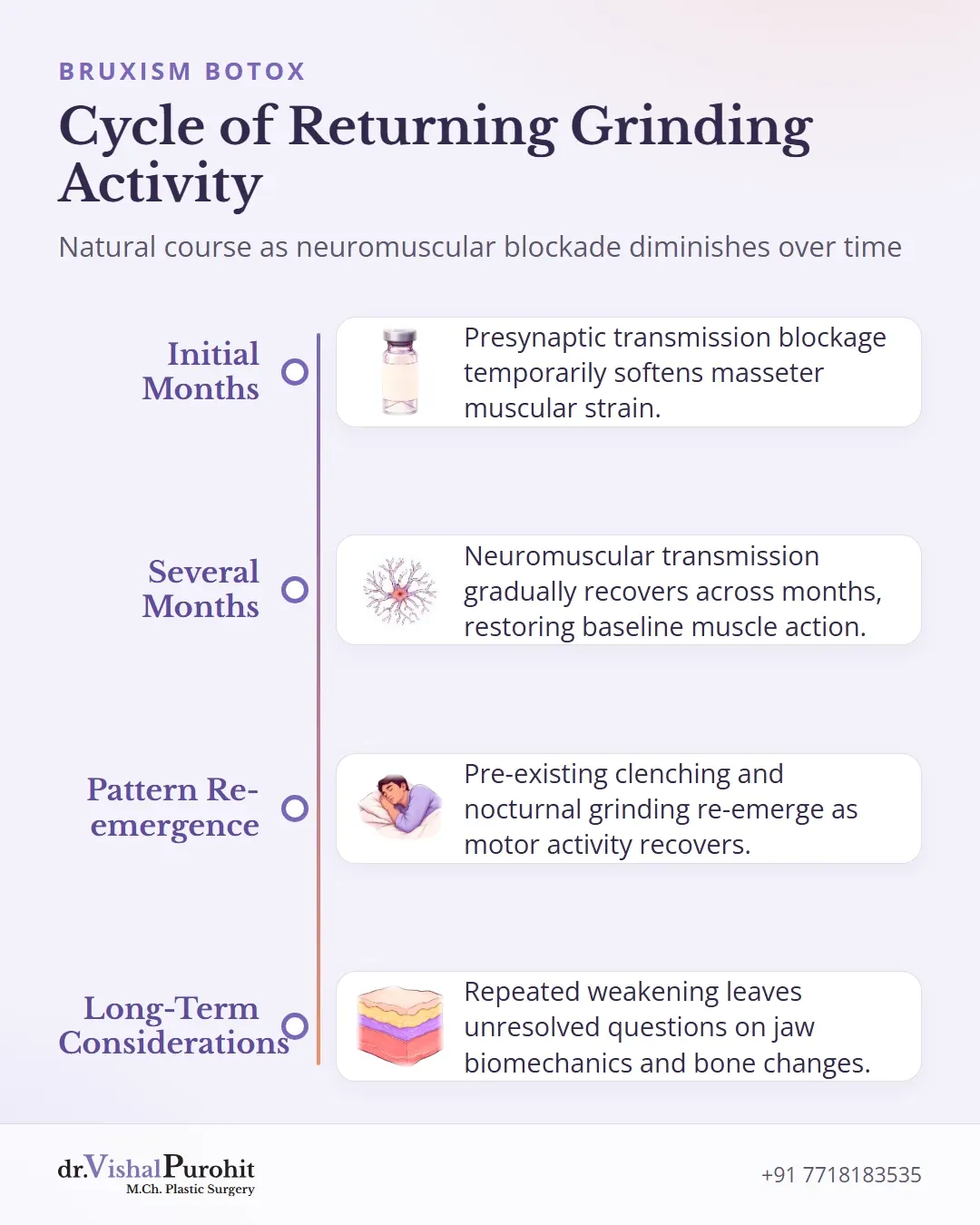
Because botulinum toxin works by temporarily blocking signals between nerves and muscles, its functional effect diminishes over time:
- Neuromuscular transmission gradually recovers across several months, allowing baseline muscle action to return2.
- Pre-existing clenching and nocturnal grinding patterns commonly re-emerge as motor activity recovers2.
- Repeated weakening of the chewing muscles also carries unresolved questions regarding altered jaw biomechanics, reduced bite force, and mandibular bone changes2.
TMD Uncertainties and Migraine Differences
Temporomandibular disorders (TMD) represent a complex group of musculoskeletal and neuromuscular conditions involving the jaw joint, masticatory muscles, and surrounding structures11. Although muscle hyperactivity frequently coexists with bruxism and facial pain11, systematic reviews note that evidence for treating broader joint and muscle dysfunction with botulinum toxin remains inconsistent across clinical trials1114. Because TMD stems from multifactorial physical and psychological causes, management requires a tailored approach rather than a single intervention1114.
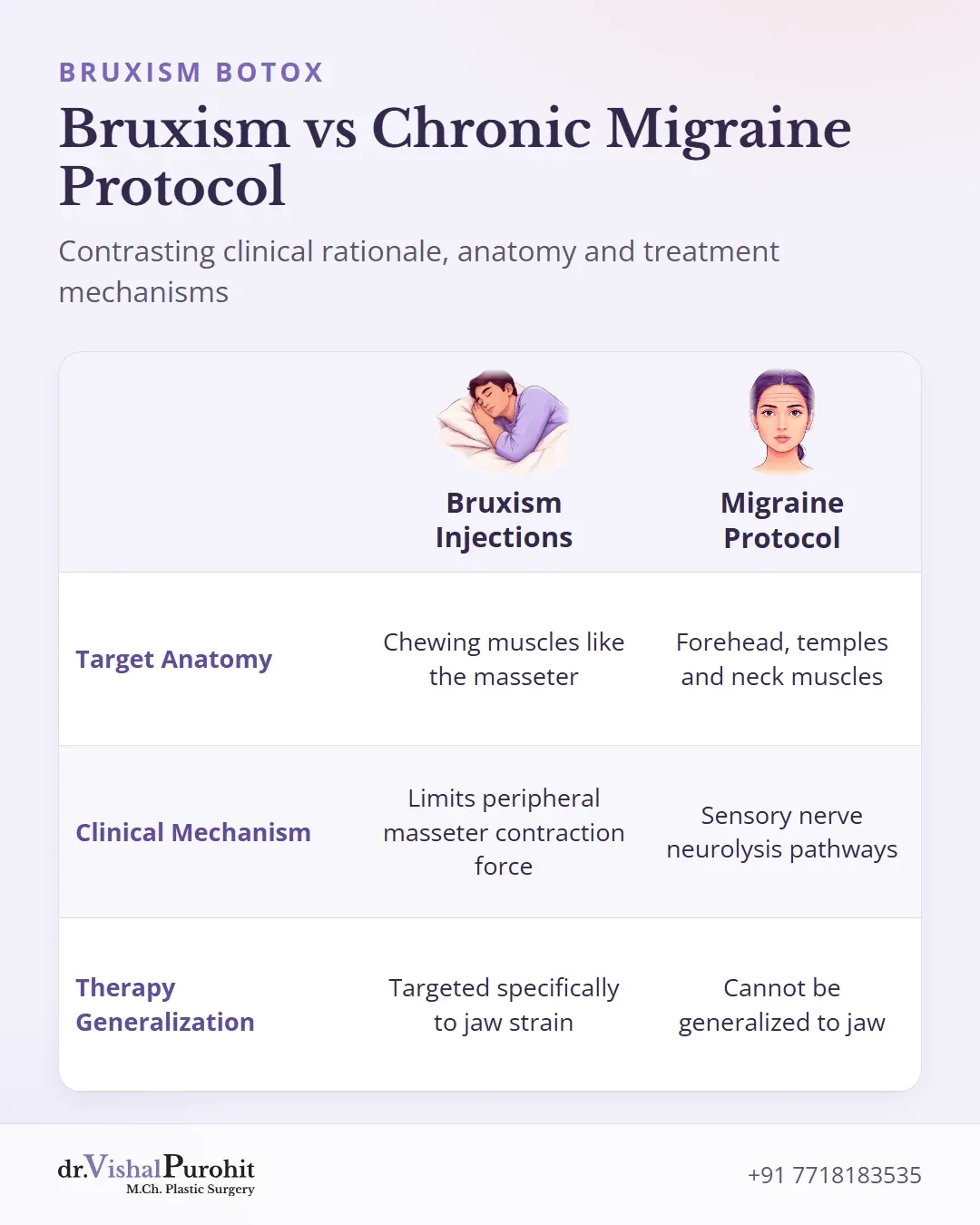
Furthermore, regulatory clinical trial protocols for chronic migraine address distinct neuromuscular pathways and cannot be generalized to the jaw1516. The established chronic-migraine protocol treats several head and neck muscles, such as the forehead, temples and neck16. These separate injection patterns reflect sensory nerve neurolysis rather than targeted therapy for jaw clenching1516.
At Dr. Vishal Purohit’s practice in Jaipur, suitability for jaw injections is decided at the consultation. Choosing no injection remains a valid option for every patient.
Muscle Evaluation and Jaw Care in Jaipur
Understanding how chewing muscle relaxation works helps patients make informed decisions about managing teeth grinding. To explore non-surgical options, review details about Bruxism Botox in Jaipur or read Bruxism Botox FAQs for further details. Dr. Vishal Purohit provides non-surgical injections alongside routine dental care for adults experiencing jaw clenching, with all individual suitability and follow-up schedules decided at the consultation.
This is educational information, not medical advice.