
Teeth grinding and clenching can cause tooth wear, fractures, and persistent muscle discomfort. A custom night guard acts as a mechanical barrier between arches, whereas daily habit awareness and stress management focus on awake jaw posture.
Injections targeting the masticatory muscles can reduce contraction intensity and ease pain, but they do not replace dental appliances. A structured Jaw Pain, Tooth Wear and Headaches: Pre-Botox Assessment helps clarify whether non-surgical injection treatment is appropriate alongside regular dental care.
How Night Guards Protect Dental Surfaces
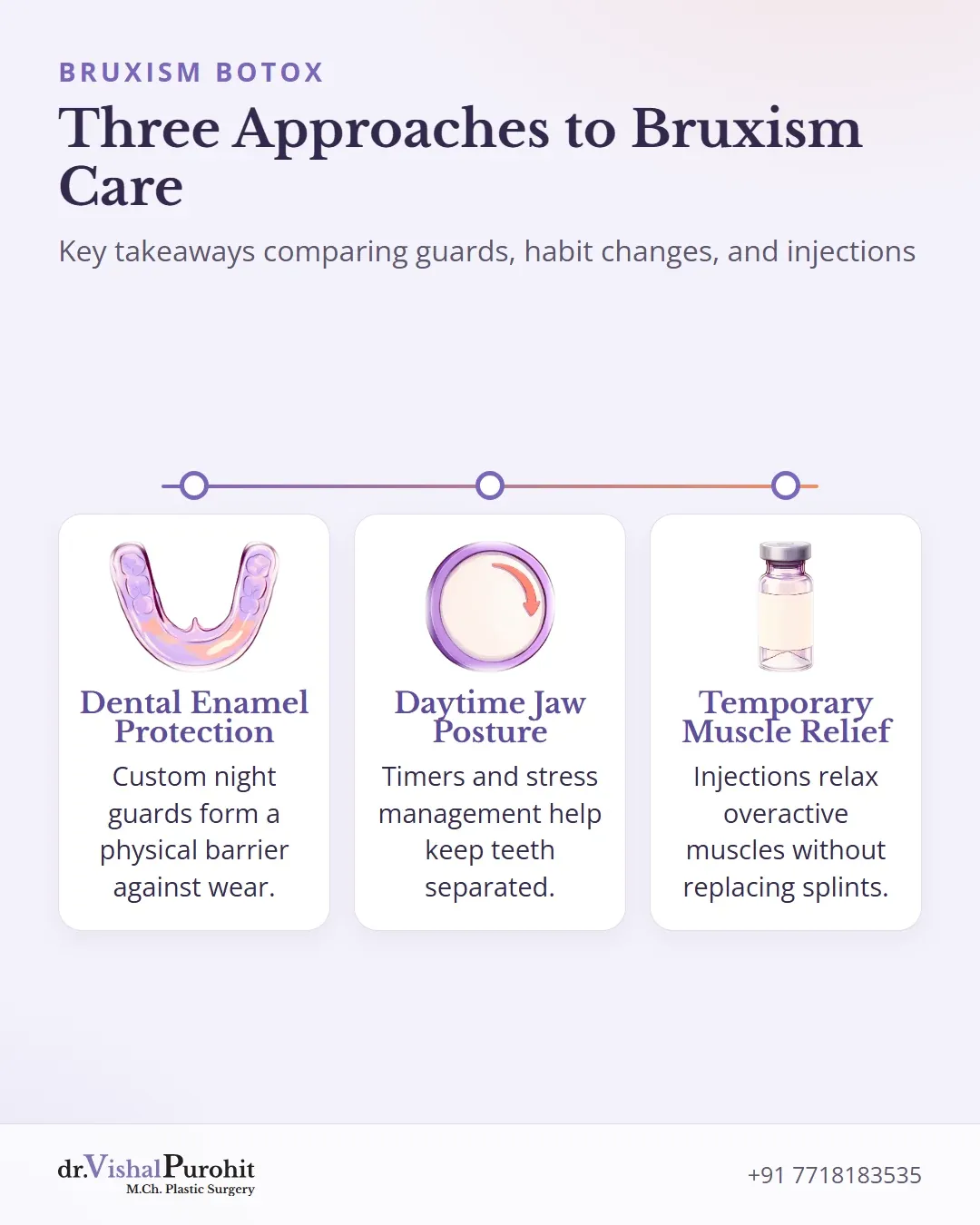
A custom night guard is a removable appliance made to fit over the occlusal surfaces of the upper or, less often, the lower teeth, with even contact against the opposing arch1. A dentist can make one to fit precisely over the upper or lower teeth, and it is worn at night to protect the teeth from damage2. Sitting between the arches, it forms a barrier that takes the load which would otherwise pass from tooth to tooth.
Key points
- A custom night guard forms a protective barrier between the dental arches to absorb nocturnal bite forces.
- It shields teeth and restorations from wear while potentially decreasing sensitivity and mobility.
- Full-arch coverage is essential to prevent unintended tooth movement or changes in joint position.
What the barrier does
- It protects teeth and existing restorations from wear and fracture3.
- It may decrease tooth sensitivity and mobility3.
What it does not do
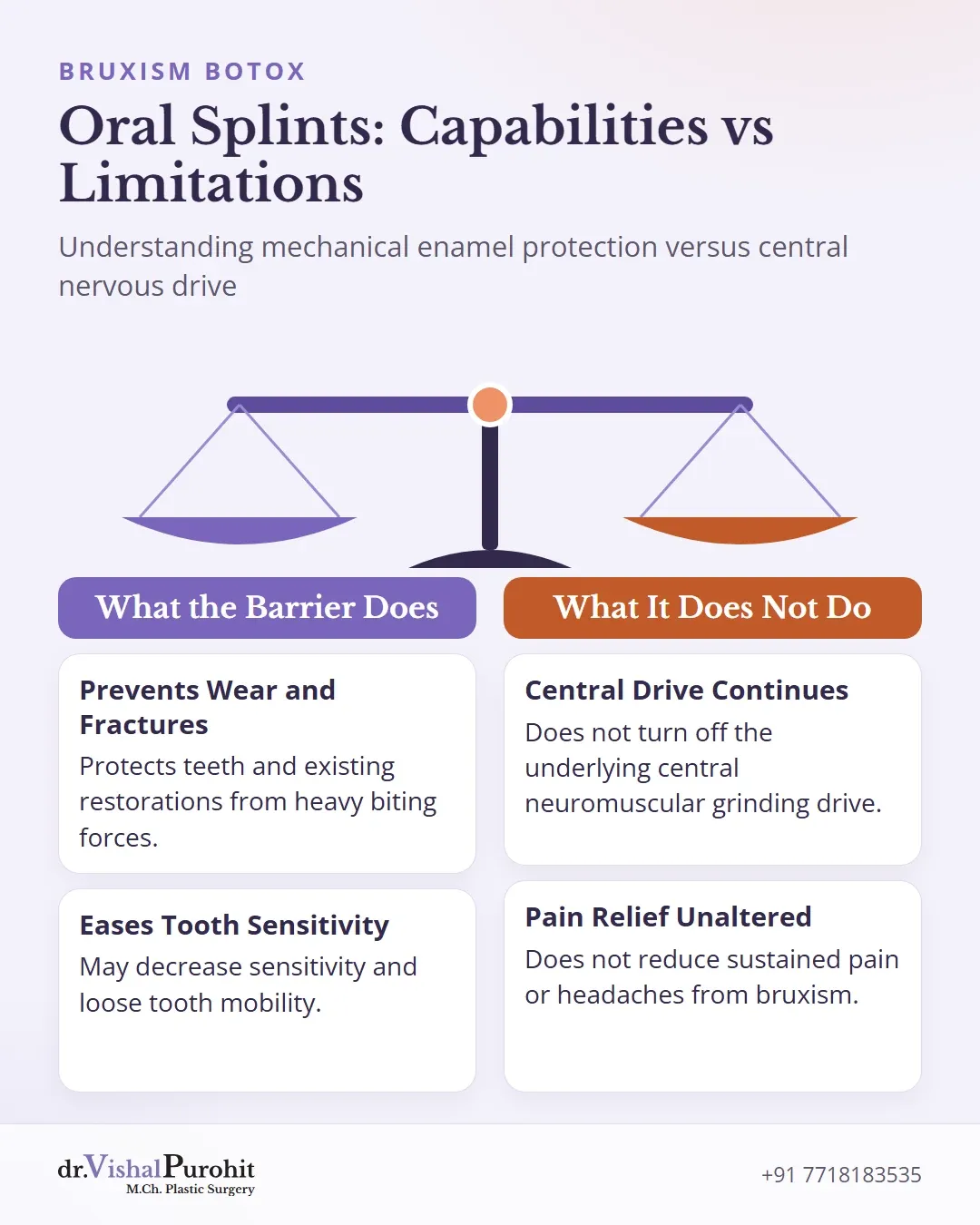
A guard is a barrier, not a switch. It does not necessarily turn off the underlying central neuromuscular drive, and the physiological basis of splint treatment is not well understood1. Benefit has been attributed to reduced loading on the temporomandibular joints and reduced neuromuscular reflex activation1.
Coverage matters: appliances should cover all the teeth on one arch, because partial coverage can allow teeth to extrude or intrude and can reposition the condyles3.
Daytime Habit Awareness and Stress Support
Jaw posture checks
For jaw posture, a patient information source on bruxism advises setting reminders—written notes or a timer on a mobile phone—to keep the teeth apart during the day when grinding or clenching occurs4. It also recommends regular dental visits so that signs of bruxism can be spotted4. This is a self-directed habit step4.
Stress support
For stress, the same source suggests relaxing activities such as yoga or meditation, and notes that counseling may help with stress reduction4. It also lists avoiding caffeine and alcohol, and not smoking4.
The Botox literature on awake bruxism remains limited5. A systematic review of Botox injections into the masticatory muscles for sleep bruxism found that all eight included studies focused primarily on sleep bruxism, and none provided a separate quantitative analysis of awake bruxism5. The reviewers stated that evidence on the effect of botulinum toxin type A on muscle activity recorded by EMG comes almost exclusively from sleep bruxism, and that dedicated awake bruxism studies with instrumental confirmation are needed5.
Sleep Hygiene, Caffeine and Alcohol Adjustments
Linked factors
The cause of teeth grinding is not always clear. It is often linked to stress and anxiety, sleep problems such as snoring and sleep apnoea, medicines for sleep problems, depression or anxiety, smoking, and drinking lots of alcohol or caffeine2. Alcohol or caffeine consumption and smoking are also listed among factors that appear to have a role4.
Habits to review
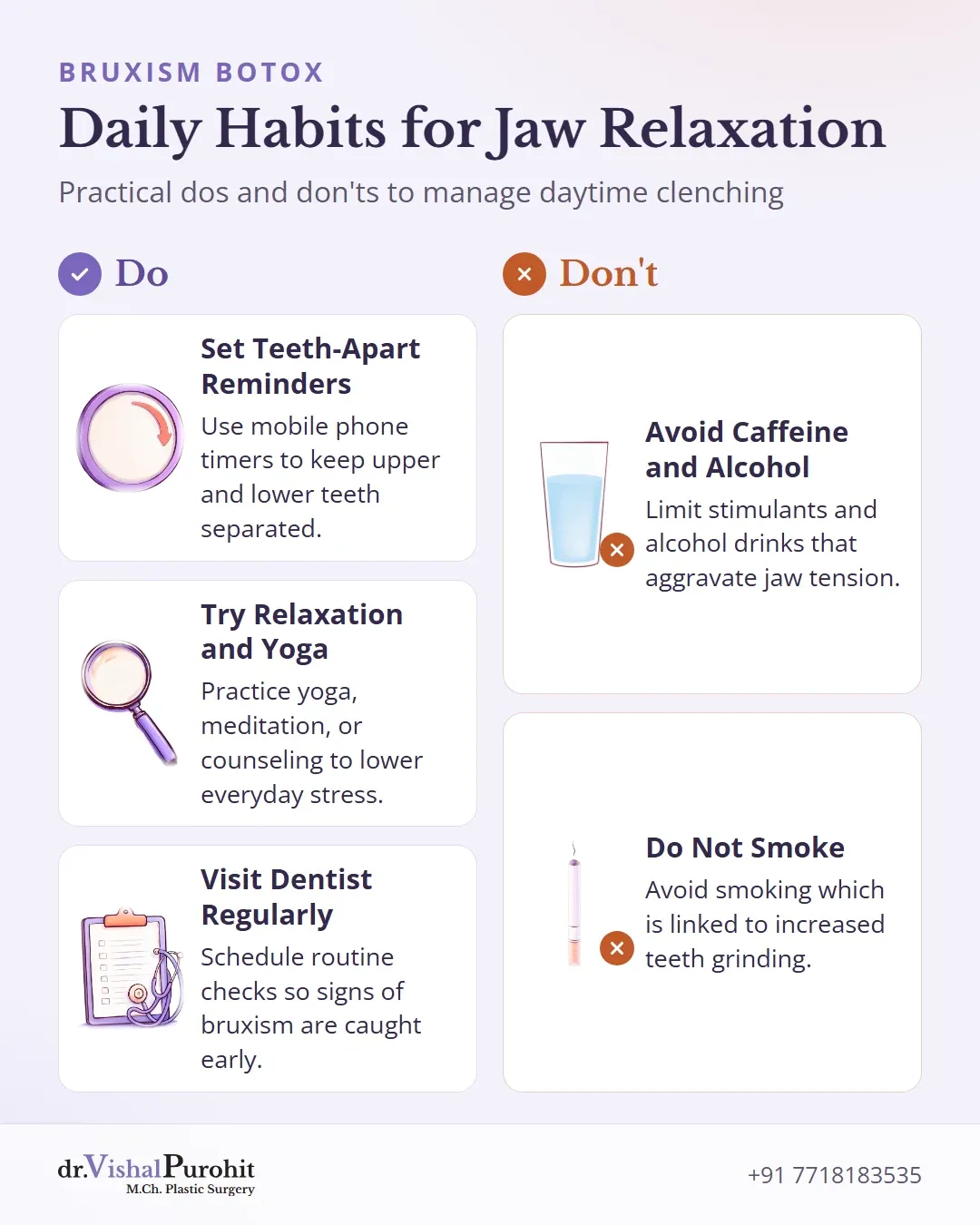
- Avoid caffeine and alcohol4.
- Do not smoke4.
- Set reminders to keep the teeth apart if grinding or clenching happens during the day4.
- Try relaxing activities such as yoga or meditation; counselling may also help with stress reduction4.
- Visit the dentist regularly so signs of bruxism can be spotted4.
Any treatment plan is decided at the consultation.
Why Muscle Relief Does Not Equal Tooth Protection
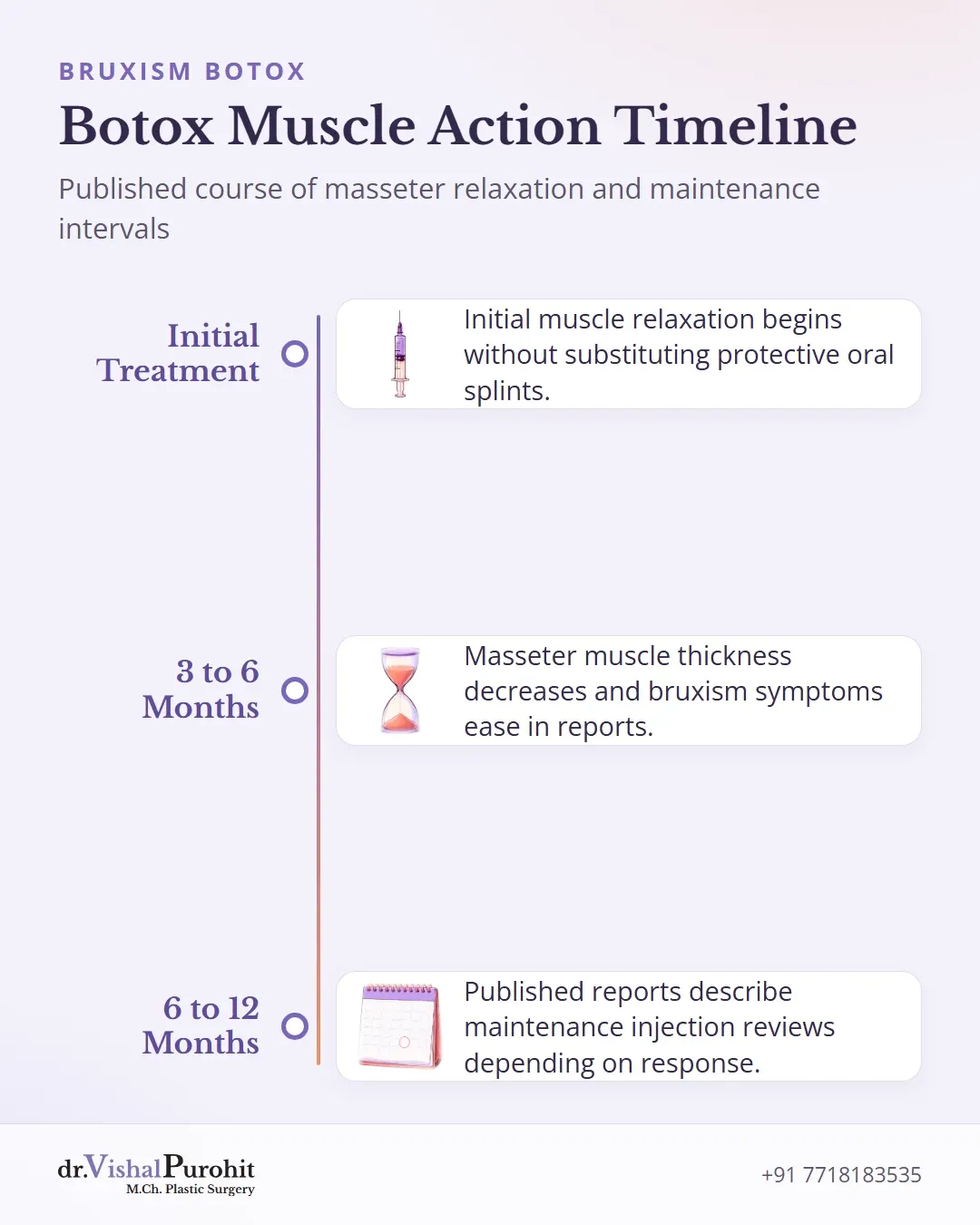
Botox can relax overactive jaw muscles. A dermatology reference notes that botulinum toxin injected into each masseter reduced muscle thickness for three to six months or longer and eased bruxism symptoms in case reports and uncontrolled studies6. Relief of masticatory muscle pain is therefore functional and temporary, not proof of dental protection.
What the Evidence Does Not Show
Traumatic occlusal forces can cause tooth wear, fracture, mobility and periodontal injury7. However, direct evidence that botulinum toxin prevents tooth fracture, prosthetic failure, periodontal attachment loss or tooth loss is lacking7. Reducing excessive occlusal loading remains an unproven dental application7. Another review adds that botulinum toxin may reduce masseter contraction intensity, but this should not be equated with treatment of bruxism itself8.
Why a Dental Appliance Still Matters
Injections alone are not a substitute for a prescribed protective dental appliance, because protection against tooth wear and fracture is not established7. Relying on injections alone may lead a patient to set aside that appliance without evidence that tooth wear or fracture risk is reduced7.
Dr. Purohit’s note: Dr. Vishal Purohit offers Botox as a non-surgical treatment alongside dental care.
Adjusting Splints Rather Than Quitting Protection
Discomfort, bulkiness, or a changed bite from an ill-fitting splint is a fit problem, not a reason to abandon enamel protection. It should prompt a dental review, where the splint can be refitted or its design changed.
Key points
- Discomfort or bite changes from a splint call for refitting or redesign rather than stopping enamel protection.
- Splints protect teeth against wear from grinding but do not permanently reduce overall bruxing activity or headache.
- Conservative dental adjustment and choosing no injection treatment remain valid options alongside regular dental care.
What splints do, and do not do
Oral splints are the most widely used and studied treatment for sleep bruxism. Their objective benefit, as measured by surface electromyography (sEMG), is limited to the first nights of continuous use and does not persist from week two onwards9.
Splints are understood to reduce dental destruction from grinding without changing overall bruxing activity for sustained periods, and therefore do not reduce pain or headache linked to bruxism9.
Keeping other choices open
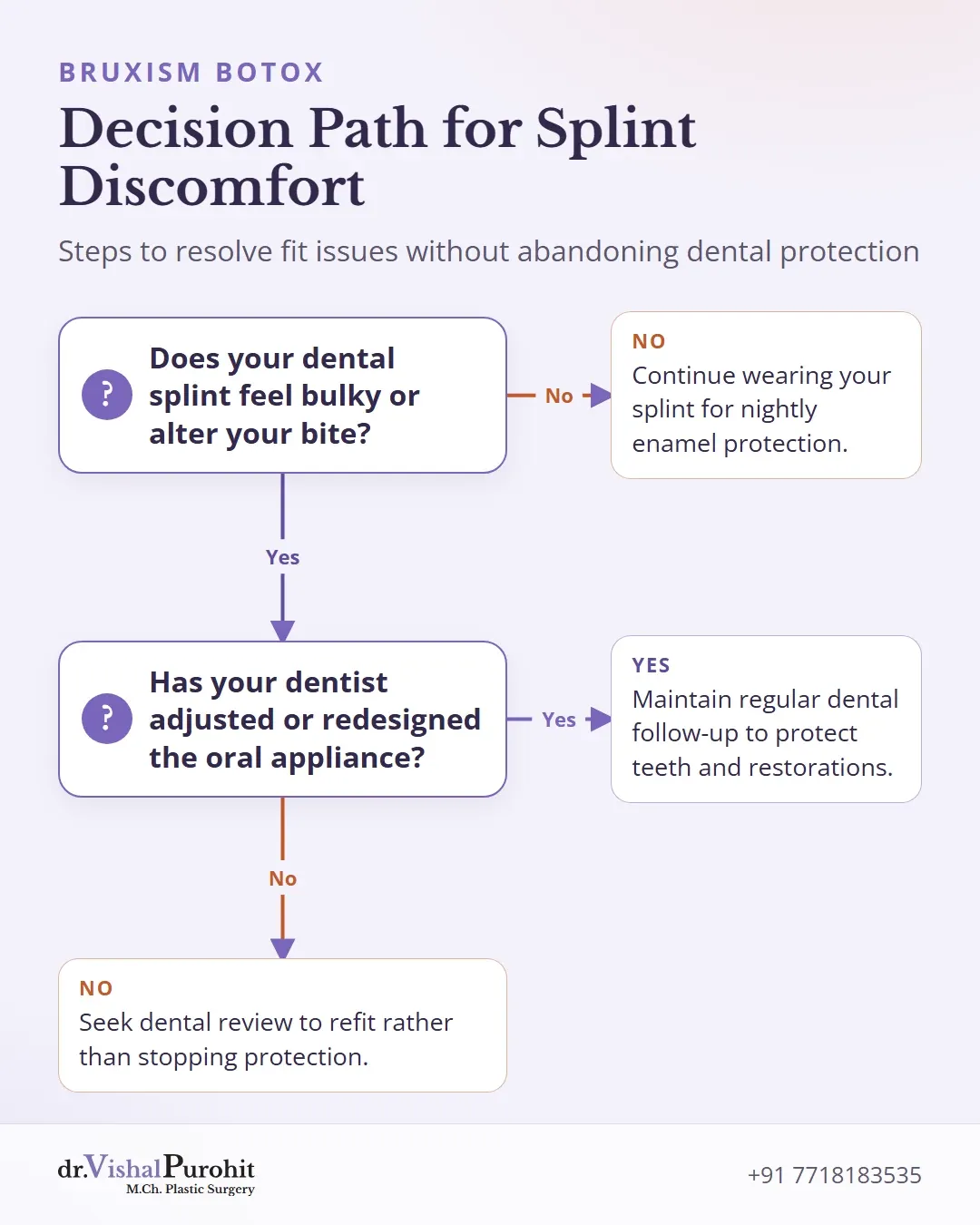
Conservative dental adjustment is a valid path, and choosing no injection treatment is equally valid. Severe bruxism can damage teeth and cause jaw pain, tiredness, and headache, so regular dental care still matters4. Many mild cases may not need treatment at all4.
What Dr. Purohit advises about adjusting or replacing a splint is decided at the consultation.
Consultation Questions and Off-Label Consent in India
Goals and history first
The first conversation should establish what the patient wants from treatment — less clenching, less jaw discomfort, or a change in facial width — alongside any dental care already in progress. A full medical history, current medicines and earlier toxin treatment belong in the same discussion. Response is not uniform: published experience records patients who responded weakly to repeated high doses of Botox into enlarged masseters10.
Approval in one country is not approval in another
Masseter treatment is described in the literature as an off-label use of botulinum toxin11. The US FDA approval years recorded for these products apply to named indications in that country12; they do not by themselves constitute CDSCO approval in India. Detailed informed consent is listed among the key points for botulinum toxin injections13.
What is settled before injection
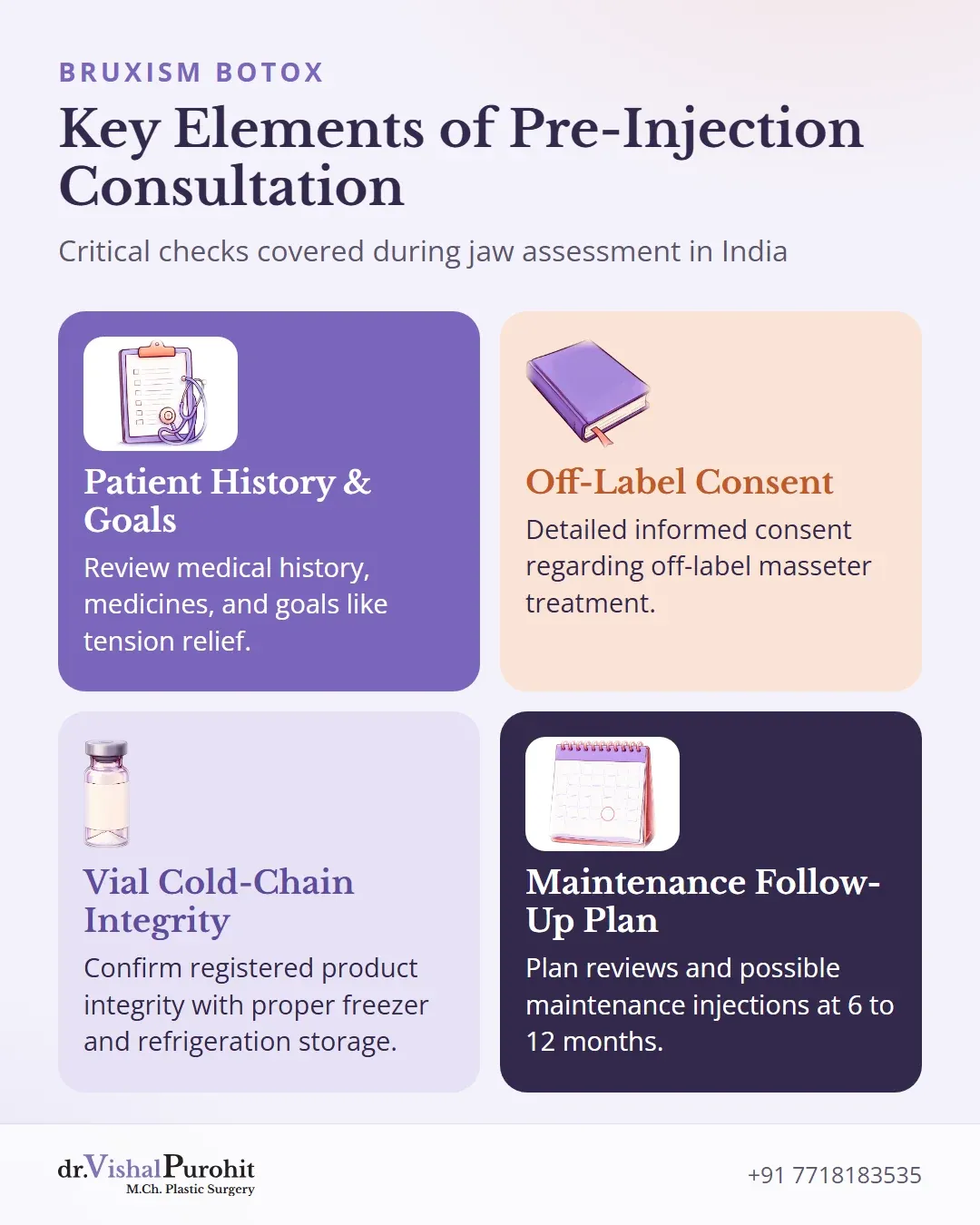
- Confirmation that the vial is a registered product and that its cold chain has been maintained; storage instructions for these products include freezer storage before reconstitution and refrigeration afterwards12.
- A follow-up plan; published reports describe maintenance injections every 6 to 12 months depending on the patient’s response14.
- The product used, who injects, review timing and aftercare are decided at the consultation.
Consulting Dr. Purohit for Jaw Care in Jaipur
Managing teeth grinding often involves combining dental protection with muscle-directed care. For individuals experiencing persistent clenching tension or jaw discomfort, exploring Bruxism Botox in Jaipur provides a non-surgical clinical path alongside standard dental splints. Reviewing common questions through Bruxism Botox FAQs can help clarify expectations. Every treatment plan remains individualized, and conservative management without injections is always an option. Inquiries and consultation bookings are available by contacting +91 7718183535.
This is educational information, not medical advice.