
Bruxism involves repetitive masticatory muscle activity through clenching, grinding, bracing, or thrusting the jaw. Because muscle contractions during wakefulness often stem from stress while nocturnal episodes represent a sleep-related movement disorder, identifying the timing of symptoms shapes appropriate management.
Clinicians separate historical enamel loss from ongoing muscle strain when planning care. Reviewing a Jaw Pain, Tooth Wear and Headaches: Pre-Botox Assessment helps clarify whether current discomfort warrants watchful waiting, behavioral modifications, or medical evaluation.
Understanding Daytime Clenching and Sleep Grinding
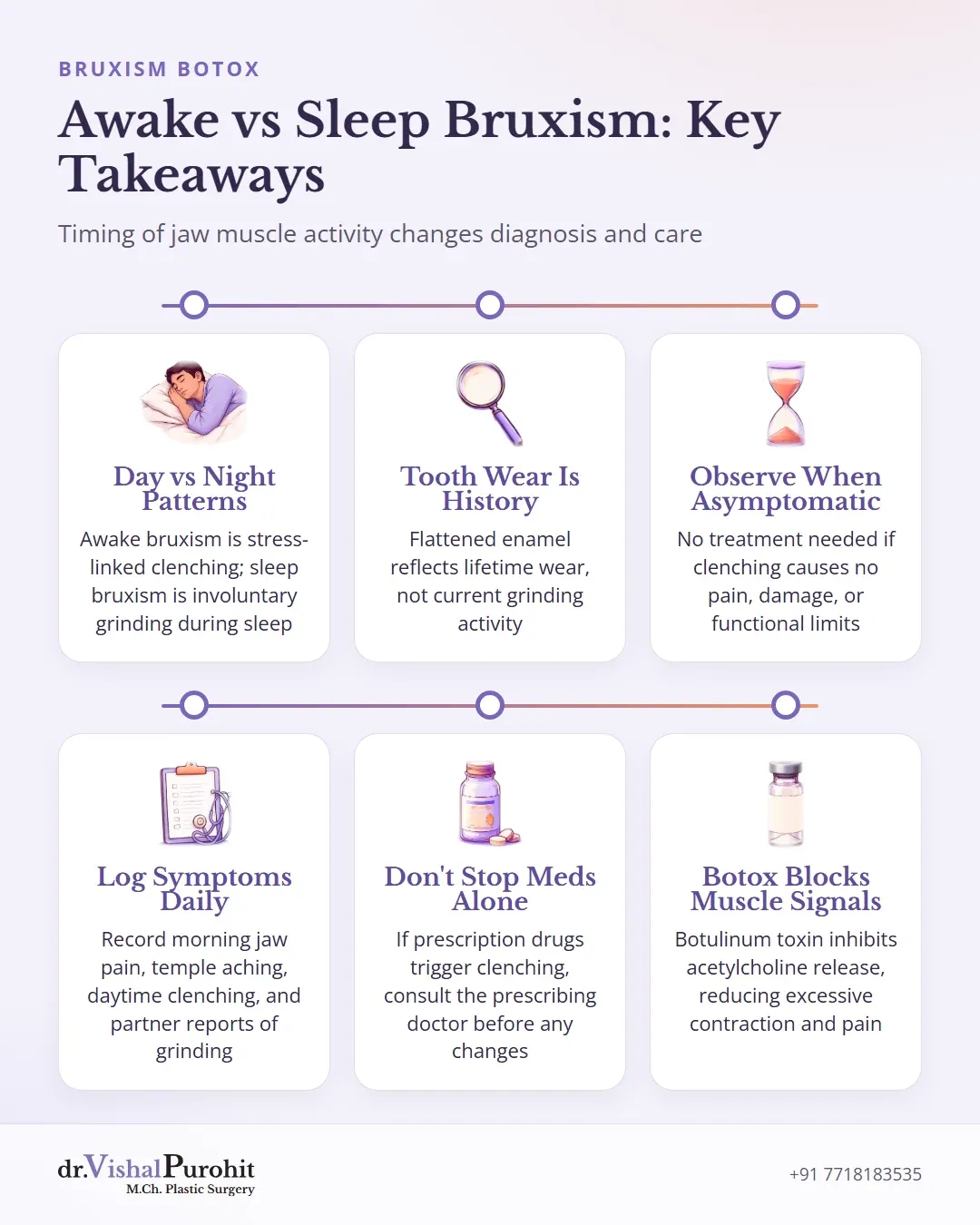
Bruxism involves repetitive masticatory muscle activity through clenching, grinding, bracing, or thrusting the jaw1. Differentiating the timing of these muscle contractions is central to directing appropriate clinical management.
Distinguishing Day and Night Patterns
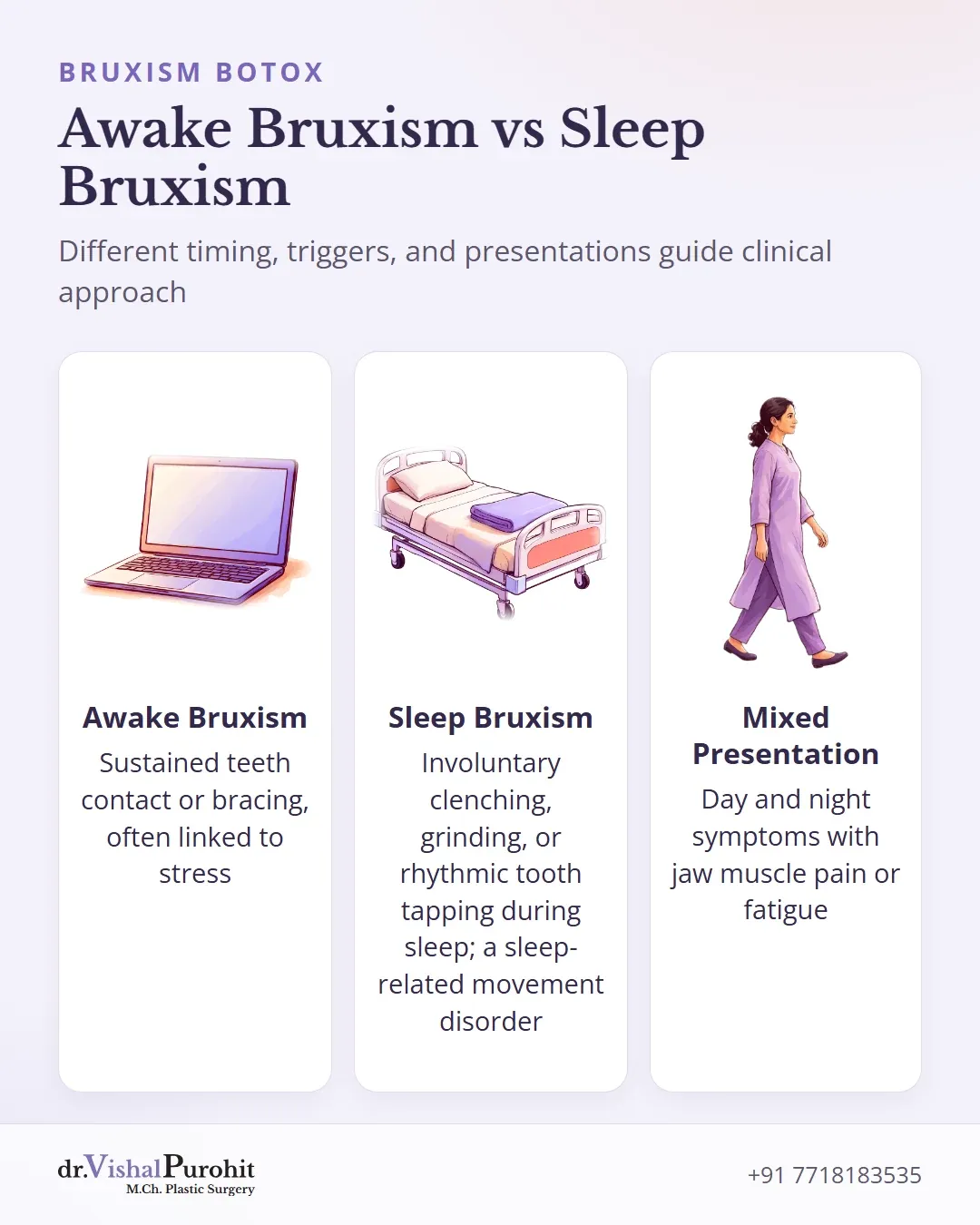
The daily timing of jaw muscle activity reflects distinct presentations:
Awake Bruxism
Often associated with psychosocial stress, featuring sustained teeth contact, silent clenching, or mandibular bracing during wakefulness1.
Clinical Significance
Both awake and sleep bruxism are thought to be centrally regulated1. A single therapeutic approach does not fit every patient. Recognizing whether muscle hyperactivity occurs during daytime concentration, nocturnal sleep, or both allows clinicians to tailor diagnostic confirmation and care pathways13. Evaluation may combine clinical assessment with instrumental approaches such as electromyography or sleep studies to clarify the underlying pattern13.
What Sleep Partners and Daytime Reminders Reveal
Teeth grinding and clenching involve repetitive masticatory muscle activity, including jaw clenching, tooth grinding, or bracing of the mandible1. Because sleep bruxism is an involuntary sleep-related movement disorder, individuals often cannot track these episodes on their own1.
Unconscious Nighttime Signs
Diagnosis of sleep-related muscle activity may rely on self-reports or objective instrumental assessments like polysomnography or electromyography to confirm the condition13. Polysomnography uses bodily sensors, audio, and video recordings to detect muscle activity during sleep3.
Daytime Awareness and Habits
During waking hours, awake bruxism is characterized by jaw bracing, clenching, or tooth contact, often linked to psychosocial stress1.
Why Tooth Wear Cannot Date Current Grinding
Flattened enamel, chipped dental restorations, or notched incisal edges reflect accumulated mechanical wear over a person’s lifetime rather than active current grinding14. In literature examining sleep bruxism, complications encompass dental wear, tooth fractures, and prosthetic damage1. However, the presence of wear facets alone does not clarify whether the underlying clenching or grinding is currently taking place45.
Key points
- Tooth wear reflects cumulative mechanical damage accumulated over a lifetime rather than ongoing grinding activity.
- Bruxism is fundamentally a repetitive masticatory muscle activity rather than a structural dental disease.
- Determining active clenching requires evaluating current muscle overactivity and functional impairment rather than existing wear facets alone.
Distinguishing Past Loss from Ongoing Strain
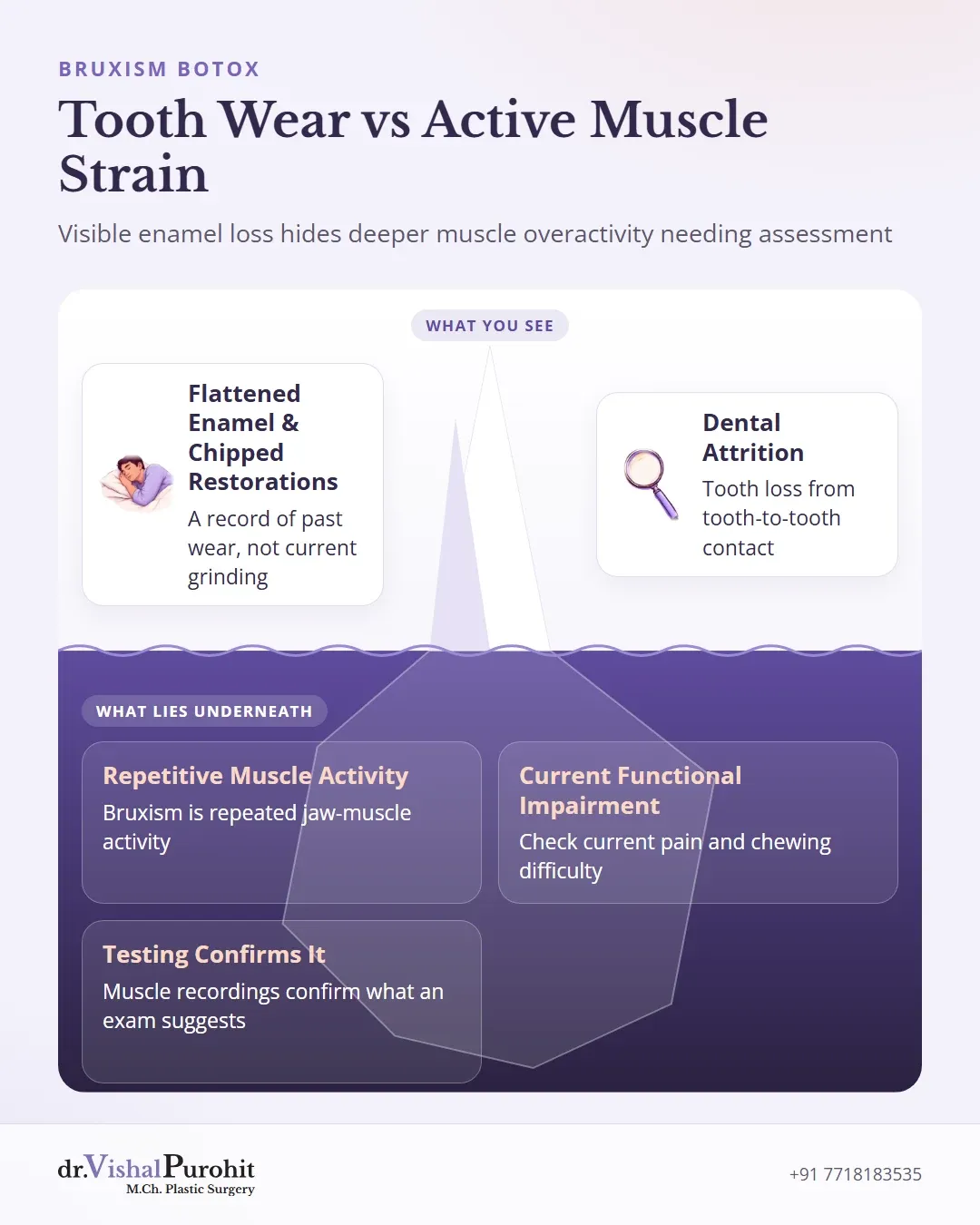
Evaluating bruxism requires separating historical tooth damage from current masticatory muscle activity:
- Dental attrition describes the loss of tooth structure from tooth-to-tooth contact during occlusion and mastication, which can be exacerbated by parafunctional grinding over time4.
- Bruxism is defined as a repetitive masticatory muscle activity rather than a structural dental disease15.
- A graded diagnostic framework identifies “probable” sleep bruxism through clinical inspection alongside patient reporting, whereas instrumental confirmation such as electromyography evaluates actual muscle events1.
Consequently, tooth wear serves as a historical record of past friction, whereas evaluating active muscle overactivity requires assessing current functional impairment15.
When Mild Clenching Needs Only Observation
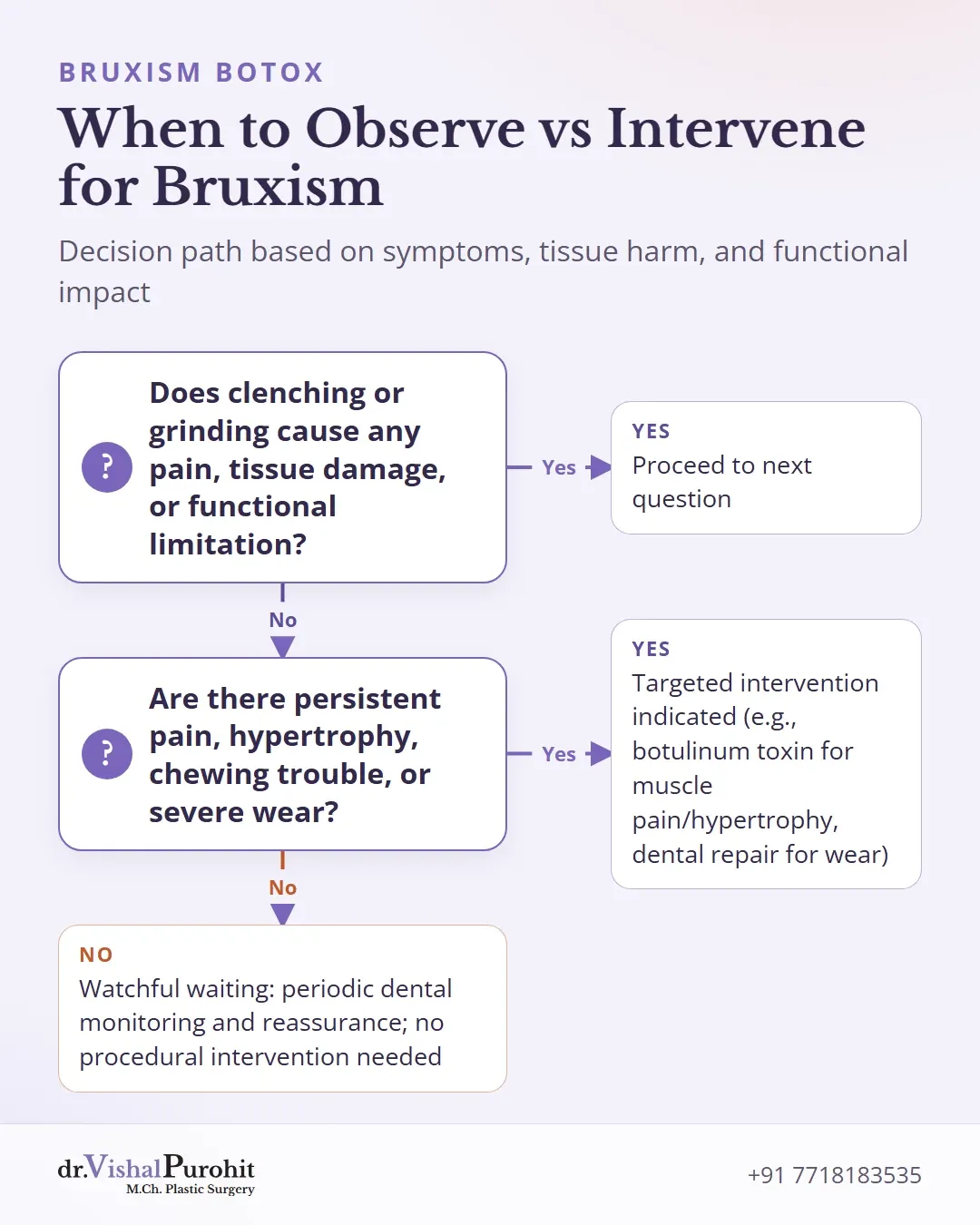
Bruxism is defined as masticatory muscle activity or behavior rather than a disease entity5. In otherwise healthy adults, awake clenching and sleep grinding are not necessarily disorders in themselves56. When muscle contraction causes no symptoms or tissue harm, medical intervention is not automatically required56.
Choosing no treatment remains a valid path when symptoms cause no functional limitations. A clinician may recommend periodic dental monitoring alongside reassurance rather than injections or invasive care56.
According to medical literature, interventions such as botulinum toxin should target clinically relevant consequences rather than the mere presence of bruxism activity56. These consequences include:
- Persistent masticatory muscle pain5
- Muscle hypertrophy6
- Functional impairment or chewing difficulty5
- Severe tooth wear or prosthodontic complications56
- Failure of conservative dental approaches6
In the absence of physical damage or sustained discomfort, watchful waiting allows jaw muscles to function naturally without unnecessary procedural intervention56.
Questions and Symptom Records for the Dentist
Keeping a structured symptom record helps prepare for a clinical dental evaluation3. Tracking daily patterns allows a dental practitioner to evaluate when grinding or clenching occurs and identify relevant physical stressors3.
What to Record
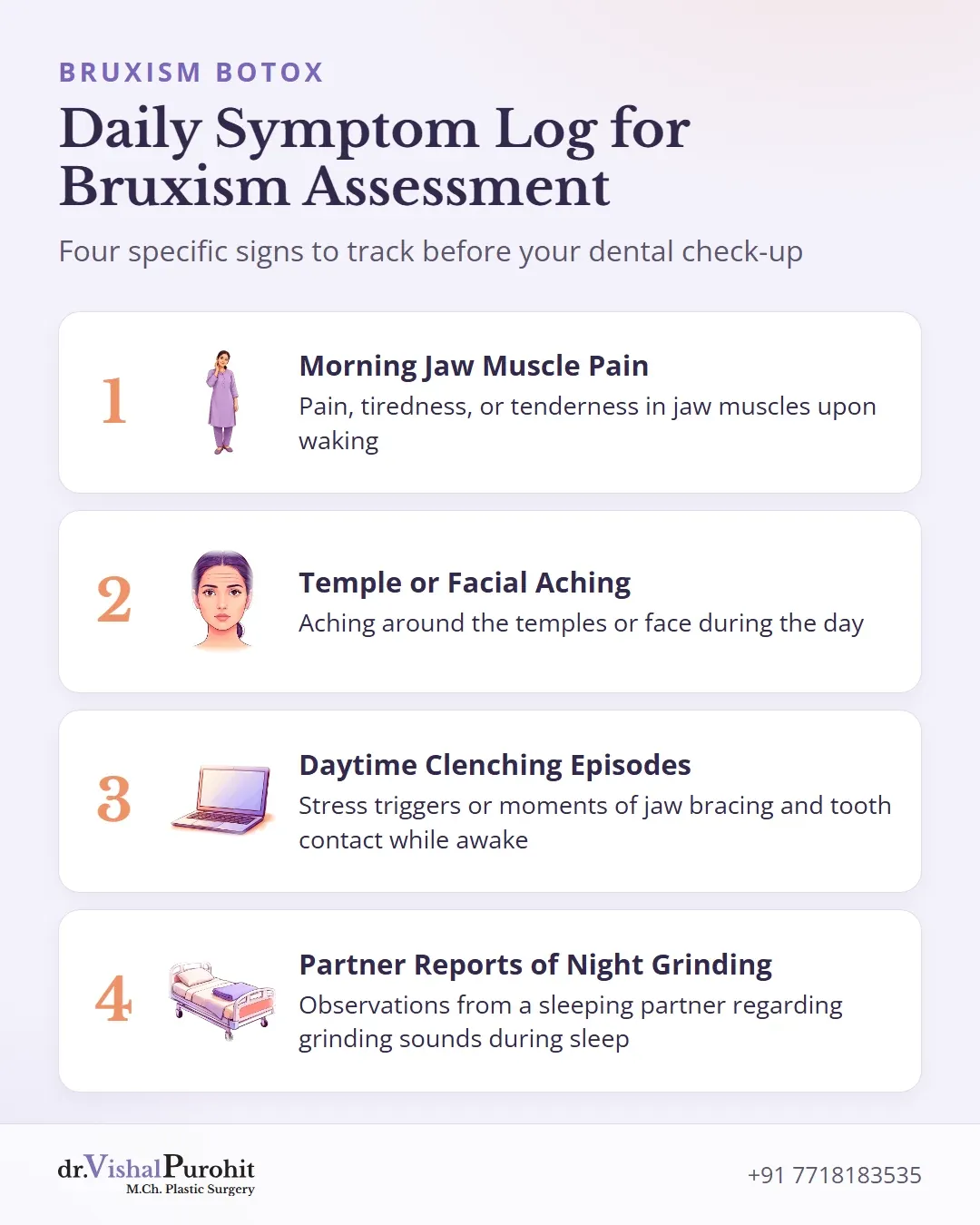
A personal log should note specific signs and daily triggers3:
- Morning jaw muscle pain, tiredness, or tenderness3
- Aching around the temples or face3
- Daytime stress triggers or clenching episodes3
- Observations from a sleeping partner regarding night grinding sounds3
Key Questions for the Examination
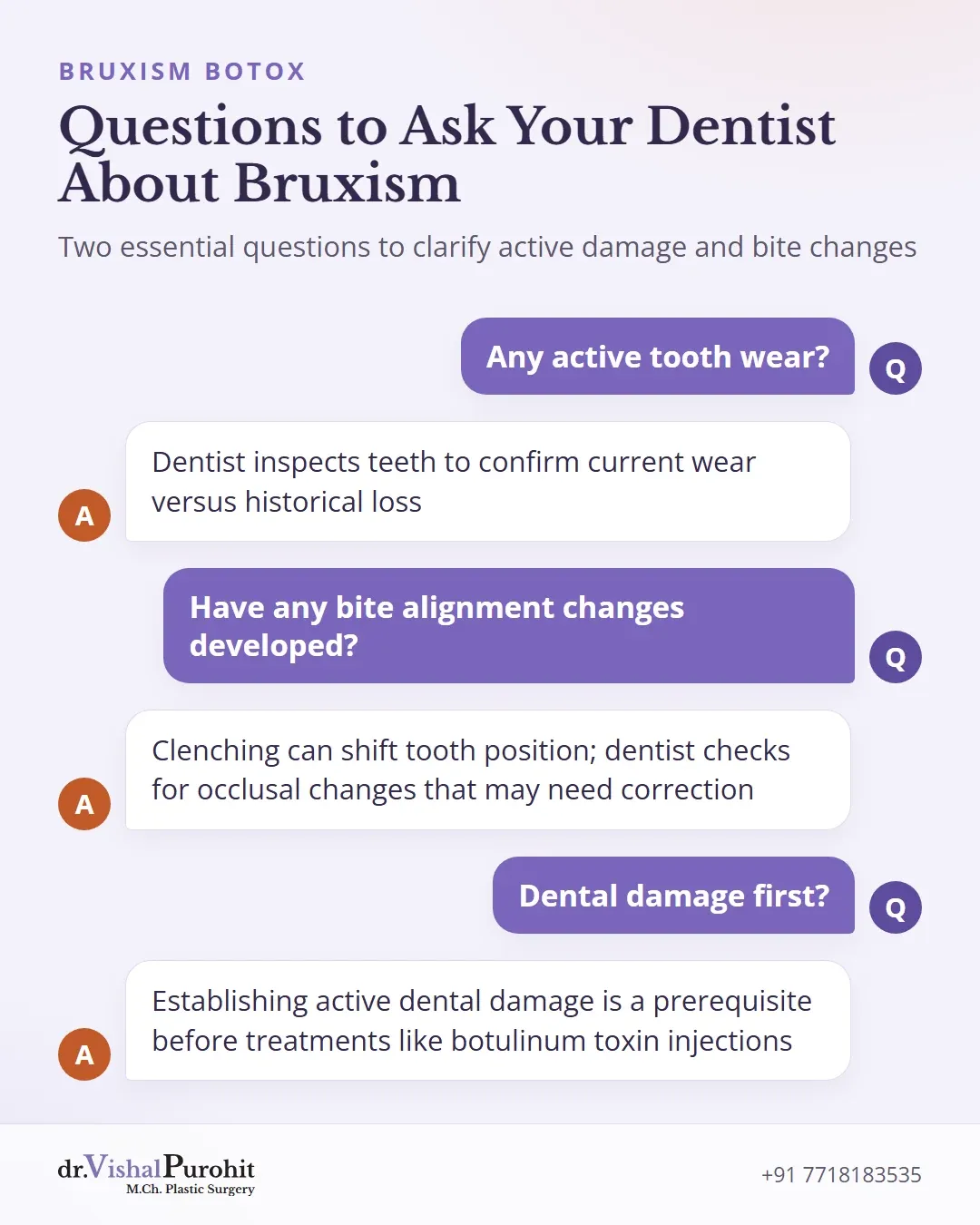
During a routine dental check-up, a dentist inspects the teeth and dental restorations for physical damage and checks painful facial areas23. Patients should ask:
- Is there evidence of active tooth wear, enamel damage, or injured restorations3?
- Have any bite alignment changes developed from jaw clenching3?
Before considering muscle modulation, a patient should establish whether active dental damage is present3. Dr.
Reviewing Medication-Induced Clenching and Triggers
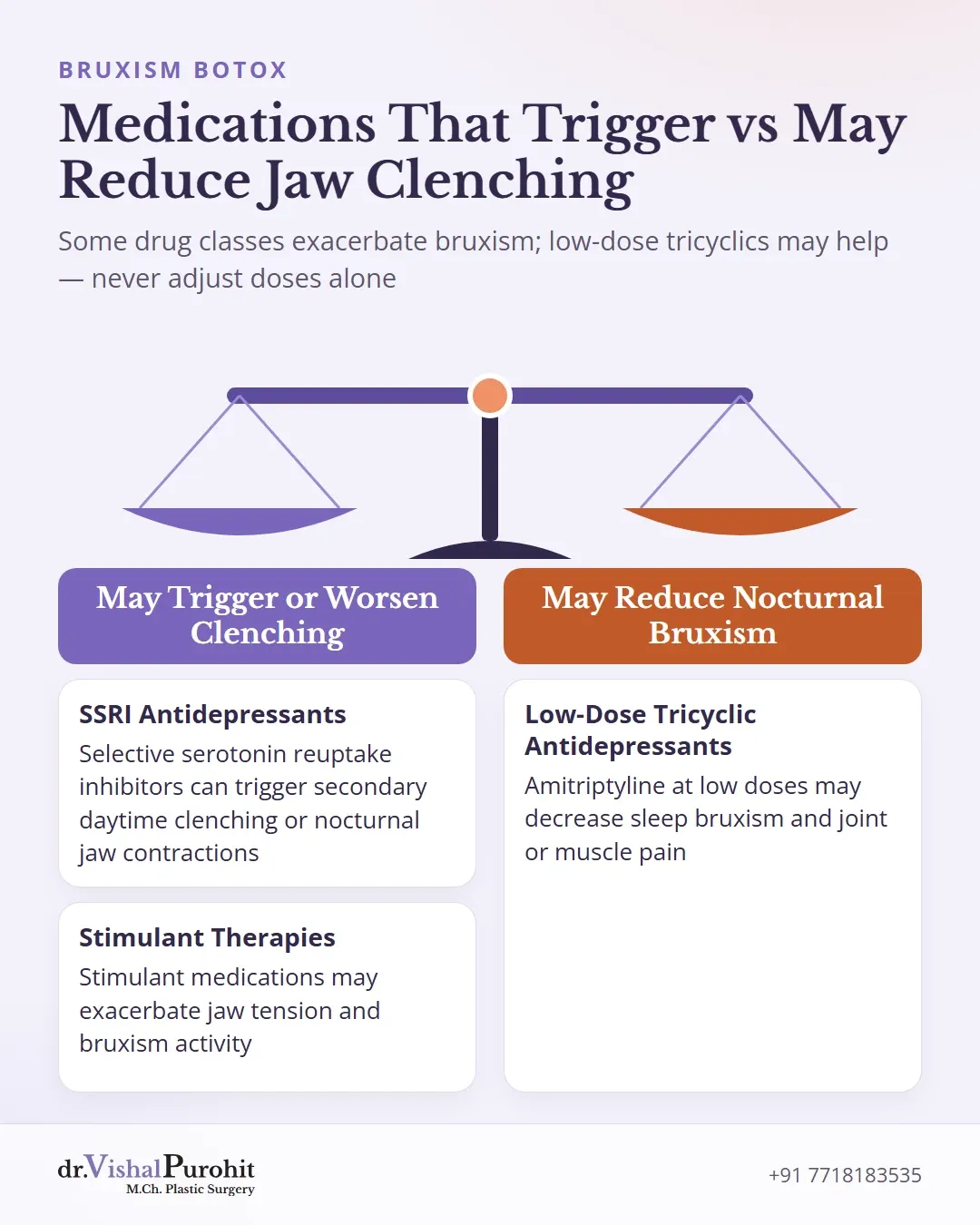
Certain prescription drugs can influence masticatory muscle tone and jaw contractions. While low doses of tricyclic antidepressants such as amitriptyline have been described anecdotally as decreasing nocturnal bruxism and joint or muscle pain7, other classes of medications may trigger or exacerbate jaw tension.
Key points
- Certain prescription medications can influence jaw tension and masticatory muscle contractions.
- Patients should never discontinue or adjust medications without direct supervision from their prescribing physician.
- Botulinum toxin injections may be considered as a targeted intervention to temporarily reduce persistent jaw muscle activity.
Patients who suspect that a prescription medicine is contributing to daytime jaw clenching or nocturnal teeth grinding must not discontinue treatment or adjust doses independently. Medication adjustments must be managed directly with the prescribing physician to ensure underlying medical conditions remain safely treated.
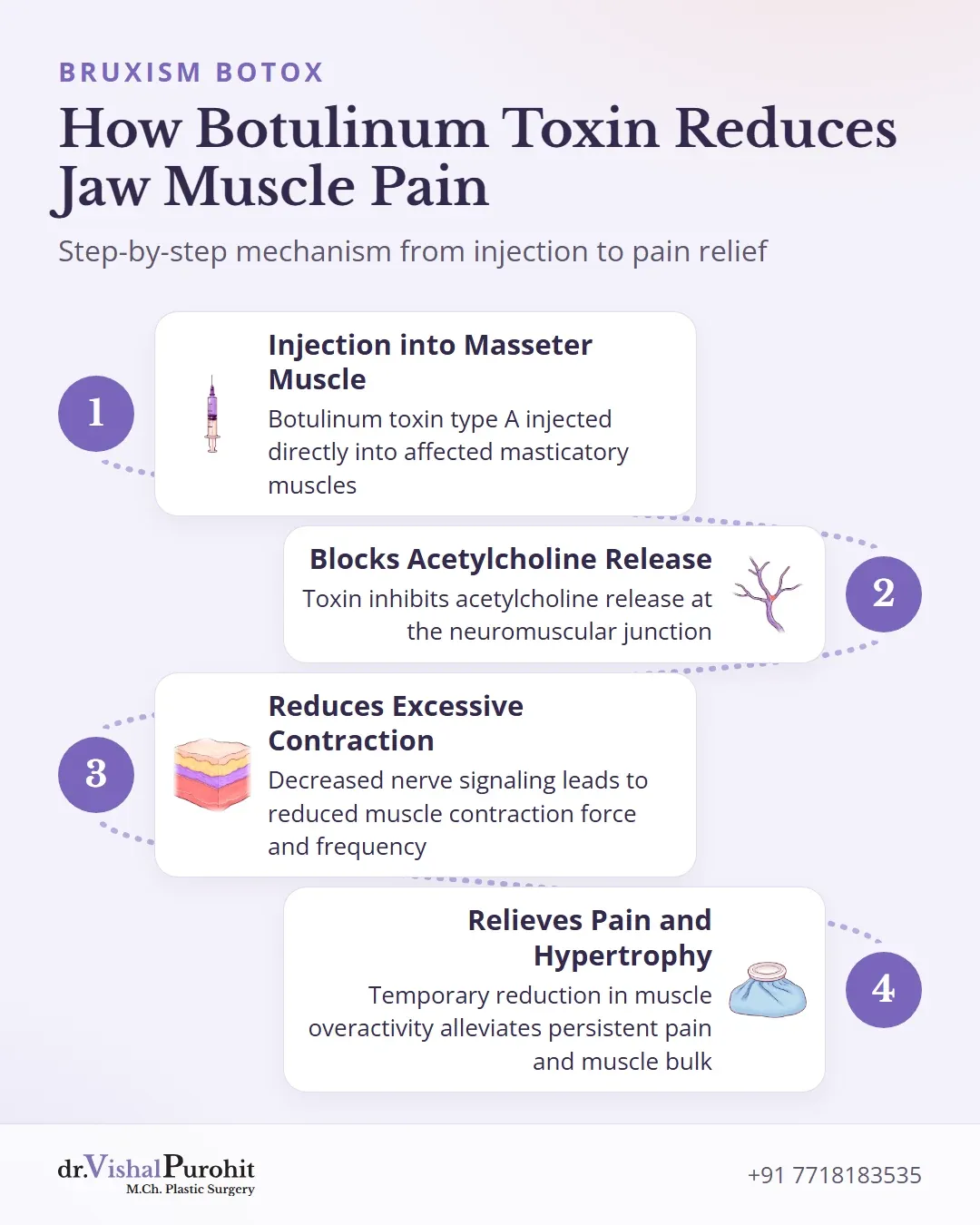
When muscle contractions persist, localized interventions may be considered. Botulinum toxin type A (Botox) injections into affected muscles inhibit acetylcholine release at the neuromuscular junction, temporarily decreasing muscle contraction activity and associated pain7. Injections into the masseter muscle serve as a muscle-directed intervention for selected individuals with excessive or painful jaw muscle activity5.
For patients evaluating whether jaw symptoms are related to medication use or require adjunctive interventions, consultation with the prescribing doctor alongside clinical evaluation remains essential.
Clinical Consultation for Bruxism in Jaipur
Distinguishing daytime jaw clenching from nocturnal grinding ensures that clinical interventions target active muscle overactivity rather than past dental wear. For persistent jaw pain, masseter muscle hypertrophy, or chewing discomfort, a clinical evaluation determines whether procedural intervention is warranted. Learn about non-surgical options with Bruxism Botox in Jaipur and find answers to practical treatment details in the Bruxism Botox FAQs.
This is educational information, not medical advice.