
Botulinum toxin injections help ease involuntary clenching tension by reducing hyperactivity in the masseter muscles. Because these muscles drive normal chewing, lowering their contraction strength can cause transient mealtime fatigue or reduced bite power.
Patients considering treatment often review Night Guard, Habit Change or Botox: Comparing Care to understand functional trade-offs. Weakened mastication generally lasts two to four weeks while neighboring pterygoid and temporalis muscles adapt, though daily jaw comfort remains the central goal of clinical management.
Why Chewing Weakness Matters During Treatment
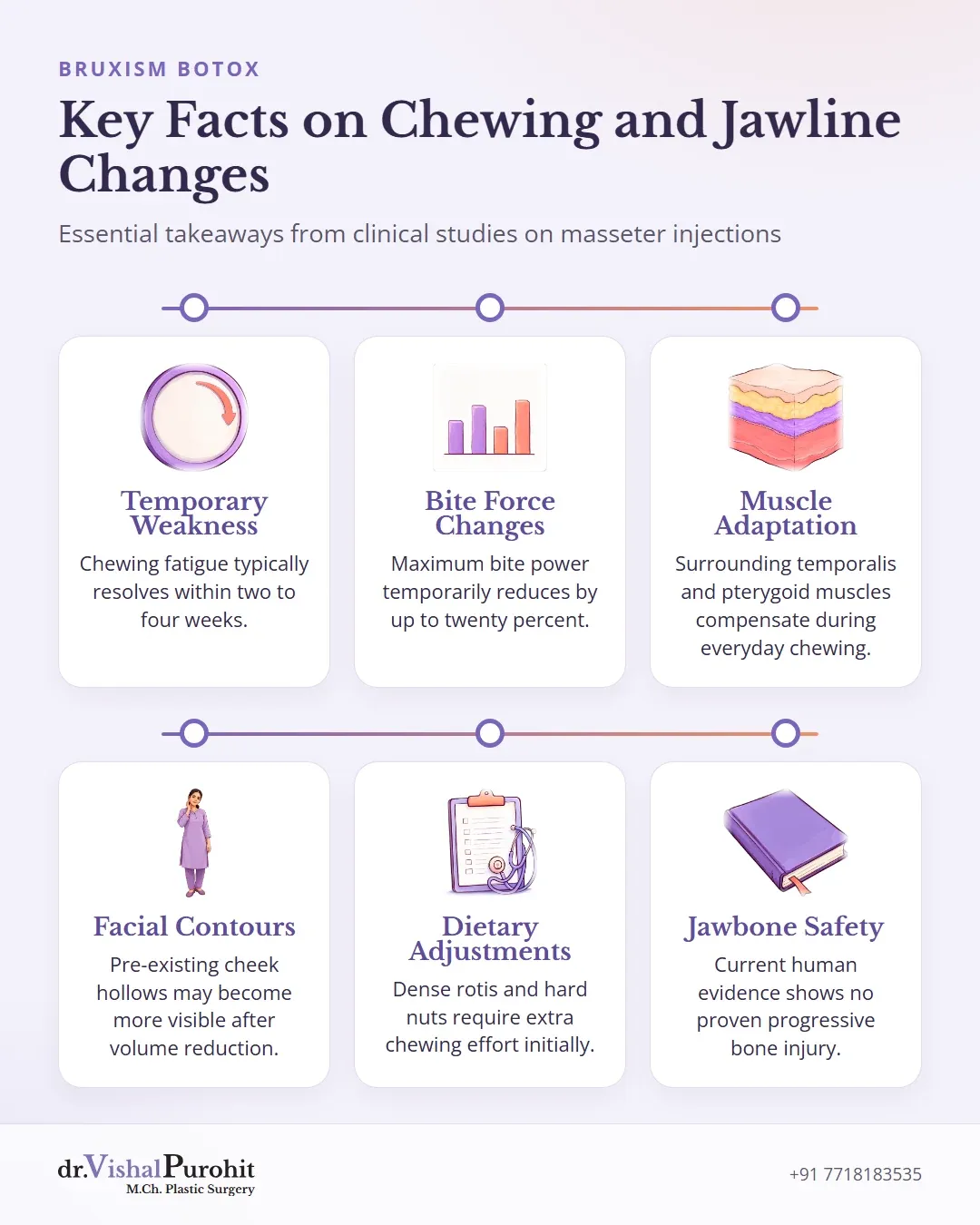
Botulinum toxin injections reduce involuntary masseter muscle activity and lower excessive bite force associated with bruxism1. While this reduction helps ease clenching tension and high occlusal loads, it also directly affects normal masticatory function12. Patients may experience fatigue or discomfort when chewing tough or dense foods during everyday meals23.
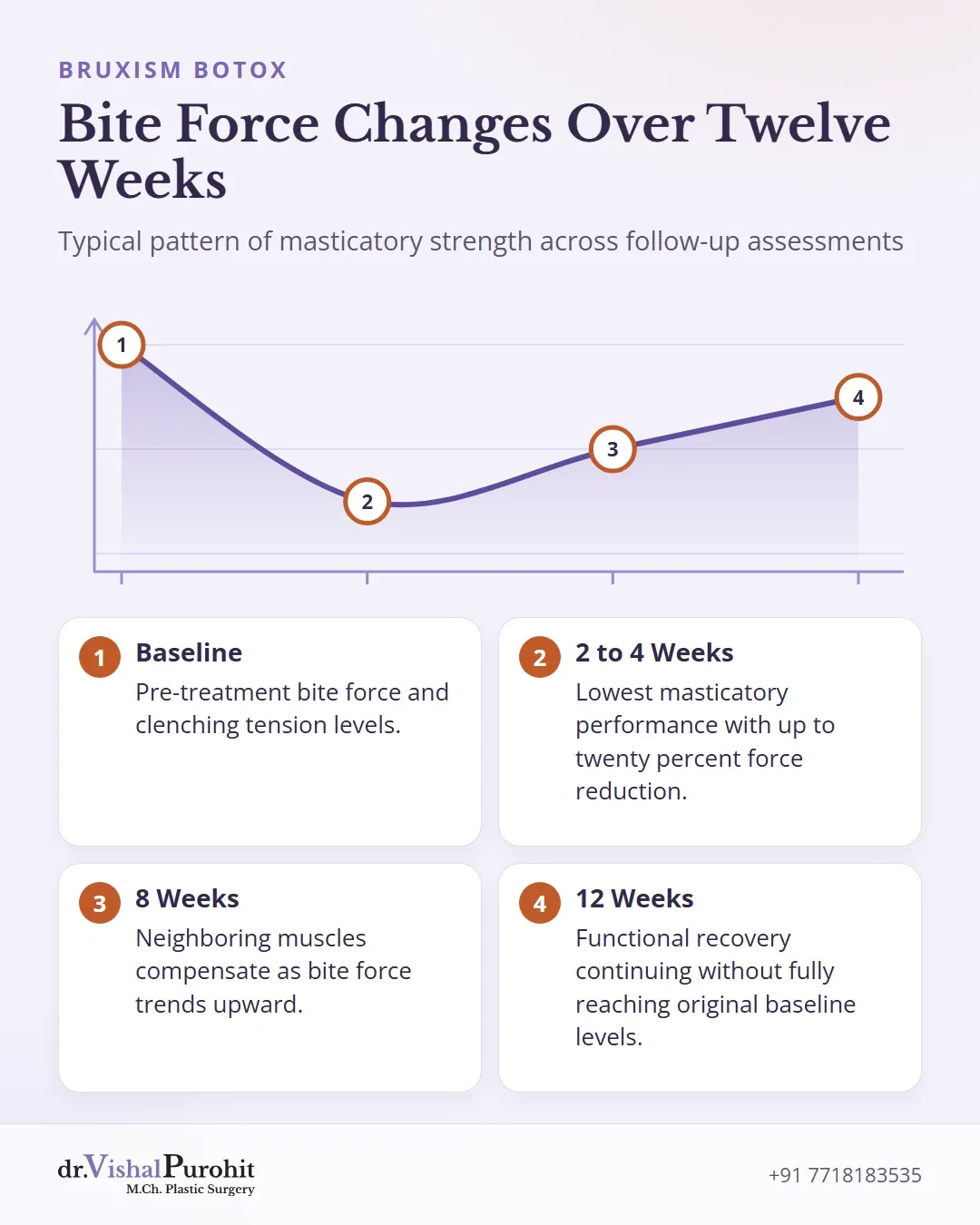
Studies show that weakening the masseter can lead to transient chewing difficulties2. In one clinical evaluation of patients receiving masseter injections, reduced bite force was noted at two, four, and eight weeks post-injection2. Weakened mastication typically lasts two to four weeks, during which other muscles such as the temporalis, medial pterygoid, and lateral pterygoid compensate, though chewing remains uncomfortable initially3. In a bruxism trial, fourteen of twenty participants reported discomfort from reduced masticatory force and three noted masticatory difficulty4.
Evaluating treatment suitability requires balancing symptom relief with functional comfort:
Trial Reports on Focal Weakness and Bruising
Clinical trials evaluating botulinum toxin type A injections into the masticatory muscles describe adverse events as generally mild, localized, and short-lived5.
Documented Adverse Events
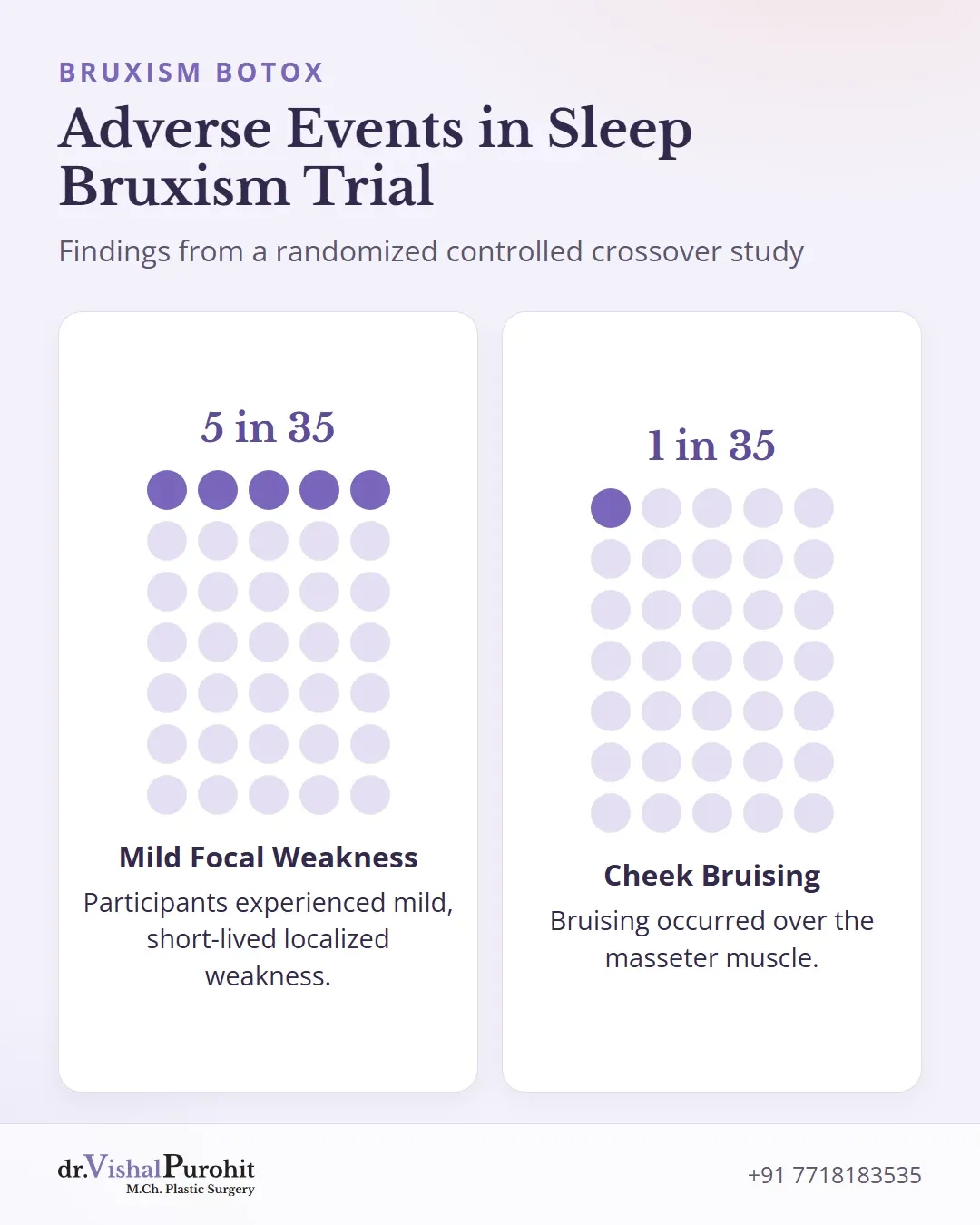
In a randomized, placebo-controlled crossover study of sleep bruxism, targeted injections showed a favorable safety profile6. Reported side effects across clinical trials include:
- Mild focal weakness: In one sleep bruxism trial, 5 out of 35 participants experienced mild, short-lived focal weakness after injection6. Trials across masticatory muscle treatments also report a subjective sensation of chewing weakness5.
- Cheek and injection-site bruising: Bruising over the masseter muscle occurred in one participant in the sleep bruxism trial6. More broadly, injection-site trauma can lead to transient erythema, edema, and bruising7.
- Local tenderness and pain: Injection-site pain and tenderness remain among the most frequent local reactions57.
Muscle Deconditioning vs Comfortable Daily Function
Limiting masseter contraction induces disuse atrophy, which reduces muscle volume over time8. Continuous load produces work hypertrophy, whereas reducing that workload leads to localized muscle deconditioning8. The clinical goal of functional care in bruxism is to relieve symptoms and preserve daily jaw comfort rather than induce excessive muscle weakening9.
Temporary functional changes noted in clinical studies include:
Temporary Functional Changes
To avoid excessive muscle weakness, atrophy, and functional impairment, repeated high-dose injections at short intervals should be avoided9. Individualized treatment intervals based on functional status and symptom recurrence help protect everyday function9. In the literature, neighboring muscles such as the temporalis and pterygoid muscles compensate for reduced masseter activity during chewing11.
Dr. Purohit’s note: In Dr. Vishal Purohit’s practice in Jaipur, non-surgical injection treatment alongside dental care is planned so that normal comfortable jaw function remains uncompromised.
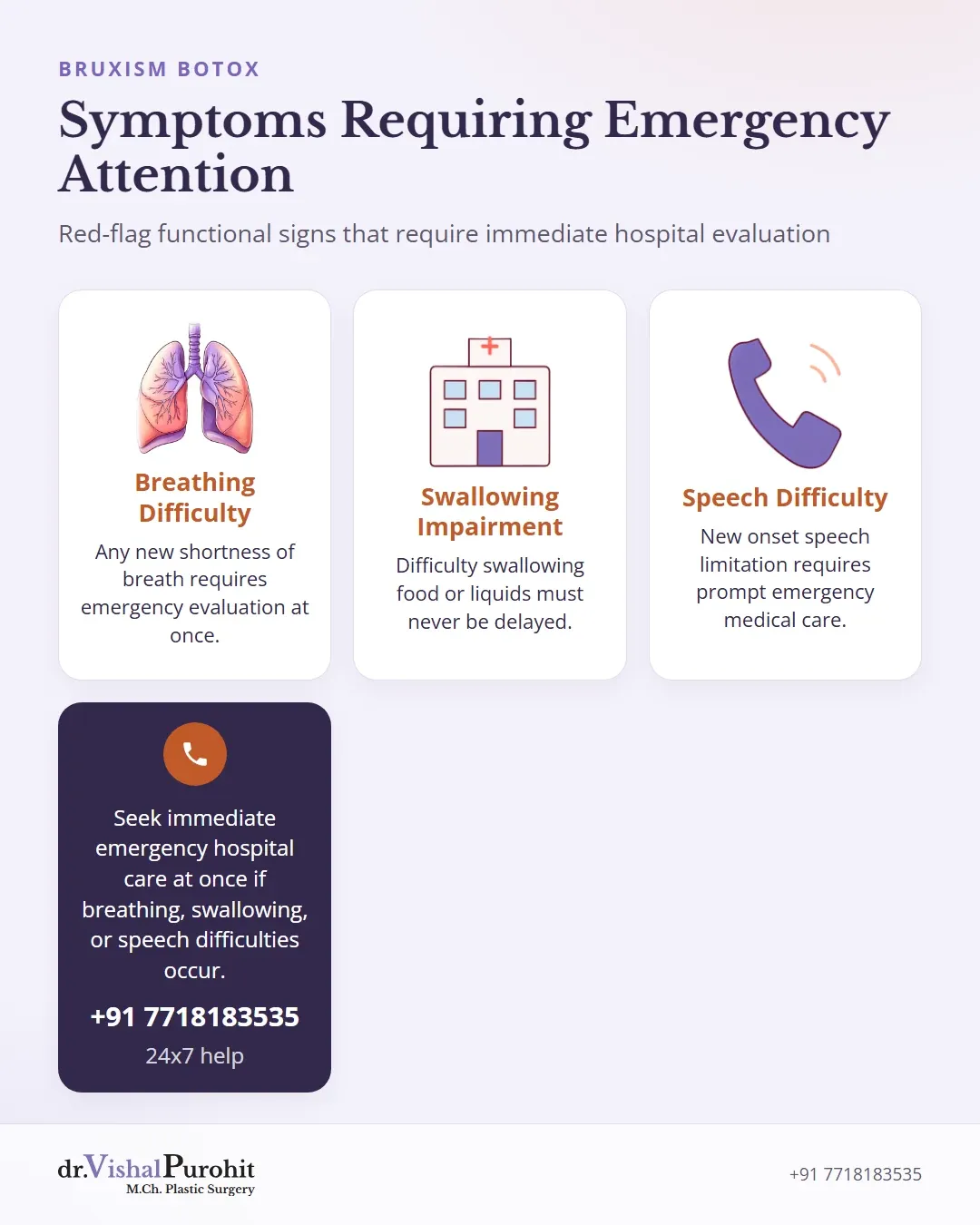
Any new difficulty with speech or swallowing requires prompt emergency medical attention.
Unintended Jawline Slimming and Hollow Cheeks
In patients receiving botulinum toxin type A injections into the jaw muscles purely for bruxism pain, changes to lower-face shape can occur as unintended cosmetic side effects4. When masseter volume reduces, individuals with loose skin may develop jowl sagging or a visible step along the anterior muscle border12. In patients with pre-existing cheek hollows above the muscle, reducing masseter bulk removes support below, making cheeks appear sunken or hollow12. Because contour changes alter facial appearance, these cosmetic possibilities require separate informed consent during consultation.
Key points
- Treating jaw muscle pain with botulinum toxin can inadvertently alter lower-face contours or worsen cheek hollows.
- Uneven relaxation between masseter layers can lead to paradoxical bulging while chewing.
- Any unexpected contour changes or bulges warrant clinical evaluation for potential touch-up correction.
Paradoxical Muscle Bulging
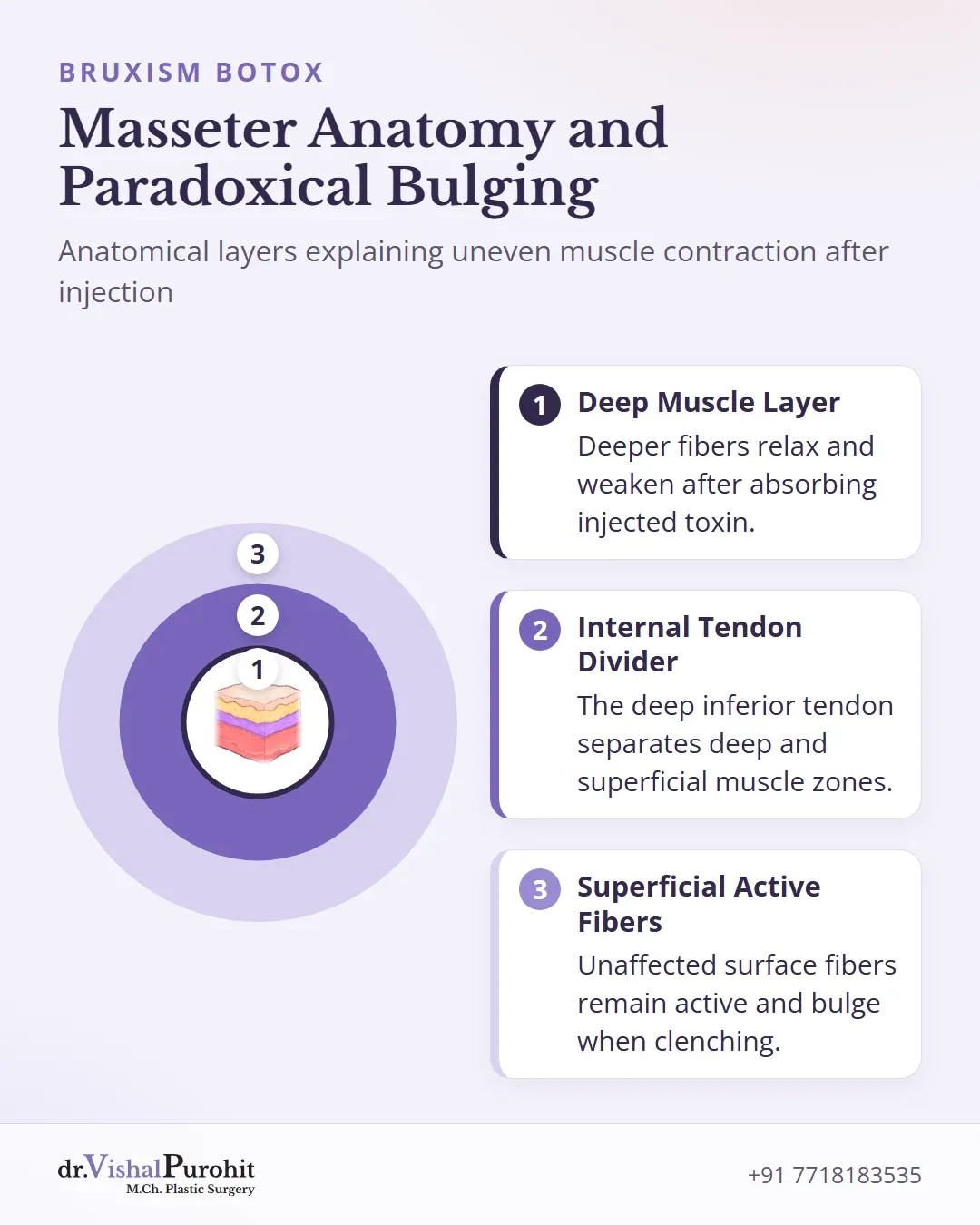
Uneven muscular bulging during chewing can also develop13. The masseter muscle contains superficial and deep layers separated by internal tendinous structures, such as the deep inferior tendon1415. If toxin fails to reach superficial fibers while deeper segments weaken, the unaffected superficial fibers remain active and can bulge outward when biting down or clenching914.
Reported complications such as uneven muscular bulging typically present within the first week or initial four weeks1314. Any unusual bulge when chewing warrants clinician review to assess the muscle layers and evaluate need for correction1415.
Dietary Realities with Firm Indian Foods
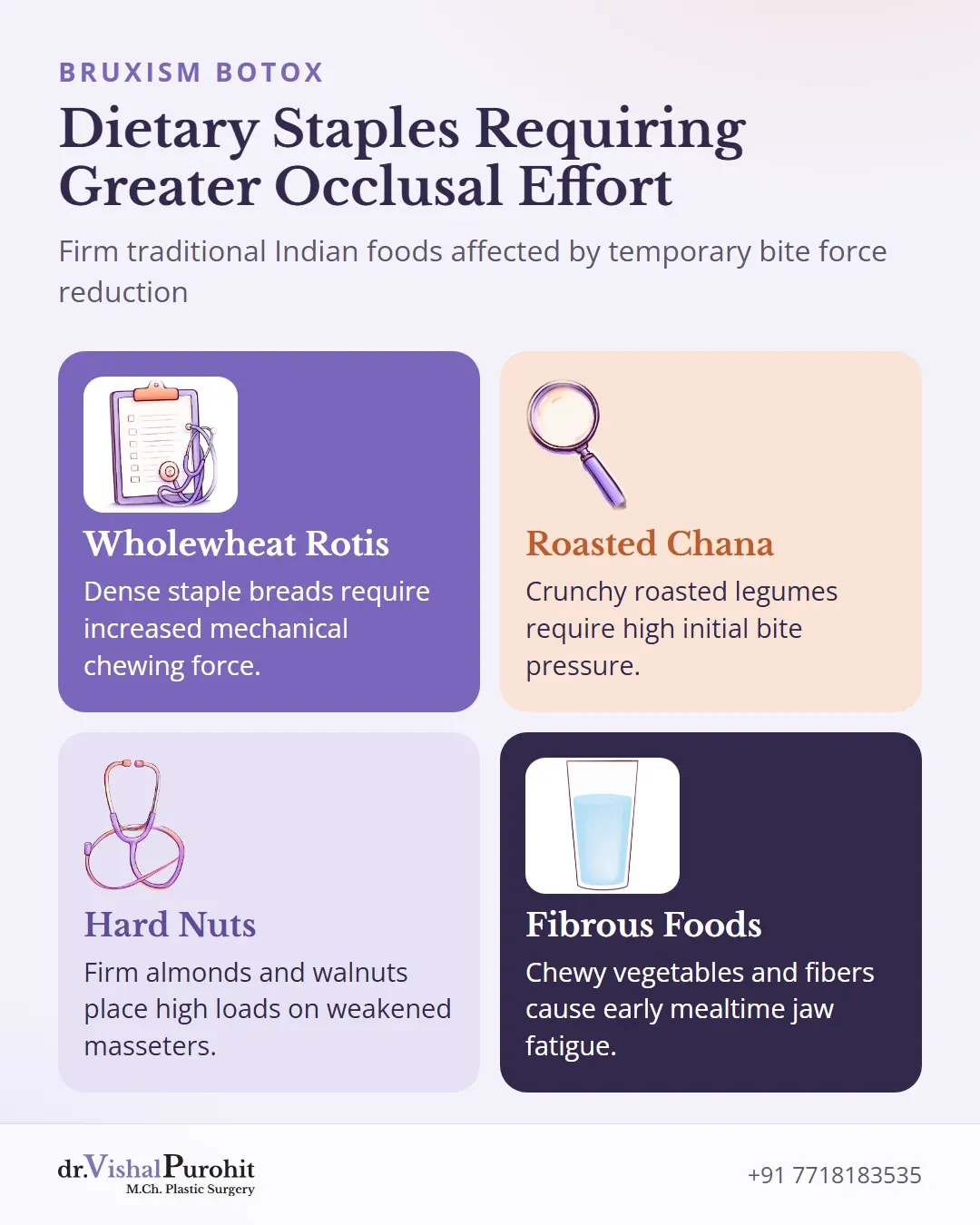
Partial relaxation of the jaw muscles can lead to weakened chewing power and altered mastication213. Clinical literature notes that masticatory difficulties occurred in 44% of treated patients in one study2. In measured assessments, significant bite-force reduction was observed at 2, 4, and 8 weeks following injection, without fully returning to pre-treatment levels by 12 weeks2.
This reduced bite capacity directly affects the mechanical chewing of firm traditional dietary staples such as wholewheat rotis, roasted chana, hard nuts, and fibrous foods.
Specific dietary modifications or aftercare rules in his practice are not fixed in advance; each plan is decided at the consultation.
Patients experiencing significant chewing limitation or persistent discomfort should keep a log of their symptoms and seek clinician follow-up.
Any breathing, swallowing, or speaking difficulty requires emergency medical care at once.
Repeat Injections and Jawbone Health Questions
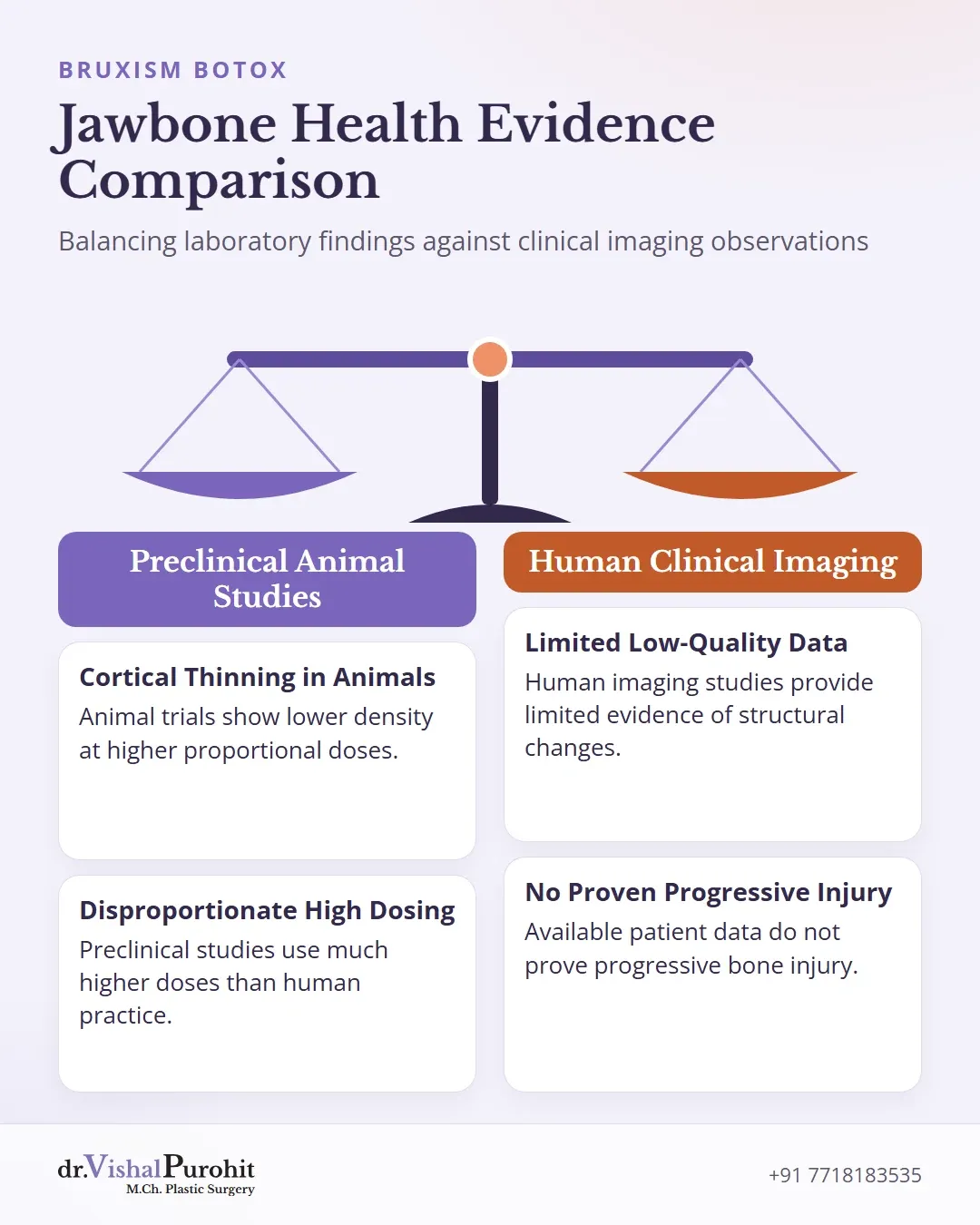
Repeated relaxation of the chewing muscles reduces mechanical forces transmitted to the lower jaw16. Because bone structure relies on regular functional loading, this reduction in muscular tension has prompted radiographic evaluations regarding structural remodeling in the mandibular angle and condylar regions16.
Animal experiments demonstrate that toxin-induced muscle atrophy can lead to reduced cortical bone thickness and lower bone density at the mandibular angle and condyle16. However, preclinical research involves higher doses relative to muscle mass than those administered in clinical care16.
Human imaging studies and systematic reviews evaluating repeated treatments note that findings remain limited and of low quality116. Although these evaluations identified a signal for bone changes, the magnitude and clinical relevance in humans remain uncertain, and available data do not prove progressive long-term bone injury116.
Because long-term functional and morphological outcomes require further prospective investigation, automatic repeat injections should not be treated as a routine necessity116. Dr. Vishal Purohit views choosing no treatment as a valid option, allowing individuals to carefully weigh conservative observation against ongoing therapy.
Consulting Dr. Vishal Purohit in Jaipur
Managing teeth grinding requires balancing clenching relief with comfortable everyday chewing. Individuals exploring therapy can evaluate options for Bruxism Botox in Jaipur alongside conservative dental measures. To review functional expectations and treatment safety details, browse the Bruxism Botox FAQs before your visit. To discuss personalized care or schedule an assessment with M.Ch. plastic surgeon Dr. Vishal Purohit, contact +91 7718183535.
This is educational information, not medical advice.