Gynecomastia is a recognised medical condition, not a personal failing. It can cause emotional and physical distress, and many men change how they dress or avoid sport because of it. Understanding the condition is the first step towards feeling less isolated.
Support starts with a proper assessment. A doctor can check whether the cause is hormonal, related to weight or medication, and explain the available gynecomastia treatment options. Talking about the emotional side matters too, especially for teenagers and their families.
You Are Not Alone
A Condition, Not a Character Flaw
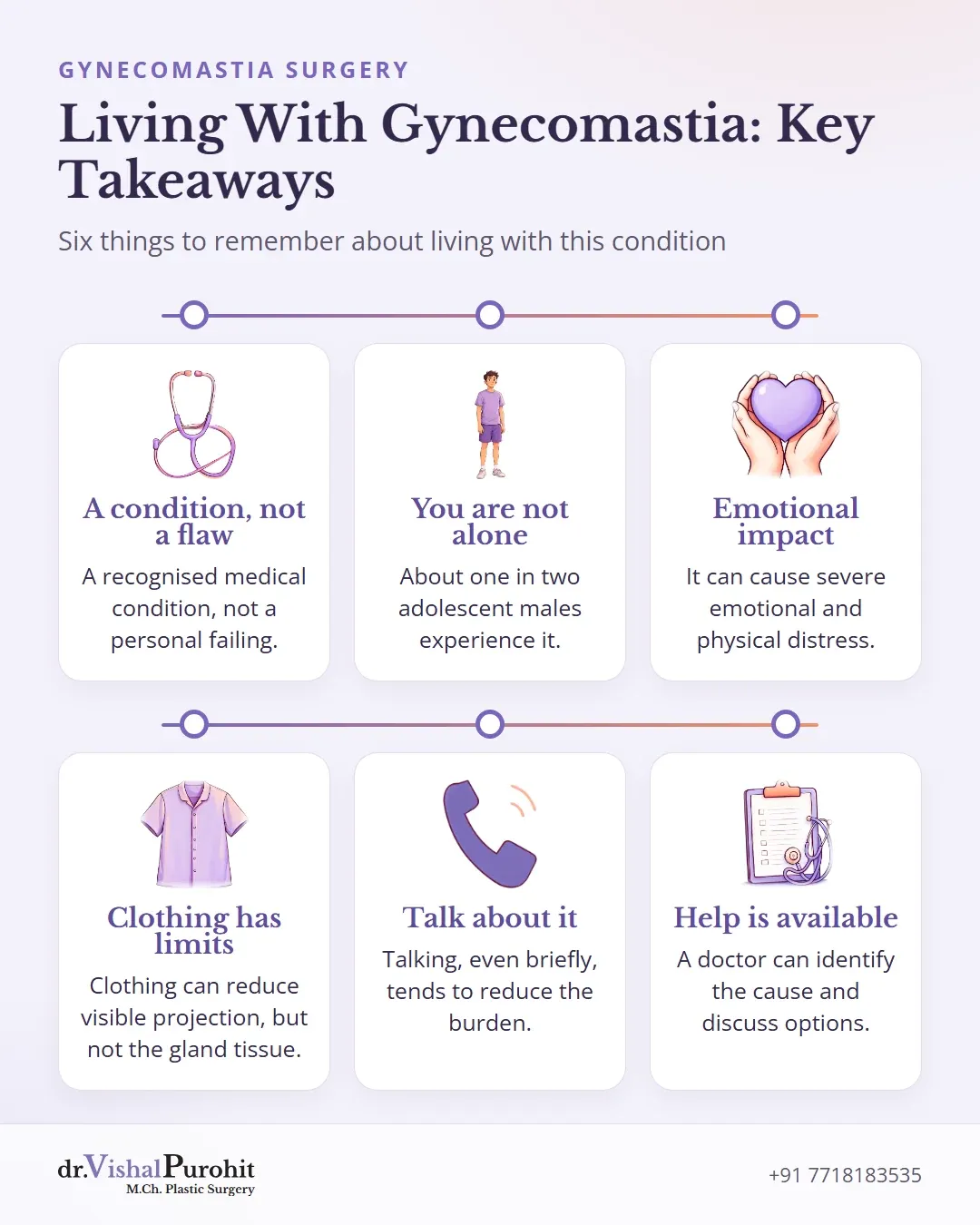
Gynecomastia is the most common form of breast alteration in men, arising from the proliferation of gland ducts and stromal components, including fat [1]. It is a recognised medical condition that can cause severe emotional and physical distress in both young and older men [1]. Many men feel isolated by it, yet the numbers show otherwise.
How Common Is It?
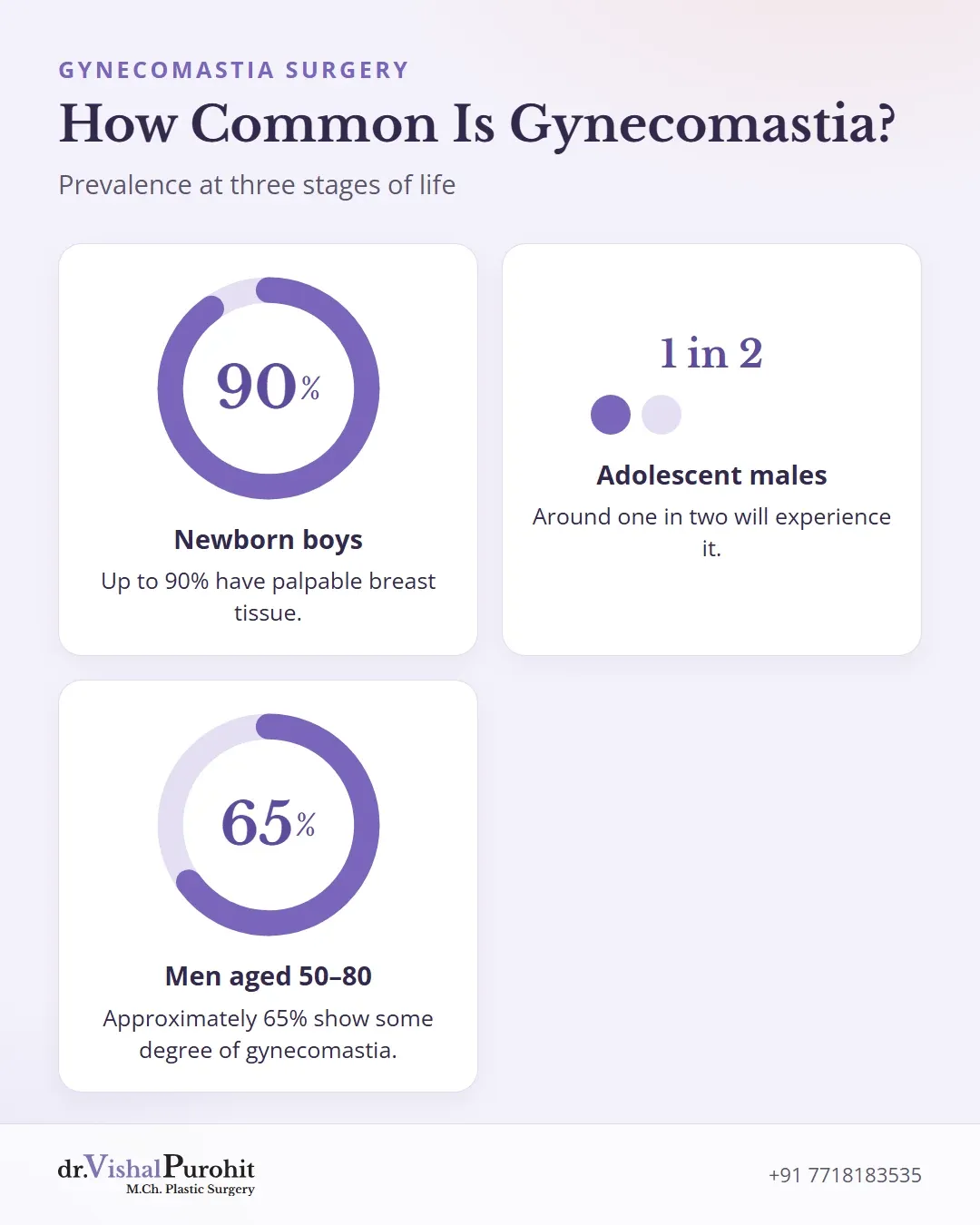
Prevalence across the lifespan is striking [1, 2]:
| Life stage | Approximate prevalence |
|---|---|
| Newborn boys | Up to 90% have palpable breast tissue [2] |
| Adolescent males | Around one in two will experience it [2] |
| Men aged 50–80 | Approximately 65% show some degree of gynecomastia [2] |
The condition can occur at any age and may be related to hormonal changes, heredity, obesity, or the use of certain drugs [3].
What This Means for You
Because gynecomastia is so prevalent, a man living with enlarged breast tissue is far from unusual. The condition is not caused by weakness, lifestyle failure, or lack of effort. It is a physical finding with recognised medical causes.
The Emotional Side
How Gynecomastia Affects Self-Esteem and Confidence
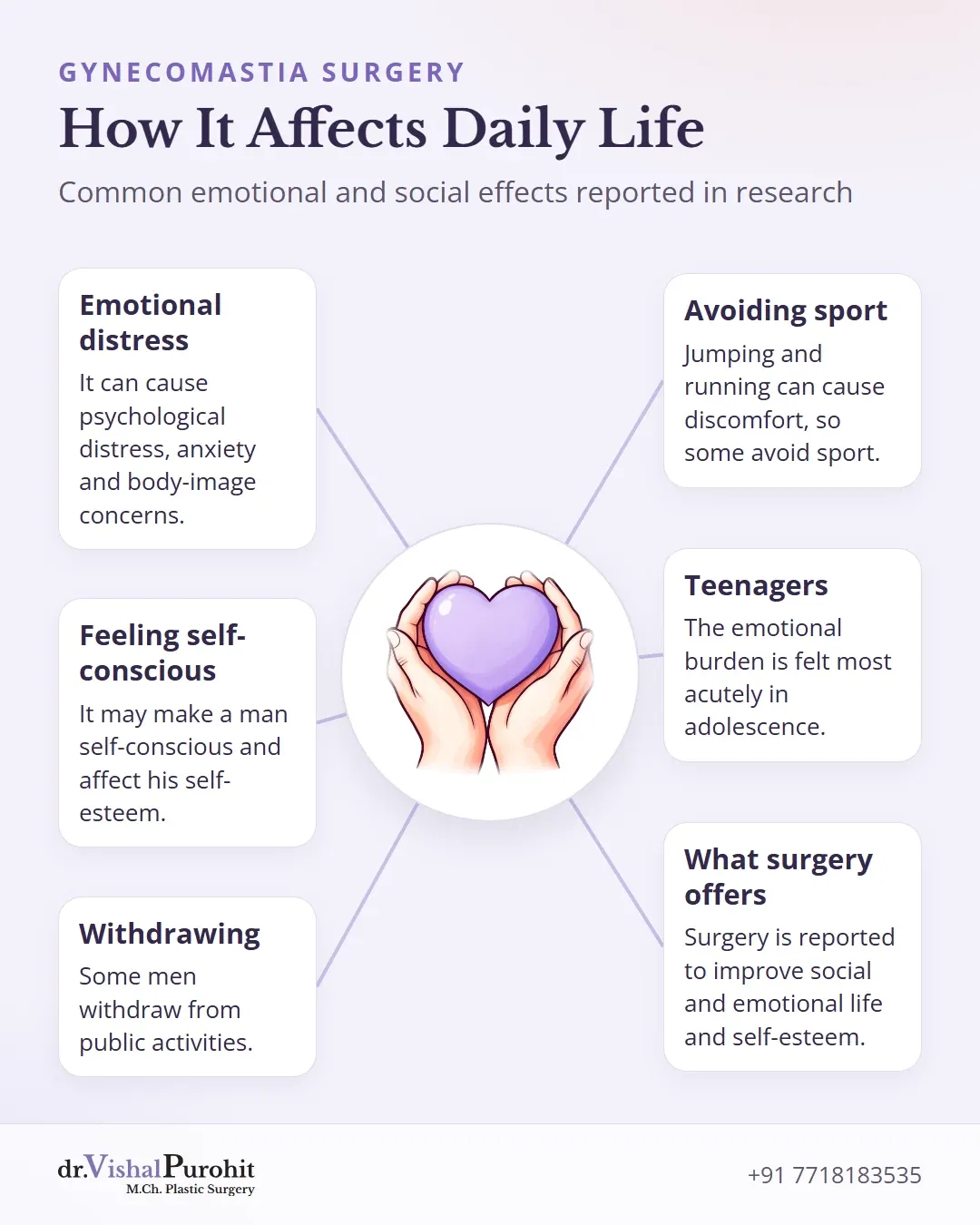
Studies consistently note that gynecomastia can cause psychological distress, anxiety, and concerns about body image [4]. The condition may make a man self-conscious and affect his self-esteem [5]. Research also observes that some men withdraw from public activities as a result [6].
Key points
- Gynecomastia can cause psychological distress, anxiety, and concerns about body image.
- The condition may make a man self-conscious and lower his self-esteem.
- Some men withdraw from public activities and avoid sports as a result.
Avoidance of Sports and Social Situations
Avoiding activities that draw attention to the chest is a commonly reported pattern. Literature notes that gynecomastia can lead to discomfort during activities that involve jumping and running, which may discourage participation in sport [7]. Anxiety and depression related to body image are listed among the psychological complications associated with the condition [4].
Adolescents and Young Adults
The emotional burden tends to be felt most acutely during adolescence. The literature acknowledges that even when the physical cause is benign and temporary, intervention may be warranted to ease emotional distress [2]. Cosmetic concerns and psychological impact can persist if the condition does not resolve on its own [4].
What Surgery Has Been Shown to Offer
Surgical correction is reported to yield significant improvements in patients’ social and emotional life, relieving psychological distress and increasing self-esteem [8]. The Cleveland Clinic similarly notes that the procedure can help a patient feel more confident [7].
Bullying, Teasing and Talking About It
The Reality for Teens and Young Men
Up to half of adolescent males experience gynecomastia, with onset typically around 13 to 14 years of age [2]. At an age when appearance matters deeply, visible breast tissue can make a young person a target for teasing in changing rooms, during sport, or on social media. Psychological support is recognised as crucial for affected adolescents, specifically to address body image concerns and the potential for bullying [4].
Starting the Conversation
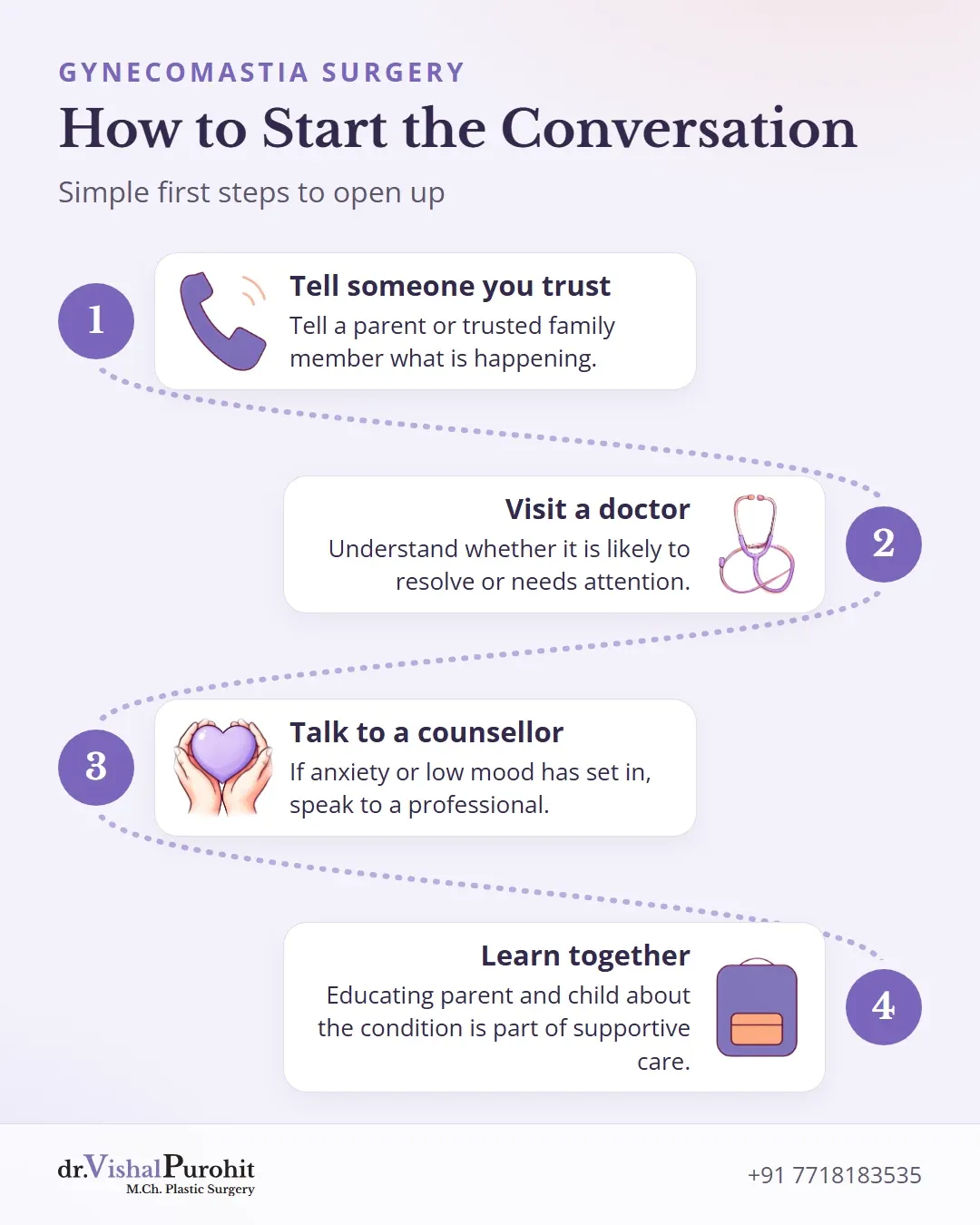
Many boys stay silent out of embarrassment. Talking — even briefly — tends to reduce that burden. Useful first steps include:
- Telling a parent or trusted family member what is happening at school or in social settings
- Visiting a doctor to understand whether the condition is physiologic and likely to resolve, or whether it warrants further attention
- Speaking with a school counsellor or mental health professional if anxiety or low mood has set in
Education of parents and child about the condition and its typical course is a recognised part of supportive care [4].
How Parents Can Help
Parents are encouraged to listen without minimising the concern.
Dr. Purohit’s note: In Jaipur, a parent or guardian is present at every consultation for a minor, written consent is taken before the examination, and counselling is provided to both the young person and the family.
For families asking about the right age for surgery, the timing rules are explained in gynecomastia surgery age and timing.
Clothing and Its Limits
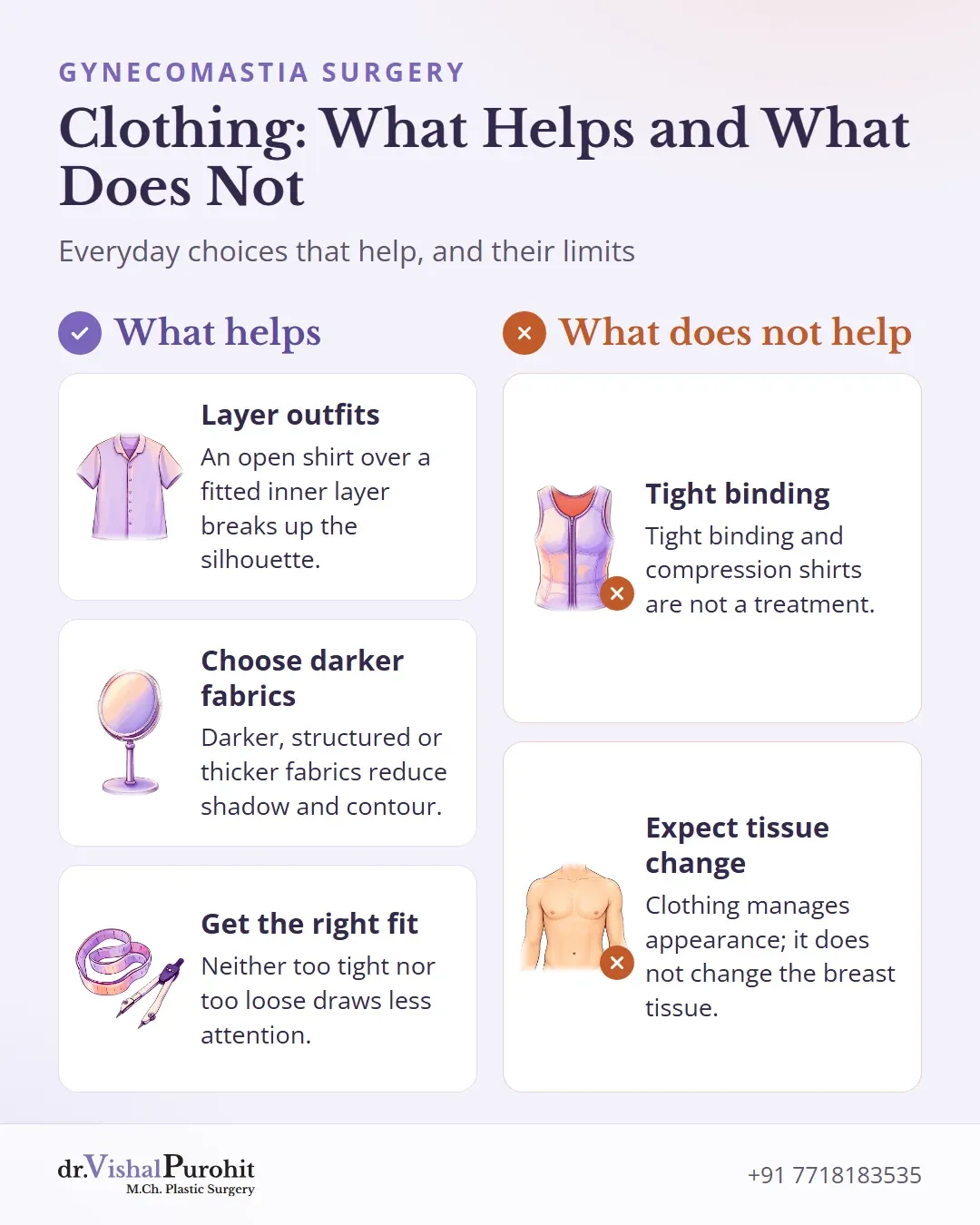
Many men with gynecomastia develop practical habits around clothing before they consider surgery. These strategies can reduce visible chest projection day to day, though they do not address the underlying glandular tissue [3].
Choices that tend to help
- Layered outfits — an open shirt over a fitted inner layer — break up the chest silhouette without adding pressure.
- Darker, structured or thicker fabrics reduce the shadow and contour that lighter materials can accentuate.
- Well-fitted clothing, neither too tight nor too loose, tends to draw less attention than either extreme.
Where clothing falls short
Clothing manages appearance; it does not change the breast tissue itself [3]. Some men turn to tight binding or compression shirts for a flatter look; these are not a treatment, and it is worth asking a doctor before relying on them every day.
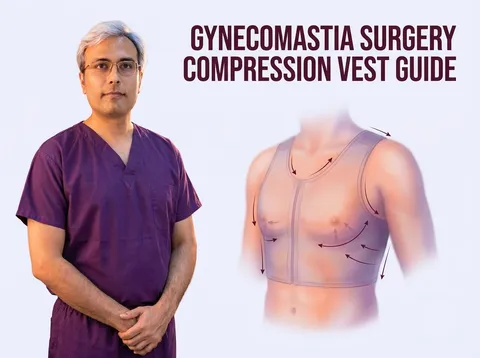
Compression has a different role after surgery: Dr. Vishal Purohit’s patients wear a custom medical-grade vest 24/7 for 4 to 6 weeks to support skin redraping. That is a structured, time-limited part of healing, not a daily habit.
When to Seek Help
See a Doctor First
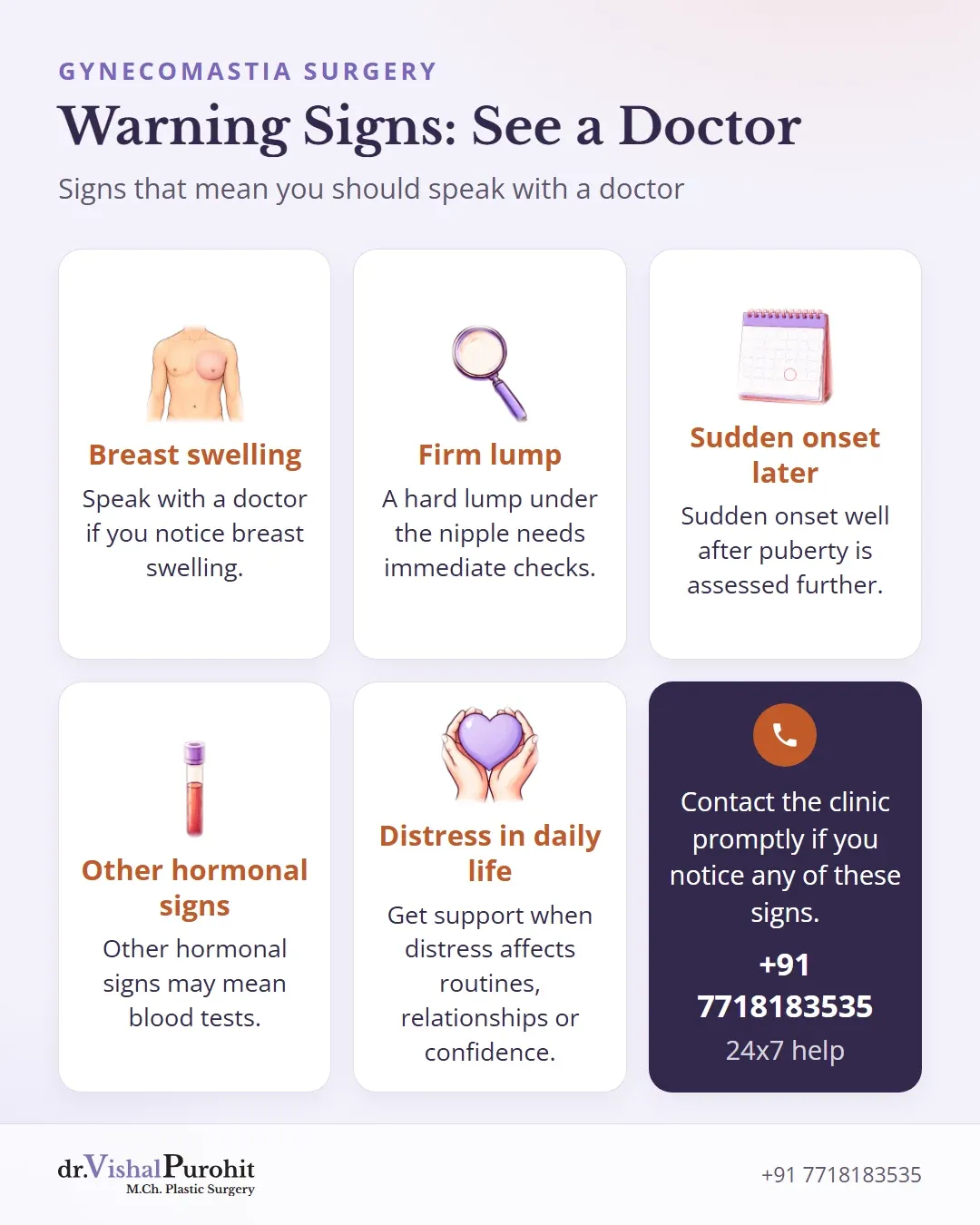
Anyone who notices breast swelling or a firm lump under the nipple should speak with a doctor [5]. The first step is a clinical examination and direct palpation. Imaging such as ultrasound or MRI is arranged when needed, and hormone blood tests are ordered only when there are other signs of a hormonal imbalance — this is how Dr. Vishal Purohit approaches every new patient in Jaipur. A referral to an endocrinologist is considered only when gynecomastia develops suddenly, well after puberty is complete, or when other hormonal symptoms are present.
Key points
- Breast swelling or a firm lump under the nipple is reason to see a doctor.
- Diagnosis starts with a clinical examination, with imaging or hormone tests only when needed.
- Psychological support matters when body image concerns affect daily life.
A doctor can also identify the underlying cause — medication, a hormonal shift, or weight — and discuss all available options [6].
When Distress Affects Daily Life
Gynecomastia can cause anxiety and embarrassment [5]. Psychological support is important when body image concerns begin to affect daily routines, relationships, or self-confidence [4].
Surgery addresses the physical gland; it is one option among others and is not a promise of relief from emotional distress. The choices are compared in gynecomastia treatment options.
A Note on Philosophy
In Dr. Vishal Purohit’s words: “Everyone deserves to feel good and confident about their body.”
Getting Support in Jaipur
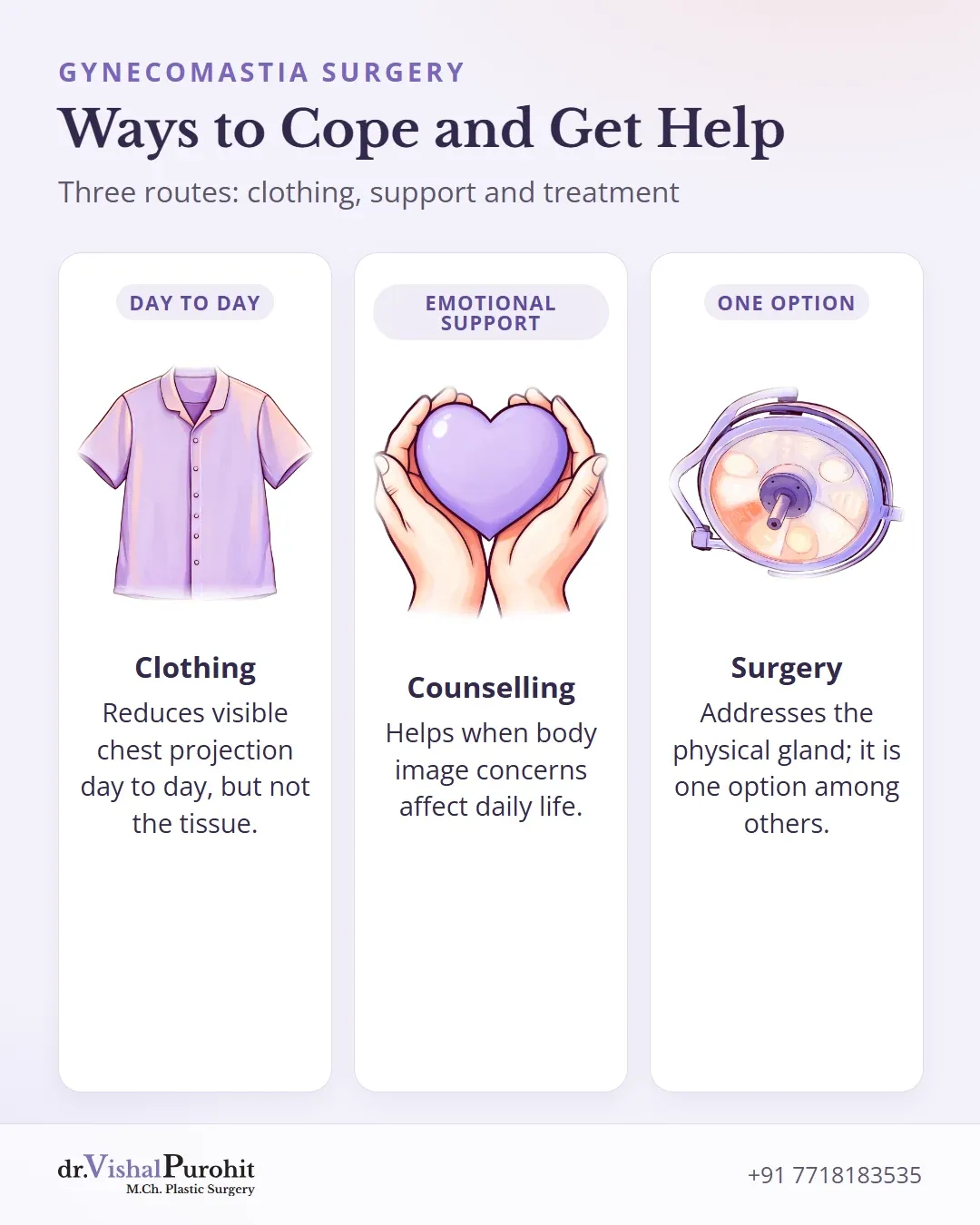
Living with gynecomastia can feel isolating, but support is available. Clothing changes may help day to day, while counselling can help address body image concerns. For readers considering treatment, gynecomastia surgery in Jaipur explains the assessment and recovery pathway.
Dr. Vishal Purohit, M.Ch. plastic surgeon, sees patients in Jaipur and answers common concerns in the gynecomastia FAQs. Talking about the condition can make the practical and emotional sides easier to manage.
This is educational information, not medical advice.