
How to Identify Signs of Infection After a Tummy Tuck: A Clinical Guide to Post-Operative Warning Signs
Most people recover without any issues. However, you must know the difference between normal healing and a real infection.
Watch for redness that spreads away from your cuts. Your skin may also feel hot. You might see pus or cloudy fluid, or have a fever that won’t go away.
If you see these signs, call your doctor right away. This keeps your recovery on the right track.
At Kalpana Aesthetics, Dr. Vishal Purohit (M.B.B.S., M.S., M.Ch. Plastic Surgery) uses precision and care to help you feel confident. He focuses on the patient to give you a great silhouette.
Listening to your body is a big part of getting natural-looking results. You might be recovering now or looking into comprehensive cosmetic surgery in Jaipur. Either way, staying alert keeps you safe.
Some swelling and soreness are normal as you heal. An infection is different and does not follow a normal healing path.
If you spot these red flags early, we can act fast. This protects your health and the look of your new body.
Identifying Localized Inflammatory Markers
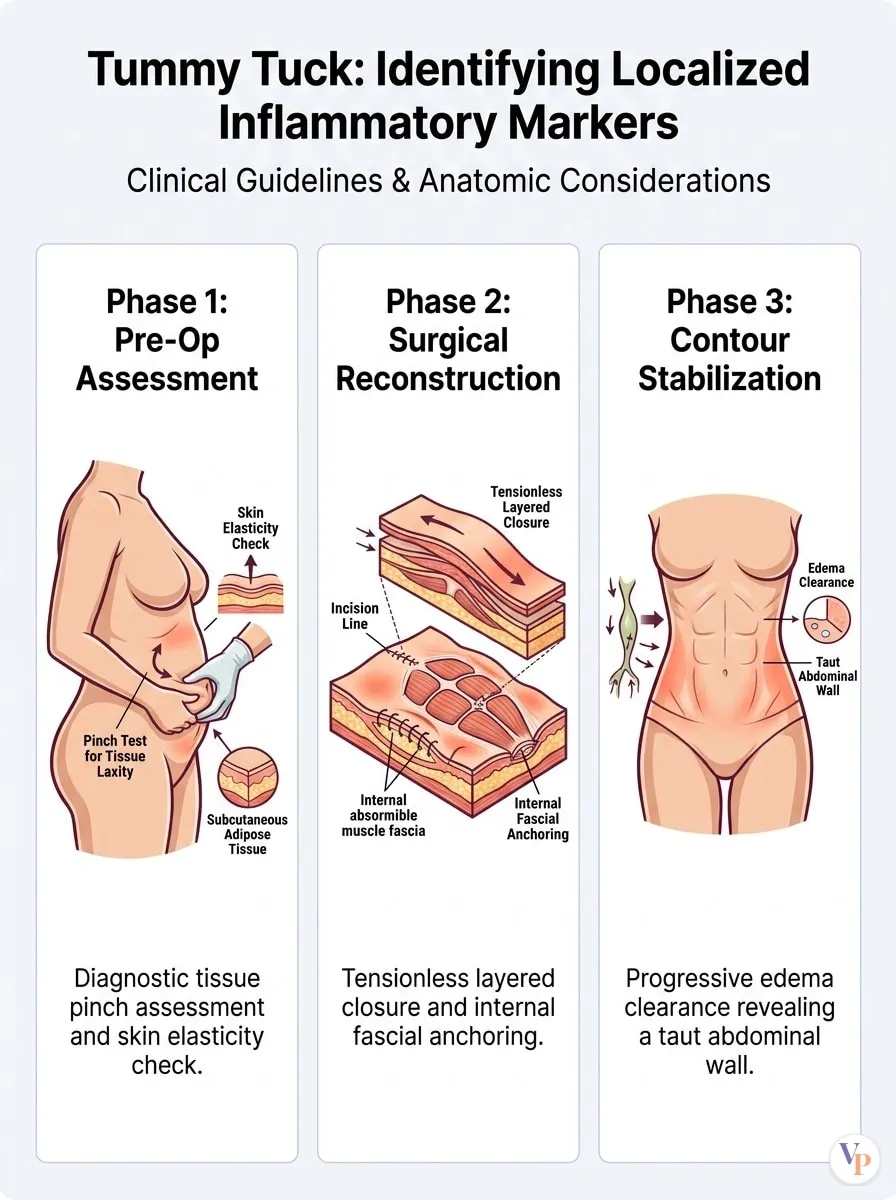
It is normal to see some redness and swelling right after surgery. These are common side effects as your body heals.
Normal swelling stays near your incision site. This is the cut the surgeon made. It usually goes away in a few days.
A surgical site infection looks different. You will see erythema, which is “a deep redness that spreads across the skin.” This spreading color is a warning sign. You must call your doctor right away.
Abnormal Redness and Spreading Erythema
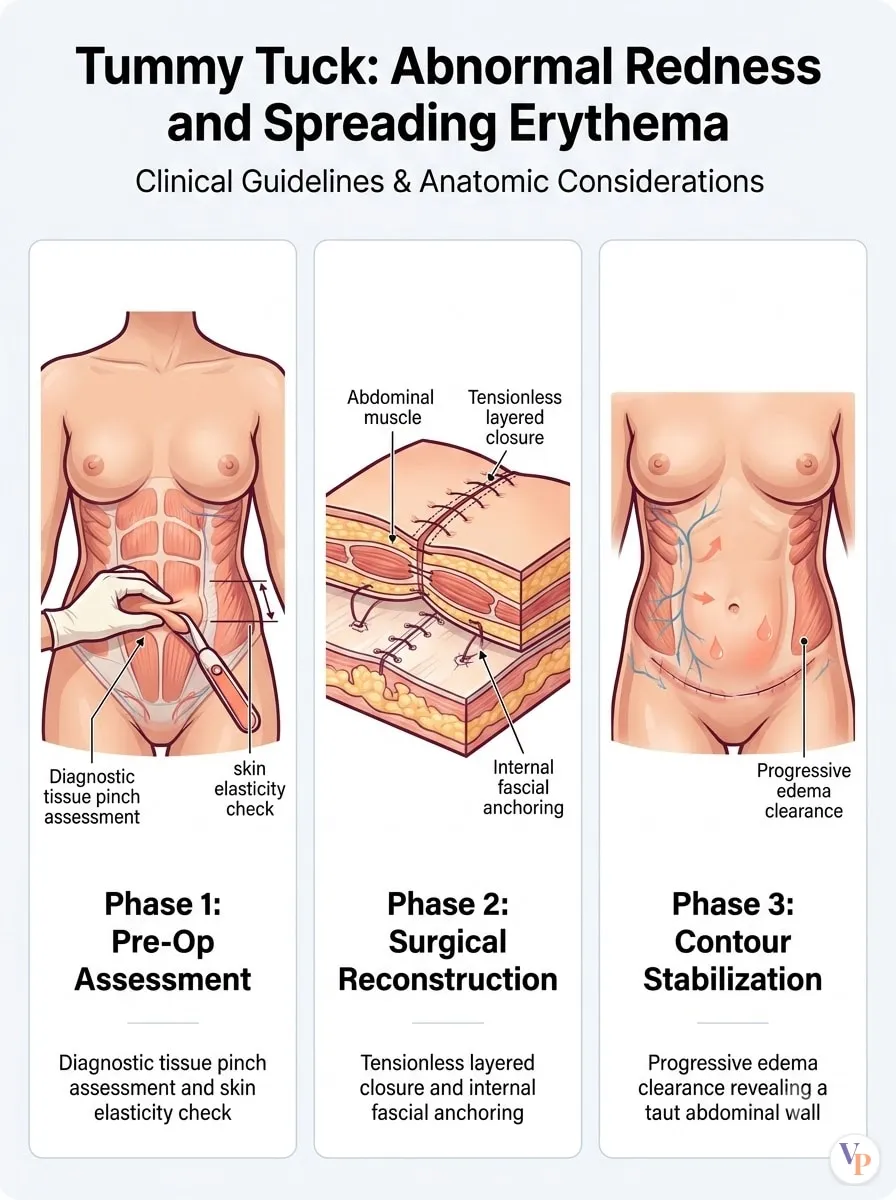
Redness around the incision is common at first. However, watch for skin discoloration that moves away from the cut.
It is a sign of trouble if the red area grows larger each day.
This spreading inflammation is not a normal part of healing. Normal redness stays in one spot and fades.
Your body may be fighting an infection if red streaks or patches expand.
Excessive or Asymmetric Swelling
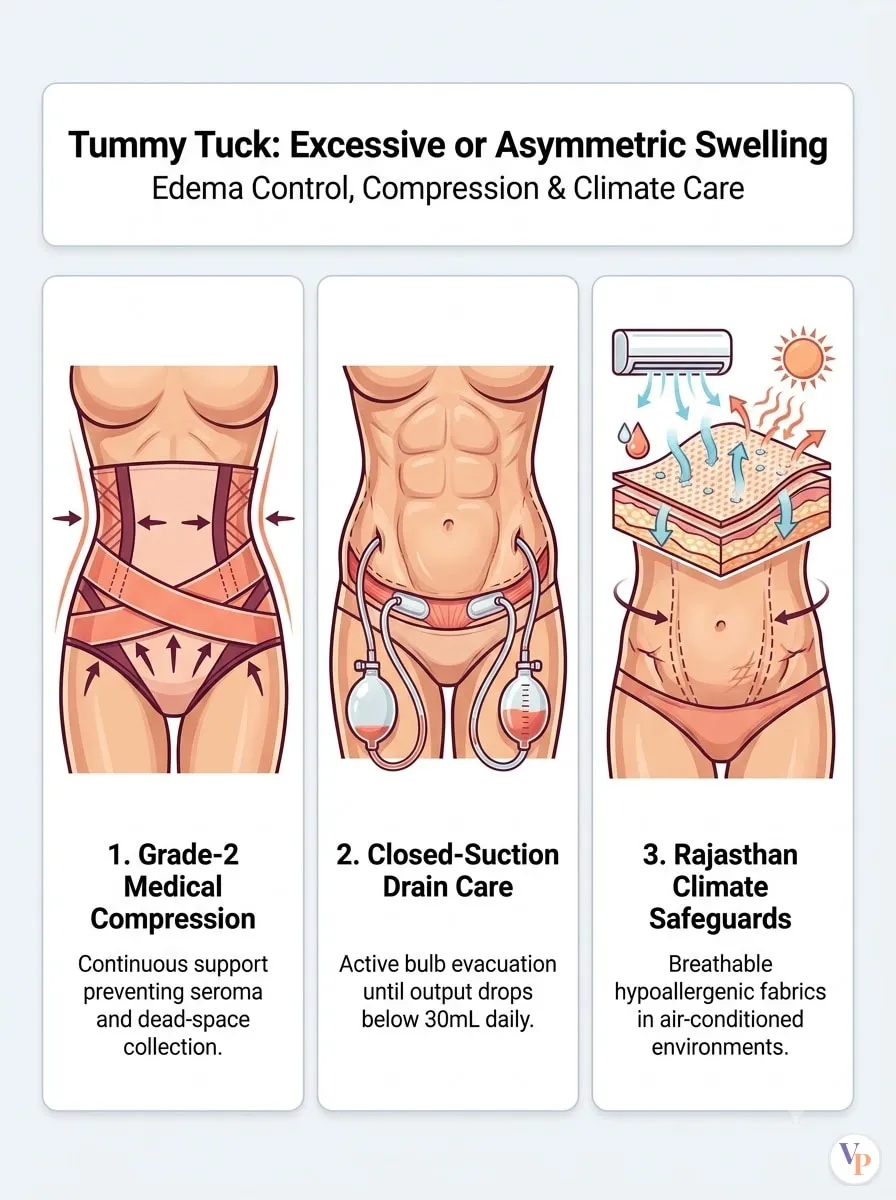
Some edema is normal after surgery. This is just fluid trapped in your body tissues.
This post-op inflammation usually looks the same on both sides of your belly. It should slowly get better as you follow tips to manage tummy tuck swelling.
Localized swelling is a red flag if it is asymmetric. This means one side of your stomach is much more swollen than the other.
A sudden increase in size in one specific spot is not normal. Call your doctor if one area feels hard or looks like a tight balloon.
This could be a sign of an infection or fluid buildup. Acting fast keeps your recovery smooth and protects your new shape.
Analyzing Exudate Characteristics and Drainage
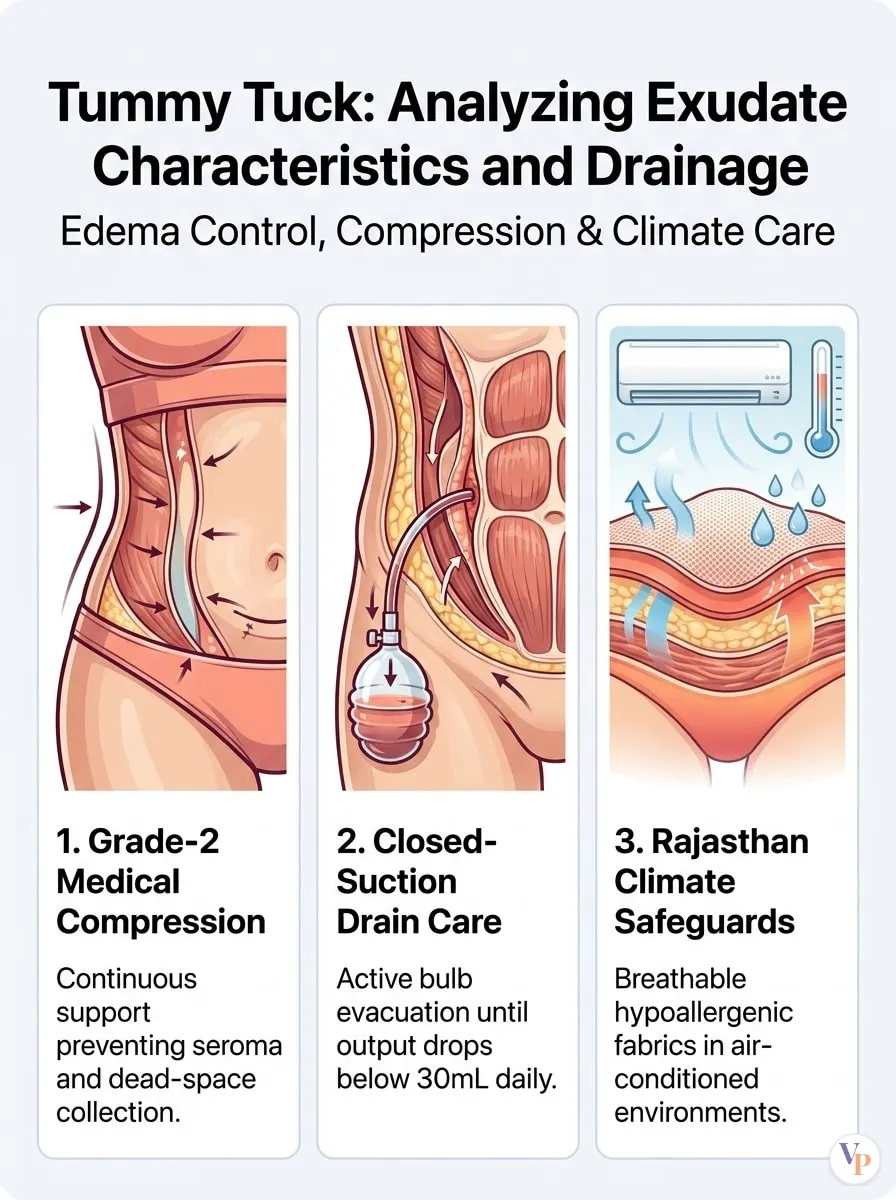
It is normal for your cut to leak some fluid for a few days. This fluid is called exudate.
Learning what is normal helps you feel confident. It also helps you spot signs of infection.
Serous fluid is clear or light yellow. This is a normal part of healing.
A seroma happens when this fluid builds up under your skin. A doctor should check large seromas to make sure your skin heals flat.
Purulent discharge, or pus, is a major warning sign. This fluid is thick and white, yellow, or green.
It often has a foul smell. If you see this, your body is likely fighting an infection.
Use this table to identify the type of drainage you see:
| Fluid Type | Appearance | Smell | What it Means |
|---|---|---|---|
| Serous Fluid | Clear, straw-colored, or thin | No smell | Normal healing process |
| Seroma | Clear or yellow fluid pooling | No smell | Fluid buildup under the skin |
| Purulent Discharge | Thick, opaque, white, yellow, or green | Foul smell | Possible infection (pus) |
Recognizing Systemic Febrile Responses
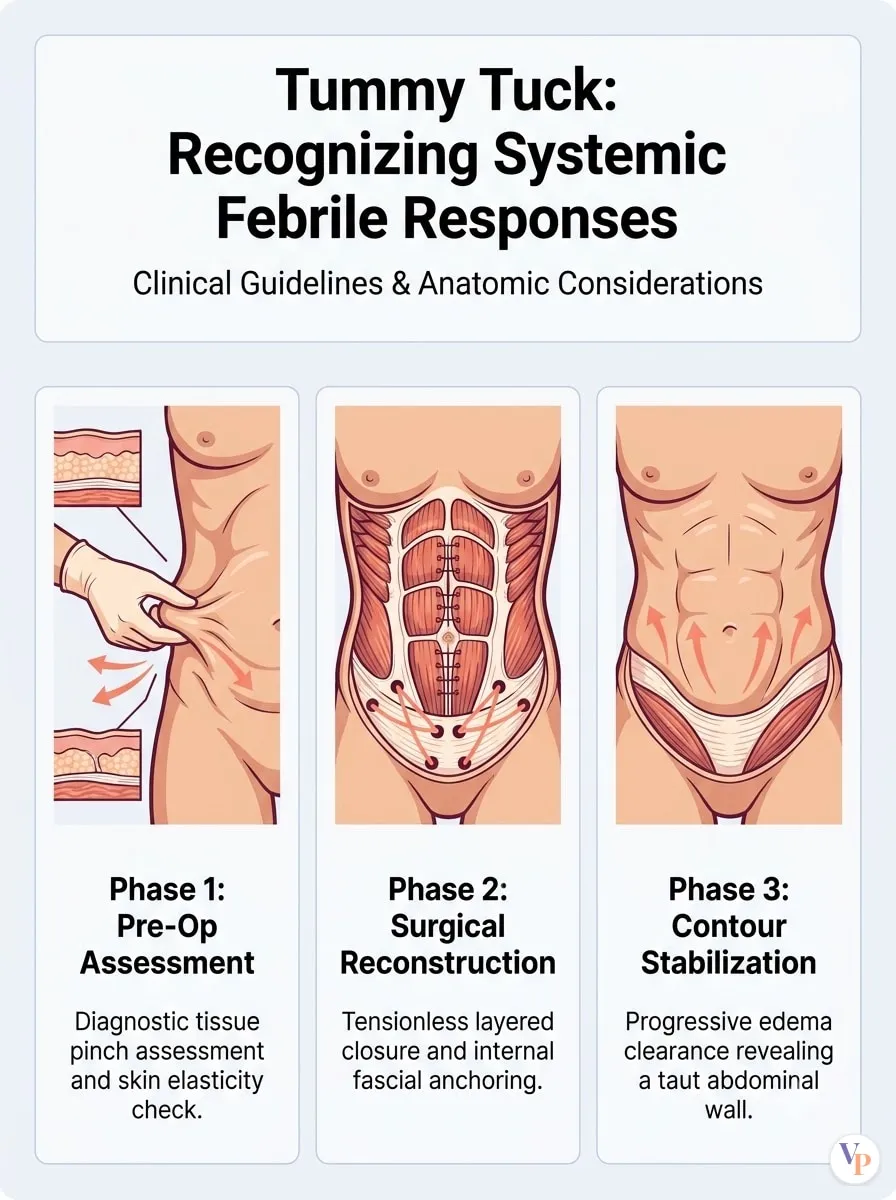
Infection doesn’t always stay on your skin. Sometimes, it spreads through your entire body. This is called a systemic infection.
It means your immune system is fighting a bigger battle. A rising body temperature is the first big warning sign.
A fever happens when your brain turns up the heat to kill germs. Call your doctor if you feel hot or have a high temperature.
You might also get chills. These are shivering fits that happen even in warm rooms.
You may also feel extreme fatigue. This is a deep tiredness that rest cannot fix. These signs mean you need medical help right away.
Tactile Indicators: Localized Thermal Changes
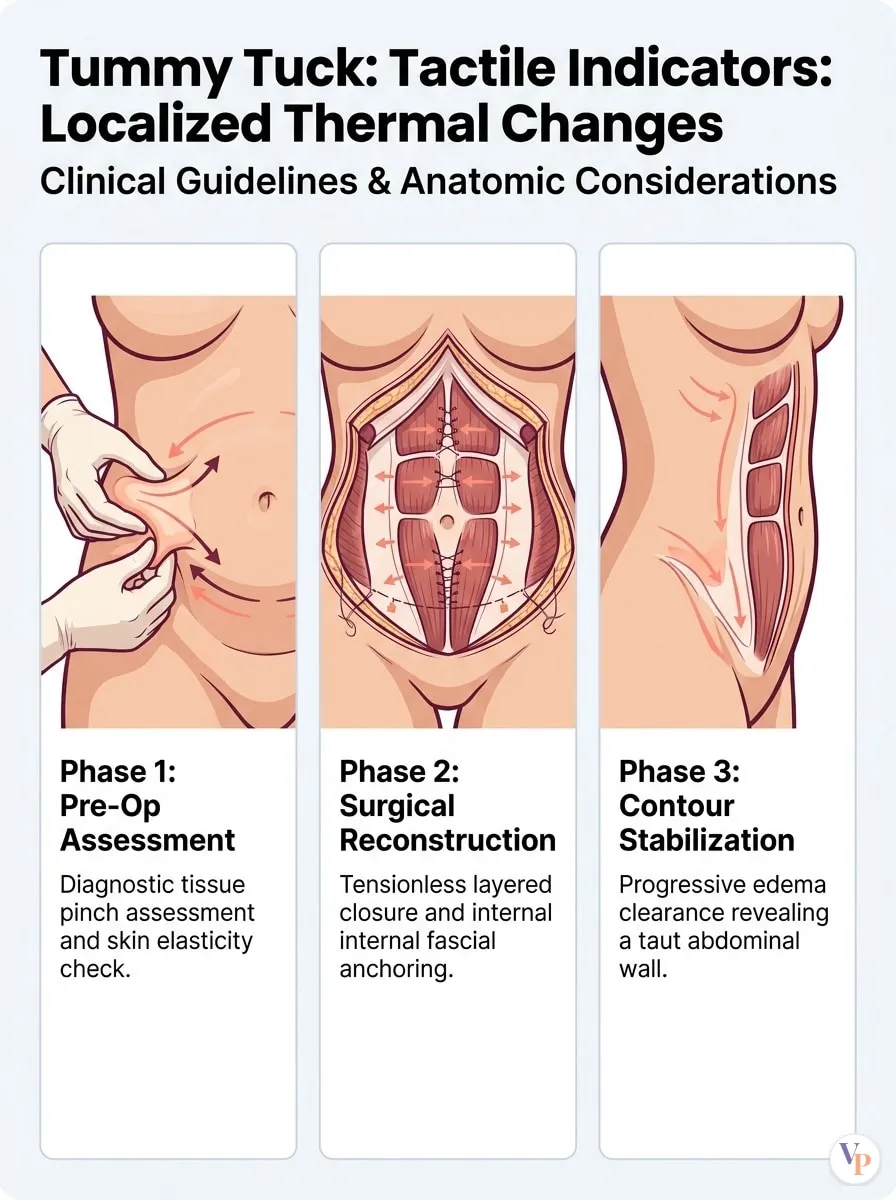
Your sense of touch helps you track your recovery. You can use a simple tactile diagnosis. This just means using your hands to feel for changes in your body.
Doing this helps you find problems before you can see them.
Watch for these signs:
- Skin heat: Feel the skin near your tummy tuck area. Some warmth is normal. But, intense skin heat that feels like a fever on the skin is a warning sign.
- Hot spots: Feel for small areas that are much warmer than the skin around them. These hot spots often show where an infection is starting.
- Warmth near incision: Gently touch the skin near your stitches. Unusual warmth near incision lines can mean your body is fighting germs in that spot.
Incision Dehiscence and Wound Integrity
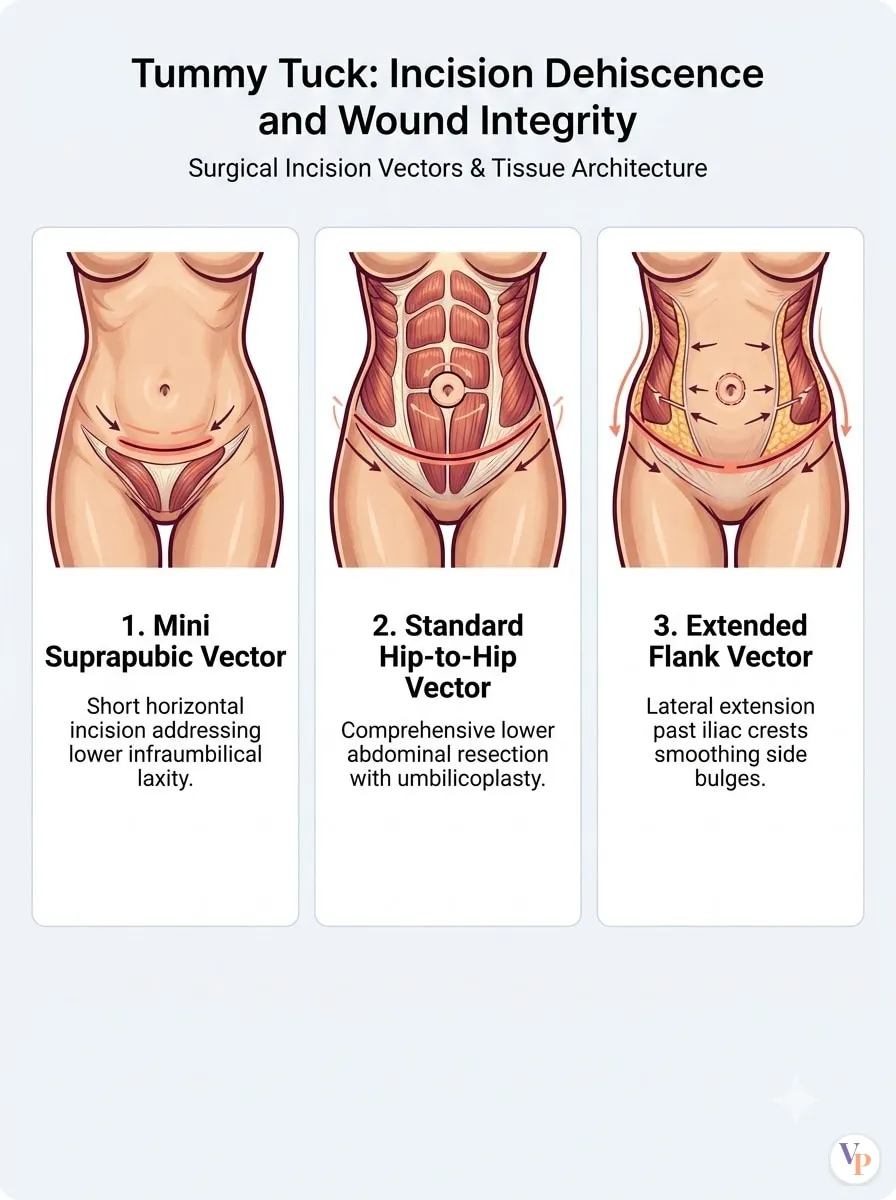
Your incision must stay closed to heal properly. Dehiscence is when the edges of your wound pull apart.
This wound separation (“abdominal scar dehiscence secondary to a failed abdominoplasty procedure”) lets germs into your body. It often starts with stitch failure when your sutures break or unravel.
An open wound increases your risk of a deep tissue infection. You might see leaking fluid coming from the gap in your skin.
Clear fluid is common, but thick or smelly liquid is a red flag. You can help keep the skin edges together by using support.
Learn more about the importance of compression garments to help your healing. Call your surgeon right away if any part of your incision opens.
Related Clinical Guide: For climate-specific moisture management in Rajasthan, review managing tummy tuck recovery in Jaipur hot and dry weather.
Frequently Asked Questions
What are the primary clinical signs of an infection after a tummy tuck?
Key signs of surgical site infection include spreading redness (erythema) extending beyond 2 cm from the incision, localized warmth, worsening throbbing pain, foul-smelling cloudy drainage, or a fever exceeding 100.4°F, documented by Dr. Vishal Purohit in Jaipur. Mild incisional redness during the first 48 hours is normal inflammation, but spreading margins indicate bacterial colonization. As an M.Ch plastic surgeon, Dr. Purohit provides immediate 24/7 clinical evaluation to arrest infection promptly.
How does Dr. Vishal Purohit prevent infections during tummy tuck surgery?
Dr. Vishal Purohit in Jaipur prevents surgical site infections through preoperative IV broad-spectrum antibiotics, laminar airflow operating theater sterilization, chlorhexidine skin antisepsis, and meticulous multi-layer monofilament suturing. Drains are managed with closed-suction bulbs to prevent retrograde contamination. Dr. Purohit’s surgical infection rates remain below 0.5% across all major body contouring procedures.
What should I do immediately if I suspect my incision is infected?
Contact Dr. Vishal Purohit in Jaipur at +91-7718183535 immediately, avoid self-prescribing over-the-counter creams, and keep the wound covered with sterile dry gauze. Dr. Purohit will perform an in-clinic wound culture, examine fluid collections via ultrasound, and prescribe targeted oral or IV antibiotics. Rapid professional management resolves minor infections within 48 to 72 hours without compromising aesthetic results.
Can a wound infection cause incision opening (dehiscence)?
Severe untreated bacterial infection can compromise local tissue vascularity and cause localized wound edge separation (dehiscence), warns Dr. Vishal Purohit in Jaipur. However, prompt clinical intervention with wound cleansing, targeted antimicrobials, and secondary dressing care ensures rapid granulation and closure. As an M.Ch. plastic surgeon, Dr. Purohit provides meticulous reconstructive wound care to protect scar aesthetics.
For full details on hospital facilities, OT safety protocols, and personalized surgical pricing, explore our comprehensive guide on Tummy Tuck Surgery in Jaipur or review our main Tummy Tuck Guide.