Am I a Good Candidate for Breast Reduction Surgery? Eligibility and Criteria
Are you a good candidate for breast reduction surgery? This depends on your health, your body proportions, and any symptoms you have.
It is not just about breast size. It is about how your size affects your daily life.
Do you have constant pain in your back, neck, or shoulders? Do you have skin irritation or feel unbalanced? If so, this procedure could be right for you.
In Dr. Vishal Purohit’s practice, we believe you deserve to look and feel beautiful. We focus on your self-esteem and your physical freedom.
When considering breast reduction in Jaipur, our goal is to help you. We create a custom plan to balance your body and increase your comfort.
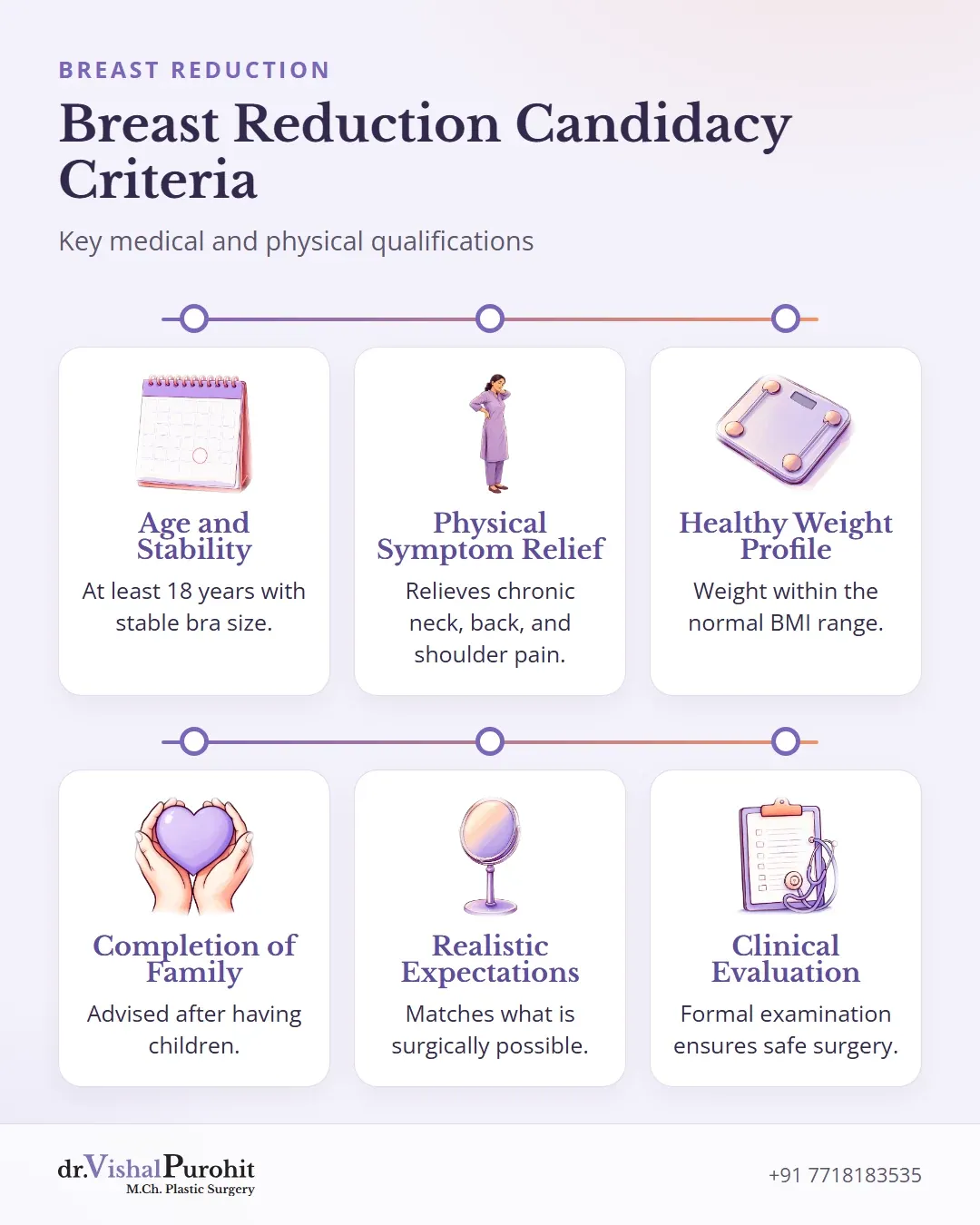
In Dr. Vishal Purohit’s practice, ideal candidates meet several key criteria:
General Eligibility
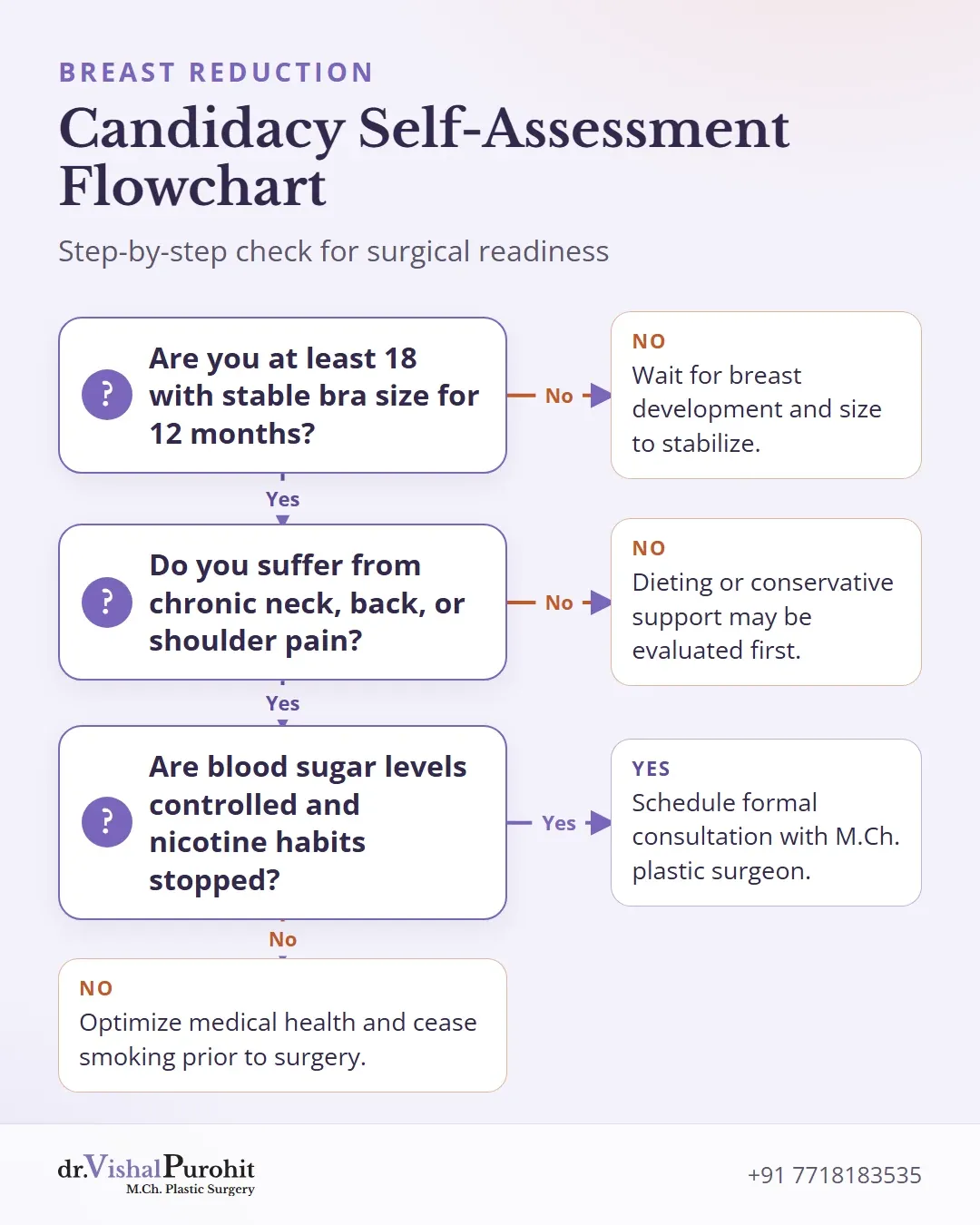
- Be at least 18 years old
- Have a bra size that has been stable for 12 months
- Keep weight within the normal BMI range before surgery
Personal and Surgical Readiness
- Have completed their family, as the chances of breastfeeding afterwards are slim
- Have realistic goals for the surgical results
An M.Ch. plastic surgeon will give you a formal exam. This ensures the surgery is safe and fits your unique body.
Physical Symptom Profile and Medical Necessity
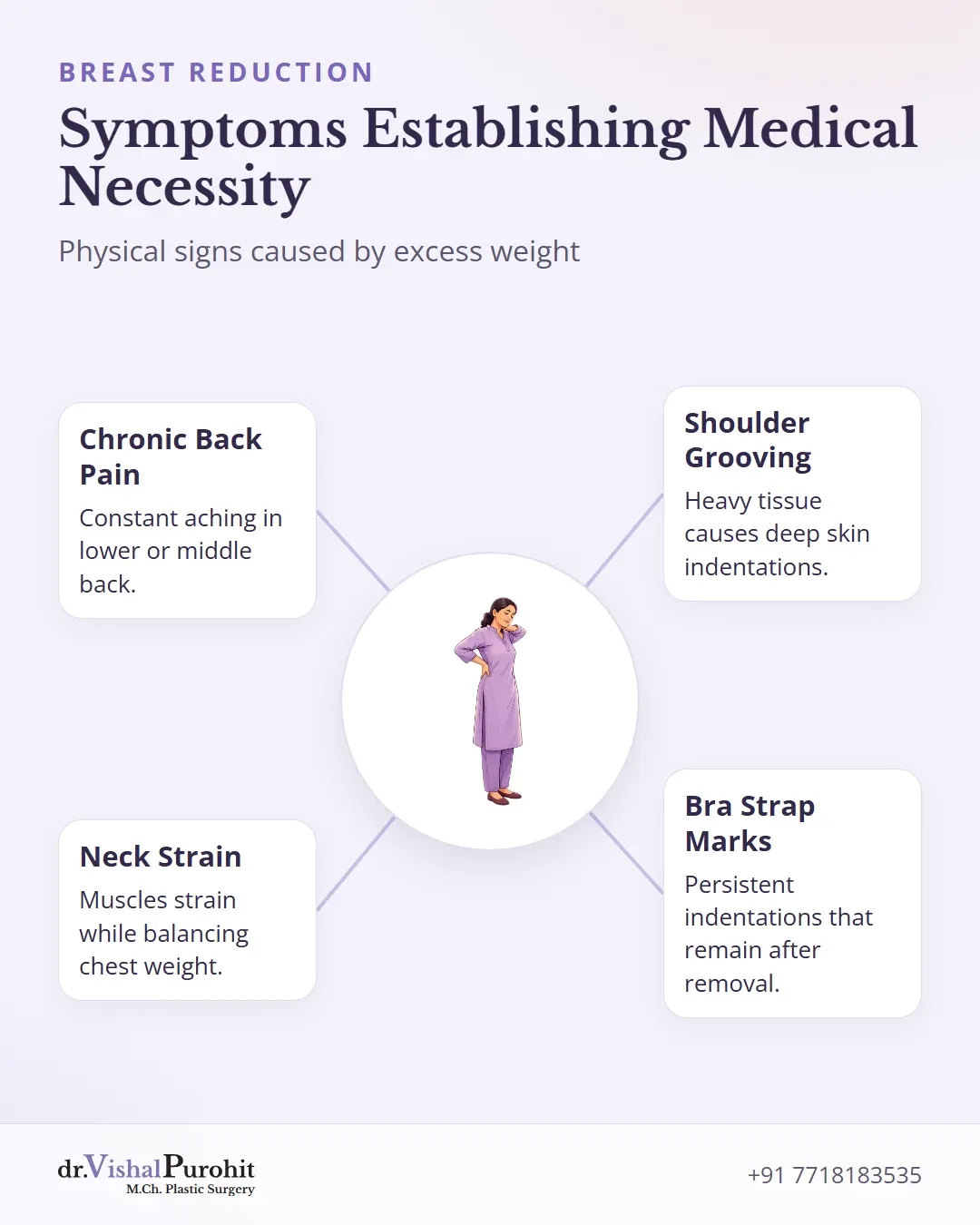
Surgery is a medical necessity when breast weight causes lasting physical harm. You may be a strong candidate if you have these symptoms:
- Chronic back pain: You may feel constant aching in your lower or middle back. This procedure relieves back, neck, and shoulder pain by shifting your center of gravity.
- Neck pain: Your upper spine and neck muscles may strain. This happens when you lean forward to balance your weight.
- Shoulder grooving: Heavy breast tissue can cause deep indentations in your shoulder skin.
- Bra strap marks: You might have permanent or deep bra strap marks. These marks do not go away after you remove your bra.
Breast-to-Body Proportion and Macromastia
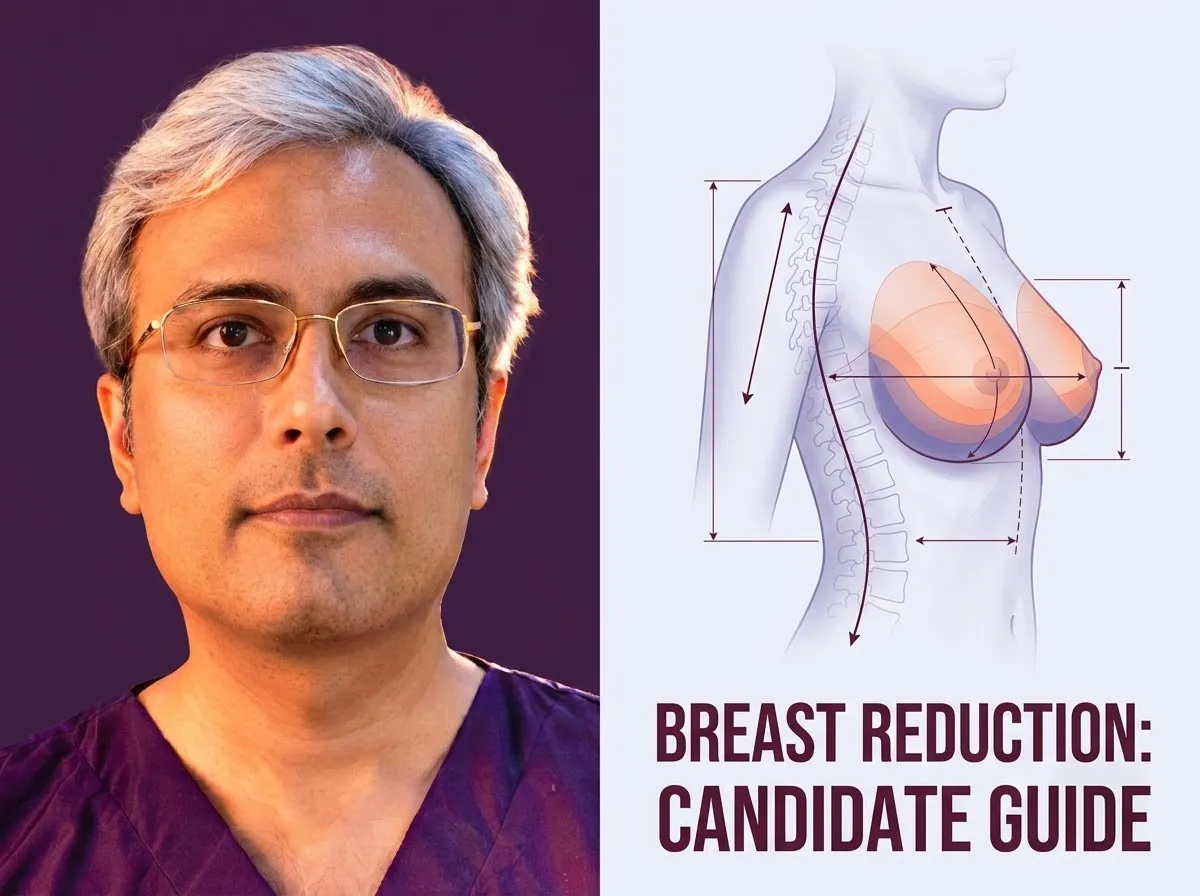
Dr. Vishal Purohit checks your breast-to-body proportion. He evaluates whether your breast size fits your body frame.
When breasts are too large for your frame, it is called macromastia. Candidacy is individualized at consultation — reduction mammoplasty is described as safe and effective for selected patients (“reduction mammoplasty is a safe and effective solution”) with weight-related symptoms.
This can cause a physical imbalance. It often changes how you move and feel.
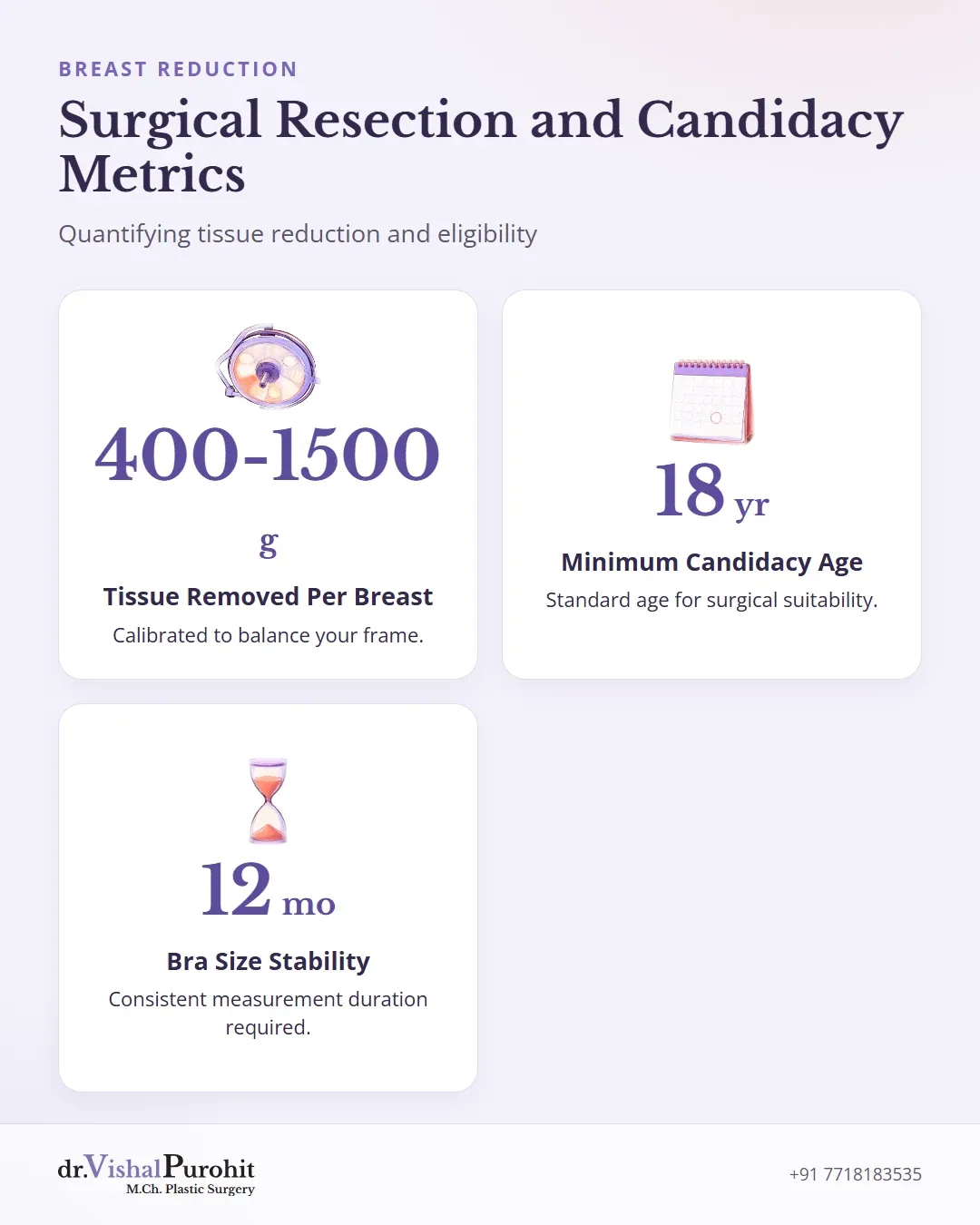
Dr. Purohit's note: There is no single size threshold for everyone. Dr. Purohit evaluates how breast volume affects your unique shape, and typically removes 400 to 1,500 grams of tissue per breast.
The goal is to balance your silhouette, removing enough tissue to relieve physical strain and improve comfort.
Myth: Dieting alone will fix the imbalance of macromastia.
Fact: Research shows that symptoms of macromastia are not usually alleviated by weight loss. This means dieting alone cannot fix the imbalance.
Medical Contraindications and Health Screening
Your safety comes first. Before surgery, we do a detailed health screening.
In Dr. Vishal Purohit’s practice, a mammogram or breast ultrasound is required before surgery for every patient, with genetic counselling arranged when family risk of breast cancer is high.
Systemic Health
This process finds systemic health risks. We want to make sure the procedure is safe for you.
Comorbidities
We also look for comorbidities. These are other health conditions you may have at the same time.
Anaesthesia Safety
We also check anaesthesia safety. This ensures your body can handle the sleep medication.
Some people should not have this operation, and understanding who should avoid breast reduction helps protect your overall health.
We review surgical contraindications. These are specific reasons why a surgery should not happen.
| Health Concern | Why It Matters | Impact on Candidacy |
|---|---|---|
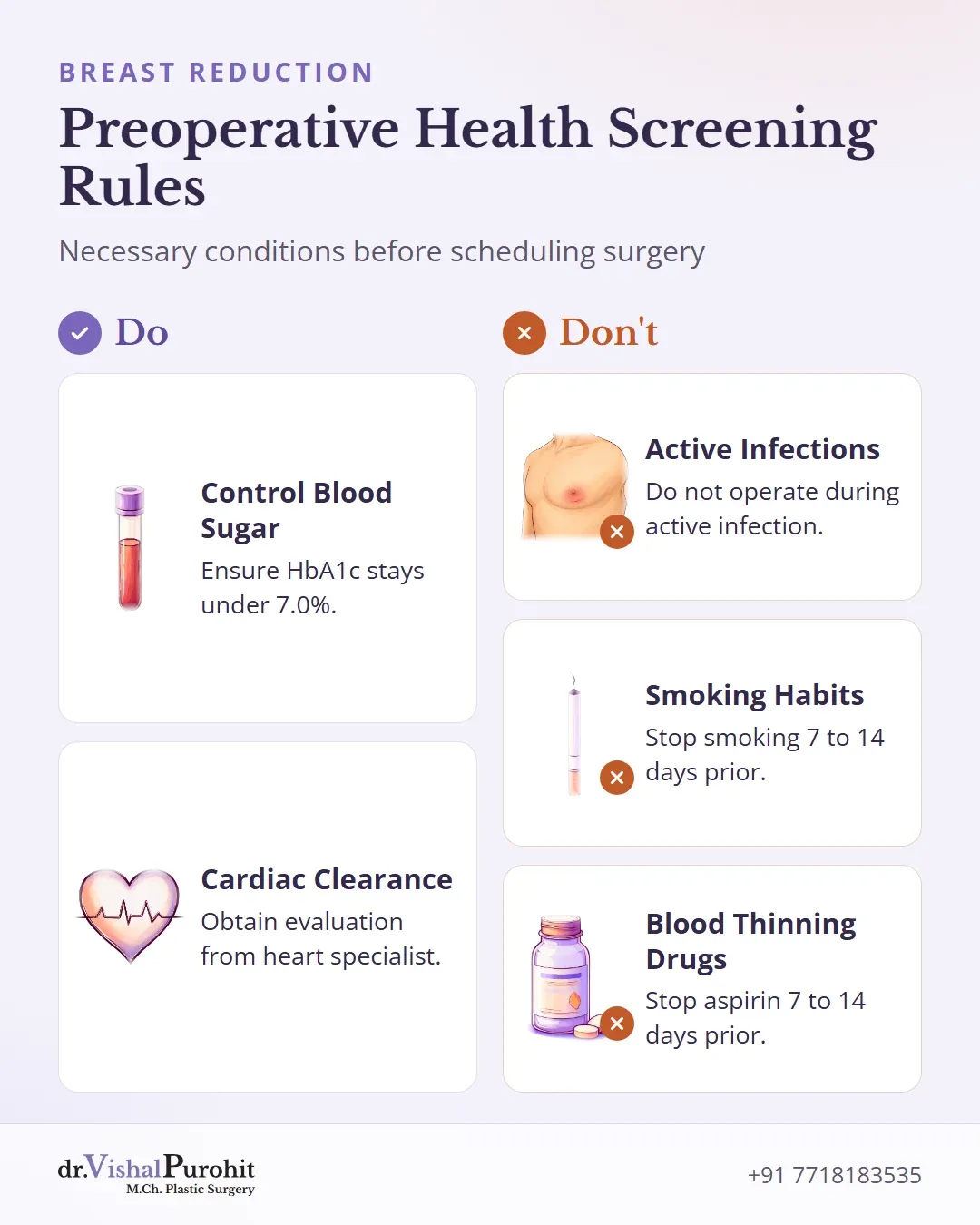
| Uncontrolled Diabetes | Slows down wound healing. | In Dr. Vishal Purohit’s practice, patients with diabetes need an HbA1c below 7.0% with tightly controlled blood sugar levels before surgery. |
| Severe Heart Disease | Increases risks during sleep. | Requires clearance from a heart specialist. |
| Active Infections | Can spread through the body. | Surgery is paused until the infection is gone. |
| Blood Clotting Issues | Causes dangerous bleeding. | Blood thinners and aspirin must be stopped 7 to 14 days before surgery under medical supervision. |
| Smoking Habits | Reduces oxygen to the skin. | Smoking must be stopped 7 to 14 days before surgery. |
Psychological Readiness and Outcome Expectations
We focus on mental preparation so you feel confident. You should understand how you will look and feel after the process.
Mental Preparation
Your mind needs to be as ready as your body.
Realistic Expectations
Remember that surgery changes your shape, but it does not change your whole life.
Aesthetic Goals
Your aesthetic goals must match what is possible for your body. We discuss surgical outcomes to make sure we both agree.
We will work together to create a plan just for you. This leads to higher patient satisfaction and a happier recovery.
Realistic expectations are the key to a happy result.
Future Biological Considerations: Pregnancy and Breastfeeding

Choosing the right surgical timing matters if you want children. Dr. Vishal Purohit advises breast reduction surgery after a patient has completed her family.
Dr. Purohit's note: In Dr. Vishal Purohit's practice, the chances of breastfeeding after breast reduction surgery are slim, which is why he advises surgery after you have completed your family.
Here is how the surgery affects your future:
- Future Pregnancy: Pregnancy changes your breast size and skin. Dr. Purohit advises having surgery after you are finished having children. This keeps your final shape the same.
- Breastfeeding Ability: Breast reduction can affect your ability to breastfeed later.
- Nerve and Duct Care: While pedicled transposition keeps the nipple attached and is designed to preserve sensation via the 4th lateral intercostal nerve branch, milk ducts can be disrupted, impacting future nursing.
For hospital packages and Mediclaim coverage, see breast reduction cost, EMI, and insurance in Jaipur.
Weight, BMI and Timing
Body Mass Index and Surgical Outcomes
Body mass index (BMI) alone does not capture the full physical burden experienced by women seeking reduction mammaplasty1. Studies show that symptomatic relief—such as easing neck pain, back pain, and shoulder grooving—remains the primary motivation for surgery rather than quantitative measures like BMI or cup size alone1.
Key points
- Symptomatic relief from neck, back, and shoulder pain is the primary motivation for breast reduction regardless of BMI.
- In Dr. Vishal Purohit's practice, weight should be within the normal BMI range before surgery.
- Surgery is advised after completion of breast growth, stable bra size for 12 months, and completing one's family.
Research notes that normative well-being scores tend to be lower among women with a BMI of 30 or higher and a bra cup size of D or larger1. However, preoperative satisfaction scores in women presenting for breast reduction remain significantly lower than normative scores, showing that macromastia imposes an independent physical and quality-of-life burden regardless of body habitus1.
While higher BMI can influence surgical planning and resection calculations2, published literature emphasizes that decisions are individualized rather than guided by a universal BMI threshold1. Individual anatomy and tissue characteristics help determine how much smaller breasts can be after surgery.
Weight Stability and Timing of Surgery
Pre-surgical weight changes can alter breast volume and tissue distribution. While weight loss prior to surgery is sometimes explored in patients with overweight3, significant postoperative fluctuations after massive weight loss may alter breast appearance or require further assessment4. Ensuring weight stability prior to reduction mammaplasty allows for more predictable planning.
Timing also depends on physical maturity and future life stages:
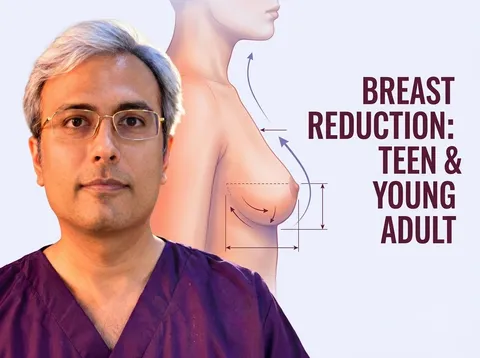
- Completion of breast growth: In teenagers and young adults, reduction mammaplasty is evaluated on an individual basis and typically considered after breast development has concluded. In Dr. Vishal Purohit’s practice, the minimum age for breast reduction is 18 years, and the bra size must have been stable for 12 months.
- Pregnancy and lactation: Because life events such as pregnancy and nursing can change breast tissue volume and shape, timing relative to childbearing is evaluated individually during consultation with Dr. Vishal Purohit in Jaipur. Breast reduction is advised after the patient has completed her family (after children), and the chances of breastfeeding after breast reduction surgery are slim.
Next Steps
We look at your symptoms and your health to see if you are a fit. We balance your need for pain relief with how well your body heals.
You should schedule a visit with an M.Ch. plastic surgeon for a personal plan. Only a professional exam can find your specific needs and goals. Start with what happens at a breast reduction consultation so you know what to bring and what will be assessed.
- Learn consultation steps Read what to bring and expect
- Book consultation Contact the clinic in Jaipur
- Undergo examination Have symptoms, health, and goals evaluated
- Receive personal plan Get tailored surgical care and guidance
If you would like to discuss your condition or book a consultation, contact Dr. Vishal Purohit in Jaipur at +91 7718183535. Our specialist team is here to guide you through every step of your care.
For the full picture of the procedure, visit our page on breast reduction in Jaipur.