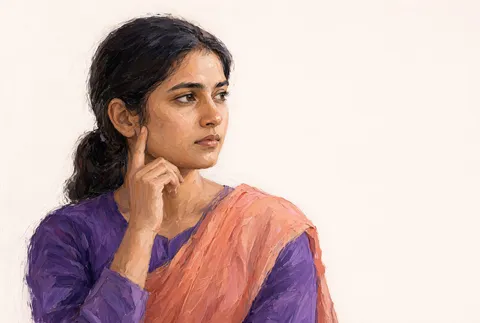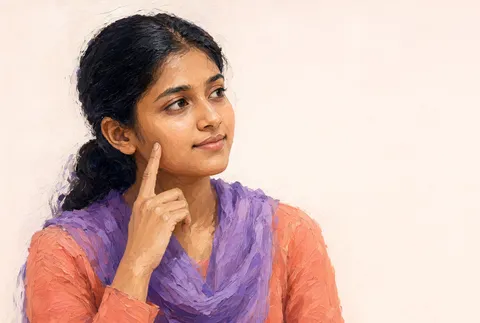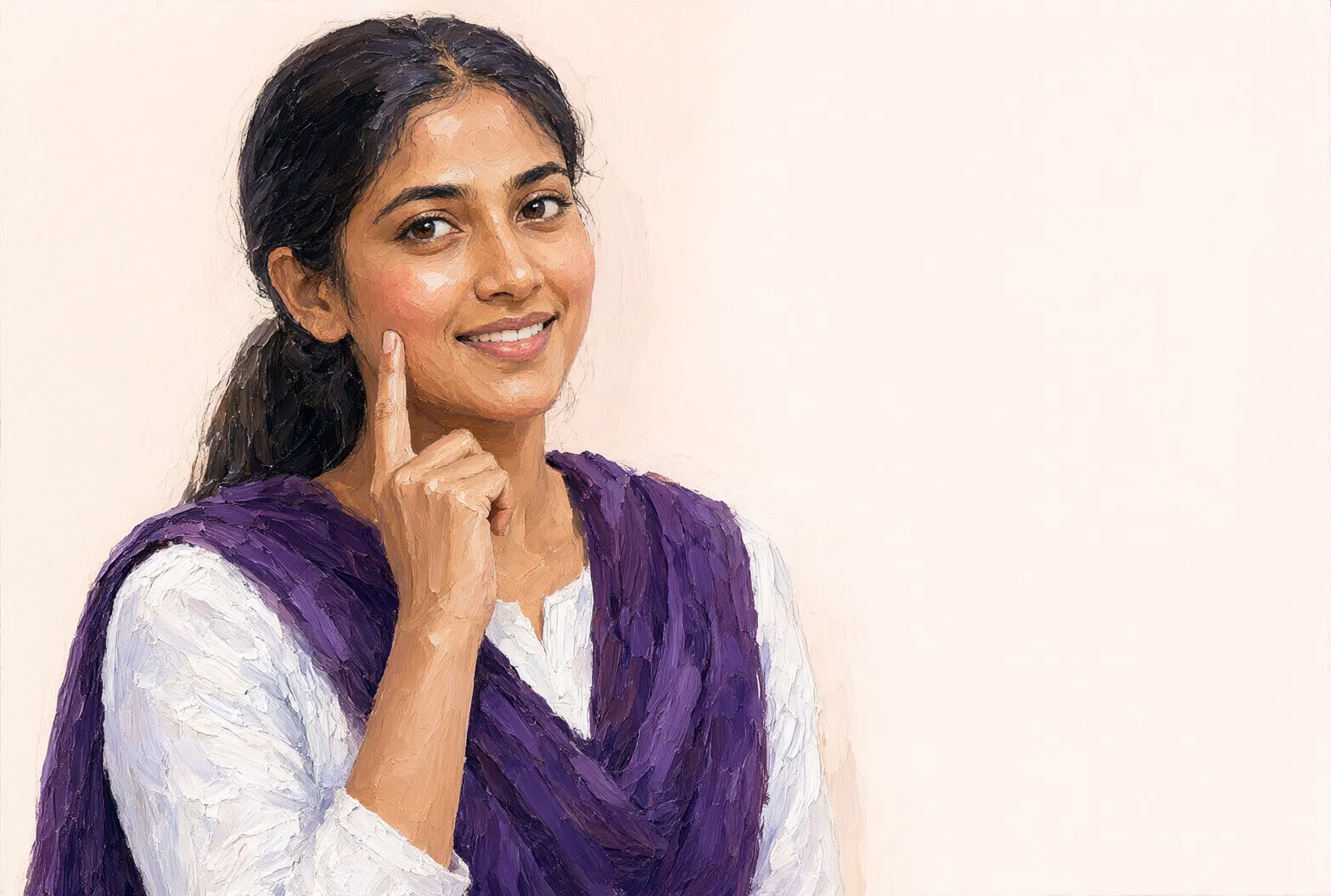
Cheek dimples appear naturally when deeper facial muscles attach directly to the undersurface of the skin. Dimple creation surgery recreates this anatomy by forming a gentle adhesion between the buccinator muscle and the overlying dermis.
The entire operation takes place inside the mouth without external facial cuts. Patients considering this procedure can learn more about local anaesthesia for dimpleplasty: what you feel and when during intraoral treatment.
The Idea Behind the Operation
Naturally occurring dimples are usually caused when fibres of the cheek muscle insert directly into the underside of the skin, causing a tethering effect when smiling. Dimple creation surgery aims to recreate this anatomical relationship by forming an adhesion between the deeper cheek muscle and the dermis.
Dr. Purohit’s note: In his practice in Jaipur, Dr. Vishal Purohit creates cheek dimples by placing an absorbable internal suture through a small incision inside the cheek, accompanied by very slight electrocautery to the muscle, with no cut made on the facial skin.
Surgical literature describes different techniques used over time to create this connection:
- Lari and colleagues passed a transcutaneous bolster stitch after scraping mucomuscular attachments off the dermis to form a dimple.
Over time, this deliberate connection between the muscle and the dermis heals into a small internal scar. As the tissues heal, the tether draws the skin inward when the facial muscles contract during a smile.
Marking and Numbing
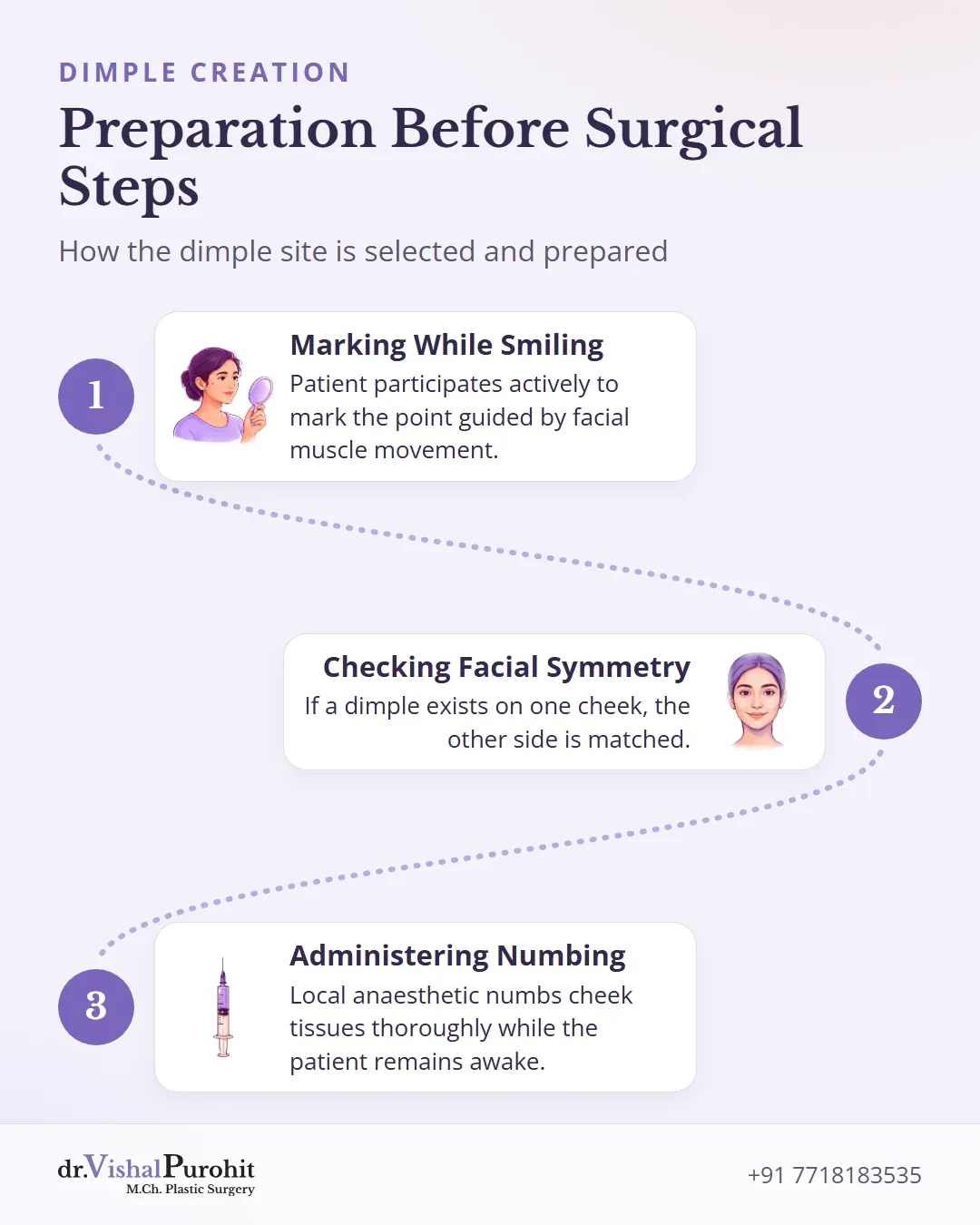
Before surgery under local anaesthesia, no fasting is needed, but good oral hygiene with a chlorhexidine mouthwash is a must. The position of the proposed dimple is then planned and marked on the cheek.
Marking the Dimple Site
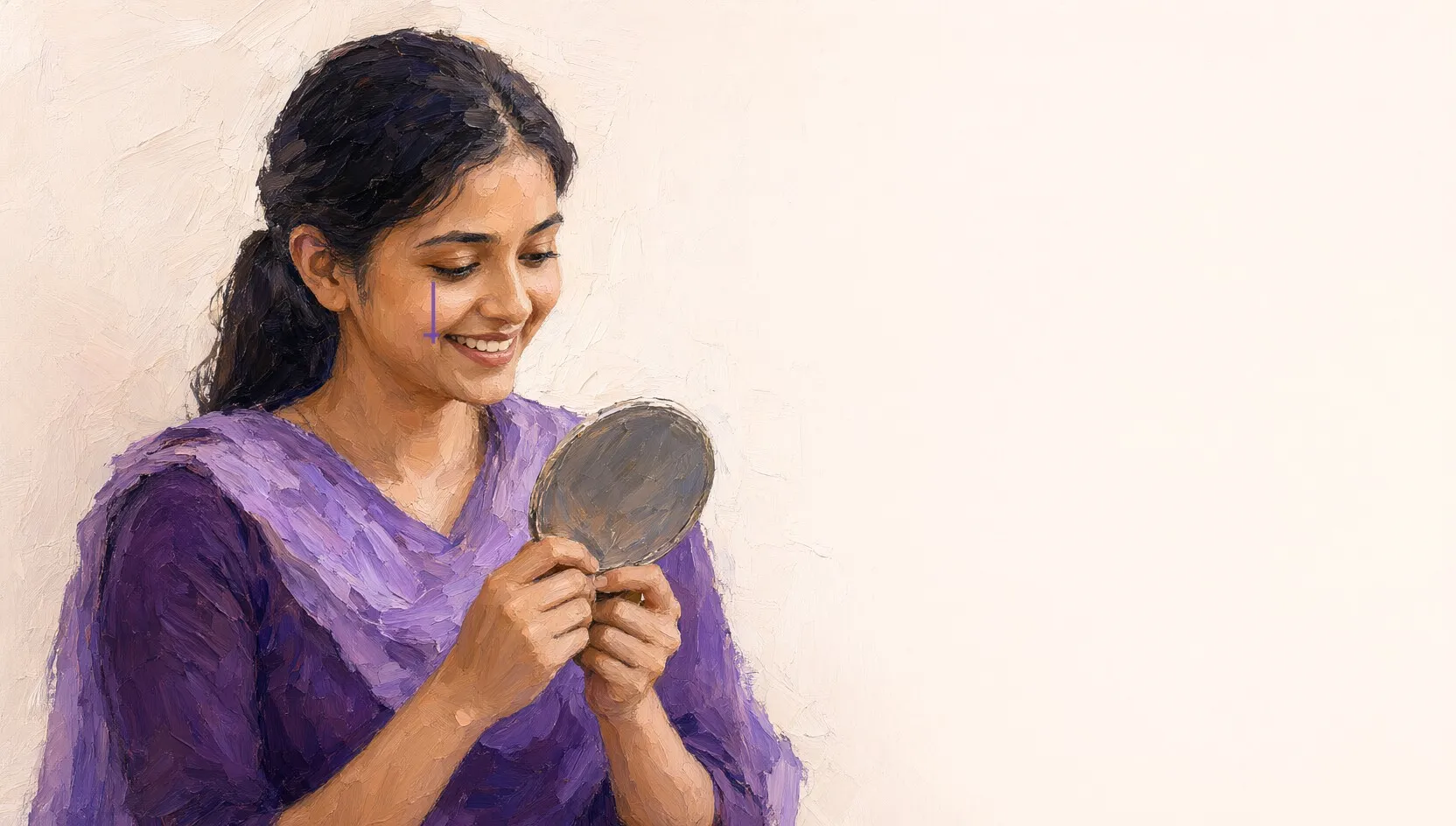
The patient participates actively in choosing where the dimple will sit. The point is marked while smiling so that the natural movement of the facial muscles can guide the placement. If a natural dimple is already present on one cheek, marking the corresponding site on the other cheek helps achieve facial symmetry.
Local Anaesthesia
Once the marking is finalised, the cheek is numbed so the operation can proceed comfortably.
- Dr. Vishal Purohit usually performs dimple creation under local anaesthesia; general anaesthesia is available on request.
- Sedation is not used.
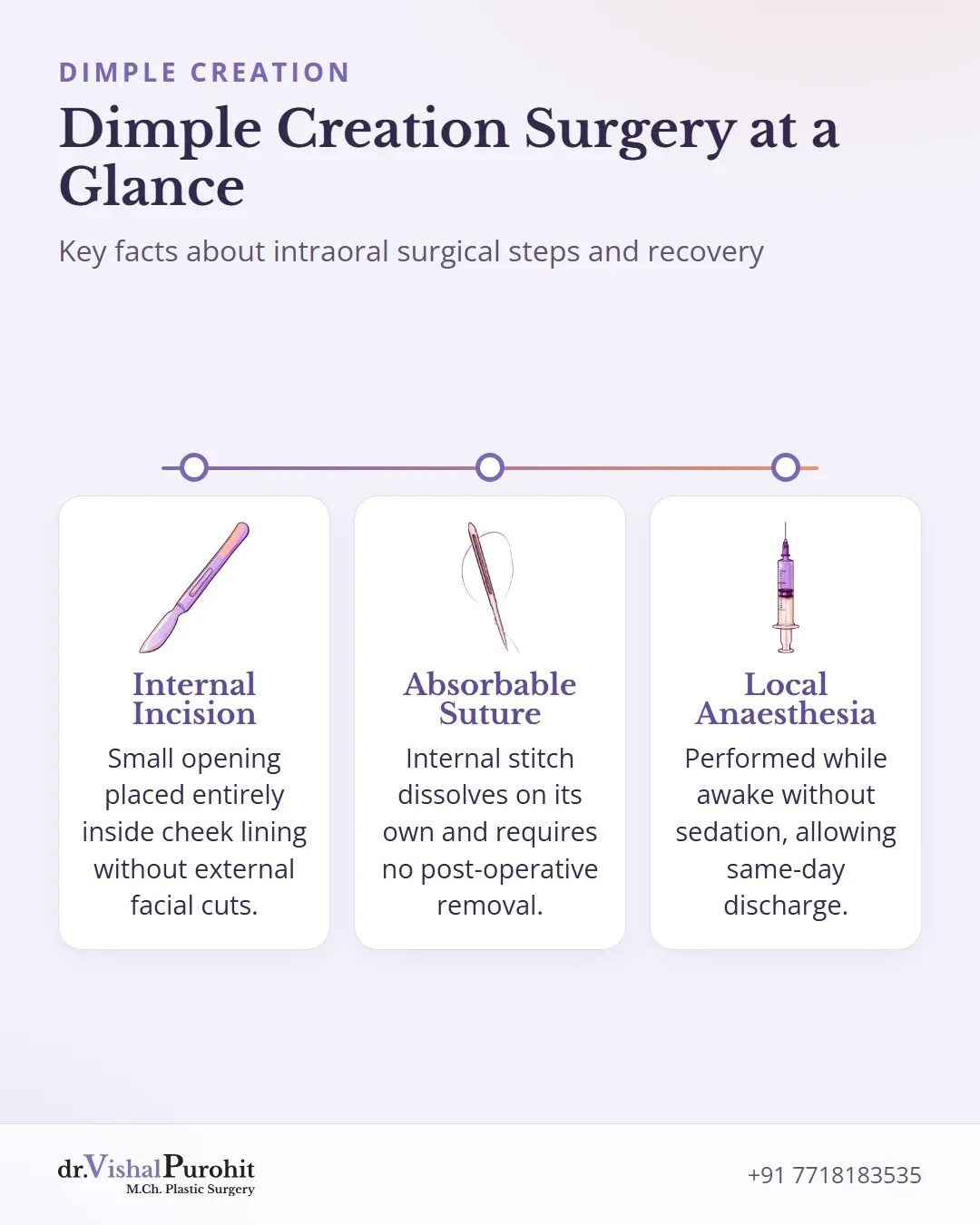
The local anaesthetic numbs the cheek tissues thoroughly before any surgical steps are carried out. Under local anaesthesia, the patient remains awake throughout the procedure and is able to return home on the same day.
Working From Inside the Mouth
Dimple creation is carried out from inside the cheek. Making the surgical opening on the oral mucosa ensures there is no cut or visible mark on the skin of the face.
Key points
- Dimple creation is performed entirely from inside the cheek, with no cut on the facial skin.
- Literature describes tissue-core excision and suture-only approaches, each with distinct trade-offs.
- Dr. Purohit utilizes an internal absorbable suture combined with subtle muscle electrocautery to secure the dimple.
Approaches in the Medical Literature
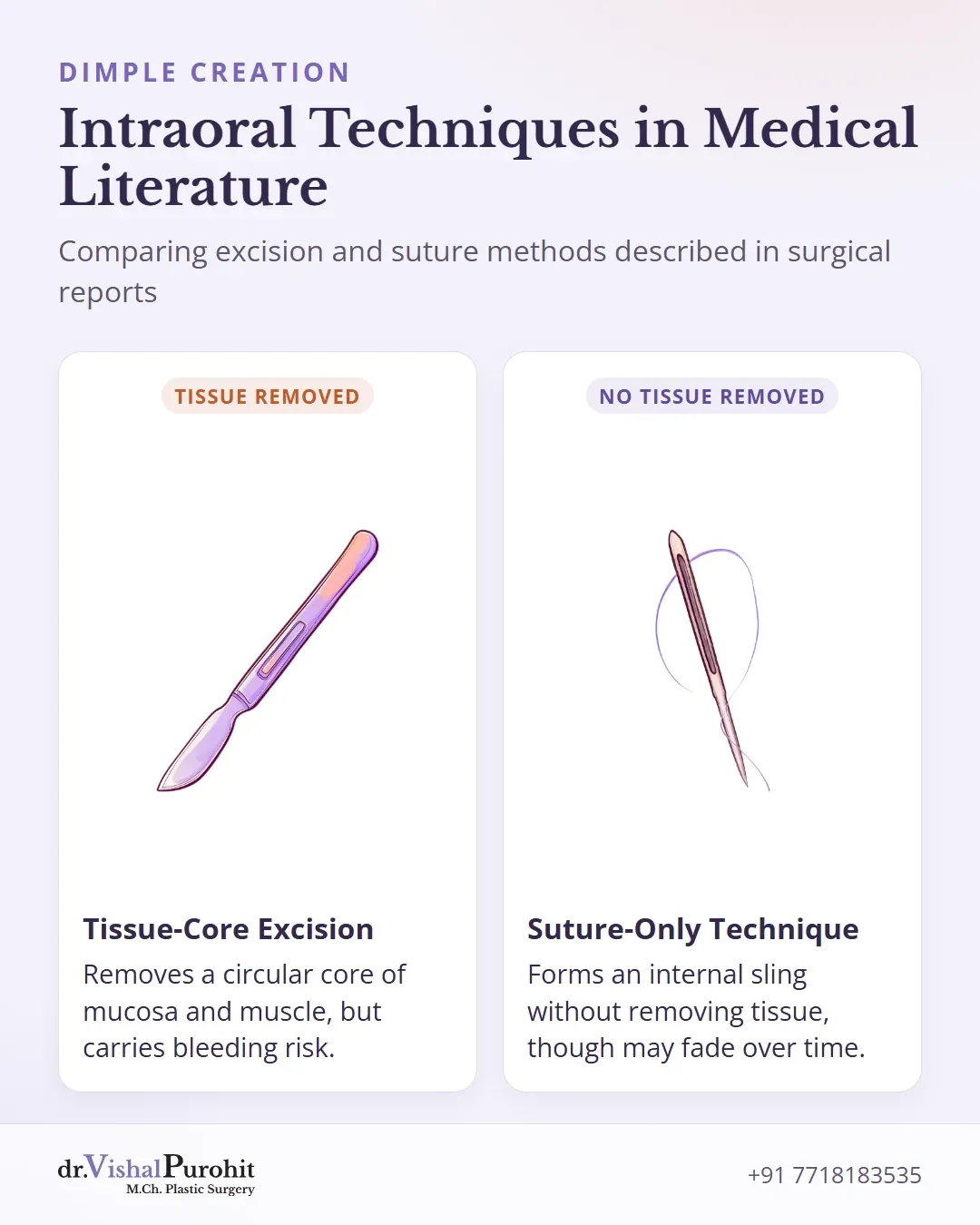
Published surgical reports describe two broad intraoral methods for creating a cheek dimple:
- Tissue-core excision: A small circular core of mucosa, muscle, and submucosal tissue is removed using an instrument such as a punch biopsy, leaving the overlying skin and dermis intact. This open defect creates space beneath the skin, though tissue excision carries risks of bleeding, haematoma, and infection.
- Suture-only technique: A suture is placed through the active facial muscle and the dermis to form a sling without excising tissue. This reduces tissue trauma, though some authors note that suturing alone without tissue excision may lead to fading over time.
Surgical Method in Jaipur
In his practice in Jaipur, Dr. Vishal Purohit uses an internal technique that avoids cutting the skin of the face. Working entirely through a small incision inside the cheek, he places an absorbable internal suture combined with very slight electrocautery applied to the muscle. This internal stitch holds the undersurface of the dermis to the underlying cheek muscle and dissolves on its own over time.
The Stitch That Makes the Dimple
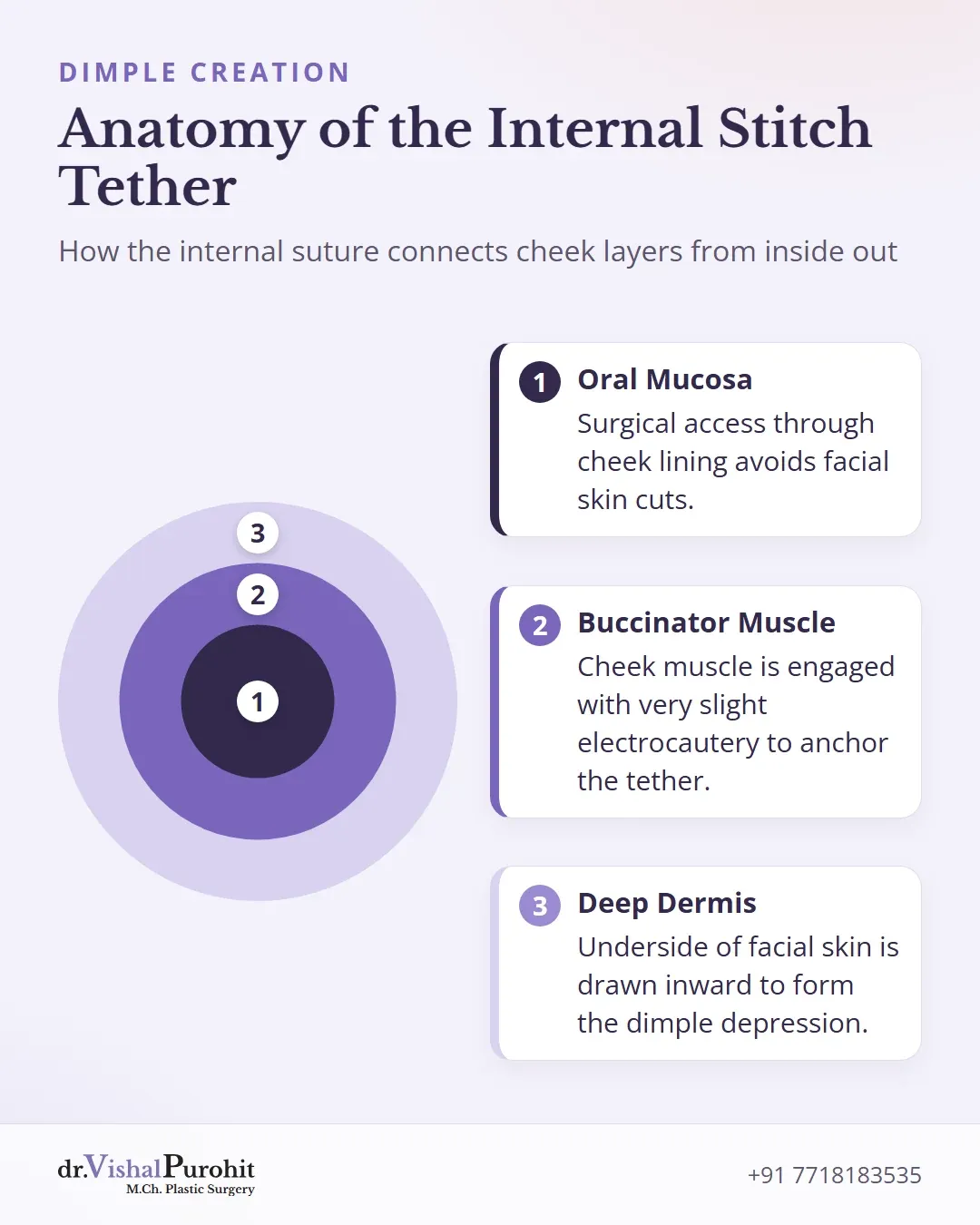
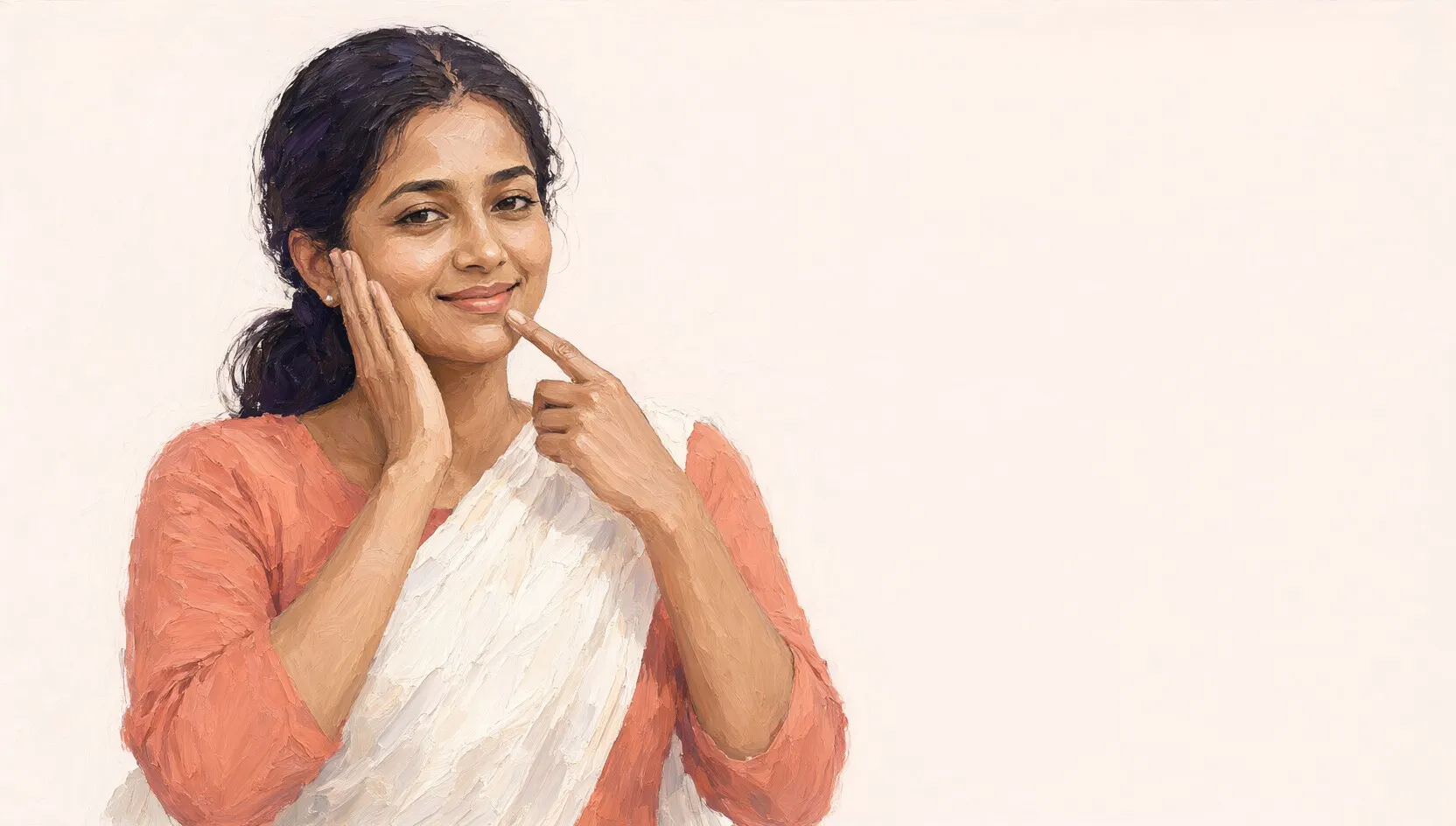
Natural cheek dimples occur when muscular fibres tether directly into the overlying facial dermis. In dimpleplasty, the surgical stitch creates this connection artificially.
Key points
- A dimpleplasty uses an internal stitch to connect the cheek muscle to the deep dermal skin layer.
- Tying the suture pulls the tissues inward to artificially replicate a natural dimple depression.
- The procedure uses an absorbable stitch placed entirely inside the mouth, leaving no cut on the facial skin.
Surgical techniques connect the active facial muscles to the dermis by forming an internal sling between the cheek muscle—usually the buccinator—and the underside of the skin. The suture passes through the internal cheek lining, the muscle, and into the dermal layer of the cheek skin before being secured from the inside. Tying this stitch pulls the deeper tissues against the skin, drawing the cheek inward to form the dimple depression.
Absorbable Stitches and Healing
Dr. Purohit performs dimple creation through a small incision placed entirely inside the cheek, using an absorbable internal suture combined with very slight electrocautery to the muscle. Because the procedure is conducted completely from within the mouth, there is no cut made on the facial skin.
Key details of the internal stitch include:
- The stitch joins the buccinator muscle directly to the deep dermal surface from the inside of the cheek.
- Dr. Purohit uses an absorbable suture that dissolves on its own inside the tissue and does not require removal.
How Long It Takes
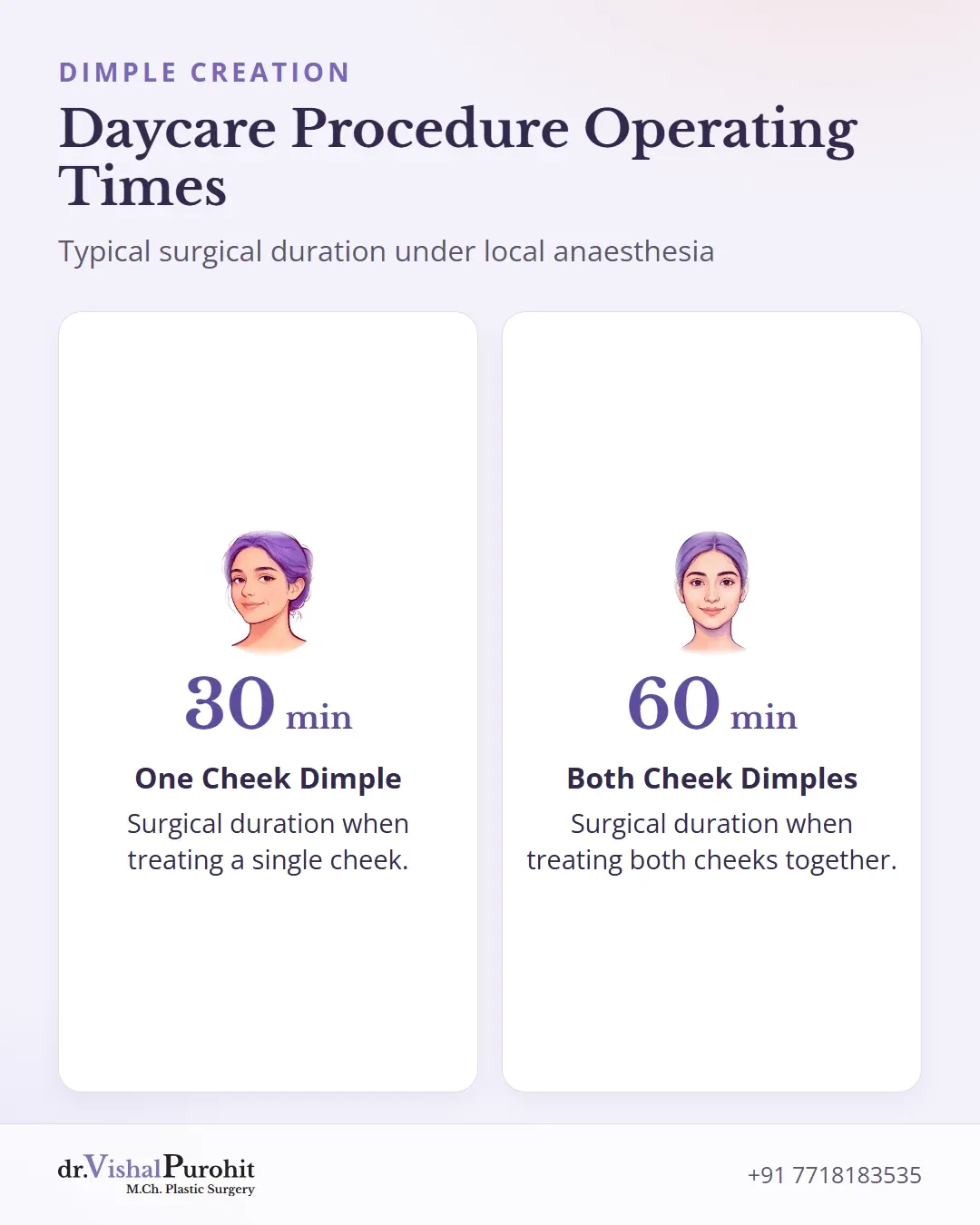
Dimple creation is planned as a straightforward daycare procedure. In Dr. Vishal Purohit’s practice, operating times depend on whether one or both cheeks are treated:
- About 30 minutes for one dimple
- About 60 minutes for two dimples
Under local anaesthesia without sedation, patients do not require an overnight hospital stay. They are discharged to go home the same day shortly after the surgery is completed.
Surgical preparation, pre-procedure markings, and immediate post-operative instructions are reviewed before leaving. A detailed breakdown of what to expect from arrival through discharge is discussed in the guide to surgery day.
After heading home, healing begins from the inside of the cheek. Patients can return to desk work after about 48 hours, simple outdoor work after about 7 days, and exercise after about 21 days, avoiding wide smiling for the first 2 weeks. The dimple shows at rest at first and settles by about 6 to 8 weeks to show mainly on smiling, while soreness, tightness, and swelling usually last about 1 month.
Consulting for Dimple Creation in Jaipur
Understanding each step of dimpleplasty helps patients prepare comfortably for treatment. You can explore details about dimple creation in Jaipur or read through our dimple creation FAQs to understand candidate suitability, internal stitch healing, and post-operative oral care.
This is educational information, not medical advice.