
In short
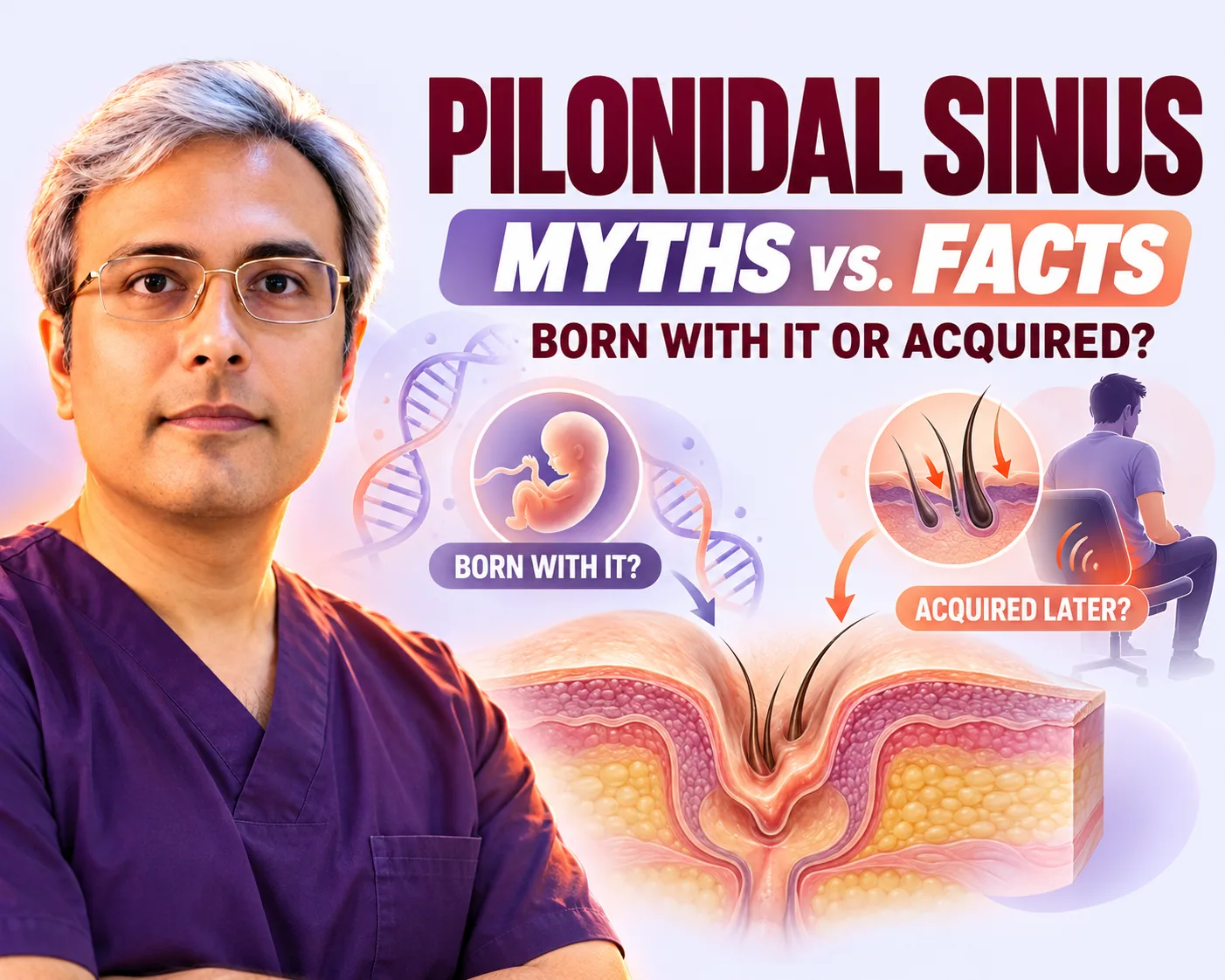
- Pilonidal sinus is not inborn — shed hair pierces cleft skin and it is acquired.
- Walls hold no roots; hairs inside are loose bits from outside.
- It is not your fault, not spread by touch, and needs tract care, not drugs.
Why this confusion lasts
Many patients think they were born with it. The name, the midline spot, and old books feed that fear. The spot sits over the tailbone, near the spine.
This page is for new cases, parents, and teens who heard mixed talk. It reviews old birth-defect ideas. Then it shows proof of the acquired cause and removes shame.
At the first visit in Jaipur, Dr. Vishal Purohit gives the same clear word. This is an acquired hair-and-friction disease of the cleft. It can be treated. It is nobody’s fault.
Short words help here. Acquired means gained after birth. Congenital means present from birth. Pilonidal disease sits firmly in the first group.
The tailbone spot fooled doctors too. Midline lumps near the spine suggest birth defects. Only microscopes settled it. Tract walls showed no roots, only scar.
The old birth-defect ideas
Early writers blamed birth remnants. They spoke of trapped skin bits, scent glands, or a cord left from spine growth. The midline spot made it sound true.
Old books spread that view. The word “cyst” added more. It painted a sac carried since birth.
War surgeons changed minds fast. Jeep units filled with sore clefts. Rest, dry kits, and hair checks cut cases. Peace-time students show the same pattern with desks.
Time proved it wrong. Disease shows after puberty, not at birth. It tracks long sitting, jeep rides, and desk jobs. It even strikes barbers’ finger webs, where no birth remnant can sit. War-era jeep groups turned thought toward an acquired cause. Current reviews state it plainly: acquired hair-driven force on cleft skin, then abscess with or without pits. For the full model see how hair trapping forms a sinus.
Barbers proved the point outside the cleft. Cut hairs pierce finger webs and form the same tunnels. No birth sac can exist between fingers. The same loose-hair process drives both.
Old names still mislead. “Cyst” suggests a sac. “Sinus” suggests a birth hollow. Doctors now read both as tunnels from planted hair. Treatment targets tunnels, not sacs.
Proof it is acquired
Two facts settle the case. First, true birth tracts hold skin parts like roots in their walls. Pilonidal walls hold no roots. They show pits grown inward with scar and surface skin.
Second, hairs inside are loose shed bits. They drift in from scalp, back, or clothes. They lie free in the cavity. No root inside could have grown them.
| Myth | Fact |
|---|---|
| Birth sac or spine link | Acquired skin tunnel above deep sheet; no spine link |
| Caused by dirt or spread by touch | Hair and friction cause it; no spread by touch or germs |
| Drugs or home squeezing cures it | Drugs only calm redness; squeezing spreads germs |
| In-grown roots feed it | Loose shed hairs pierce in from outside |
Life patterns fit too. Post-puberty onset, male lead, deep cleft, coarse hair, long sitting, and extra weight — each raises odds. Each adds more shed hair, more dampness, or more friction. Hair control after healing guards the fix. Check your disease risk factors and what the disease is for next steps. Early mapping keeps repair small and rest short.
It is also not cancer. Long leaks scare families into that fear. Pilonidal tracts are benign walls around hair. Doctors watch very long neglected tracts for rare skin change, but that needs a separate check, not panic.
School life suffers most. Teens skip sports, trips, and classes. Stains and smell isolate them. A named plan and date bring relief faster than hiding.
Parents carry quiet guilt. They blame baths, diet, or genes. None of these build tunnels alone. Facts free the whole family to act.
Hiding stretches months into years. Small pits grow side tunnels. A ten-minute check could have kept repair small. Shame is the costliest delay.
Drop shame, act early
The spot breeds shame. Smelly leaks low down push teens to hide. Many pad with tissue for months. Some lance boils at home. Rounds of “repeat boil” pills hide spreading tracts.
Do not delay care for these myths
- “One more course of pills will melt the tract” — it will not
- “Just squeeze it hard at home” — spreads infection deeper
- “It must be dirty habits” — shape and hair drive it
Truth lifts blame. Shed hairs screw into soft cleft skin through friction and shape. Then germs wall them off. That new frame turns shame into a plan: map tracts, fix shape, cut hair load. Early visits keep repair small and rest short.
Antibiotics confuse many families. Pills calm redness and shrink boils. But skin-lined tunnels stay open below. Leaks return within weeks. Only tract removal ends the cycle.
Partners ask about spread. Touch, shared towels, and close contact cannot pass it. No germ travels that way. The wall around hair stays local to one cleft.
Families can help without shaming. Spot leaks, back sitting breaks and dry washing, join the surgeon visit, and aid dressings after care. Consults link facts to a flap and hair-control plan. Teens heal well once clear facts remove fear. Parents help most by booking early, doing care steps, and keeping every review date till full closure. This is educational information, not medical advice.
Keep every review date till full closure. Leaks that stop early still need checks. Tracts can smoulder silent for weeks. The last visit confirms the seal.
Key figures from published series
- Current view: acquired hair-driven force on cleft skin, then abscess with or without pits.
- Lab base: no hair roots in walls; cavity hairs are loose shed shafts from outside.
- Group tag: chronic acquired disease of working-age people, with heavy care load if missed.
What Dr. Vishal Purohit does in Jaipur
Dr. Vishal Purohit in Jaipur treats it as the acquired disease shown above. He maps pits and tunnels, splits acute abscess from chronic tract disease, and picks a Limberg or Karydakis flap shape by spread. Every plan follows the map. Abscess cases get drainage first when swollen, then planned flap care.
No birth-sac surgery, phenol, laser, scope, or pick methods are offered. Visits teach why drugs alone fail and why hair control after healing blocks a new acquired round. Mapping comes first in every case.
Teens may attend with parents. Exams stay brief and private. Photos of the map explain more than words. Questions are welcome at every step.
Advice stays plain and written. Maps, dates, and hair steps go on paper. Families leave with a named plan. Paper beats memory at home.
Hairs drift in from far sites. Scalp, back, and clothes all shed. Sweat glues them to the cleft. Friction then screws them in. Daily rinsing breaks this chain before pits deepen. Clean fingers check the cleft better than harsh scrubbing. Gentle habits beat strong chemicals here. Teach teens this routine early and repeat it often. Calm daily care beats panic scrubbing before a wedding or exam. Steady habits win over sudden fixes every time, so start the routine this week itself.