
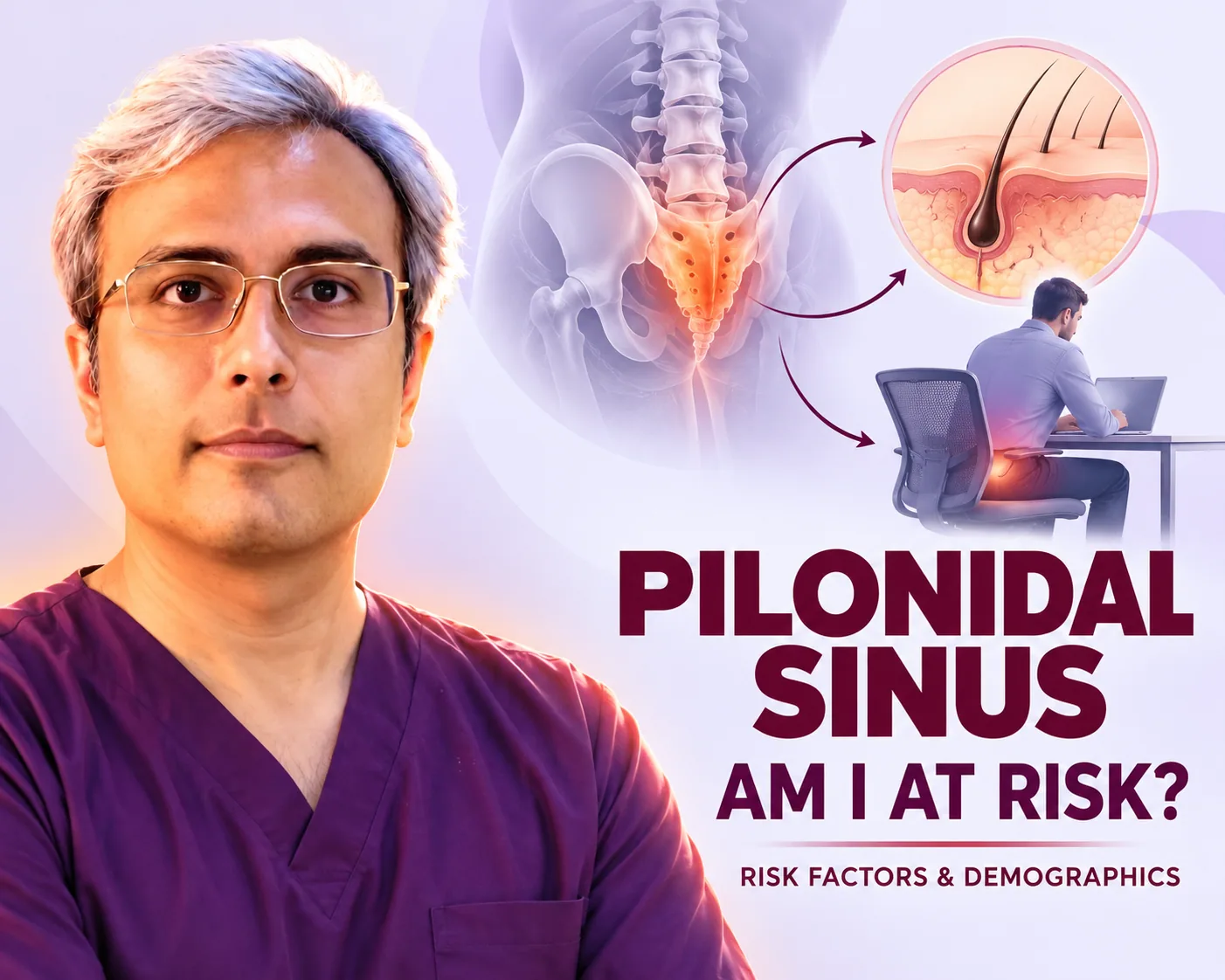
In short
- Teens and young men face the most risk, near ages 15 to 30.
- Deep cleft, coarse hair, long sitting, and extra weight raise risk.
- Risk hints at cause — only an exam confirms disease.
Who gets it most
Pilonidal sinus starts when shed hair pierces cleft skin. The body walls it off. An abscess or leak forms, with or without small pits.
This page is for teens, parents, students, drivers, and desk staff. It tells who gets it most and which habits add risk. The facts here come only from pilonidal reports.
Risk is not proof. A lasting pit near the tailbone, a leak, blood, or a sore boil needs a face-to-face exam. Dr. Vishal Purohit in Jaipur maps pits and tracts at the first visit.
Short words help here. A pit is a mouth on the skin. A tract is the tunnel below. Risk means higher odds, not certain disease.
Age and sex pattern
Cases cluster in young adults. Onset peaks near ages 15 to 30. This matches post-puberty hair growth and long study or desk hours.
Cases before puberty are rare. New cases fall after middle age as hair thins. Students, trainees, and young staff form a large share of cases.
Men lead the charts. Many series report about 2 to 3 men per woman. Some groups report up to 10 to 1 based on place and case mix. Dense hair, deep clefts, and seated work help explain the gap. Women fall ill by the same process too.
Place shapes the numbers. Hot regions report more sweat-linked flares. Jobs with long seated shifts cluster cases. These shifts explain why some series show wider male leads than others.
Jobs shape risk by posture. Tailors, coders, and drivers sit for very long stretches. Guards and sales staff stand more and fare better. Small posture shifts beat long static loads.
| Group | Pattern in reports | Why |
|---|---|---|
| Ages 15–30 | Peak onset period | Hair growth plus long sitting |
| Men | About 2–3 per woman | Denser coarse hair, deeper cleft |
| Hairy people | Seen more in surgery groups | More loose shafts to plant |
Age matters because hair and habits peak together. Teens grow coarse hair fast. They also sit for exams, coaching, and screens. That mix plants more loose shafts right where the cleft traps them. To see why age matters, learn how hair trapping starts a sinus.
Girls fall ill too, often later in the teens. Hair-removal habits can mask early pits. Shaving rash near the cleft deserves a look. Do not blame waxing alone — shape still drives it.
Numbers shift with case mix. Army clinics see young men. Family clinics see broader groups. Read each rate with its setting in mind.
Build and hair risks
A deep cleft is the main risk. It traps shed hair in warm, damp folds. Walking and sitting then drive hair into soft skin.
The main build and hair risks:
- Deep narrow cleft — poor airflow, hard to clean.
- Stiff coarse hair — sharp shed bits pierce best.
- Heavy hair growth — more loose shafts near the cleft.
- Friction and small cuts — hard seats, tight seams, cycling.
Lab study adds proof. Tract walls hold no live hair roots. Hairs inside are loose shed shafts, not in-grown roots. That is why flap surgery that flattens the cleft cuts returns — see the Limberg flap shape and Karydakis flap shape.
Hair texture counts as much as hair amount. Coarse, wiry shafts act like tiny needles. Fine soft hair pierces less. Shaving the cleft can backfire, since sharp stubble pierces well — trimming and planned laser after healing work better.
Hair cuts need care. Home razors leave sharp stubble that pierces well. Electric trimmers cut safer with less rash. Never wax an angry or leaking cleft.
Sports add friction too. Cycling presses the cleft on a narrow seat. Rowing and long bike rides rub the same spot. Padded shorts and dry changes lower the load.
Shape cannot be fixed by creams. No oil or powder flattens a deep cleft. Only surgery reshapes it. Daily care only lowers the load till then.
Sitting, weight, and wash habits
Long sitting ranks among the best-known fixable risks. The old name “Jeep disease” came from jeep drivers with hours of bumpy sitting. Today it catches exam-season students, coders, and truck or cab drivers.
Soldiers gave the first lesson. Bumpy jeep rides shook loose hairs into sore skin. Rest breaks and dry uniforms cut cases. Modern drivers face the same mix with traffic jams.
Summer heat adds load. Sweat soaks the cleft on long rides. Carry a dry change and wipes. Rinse and pat dry at each halt.
Students form a large share. Coaching hours, exams, and screens chain them to chairs. Short stand-and-walk breaks each hour help. A cushion with a tailbone cutout spreads load.
Extra weight adds risk four ways. Folds press tighter. Sweat and rashes grow. Friction rises. Washing gets harder. Reviews count high weight with long sitting and local friction as known risks.
See a surgeon soon if you notice
- A pit near the tailbone that leaks
- A sore boil that swells, bursts, then returns
- Bloody or smelly discharge on underwear
Poor washing adds risk but does not cause disease. Stale sweat softens skin and feeds germs at pit mouths. Yet many clean patients fall ill from build and hair. Daily gentle washing, full drying, and no home picking are wise steps.
Parents often ask what to watch. A teen who sits sideways, skips games, or stains underwear needs a look. Early pits are painless and easy to miss. A quick check beats months of pads.
Habits help but cannot close a formed tract. Once pits join tunnels, only care that removes tracts works. Read myths vs facts to drop blame and act early. Early small disease needs a small flap and heals fast. Late branch disease needs wide repair and long rest. That gap is what makes fast checks pay off. This is educational information, not medical advice.
Key figures from published series
- Peak onset in pilonidal reports: near 15–30 years.
- Male lead across series: often near 2–3 to 1, ranging up to 10 to 1 with place and case mix.
- Known risks in reviews: high weight, long sitting, local friction; deep cleft with coarse hair growth.
What Dr. Vishal Purohit does in Jaipur
Dr. Vishal Purohit in Jaipur checks risk and disease in one visit. He maps pits, tract direction, cleft depth, and hair load. He also looks at sitting hours, weight, and old boil care.
Proven disease fit for surgery gets Limberg or Karydakis flap repair matched to build. Abscess gets drainage first. After healing, he plans sitting breaks, wash steps, and laser hair control to guard recovery.
Bring school or work leave papers to the visit. Dates get stamped by wound stage. Desk roles return sooner than field roles. The plan spells out which week fits which duty. Early review keeps every option open, from watchful care to small flap repair. Waiting only narrows choices and widens surgery. A ten-minute mapping visit answers the risk question for good. Bring notes on sitting hours, sports, and prior boils to that first visit for a faster verdict.