
Heavy sweating affects different body areas in distinct ways. Managing focal sweat starts with understanding how targeted treatments, from topical plugs to site-specific injections, function across specific anatomical surfaces.
Patients weighing non-surgical care can review an Excessive Sweating: Medical Assessment Before Botox to assess whether local injections or conservative therapies match their symptom distribution.
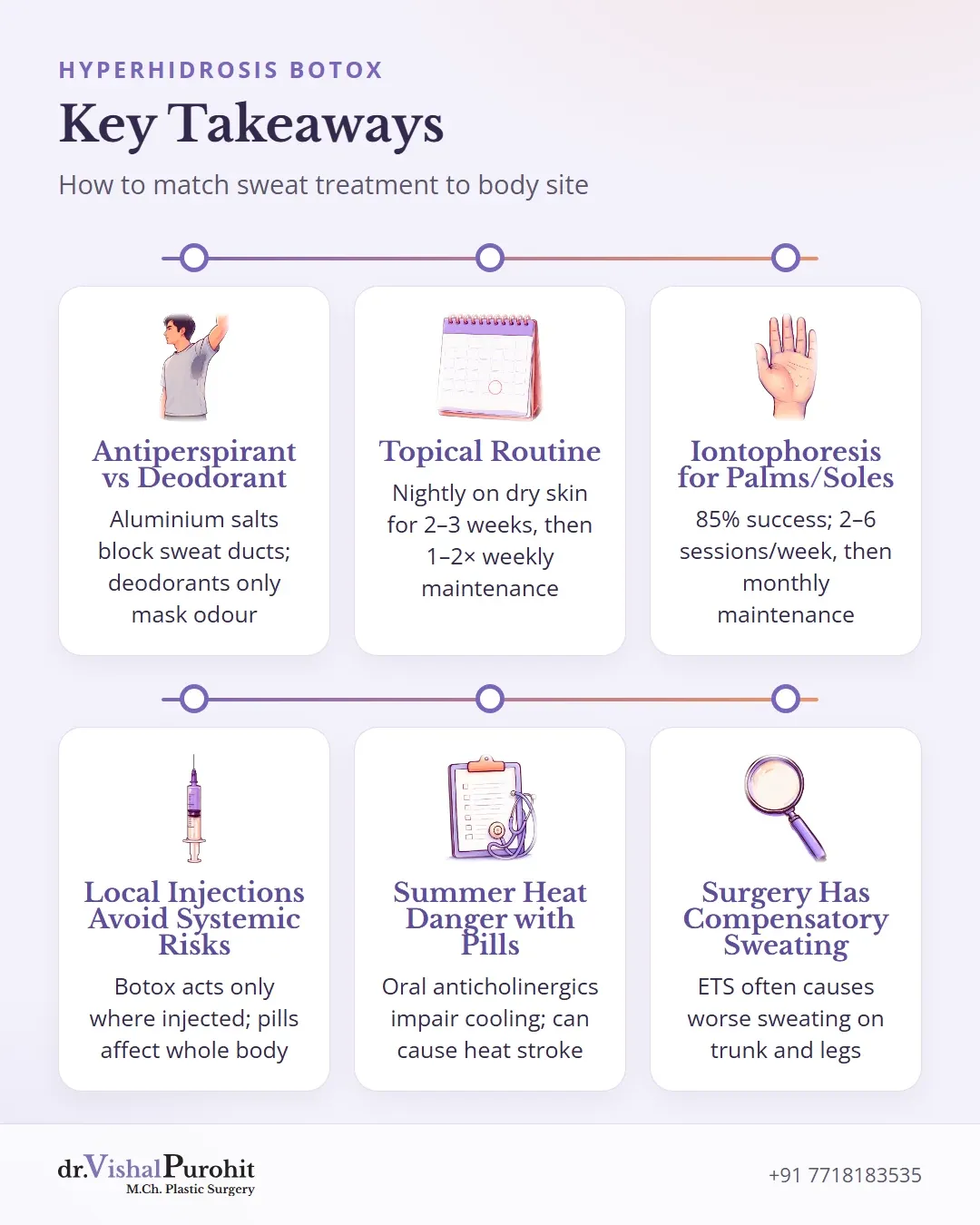
Antiperspirants Target Sweat While Deodorants Target Odour
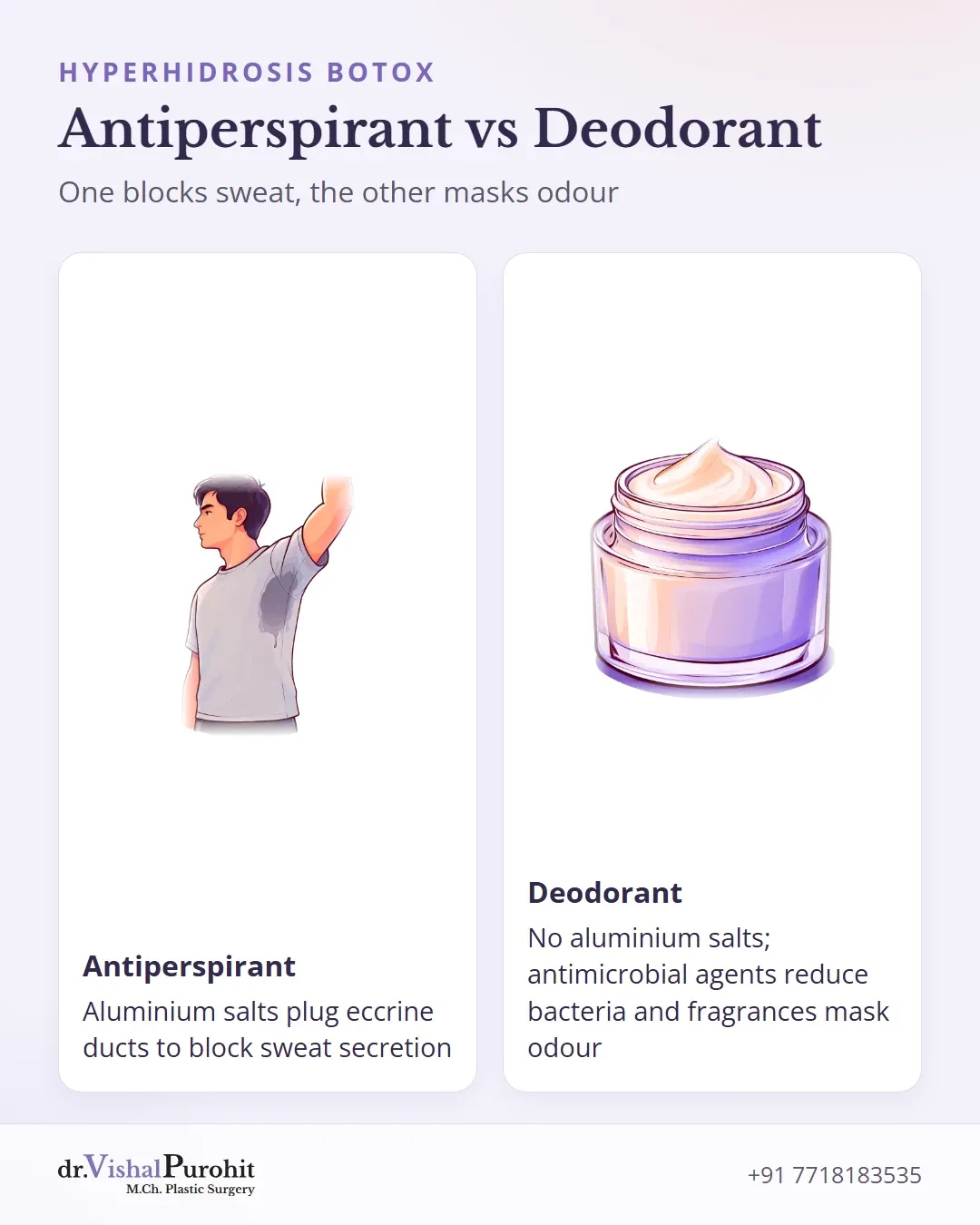
Understanding the difference between antiperspirants and deodorants helps prevent mistaking cosmetic body sprays for medical sweat-reducing therapy12.
Antiperspirants are designed to decrease sweat output1. They primarily contain aluminium compounds, such as aluminium chlorohydrate or aluminium chloride hexahydrate234. When applied to the skin, these aluminium salts act by precipitating within the eccrine sweat ducts45. This creates a physical plug that temporarily blocks sweat secretion from reaching the surface456.
In contrast, deodorants do not reduce sweat volume12. Deodorants are cosmetic products that typically do not contain aluminium salt complexes2. Their main purpose is to neutralise or reduce underarm odour14. They achieve this by combining antimicrobial agents to curb bacterial action on sweat components, alongside added fragrances designed to mask unpleasant smells4.
While both functions are frequently formulated together into a single retail product14, relying purely on a cosmetic deodorant will not treat underlying heavy sweating126.
Optimising Topical Formulas and Skin Irritation
Prescription-strength antiperspirants, such as aluminium chloride hexahydrate, serve as a common initial therapy for excessive sweating378. However, skin irritation frequently limits their use and remains a primary cause of early discontinuation7910. Moisture reacts with aluminium-based compounds to create hydrochloric acid, which can trigger stinging, erythema, and irritant dermatitis137.
Key points
- Prescription antiperspirants are an effective first-line therapy, but moisture-induced skin irritation often causes early discontinuation.
- Applying formulas to completely dry skin at night and avoiding shaving reduces irritation.
- Achieving sweat control typically takes two to three weeks before transitioning to a weekly maintenance routine.
Before concluding that topical treatment has failed, consulting a doctor allows patients to correct application technique and protect the skin barrier:
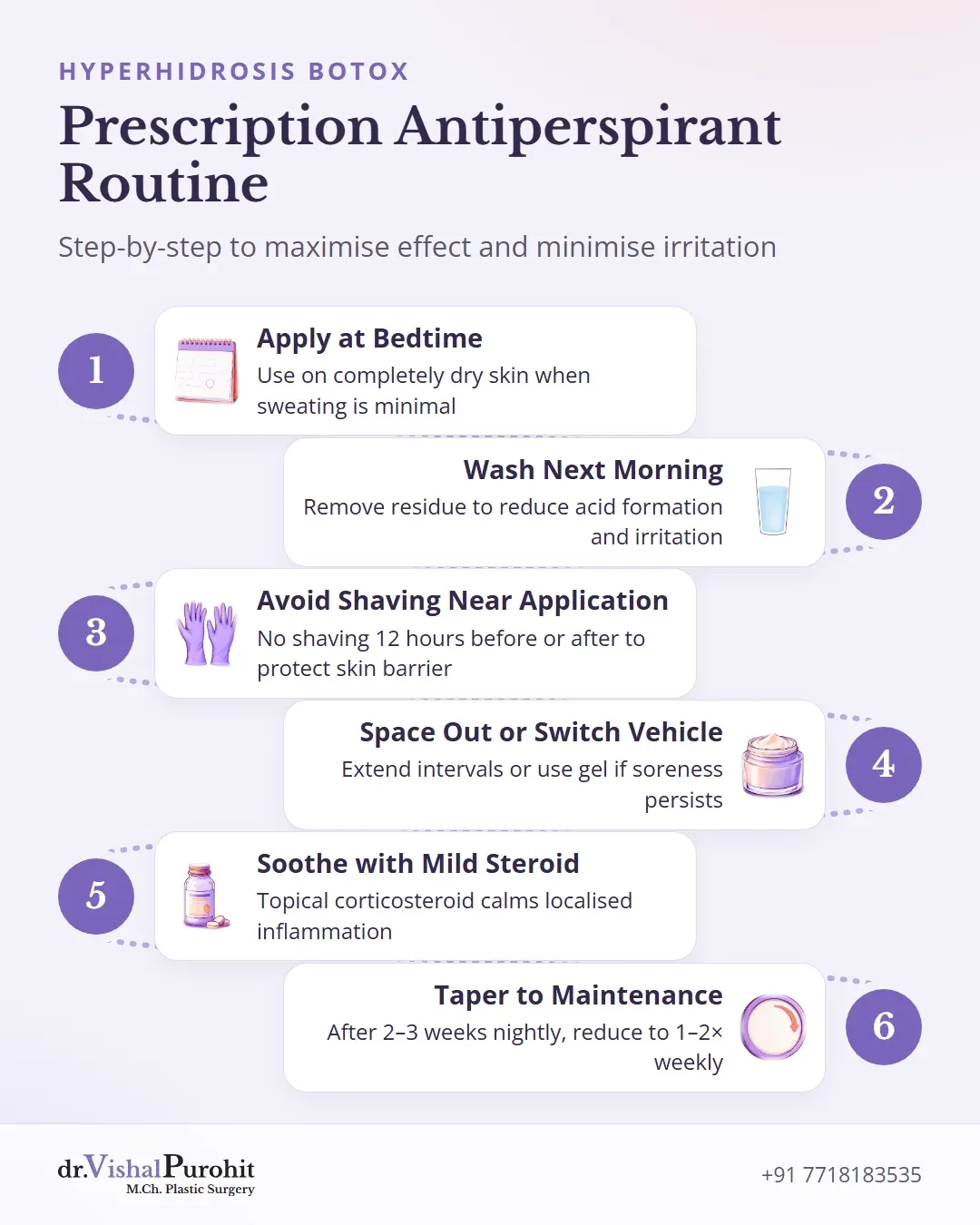
- Apply formulations strictly at bedtime to completely dry skin, when sweating is minimal, and wash the area thoroughly the following morning6710.
- Avoid shaving axillary skin within twelve hours before or after application1.
- Space out applications or use alternative vehicles, such as gels, if persistent soreness develops6.
- Mild topical corticosteroids may be recommended to soothe localised inflammation171011.
Hyperhidrosis often requires two to three weeks of consistent nightly use before adequate sweat control is achieved7. Once sweating reduces, maintenance applications can often be tapered to once or twice weekly367. Discussing tolerance issues with a doctor ensures these adjustments are explored fully.
Why Iontophoresis Fits Hands and Feet
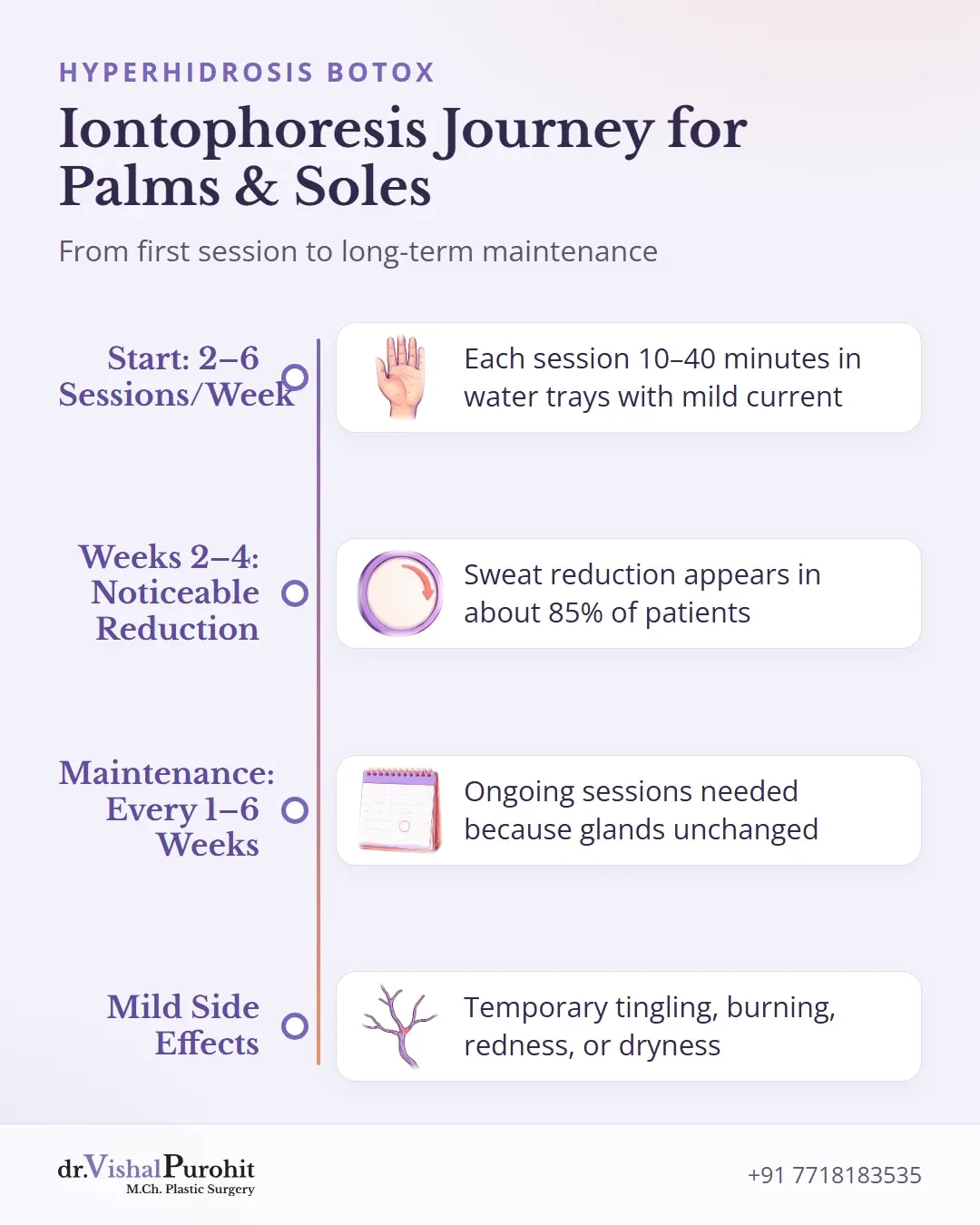
Iontophoresis involves placing the hands or feet in shallow trays of water while a mild electrical current passes into the skin surface612. This mechanism makes it particularly suitable for the thicker skin of the palms and soles613. It provides a non-invasive treatment option that alleviates excessive sweating in about 85 percent of treated patients1214.
However, the approach demands consistent time and device access:
- Initial therapy usually involves two to six sessions per week, with sessions lasting 10 to 40 minutes614.
- Noticeable sweat reduction often appears within two to four weeks612.
- Because sweat glands undergo no permanent structural change, ongoing maintenance sessions every one to six weeks are necessary to preserve results614.
Patients may start under medical guidance before purchasing an approved home machine121314. Mild side effects can include temporary tingling, burning sensations, redness, or skin dryness612.
Local Injections Versus Oral Medications
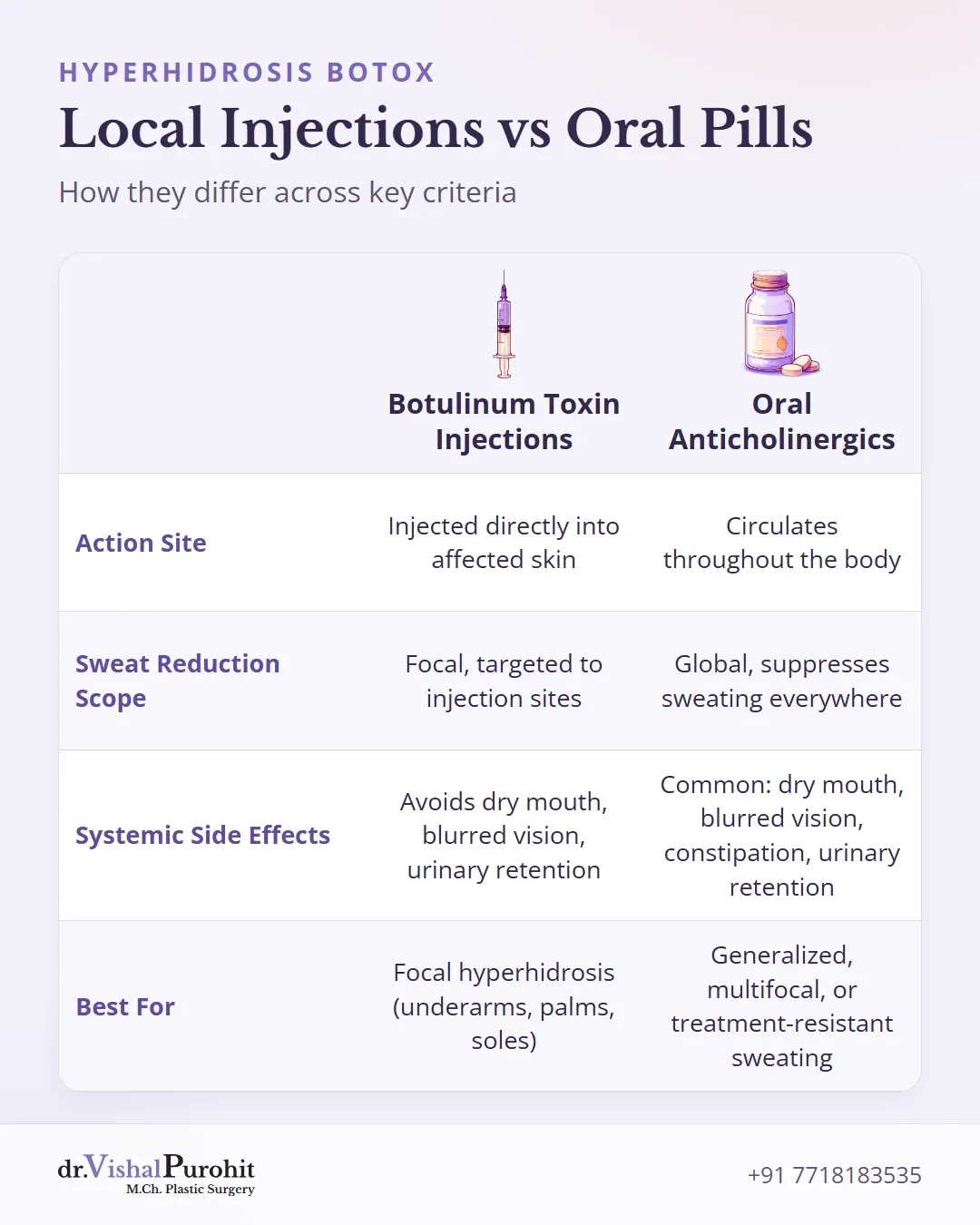
Choosing a treatment approach depends on whether sweating is confined to a specific area or spread across multiple regions.
Site-Specific Injections
Site-Specific Injections Versus Systemic Pills
Botulinum toxin injections act directly at the targeted skin site to block localized sweating19. Because the medicine is injected into the skin of the affected area, its action remains localized rather than dispersing throughout the body915.
In contrast, oral anticholinergic medications such as glycopyrrolate, oxybutynin, or propantheline work systemically139. By circulating throughout the body, these tablets suppress sweating globally, making them an option reserved mainly for generalized, multifocal, or treatment-resistant sweating39.
Understanding Systemic Side Effects
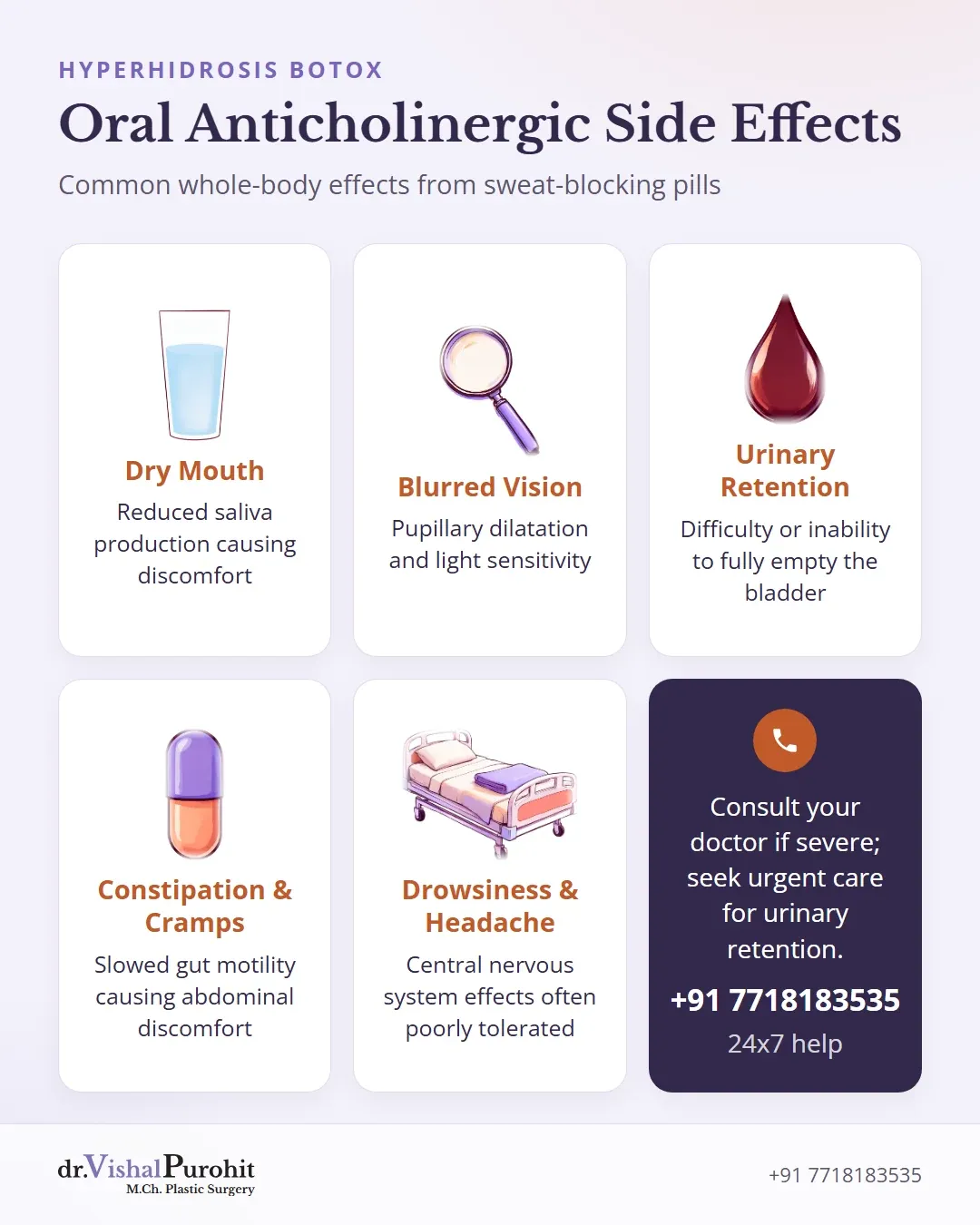
Because oral anticholinergic tablets affect the entire nervous system’s cholinergic pathways, they frequently produce widespread side effects19. These generalized effects commonly include:
- Dry mouth13916
- Blurred vision and pupillary dilatation13916
- Urinary retention or difficulty in passing urine13916
- Constipation and tummy cramps116
Local botulinum toxin injections avoid these systemic anticholinergic complications by delivering targeted relief directly to focal areas19.
Dr. Purohit’s note: Dr. Purohit evaluates each patient’s individual pattern of sweating to determine the most suitable medical strategy during consultation.
Summer Heat and Systemic Anticholinergic Risks
During extreme summer temperatures in Jaipur, oral anticholinergic medications require careful caution. These oral drugs act throughout the body to stop sweat production by inhibiting acetylcholine receptors617. Because sweating is the primary physiological mechanism for cooling the body, widespread reduction in sweating impairs heat dissipation6.
When taking systemic anticholinergic medications, avoiding hot temperatures is essential because decreased perspiration makes cooling difficult6. In severe heat, an inability to cool down can lead to a fever or heat stroke6.
Oral anticholinergics also cause frequent systemic side effects that are often poorly tolerated18, including:
- Dry mouth and constipation6
- Drowsiness and headache6
- Dilated pupils, light sensitivity, and blurred vision6
- Inability to fully empty the bladder6
Thorough clinician counselling is vital before attempting systemic therapy. Whether oral medications or other therapies suit a patient’s circumstances is decided at the consultation with Dr. Vishal Purohit. Choosing no treatment remains a valid option for any patient.
Beyond Conservative Care: Devices and Surgery Tradeoffs
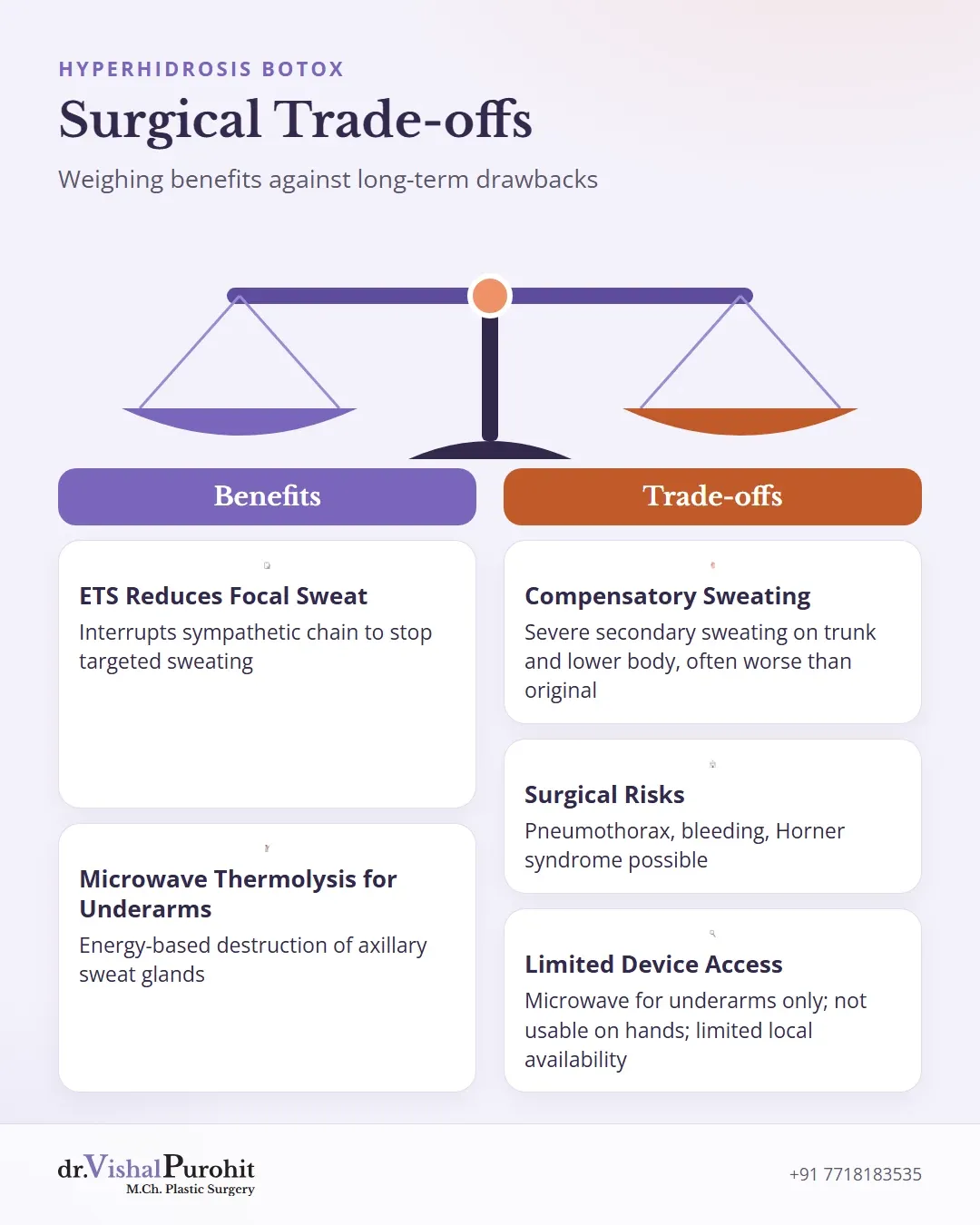
When conservative options fail, escalating to procedural or surgical interventions requires weighing distinct anatomical tradeoffs and significant risks3.
Endoscopic thoracic sympathectomy interrupts the sympathetic chain to reduce sweating, but it carries surgical risks such as pneumothorax, bleeding, and Horner syndrome3. Its primary long-term drawback is compensatory sweating, which frequently causes severe, secondary sweating across the trunk and lower body319. This compensatory sweating can sometimes prove more troublesome to manage than the initial focal hyperhidrosis1.
Anatomical suitability differs sharply between anatomical sites:
- Underarms: Energy-based systems such as microwave thermolysis target axillary tissue to destroy sweat glands320. However, accessibility is restricted by limited local availability20.
- Hands: Microwave devices cannot be used on the hands, leaving surgical denervation or injectables as procedural alternatives13.
Dr. Purohit does not provide laser treatments or unverified energy devices in his practice. Instead, surgical suitability, procedural safety, and intervention choices are decided at the consultation. Patients can discuss their focal sweating distribution and symptom history to determine an appropriate clinical pathway.
Medical Sweat Management Consultation in Jaipur
Navigating options for focal sweating requires aligning therapies with specific anatomical regions. While conservative topicals and iontophoresis offer initial management for palms and soles, localized injections deliver targeted sweat reduction without systemic anticholinergic complications. Learn more about treatment candidacy through Hyperhidrosis Botox in Jaipur and review common queries via Hyperhidrosis Botox FAQs before your clinical evaluation.
This is educational information, not medical advice.