
Attending a medical evaluation for excessive sweating requires careful preparation and full disclosure of your health background. A comprehensive review ensures that injectable neurotoxin treatment remains safe, appropriate, and aligned with personal therapeutic goals.
Clinicians review past antiperspirant use and sweating patterns before recommending second-line interventions. Understanding your Excessive Sweating: Medical Assessment Before Botox helps identify whether underlying conditions contribute to sweating before proceeding with an individualized treatment plan.
Outlining Symptoms and Past Treatment History
Before attending an evaluation, patients should prepare a clear record of their sweating patterns and previous interventions.
Dr. Purohit’s note: Dr. Vishal Purohit assesses this information to evaluate whether injectable treatment is suitable for their situation.
Documenting Sweating Patterns and Medical Background

Patients should record several clinical details before their appointment:
- The anatomical areas affected, such as the underarms, palms, or soles12.
- When excessive sweating first began, noting that primary focal hyperhidrosis typically starts in childhood and intensifies during adolescence1.
- Any history of generalized sweating, which may indicate medication side effects or an underlying systemic condition that requires medical evaluation23.
Reviewing Past Therapies and Therapy Goals
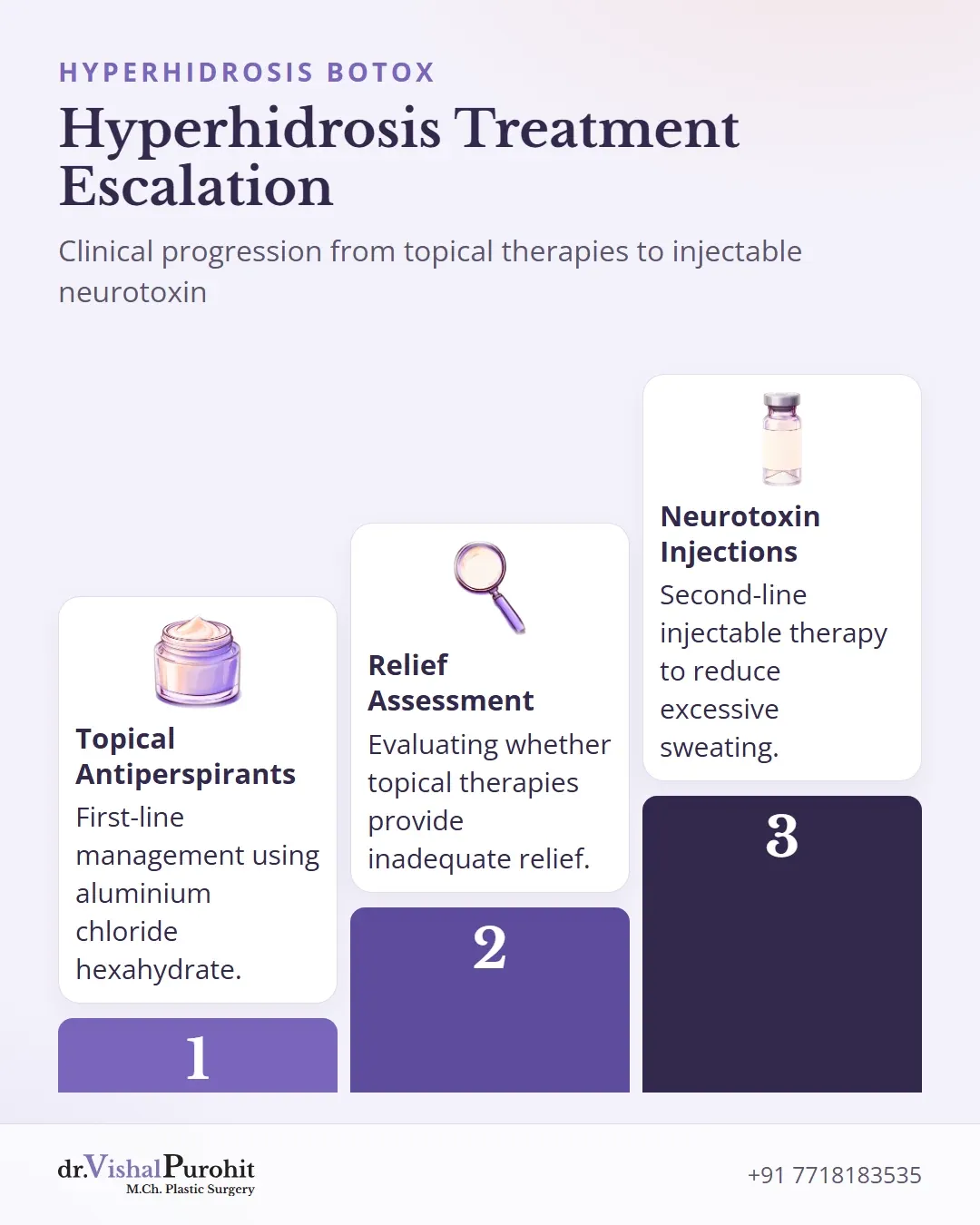
Patients should compile a record of previous conservative measures, including topical antiperspirants such as aluminium chloride hexahydrate formulations23. Understanding an individual’s specific goals in therapy and daily activities helps the clinician align expectations and discuss known side effects before proceeding2. Botulinum toxin injection serves as a second-line therapy when topical management provides inadequate relief23.
Disclosing Prescriptions and Muscle Relaxants

A complete medical disclosure is essential before receiving botulinum toxin injections for excessive sweating. Patients must inform the treating doctor about every current prescription, over-the-counter medicine, dietary supplement, and prior neurotoxin treatment.
Certain medications interfere with neuromuscular transmission and can interact with botulinum toxin. Specifically, aminoglycoside antibiotics and muscle relaxants can potentiate the effects of the toxin, increasing the risk of muscle weakness45. Furthermore, administering another botulinum neurotoxin before the effects of an earlier treatment have resolved may exacerbate neuromuscular weakness5.
Dr. Vishal Purohit assesses complete medical backgrounds during the preliminary consultation in Jaipur. Under no circumstances should patients stop, pause, or alter their prescribed medical therapies on their own before speaking directly with their prescribing doctor or treating physician. Any adjustment to prescription regimens must be managed under direct medical supervision.
Screening for Neuromuscular and Respiratory Conditions
Before receiving Botox injections for excessive sweating, patients undergo a detailed medical history evaluation67. Pre-existing neuromuscular disorders and respiratory vulnerabilities are critical safety considerations during pre-procedure screening48.
Key points
- A thorough medical history is essential before Botox treatment for hyperhidrosis.
- Pre-existing neuromuscular conditions increase the risk of serious complications like generalized weakness and dysphagia.
- Patients with breathing or swallowing vulnerabilities require careful screening and must disclose all conditions.
Neuromuscular Disorders
Patients with underlying conditions affecting neuromuscular transmission may face an increased risk of severe adverse reactions910. Product safety labels warn that individuals with systemic neuromuscular vulnerability can experience clinically significant effects from onabotulinumtoxinA8. These potential complications include:
- Generalized muscle weakness8
- Diplopia and ptosis8
- Dysphonia and dysarthria8
- Severe dysphagia and respiratory compromise8
Individuals diagnosed with myasthenia gravis, Lambert-Eaton syndrome, amyotrophic lateral sclerosis, or peripheral motor neuropathic diseases require careful monitoring and assessment8.
Breathing and Swallowing Difficulties

Botulinum toxin products can lead to swallowing or breathing problems, and individuals with pre-existing difficulties are more susceptible to these complications8. Weakening of muscles involved in respiration or oropharyngeal muscles controlling swallowing accounts for most of these occurrences8. Any difficulty in breathing, swallowing, or speaking following treatment is an emergency that requires immediate medical care. Patients must disclose all medical conditions and medications during their consultation with Dr. Purohit46.
Skin Integrity and Treatment Site Suitability
Before undergoing botulinum toxin injections for hyperhidrosis, the skin across the planned treatment area must be thoroughly evaluated.
Local Skin Health and Allergies

Botulinum toxin must not be administered if there is an active skin infection at the planned injection site51112. Any localized infection serves as an absolute contraindication to treatment1112.
Patients must also disclose any prior allergic reactions. Treatment is contraindicated in individuals with:
- A known allergy to any ingredient or excipient in the product, including human albumin51113
- A history of an allergic reaction to any other botulinum toxin product5
- A previous anaphylactic reaction to botulinum toxin or albumin1112
Clinical Assessment
Dr. Purohit evaluates injection site suitability and checks for specific product ingredient allergies before planning any injection. The specific brand or product used is decided at the consultation.
Pregnancy Considerations and Regulatory Consent
Safety data for botulinum toxin injections during pregnancy and lactation remain limited14. Because formal human studies in pregnant women have not been conducted and excretion into human breast milk remains unestablished1516, botulinum toxin is categorized as pregnancy category C and is not advisable during lactation1517. Consequently, elective sweat-reduction injections are deferred during pregnancy and breastfeeding171819.
Key points
- Elective botulinum toxin injections are deferred during pregnancy and breastfeeding due to limited safety data.
- Use of botulinum toxin for hyperhidrosis outside the underarms is considered off-label.
- Thorough informed consent includes discussing off-label indications, risks, and alternatives without pressure.
Informed Consent and Off-Label Status
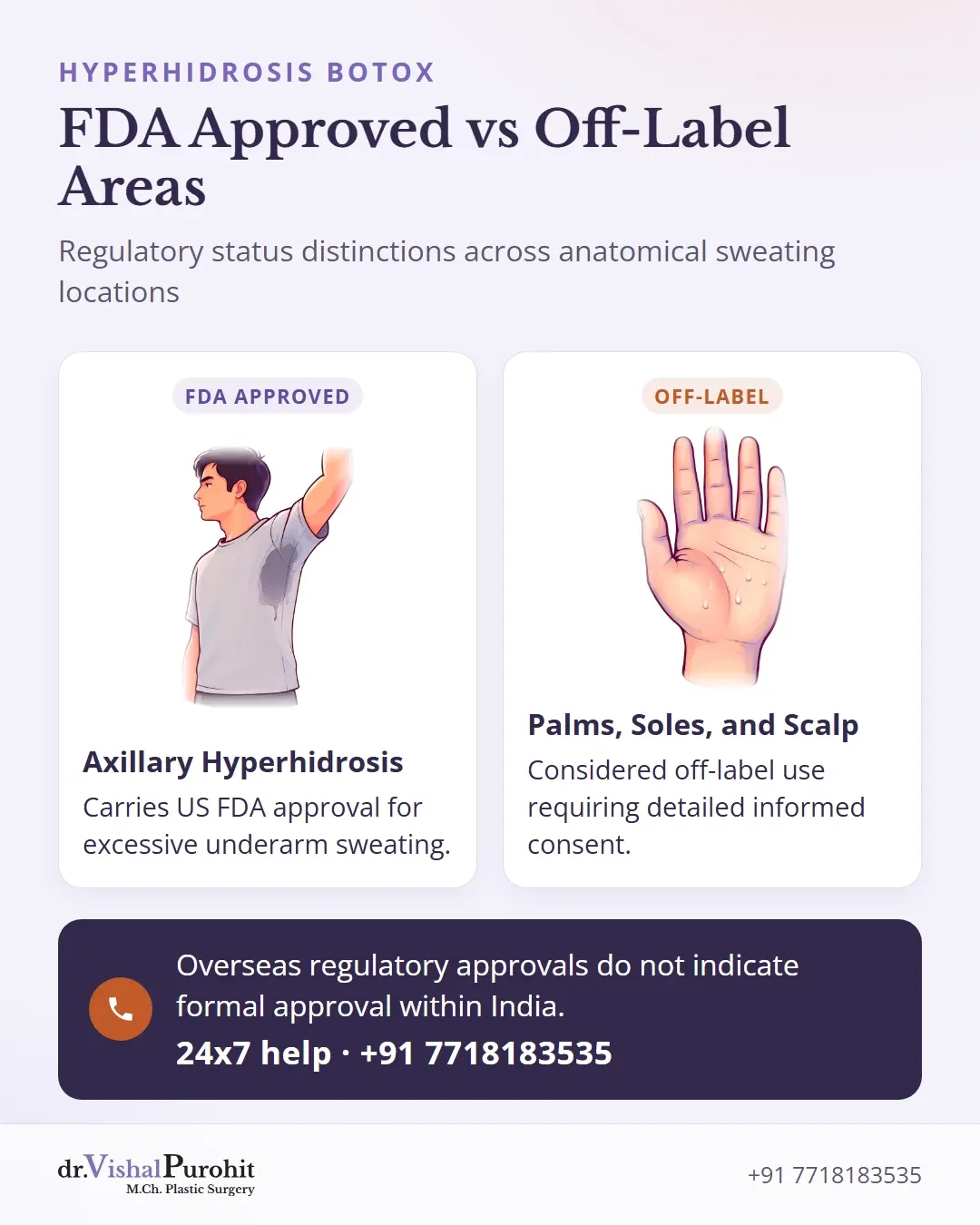
Regulatory approvals do not extend universally across all anatomical areas or jurisdictions:
- While Botox carries US FDA approval for axillary hyperhidrosis, its use for excessive sweating of the palms, soles, face, and scalp is considered off-label20.
- Overseas regulatory approvals such as US FDA clearance do not indicate formal approval within India.
- Thorough informed consent requires an open discussion of these off-label indications, anticipated outcomes, and potential procedural risks1520.
- Setting realistic expectations is essential, alongside a clear understanding of treatment alternatives1621.
Choosing no treatment is always a valid decision. Patients are never pressured into pursuing medical intervention, allowing individuals to carefully evaluate elective sweat injections at their own pace.
Medical Consultation for Sweat Reduction in Jaipur
Undergoing an evaluation for excessive sweating allows patients to review medical safety, potential drug interactions, and procedural expectations. To understand clinical options and candidacy, learn more about Hyperhidrosis Botox in Jaipur or read Hyperhidrosis Botox FAQs. Clinical photographs remain strictly for medical records, and inquiries can be directed via phone or WhatsApp at +91 7718183535.
This is educational information, not medical advice.